Two Israeli activists detained near Yasuf after clash, barred from closed zone
Soldiers detained two Israelis who refused to leave a closed military zone near the Samaria village of Yasuf; a court later barred them from returning to the area.
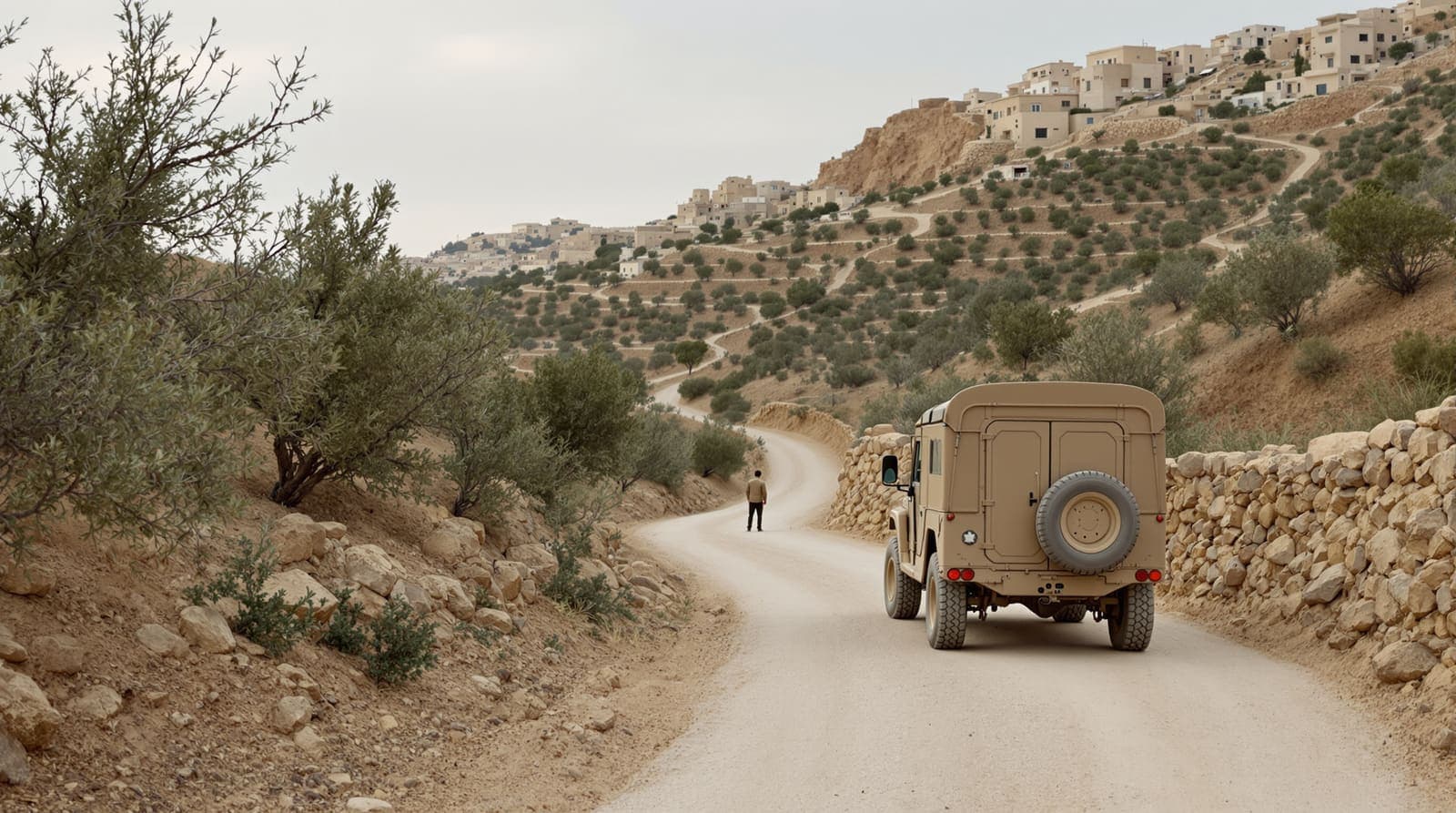
AI illustration, not a photo of the events.
Israeli soldiers detained two Israeli activists near the village of Yasuf in Samaria on Friday after what the military described as a violent confrontation in the area, according to a joint statement from the Israel Defense Forces (IDF) and the Israel Police. The statement said several Israelis declined to leave, at which point troops showed them an order designating the location a closed military zone and took two of them into custody.
Officers from the police station in Ariel were called to the scene and the pair were taken there for questioning, the statement said. Israeli broadcaster N12 reported, citing the continuation of the official announcement, that the questioning raised a further suspicion against one of the two: involvement in an incident roughly a week earlier in which he allegedly attacked IDF soldiers, refused to clear the area and resisted the instructions of the forces on the ground. Once questioning ended, both were brought before a court, which set restrictive conditions forbidding them from entering the closed military zone.
Who was detained
The joint military and police statement did not name the two men. It referred to them as Israelis, and N12's Hebrew-language account of the same statement described them as Israeli activists.
The Telegram news channel Abu Ali Express identified them as Yehonatan Pollak and Roman Levin, and reported that police took them in handcuffs to the station in Ariel. The channel called Pollak an anarchist and said he had previously spoken in favour of taking an active part alongside Palestinians in their campaign against Israeli settlements. It also said he had been photographed in the past bringing tyres to a point of friction near the village of Beita, alongside Palestinians. These identifications and characterisations come from that channel alone; neither the IDF, the police nor N12 confirmed the names.
Where this happened
Samaria is the name used in Israeli official and Hebrew usage for the northern part of the West Bank. The IDF organises its forces there by regional brigades, and N12 placed Yasuf within the army's Samaria Brigade area. Yasuf is a village; the reports do not describe its population or exactly where the confrontation took place in relation to it. Ariel, whose police station handled the case, is an Israeli city in the same region.
What a closed military zone order means
In the West Bank, the IDF military commander can declare a specific area a closed military zone for a set period. The order allows soldiers to bar civilians, Israeli or Palestinian, from entering or staying in that area, and refusing to leave once the order has been presented can lead to detention. That is the sequence the joint statement describes: the order was shown to the group after they declined to go, and two were then held.
The court conditions reported by N12 extend that restriction to the two men individually, prohibiting them from entering the area covered by the order.
A separate case reported the same day
The Times of Israel reported on the same day that Honenu, a legal aid group that represents Jews accused of nationalist violence against Palestinians, said two "security personnel" had been arrested in the northern West Bank. That case concerns a police and Shin Bet (Israel Security Agency) investigation into violence near Aqraba, close to Nablus, about a month earlier, and is partly under a gag order. Nothing in the reports links it to the Yasuf detentions, and it should not be read as the same event.
What the reports do not say
The official statement, as available, does not describe the violent confrontation itself: who took part, whether Palestinians, settlers or soldiers were involved, or whether anyone was hurt. The English version of the joint statement published on the IDF channel is cut off mid-sentence, so part of the official account may be missing from the material available to us.
The reports do not name the court that heard the case, say how long the restrictive conditions last, or state whether either man will face charges. They give no details of the incident a week earlier beyond the allegation against one suspect, and they do not say which of the two he is. No response from the two men or from any lawyer representing them appears in the reports.
Sources and further reading
Every link below was opened and checked when this page was written. Official statements are marked as such: they are the subject's own account, not an independent one.
- Officialidft.meIDF spokesperson
- Reportingkeshett.meN12
- Reportingkeshett.meN12
- Reportingabualiexpresst.meAbu Ali Express
- Reportingtoitimesofisrael.comThe Times of Israel
How we checked this
The detentions, the closed military zone order and the court conditions come from a joint IDF and Israel Police statement, published by the IDF and relayed by N12. The detainees' names and background are reported only by the Telegram channel Abu Ali Express and are unconfirmed by officials.
Our sourcing and corrections policy →The week from Israel, in one email
The stories that mattered, sourced and checked by the Israel.com newsroom. Free, weekly, one-click unsubscribe.
One list, unsubscribe in a click. See our privacy policy.
More in Courts & Crime
All courts & crime →
Latest
- Two-year-old girl critically injured after being hit by vehicle in Galilee
- France voices regret as Palestinian elections pushed to September 2027
- Driver, 71, lightly hurt after car hits a store at an Ashdod shopping center
- Woman who used a wheelchair dies in house fire in Golan town of Mas'ade
- Man, about 30, seriously burned in e-bike battery blast near Azriel
- IDF still searching for unidentified object from Lebanon as footage circulates