Museum · The Galilee
Nazareth Village
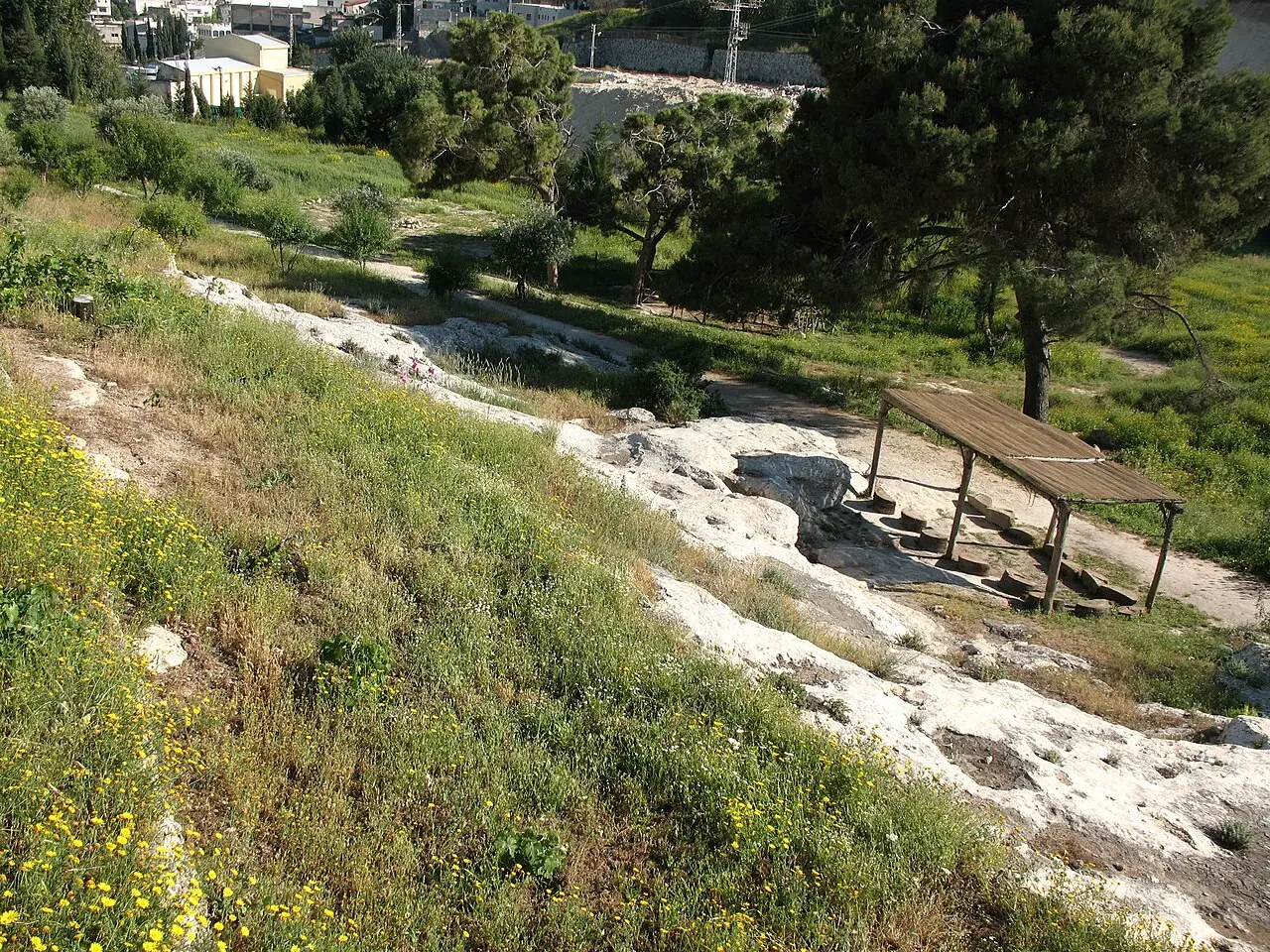
The hillside was quarried and farmed in the Late Hellenistic and Early Roman periods, and the wine press cut into its bedrock sits about 500 metres from the centre of the village Nazareth grew out of.
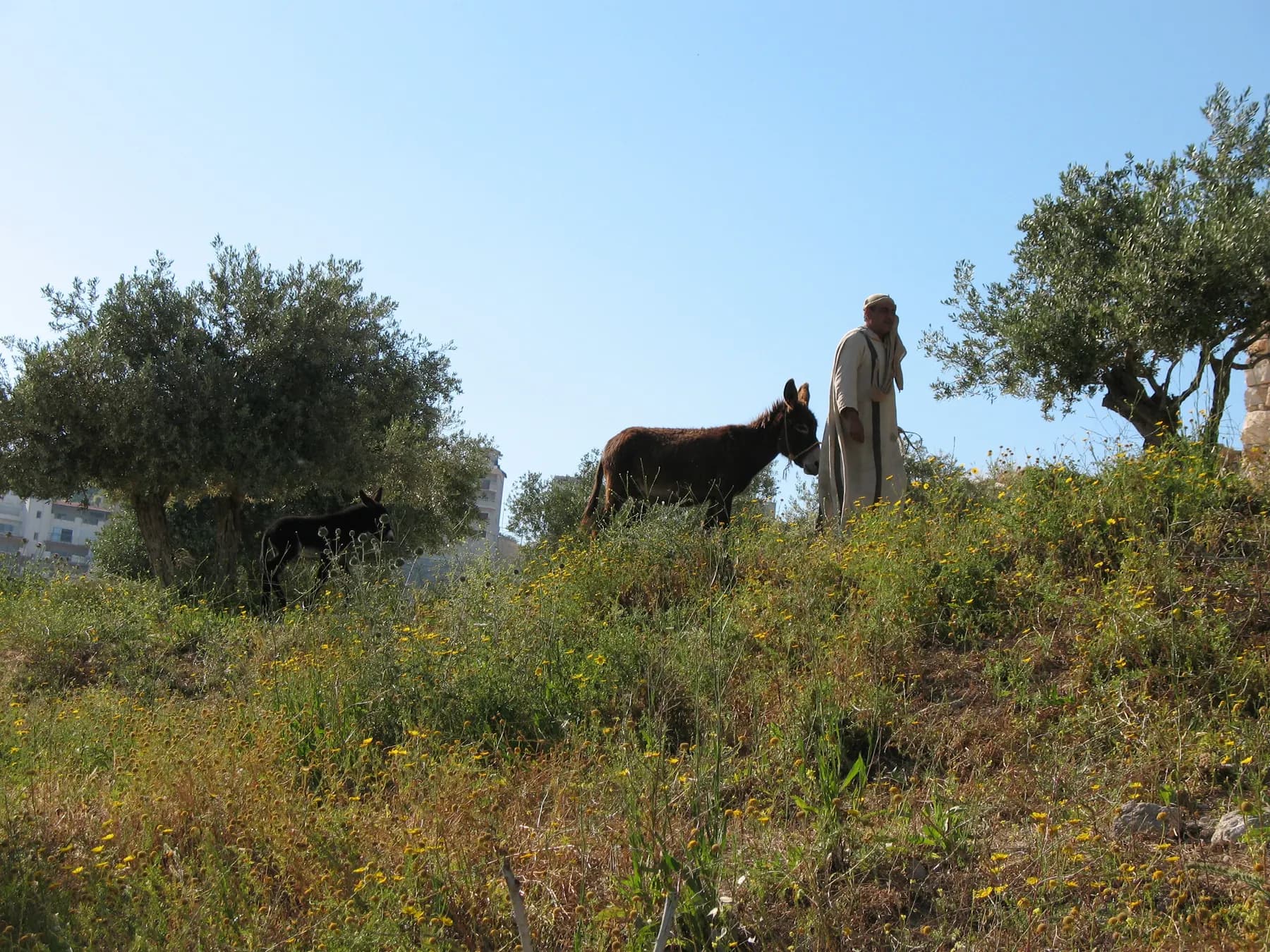
James Emery from Douglasville, United States / CC BY 2.0 · Wikimedia Commons
Opened
2000
after excavations that began around 1996 and ran through 2002, on the operator's own account
Adult admission
55 shekels
the 2026 tourist rate; the operator publishes a separate rate for locals at 47 shekels
Standard tour
1 hour 15 minutes
and there is no other way in: entry is by guided tour, prebooked, only
The plot
6 hectares
the operator's figure for the hillside, which sat inside the Nazareth Hospital grounds through the twentieth century
In short
- How long to give it
- about 90 minutes, of which the standard guided tour is 1 hour 15 minutes
- Open
- Monday to Friday, 09:00 to 17:00. Closed Saturday and Sunday
- Tourists, 2026
- Adults 55 shekels; seniors and university students with valid ID 47 shekels; children aged 5 to 12, 32 shekels; under 5 free; groups of 15 or more, 47 shekels per person
כפר נצרת
Nazareth Village is an open-air museum on a terraced hillside in the middle of Nazareth, about ten minutes' walk from the city centre, on which a first-century Galilean farming village has been rebuilt. It is run by the Nazareth Trust, the Christian medical charity that also runs the Nazareth Hospital next door, and entry is by guided tour, booked in advance, with nothing that resembles a walk-up ticket window.
The thing worth being clear about before arriving is which half of the site is old. The ground is genuinely ancient: a wine press hewn out of the bedrock, three excavated watchtowers, stone quarries, farm terraces and a spring-fed irrigation system cut from rock, all of it dated by the excavators to the Late Hellenistic and Early Roman periods. Everything standing with a roof on it is not. The houses, the synagogue, the mikveh and the olive presses are reconstructions, built from the materials and by the methods the project judged first-century after surveying twenty other excavations.
That split is the site's whole proposition and it is also where the arguments are. The excavation was published in full in 2007, and the following year the same journal printed a challenge to its dating alongside three replies. None of that appears on the tour, which presents the project's own reading, delivered by costumed interpreters who stay in character. Understanding what has been reconstructed, from what evidence, and what remains contested is the difference between an hour and a quarter of theatre and an hour and a quarter of archaeology.
The land
A farm that survived because a hospital owned the hill
The reason this piece of slope was never built over is institutional rather than archaeological. It lay inside the grounds of the Nazareth Hospital, and the hospital's owners were not developers. The Nazareth Trust dates itself to 1861, when Kaloost Vartan set up a medical clinic in the town; an eight-bed hospital and dispensary followed in 1867, and a larger eighteen-bed hospital after Mary Anne Vartan joined him in 1871. In 1904 the Edinburgh Medical Missionary Society granted funds to buy 25 acres on a hill west of the city for a new hospital, and building was finished in 1912. Nazareth Village's own history page puts the hospital's establishment at 1906, a date the Trust's timeline does not carry. The discrepancy is small and nobody has reconciled it, but the effect either way is the same: one owner held the hillside for a century and left it alone.
The operator puts the plot at 6 hectares and describes it as having remained untouched since New Testament times. That is the operator's phrasing. What the excavation actually established is narrower and more useful: the land was quarried and farmed in the Late Hellenistic to Early Roman period, roughly the second century BC to the first century AD, on a south-facing slope with good sun, good drainage and high-calcium soil suited to grapes.
The explanation the excavators give for what happened next is in the pottery, and it is the most quietly interesting claim on the site. About 80 per cent of the excavated sherds are Early Roman, mostly broken bowls, jugs and cooking pots of the kind villagers would have carried out to the fields. Byzantine, Arab and Crusader pottery is conspicuously scarce. The team reads that absence as intensive farming outside the village falling away after the first century, plausibly following the revolt against Rome that depopulated much of the Galilee, and possibly as Nazareth itself shifted from a farming village into a place of Christian pilgrimage.
Pottery from as far back as the Early Bronze Age also came up, which pushes human use of the slope back a long way before any of the periods the reconstruction is about. The operator mentions it and does not build anything on it.
Original
The things on this hillside that were here first
The excavation was carried out by the Jerusalem-based University of the Holy Land with Stephen Pfann as lead archaeologist, working with the archaeologist Ross Voss and the ceramicist Yehudah Rapuano. What they identified is a short list and the site publishes it plainly: three watchtowers, a wine press, stone quarries, farm terraces and a spring-fed irrigation system carved from bedrock.
The wine press is the reason the site exists. It is a small press hewn out of the bedrock, a type common enough in the Hellenistic and Early Roman periods that its interest is not rarity but position: a treading basin with a channel running to a pit where the juice collected, roughly 500 metres from the original village of Nazareth. The operator calls the surrounding land one of the last surviving first-century farmlands of Nazareth and says it is increasingly threatened by modern development. Wikipedia goes further and calls the press the area's last remaining first-century wine press, which is a stronger claim resting on a thinner base, and is worth treating as the looser of the two.
The irrigation system, excavated in 1997, is the feature most visitors walk over without registering. It is an upper water channel cut into the bedrock with smaller side channels branching off it for even distribution, and most of it would originally have been buried under terraced soil so that spring water seeped slowly downhill instead of evaporating. That detail changes what kind of farm this was: not a dry vineyard slope alone but a wet farm, capable of year-round vegetables and wheat.
The watchtowers are the rarest thing here. They were built by individual families to guard valuable plots, and in the lower Galilee most appear to have been solid structures used for watching crops and perhaps storing building stone, unlike the hollow towers with inner rooms for shelter and storage found further south in Judea and Samaria. The operator notes that Galilean examples are becoming hard to find. The quarries, mostly still unexcavated, produced blocks of consistent dimensions at 40 by 60 centimetres, which the reconstruction team found interlocked neatly as door jambs in walls 60 centimetres thick: a piece of evidence that fed straight back into how the replica houses were built.
- Wine press: bedrock treading basin with a run-off channel to a collecting pit, about 500 metres from the ancient village
- Three watchtowers: family-built, apparently solid rather than chambered, a form now scarce in the Galilee
- Spring-fed irrigation: an upper bedrock channel with distribution side channels, excavated in 1997
- Stone quarries: numerous, largely unexcavated, yielding blocks of 40 by 60 centimetres
- Farm terraces: restored to their original condition rather than invented, on the operator's account
Reconstruction
Everything with a roof on it is new
No building at Nazareth Village is ancient. The first-century houses, the synagogue, the standing watchtower, the mikveh and the olive presses are all reconstructions, put up using the building methods and materials the project's researchers judged to have been current in first-century Galilee. Only the terraces occupy a middle ground, having been restored on lines that were already there.
The method behind them is published, which is more than most reconstructions offer. The team conducted field surveys of twenty past and current excavations and spent two years working through ancient texts before building anything, rating sources by their historical, geographical and regional closeness to Nazareth and by how reliably they could be interpreted. The core group was Pfann on the literary side, Ross Voss as project archaeologist, Riyad Haddad as project architect and the late Mark Goodman as architectural reconstructionist, with a consulting list the site names by initial that includes R. Frankel, Y. Hirschfeld, A. Killabrew, E. Netzer, E. Myers, J. Strange and K. Bailey.
The comparanda are named too, and they are the check a sceptical visitor can actually apply. The reconstructions draw on Faqu'a, Gamla, Horvat Etri, Jotapata, Kiryat Sefer, Magdala, Masada, Mount Gerizim, Qumran and Sepphoris. The synagogue is the clearest case: it is modelled on the small synagogue found at Masada rather than on the far larger one at Capernaum, on the reasoning that first-century Nazareth held roughly 500 to 1,000 people and needed a building of that scale, with comparable ruins at Herodium, Gamla and Magdala. The operator's claim for it is worth quoting for what it concedes: that visitors see plenty of synagogue ruins in this country, and this is the only place they see what such ruins looked like standing.
That is the honest way to hold the whole site. It is an argument built at full size out of stone, and because the project says which excavations each element came from, the argument can be disagreed with rather than simply believed.
- Reconstructed: houses, synagogue, standing watchtower, mikveh, olive presses
- Restored: the farm terraces, along the lines already cut into the slope
- Original and in situ: wine press, excavated watchtower remains, quarries, irrigation channels
- Modelled on: Masada for the synagogue, with Gamla, Magdala, Jotapata, Qumran, Sepphoris and others behind the rest
The argument
The final report, the rebuttal and the replies printed beside it
The excavation was published as S. Pfann, R. Voss and Y. Rapuano, 'Surveys and Excavations at the Nazareth Village Farm (1997-2002): Final Report', in volume 25 of the Bulletin of the Anglo-Israel Archaeological Society, dated 2007. That is the document the site's dating rests on, and it is a normal peer-reviewed excavation report in a normal journal rather than a brochure.
The following volume, 26, printed a challenge to it. It carried R. Salm's response to the final report, with replies to Salm from S. J. Pfann, Y. Rapuano and K. Dark; Rapuano's own amendment to the Nazareth Village Farm project pottery; and Dark's review of Salm's book The Myth of Nazareth: The Invented Town of Jesus. Salm's position, argued at length in that book, is that the Early Roman dating of material around Nazareth does not hold. The journal published the response and all three replies together in one issue.
This page does not adjudicate that. What is worth a reader knowing is the shape of it: the excavators answered in print, a third archaeologist working independently on Roman-period and Byzantine Nazareth answered as well, and the ceramicist issued an amendment to his own pottery report in the same volume. An excavation that revises part of its own ceramic data in public is behaving better than one that does not, and the dispute is more specific and more technical than the versions of it that circulate online.
None of this surfaces on the tour, which presents the project's own reading without qualification. Anyone who wants the disagreement has to bring it with them.
The visit
Guided only, prebooked only, an hour and a quarter long
There is no unaccompanied wandering here. The operator states that entry is by guided tour and arranged by booking ahead of time only, and that individual travellers usually have two slots a day, at 10:45 and 13:45. The standard tour runs 1 hour 15 minutes on foot across a terraced hillside. Groups book through the operator's booking form or by telephone or email. Turning up hopefully at the gate is the commonest way to be turned away.
What happens on it is living-history interpretation rather than a museum walk. Costumed villagers work through the daily routines of a first-century farm, and the operator names two of them: Joseph the carpenter and Hannah the weaver. There are animals and crops, and the guide retells the parables in the landscape they came out of, which is the specific thing this site can do that a display case cannot. It is an explicitly Christian project run by a Christian medical charity, and it does not present itself as anything else. Nakhle Bishara, who first proposed it, said he wanted a place where visitors saw the ancient stones come to life rather than only dusty stones, and that is the register the tour is pitched in.
A meal can be added and is worth knowing about in advance because it cannot be arranged on the spot for most people. The traditional first-century meal is 80 shekels a head, offered to groups of fifteen or more who have also booked the tour, and served between 12:00 and 14:00. Smaller parties are sometimes fitted in on days when meals are already being served, and the operator asks two working days to confirm a booking.
Two practical constraints catch people out. Standard tours are led in English; Hebrew, Arabic, Russian, French, Italian, Romanian, Finnish, Portuguese, Spanish and German are available only on request, only for groups of fifteen or more, and the operator will not guarantee them. And the summer is genuinely reduced: in July and August tours run less often, the operator reserves the right to change the daily schedule and to close early in extreme heat, and the whole site shuts from 20 to 30 August 2026 for on-site maintenance.
What to look for
Things not to walk past at Nazareth Village
The details that repay knowing about before you are standing in front of them.
The bedrock wine press
A treading basin cut straight into the rock, with a channel running down to a pit where the juice collected. It is the find the whole project was built around, and it sits roughly 500 metres from the centre of the ancient village.
The irrigation channels
An upper channel carved into bedrock with smaller side channels branching from it, excavated in 1997 and originally buried under terraced soil so water seeped rather than evaporated. It is the evidence that this was a wet farm growing wheat and vegetables year-round, not only a vineyard.
The excavated watchtower
Family-built and, in the lower Galilee, apparently solid rather than chambered, which distinguishes it from the towers with inner rooms found in Judea and Samaria. The operator notes that Galilean survivors are getting rare.
The synagogue, modelled on Masada
Small on purpose: the reconstruction assumes a village of roughly 500 to 1,000 people and follows Masada rather than Capernaum. It is one of very few places to stand inside a first-century synagogue with its roof on.
The quarry blocks at 40 by 60 centimetres
Consistent dimensions turned up across the site's largely unexcavated quarries, and the team found they interlock as door jambs in walls 60 centimetres thick. It is a rare case of an excavated measurement feeding directly into how the replicas were built.
The long view
Nazareth Village, in order
2nd century BC to 1st century AD
The hillside is quarried and farmed. About 80 per cent of the pottery later excavated here dates from this Early Roman span.
After the first century AD
Byzantine, Arab and Crusader pottery is conspicuously scarce, which the excavators read as intensive farming outside Nazareth falling away.
1861
Kaloost Vartan sets up a medical clinic in Nazareth. The Nazareth Trust dates its founding to this year.
1867
An eight-bed hospital and dispensary open, enlarged to eighteen beds after Mary Anne Vartan joins in 1871.
1904
The Edinburgh Medical Missionary Society funds the purchase of 25 acres on a hill west of the city for a new hospital. The building is completed in 1912. Nazareth Village's own history page dates the hospital to 1906.
1997
Excavation begins on the hospital's hillside, including the spring-fed irrigation system. The University of the Holy Land leads the work under Stephen Pfann.
1997 to 2002
Surveys and excavations by Pfann, Voss and Rapuano, alongside field surveys of twenty other excavations and two years of work on ancient texts.
2000
Nazareth Village opens, on the vision of Nakhle Bishara and under its first director, D. Michael Hostetler, with funding from Sherry Herschend and the Miracle of Nazareth Foundation among others.
2007
The final report is published in the Bulletin of the Anglo-Israel Archaeological Society, volume 25.
2008
Volume 26 prints R. Salm's response to the report with replies from Pfann, Rapuano and Dark, plus Rapuano's amendment to the pottery report and Dark's review of Salm's book.
2015
Nazareth Village moves fully under the jurisdiction of the Nazareth Trust.
2026
The Trust is fundraising for a Discovery Center on unused village land, with a lecture hall, an archaeological exhibit hall, expanded reception, shop and kitchen, at an estimated 15 million dollars.
Practical
Visiting Nazareth Village
Where
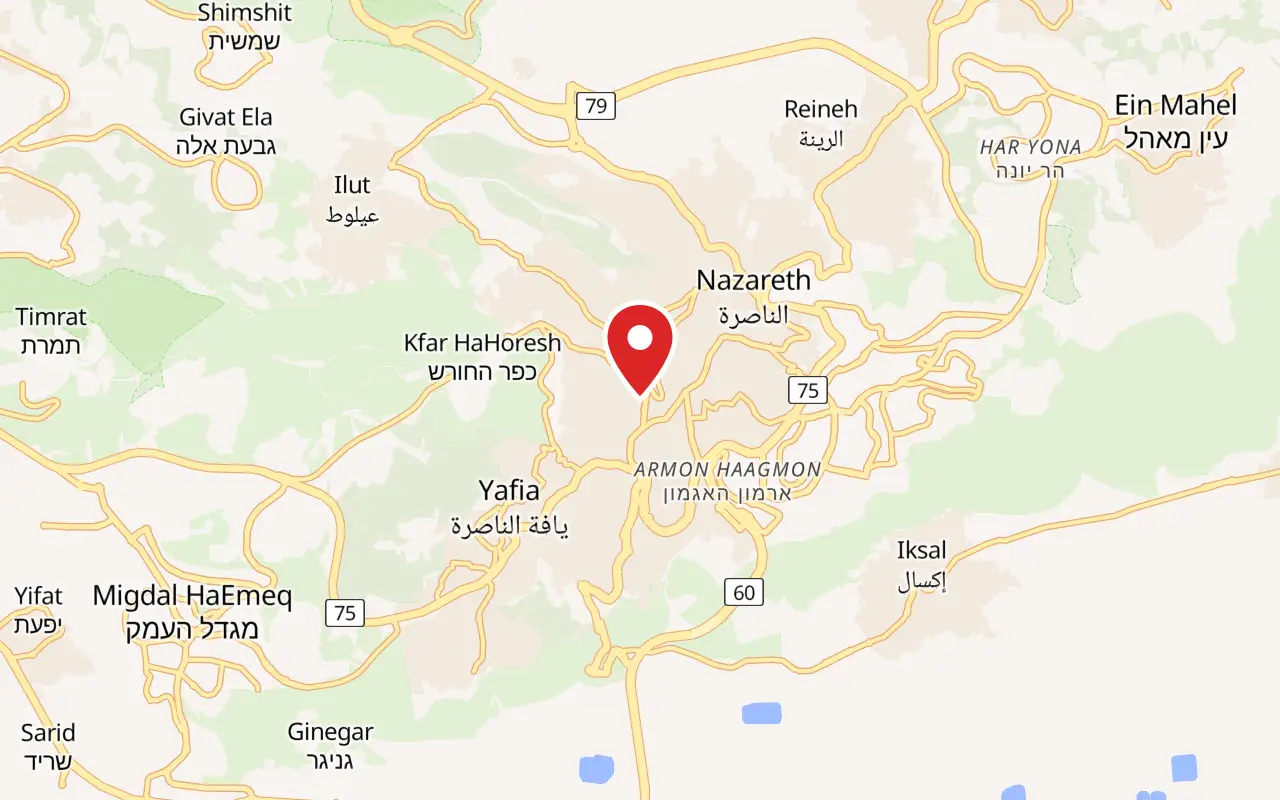
5079 St., Nazareth, about ten minutes on foot from the city centre
What ticket you need
This is not inside a larger ticketed park and needs no other ticket. It does sit on the hillside of the Nazareth Hospital compound, and the village has been fully under the Nazareth Trust, the charity that runs the hospital, since 2015. The Basilica of the Annunciation is a short walk away and is free, so the two are easily done in a morning with only one ticket bought.
Opening hours
- Open
- Monday to Friday, 09:00 to 17:00. Closed Saturday and Sundaysource
- Last tour of the day
- Starts at 15:30source
- Tours for individual travellers
- Usually two a day, at 10:45 and 13:45. Booking ahead is strongly recommended to secure a placesource
- July and August
- Tours run less frequently, the operator reserves the right to change the daily schedule because of the heat, and may close early in extreme conditionssource
- Closed for on-site maintenance
- 20 to 30 August 2026source
- Other published 2026 closures
- 10 April (Eastern Good Friday), 12 and 13 April (Eastern Easter), 22 April (Independence Day), 25 December (Christmas), 1 January 2027source
Admission
- Tourists, 2026
- Adults 55 shekels; seniors and university students with valid ID 47 shekels; children aged 5 to 12, 32 shekels; under 5 free; groups of 15 or more, 47 shekels per personsource
- Locals, 2026
- Adults 47 shekels; seniors and university students with valid ID 42 shekels; children aged 5 to 12, 25 shekels; under 5 free; groups of 15 or more, 42 shekels per personsource
- Traditional first-century meal
- 80 shekels per person, added to a booked tour. Offered to groups of 15 or more, served between 12:00 and 14:00, with two working days asked for confirmationsource
Access
Not accessible. The operator states plainly that because the village is an authentic first-century outdoor setting it is not wheelchair or scooter accessible, and that is not a formality: the route is a walking tour across a terraced hillside on uneven and unpaved ground. The operator also states that pets of any kind are not allowed on the tour, service animals included, which is unusual and worth checking directly with the village if it affects a visit.
On site
- Guided tours in English
- Group tours in ten other languages, on request
- Gift shop
- Coffee shop area
- Toilets
- Biblical meals for groups
- Working farm with animals
- Bus parking
Booking
Prebooking is mandatory, not advisory. The operator states that entry is by guided tour and arranged by booking ahead of time only. Groups book through the booking form on the site, or by telephone on +972 4 645 6042 or by email to the village's booking address. Individual travellers should aim at one of the two daily slots, 10:45 and 13:45, and book rather than arrive.
Hours and prices are given as the operator publishes them and change without much notice, particularly around Shabbat and the festivals. Check the operator's own page before you travel for this.
Official page at nazarethvillage.com →What people wish they had known
- Book before travelling. Entry is by guided tour and by prior booking only, and there are usually just two daily tours for people not arriving with a group, at 10:45 and 13:45. Arriving at the gate without a reservation is the standard mistake here.
- Check the day of the week, not just the date. This site closes Saturday and Sunday, which inverts the pattern most visitors have learned elsewhere in the country, where Saturday is the closure and Sunday a working day.
- Late August 2026 is out. The village is shut from 20 to 30 August for on-site maintenance, and in July and August generally the tours are less frequent and may be cut short or cancelled in extreme heat.
- Anyone using a wheelchair or a mobility scooter cannot do this tour, on the operator's own statement, and the ground is a terraced hillside rather than a museum floor. The operator also excludes pets of every kind from the tour, service animals included.
- Do not assume a tour in your own language. Standard tours are in English. The ten other languages the village lists are available on request only, only for groups of fifteen or more, and are not guaranteed.
- Sort the meal out in advance. The first-century meal is 80 shekels a head, is normally for groups of fifteen or more who have also booked the tour, is served only between 12:00 and 14:00, and needs two working days to confirm.
The figures
Nazareth Village by the numbers
Each figure carries the year it belongs to and links the source it came from.
| Measure | Figure | As of | Source |
|---|---|---|---|
| Area of the site | 6 hectares | 2026 | nazarethvillage.com |
| Distance of the wine press from the original village | about 500 metres | 2026 | nazarethvillage.com |
| Watchtowers identified on the site | three | 2026 | nazarethvillage.com |
| Share of excavated pottery dating to the Early Roman period | about 80 per cent | 2026 | nazarethvillage.com |
| Consistent quarry block dimensions | 40 by 60 centimetres | 2026 | nazarethvillage.com |
| Excavations field-surveyed before the reconstruction | 20 | 2026 | nazarethvillage.com |
| Annual visitors, on the operator's history page | more than 100,000, from over 150 nations | 2026 | nazarethvillage.com |
| Annual visitors, on the Nazareth Trust's page for the same site | nearly 100,000, from over 110 countries | 2026 | nazarethtrust.org |
While you are here
The rest of The Galilee
Everything else in this destination with a page of its own.
כובש המלפפונים / CC BY-SA 4.0 · Wikimedia Commons
Religious site
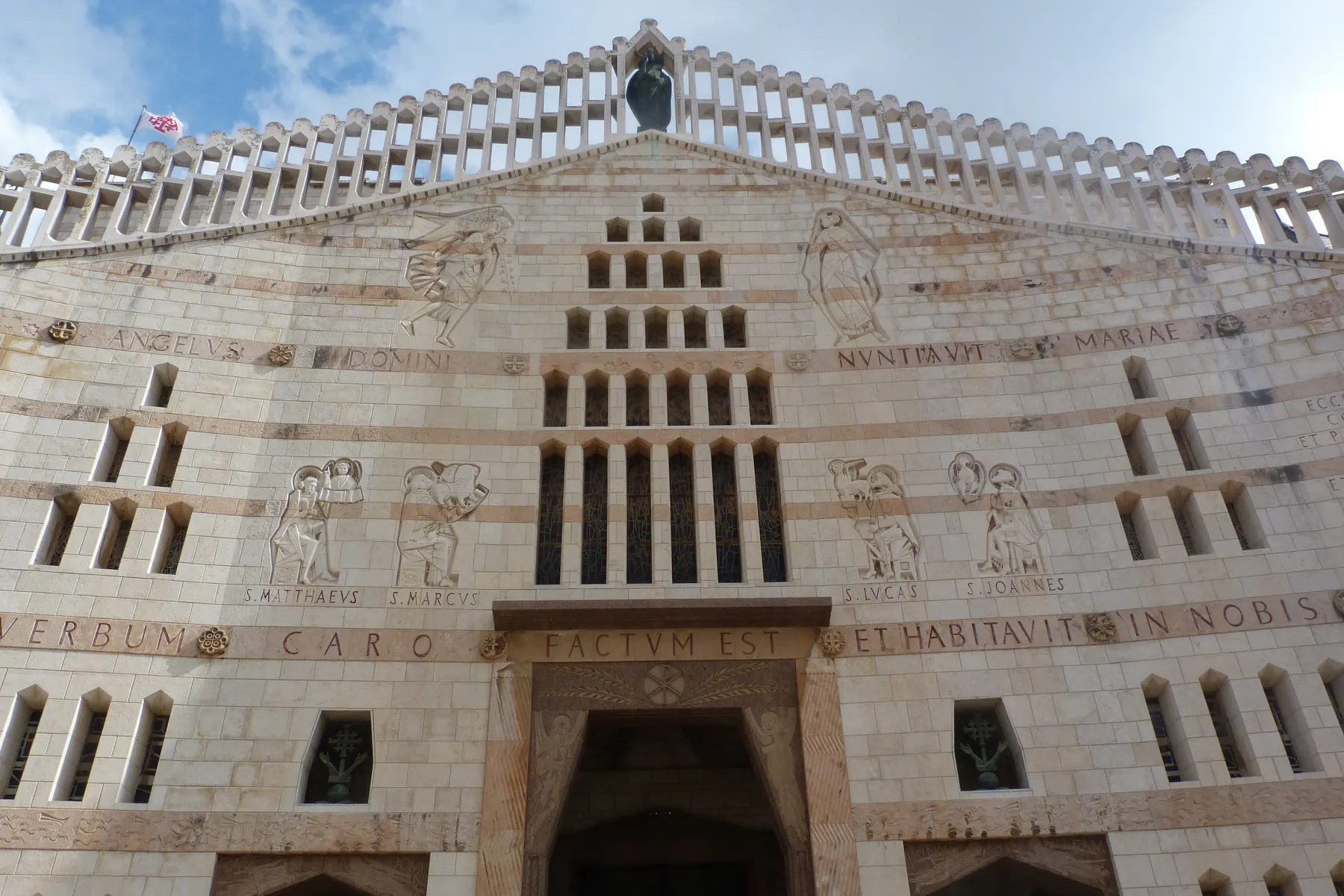
Basilica of the Annunciation
The Custody of the Holy Land dropped Antonio Barluzzi's design for this church and built Giovanni Muzio's instead: two churches stacked over one rock-cut cave, with the excavated village of Nazareth left open in the floor between them.
Yair Haklai / CC BY-SA 4.0 · Wikimedia Commons
Archaeological site
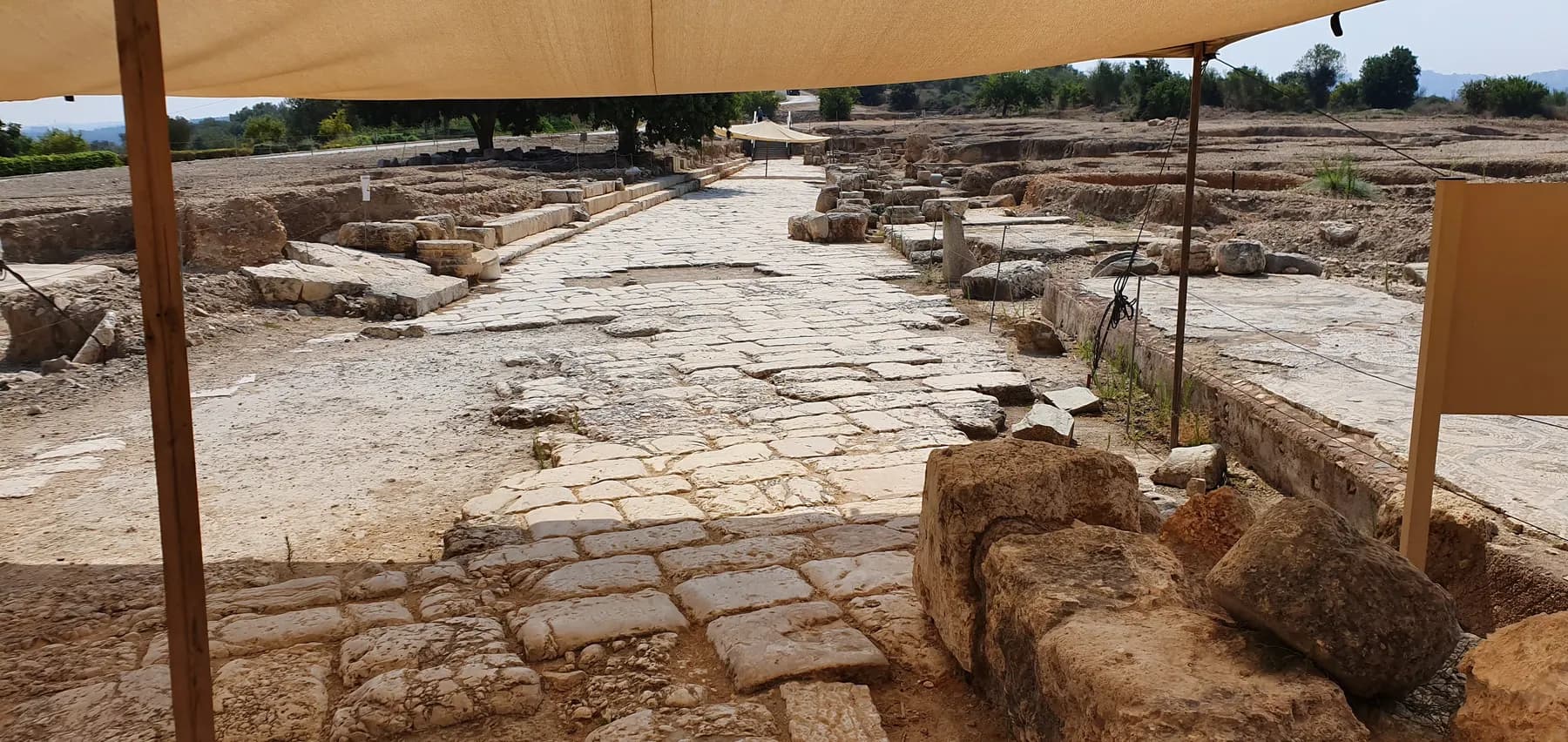
Zippori National Park
The Roman capital of the Galilee, where the dining room of a third-century mansion holds the face known as the Mona Lisa of the Galilee and a rock-cut reservoir 260 metres long runs under the hill to the east.
עמוס גל / CC BY-SA 4.0 · Wikimedia Commons
Religious site
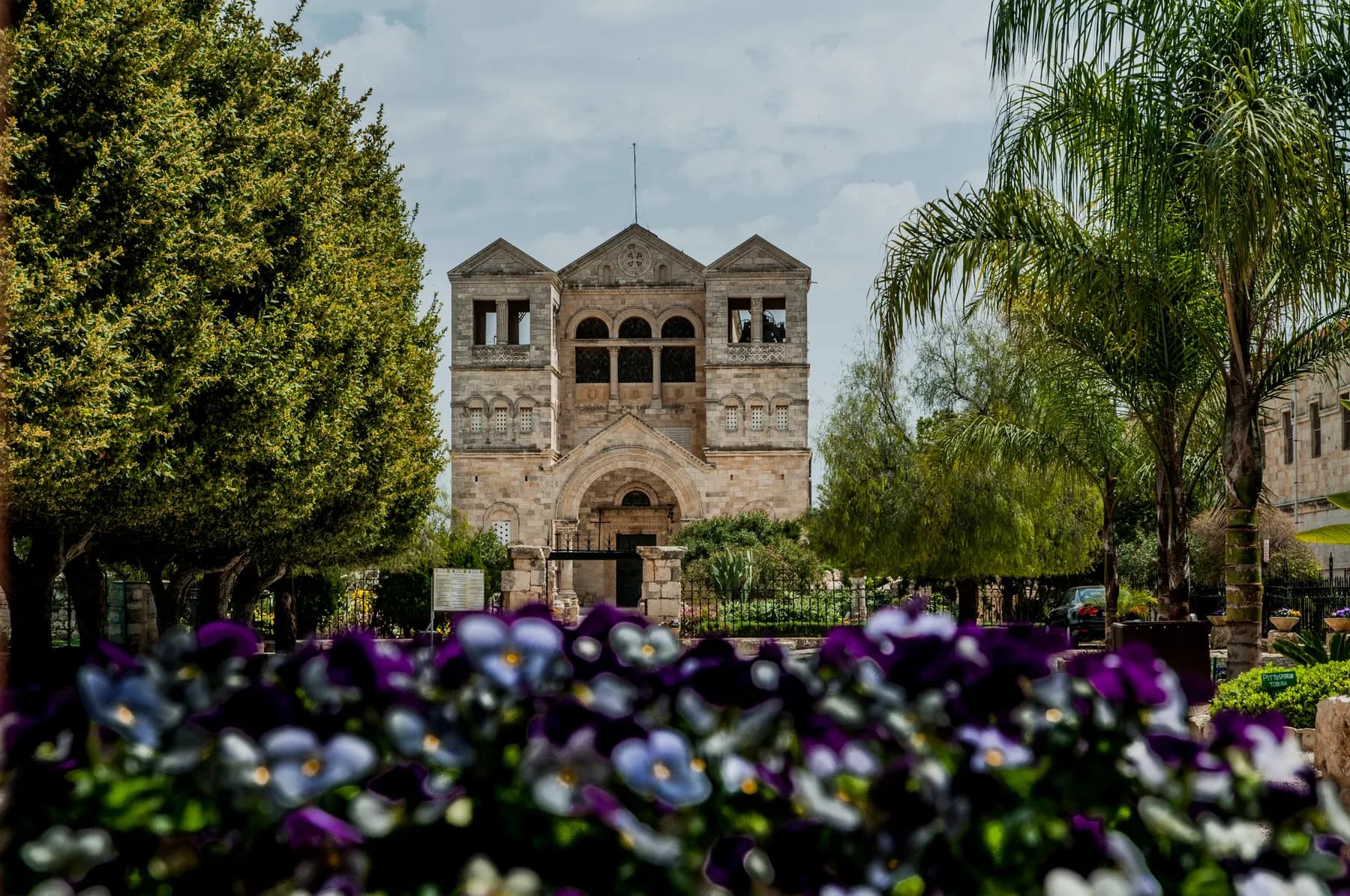
Mount Tabor
Antonio Barluzzi's first church in the Holy Land stands on this dome of a hill above the Jezreel Valley, built between 1921 and 1924 over a Byzantine apse and the ruins of a Benedictine abbey that Baibars levelled in 1263.
Sources and further reading
Every link below was opened and checked when this page was written. Official statements are marked as such: they are the subject's own account, not an independent one.
- OfficialNazareth Villagenazarethvillage.comOpening Times
Monday to Friday 09:00 to 17:00, last tour 15:30, the two daily slots for individual travellers at 10:45 and 13:45, the reduced July and August schedule, and the dated 2026 closures including 20 to 30 August for maintenance
- OfficialNazareth Villagenazarethvillage.comTours and Prices
The 2026 admission tables in shekels for tourists and for locals, the 1 hour 15 minute standard tour, the guided-and-prebooked-only rule, the statement that the site is not wheelchair or scooter accessible, the exclusion of pets including service animals, and the language list
- OfficialNazareth Villagenazarethvillage.comBiblical Meals
The traditional first-century meal at 80 shekels per person, the group minimum of fifteen, the 12:00 to 14:00 service window and the two working days asked for confirmation
- OfficialNazareth Villagenazarethvillage.comOur History
The 6-hectare plot, the hospital grounds, the 2,000-year-old bedrock wine press, the Early Bronze Age pottery, the twenty excavations surveyed and two years on ancient texts, the opening in 2000, and the visitor figure of more than 100,000 from over 150 nations
- OfficialNazareth Villagenazarethvillage.comSite Archaeology
University of the Holy Land excavation under Stephen Pfann, the Late Hellenistic to Early Roman dating, and the list of features: three watchtowers, a wine press, stone quarries, farm terraces and a spring-fed irrigation system
- OfficialNazareth Villagenazarethvillage.comSite Archaeology: Pottery
About 80 per cent of excavated pottery Early Roman, the scarcity of Byzantine, Arab and Crusader material, and the excavators' reading of decline after the revolt against Rome
- OfficialNazareth Villagenazarethvillage.comSite Archaeology: Quarries
Numerous largely unexcavated quarries, blocks of consistent 40 by 60 centimetre dimensions, and their use as interlocking door jambs in 60 centimetre walls
- OfficialNazareth Villagenazarethvillage.comSite Archaeology: Wine Press and Watchtowers
The bedrock wine press about 500 metres from the original village, and on the linked watchtowers page Ross Voss's excavation and the observation that lower Galilean towers appear solid rather than chambered
- OfficialNazareth Villagenazarethvillage.comThe Synagogue
The reconstruction modelled on the synagogue at Masada rather than Capernaum, sized for a small community, with Herodium, Gamla and Magdala cited as comparable
- OfficialNazareth Villagenazarethvillage.comArchaeological Survey
The ten comparative sites the reconstructions draw on: Faqu'a, Gamla, Horvat Etri, Jotapata, Kiryat Sefer, Magdala, Masada, Mount Gerizim, Qumran and Sepphoris
- OfficialThe Nazareth Trustnazarethtrust.orgOur History
Kaloost Vartan's clinic in 1861, the eight-bed hospital of 1867, the 1904 purchase of 25 acres funded by the Edinburgh Medical Missionary Society, completion in 1912, and Nazareth Village moving fully under the Trust in 2015
- ReportingHistory News Networkhistorynewsnetwork.orgNazareth Village in Israel recreates world of Jesus
Independent account of Stephen Pfann spotting the ancient wine press while visiting the Nazareth Hospital, and of the project's scholarly team and intent
- ReferenceAnglo-Israel Archaeological Societyaias.org.ukBulletin of the Anglo-Israel Archaeological Society, volume 25 (2007)
Contents listing S. Pfann, R. Voss and Y. Rapuano, 'Surveys and Excavations at the Nazareth Village Farm (1997-2002): Final Report'
- ReferenceAnglo-Israel Archaeological Societyaias.org.ukBulletin of the Anglo-Israel Archaeological Society, volume 26 (2008)
Contents listing R. Salm's response to the final report with replies from S. J. Pfann, Y. Rapuano and K. Dark, Rapuano's pottery amendment, and Dark's review of Salm's The Myth of Nazareth
Nazareth Village: common questions
What are the opening hours?+
Monday to Friday, 09:00 to 17:00, with the last tour starting at 15:30, on the operator's published times. It is closed on Saturday and Sunday, which is the opposite of the usual Israeli pattern. In July and August tours run less often and the operator reserves the right to change the schedule or close early in extreme heat. Dated closures for 2026 include 10 April, 12 and 13 April, 22 April, 20 to 30 August and 25 December.
How much does it cost?+
For tourists in 2026: 55 shekels for adults, 47 shekels for seniors and university students with valid ID, 32 shekels for children aged 5 to 12, and free under 5, with groups of 15 or more at 47 shekels a head. The operator publishes a separate and lower set of prices for locals, starting at 47 shekels for adults. A traditional first-century meal can be added at 80 shekels per person.
Can you just turn up?+
No. The operator states that entry is by guided tour and arranged by booking ahead of time only, and repeats it on both the opening times and the prices pages. Individual travellers are fitted into two daily tours, usually at 10:45 and 13:45, and are strongly advised to book to secure a place. Groups book through the village's booking form, or by telephone or email.
How long does it take?+
The standard guided tour is 1 hour 15 minutes, and about 90 minutes is a realistic figure once the shop and the walk in and out are counted. Adding a meal pushes it past two hours, since meals are served between 12:00 and 14:00 and are booked alongside the tour. There is no way to extend the visit by wandering afterwards, because the site is not open for unguided visiting.
Is any of it actually ancient, or is it all a replica?+
Both, and the line between them is clean. The ground is genuinely ancient: a wine press cut into the bedrock, three excavated watchtowers, stone quarries, farm terraces and a spring-fed irrigation system, all dated by the excavators to the Late Hellenistic and Early Roman periods. Everything standing is reconstruction, including the houses, the synagogue, the mikveh and the olive presses, built with materials and methods the project judged first-century after surveying twenty other excavations.
Is it wheelchair accessible?+
No. The operator states that because the village is an authentic first-century outdoor setting it is not wheelchair or scooter accessible. The tour is a walking route across a terraced hillside on uneven, largely unpaved ground, with slopes throughout. Anyone with limited mobility should contact the village directly before booking rather than assuming a workaround exists.
Is the archaeology here disputed?+
Part of it is, in print. The excavation was published as the final report on the Nazareth Village Farm in volume 25 of the Bulletin of the Anglo-Israel Archaeological Society in 2007. The next volume carried R. Salm's response challenging it, together with replies from Pfann, Rapuano and Dark, an amendment by Rapuano to his own pottery report, and Dark's review of Salm's book. The disagreement is specific and technical, it is not settled on this page, and none of it comes up on the tour.
Is it worth it if you are not religious?+
It depends on what interests you. The site is run by a Christian medical charity, the guiding retells the parables and the framing is devotional, so a visitor who wants archaeology with no theology attached will be doing some filtering. The material underneath is real all the same: a wet farm with bedrock irrigation channels, a family watchtower, quarries whose block sizes shaped the reconstruction, and a standing synagogue interior modelled on Masada that very few places anywhere can show.
Can it be combined with the Basilica of the Annunciation?+
Easily, and most visitors do. The village sits about ten minutes' walk from the centre of Nazareth and a short walk from the basilica compound, which is free and keeps much longer hours. The usual order is the village first, because it runs on fixed tour slots and the basilica does not, then the churches and the old market afterwards.
How busy does it get?+
Busy enough that the tour slots matter more than the crowds. The operator's history page claims more than 100,000 visitors a year from over 150 nations, while the Nazareth Trust's own page for the same site says nearly 100,000 from over 110 countries, so the figures are approximate even in-house. Because everyone moves in guided groups the site never feels swarmed, but the two individual slots each day fill, which is the real constraint.