
Haifa · Best time to visit
The best time to visit Haifa
The Bahai Gardens open daily from 09:00 to 17:00 and cost nothing, but the operator closes them on nine Bahai holy days, on Yom Kippur, and temporarily whenever it rains.
Warmest sea
30.5°C
Mean daily maximum in August off the city, in 2023 and 2024, as far back as the sea record goes
Wettest month
180 mm
January, falling across about fourteen days with a millimetre or more
Gardens shut
10 days
Nine Bahai holy days plus Yom Kippur in 2026, on top of temporary closures in rain
Summer rain
10 mm
June to September combined, across fewer than four days with a millimetre or more
Haifa is not a resort and it does not have a season in the way a beach town does. It is a working city arranged vertically on the side of a mountain, and the question of when to come is mostly a question of when it is comfortable to climb it. The Bahai terraces fall a kilometre down the northern slope of Mount Carmel with roughly 1,700 steps in them, by the operator's own count, and the guided descent alone covers 750 stairs on pebbled paths. In July that is a different proposition from the same walk in April, even though the thermometer between the two months moves less than eight degrees.
The other half of the answer is not weather at all. Haifa is the one Israeli city where a visitor has to check two religious calendars rather than one. The Jewish festival year does here what it does everywhere: Passover and Sukkot fill the country and push hotel rates to their annual peak, and Yom Kippur shuts it, airport included. On top of that the Bahai Gardens, which are why most people come and which cost nothing to enter, close on nine Bahai holy days scattered from March to November that appear on no Israeli calendar, and the page that publishes the hours adds that they may also close temporarily in rainy weather.
What follows takes the two windows that work, then both calendars, then the hazard visitors here get wrong. It is not the summer heat. It is the fortnight either side of the end of November, when the Carmel has gone five or six months without rain and when both of the fires that shaped this city began.
The year
What the weather actually does in Haifa
Monthly normals computed from daily reanalysis at this destination's own coordinates, 2015 to 2024. Not a forecast and not an impression.
Month by month
When to go to Haifa
January
Mixed16.4°C by day, 11°C at night, sea 19.8°C, 13.9 wet days
The wettest month of the year, and the one when the thing most people come for is least reliable: the Bahai World Centre says the gardens may close temporarily in rainy weather, and January brings 180 mm across about fourteen days with a millimetre or more. What that buys is an empty city, the lowest hotel rates of the year on the Carmel ridge, and a mountain that is green rather than brown. Hiking on the Carmel is at its best between systems, and Wadi Nisnas and the museums do not care what the sky is doing. Nobody is swimming.
February
Mixed17.2°C by day, 10.9°C at night, sea 18°C, 10.1 wet days
The sea reaches its coldest of the year now, colder than the air above it, because the Mediterranean lags the land by roughly two months in both directions. Rain is easing but has not finished, so the terraces remain a morning that may have to be moved. Israeli crowds are thin outside weekends and no festival is in the way. A clear February day on the steps with the bay laid out below and nobody else on them is one of the better arguments for coming out of season.
March
Good18.9°C by day, 12.6°C at night, sea 18.5°C, 8.9 wet days
Rainfall drops by nearly half from February and the Carmel is at its greenest before the summer dries it out, which makes this the best hiking month above the city. Two dates to check. Purim is a school holiday rather than a shutdown and fills the city midweek, and Naw-Ruz on 21 March closes the Bahai Gardens outright. The first sharav days of the year can arrive now, hot and dry for no more than about a day before the weather cools again.
April
Best21.6°C by day, 14.8°C at night, sea 20.6°C, 5.2 wet days
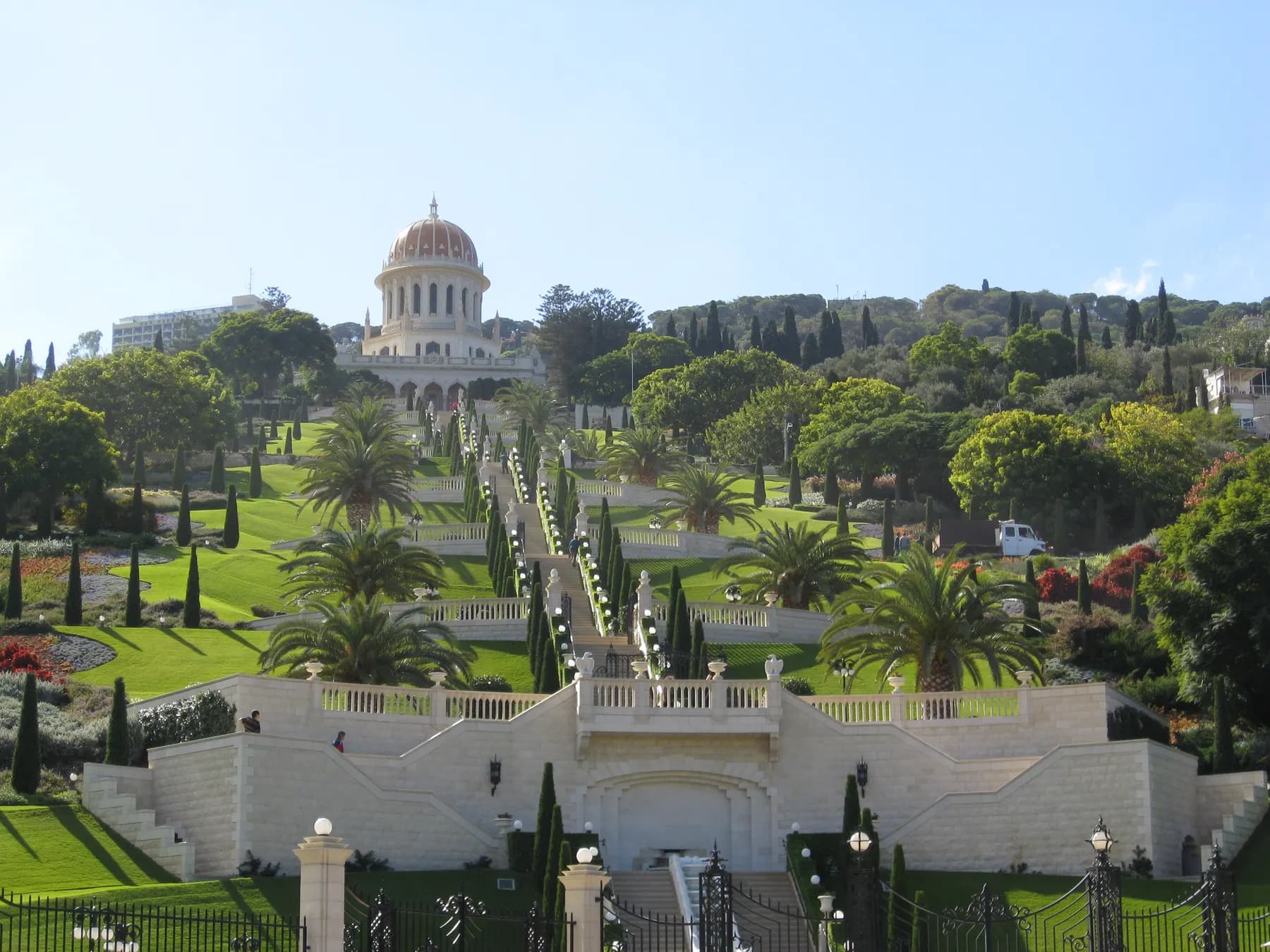
The best month in an ordinary year and the one most easily wrecked by the calendar. Rain is effectively over, the sea is still cold enough to hold the city down, and late afternoon light on a west-facing mountain is the reason to walk the terraces downhill rather than up. Passover fills every hotel in the country and pushes rates to their annual peak; in 2027 it runs 21 to 29 April. In 2026 the gardens also close on 21 and 29 April for the first and ninth days of Ridvan, which is the same span, so check both lists before booking.
Chris Yunker from St. Louis, United States / CC BY-SA 2.0 · Wikimedia Commons
May
Best24.7°C by day, 18.1°C at night, sea 22.8°C, 3.1 wet days
Dry, warm, long, and not yet humid enough to punish a staircase, with the sea past 22°C and climbing. This is peak sharav season, and the meteorological service's own illustration of it is Haifa's problem exactly: the bathing season can open with the water at about 18°C while a sharav day pushes the air over 30°C. Three closure dates in 2026: 2 May for the twelfth day of Ridvan, 24 May for the Declaration of the Bab and 29 May for the Ascension of Baha'u'llah. Around them, the cleanest month on the mountain.
June
Good26.8°C by day, 21.2°C at night, sea 26.6°C, 1.5 wet days
The first fortnight is May with warmer water and longer days, and the terraces are still comfortable at nine in the morning. Then two things change. Israeli schools break up at the end of the month and the beaches below Mount Carmel fill, and the humidity Haifa carries all year starts to matter on an open slope. Rain has stopped: June to September together bring about 10 mm across fewer than four wet days, which is the clock that runs down to the autumn fire season.
July
Hard going29.2°C by day, 24°C at night, sea 29.5°C, effectively no rain
Genuinely difficult on the terraces and pleasant almost nowhere except the water. The mean daily high is 29.2°C, the mean daily low sits at 24.0°C, the humidity is high all year in this city, and the guided descent is 750 stairs on an open slope with little shade. Every school in the country is out. The gardens close on 10 July in 2026 for the Martyrdom of the Bab. If July is the only option, be at the gate for the 09:00 opening and be finished with the mountain by noon.
August
Hard going29.9°C by day, 24.9°C at night, sea 30.5°C, effectively no rain
The hottest and most humid month, with the sea at 30.5°C and rainfall that rounds to nothing, and in 2026 it is worse than usual: the Shrine of the Bab and the inner gardens are closed to the public from 9 August to 5 September, so the single thing most visitors travel for is unavailable for most of the month. The outer gardens keep their 09:00 to 17:00 day and the balcony at Yefe Nof still gives the whole sightline without the descent. The country is on holiday and the Carmel hotels are full. Swim, eat late, and treat the mountain as an early-morning errand.
זאב שטיין / CC BY 2.5 · Wikimedia Commons
September
Mixed29.2°C by day, 24°C at night, sea 29.4°C, 1 wet day
The first week is August in everything but name, and the shrine stays closed to the 5th in 2026. Then the festival calendar takes the month over: Rosh Hashanah from the evening of the 11th, Yom Kippur from the evening of the 20th, which closes the country, the airport and the gardens, and Sukkot from the evening of the 25th. Sukkot in Haifa also means the film festival, running since 1983 with special screenings of about 170 new films across seven theatres, so accommodation is answering two events at once. The sea is at its warmest of the year.
October
Best27.2°C by day, 21.1°C at night, sea 27.1°C, 4.3 wet days
The other clear window, once the holidays clear out of it. Sukkot runs to 2 October in 2026 and Simchat Torah to the 4th; from about the 8th the city empties, the mean daily high falls back to 27.2°C and rainfall is still only 18 mm across four days. The qualification is fire rather than weather: this is the driest the Carmel gets, five months after the last real rain, and the ridge is at its most vulnerable. Book the second half of the month.
November
Good23.4°C by day, 16.9°C at night, sea 23.8°C, 7.4 wet days
Rain returns gently, at 59 mm across about seven days, and the mountain is comfortable to walk again with the summer crowds long gone. Two things to know. The gardens close on 10 and 11 November in 2026 for the birthdays of the Bab and of Baha'u'llah. And this is the peak of the fire season: the fires of 22 to 27 November 2016 forced about 75,000 people, roughly a quarter of Haifa, out of eleven neighbourhoods and destroyed 527 apartments across 77 buildings.
December
Mixed18.9°C by day, 13.3°C at night, sea 21.5°C, 11.8 wet days
The second wettest month and the shortest daylight, with the gardens liable to shut temporarily whenever it rains. What December has instead is the Holiday of Holidays, which Beit Hagefen has run in Wadi Nisnas since 1993 and which is the one point in the year when the mixed city puts itself on public display. Hanukkah, 4 to 12 December in 2026, is a school holiday that fills the city midweek without closing anything. It is also the anniversary of the Carmel fire of 2 to 6 December 2010, which killed 44 people and destroyed over 50,000 dunams of forest above the city.
The table
Every month in figures
| Month | Average high | Average low | Sea | Rain | Wet days |
|---|---|---|---|---|---|
| January | 16.4°C | 11°C | 19.8°C | 180 mm | 13.9 |
| February | 17.2°C | 10.9°C | 18°C | 104 mm | 10.1 |
| March | 18.9°C | 12.6°C | 18.5°C | 62 mm | 8.9 |
| April | 21.6°C | 14.8°C | 20.6°C | 38 mm | 5.2 |
| May | 24.7°C | 18.1°C | 22.8°C | 14 mm | 3.1 |
| June | 26.8°C | 21.2°C | 26.6°C | 4 mm | 1.5 |
| July | 29.2°C | 24°C | 29.5°C | 1 mm | 0.5 |
| August | 29.9°C | 24.9°C | 30.5°C | 2 mm | 0.7 |
| September | 29.2°C | 24°C | 29.4°C | 3 mm | 1 |
| October | 27.2°C | 21.1°C | 27.1°C | 18 mm | 4.3 |
| November | 23.4°C | 16.9°C | 23.8°C | 59 mm | 7.4 |
| December | 18.9°C | 13.3°C | 21.5°C | 138 mm | 11.8 |
2015 to 2024 averages at 32.8156, 34.9892, elevation 71 m. Source: European Centre for Medium-Range Weather Forecasts (IFS, ERA5). A wet day has 1 mm of rain or more.
Sea temperatures: Copernicus Marine Service, averaged from 23 November 2022.
The windows
Two windows, and a cold sea is what makes the first one better
April to early June is the first window and the better one. Rain has effectively finished, the mountain is still green, the days are long, and the sea is why the city feels comfortable rather than close: at 20.6°C in April it is still well behind the land, and the air moving in off it holds the slope down. The Israel Meteorological Service uses this mismatch to explain why the water feels wrong in spring, noting that the bathing season can open with the sea at about 18°C on days when a sharav has already pushed the air over 30°C. What that costs in swimming it repays in walking, which is what Haifa is for.
The second window is the second half of October and into November. Heat falls back towards April levels, rainfall is still light at 18 mm in October and 59 mm in November, the Israeli summer holiday is long over and the autumn festivals have cleared. The difference from spring is the sea, which by October is at 27.1°C and gives its heat back to the city through the evening rather than taking it away. That is pleasant on the German Colony at nine at night and less pleasant on the terraces at two in the afternoon.
There is a third window that suits a narrower visit. From December to February, Haifa on a weekday is close to empty, hotel rates on the Carmel ridge are at their lowest, and the mountain is green in a way it will not be again until the following winter. The city half of the itinerary, Wadi Nisnas, the museums, the downtown, does not care what the sky is doing. The gardens do: the operator's line about temporary closures in rainy weather is not decorative, and January delivers 180 mm across about fourteen days with a millimetre or more.
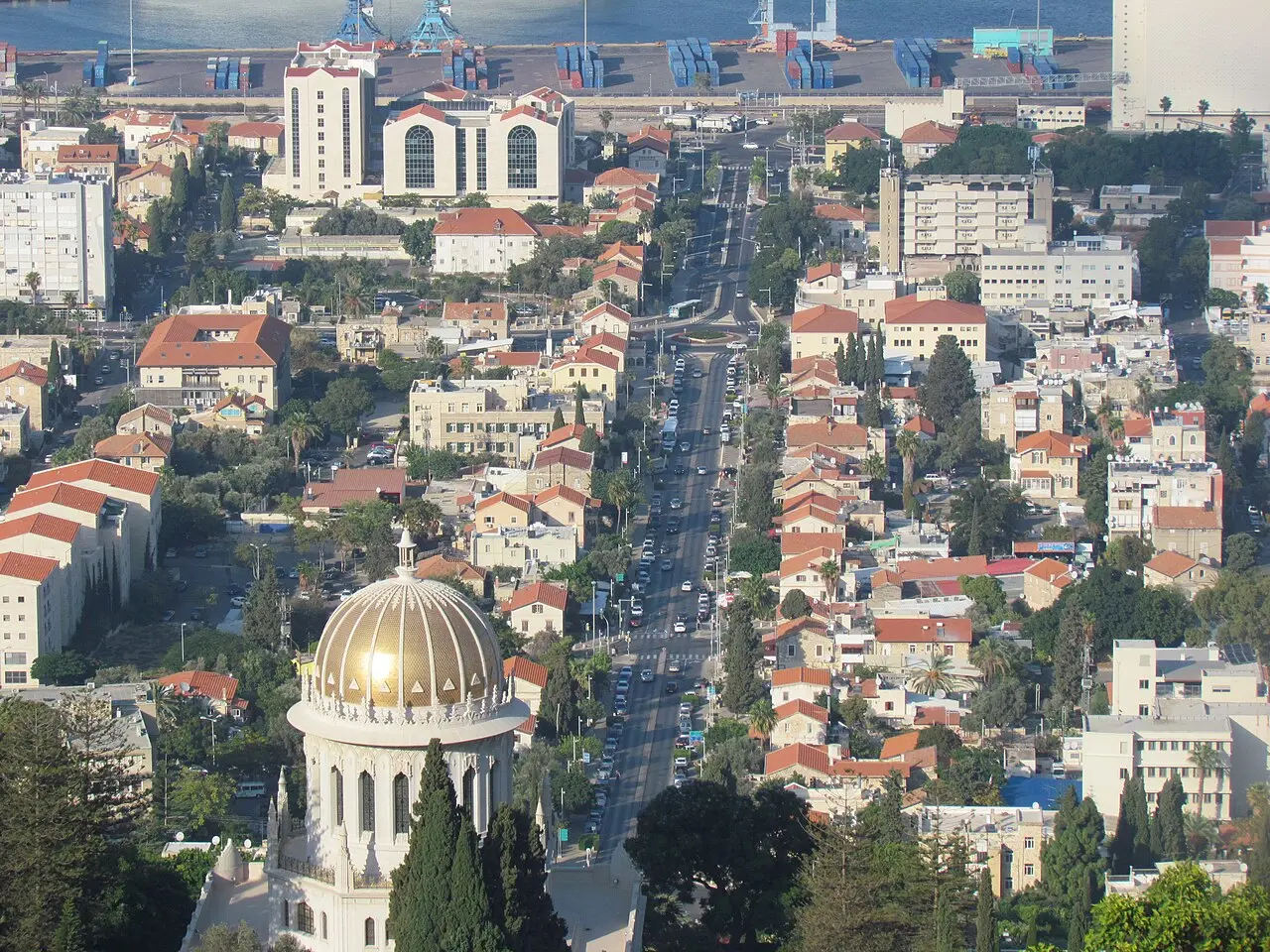
One thing does not vary. Humidity in Haifa tends to be high all year round, which is why a summer figure of 29.9°C understates the month and why the ridge neighbourhoods, where most of the hotels are, are the more bearable place to sleep.
Noal242 / CC BY-SA 3.0 · Wikimedia Commons
The calendars
Haifa is the one Israeli city where you have to check two religious calendars
The Jewish festival calendar is the thing visitors most often get wrong about Israel, because it runs on a lunar-solar year and lands on different Gregorian dates every time. Passover and Sukkot each run about a week, and the intermediate days between the opening and closing holidays are a school holiday and, for many Israelis, collective paid leave. Yom Kippur is different in kind: no public transport, no broadcasting, shops and businesses closed nationwide, and the airport shut for roughly a day and a half. The dates are Rosh Hashanah from the evening of 11 September 2026, Yom Kippur from the evening of the 20th, Sukkot from the evening of the 25th to 2 October, Shemini Atzeret and Simchat Torah from 2 to 4 October, Hanukkah from 4 to 12 December 2026, Purim on 22 and 23 March 2027 and Passover from 21 to 29 April 2027.
The second calendar is the one nobody arrives knowing about. The Bahai World Centre publishes it without qualification: the gardens are closed on Bahai holy days and on Yom Kippur. For 2026 that means 21 March for Naw-Ruz, 21 and 29 April and 2 May for the first, ninth and twelfth days of Ridvan, 24 May for the Declaration of the Bab, 29 May for the Ascension of Baha'u'llah, 10 July for the Martyrdom of the Bab, and 10 and 11 November for the birthdays of the Bab and of Baha'u'llah. A Bahai day runs from sunset to sunset, so the observance begins the evening before the date given.
The two can land on top of each other, which is how an April trip goes wrong twice over. Passover in 2027 runs from 21 to 29 April, and in 2026 the gardens are shut on 21 and 29 April for Ridvan. Neither list predicts the other, so a spring visit has to be checked against both. There is a larger closure in 2026 on top of them: the Shrine of the Bab and the inner gardens are closed to the public from 9 August to 5 September, while the outer gardens keep their 09:00 to 17:00 day.
Sukkot in Haifa carries a third layer. The Haifa International Film Festival has run since 1983, the first of its kind in Israel, and is held during the Sukkot week with special screenings of about 170 new films across seven theatres and open-air venues. That week therefore brings the national holiday, the school holiday and a festival audience into one city, and it is the hardest to book of the year. December is the opposite: the Holiday of Holidays, run by Beit Hagefen in Wadi Nisnas since 1993, fills the weekends with street events rather than emptying the city.
אושרי רייכר / CC BY 2.5 · Wikimedia Commons
The hazard
The Carmel does not burn in July, it burns at the end of November
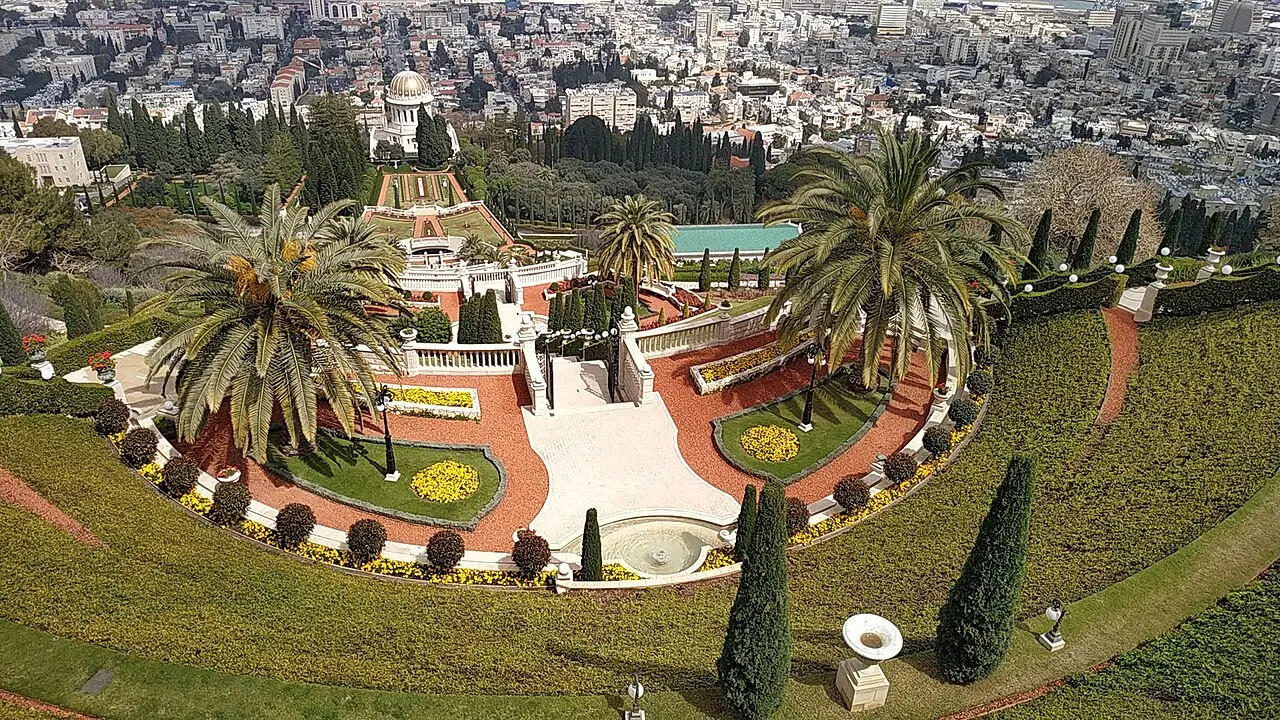
The instinct is that a Mediterranean mountain of pine and oak is at its most flammable in high summer. Haifa's own record says otherwise, twice. The fire that began near Isfiya on 2 December 2010 burned until the 6th, killed 44 people, destroyed over 50,000 dunams of forest and forced more than 17,000 people out of their homes, 3,000 of them in Haifa. Six years later, fires ran from 22 to 27 November 2016: about 75,000 residents, roughly a quarter of the city, were evacuated from eleven Haifa neighbourhoods, and 527 apartments across 77 buildings were destroyed.
The reason sits in the climate table on this page rather than in the fire reports. June to September together bring about 10 mm of rain across fewer than four days with a millimetre or more, and October adds only 18 mm. By late November the forest above the city has had five or six months with effectively no water in it, and that is when the season's dry easterly winds arrive. The 2010 fire followed an unusually warm autumn and dry conditions after an exceptionally hot spring and summer; the 2016 fires came after two months of drought, with high temperatures and dry winds named by officials as the aggravating factor.
The other half of the year carries the opposite hazard, and it is the one that spoils trips rather than threatening them. Winter rain closes the gardens temporarily, at the operator's discretion and without notice, and there is a lot of it: 180 mm in January and 138 mm in December, out of 623 mm a year summed from the monthly normals for the decade to 2024, close to the roughly 629 mm usually quoted for the city. A wet Tuesday is not a lost day in Haifa, because the museums and the market quarter are indoors, but it can easily be a lost visit to the one thing on the itinerary that cannot be rescheduled.
Namikilisu / CC BY-SA 4.0 · Wikimedia Commons
The week
Friday afternoon is the awkward half-day here, not Saturday
Shabbat is the weekly version of the festival problem, and in most Israeli cities it takes a day out of a short trip: buses and trains stop from Friday evening until Saturday nightfall. Haifa is the standing exception. The Times of Israel puts it plainly, that Haifa has long had some public transport on Shabbat unlike most majority-Jewish communities, a legacy of a mixed population and of services that ran here before the state.
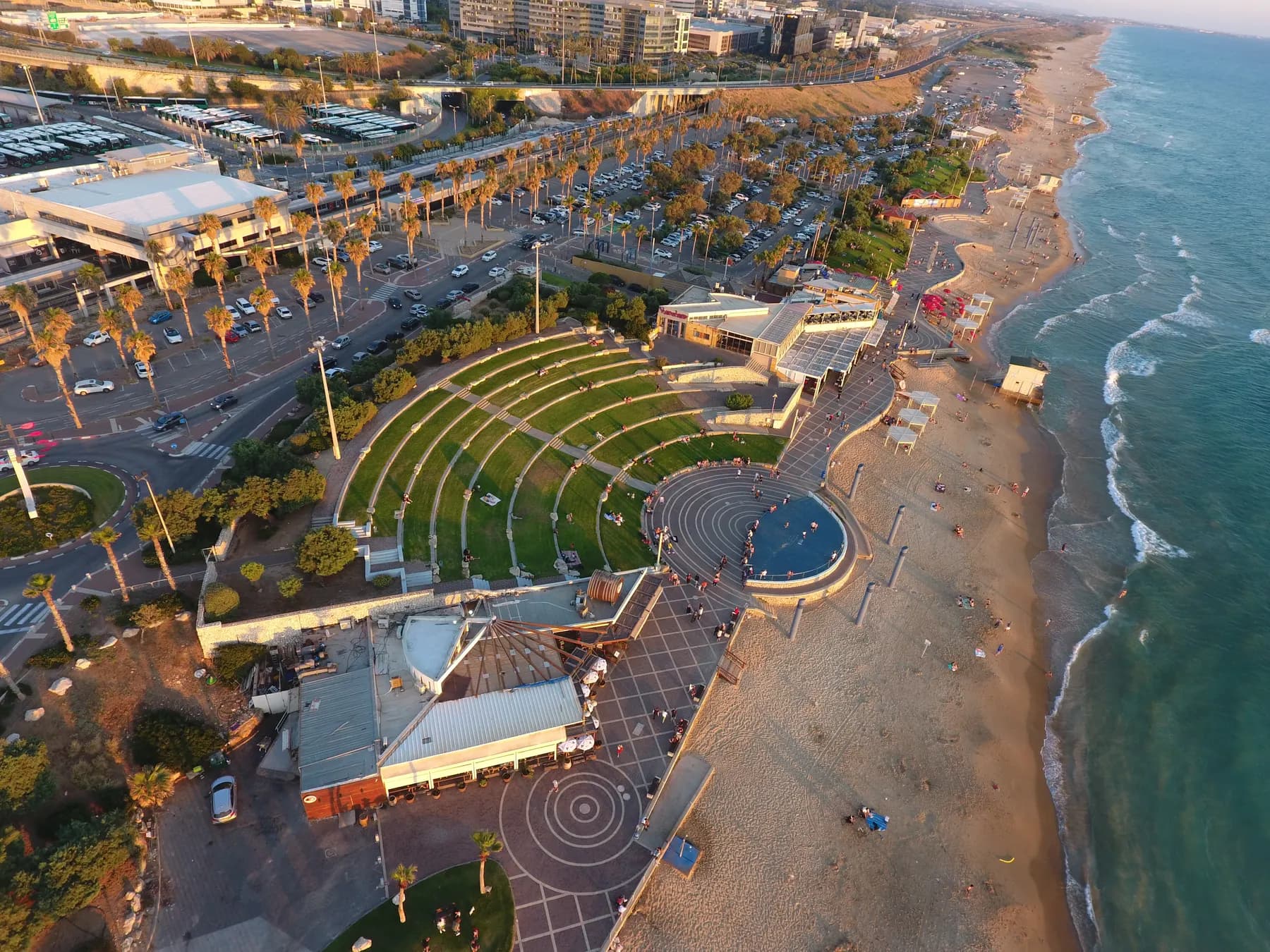
The Carmelit is the clearest expression of that, and its timetable is one of the few things in the city that changes with the season. It runs Sunday to Thursday from 06:00 to midnight, Friday and holiday eves from 06:00 to 15:00, and on Saturday from 19:00 in summer or 20:00 in winter until midnight. So the funicular that removes the worst of the climb between downtown and the ridge is gone from mid-afternoon on Friday and does not come back until Saturday evening, which is the single most useful piece of scheduling in a city built on a slope.
The gardens follow the same asymmetry. They open daily from 09:00 to 17:00, Saturdays included, and the closure list names Bahai holy days and Yom Kippur rather than Shabbat. A Saturday in Haifa is therefore a working sightseeing day in a way a Saturday in Jerusalem is not, and Friday afternoon is the half-day to plan around.
Gal Ben-David / CC BY-SA 4.0 · Wikimedia Commons

Practical
What to know before you go
- Check the Bahai calendar as well as the Jewish one. In 2026 the gardens are closed on 21 March, 21 and 29 April, 2, 24 and 29 May, 10 July, and 10 and 11 November, plus Yom Kippur, and a Bahai day begins at sunset on the eve.
- In 2026 the Shrine of the Bab and the inner gardens are closed to the public from 9 August to 5 September. The outer gardens stay open daily from 09:00 to 17:00, and so does the balcony at 61 Yefe Nof.
- Between June and September, take the 09:00 opening. The guided descent is 750 stairs on pebbled paths with little shade, and the operator asks for shoes with grip, a hat and sunscreen in summer.
- A wet winter morning is a gamble rather than a plan. The gardens may close temporarily in rainy weather, and January averages fourteen days with a millimetre or more.
- Friday is the tight day, not Saturday. The Carmelit runs 06:00 to 15:00 on Fridays and holiday eves and resumes at 19:00 on Saturday in summer, 20:00 in winter.
- Book Sukkot many months ahead or avoid it. Haifa carries the national holiday and the film festival in the same week, with about 170 films screening across seven theatres and open-air venues.
- On the Carmel between mid-October and the first real rain, no open flame of any kind, and check ridge road closures if a fire is burning on the mountain.
- Nothing runs on Yom Kippur, the airport included. In 2026 it begins at sunset on 20 September, and the gardens are closed for it by the operator's own rule.
The figures
Numbers behind this page
Each figure carries the year it belongs to and links the source it came from.
| Measure | Figure | As of | Source |
|---|---|---|---|
| Mean daily high and low at Haifa, August | 29.9°C and 24.9°C | 2015-2024 | cds.climate.copernicus.eu |
| Mean daily maximum sea temperature, August | 30.5°C | 2023-2024 | data.marine.copernicus.eu |
| Mean daily maximum sea temperature, February | 18.0°C | 2023-2024 | data.marine.copernicus.eu |
| Mean January rainfall, and days with a millimetre or more | 180 mm across 13.9 days | 2015-2024 | cds.climate.copernicus.eu |
| Mean rainfall from June to September combined | 10 mm across 3.7 days | 2015-2024 | cds.climate.copernicus.eu |
| Mean annual rainfall, summed from the monthly normals | 623 mm | 2015-2024 | cds.climate.copernicus.eu |
| Haifa residents evacuated in the fires of 22 to 27 November 2016 | about 75,000, roughly a quarter of the city | 2016 | en.wikipedia.org |
| Deaths in the Mount Carmel forest fire of 2 to 6 December 2010 | 44 | 2010 | en.wikipedia.org |
The rest of the Haifa guide
Sources and further reading
Every link below was opened and checked when this page was written. Official statements are marked as such: they are the subject's own account, not an independent one.
- OfficialBahai Gardens, Bahai World Centreganbahai.org.ilVisit Us: Haifa
Daily 09:00 to 17:00 at all three access points, the statement that the gardens are closed on Bahai holy days and Yom Kippur and may also be closed temporarily in rainy weather, the 750-stair guided descent of about 50 minutes for up to 19 people, the dress and footwear standards, and the closure of the Shrine of the Bab and inner gardens from 9 August to 5 September 2026
- OfficialBahai Gardens, Bahai World Centreganbahai.org.ilFrequently Asked Questions
Free entry and free tours, the gardens stretching a kilometre up the northern slope of Mount Carmel with about 1,700 steps, roughly 450 plant species, and photography permitted everywhere except inside the shrines
- OfficialBahai International Communitybahai.orgThe Bahai Calendar
The nine holy days with their Gregorian dates for 183 B.E., running from Naw-Ruz on 21 March 2026 to the birth of Baha'u'llah on 11 November 2026, and the rule that a day runs from sunset to sunset
- OfficialBeit Hagefen Arab-Jewish Cultural Centrebeit-hagefen.comHoliday of Holidays
The December festival begun in 1993, centred on Beit Hagefen in Wadi Nisnas, celebrating cultural diversity in Israel and in Haifa through street performances, exhibitions, music and a Hanukkah and Christmas fair
- OfficialIsrael Meteorological Serviceims.gov.ilIt's so hot outside, so why is the sea so cold?
The thermal lag between land and sea, and the observation that the bathing season can open with the water at about 18 degrees while sharav days already push the air over 30
- OfficialIsrael Meteorological Serviceims.gov.ilAbout the Sharav low
Hot, dry sharav weather arriving every few days in spring for no more than about 24 hours at a time, after which the weather cools down again
- ReportingThe Times of Israeltimesofisrael.comIgnoring objections, minister inaugurates new bus route in Haifa during Shabbat
Haifa having long had some public transport on Shabbat unlike most majority-Jewish communities, attributed to its mixed Jewish and Arab population and to services predating the state
- DataHebcalhebcal.comJewish Holidays 2026-2027
Gregorian dates for Rosh Hashanah, Yom Kippur, Sukkot, Shemini Atzeret, Simchat Torah, Hanukkah, Purim, Passover, Yom HaAtzmaut and Shavuot across 2026 and 2027
- DataCopernicus Marine Servicedata.marine.copernicus.euGlobal ocean physics analysis: sea surface temperature
The mean daily maximum sea temperatures on this page, averaged over 2023 and 2024 at the nearest sea point. The record there starts in late November 2022.
- ReferenceWikipediaen.wikipedia.orgPublic holidays in Israel
Which festivals close schools, government and transport, the status of the intermediate days of Passover and Sukkot, and the scale of the Yom Kippur shutdown including the airport
- ReferenceWikipediaen.wikipedia.orgHaifa
The hot-summer Mediterranean classification, annual precipitation of approximately 629 mm, and the statement that humidity tends to be high all year round
- ReferenceWikipediaen.wikipedia.orgMount Carmel forest fire (2010)
The fire beginning at about 11:00 on 2 December 2010 and burning to 6 December, 44 dead, over 50,000 dunams destroyed, more than 17,000 evacuated including 3,000 from Haifa, and the unusually warm autumn and dry conditions that preceded it
- ReferenceWikipediaen.wikipedia.orgNovember 2016 Israel wildfires
Fires from 22 to 27 November 2016 after two months of drought, about 75,000 Haifa residents evacuated from eleven neighbourhoods, and 527 apartments in 77 buildings destroyed
- ReferenceWikipediaen.wikipedia.orgHaifa International Film Festival
Inaugurated in 1983 as the first festival of its kind in Israel, held during the week of Sukkot, with special screenings of about 170 new films at seven theatres and open-air venues
- ReferenceWikipediaen.wikipedia.orgCarmelit
The 1.8 km tunnel, six stations and 274 m climb, the October 1959 opening and October 2018 reopening, and the operating hours including the seasonal Saturday start of 19:00 in summer and 20:00 in winter
The best time to visit Haifa: common questions
What is the best month to visit Haifa?+
April and May, with the second half of October close behind. All three give a dry mountain, comfortable walking on a city built as a staircase, and the gardens on their full 09:00 to 17:00 day. Spring has the edge because the sea is still cold and drags the temperature over the city down, while an October evening stays warm because the water is at 27.1°C. The catch in April is Passover, and in October the first week is usually still Sukkot.
Is Haifa worth visiting in winter?+
Yes, for the city rather than for the gardens. December to February is quiet, hotel rates on the ridge are at their lowest, the Carmel is green, and Wadi Nisnas, the museums and the downtown are unaffected by rain. The risk is that the Bahai Gardens may close temporarily in rainy weather, and January brings 180 mm across about fourteen days with a millimetre or more, so build in a spare morning.
How bad is Haifa in July and August?+
Difficult, and the page will not soften it. The mean daily high reaches 29.9°C in August against a mean daily low of 24.9°C, humidity in this city tends to be high all year round, and the main attraction is 750 stairs down an open slope with little shade. It is a good month for the beaches below Mount Carmel and a poor one for the terraces at any hour after about eleven.
When are the Bahai Gardens closed?+
On Bahai holy days and on Yom Kippur, and temporarily in rainy weather, as the Bahai World Centre states on its own visiting page. For 2026 the holy days fall on 21 March, 21 and 29 April, 2, 24 and 29 May, 10 July, and 10 and 11 November, each beginning at sunset the evening before. There is also a longer closure of the Shrine of the Bab and the inner gardens from 9 August to 5 September 2026, with the outer gardens staying open.
What happens in Haifa during Passover and Sukkot?+
Both fill the city and push hotel rates to their annual peak. The intermediate days of each are a school holiday and, for many Israelis, collective paid leave, which puts families on the road for a week at a time. Sukkot is the harder of the two in Haifa specifically, because the Haifa International Film Festival is held in the same week and has been since 1983.
Is anything open on Yom Kippur in Haifa?+
No. The country stops: no public transport, no broadcasting, shops and businesses closed nationwide and the airport shut for roughly a day and a half. The Bahai Gardens close for it by the operator's own rule, alongside the Bahai holy days. In 2026 it begins at sunset on 20 September and ends at nightfall on the 21st.
Does public transport run in Haifa on Shabbat?+
Some of it does, which makes Haifa unusual among Israeli cities. The Times of Israel notes that Haifa has long had some public transport on Shabbat unlike most majority-Jewish communities, a legacy of the mixed population and of services that predate the state. The Carmelit funicular runs on Saturday from 19:00 in summer or 20:00 in winter until midnight, but stops at 15:00 on Fridays and holiday eves, so Friday afternoon is the harder half-day.
When can you swim in Haifa?+
Comfortably from about June to October, when the mean daily maximum sea temperature runs from 26.6°C up to 30.5°C in August and back to 27.1°C. February is the coldest month in the water at 18.0°C, colder than the air above it, because the Mediterranean lags the land by roughly two months in both directions. May and November are the shoulder months where the water is swimmable but nobody stays in long.
Is there a wildfire risk on Mount Carmel, and when?+
Yes, and it peaks in late autumn rather than in summer, which is the thing visitors read backwards. Almost no rain falls between June and September, so by late November the forest above the city has had five or six months without water when the dry easterly winds arrive. The fire of 2 to 6 December 2010 killed 44 people and destroyed over 50,000 dunams, and the fires of 22 to 27 November 2016 evacuated about 75,000 people from eleven Haifa neighbourhoods.
When is the Holiday of Holidays festival?+
In December, across the weekends, centred on Beit Hagefen and Wadi Nisnas. Beit Hagefen began the tradition in 1993 and describes it as celebrating cultural diversity in Israel generally and in Haifa in particular through a wide range of events, from street performances and exhibitions to a Hanukkah and Christmas fair. It is the one point in the year when the city's mixed character is the visitor attraction rather than the background.