
The Sea of Galilee · Best time to visit
The best time to visit the Sea of Galilee
The lake sits about 215 metres below sea level, and the four months from June to September average a daily high of 36.0 to 38.2 degrees with 8 mm of rain between them, which is why the good windows here are shorter than the Galilee's.
The window most people want
Mid-March to April
Green hills, the walking still on all day, and the water warm enough by the end of it
The month almost nobody books
November
26.8 °C by day, 40 mm of rain, the festivals over and the shoreline empty
June to September
36.0 to 38.2 °C
Mean daily highs on the 2015-2024 normals at the lake's own coordinates, 215 metres below sea level
Yom Kippur
about 28-30 hours
Airports, border crossings, buses and broadcasting all stop nationwide, once a year in September or October
The Kinneret is not the Galilee, climatically, and treating it as though it were is the commonest planning mistake made about it. The hill country above the lake is a Mediterranean upland with a long shoulder season at either end of summer. The lake is a rift floor 215 metres below sea level and behaves like one: on the ten-year normals computed at its own coordinates and charted below, four consecutive months average a daily maximum between 36.0 and 38.2 °C, and September, which on the coast is a reprieve, is still 37.0 °C here.
So the good windows are real but narrow. Mid-March to the end of April is the one most visitors want: green hills, wildflowers, the Arbel cliff and the shoreline trail walkable all day, and by late April water warm enough to swim in. The second window is late October into early December, and its best part, November, is the one nobody books. The rest is a trade. Winter buys the gospel shoreline nearly empty and costs the swimming; summer buys the lake and costs the middle eight hours of every day.
Laid across that is the Hebrew calendar, which decides prices and crowds here more sharply than the weather does. Passover and Sukkot each turn the Kinneret into Israel's domestic holiday shore for a week: on one Passover Sunday about 30,000 people were on the lake's beaches and in its car parks, and the public camping beaches shut to new arrivals during the afternoon. Yom Kippur stops the country outright.
The year
What the weather actually does in The Sea of Galilee
Monthly normals computed from daily reanalysis at this destination's own coordinates, 2015 to 2024. Not a forecast and not an impression.
Month by month
When to go to The Sea of Galilee
January
Mixed19°C by day, 10.7°C at night, 12.4 wet days
The wettest month at the lake, 107 mm across about twelve rain days, but the days themselves top out near 19 °C and the hills are green for the only stretch of the year. This is the filling season, when the country watches the water level, and it is also when Tiberias is cheapest and Capernaum, Tabgha and the Mount of Beatitudes are close to empty. Rain arrives in fronts of a day or two rather than continuously, so the Arbel ridge and the shoreline are usually walkable between them. The Golan stream routes above the eastern shore are not: they are running hard and are the wrong place to be in heavy rain.
February
Good20.6°C by day, 10.9°C at night, 8.6 wet days
Rain drops by a third from January to 72 mm and the wildflowers start, which is where the Jesus Trail's operator opens its own recommended walking season. Prices and crowds are still at winter levels and the gospel sites on the north shore are quiet enough to sit in. Snow on the Golan plateau above the lake can shut roads for a day or two, so Route 98 is worth checking on the morning rather than the night before. Swimming is not really on yet; February is for walking the shore rather than getting into it.
March
Best23.5°C by day, 12.9°C at night, 8.1 wet days
The best all-round month here. Days average 23.5 °C, rain has fallen to 45 mm, the hills are still green, the Golan streams still carry water, and the exposed basalt at Capernaum and Korazim is comfortable at midday. Purim falls in late February or March, on 22 to 23 March in 2027, and is a noisy day rather than a closure. The one date to check is Passover, which in some years begins in the last days of March and takes the following week with it.
April
Best28.9°C by day, 15.7°C at night, 4.6 wet days
The warm end of the green season, at 28.9 °C by day and 29 mm of rain, and the first month in which most visitors will actually swim. Passover is the catch and it is a large one: on a single Sunday of the intermediate days around 30,000 people were on the lake's beaches and in its car parks, most public camping beaches shut to new arrivals during the afternoon, and lakeside rates roughly double for the week. In 2027 it runs from the evening of 21 April to 28 April. Book far ahead or plan round it, because outside that week April is close to ideal.
geagea / CC BY 3.0 · Wikimedia Commons
May
Mixed33.5°C by day, 19.6°C at night, 2.2 wet days
The heat arrives early on the rift floor. The mean daily maximum is already 33.5 °C, ahead of Tiberias's annual mean maximum on the WMO normals, and a sharav can add several degrees and a load of dust in a day. Swimming is excellent and getting better; walking is a dawn activity by the middle of the month. It is also a windy end of spring, and 15 May 2022 is the reminder: easterly gusts of 140 km/h wrecked the Tiberias promenade, flooded the restaurants on it and sank boats.
June
Hard going36°C by day, 22.5°C at night, 1 wet day
Summer proper, at 36.0 °C by day and 22.5 °C at night with 3 mm of rain. The Jesus Trail's operator describes June to September on this shoreline as prohibitively hot and humid and a serious health risk of dehydration, and the north-shore archaeology has almost no shade over it. Israeli schools break up on 20 and 30 June and the camping beaches begin to fill; the free beach shuttle starts running on 30 June. Come for the water, and accept that the sightseeing has to happen before nine in the morning.
July
Hard going38.2°C by day, 24.9°C at night, effectively no rain
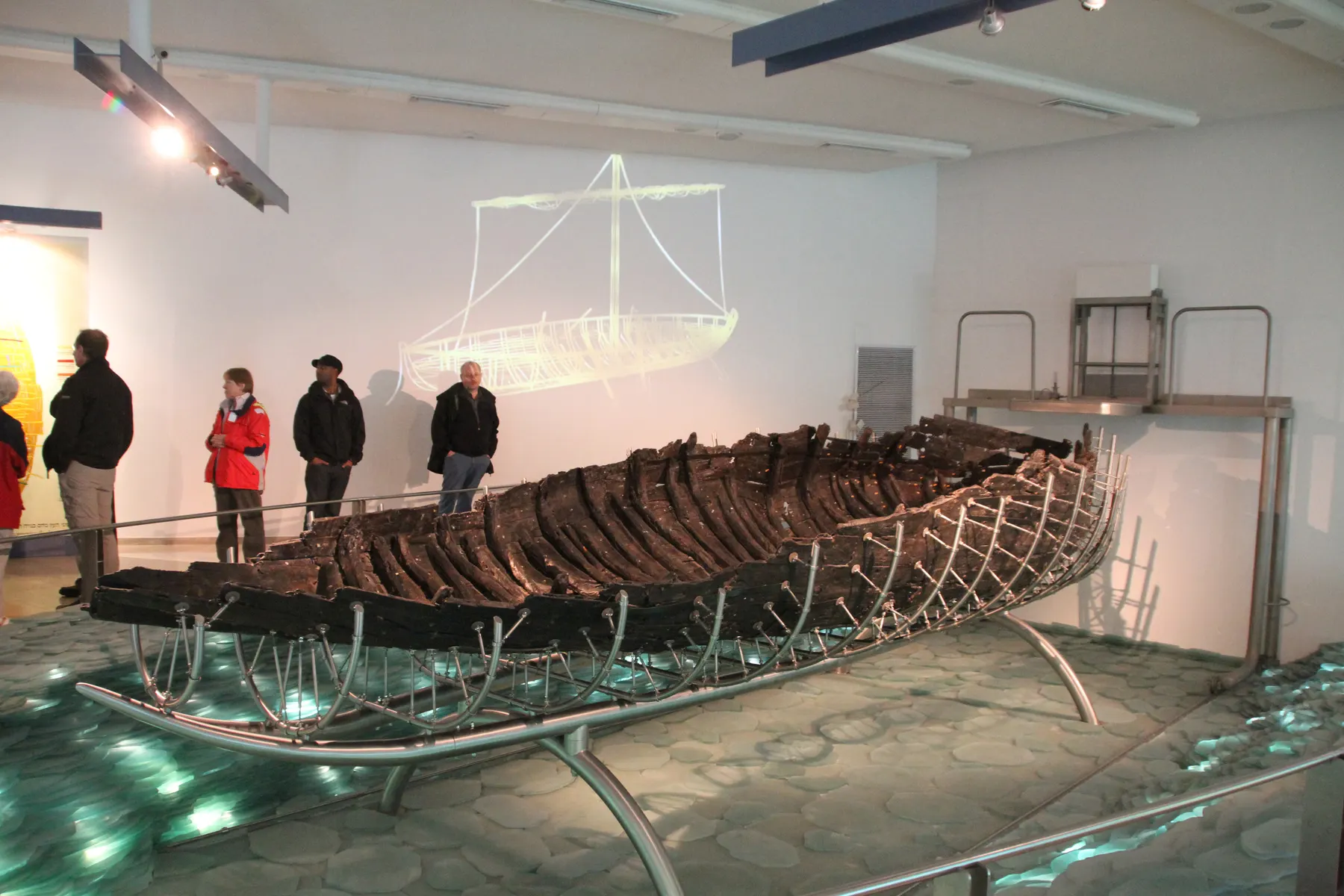
One of the two hottest months, averaging 38.2 °C by day and 24.9 °C at night with 1 mm of rain, and it is genuinely difficult rather than merely warm. In the July 2019 heatwave the World Meteorological Organization recorded the Jordan Valley running at 43 to 46 °C. The lake is at its best and everything else at its worst: water and shade in the middle of the day, with the climate-controlled boat hall at Ginosar one of the few cool rooms on the shore. The beaches and the free shuttle are full of Israeli families all month.
August
Hard going38.2°C by day, 25.6°C at night, effectively no rain
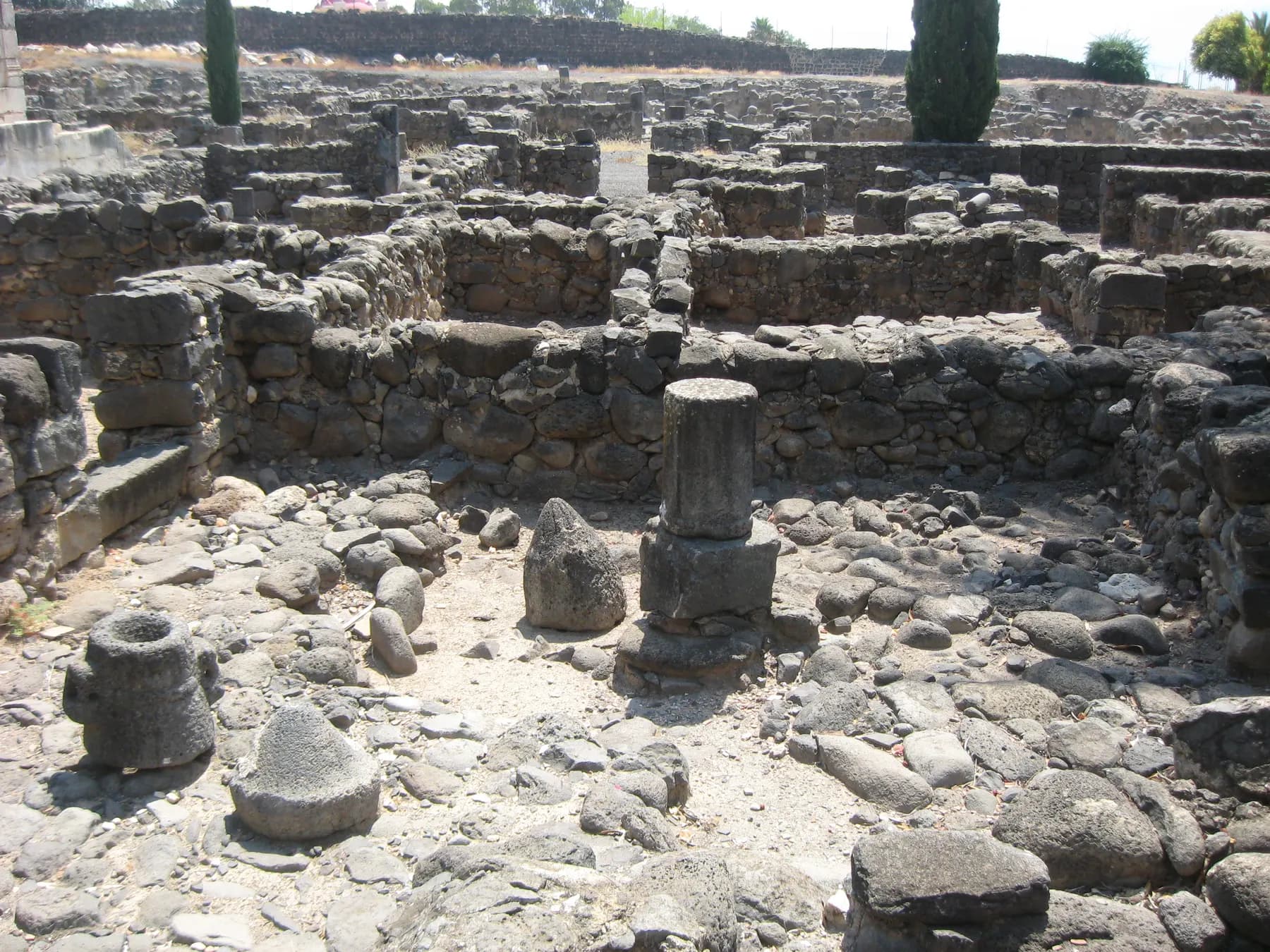
The hardest month at the Kinneret. The mean daily maximum is 38.2 °C and the mean minimum 25.6 °C, so the night returns almost nothing, and the month's rainfall is 1 mm. Israel's national record of 54 °C was set on this same rift floor at Tirat Tzvi in June 1942, which is the company the lake keeps in high summer. The camping beaches are at their busiest of the year and the shoreline trail and the Arbel clifftop are not sensible after about nine in the morning.
Gerd Eichmann / CC BY-SA 4.0 · Wikimedia Commons
September
Hard going37°C by day, 24.6°C at night, 1.1 wet days
Still summer here at 37.0 °C by day, which is barely down on August, so the sightseeing is as hard as it was even though the coast has begun to cool. The water, on the other hand, is at its most inviting, which is why the Kinneret Crossing, Israel's best-known open-water swim, is held on this lake every September. The festivals then crowd the month: in 2026 Rosh Hashanah is 11 to 13 September, Yom Kippur 20 to 21 September and Sukkot starts on the evening of 25 September. Yom Kippur shuts the country including the airports for about 28 to 30 hours.
October
Mixed33.1°C by day, 21.9°C at night, 2.5 wet days
A month of two halves. The first is usually Sukkot, when Israeli domestic travel peaks, the parks system counts about 1.5 million visits in the week and the lake takes its share of them. Once it clears, the back half of October is the first properly pleasant stretch since April: the monthly mean daily maximum is 33.1 °C and the second half runs below that, with the first 11 mm of rain laying the dust. In 2027 Sukkot begins on the evening of 15 October, which pushes the good fortnight later still.
November
Best26.8°C by day, 17.1°C at night, 5.7 wet days
The quietest good month of the year here and the one almost nobody books. Days average 26.8 °C and nights 17.1 °C, rain is 40 mm across about six days, the school holidays and the festivals are finished and Tiberias rates come back to ordinary money. The hills start to green after the first rain and the north-shore sites can be walked at midday without suffering. The catch is daylight, which goes early, so the last stop of the day wants to be a mid-afternoon one.
December
Mixed21.3°C by day, 12.9°C at night, 9.5 wet days
Winter proper, at 82 mm across roughly nine or ten rain days and days around 21 °C. It is a good month for the gospel shoreline and the museums and a poor one for the water. Christmas fills the Christian guesthouses on the north shore and Nazareth up the hill, and Hanukkah, 4 to 12 December in 2026, is eight days of school holiday that fills family sites without closing anything. Storms coming off the Golan can put a real sea on a lake that is usually flat.
The table
Every month in figures
| Month | Average high | Average low | Rain | Wet days |
|---|---|---|---|---|
| January | 19°C | 10.7°C | 107 mm | 12.4 |
| February | 20.6°C | 10.9°C | 72 mm | 8.6 |
| March | 23.5°C | 12.9°C | 45 mm | 8.1 |
| April | 28.9°C | 15.7°C | 29 mm | 4.6 |
| May | 33.5°C | 19.6°C | 9 mm | 2.2 |
| June | 36°C | 22.5°C | 3 mm | 1 |
| July | 38.2°C | 24.9°C | 1 mm | 0.3 |
| August | 38.2°C | 25.6°C | 1 mm | 0.2 |
| September | 37°C | 24.6°C | 3 mm | 1.1 |
| October | 33.1°C | 21.9°C | 11 mm | 2.5 |
| November | 26.8°C | 17.1°C | 40 mm | 5.7 |
| December | 21.3°C | 12.9°C | 82 mm | 9.5 |
2015 to 2024 averages at 32.8, 35.59, elevation -215 m. Source: European Centre for Medium-Range Weather Forecasts (IFS, ERA5). A wet day has 1 mm of rain or more.
The windows
Two good stretches, and one of them is in November
The spring window opens with March and closes with Passover or with the end of April, whichever comes first. March runs at 23.5 °C by day with 45 mm of rain still falling across about eight days, which is the combination the shoreline wants: green hills, water in the Golan streams, and heat that has not yet made the exposed basalt of Capernaum and Korazim unpleasant. April warms to 28.9 °C and dries to 29 mm, and is the first month most people will actually swim.
May is where the region's advice and the lake's own numbers part company. Up in the hills May is still a walking month. Down here the mean daily maximum is already 33.5 °C, ahead of Tiberias's annual mean maximum of 28.9 °C on the World Meteorological Organization normals, and a sharav can put several degrees and a load of dust on top. May is a fine month to swim in the Kinneret and a poor one to walk round it.
The autumn window is later and shorter than the Galilee's, for the same reason. October averages 33.1 °C across the month, and Sukkot usually takes the first week or two of it. What is left is worth waiting for. November comes in at 26.8 °C by day with 40 mm of rain across about six days, the school holidays and the festivals are finished, Tiberias rates fall back to ordinary money, and the north-shore sites can be walked at midday without suffering.
Winter is not a write-off. January tops out around 19.0 °C, a pleasant walking temperature, and the rain arrives in fronts of a day or two rather than as continuous drizzle. What it costs is the swimming, the Golan stream walks and a few days lost to weather.
Tracy Hunter from Spokane, USA / CC BY 2.0 · Wikimedia Commons
The calendar
Passover, Sukkot, and the week the whole country comes to the lake
Passover and Sukkot each run about a week, and the intermediate days in the middle of both, the chol hamoed, are a school holiday and collective paid leave in many Israeli businesses and government offices. That produces a national travel week aimed at precisely what a visitor came for, and the Kinneret is one of its main destinations. The Times of Israel reported around 30,000 people at the lake's beaches and parking areas on a single Passover Sunday, most public camping beaches closed to new arrivals in the afternoon and only Dugit still taking cars.
Nationally the same festivals fill the parks system, which counted about 1.5 million visits in one Sukkot week, up 22 per cent on the year before. Lakeside rooms go months in advance and are priced accordingly, and the dates move against the Gregorian calendar by up to a month. In 2026 Sukkot runs from the evening of 25 September to 2 October; in 2027 Passover runs from the evening of 21 April to 28 April and Sukkot begins on the evening of 15 October.
Yom Kippur is a different problem, because there is nothing to book around. Businesses close nationwide, there is virtually no traffic apart from emergency vehicles, and services that normally run on festivals, airports and border crossings and broadcasting among them, stop for about 28 to 30 hours. It falls on 20 to 21 September in 2026 and 10 to 11 October in 2027.
The Christian calendar matters here as it does at few other Israeli destinations, because the north shore is a pilgrimage shore. Easter and Christmas fill the guesthouses at Tabgha, the Mount of Beatitudes and Magdala, and the two Easters usually sit a fortnight or more apart: 5 and 12 April in 2026, 28 March and 2 May in 2027.
Ovedc / CC BY-SA 4.0 · Wikimedia Commons
The heat
June to September is genuinely difficult, and the lake is the only answer
July and August both average a daily maximum of 38.2 °C at the lake on the 2015-2024 normals, matching the World Meteorological Organization figure of 38.0 °C for Tiberias almost exactly. The nights do not give it back: the mean daily minimum in August is 25.6 °C. Rainfall over the four months from June to September totals 8 mm. This is not a warm summer, it is a hot-climate summer on a rift floor.
The company the Kinneret keeps makes the point. Israel's national record of 54 °C was set at Tirat Tzvi, on the same rift floor south of the lake, in June 1942, and in the July 2019 heatwave the World Meteorological Organization recorded the Jordan Valley and Arava at 43 to 46 °C. The Jesus Trail's operator, describing this shoreline, calls June to September prohibitively hot and humid and a serious health risk of dehydration.
What summer does have is the water, and Israeli families come for exactly that. The free beach shuttle runs the shoreline from 30 June to the end of August, elementary school terms end on 30 June, and the camping beaches at Amnon Bay and northern Hukok fill up. The Kinneret Crossing, the country's best-known open-water swim, is held every September for the sound reason that the lake is then at its warmest.
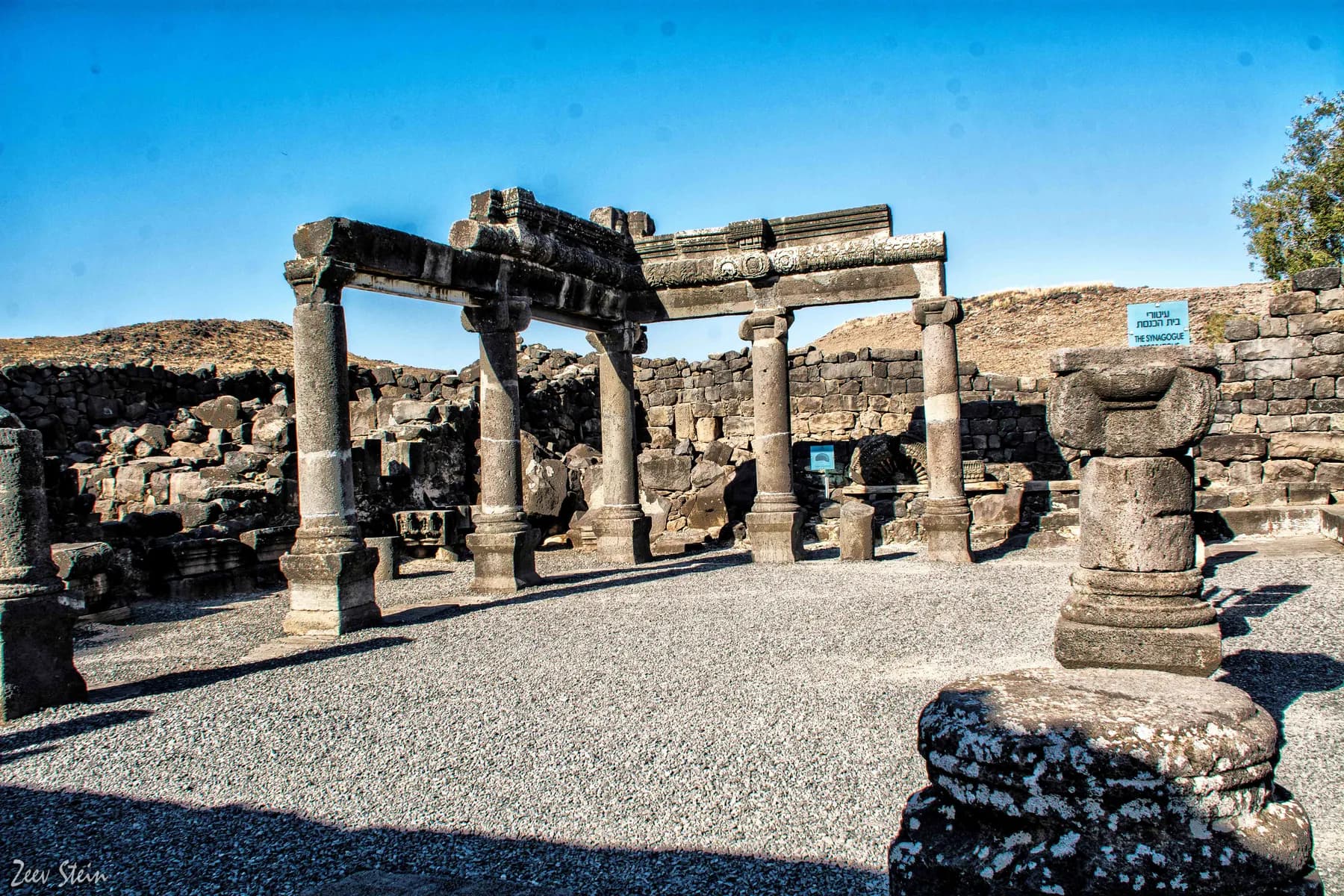
For anyone stuck with these months the pattern is simple: everything outdoors before about nine, water and shade in the middle of the day, the sites again after five. The archaeology at Capernaum, Korazim and Kursi is dark basalt with almost no shade over it, and the climate-controlled hall at Ginosar holding the first-century boat is one of the few cool rooms on the shore.
זאב שטיין / CC BY 2.5 · Wikimedia Commons
Hazards
The wind on the water, and the storms that come off the Golan
The hazard that matters here is not the desert flash flood that dominates advice about the Negev, nor the snow that closes the upper Galilee. It is wind on a small lake surrounded by high ground, and it is not folklore. On 15 May 2022 easterly gusts reaching 140 km/h hit Tiberias, shattering shopfronts along the Yigal Alon promenade, driving waves over it into the restaurants, tearing up pavements, sinking boats and doing damage counted in millions of shekels.
That was extreme, but a lesser version of it is an ordinary afternoon. The lake is roughly 21 kilometres long with the Golan escarpment on one side and the Arbel cliffs on the other, and a flat morning can turn choppy fast. Swim inside the flags at the guarded beaches, of which there are 31 round the shore. Degania beach at the southern outlet bans swimming outright, and boat crossings and paddling are morning activities.
Winter brings the other pair. Storms off the Golan put a genuine sea on a lake that is normally glassy, and the streams draining the eastern escarpment into it run hard in January and February and are the wrong place to be during or after heavy rain. Snow on the plateau above, around Katzrin and higher, can close roads for a day or two even though it essentially never settles at lake level.
Spring and autumn bring the sharav, the hot dry wind Hebrew and Arabic speakers also call a hamsin: a temperature above 27 °C, at least five degrees above the annual mean, and humidity about ten per cent below normal. It comes with enough dust to cut visibility and strong wind overnight, and in Israel it clusters in the weeks between Passover and Shavuot. A May day forecast at 33 °C can arrive well above it in a brown haze, with the Arbel view gone.
The lake itself
Water level, beaches and what the season does to the shoreline
One variable here has no equivalent at other Israeli destinations: the lake is a working reservoir and its surface moves. It has fluctuated between about 215 and 209 metres below sea level, and where it sits decides what a beach looks like. A low lake means wide gravel margins and a long walk to the water at beaches built for a fuller one; a rising lake closes beaches from the other direction, which Ynetnews recorded when the water came up.
The filling season is November to March, which is why the lake's calendar runs a beat behind the weather. January at 107 mm and December at 82 mm are the wettest months, against 1 mm in July and August, and the annual total on these normals is about 403 mm across roughly 56 rain days.
The beach season is set by the school year rather than the thermometer. The free shuttle linking the shoreline beaches runs from 30 June to 31 August, with weekend service the rest of the year and extra eastern-shore lines from 30 July to 17 August. Pedestrian entry to the local-authority beaches is free but parking is charged at most, so the cheap swim is the one reached by shuttle or on foot.
The Kinneret Trail and the cyclists on it belong to spring and autumn. There is very little shade on the eastern side, and between May and October it is a dawn activity or nothing.
זאב שטיין / CC BY 2.5 · Wikimedia Commons

Practical
What to know before you go
- Look up the Hebrew date before booking anything. Passover and Sukkot move against the Gregorian calendar by up to a month, and either one turns the Kinneret into Israel's busiest domestic shore for a week.
- Do not fly into Yom Kippur. Airports and border crossings stop for about 28 to 30 hours, and the days on either side are among the heaviest of the year.
- Aim at November if the dates are flexible. It is the one month with comfortable daytime heat, low rain, no festivals and ordinary room rates, and it is consistently overlooked.
- In any month from May to October, treat the Arbel clifftop and the shoreline trail as a dawn activity. There is very little shade on the eastern side of the lake and none on the cliff.
- Between 30 June and 31 August use the free beach shuttle rather than hunting for parking. Pedestrian entry to the local-authority beaches is free but parking is charged at most of them.
- Check the lake level before choosing a beach in winter or after a dry year. A low Kinneret means wide gravel margins and a long walk to the water; a high one closes beaches from the other side.
- Swim inside the flags, and do boat trips in the morning. The afternoon wind on a lake ringed by cliffs and escarpment gets up fast, and Degania beach at the southern outlet bans swimming outright.
- In a sharav, write off the afternoon and move everything earlier. The forecast temperature can be well under what arrives, and the dust takes the view with it.
The figures
Numbers behind this page
Each figure carries the year it belongs to and links the source it came from.
| Measure | Figure | As of | Source |
|---|---|---|---|
| Mean daily high, July and August, at the lake | 38.2 °C | 2015-2024 | cds.climate.copernicus.eu |
| Mean daily low, August, at the lake | 25.6 °C | 2015-2024 | cds.climate.copernicus.eu |
| Rainfall, June to September combined | 8 mm across about 2.6 rain days | 2015-2024 | cds.climate.copernicus.eu |
| Annual rainfall, summed from the monthly normals | about 403 mm across roughly 56 rain days | 2015-2024 | cds.climate.copernicus.eu |
| Mean daily high and low, November | 26.8 °C and 17.1 °C, with 40 mm of rain | 2015-2024 | cds.climate.copernicus.eu |
| Tiberias on the WMO normals: July and August high, August low, annual rainfall | 38.0 °C, 25.2 °C and 437.1 mm | 1995-2009 temperatures, 1981-2010 rainfall | en.wikipedia.org |
| Jordan Valley and Arava in the July 2019 heatwave | 43 to 46 °C | 2019 | wmo.int |
| Easterly gusts at Tiberias, 15 May 2022 | 140 km/h | 2022 | haaretz.com |
The rest of the The Sea of Galilee guide
Sources and further reading
Every link below was opened and checked when this page was written. Official statements are marked as such: they are the subject's own account, not an independent one.
- OfficialWorld Meteorological Organizationwmo.intRecord-breaking temperatures in Israel, July 2019
49.9 °C at Sedom on 17 July 2019, the Jordan Valley and Arava at 43 to 46 °C, and Israel's national record of 54 °C at Tirat Tzvi on 21 June 1942.
- OfficialJesus Trail (route operator)jesustrail.comJesus Trail: frequently asked questions
The operator's own seasonal advice for the route that ends at Capernaum on this shore: October to November and February to mid-May as optimal, June to September prohibitively hot and humid with a serious risk of dehydration, December and January too wet.
- ReportingYnetnewsynetnews.comSun, sand and serenity: the spectacular beaches of the Sea of Galilee
31 guarded beaches and how they divide between Tiberias, the Kinneret municipal union, Emek HaYarden and Migdal; free pedestrian entry with charged parking; the free shuttle from 30 June to 31 August with extra eastern-shore lines from 30 July to 17 August; camping at Amnon Bay and northern Hukok; the swimming ban at Degania; and beach closures when the water rose.
- ReportingThe Times of Israeltimesofisrael.comHundreds of thousands flock to beaches, parks during intermediate days of Passover
About 30,000 people at the Sea of Galilee's beaches and parking areas on one Sunday of chol hamoed, most public camping beaches closed to new visitors in the afternoon with only Dugit still open, and about 200,000 at parks authority sites the same day.
- ReportingThe Times of Israeltimesofisrael.comRecord 1.5 million Israelis visit national parks during Sukkot break
About 1.5 million visits to national parks and nature reserves in one Sukkot week, a rise of 22 per cent year on year.
- ReportingHaaretzhaaretz.comStrong winds leave a trail of destruction at Tiberias lakeside promenade
Easterly gusts of 140 km/h on 15 May 2022, shattered shopfronts, waves flooding the Yigal Alon promenade and its restaurants, sunken boats, and farm damage in the Hula Valley.
- DataEuropean Centre for Medium-Range Weather Forecastscds.climate.copernicus.euERA5 reanalysis and IFS model archive
The ten-year monthly normals for 2015 to 2024 charted on this page, computed at the lake's own coordinates at 215 metres below sea level.
- DataIsrael Meteorological Serviceims.gov.ilClimate Atlas
The national long-term station series for temperature, rainfall and rain days, including the 1980/81 to 2009/10 and 1990/91 to 2019/20 precipitation periods used as the Israeli baseline.
- ReferenceWikipediaen.wikipedia.orgTiberias
Carries the World Meteorological Organization normals for the lakeshore: 38.0 °C mean daily high in July and August, 25.2 °C mean low in August, 437.1 mm annual rainfall and extremes from 0 °C to 48 °C.
- ReferenceWikipediaen.wikipedia.orgSea of Galilee
The surface level fluctuating between 215 and 209 metres below sea level, and the Kinneret Crossing open-water swim held on the lake every September.
- ReferenceWikipediaen.wikipedia.orgPublic holidays in Israel
The chol hamoed intermediate days as school holiday and collective paid leave, and the Yom Kippur shutdown of about 28 to 30 hours covering airports, border crossings and broadcasting.
- ReferenceHebcalhebcal.comJewish holidays 2026-2027, Israel observance
Gregorian dates for Rosh Hashanah, Yom Kippur, Sukkot, Hanukkah, Purim, Passover and Shavuot in 2026 and 2027 as observed in Israel.
- ReferenceWikipediaen.wikipedia.orgKhamsin
The three-part meteorological definition of a sharav, its spring and autumn timing between Passover and Shavuot, and the dust and overnight wind that come with it.
- ReferenceWikipediaen.wikipedia.orgList of dates for Easter
Western and Orthodox Easter dates: 5 and 12 April in 2026, 28 March and 2 May in 2027.
The best time to visit the Sea of Galilee: common questions
When is the best time to visit the Sea of Galilee?+
Mid-March to the end of April, and then November. Spring gives green hills, running streams on the Golan side and water that is swimmable by late April; November gives 26.8 °C days, 40 mm of rain and an empty shoreline after the autumn festivals. The lake's shoulder seasons are shorter than the Galilee hills' above it, because it sits 215 metres below sea level and warms up earlier and cools down later.
Is July or August too hot?+
For sightseeing, yes, and the page will not pretend otherwise. Both months average a daily maximum of 38.2 °C with a mean minimum of 25.6 °C in August and 1 mm of rain, and the archaeological sites on the north shore are dark basalt with almost no shade. For swimming it is the best time of the year, which is why the beaches are full of Israeli families. The workable pattern is outdoors before nine, water and shade in the middle, sites again after five.
What months can you swim in the Sea of Galilee?+
Broadly late April through October, with the peak from June to September. The lake is at its warmest at the end of summer, which is why the Kinneret Crossing open-water swim is held every September. Winter and early spring are for walking the shore rather than getting into it. Swim at the guarded beaches and inside the flags: there are 31 of them around the lake, and Degania beach at the southern outlet prohibits swimming altogether.
What happens at Passover and Sukkot?+
The Kinneret becomes Israel's domestic holiday shore and prices roughly double. The intermediate days of both festivals are a school holiday and collective paid leave in many businesses, and the Times of Israel reported about 30,000 people on the lake's beaches and in its car parks on one Passover Sunday, with most public camping beaches closed to new arrivals in the afternoon. Nationally the parks system counted about 1.5 million visits in a single Sukkot week. Book months ahead or plan around the dates.
Does everything close on Yom Kippur?+
Yes, nationwide, for about 28 to 30 hours. Businesses shut, there is virtually no traffic apart from emergency vehicles, and airports, border crossings and broadcasting stations all stop. It falls on 20 to 21 September in 2026 and 10 to 11 October in 2027. Do not schedule a flight, a hire car collection or a drive round the lake into it.
Does it snow at the Sea of Galilee?+
Essentially never at lake level, which sits about 215 metres below sea level and averages a January maximum near 19 °C. Snow does fall on the Golan plateau immediately above the eastern shore and can close roads there for a day or two at a time, so winter driving on Route 98 and higher is worth checking on the morning rather than the night before.
Is the hiking on in winter?+
Partly. The Arbel ridge, the shoreline and the north-shore sites are walkable between fronts, and January's 107 mm arrives as a day or two of rain at a time rather than continuous drizzle. The Golan stream routes draining into the eastern shore are the exception: they run hard in January and February and are the wrong place to be during or after heavy rain. The reward for winter walking is green hills, which the lake has for only a few months.
Is November really a good month here?+
It is arguably the best value month of the year at the Kinneret. Daytime highs average 26.8 °C, rain is 40 mm across about six days, the festivals and the school holidays are over, room rates have come back to normal, and the hills start greening after the first rain. The only real cost is daylight, which goes early, so the last stop of the day should be a mid-afternoon one.
How much rain does the Sea of Galilee actually get?+
About 403 mm a year across roughly 56 rain days on the ten-year normals charted here, which is close to the 437.1 mm in the World Meteorological Organization table for Tiberias. Almost all of it falls between November and March, with January the wettest month at 107 mm. June to September together total 8 mm, so a summer trip can be planned without any reference to rain at all.
Is there shade around the lake?+
Very little where visitors spend their time. The archaeology at Capernaum, Korazim and Kursi is open basalt, the Arbel clifftop has none, and the eastern side of the shoreline trail is largely unshaded, which is why cyclists there start at dawn between May and October. The guarded beaches are the exception: many have planted shade and facilities, and the climate-controlled hall holding the ancient boat at Ginosar is one of the few genuinely cool rooms on the shore.