Border Police combat soldierלוחם/ת משמר הגבול (מג"ב)
What the Border Police combat soldier role asks for, and what it holds
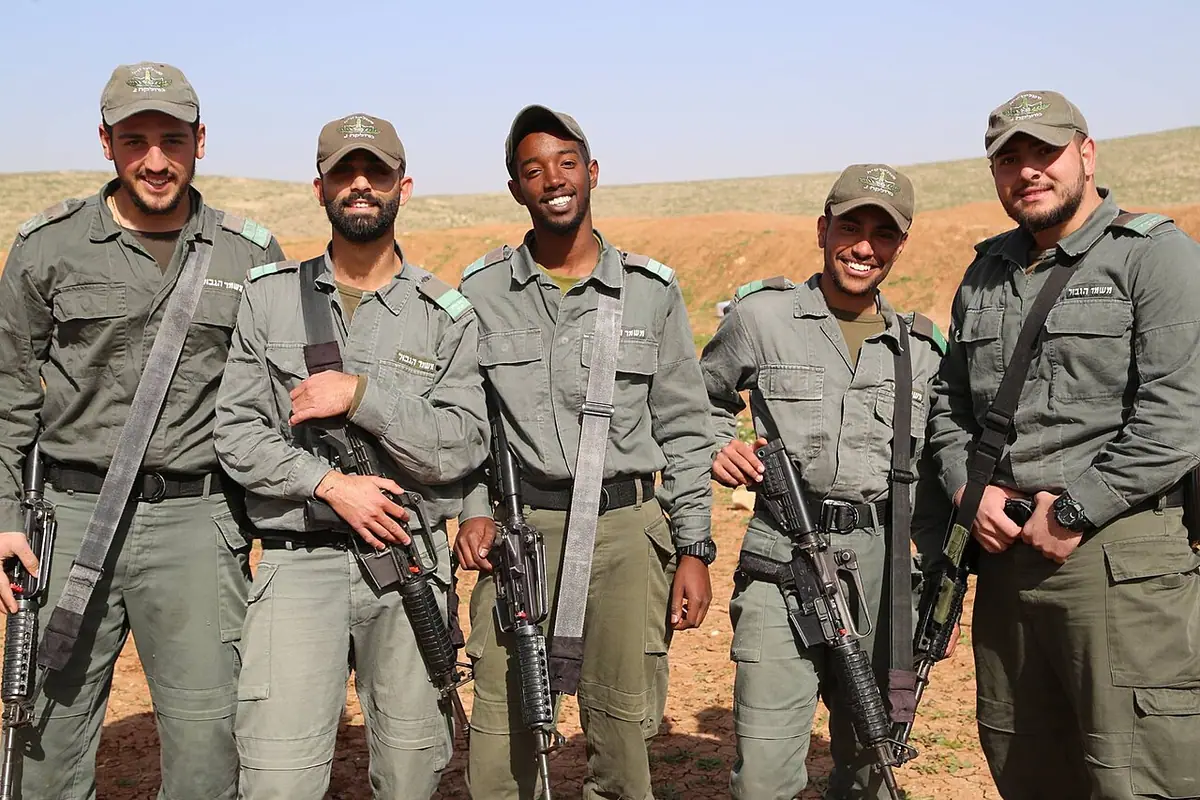
Border Police combat soldiers serve in Border Police units across the country, working against terror, crime and public disorder.
CombatBorder PoliceProfile 82+MenDark green
The role asks for a medical profile of 82 and up, a Hebrew score of 5 and up and a body mass index between 17 and 32.
The medical profile runs from 21 to 97.
The Hebrew score runs from 1 to 9.
- Kind of role
- Combat
- Branch
- Border Police
- Open to
- Men
- Medical profile
- 82 and up
- Hebrew score
- 5 and up
- Body mass index
- 17 to 32
- Try-out
- Not needed
- Training place
- the Border Police training base
The IDF's page also names a lowest score in 4 traits.
The IDF's page lists these traits among the role's requirements, each with the minimum score the role asks for.
- Command2
- Effort and persistence2
- Maturity2
- Teamwork2
This is what the work of the role holds.
Soldiers in the role work to prevent and foil terror attacks and carry out routine policing and security in city centers and crowded areas. They also fight serious crime, act against illegal residents and prevent public disorder.
The role involves technological means, weapons and different vehicles, including jeeps, ATVs and motorcycles, both marked and unmarked.
After qualifying, the soldier can join any Border Police unit, among them routine security companies in Judea and Samaria and the Jerusalem area, patrol units that fight crime, and undercover units. Other units are the tactical brigade for special operations and the national internal security brigade, which deal with terror incidents and public disorder.
This is how the IDF's page sets out the way into the role.
- 1Women go through the general selection for female combat soldiers, which covers all combat roles. This selection is for women only.
This is how the training for the role runs.
Training is basic training 05, which lasts about 16 weeks and includes police training. It takes place at the Mikhmash training base.
Where it trainsthe Border Police training base
This is what service in the role looks like.
Soldiers in the role serve at bases across the country. Women commit to compulsory service as long as men's, sign a document accepting the same terms as men, and commit to active reserve duty.
The role also asks for a few more things.
- Men with profile 72 can be accepted with a permitting medical clause.
- Placement depends on an occupational suitability approval from the information security unit of the Israel Police.
The Border Police combat soldier role belongs to these units in the guide.
More roles to read about in the same branch.
- Border Police patrol officerCombat · Profile 72+
- Israel Police conscript (Shacham)Combat support · Profile 45+
- Combat Collection Corps spearhead combat soldierCombat · Profile 82+
- Tank combat soldier in border infantry battalionsRear
- Bareket Battalion combat soldierCombat
- Ground Forces simulator instructor (armor and artillery)Combat support · Profile 72+
Frequently asked questions
What does the Border Police combat soldier role ask for?
The role asks for a medical profile of 82 and up, a Hebrew score of 5 and up and a body mass index between 17 and 32.
Who can serve as Border Police combat soldier?
The role is open to men.
Is there a try-out for Border Police combat soldier?
The IDF's page sets out the selection this way. Women go through the general selection for female combat soldiers, which covers all combat roles. This selection is for women only.
What does the training for Border Police combat soldier hold?
Training is basic training 05, which lasts about 16 weeks and includes police training. It takes place at the Mikhmash training base.
This page was written from the IDF's pages for future soldiers, read on 6 November 2026.
- The role's page on the IDF's site: Border Police combat soldier
The requirements and screenings change from time to time, and the IDF's page for each role is the one that counts.
Photo credits
- Israel Police, CC BY-SA 3.0, via Wikimedia Commons