Egypt's Abdelatty 'extremely worried' a new US-Iran round would be more destructive
Speaking at a Bahrain security summit, Egypt's foreign minister warned that renewed fighting between the United States and Iran could carry wider damage for the region.
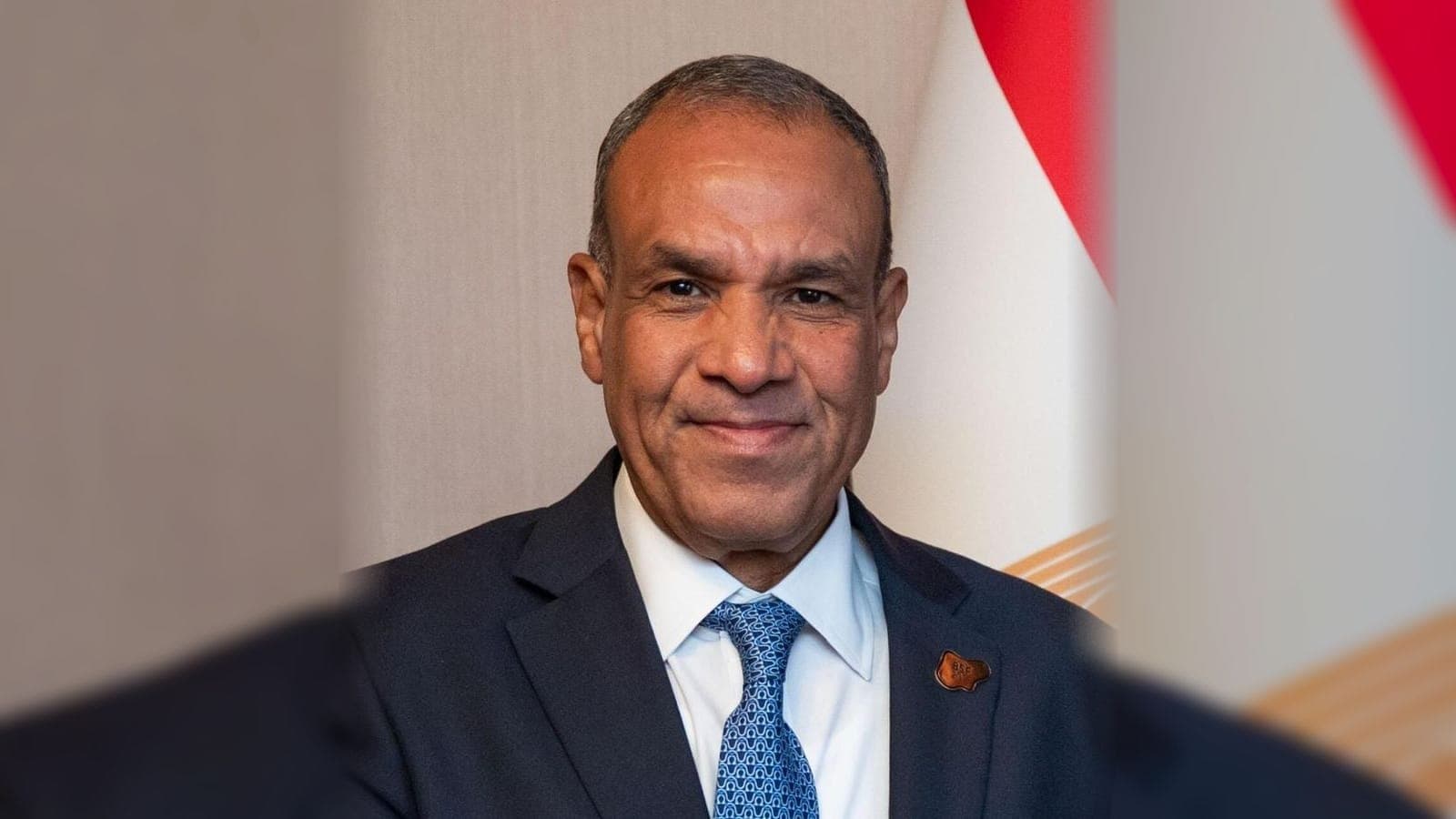
Badr Abdelatty. File photo by Boštjan Podlogar, public domain, via Wikimedia Commons.
Egypt's Foreign Minister Badr Abdelatty has said he is "extremely worried" that renewed escalation in the US-Iran war would prove more destructive than earlier fighting and have a major impact. The Times of Israel reported that he made the remarks at the IISS Manama Dialogue, a security summit held in Bahrain.
The Israeli broadcaster N12 carried the same account on its foreign desk channel, reporting that Abdelatty warned the conference that renewed escalation between Washington and Tehran could prove more destructive and bring significant consequences. The Jerusalem Post framed the warning in terms of the impact such an escalation would have on the Middle East as a whole.
Who is speaking, and where
Abdelatty is the top diplomat of Egypt, the most populous Arab state and a country that shares borders with both Israel and the Gaza Strip. A few days before the Bahrain summit, on October 26, 2026, he held a press conference at his ministry's headquarters in Egypt's New Administrative Capital, according to a photo caption published by The Times of Israel.
The Manama Dialogue is a regional security conference run by the International Institute for Strategic Studies (IISS), a think tank, and it takes place in Manama, the capital of the Gulf kingdom of Bahrain. The event regularly brings together ministers, military officials and analysts from the Gulf, the wider Middle East and Western capitals, which makes it a common venue for governments to signal their positions on regional crises to one another.
Egypt's role in regional diplomacy
Cairo has positioned itself as a mediator in recent regional conflicts. The Jerusalem Post illustrated its report with an image of US President Donald Trump meeting Egyptian President Abdel Fattah el-Sisi in Sharm El-Sheikh on October 13, 2025, before a gathering of world leaders aimed at bringing the fighting in Gaza to an end. That meeting, according to the caption, took place amid a ceasefire deal between Israel and Hamas brokered by the United States, which included an exchange of prisoners and hostages.
Israel's week in five stories, every Friday
Sourced and checked by the Israel.com newsroom, with Shabbat times. Free, one-click unsubscribe.
One list, unsubscribe in a click. See our privacy policy.
A warning from Egypt's foreign minister about the US-Iran war therefore comes from a government that has sought a hand in managing the region's conflicts and that would be exposed to their wider fallout.
The backdrop: talk of new strikes, and of talks
The Times of Israel placed Abdelatty's comments against reports that Washington had told its Gulf allies to get ready for a further possible wave of attacks on Iran, potentially from November 4, the day after the US midterm elections. The outlet attributed that detail to other reports rather than to an official US statement.
Next story Security
Egypt's Sisi says his presidency will end in 2030, constitution to stay
The same live coverage also carried items pointing in different directions. One reported that an American delegation was reportedly set to take part in face-to-face negotiations with Tehran in Doha, the capital of Qatar, following what was described as a breakthrough in negotiations. Another said Saudi Arabia reported intercepting a "hostile drone" in the region around its capital, Riyadh. The Times of Israel did not link the drone report to Abdelatty's remarks.
Taken together, these reports describe a moment in which preparations for further military action and diplomatic contacts appear to be running in parallel. Abdelatty's comments, as reported, addressed the risk of the first path rather than the prospects of the second.
How the reports differ
The three outlets agree on the core of the story: the speaker, the venue in Bahrain and the substance of the warning. Their emphasis varies slightly. The Times of Israel quoted the phrase "extremely worried" and spoke of a major impact. N12 described the remarks as a warning of significant consequences. The Jerusalem Post's headline stressed the effect on the Middle East. These are differences of wording rather than of fact.
What the reports do not say
None of the reports quotes Abdelatty at length or explains what specific consequences he had in mind, whether for Egypt's economy, for shipping, for Gulf states or for Israel. They do not say whether he proposed any Egyptian initiative or called on either side to take particular steps. The reports do not record any response from Washington or Tehran to his remarks. The claim that the US warned Gulf allies of strikes as early as November 4 is relayed by The Times of Israel from other reports and is not confirmed by any official statement in the material. The status of the reported Doha talks is likewise not detailed.
Read next
All security →
Illustration
Security
Jordan says border guards repelled 14 armed men crossing from Syria
File photo
Security
Tanker hit near Hormuz as Trump says Iran wants to talk and the US has time
Illustration
Security
US tells Gulf allies new Iran strikes could come as early as November 4
File photo
Security
Tanker hit near Hormuz as Trump says Iran 'wants to talk' and US has time
Sources and further reading
Every link below was opened and checked when this page was written. Official statements are marked as such: they are the subject's own account, not an independent one.
- Reportingtoitimesofisrael.comThe Times of Israel
- Reportingjpostjpost.comThe Jerusalem Post
- Reportingkeshett.meN12
How we checked this
The Times of Israel, The Jerusalem Post and N12 each reported Abdelatty's warning at the Bahrain summit. The report of possible US strikes from November 4 and of talks in Doha comes only from The Times of Israel's live coverage, citing other reports.
Our sourcing and corrections policy →The week from Israel, in one email
The stories that mattered, sourced and checked by the Israel.com newsroom. Free, weekly, one-click unsubscribe.
One list, unsubscribe in a click. See our privacy policy.
Latest
- Qatari paper reports US delegation heading to Doha for direct Iran talks
- Qatari mediators spend 12 hours in Tehran pressing for a US-Iran deal
- Israel's opposition weighs direct prime minister vote after deadlocked election
- Florida man, 31, charged over alleged threat to shoot at new Jewish community
- Poland suspends constitutional court chief, prompting protests in Warsaw
- Trump says Iran wants to talk and the US has time to negotiate