Israel's opposition weighs direct prime minister vote after deadlocked election
Parties opposed to Benjamin Netanyahu are reported to be considering a law for direct prime ministerial elections, a route to power that might bypass a Knesset majority.
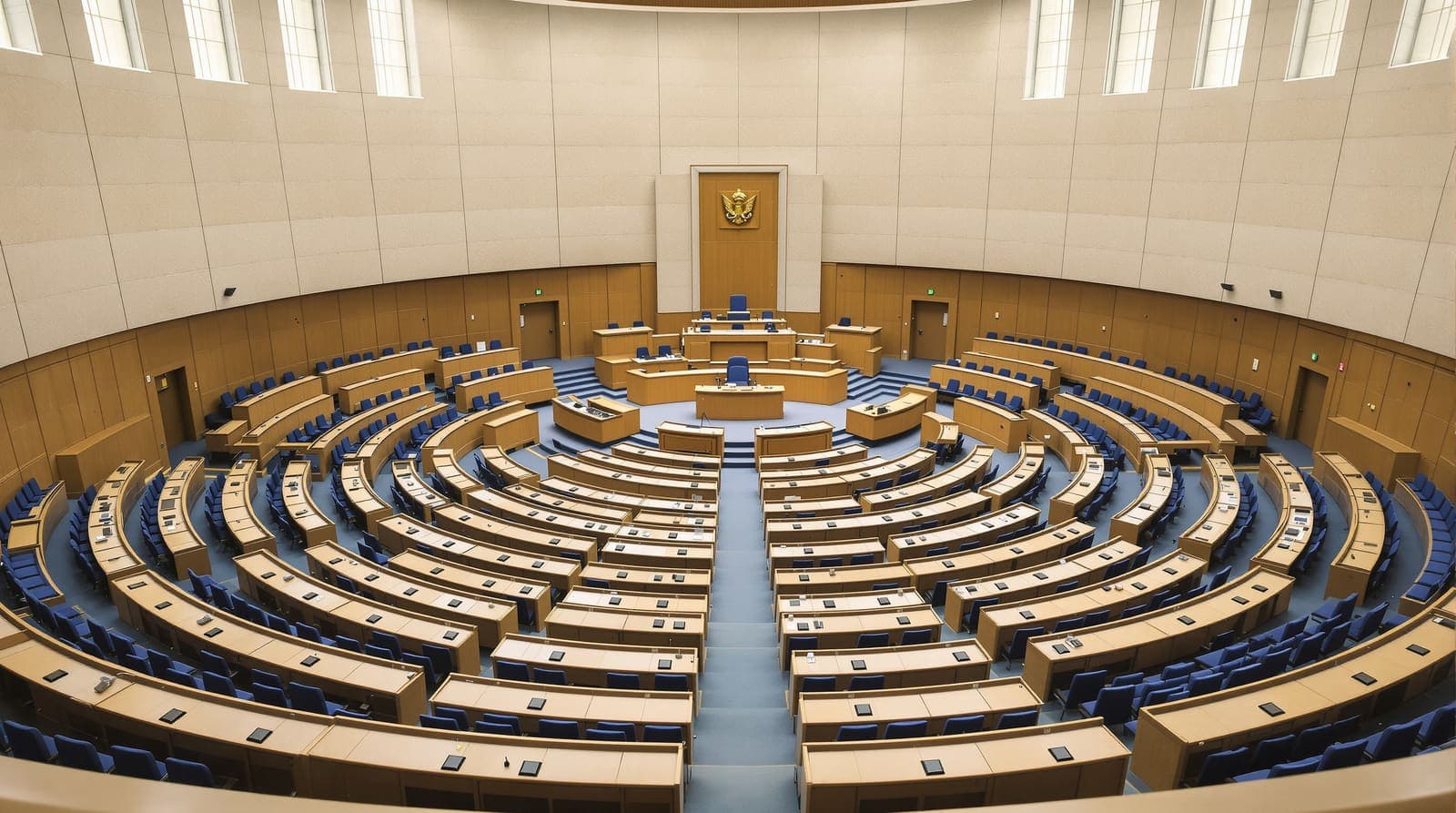
AI illustration, not a photo of the events.
Parties in the bloc opposed to Prime Minister Benjamin Netanyahu are considering legislation that would let Israelis vote for the prime minister directly, separately from the vote for parliament. The Times of Israel, citing reports in Hebrew-language media, said the aim would be to form a minority government that does not depend on backing from Arab parties.
The idea surfaced days after Tuesday's general election left neither Netanyahu's camp nor his opponents with a majority in the Knesset, Israel's parliament. The Jerusalem Post also reported that the opposition is weighing direct elections for prime minister, describing the move as a revival of the method and framing it as a way to end the stalemate without dissolving the Knesset.
On the ground

Israel's political deadlock deepens as the opposition bloc considers reviving Netanyahu's own 2021 proposal for direct prime ministerial elections. jpost.com/israel-electio…
Why the election produced a deadlock
Israelis voted on October 27, 2026, for the 120 members of the Knesset. Under the current system, voters choose party lists rather than a prime minister. After the vote, a candidate must assemble a coalition of parties able to command support in the chamber.
According to the Times of Israel, Israel's Basic Law: The Government says a government seeking to take office must first secure the confidence of the Knesset, a chamber of 120 seats. Israel has no single written constitution; its Basic Laws are a set of statutes that together carry quasi-constitutional status, and this one sets out how governments are formed. When neither side reaches a majority, that requirement can leave the country without a clear route to a new government.
What a direct vote would change
The proposal under discussion would separate the choice of prime minister from the choice of parliament. As the Times of Israel described it, a candidate who won a direct contest for the premiership could in theory go on to form a minority government, one that governs without a majority of Knesset seats behind it.
Get an email the day Israel has a new government.
Coalition talks can take weeks. When a government is sworn in, Israel.com's newsroom emails who leads it, which parties are in and who got which ministry, then the Friday email each week. Free, and one click unsubscribes.
One list, unsubscribe in a click. See our privacy policy.
That is the feature that appears to make the idea attractive to the opposition at this moment. By the Times of Israel's account, the bloc's goal is to take office without relying on the support of Arab parties.
The Jerusalem Post's framing adds a further element: that the change could be made without dissolving the current Knesset. That would mean avoiding another general election, although the report excerpt available does not explain the mechanics of how this would work.
Who is in the opposition bloc
The Times of Israel illustrated its report with a composite photograph of five figures from the camp opposed to Netanyahu: Yair Lapid, Naftali Bennett, Avigdor Liberman, Gadi Eisenkot and Yair Golan. The reports do not say which of them, or which of their parties, is driving the proposal, or whether all of them support it.
Next story Elections
Fitch keeps Israel's A rating on negative outlook, warns of election deadlock
A proposal Netanyahu once championed
The idea is not new to Israeli politics. The Times of Israel noted that Netanyahu himself promoted a similar plan after the inconclusive election of March 2021, when his own attempts to put together a coalition had stalled.
The Jerusalem Post's description of the plan as a revival reflects that direct prime ministerial elections have been part of Israel's political debate before. The current proposal would place the opposition in the position of advancing a mechanism once favoured by the leader it is trying to replace.
What the reports do not say
Both reports describe the proposal as under consideration, not as a decision. Neither gives the text of any draft bill, a timetable for introducing it, or the number of Knesset members who would back it. It is not clear from the material whether the opposition currently has the votes to pass such a law, or how a law that changes the basic method of choosing a prime minister would be applied to the result of an election that has already taken place.
The reports also differ in emphasis. The Times of Israel focuses on forming a minority government without Arab parties; the Jerusalem Post highlights avoiding the dissolution of the Knesset. These points are not contradictory, but neither report confirms the other's detail.
Finally, the reports do not include any on-the-record comment from the opposition leaders named, from Netanyahu's camp, or from the Arab parties whose role is central to the calculation. The Times of Israel attributes the core claim to Hebrew-language media rather than to its own sourcing.
Read next
All elections →
File photo
Elections
Lapid claims 'a win on points' as his share of Bennett merger falls to 5 seats

Illustration
Elections
Around 300,000 votes go to parties that missed Israel's electoral threshold
File photo
Elections
Lapid asks supporters for patience as coalition talks go on behind closed doors

Illustration
Elections
Likud tops final Israeli results with 27 seats; 47 new lawmakers elected
Sources and further reading
Every link below was opened and checked when this page was written. Official statements are marked as such: they are the subject's own account, not an independent one.
- Reportingtoitimesofisrael.comThe Times of Israel
- Reportingjpostjpost.comThe Jerusalem Post
How we checked this
The Times of Israel and The Jerusalem Post both reported that the opposition is considering direct prime ministerial elections; the Times of Israel attributes this to Hebrew-language media. The detail about not dissolving the Knesset comes only from The Jerusalem Post, and we have not independently verified either account.
Our sourcing and corrections policy →The week from Israel, in one email
The stories that mattered, sourced and checked by the Israel.com newsroom. Free, weekly, one-click unsubscribe.
One list, unsubscribe in a click. See our privacy policy.

Israel.com is free, and readers like you keep it that way.
The Israel.com newsroom checks every story against its sources and publishes it free. If this one helped, a contribution of any size keeps the next one free too.
One payment, nothing to sign up for. Another amount
Latest
- Qatari paper reports US delegation heading to Doha for direct Iran talks
- US tells Gulf allies new Iran strikes could come as early as November 4
- Qatari mediators spend 12 hours in Tehran pressing for a US-Iran deal
- Florida man, 31, charged over alleged threat to shoot at new Jewish community
- Poland suspends constitutional court chief, prompting protests in Warsaw
- Tanker hit near Hormuz as Trump says Iran 'wants to talk' and US has time