Israel delivers blankets, food and medical kits to Nepali village
Israel's embassy in Kathmandu says its team reached an affected village and handed relief supplies straight to residents, in coordination with Nepal's government.
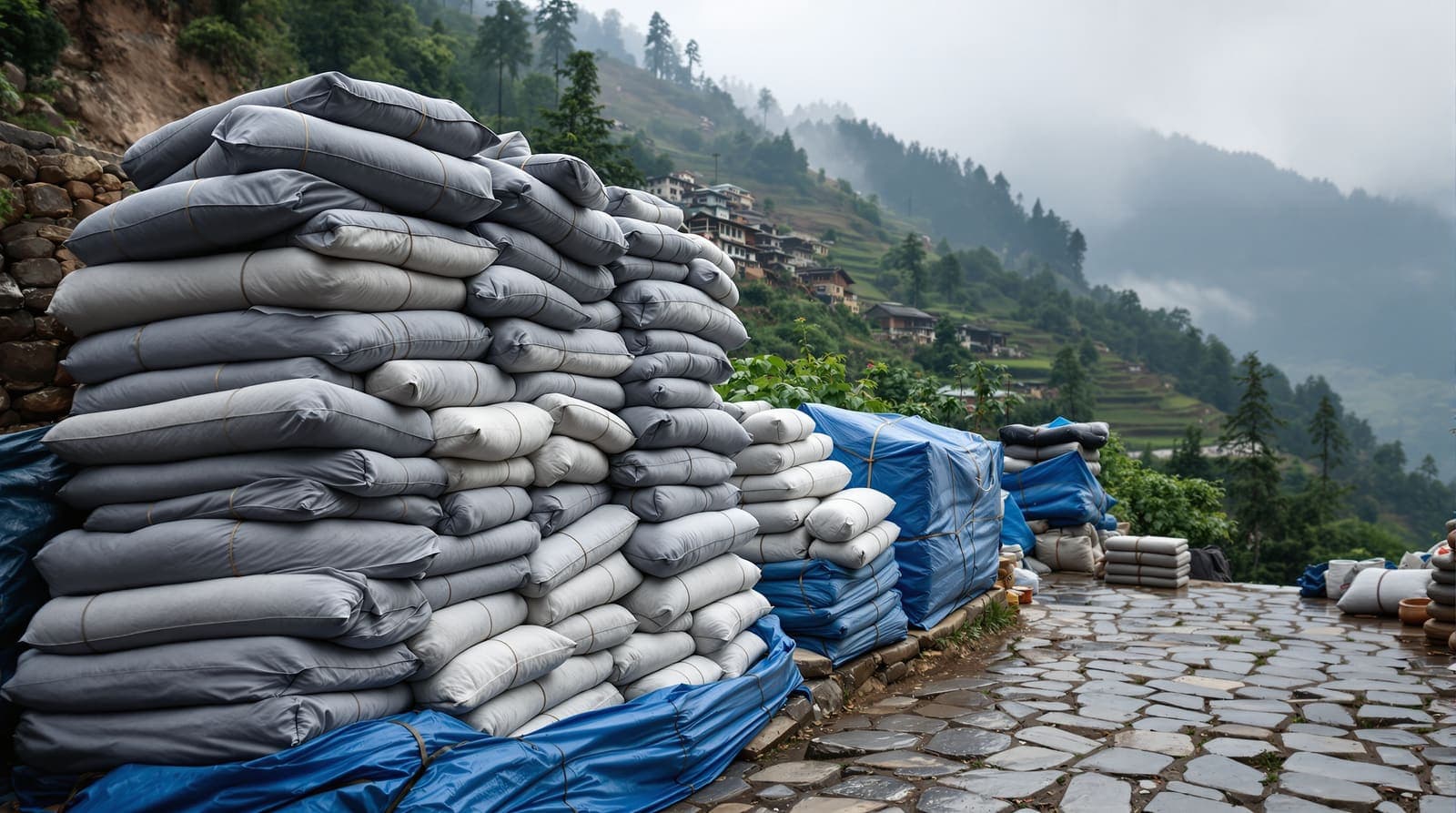
AI illustration, not a photo of the events.
An Israeli embassy team travelled to an affected area of Nepal and handed relief supplies directly to residents of a village there, according to a statement published by the Israeli government on 4 September 2026. The statement said the aid was provided through Israel's national development and aid agency and in line with needs identified by the Government of Nepal.
The items listed in the statement were blankets, medical supplies, dry food, first aid kits, fans, mattresses and pillows. Israel "remains in close contact with the local authorities and stands ready to assist in any way possible", the statement said, adding that the country "stands with the people of Nepal during these difficult and painful days". The photographs accompanying the announcement were credited to the Embassy of Israel in Nepal.
What MASHAV is
The aid was channelled through MASHAV, the Hebrew acronym commonly used for Israel's Agency for International Development Cooperation, which sits within the Ministry of Foreign Affairs. MASHAV is the body that handles Israel's civilian overseas development work and emergency relief, and it is the channel through which Israeli embassies typically procure and distribute supplies after a disaster abroad. The government statement described MASHAV as Israel's national aid agency and said the assistance was calibrated to needs set out by Nepali authorities rather than determined unilaterally.
That distinction matters in disaster response. Aid agencies and host governments frequently clash over unsolicited donations that do not match what is needed on the ground, and international guidelines encourage donors to supply only what the receiving state requests. The Israeli statement frames this delivery in those terms.
Where this happened, and where it did not say
Nepal is a landlocked country in South Asia, bordered by India and China, with Kathmandu as its capital. Much of its territory is mountainous, and villages outside the main valleys can be difficult to reach when roads are cut. The Israeli statement refers only to "the affected area" and "the affected village" and does not name either, nor does it identify the district or province.
Israel's week in five stories, every Friday
Sourced and checked by the Israel.com newsroom, with Shabbat times. Free, one-click unsubscribe.
One list, unsubscribe in a click. See our privacy policy.
Israel has maintained diplomatic relations with Nepal for decades and keeps an embassy in Kathmandu, which the government page links to as a further point of contact. Nepal is also a long-standing destination for Israeli travellers, particularly young people trekking after military service, and Israeli missions there have in the past been involved in locating and assisting citizens during emergencies. The current statement makes no reference to Israeli nationals in the country.
How Israel usually frames this kind of mission
Israeli overseas relief typically takes one of two forms: a delegation of search and rescue or medical personnel deployed under the Israel Defense Forces or the Foreign Ministry, or a smaller, embassy-led distribution of equipment purchased locally or flown in. What is described here is the second kind, carried out by embassy staff rather than an announced delegation. The government release does not mention any Israeli medical team, field hospital or search and rescue unit operating in Nepal.
Such announcements are also an instrument of public diplomacy. The Foreign Ministry publishes them in English on the government portal, filed under foreign policy and international aid, and they are shared through the ministry's social media channels alongside photographs from the field. That is the format of this release.
What the statement does not say
The release does not identify the disaster or event that made the area "affected". It gives no casualty figures, no assessment of damage, and no indication of how many people were displaced or how many received the supplies. It does not say how many villages were reached, how many embassy staff took part, or on what date the delivery itself was made, as distinct from the date of publication.
It also does not put a value on the equipment, say whether it was bought in Nepal or shipped from Israel, or name any Nepali agency or partner organisation involved in the distribution. No further Israeli assistance is specified beyond the general readiness to help. Because this account rests on a single official statement, none of these details can be filled in from other reporting here, and the description of the delivery remains the account of the Israeli government alone.
Read next
All health →
File photo
Health
Paraguay's vice president meets Netanyahu and Sa'ar, signs health pact
Illustration
Security
IDF fires interceptor at suspected aerial target over southern Lebanon
Illustration
Security
IDF says about 220,000 dunams of West Bank olives harvested so far
Illustration
Security
Troops detain Palestinian suspected of planning imminent attack in Binyamin area
Sources and further reading
Every link below was opened and checked when this page was written. Official statements are marked as such: they are the subject's own account, not an independent one.
- Officialgov.ilgov.ilIsraeli government press release
How we checked this
All details here come from a single Israeli government media statement published on 4 September 2026 and credited to the Embassy of Israel in Nepal. No independent confirmation of the delivery, its location or its scale was available.
Our sourcing and corrections policy →
The week from Israel, in one email
The stories that mattered, sourced and checked by the Israel.com newsroom. Free, weekly, one-click unsubscribe.
One list, unsubscribe in a click. See our privacy policy.

Israel.com is free, and readers like you keep it that way.
The Israel.com newsroom checks every story against its sources and publishes it free. If this one helped, a contribution of any size keeps the next one free too.
One payment, nothing to sign up for. Another amount
Latest
- Soldiers killed near Hebron named and buried as army operation goes on
- Truck driver arrested after fatal crash on Route 465 near Aboud
- Man of about 25 shot dead in Yafia, near Nazareth, during a taxi ride
- IDF says Gaza strikes killed two men who moved Iranian and Turkish money to Hamas
- Israeli and Greek navies practise sinking a hostile vessel in joint drill
- Kinneret Drops Another 4.0 cm to -213.715 m, Sitting 0.72 m Below the Lower Red Line