Israel weighs acting alone on Iran while fearing a surprise US strike
Two Israeli outlets describe a defence establishment preparing for Iran scenarios both with and without Washington, as US nuclear talks with Tehran continue.

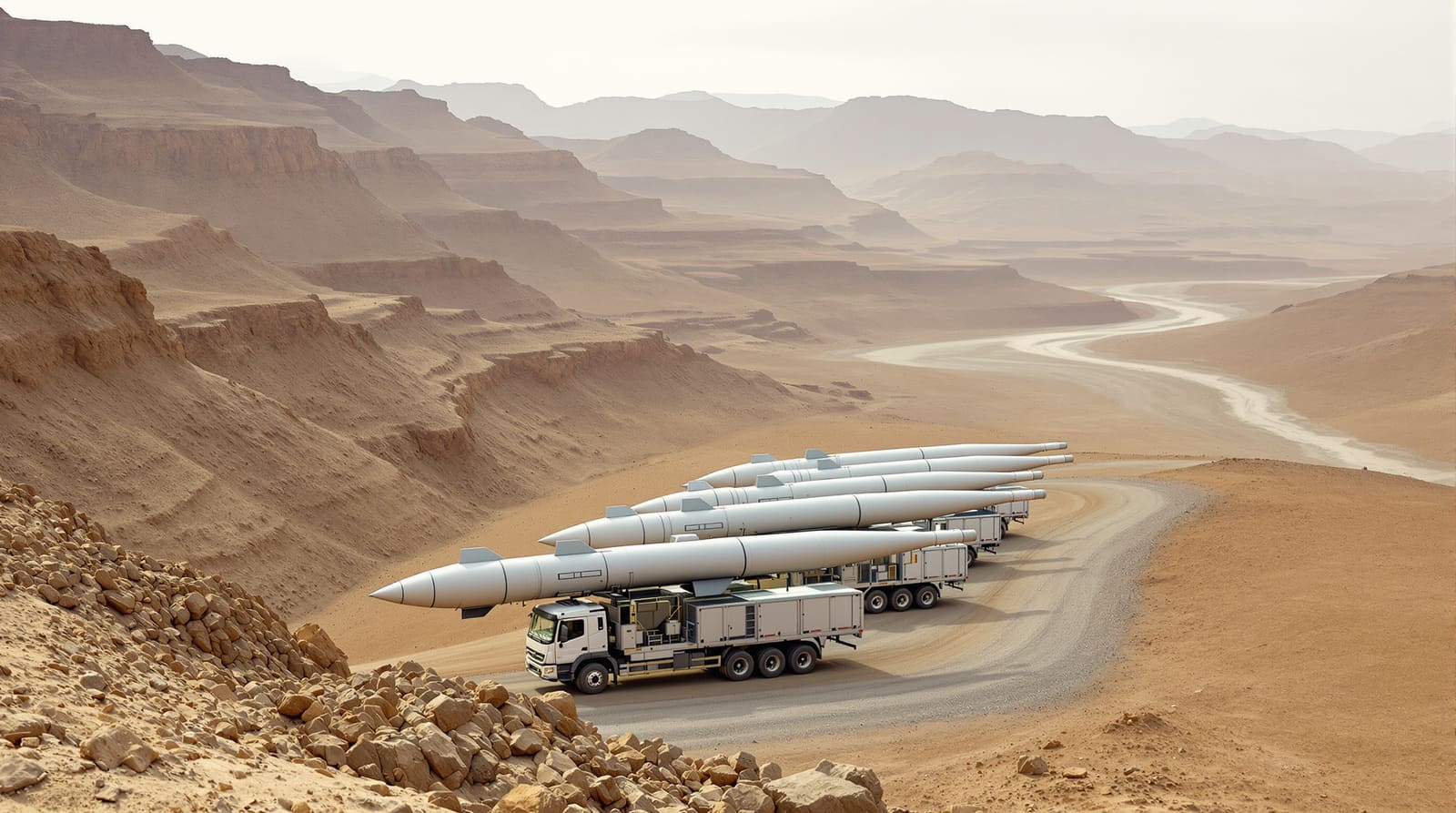
AI illustration, not a photo of the events.
Israel is preparing for the possibility that it may have to act against Iran without the United States, according to an analysis published by the Israeli news site Ynet. The report says the Israel Defense Forces (IDF) are pressing for what it calls strategic certainty, and that officials in Jerusalem are troubled that Iran's enriched uranium is not under oversight. Ynet also reported that Israeli military intelligence is updating its list of potential targets, and that US forces, which are building up in the region, have sent Israel additional defence systems.
A separate analysis in The Jerusalem Post approached the same situation from another angle, reporting that Israel fears the United States could carry out a surprise strike on Iran, and that ongoing nuclear talks are feeding concern about escalation. Taken together, the two pieces describe Israeli planners trying to prepare both for a scenario in which Washington moves without warning and one in which Israel moves on its own.
Two outlets, two emphases
The reports do not contradict each other outright, but they stress different risks. Ynet's account centres on the prospect of Israel needing what it terms a "solo" operation, at a time when, it says, President Donald Trump's attention is turned toward a summit in China. The Jerusalem Post's account centres on the opposite concern: that the US might act first, catching Israel unprepared, as diplomacy with Tehran proceeds. Both are labelled or framed as analysis rather than as reports of a specific decision, and neither describes an order or a timetable.
What military intelligence and a target bank are
Ynet refers to Aman, the Hebrew acronym for the IDF's Military Intelligence Directorate, the body responsible for assessing threats and producing intelligence for military planning. The term "target bank" refers to the catalogue of sites and assets that the military has identified and studied in advance so that they can be struck if a decision is taken. Updating it is a routine part of contingency planning, and the report does not say that any strike has been approved.
The enriched uranium question
According to Ynet, a central worry in Jerusalem is that Iran's stock of enriched uranium is not being monitored. Enriched uranium is the material that can fuel nuclear reactors and, at higher levels of enrichment, nuclear weapons, which is why its whereabouts and the degree of outside supervision over it are a recurring concern for Israel. The report does not specify how much material is involved or where it is believed to be.
Israel's week in five stories, every Friday
Sourced and checked by the Israel.com newsroom, with Shabbat times. Free, one-click unsubscribe.
One list, unsubscribe in a click. See our privacy policy.
The wider backdrop
A photo caption accompanying The Jerusalem Post's analysis refers to an ongoing war between Israel, Iran and Hezbollah, the Lebanese armed group backed by Tehran, with an image dated March 12, 2026. That places the current planning in the context of a conflict that has already involved direct confrontation between Israel and Iran. Ynet's account notes that American forces are thickening their presence and have transferred further defensive systems to Israel, though it does not name the systems.
A question from inside the security establishment
Ynet quoted unnamed security officials as saying the state would have to explain the purpose of another round of fighting. The remark suggests that, within parts of the defence establishment, the demand for strategic certainty is about defining clear political goals before any renewed operation, not only about military readiness. The report attributes this view to security figures generally and does not identify them.
What the reports do not say
Neither report cites any statement from the Israeli government, the IDF spokesperson, the White House or Iran, so there is no official response on record to either account. Neither identifies which defence systems the US has sent, what the summit in China involves, or what stage the nuclear talks have reached. Ynet does not say what concrete conditions the IDF wants met to achieve strategic certainty, and The Jerusalem Post's summary does not say what evidence underlies the concern about a surprise US strike.

xiquinhosilva / CC BY 2.0 · Wikimedia Commons
Read next
All security →
File photo
Government
Eisenkot works three coalition channels as talks with Likud are set to open
File photo
Security
Trump may hold off on Iran strikes and leave Hormuz talks to Gulf, reports say
File photo
Government
Netanyahu's office says US aid will end gradually, unlike Trump's timeline

File photo
Elections
Mansour Abbas says Netanyahu told him in 2021 he and Sinwar understood each other
Sources and further reading
Every link below was opened and checked when this page was written. Official statements are marked as such: they are the subject's own account, not an independent one.
- Reportingyediothynet.co.ilYnet
- Reportingjpostjpost.comThe Jerusalem Post
How we checked this
The broad picture of Israeli concern over Iran and US intentions appears in both Ynet and The Jerusalem Post, though each frames it differently. Details on the target bank, uranium oversight, US defence systems and the security officials' remark come from Ynet alone; neither outlet cites an official statement.
Our sourcing and corrections policy →The week from Israel, in one email
The stories that mattered, sourced and checked by the Israel.com newsroom. Free, weekly, one-click unsubscribe.
One list, unsubscribe in a click. See our privacy policy.
Latest

Illustration
File photo
File photo
Illustration

Illustration

Illustration