Knesset legal adviser says 'terror supporter' jibe is allowed, but not as a barrage
Sagit Afik ruled the phrase is not banned in the plenum, though its systematic repetition alongside insults can justify a call to order, after Arab lawmakers sought a ban.
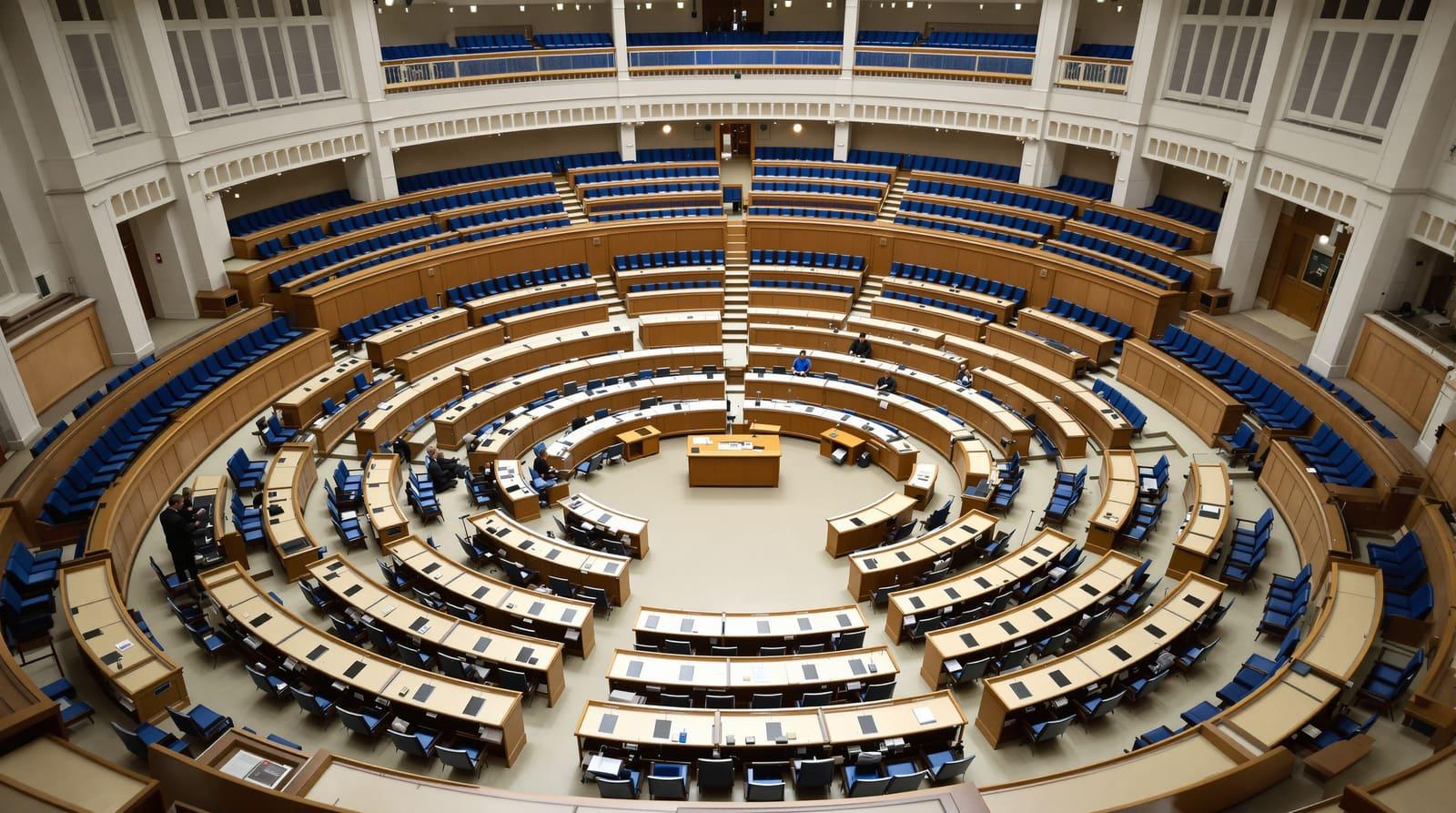
AI illustration, not a photo of the events.
The legal adviser to the Knesset, Israel's parliament, has concluded that lawmakers may describe a fellow member as a "terror supporter" during debates, but that hammering the label repeatedly as part of a defamatory tirade, together with other insults, gives the chair grounds to call the speaker to order. Ynet reported that the opinion, written by legal adviser Sagit Afik, came in response to a demand by Arab members of the Knesset that the phrase be barred from the plenum.
Political commentator Amit Segal wrote on his Telegram channel that the request had come from MK Tibi. In Afik's reading, as reported by Ynet, "terror supporter" is not a forbidden expression. She distinguished it from two other words, the Hebrew terms for "terrorist", which the Knesset Ethics Committee has already ruled out of bounds. The Times of Israel likewise summarised the opinion as finding that the label itself is not prohibited.
What the legal adviser decided
The opinion draws a line between a single use of the phrase and a pattern. According to N12 political correspondent Dafna Liel, Afik held that calling a member a "terror supporter" is permitted, while making systematic use of the epithet alongside curses is not. Segal, in a second post, described the same distinction: the opinion does not forbid the words unless they are repeated systematically as a smear, accompanied by further abuse.
The reports frame the consequence slightly differently. Ynet's headline and N12's first update describe that kind of repeated use as forbidden. Segal's posts, and a later N12 update, put it in more procedural terms: a defamatory outburst of that kind allows the presiding chair to issue a call to order. The reports do not suggest these accounts conflict, but they differ in emphasis.
Two Hebrew words that are already off limits
Hebrew has two common words that English renders as "terrorist". One is terrorist, borrowed directly. The other is mehabel, the term most often used in Israeli media and official statements for a person who carries out an attack. Ynet and N12 both reported that the Ethics Committee has classed both words as prohibited when directed at members, and Afik's opinion leaves that position in place. The question she addressed was whether "terror supporter", tomech teror in Hebrew, falls into the same category. Her answer, according to the reports, is that it does not on its own.
Israel's week in five stories, every Friday
Sourced and checked by the Israel.com newsroom, with Shabbat times. Free, one-click unsubscribe.
One list, unsubscribe in a click. See our privacy policy.
The bodies involved
The Knesset legal adviser is a civil servant, not a politician, who advises the parliament's presidium, committees and members on legal and procedural questions, including what is permitted in debate. The Ethics Committee is a parliamentary panel that rules on members' conduct and can set standards for acceptable language.
The plenum is the full chamber where all members sit and vote, as distinct from the committee rooms. A call to order is a formal rebuke that the member chairing a plenum session can issue to a lawmaker whose conduct breaches the rules of debate.

Illustration
Next story Security
Israel's security cabinet to meet Thursday as tension with Iran rises
Why the phrase matters
Arab lawmakers in the Knesset are frequently accused by political opponents of supporting terrorism, and the phrase has become a regular feature of heated exchanges in the chamber. The demand to ban it, which Ynet attributed to Arab MKs and Segal to Tibi, sought to place it alongside the two words the Ethics Committee has already barred. Afik's opinion stops short of that: it leaves the phrase available to members while giving presiding chairs a basis to intervene when its use turns into sustained abuse.
What the reports do not say
None of the reports quotes a response from Tibi or the other Arab members who made the demand, or from the lawmakers who use the phrase. They do not say what incident prompted the request, whether the Ethics Committee will revisit the question, or how presiding chairs are expected to judge when repetition becomes "systematic". The full text of Afik's opinion has not been published in the material available.
People in this story: Amit Segal
Read next
All security →
Illustration
Security
Leaked Russian data puts soldier deaths near 500,000, suicides above 1,000

Illustration
Security
Hamas condemns killing of its internal security chief as IDF confirms strike

Illustration
Security
Charges coming for gunman who killed father of 6 on eve of Yom Kippur

Illustration
Security
Lebanese media report Israeli strikes on Tulin and nearby villages
See Israel.com first in Google's top stories.Add it as a preferred source on Google
Sources and further reading
Every link below was opened and checked when this page was written. Official statements are marked as such: they are the subject's own account, not an independent one.
- Reportingamitsegalt.meAmit Segal
- Reportingyediothynet.co.ilYnet
- Reportingyediotht.meYnet alerts
- Reportingtoitimesofisrael.comThe Times of Israel
- Reportingamitsegalt.meAmit Segal
- Reportingkeshett.meN12
- Reportingkeshett.meN12
How we checked this
The legal adviser's opinion was reported by Ynet, N12, The Times of Israel and commentator Amit Segal, who agree on its substance. Only Segal names Tibi as the source of the request; Ynet attributes it to Arab MKs generally.
Our sourcing and corrections policy →The week from Israel, in one email
The stories that mattered, sourced and checked by the Israel.com newsroom. Free, weekly, one-click unsubscribe.
One list, unsubscribe in a click. See our privacy policy.
Latest

Illustration
File photo

Illustration
Illustration

Illustration

Illustration