Saudi-led coalition strikes Yemen oil sites as Houthis report two dead
Coalition strikes resumed on Yemeni oil facilities after rare evacuation warnings, and the Houthis say two people died in Hodeidah while threatening Riyadh.
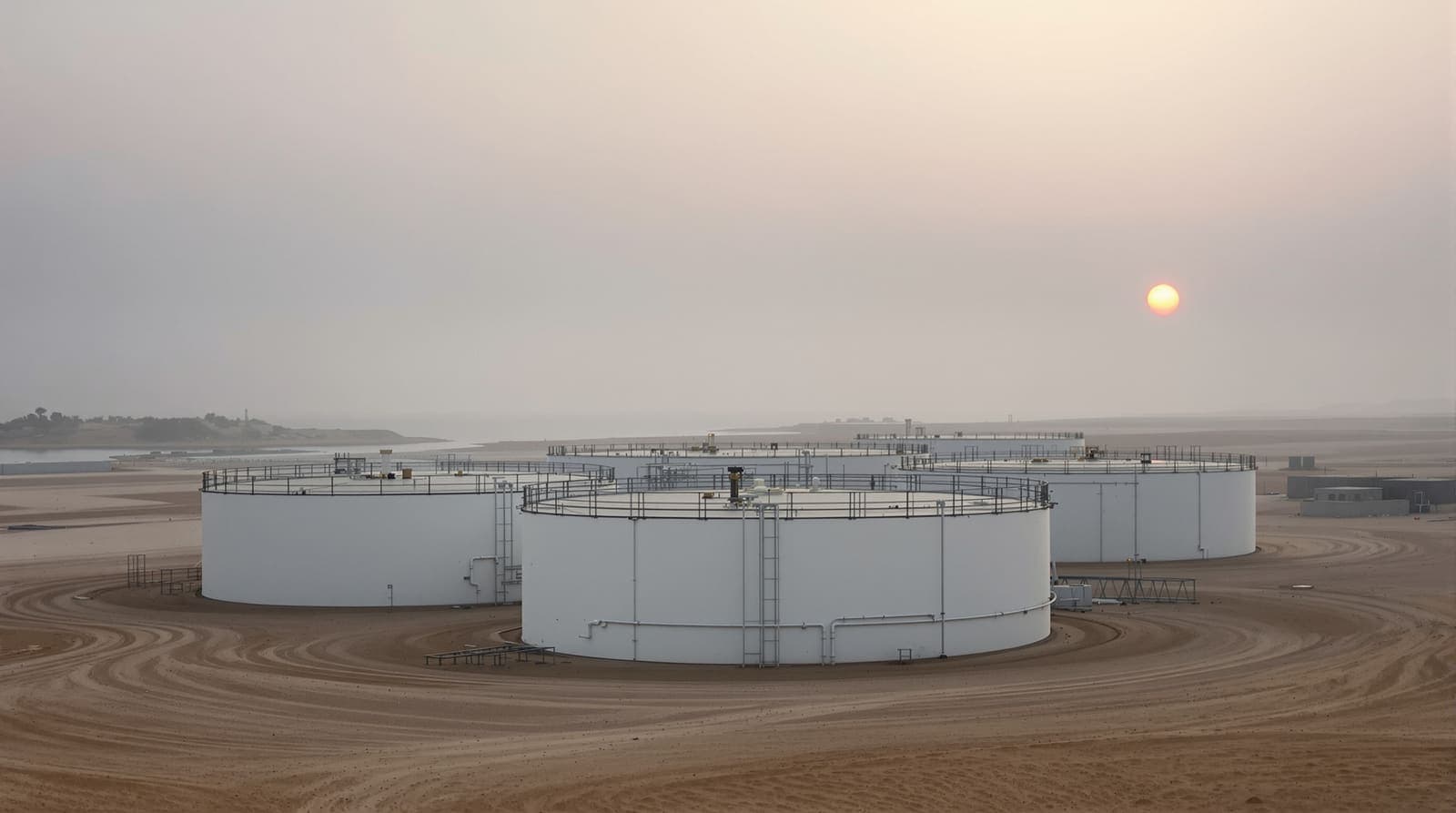
AI illustration, not a photo of the events.
The Saudi-led coalition fighting in Yemen resumed air strikes on Tuesday, hitting oil facilities in territory held by the Houthi movement. Ynet reported that the coalition renewed its attacks on Sanaa and Hodeidah, and that before doing so it published evacuation warnings for the first time. According to Ynet, the Houthis answered with warnings of their own, which also included maps.
The health ministry run by the Houthis said two people died when an oil company in Hodeidah, a province on Yemen's Red Sea coast, came under attack, and it held Saudi Arabia responsible. The Times of Israel, reporting the ministry's statement, noted there was no immediate confirmation from the Saudi side. Haaretz carried the same casualty claim, crediting Reuters and The Associated Press.
On the ground

Saudi air strikes target oil facilities in Sanaa and Hodeidah as Houthis warn of retaliatory attacks on Riyadh’s airport and refineries, as fighting near Taiz sees Houthi gains around strategic Mount Sabr despite government counteroffensives. Al Jazeera’s Yousef Mawry reports.
Video from Al Jazeera English. Tap to play. Nothing from it is shown until you do.
Where the strikes landed
The reports describe the targets in slightly different ways. The Israeli news channel News.co.il, citing reports from Sanaa, said the coalition struck oil facilities to the west of the Yemeni capital. The same post included footage it described as fighter jets attacking an oil station in the city of Dhamar, which it placed south of Sanaa. Ynet named Sanaa and Hodeidah as the areas hit, while the casualty figure from the Houthi health ministry refers specifically to an oil company in Hodeidah province.
These accounts are not necessarily in conflict, since the coalition may have struck more than one location, but the reports do not reconcile them, and none of them gives a full list of sites hit.
Who the parties are
The Houthis are the armed movement that controls Sanaa and much of northern and western Yemen, and they operate their own government institutions, including the health ministry quoted here. Casualty figures from that ministry are statements by one party to the conflict. Opposing them is a coalition led by Saudi Arabia that backs forces fighting the Houthis on the ground. Hodeidah, on the Red Sea, is home to a major port and has been a recurring focus of the war.
Threats against Saudi Arabia
According to News.co.il, the Houthis threatened a severe response in Riyadh, the Saudi capital, and repeated earlier warnings against using Saudi airports. Ynet said the Houthi counter-warnings were issued with maps, mirroring the format the coalition used for its own evacuation notices. The reports do not say which specific locations the Houthi warnings named.
Fighting on the ground
The air strikes come alongside ground fighting. News.co.il reported that the Houthis have tightened their siege of Taiz, cutting most supply routes into the city, and that forces supported by Saudi Arabia are trying to break the siege and regain control of areas near the Bab al-Mandab strait. The strait sits at the southern end of the Red Sea, between Yemen and the Horn of Africa.
Ynet also published footage it said showed direct combat between Houthi fighters and pro-Saudi forces, in which a soldier appears to be thrown into the air, apparently by an anti-tank weapon. The outlet described the scene with a comparison to the film Mad Max.
Trump's reaction
US President Donald Trump commented on the escalation, though the outlets render his words differently. Ynet quoted him, in Hebrew, as saying the Houthis had raised their heads again and that this was not nice. The Times of Israel, in a related liveblog headline, reported that Trump said the Houthis are "behaving very badly" and that he may ask Turkish President Recep Tayyip Erdogan to intervene. The reports do not explain what such an intervention would involve.
What the reports do not say
Saudi Arabia and the coalition had not, in the material available, confirmed the Hodeidah strike or the casualty figure, which rests on the Houthi health ministry alone. The reports do not identify the oil company in Hodeidah, say whether those killed were workers or civilians, or describe the extent of damage at any site, including Dhamar. They do not state what prompted the coalition to resume strikes at this point or how long the pause before it lasted. No report says whether the Houthis have carried out their threat against Riyadh, and the account of the Taiz siege comes from a single outlet.
Sources and further reading
Every link below was opened and checked when this page was written. Official statements are marked as such: they are the subject's own account, not an independent one.
- Reportingyediothynet.co.ilYnet
- Reportingtoitimesofisrael.comThe Times of Israel
- Reportinghaaretzhaaretz.comHaaretz
- Reportingnewssilt.meNews.co.il
How we checked this
The resumed strikes were reported by Ynet and News.co.il, and the two deaths in Hodeidah by The Times of Israel and Haaretz, both citing the Houthi-run health ministry, whose claim was unconfirmed by Saudi Arabia. The Taiz siege and the Dhamar footage come from News.co.il alone.
Our sourcing and corrections policy →The week from Israel, in one email
The stories that mattered, sourced and checked by the Israel.com newsroom. Free, weekly, one-click unsubscribe.
One list, unsubscribe in a click. See our privacy policy.
More in Emergency
All emergency →
Latest
- Coalition resumes Sanaa strikes as Houthis threaten Aramco sites
- One year on, Israel and a US envoy mark return of last 20 living hostages
- Trump says he 'may be doing something' on Israel's October 27 election
- 9 toddlers taken to Hadassah after allergic reactions at Betar Illit daycare
- Man aged about 20 shot dead in Umm al-Fahm, a second man lightly hurt
- Four Islamic Jihad suspects held in Qabatiya and Arraba, IDF says