Museum · Caesarea
Caesarea Maritima Museum, Sdot Yam
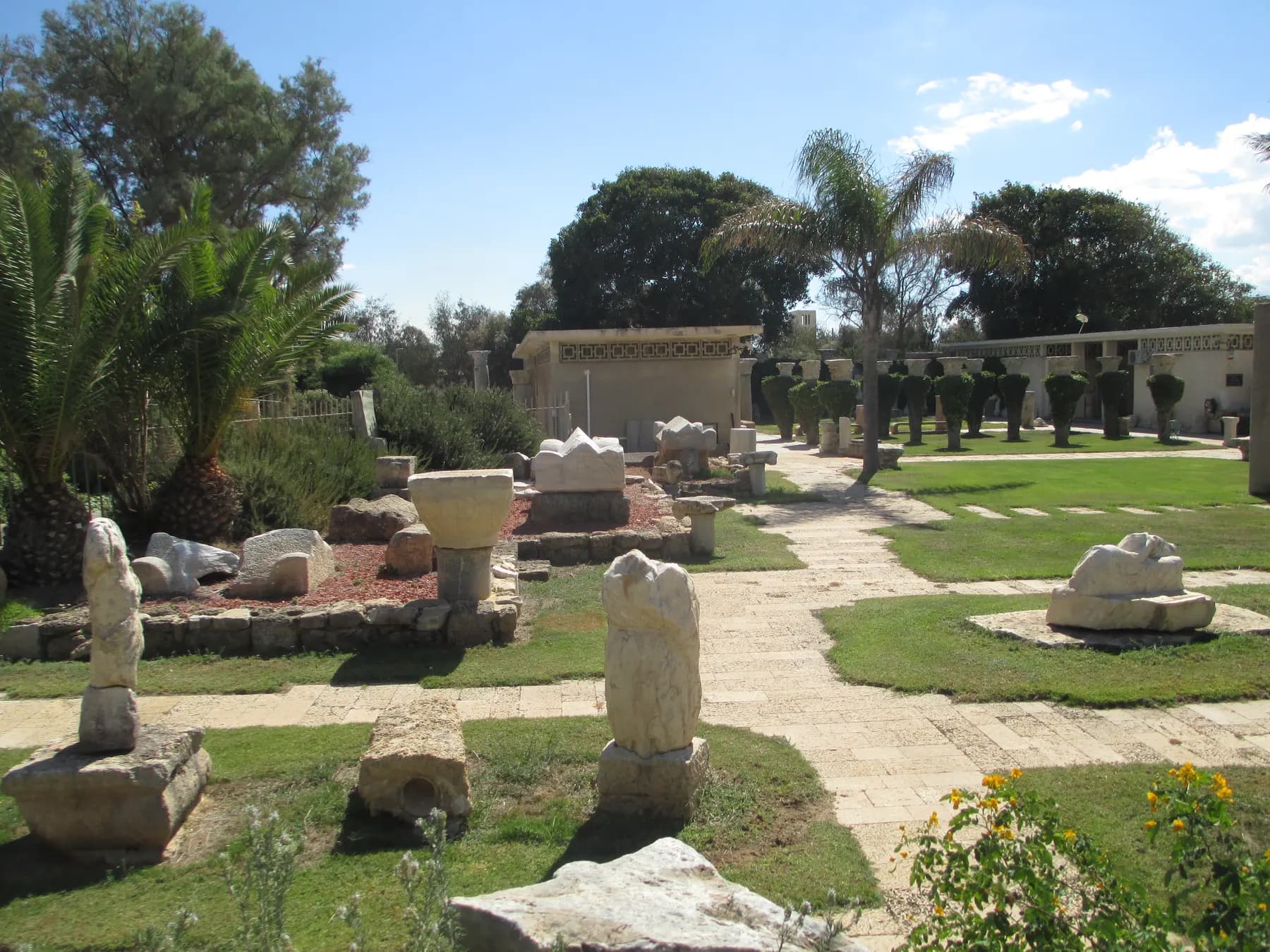
A kibbutz collection with a single author: Aharon Wegman began picking up Caesarea's antiquities when he settled here on 2 May 1940, and the museum and the collection were named for him after his death in 1993.
Dr. Avishai Teicher / CC BY 2.5 · Wikimedia Commons
Display rooms
Three
plus a courtyard of columns, statues and sarcophagi
Collecting began
May 1940
when Aharon Wegman was among the first ten members to settle at Caesarea
Open
Sun to Thu, 10:00 to 16:00
Friday 9:00 to 13:00, closed Saturdays and festivals
Scholarly catalogue
1999
the memorial volume edited by Rivka Gersht, Tel Aviv
In short
- How long to give it
- about 45 to 60 minutes for the three rooms and the courtyard, longer with a guide
- Sunday to Thursday
- 10:00 to 16:00
- Published price
- None. The operator's ticket page gives no figures and asks visitors to arrange a visit by telephone or email
מוזיאון קיסריה בשדות ים
The Caesarea Maritima Museum is the archaeological collection of Kibbutz Sdot Yam, shown in three display rooms and a walled courtyard a few hundred metres south of the national park. It exists because the people who farmed, built and fished this stretch of coast from 1940 onwards kept what they turned up. Its operator, the Anna Szenes Association, calls it the Caesarea Antiquity Museum in English; the Hebrew name in use on the kibbutz and on the Caesarea Development Corporation's own listing is Otzrot Kesariya, the Treasures of Caesarea. All three names mean the same set of rooms, next door to the Hannah Senesh House, inside a working kibbutz.
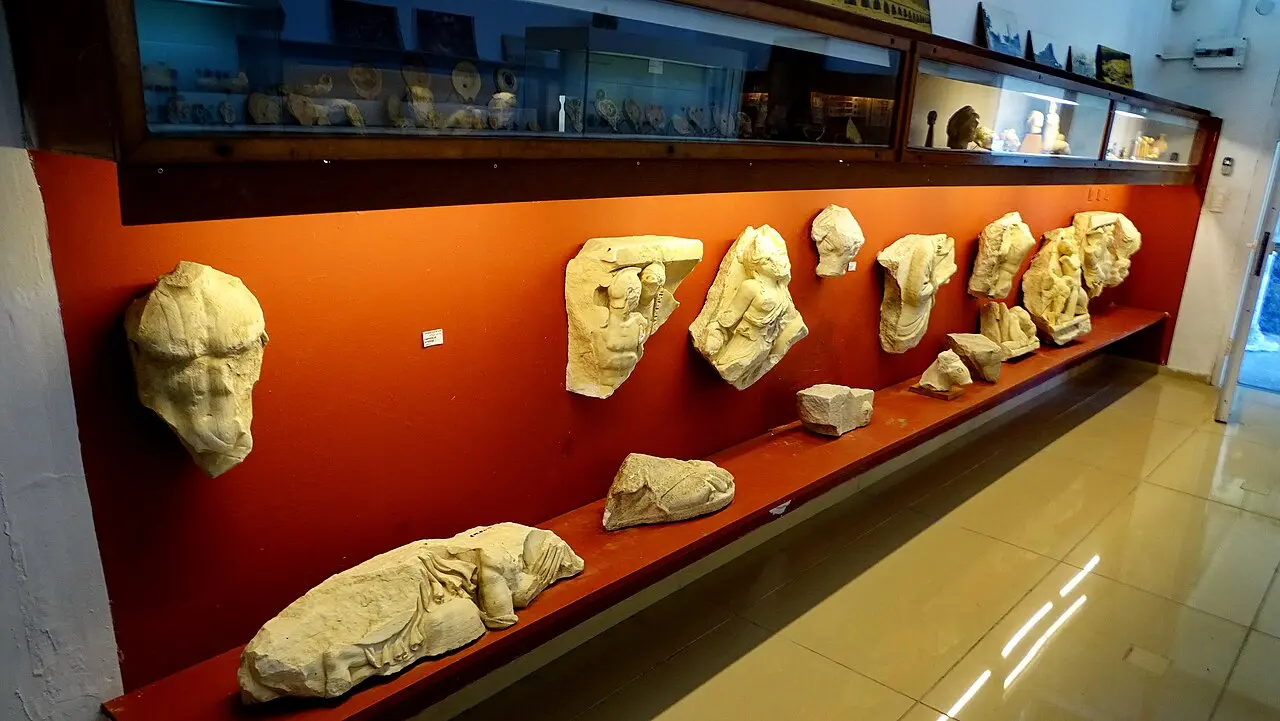
What is on show is not a selection lent from a national store. It is a local collection, and it reads like one: marble statues, oil lamps, coins, engraved gems, cosmetic implements, storage jars raised from the sea, and inscriptions cut on Jewish tombstones, nearly all of it found within a short walk or a short sail of the room it now sits in. The Caesarea Development Corporation describes the holdings as mainly Roman, Byzantine, Muslim and Crusader, with Hellenistic material and objects from the city's Jewish community beside them.
The collection also has one author. Aharon Wegman joined Sdot Yam about a year after the group formed and was among the ten members who went up to settle at Caesarea on 2 May 1940. He gathered the objects himself over decades, sorted and catalogued them in the evenings after work, and set the rule that no member kept an antiquity privately. He died on 4 July 1993, and the museum and the collection were afterwards named for him.
Dr. Avishai Teicher / CC BY 2.5 · Wikimedia Commons
Collection
Three rooms, and a courtyard laid out like a Roman house
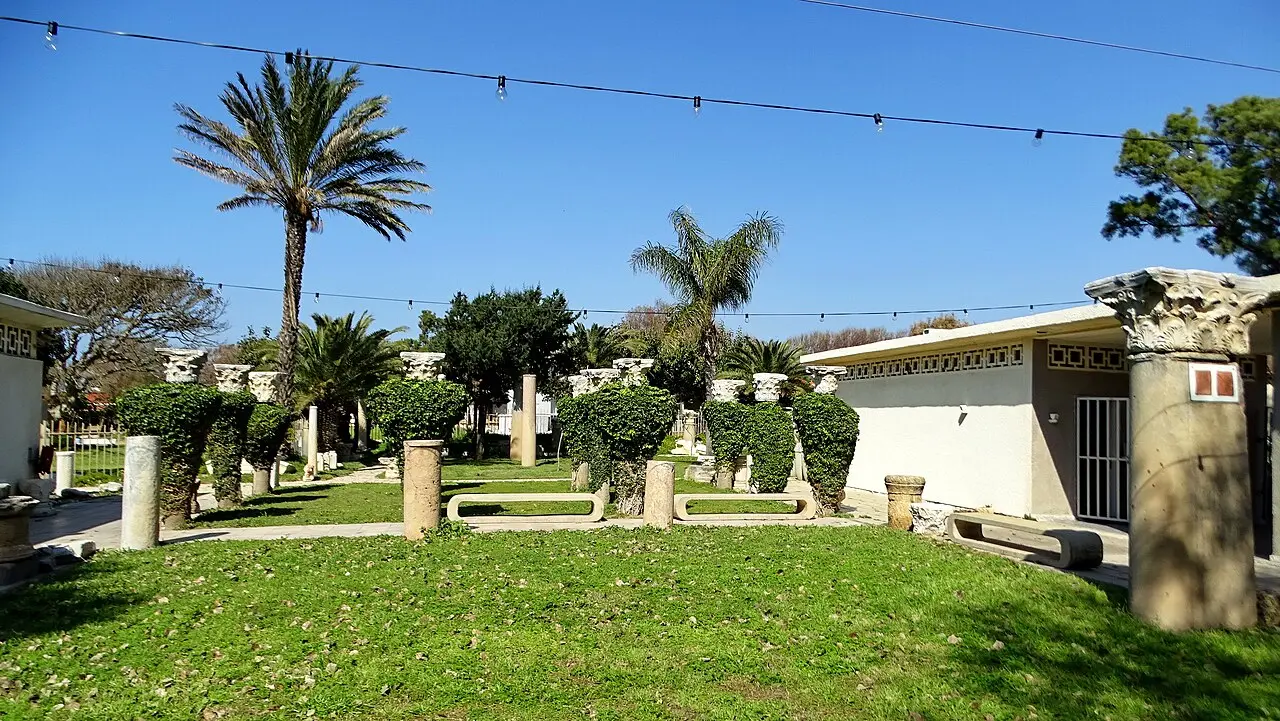
The museum's own description is precise about its shape. There are three exhibition rooms holding objects from the different periods of Caesarea, and a large courtyard in Roman style containing statues, sarcophagi and architectural pieces from the city and the surrounding country. Some of the finds were made by members of the kibbutz; others came from the archaeological expeditions that dug at Caesarea. The operator singles out marble statues, oil lamps, coins, cosmetic implements, jars recovered from the sea and rare material from the ancient synagogue of Caesarea.
The Caesarea Development Corporation, which runs the harbour front up the road, publishes a fuller inventory of what is in the display halls: a collection of Caesarea coins, oil lamps, miniature sculpture in bronze and in marble, gems, inscriptions cut on Jewish tombstones, jars raised from the sea, and objects of ornament and cult. Its description also notes that the building itself was put up in the manner of a Roman structure, with the courtyard carrying columns, Corinthian capitals, Roman statuary, dedicatory inscriptions and assorted architectural fragments.
That distinction is worth holding onto while walking round. The objects are ancient. The setting is not. The courtyard is a twentieth-century arrangement of genuine ancient stone, laid out to look like the peristyle of a Roman house, and nothing in it stands where it stood in antiquity. It is a display, and an unusually frank one, rather than a reconstruction claiming to be a building.
The scale is modest and the labelling is uneven, which is the honest reason the place divides visitors. It is a room-by-room collection assembled by an amateur and later gone over by specialists, not a designed exhibition with a narrative and a film.
- Marble statuary, free-standing and in relief
- Miniature sculpture in bronze and marble
- Caesarea coins
- Clay oil lamps
- Engraved gems, amulets and seals
- Greek, Latin, Arabic and Hebrew inscriptions
- Storage jars raised from the sea
- Columns, Corinthian capitals and sarcophagi in the courtyard
Founder
The man who picked Caesarea up one piece at a time
Aharon Wegman grew up in Haifa, came through the Hano'ar Ha'oved and Hamachanot Ha'olim youth movements, and joined Sdot Yam roughly a year after the group was founded. When ten members moved up to take hold of the ground at Caesarea on 2 May 1940 he was one of them. The memorial written for him by Asher Ovadiah of Tel Aviv University records the conditions plainly: the kibbutz arrived without land, water, transport or a settlement budget.
His route into archaeology was oblique. The Mandate authorities, Ovadiah writes, wanted to frustrate Jewish settlement at Caesarea and used the antiquities laws to block the building that would have turned a tent camp into a permanent village. Wegman had not come to dig. He had come to build a settlement. What he concluded from the collision was that a new settlement on a historic site could not be built by ignoring the remains lying in every corner of the camp, in the fields and on the seabed.
So he collected, from the moment he arrived, and he kept collecting for the rest of his life. He examined and studied each object himself, patiently, using books and consulting archaeologists and academics, and he did it after working hours. Most of the sorting, cataloguing and display work in the museum was his, done in the evenings and sometimes deep into the night. Yehuda Rotem's memorial preserves the joke Wegman made while serving as kibbutz treasurer: after a day of chasing new money he would calm down in the evening working on old money, the ancient coins.
He had no formal training, and he was still recognised by academic specialists as knowing Caesarea and its antiquities comprehensively. He took part in important excavations at the site, became the standing address for archaeologists and students working there, and used those relationships to bring further objects into the collection. The modest museum building went up with grants he raised from various institutions and with money from the kibbutz.
ISRAEL ZELLER / CC BY 2.5 · Wikimedia Commons
Provenance
Ploughed up, trawled up, bought from the neighbours
The 1999 memorial volume is unusually direct about how the collection was formed, and the answer is a portrait of a kibbutz rather than of a museum. Members working in construction and in the fields handed in whatever came out of the ground at Caesarea. The fishermen handed over the pottery jars they brought up in their nets, which they were trawling across the eastern Mediterranean rather than only off this beach. That, the volume says, is how the museum's collection of jars accumulated.
A second stream was purchase. With the small sums the kibbutz treasury could release, Wegman bought pieces from Arab residents of the area and from others. This is not a provenance record any museum would build today, and the page does not pretend otherwise: it is a collection formed in the 1940s and 1950s by a settlement standing on top of a Roman city, under an antiquities regime and a set of professional norms that no longer apply.
One rule ran through all of it. From the start Wegman set the norm, and modelled it himself, that antiquities were not to be collected for private use and that the collection was the property of the kibbutz and of the public. Ovadiah's judgement is that without that rule the important finds would have scattered and been lost, and the museum, which became a cultural and educational asset for the members and for the wider public, could not have come into being at all.
The practical consequence for a visitor is that the collection is broader than a single excavation would produce and shallower in recorded context than an excavation report. Some objects carry a findspot. Others carry only the fact that a member of Sdot Yam found them somewhere in Caesarea, or that a boat brought them up in a net.
ISRAEL ZELLER / CC BY 2.5 · Wikimedia Commons
Scholarship
What happened when the specialists went through the shelves
Wegman had wanted a catalogue of every item in the collection, and it never appeared in his lifetime. After his death his family and friends decided that a scholarly treatment of what many on the kibbutz still called simply Aharon's collection was the right memorial. Rivka Gersht of Tel Aviv University edited the result: The Sdot Yam Museum Book of the Antiquities of Caesarea Maritima, in memory of Aharon Wegman, published by Hakibbutz Hameuchad in Tel Aviv in 1999, in Hebrew with English abstracts.
Gersht's preface explains the choice made along the way. A full scientific catalogue identifying, describing and dating every object would have run to several volumes and was ruled out mainly on cost. What the editors produced instead is a set of chapters, each discussing a representative selection with an emphasis on context, use and meaning, and leaning towards material that had not been published before. Some categories were already in print elsewhere, the preface notes: the capitals through Moshe Fischer, the gems through A. Hamburger, the coins through L. Kadman, with the Greek and Latin inscriptions due to appear as separate monographs by Clayton M. Lehmann and Kenneth G. Holum.
The contents page is the best short answer to what the museum actually holds, because it is the list a group of specialists thought the collection could support. Reviewing a different Caesarea book for the Bryn Mawr Classical Review in 2003, Hagith Sivan referred readers to the 1999 articles written in memory of Wegman, whom she called the founder of the delightful museum at Sdot Yam that houses numerous finds from the excavations of Caesarea.
The collection is still working material. Sculpture from Caesarea held at Sdot Yam continues to turn up in the archaeological literature, and Gersht's own chapter on sculpture in the 1999 volume is cited in later studies of statuary from the city.
- Sculpture: Rivka Gersht
- The Greek and Latin inscriptions: Clayton M. Lehmann and Kenneth G. Holum
- The Arabic inscriptions: Moshe Sharon
- Coins: Ariel Berman
- The legal and administrative status of the port of Sebastos in the early Roman period: Dan Barag
- Gems, amulets and seals: Shua Amorai-Stark
- Clay lamps: Varda Sussman
Orientation
Why these objects are not in the national park
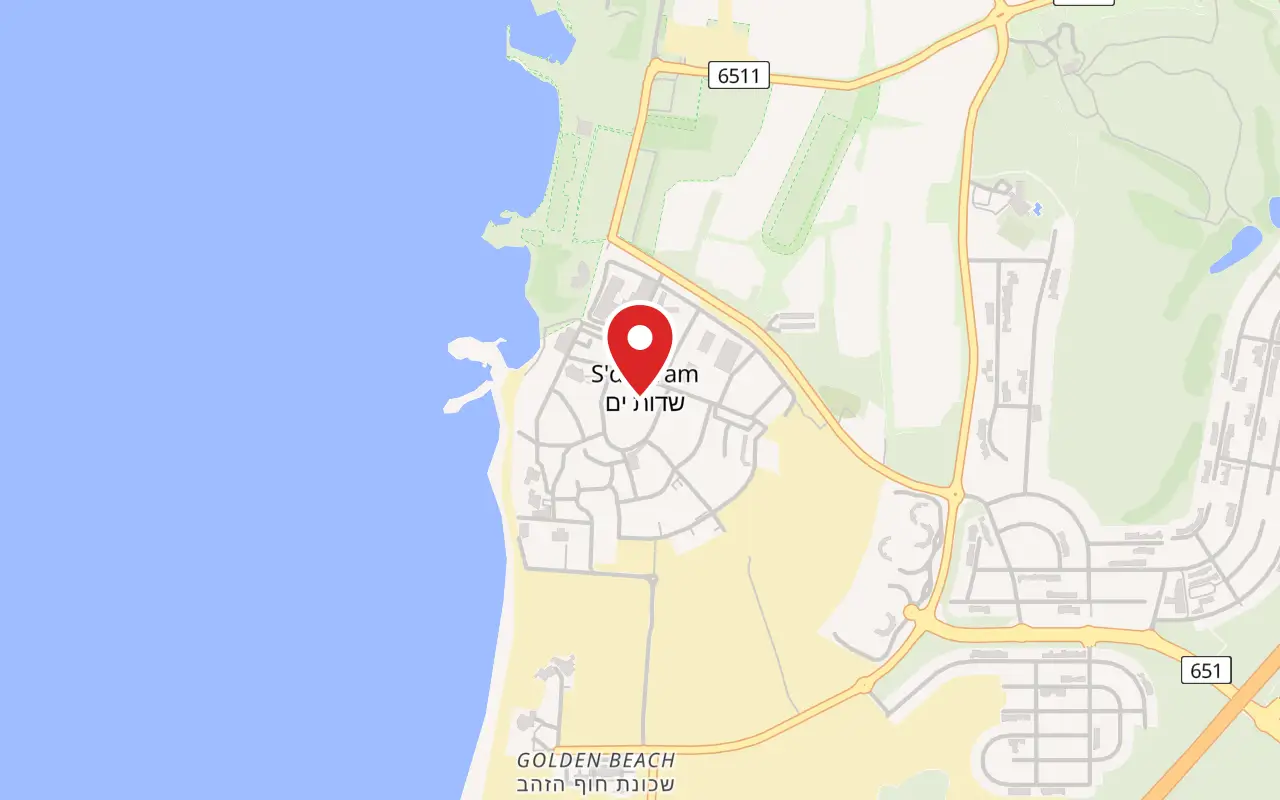
Kibbutz Sdot Yam sits immediately south of the ruins, close enough that the kibbutz gate is the nearest gate to the Roman theatre. The museum is nonetheless outside Caesarea National Park, and a park ticket does not admit anyone to it. Visitors arrive through the kibbutz, not through the archaeological site, and the two operate on different hours and different terms.
The separation is historical rather than administrative. Chance finds made at Caesarea and around it were being shown on the kibbutz well before the ruins became a national park, and the display grew from that into a small formal museum. The finds stayed where the finders were.
The building is a modern one, and there are two accounts of who shaped it. The Hebrew Wikipedia entries for Sdot Yam and for the Hannah Senesh House credit the design of the kibbutz archaeological museum to Shmuel Mestechkin, the Bauhaus-trained chief architect of the Kibbutz Artzi movement, who also designed the Hannah Senesh House next door. The 1999 volume's own publisher blurb calls the museum the fruit of the planning and design of Aharon Wegman. The two claims may simply describe an architect and a museum-maker working on the same building, but nothing available settles it, and the page does not pretend to.
The neighbour matters for planning a visit. The Hannah Senesh House, dedicated on 26 March 1950 and reopened after conservation in November 2020, is the larger draw and shares the site, the telephone number and the booking arrangements. Its original programme included a room for a museum of Caesarea antiquities alongside a library, a study room, a music room, an open stage and a performance hall, which is where this collection began before it moved into a building of its own.
What to look for
Things not to walk past at Caesarea Maritima Museum, Sdot Yam
The details that repay knowing about before you are standing in front of them.
The courtyard
Columns, Corinthian capitals, Roman statues, sarcophagi and dedicatory inscriptions set out in the open in a Roman-style court. It is part of the museum rather than a garden on the way in.
The jars from the sea
Storage jars brought up in the nets of Sdot Yam's fishermen, who were working across the eastern Mediterranean. The group exists because the fishermen handed in what came up with the catch.
The Caesarea coins
A run of coinage from the city, the part of the collection Wegman worked on in the evenings while serving as the kibbutz treasurer.
The Jewish inscriptions
Inscriptions cut on Jewish tombstones, listed by the Caesarea Development Corporation among the display halls' contents, alongside material the museum describes as rare finds from the ancient synagogue of Caesarea.
Gems, amulets and seals
Small engraved stones, catalogued in the 1999 memorial volume by Shua Amorai-Stark. Easy to walk straight past and among the most informative things in the rooms.
The miniature bronzes
Small-scale sculpture in bronze and marble, listed separately from the free-standing statuary by both the operator and the museum's scholarly volume.
The long view
Caesarea Maritima Museum, Sdot Yam, in order
1936
Kibbutz Sdot Yam is founded, at Kiryat Haim rather than on this coast.
2 May 1940
Ten members go up to take hold of the ground at Caesarea. Aharon Wegman is one of them, and starts collecting antiquities almost at once.
26 March 1950
The Hannah Senesh House is dedicated next door. Its original programme includes a room for a museum of Caesarea antiquities.
4 July 1993
Wegman dies. The museum and the collection are afterwards named for him.
1999
The Sdot Yam Museum Book of the Antiquities of Caesarea Maritima appears, edited by Rivka Gersht, with chapters by specialists on sculpture, inscriptions, coins, gems and lamps.
November 2020
The Hannah Senesh House reopens after a long conservation programme, with the antiquities museum in the adjacent building.
Practical
Visiting Caesarea Maritima Museum, Sdot Yam
Where
Kibbutz Sdot Yam, immediately south of Caesarea National Park
What ticket you need
This site is not inside Caesarea National Park and is not covered by a park ticket. It stands inside Kibbutz Sdot Yam, next to the Hannah Senesh House, and is entered through the kibbutz.
Opening hours
Admission
- Published price
- None. The operator's ticket page gives no figures and asks visitors to arrange a visit by telephone or emailsource
- Is it ticketed
- Yes. There is an entry charge, but the amount is not published online, so ask when bookingsource
- Groups
- Booked through a form on the operator's ticket page, with the guide's and the payer's detailssource
Access
The directory of the Museums Association and ICOM Israel records no wheelchair access and no on-site parking for this museum. The museum is one storey and the courtyard is flat, but neither the operator nor the association publishes an accessibility statement, so anyone who needs step-free access should telephone before travelling. There is no climb involved in reaching it.
On site
- Three display rooms
- Roman-style courtyard
- Guided tours by arrangement
- Auditorium in the Hannah Senesh House next door
- Sculpture garden and sea viewpoint on the kibbutz
- No restaurant on site
Booking
Visits are arranged with the Anna Szenes House by telephone on 04-636-4548 or by email. Groups fill in the form on the operator's ticket page. The domain caesareamuseum.com, still printed on some directory listings, no longer serves the museum's site.
Hours and prices are given as the operator publishes them and change without much notice, particularly around Shabbat and the festivals. Check the operator's own page before you travel for this.
Official page at hannahsenesh.org.il →What people wish they had known
- The park ticket does not work here. Caesarea National Park and this museum are separate operations with separate gates, and the museum is reached through the kibbutz entrance rather than through the ruins.
- Telephone or email before going. The operator's ticket page has no prices and no online booking: it asks visitors to arrange the visit in advance, and a museum staffed by a small association can be shut when the site says it is open.
- Do not leave it for the evening. Weekday closing is 16:00 and Friday closing is 13:00, so it cannot be added on after a long morning in the park, and it does not open at all on Saturdays or festivals.
- Do not confuse it with the harbour visitor centre. The display inside Herod's vaults, in the national park, is a different thing run by different people; this collection is the kibbutz one, south of the theatre.
- Treat the courtyard as an exhibit. The columns, capitals, statues and sarcophagi outside are part of the collection, and a visitor who walks through them looking for the entrance has missed a third of the museum.
- Check access first if it matters. The museums association's own directory records no wheelchair access and no parking on site, and no one publishes a fuller accessibility note.
The figures
Caesarea Maritima Museum, Sdot Yam by the numbers
Each figure carries the year it belongs to and links the source it came from.
| Measure | Figure | As of | Source |
|---|---|---|---|
| Display rooms | 3, plus a courtyard | 2026 | hannahsenesh.org.il |
| Weekday opening | 10:00 to 16:00, Sunday to Thursday | 2026 | hannahsenesh.org.il |
| Friday opening | 9:00 to 13:00 | 2026 | hannahsenesh.org.il |
| Members who first settled at Caesarea | 10, on 2 May 1940 | 1940 | kotar.cet.ac.il |
| Death of the founder | 4 July 1993 | 1993 | kotar.cet.ac.il |
| Specialist chapters in the memorial volume | 7 subject studies, from sculpture to clay lamps | 1999 | kotar.cet.ac.il |
| Wheelchair access recorded | None | 2026 | icom.org.il |
| On-site parking recorded | None | 2026 | icom.org.il |
While you are here
The rest of Caesarea
Everything else in this destination with a page of its own.
זאב שטיין / CC BY 2.5 · Wikimedia Commons
Archaeological site
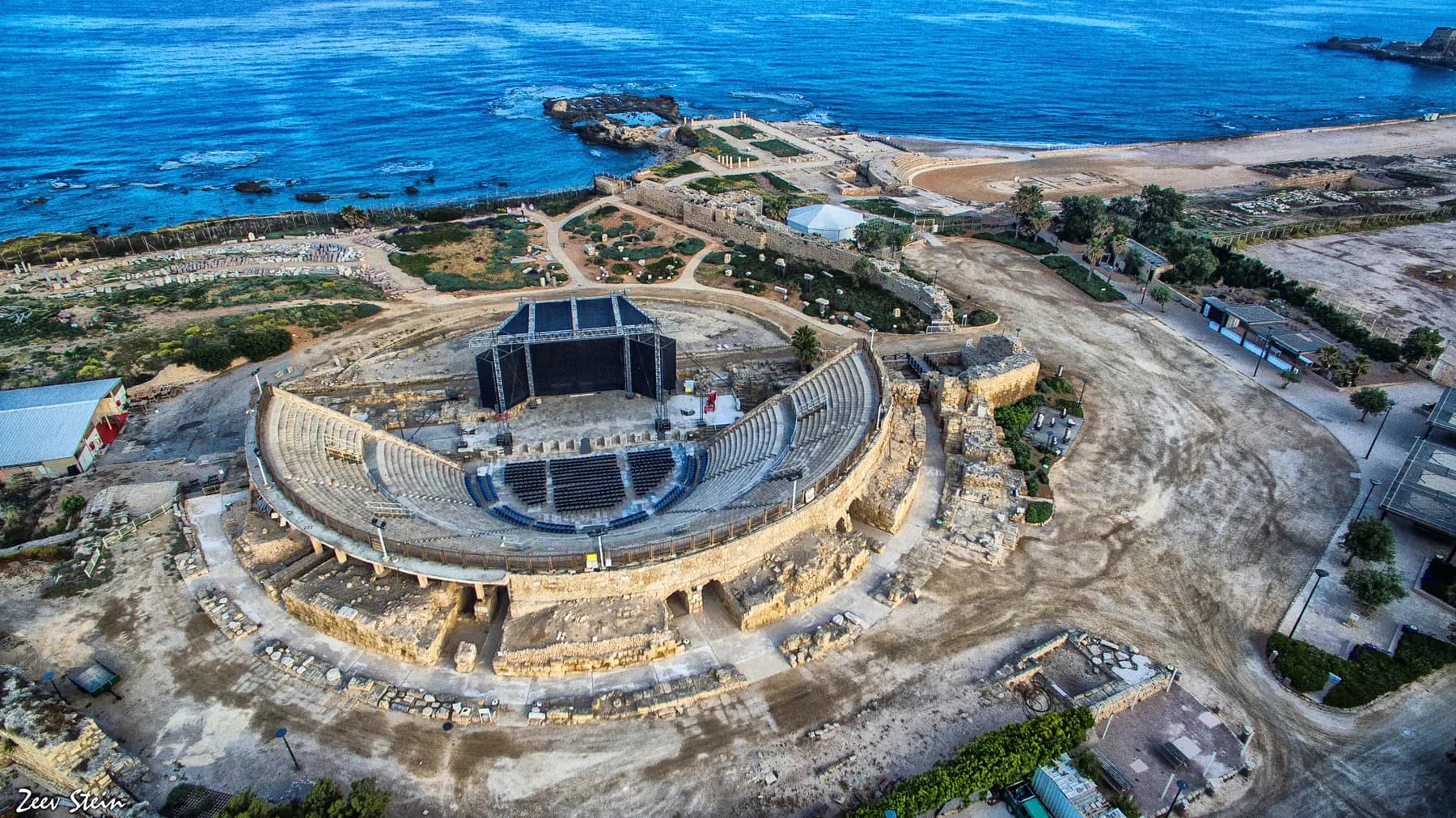
Roman Theatre of Caesarea
Herod's builders had no hillside to work with, so they stood the seating on a semicircle of vaults, and the building has been a working concert hall again since Pablo Casals played it in September 1961.
זאב שטיין / CC BY 2.5 · Wikimedia Commons
Museum
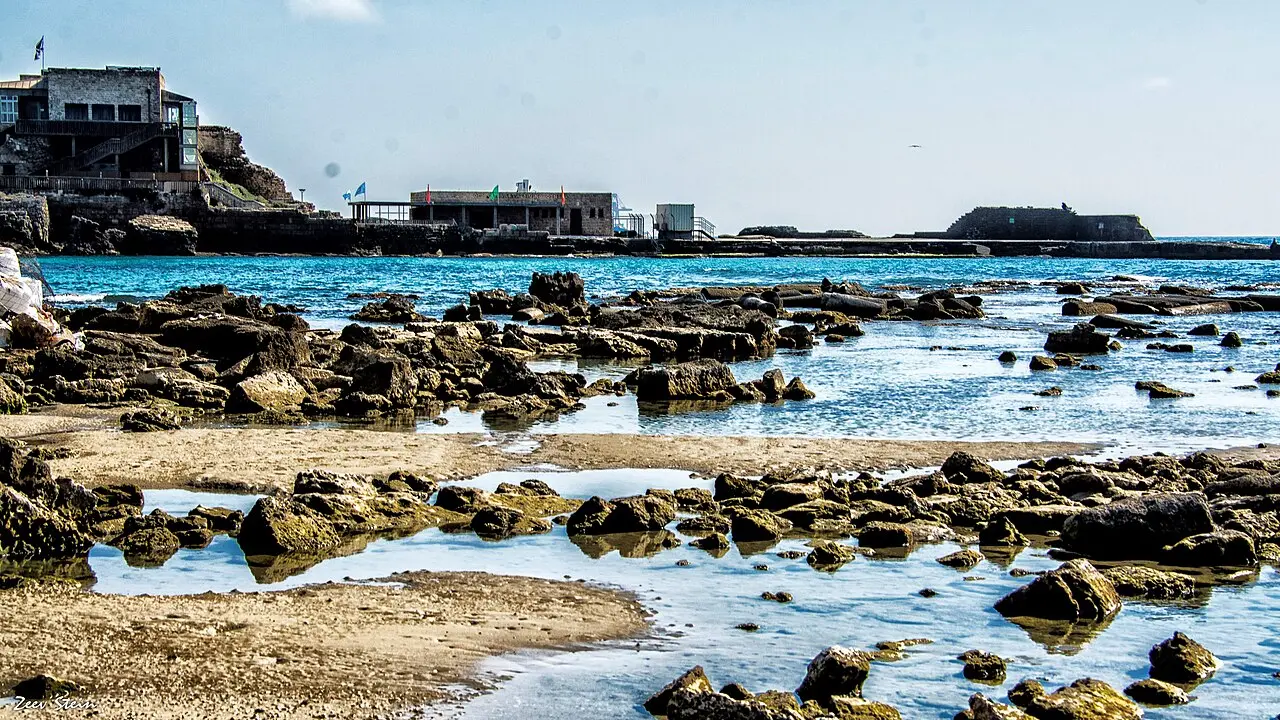
Caesarea Harbour Visitors' Centre
Four of the fourteen Herodian vaults that carried the temple platform above the harbour were dug out, stabilised and opened to the public in June 2019, after about five years of work.
Activity
Caesarea Underwater Archaeological Park
Four marked trails and 28 numbered signs run over the drowned moles of Herod's harbour, the shallowest at four metres and the deepest at nine.
Sources and further reading
Every link below was opened and checked when this page was written. Official statements are marked as such: they are the subject's own account, not an independent one.
- OfficialAnna Szenes House, Kibbutz Sdot Yamhannahsenesh.org.ilThe Caesarea Antiquity Museum
the operator's English page: three exhibition rooms, the Roman-style courtyard, the collection categories and the current opening hours
- OfficialAnna Szenes House, Kibbutz Sdot Yamhannahsenesh.org.ilמוזיאון אוצרות קיסריה
the Hebrew page for the same museum, with the hours and the telephone number
- OfficialAnna Szenes House, Kibbutz Sdot Yamhannahsenesh.org.ilרכישת כרטיסים
the ticket page, which publishes no prices and asks visitors to book by telephone or email
- OfficialCaesarea Development Corporationcaesarea.comמוזיאון אוצרות קיסריה שדות ים
the inventory of the display halls and the note that the building was put up in the manner of a Roman structure
- ReportingDanny the Diggerdannythedigger.comSdot Yam Archaeological Museum
an independent guide's account that the museum predates the national park and charges an entry fee
- ReferenceMuseums Association and ICOM Israelicom.org.ilמוזיאון אוצרות קיסריה, museum directory entry
the association's record of the museum: no parking, no wheelchair access, no restaurant
- ReferenceHakibbutz Hameuchad, via Kotarkotar.cet.ac.ilספר מוזיאון שדות-ים לעתיקות קיסריה
the 1999 memorial volume edited by Rivka Gersht, and its publisher's account of the museum's making
- ReferenceRivka Gersht, via Kotarkotar.cet.ac.ilהקדמה, ספר מוזיאון שדות-ים לעתיקות קיסריה
Gersht's preface: Wegman's death on 4 July 1993, the abandoned full catalogue and the material already published elsewhere
- ReferenceAsher Ovadiah and Yehuda Rotem, via Kotarkotar.cet.ac.ilאהרון וגמן מייסד המוזיאון ומנהלו הראשון, דברים לזכרו
the memorial chapter: the settlement of 2 May 1940, the Mandate antiquities laws, the collecting rule and the museum's formation
- ReferenceHakibbutz Hameuchad, via Kotarkotar.cet.ac.ilתוכן עניינים, ספר מוזיאון שדות-ים לעתיקות קיסריה
the contents page, which names each specialist and subject in the 1999 volume
- ReferenceBryn Mawr Classical Reviewbmcr.brynmawr.eduArt in the Public and Private Spheres in Roman Caesarea Maritima, review
Hagith Sivan's description of Wegman as founder of the museum at Sdot Yam and of the 1999 volume written in his memory
- ReferenceTel Aviv University, Faculty of Humanitiesen-humanities.tau.ac.ilDr Rivka Gersht
the editor's own publication list, confirming the 1999 volume and her chapter on sculpture
- ReferenceHebrew Wikipediahe.wikipedia.orgשדות ים
the kibbutz's founding in 1936, its two museums, and the attribution of the archaeological museum's design to Shmuel Mestechkin
- ReferenceHebrew Wikipediahe.wikipedia.orgבית חנה סנש
the neighbouring house: its dedication on 26 March 1950, the room for a museum of Caesarea antiquities in the original plan, and the reopening in November 2020
Caesarea Maritima Museum, Sdot Yam: common questions
Where is the Caesarea Maritima Museum?+
It is inside Kibbutz Sdot Yam, immediately south of Caesarea National Park, next door to the Hannah Senesh House. The kibbutz gate is the nearest entrance to the Roman theatre, but the museum is entered through the kibbutz rather than through the archaeological site. It is also listed in Hebrew as Otzrot Kesariya and in English as the Caesarea Antiquity Museum.
What are the opening hours?+
The operator publishes Sunday to Thursday 10:00 to 16:00 and Friday 9:00 to 13:00, with the museum closed on Saturdays and festivals. Those hours appear on both the Hebrew and English pages of the Anna Szenes House site. Because the museum is run by a small association, booking ahead is the safe way to be sure someone is there.
How much does it cost to get in?+
The operator does not publish an admission figure. Its ticket page carries no prices at all and instead asks visitors to arrange a visit by telephone or email, with a separate form for groups. Independent guides describe the museum as charging an entry fee, so budget for one and ask the amount when booking.
Is it included in the Caesarea National Park ticket?+
No. The museum sits outside the national park, is run by the Anna Szenes Association at Kibbutz Sdot Yam rather than by the Israel Nature and Parks Authority, and charges separately. Nothing bought at the park gate admits anyone here.
How long does a visit take?+
About 45 to 60 minutes covers the three display rooms and the courtyard at an unhurried pace. A guided visit arranged through the association runs longer, and groups often combine it with the Hannah Senesh House next door, the sculpture garden viewpoint above the sea and the coastal walk towards Caesarea.
Is it worth going if I have already seen the national park?+
It is worth it if the objects interest you more than the architecture, because the park shows the city and this shows what came out of it. The collection covers Roman, Byzantine, Muslim and Crusader Caesarea with Hellenistic and Jewish material alongside, and it was thought substantial enough to carry seven specialist studies in a 1999 volume. Anyone who came to Caesarea for the theatre, the harbour and the sea will find this a quieter and much smaller experience.
Is it wheelchair accessible?+
The directory of the Museums Association and ICOM Israel records no wheelchair access and no on-site parking for this museum. There is no climb to reach it and the courtyard is flat, but no one publishes a proper accessibility statement, so telephone the association first if step-free access is needed.
Can I visit on Shabbat?+
No. The published hours have the museum closed on Saturdays and on festivals, and Friday closing is 13:00. A Friday morning is the only weekend slot, and it is short.
Where did the objects come from?+
Mostly from Caesarea and its surroundings, found by members of Kibbutz Sdot Yam or handed over by the archaeological expeditions that dug at the site. The 1999 memorial volume records two further streams: jars that the kibbutz fishermen brought up in their nets across the eastern Mediterranean, and pieces the founder bought from Arab residents of the area and from others with small sums released by the kibbutz treasury.
Who was Aharon Wegman?+
He was the founder and first director of the museum, a member of Kibbutz Sdot Yam who was among the ten people who settled at Caesarea on 2 May 1940. He collected, sorted and catalogued the material himself, largely in the evenings after work, and set the rule that antiquities belonged to the kibbutz and the public rather than to any individual. He died on 4 July 1993 and the museum was named for him.