
Jaffa · Best time to visit
The best time to visit Jaffa
Jaffa's own municipal beach at Givat Aliyah is guarded only between 16 April and 8 October, and the municipality forbids bathing without a lifeguard: one hard date in a neighbourhood that otherwise never closes.
Wettest month
172 mm
January at Jaffa's own coordinates, falling across about twelve days with a millimetre or more
Warmest sea
30.4°C
Mean daily maximum in August. The water is still at 27.6°C in October, warmer than it was in June
Guarded season
16 Apr to 8 Oct
Rescue cover at Givat Aliyah, Jaffa's municipal beach. Outside it the municipality forbids bathing
Summer rain
6 mm
July, August and September combined, across fewer than two days with a millimetre or more
Old Jaffa is not a site with a gate, so almost nothing here opens or shuts with the season. The lanes, Kedumim Square, the harbour quay and the flea market streets are public and free at every hour of the year, and the restaurants trade on Saturdays when much of the country does not. What the calendar decides in Jaffa is whether the hill is comfortable to climb, whether the stone underfoot is dry, whether the sea is worth getting into, and above all whose festival is running.
The weather half is lopsided. Rain at Jaffa's own coordinates is packed into the winter, 172 mm in January and 121 mm in December against 6 mm across July, August and September put together, out of roughly 585 mm summed across the year. Air and sea both peak in August, but water is slow in both directions: the sea is coldest in February at 17.8°C and still 27.6°C in October, warmer than it was in June. That lag is the argument for autumn if the trip is about swimming, and for spring if it is about walking.
The half that catches visitors out is the calendar, and Jaffa keeps three of them at once. Passover and Sukkot each take about a week out of the country, fill the hotels and put most of Israel on the road together; Yom Kippur takes a day and a half out of it completely, Ben Gurion Airport included. Ramadan moves back about eleven days a year and in 2027 falls across February and March, which is when Jaffa's evenings are at their busiest. In December the municipality puts a Christmas tree up beside the clock tower. None of that shows on a weather chart.
The year
What the weather actually does in Jaffa
Monthly normals computed from daily reanalysis at this destination's own coordinates, 2015 to 2024. Not a forecast and not an impression.
Month by month
When to go to Jaffa
January
Mixed17.1°C by day, 10.6°C at night, sea 19.8°C, 12.4 wet days
The wettest month at Jaffa's coordinates, 172 mm across about twelve days with a millimetre or more, delivered as storm systems rather than as drizzle. Between them the old town is as empty as it ever gets and the light off the sea is the best of the year. The tree by the clock tower has in reported years stayed lit until 21 January, which carries it past the Orthodox Christmas on 7 and 8 January. Hotel rates are at their annual floor and the restaurants are bookable at short notice.
February
Mixed18°C by day, 10.6°C at night, sea 17.8°C, 9.8 wet days
The sea reaches its coldest of the year now at 17.8°C, a month behind the air, so this is the one month when the water is genuinely unpleasant rather than merely bracing. Rain is easing but not finished at 103 mm across about ten days. In 2027 Ramadan begins on 8 February on the calculated calendar, and for the month that follows the useful hours in Jaffa are the ones after sunset, when the lanterns go up and the iftar tables fill. Daytime trade in the Arab-owned kitchens is correspondingly thin.
March
Good19.9°C by day, 12.5°C at night, sea 18.6°C, 7.4 wet days
Rain drops by about half from February to 59 mm and the first sharav days of the year arrive: hot, dry, hazy air off the Sahara that holds for about a day to a day and a half before breaking fast from the west. In 2027 Ramadan runs to about 8 March, and the Muslim Scouts' Takbir procession and the public Eid prayer in Jaffa Park follow it. Purim falls on 22 and 23 March 2027 and empties the schools. The lanes are dry, the market is at full strength and the hill is comfortable to climb.
April
Best22.9°C by day, 14.7°C at night, sea 20.6°C, 3.7 wet days
Rain is effectively over at 39 mm across about four days, and this is the best month of the year for the walking half of Jaffa: the stepped alleys, HaPisga garden, an unhurried hour in the flea market at midday. Lifeguards return to Givat Aliyah on 16 April, so the first fortnight is closed to swimming under the municipality's own rule, and the sea is only at 20.6°C in any case. Passover in 2027 runs from the evening of 21 April to nightfall on the 29th, fills every hotel in the country and shuts Abulafia for its eight days.
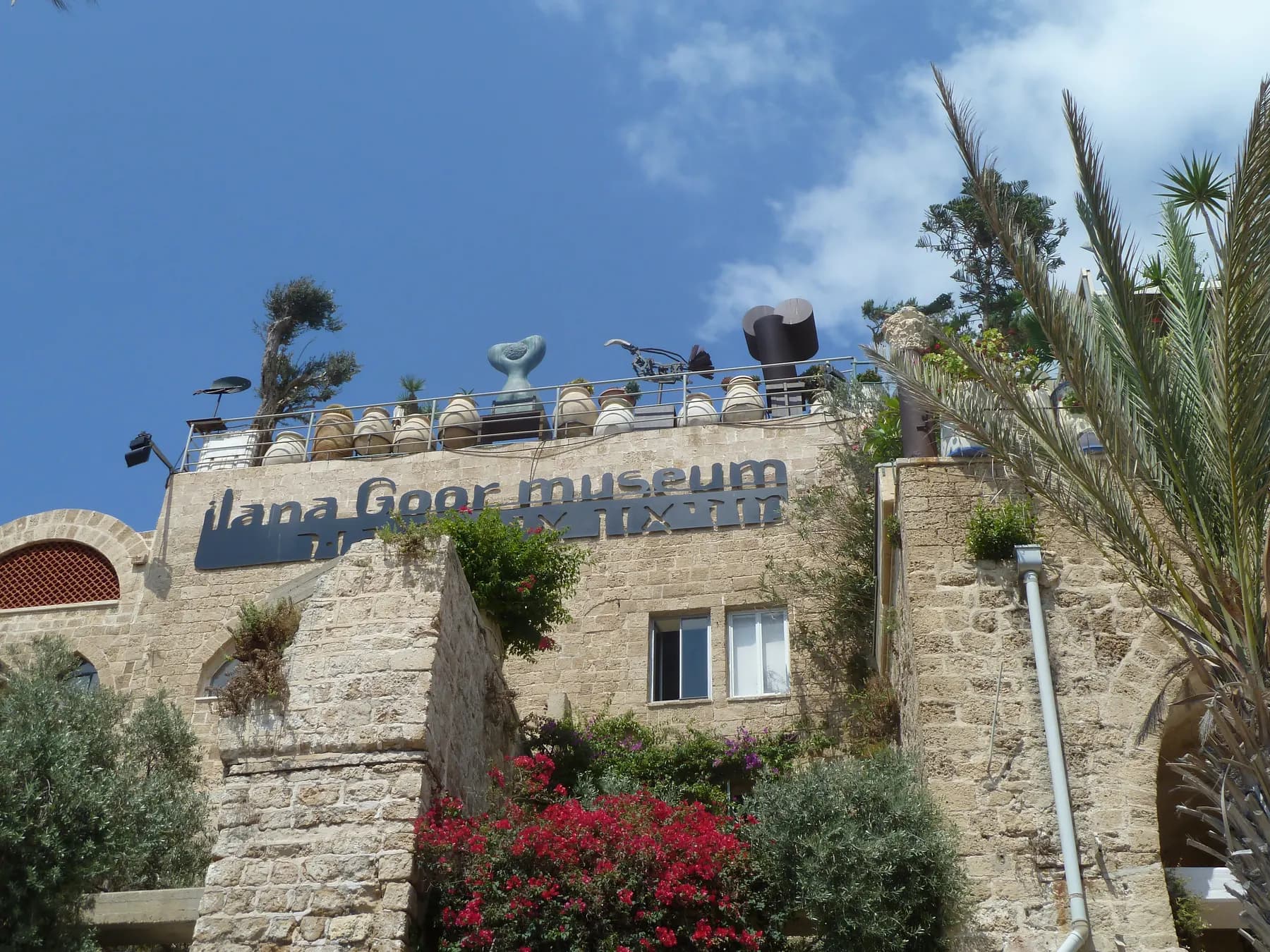
Deror_avi / CC BY-SA 3.0 · Wikimedia Commons
May
Best26.5°C by day, 18.2°C at night, sea 22.9°C, 2.5 wet days
The strongest all-round month here. Rain is finished at 9 mm, the evenings are long without being sticky, and the sea at 22.9°C is cool enough to be refreshing rather than warm. Sharav days can still push the coastal plain past 30 degrees for a day at a time and then break with strong wind and blown dust. Nothing in any of the three festival calendars interferes with the month.
June
Good28.4°C by day, 21.3°C at night, sea 26.4°C, effectively no rain
The humidity arrives and Jaffa moves outdoors after dark. The sea reaches 26.4°C, which is the point at which the swimming half of a trip finally works, and rain is down to 3 mm. Israeli middle and high schools break up on about 20 June and elementary schools on about the 30th, so the last week is noticeably busier on the quay and in the market. Tel Aviv Pride falls in the second week and takes hotel stock across both halves of the city with it.
July
Mixed30.2°C by day, 23.9°C at night, sea 29.3°C, effectively no rain
The school holiday is fully under way, rain is effectively zero and the sea is warm from dawn to dusk. The flea market's Thursday night events run through July and August with music, street theatre and special lighting, and they are the best reason to be here in high summer. The middle of the day is unproductive: the workable plan is the market and the lanes early, shade or water through the afternoon, and the square and the quay after dark.
August
Hard going30.9°C by day, 24.8°C at night, sea 30.4°C, effectively no rain
The hardest month, and it is the humidity rather than the thermometer that makes it so. Mean daily lows sit at 24.8°C and the sea, at its warmest of the year at 30.4°C, gives heat back to the headland after dark instead of taking any away, so there is no cool part of the day at all. Everything is booked and priced for it, because the Israeli and European holidays coincide. The old town's narrow lanes hold more shade than an open Tel Aviv boulevard, which helps at the margins and does not make an August afternoon usable.
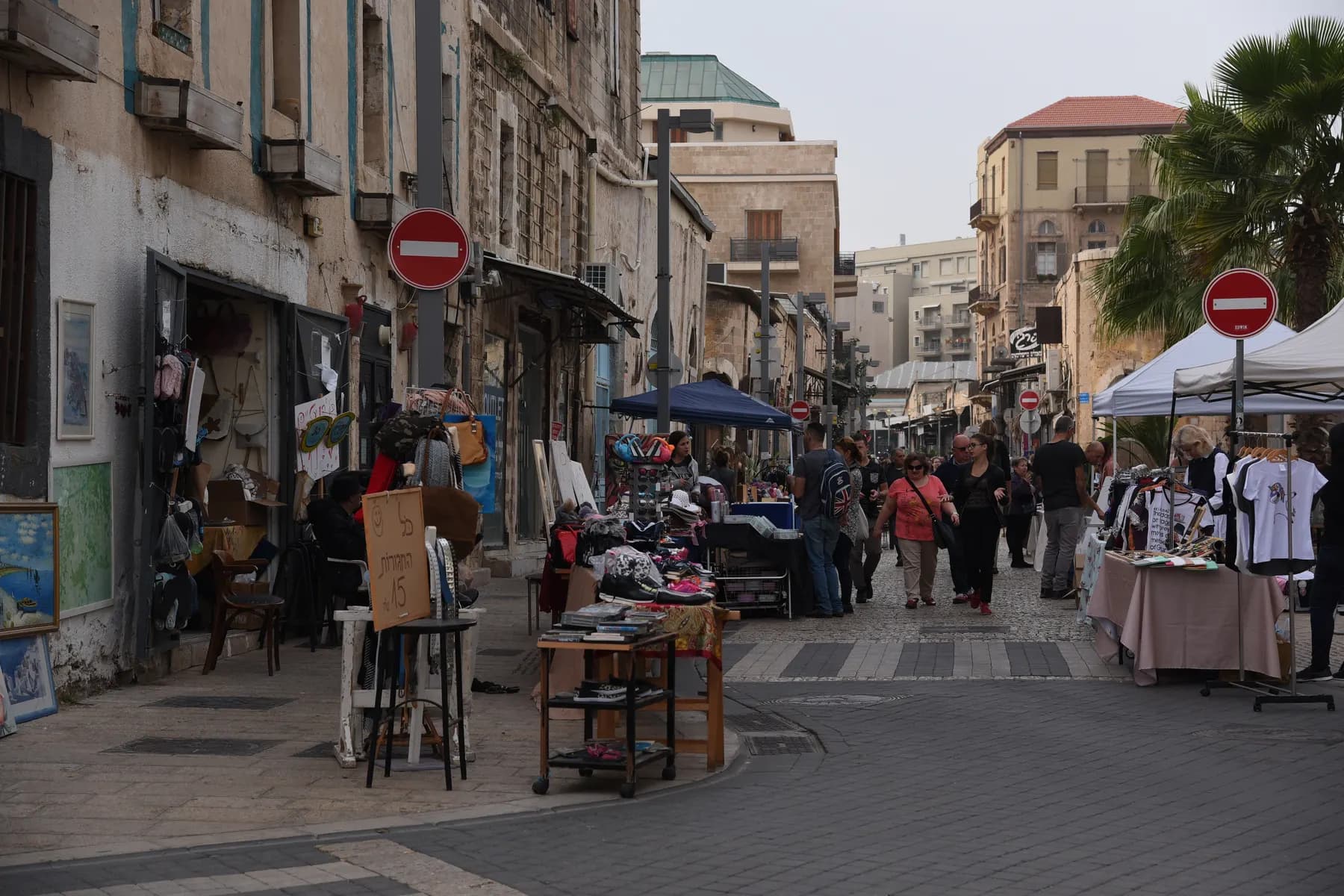
Rakoon / CC0 · Wikimedia Commons
September
Mixed30.2°C by day, 23.8°C at night, sea 29.6°C, 1 wet day
The heat holds and the sea stays near its warmest at 29.6°C, so the water half of a Jaffa trip is still excellent, but the autumn festivals now govern everything else. In 2026 Rosh Hashanah runs from the evening of 11 September to the 13th, Yom Kippur from the evening of the 20th to nightfall on the 21st, when the country stops and the airport suspends work for about 28 to 30 hours, and Sukkot begins on the evening of the 25th. Book around those dates rather than through them.
October
Best27.9°C by day, 20.9°C at night, sea 27.6°C, 3.4 wet days
The other best month, and the better of the two windows for anyone who came for the sea: 27.6°C, warmer than June, with the air off its summer peak and rain still only 17 mm across about three days. Sukkot runs to 2 October in 2026 and Shemini Atzeret with Simchat Torah to the 4th, so the first week is holiday and expensive. Rescue cover at Givat Aliyah ends on 8 October, after which the municipality's rule is that bathing is forbidden. From the second week the neighbourhood empties and the weather holds.
November
Good23.9°C by day, 16.6°C at night, sea 24.5°C, 6.8 wet days
The quietest of the good months and the cheapest. The festivals are done, the school year is back in session, and the daytime air is close to April's while the sea is still warmer than it was in May. Rain returns properly at 56 mm across about seven days and the first real storms of the season come with it. Nobody is watching the water now, so a swim is at your own risk and against the municipality's rule.
December
Mixed19.6°C by day, 12.7°C at night, sea 21.9°C, 10.6 wet days
The second wettest month at 121 mm across about eleven days, and the point at which the outdoor half of a Jaffa day becomes unreliable: the promenade walk from Tel Aviv, the harbour quay and the market lanes are all worse in rain. Against that, December is when the neighbourhood's Christian calendar is most visible, with a fifteen-metre tree put up by the municipality and the Orthodox Scouts of Jaffa in the square beside the clock tower. Hanukkah runs from 4 to 12 December in 2026 alongside it. Outside those evenings, rates are among the lowest of the year.
The table
Every month in figures
| Month | Average high | Average low | Sea | Rain | Wet days |
|---|---|---|---|---|---|
| January | 17.1°C | 10.6°C | 19.8°C | 172 mm | 12.4 |
| February | 18°C | 10.6°C | 17.8°C | 103 mm | 9.8 |
| March | 19.9°C | 12.5°C | 18.6°C | 59 mm | 7.4 |
| April | 22.9°C | 14.7°C | 20.6°C | 39 mm | 3.7 |
| May | 26.5°C | 18.2°C | 22.9°C | 9 mm | 2.5 |
| June | 28.4°C | 21.3°C | 26.4°C | 3 mm | 0.7 |
| July | 30.2°C | 23.9°C | 29.3°C | 1 mm | 0.1 |
| August | 30.9°C | 24.8°C | 30.4°C | 2 mm | 0.3 |
| September | 30.2°C | 23.8°C | 29.6°C | 3 mm | 1 |
| October | 27.9°C | 20.9°C | 27.6°C | 17 mm | 3.4 |
| November | 23.9°C | 16.6°C | 24.5°C | 56 mm | 6.8 |
| December | 19.6°C | 12.7°C | 21.9°C | 121 mm | 10.6 |
2015 to 2024 averages at 32.053, 34.7503, elevation 4 m. Source: European Centre for Medium-Range Weather Forecasts (IFS, ERA5). A wet day has 1 mm of rain or more.
Sea temperatures: Copernicus Marine Service, averaged from 23 November 2022.
The windows
Two shoulder seasons, and they are not interchangeable
The first window is April to early June, and it is the better one for the part of Jaffa that is walking. Rain is effectively finished by April at 39 mm across about four days with a millimetre or more, and by May it is down to 9 mm. The stepped alleys, the climb to HaPisga garden and an hour in the flea market at midday are pleasant rather than an endurance test. The cost is the water: 20.6°C in April and 22.9°C in May, and no lifeguard is posted at Givat Aliyah before 16 April.
The second window runs from the end of September through October, and it is the better one if the sea is the point. October gives a mean daily maximum sea temperature of 27.6°C, warmer than June's 26.4°C, while the air has come off its summer peak and rain is still only 17 mm across about three days. The catch is not the sky but the Hebrew calendar, which sits on the front of this window in most years and books it out well ahead.
November is the underrated month and the cheapest of the good ones. Daytime air is close to April's, the sea is still warmer than it was in May, and the festivals are over. Rain has returned at 56 mm across about seven days, the first serious storms come with it, and rescue cover ended on 8 October, so a swim is at the swimmer's own risk and against the municipality's own rule.
Winter suits one kind of visit and no other. December, January and February carry 396 mm of the year's 585 mm between them, and the promenade walk down from Tel Aviv that is the best approach in May is the worst idea in January. Against that, the galleries, the covered market lanes and the restaurants are unaffected, rates are at their annual floor, and the old town is emptier than at any other point.
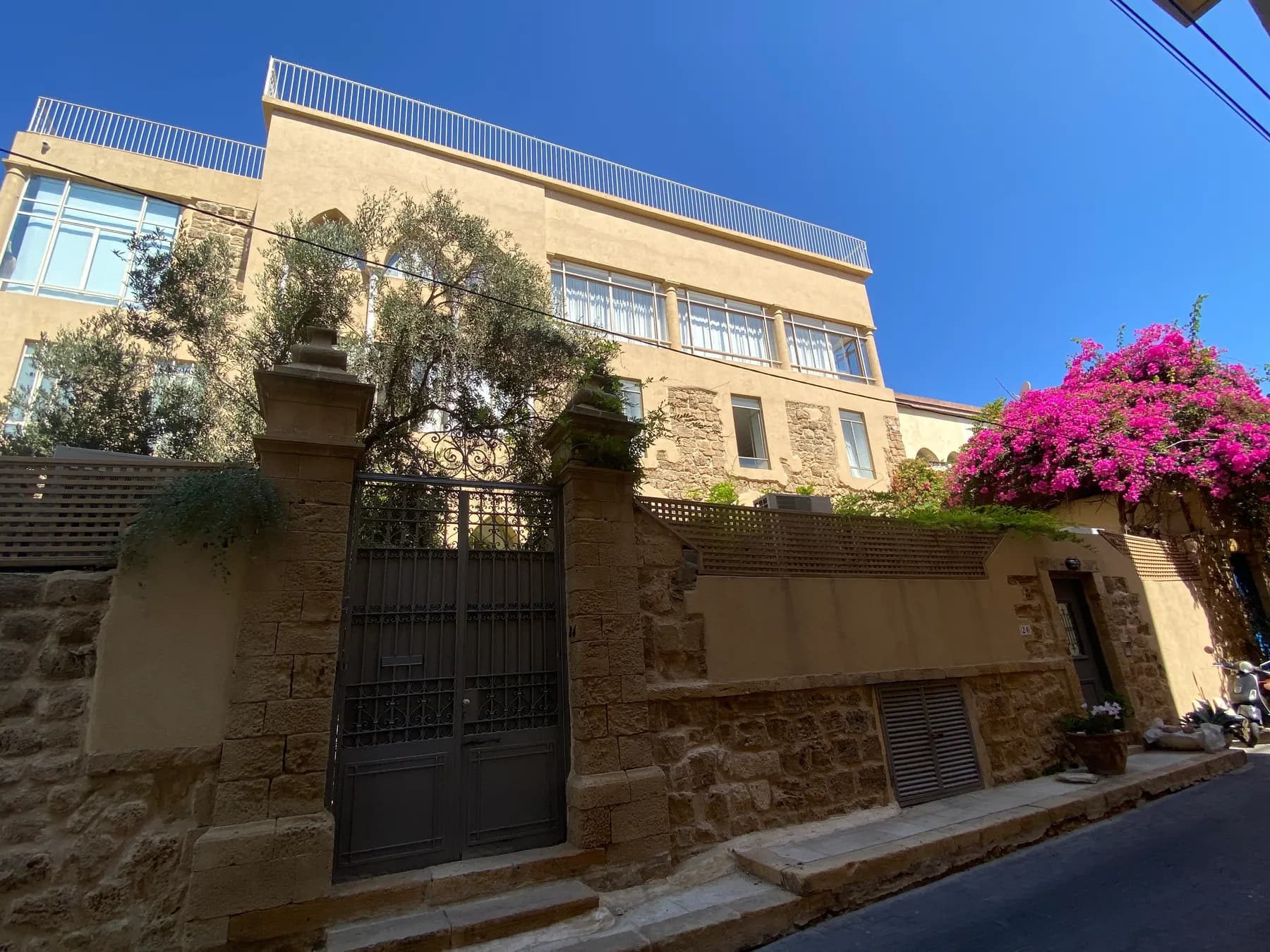
שלמה רודד / CC BY 2.5 · Wikimedia Commons
The calendars
Jaffa runs on three calendars and only one of them is printed on a flight ticket
The Jewish festivals are the ones that move prices. Passover and Sukkot each run about a week, and the intermediate days between the opening and closing holidays are a school holiday and, for many Israelis, collective paid leave, so domestic travel peaks and the coastal cities take the overflow. In 2026 Sukkot runs from the evening of 25 September to 2 October, with Shemini Atzeret and Simchat Torah behind it to the 4th; Passover in 2027 runs from the evening of 21 April to nightfall on the 29th, taking out most of the best walking month of the year. Jaffa has one famous closure of its own: Abulafia, the bakery on the edge of the clock tower square, has shut for the eight days of Passover since the 1970s, an arrangement a rabbi from the shoe factory next door began by offering to cover the lost week's profit, and which the family kept up after they stopped taking the money.
Yom Kippur is a different order of thing. From the evening of 20 September to nightfall on the 21st in 2026, essentially every business in the country closes, broadcasting stops and there is no traffic beyond emergency vehicles; airports and border crossings suspend work for about 28 to 30 hours, so a flight booked across that window does not exist. The standard summary of Israeli public holidays records exceptions in Arab areas without saying which, and Jaffa is a mixed neighbourhood, so a little more may be open here than in the rest of Tel Aviv. That is not a plan. The day is one to spend already here, on foot.
Ramadan is the calendar most visitors do not check and the one that changes Jaffa most. On the calculated calendar it runs from 8 February to 8 March in 2027, with local moon sighting able to shift either end by a day. Through it the daytime is quiet in the Arab-owned kitchens and the evening is the event: lanterns strung along facades, windows and balconies, communal iftar after sunset, and the Jaffa Muslim Scouts' Parade of Lights, revived in 2020, in which children walk the streets with lanterns handing out sweets. At the close come the Takbir procession over the final two days and a public Eid prayer in Jaffa Park that the Sacred Footsteps account of it puts at roughly 3,000 people.
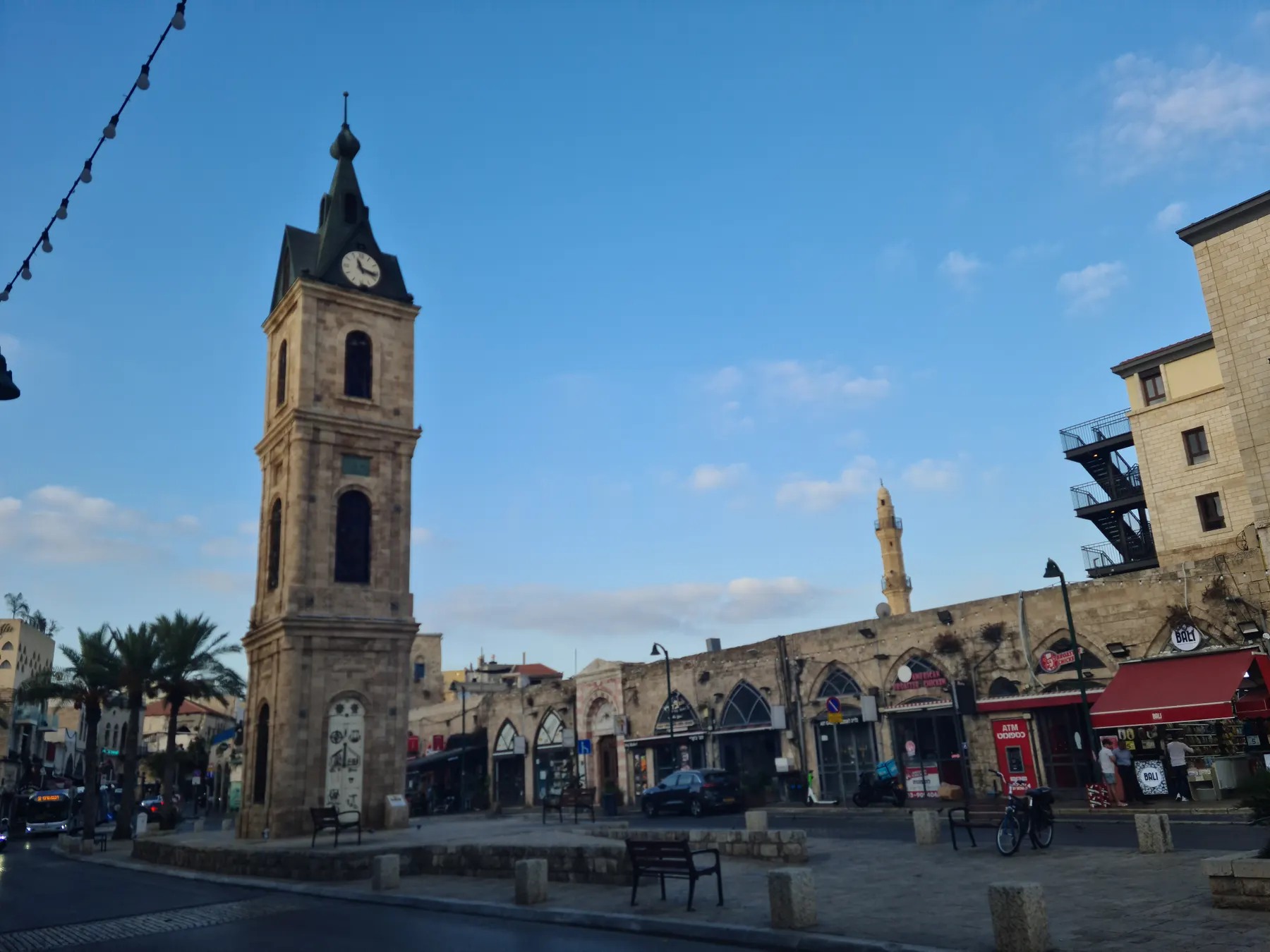
December belongs to the third calendar. The municipality and the Orthodox Scouts of Jaffa put a fifteen-metre fir in the square by the clock tower, and in reported years it has stayed lit through the night until 21 January, which carries it past the Orthodox Christmas on 7 and 8 January as well as the Latin one. Hanukkah overlaps, running from 4 to 12 December in 2026. The month with the second highest rainfall of the year is also the month when the old town is at its most lit after dark.
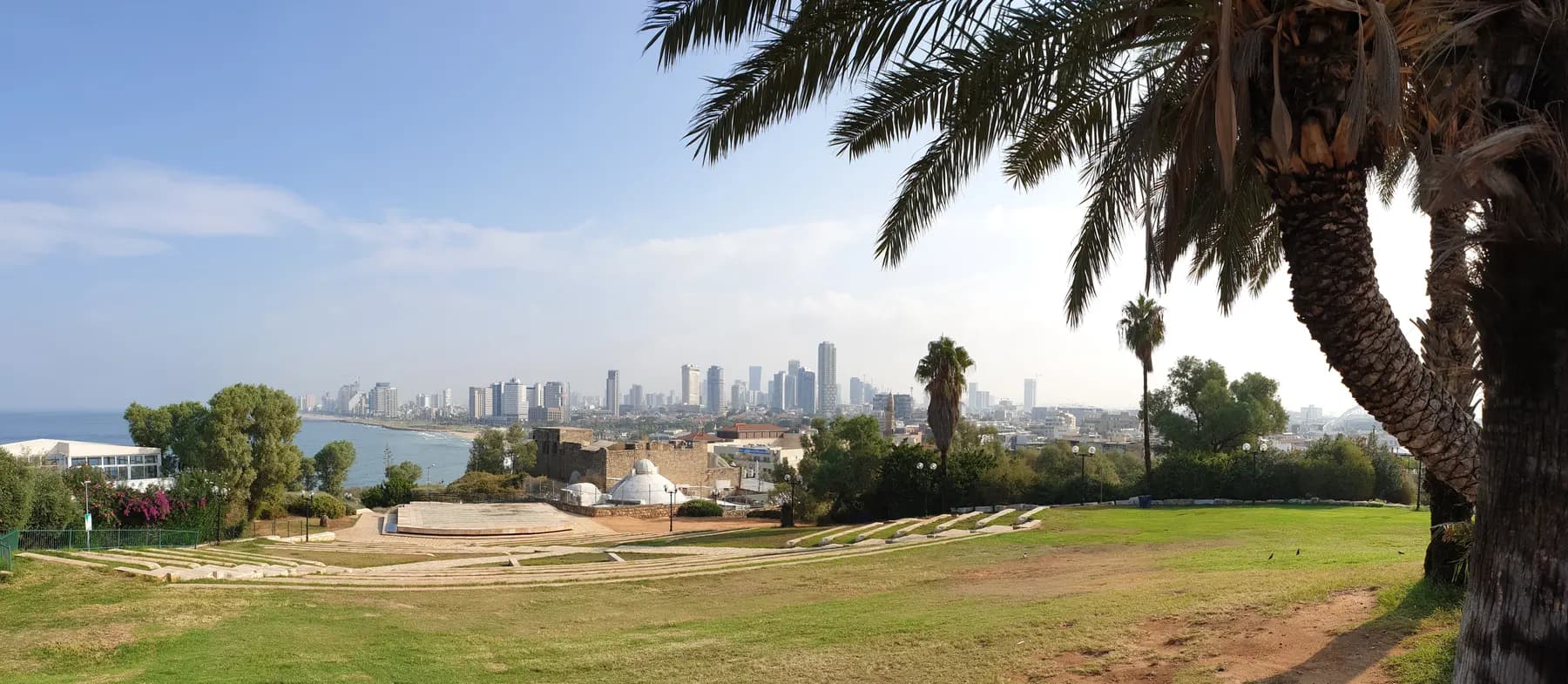
Anagoria / CC BY 3.0 · Wikimedia Commons
The hazard
The weather that matters here comes in from the west, in a handful of days
The hazard on this coast is not heat but the winter storm, and it arrives as a few violent systems rather than as steady drizzle: January's 172 mm falls across about twelve days with a millimetre or more, which is a great deal of water in a short time and long dry gaps in between. Jaffa sits on a low headland with nothing between it and the open Mediterranean, and the harbour it grew around is on the exposed side.
The January 2026 storm shows the ceiling. The Israel Meteorological Service issued a rare red early warning for sustained winds of up to 70 kph with gusts to 90, approaching 100 kph over the coast and the Carmel, and forecast Mediterranean waves to 6 metres with occasional peaks of 8 to 10 metres, particularly between Haifa and Tel Aviv. The municipality told residents to stay away from the beaches. Ynet reported it on 8 January 2026, with the service's own head noting that this one would be marked more by wind than by heavy rainfall.
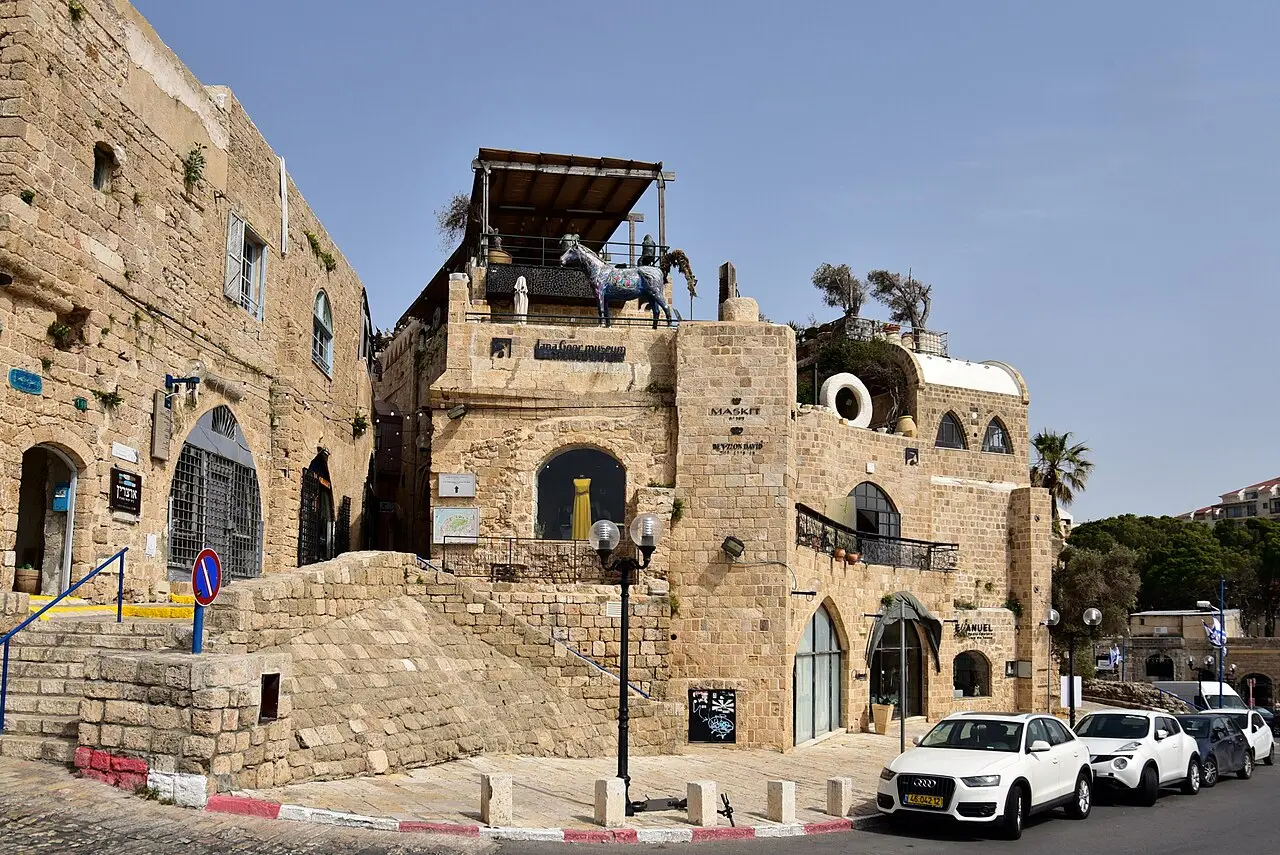
What that means in Jaffa is specific. The quay and the breakwater are the wrong place to stand in a westerly gale, since the harbour is a working base for local fishermen and a yacht marina rather than a sea wall built for spectators; the view is from HaPisga garden or the terrace above the port. The old town is worn stone and stepped alleys, and wet stone on a slope is the ordinary way people get hurt here. Between systems, though, a January day is bright and almost empty, so keep the promenade walk for a settled one and use Jerusalem Boulevard, a bus or the light rail otherwise.
Bahnfrend / CC BY-SA 4.0 · Wikimedia Commons
Summer
The hottest day is usually in spring, and the hardest month is August
The Israel Meteorological Service's account of the sharav explains something that surprises visitors every year: western Israel records its annual temperature extremes in spring rather than summer. Hot lows form over north-west Africa from March to mid-June, and sometimes from February, driven by the gap between a Sahara that has begun to bake and a Mediterranean that is still cold. Hot, dry, hazy air is drawn north ahead of them; as the low moves on north-east along the coast the wind swings westerly, the cooling is swift and sometimes violent, and the haze is blown back inland. The whole episode runs about a day to a day and a half.
August is the hard month and the page should say so rather than call it warm. Mean daily highs reach 30.9°C and, more to the point, mean daily lows sit at 24.8°C, while the sea at 30.4°C gives heat back to the headland after dark instead of taking any away. There is no cool part of the day, and everything is booked and priced for it, because the Israeli school holiday and the European one coincide. Jaffa's two small advantages over the open city to the north are that the old town lanes are narrow enough to hold shade and that stretches of the flea market trade under awnings; neither makes the afternoon usable.
The summer calendar is worth planning around. Israeli middle and high schools finish on about 20 June and elementary schools on about the 30th, and the holiday then runs to the start of September, which is why the last week of June is the point at which the quay and the market fill. Against that, the flea market's Thursday night events run through July and August with music, street theatre and special lighting, and they are the strongest single reason to be in Jaffa in high summer.
Sasha1506 / CC BY-SA 4.0 · Wikimedia Commons

Practical
What to know before you go
- The one fixed date in Jaffa is the rescue season at Givat Aliyah, the municipal beach south of the headland: 16 April to 8 October. Outside it the municipality's position is that bathing without a lifeguard is forbidden and dangerous.
- Check the Hebrew calendar before booking a flight. In 2026 Yom Kippur runs from the evening of 20 September to nightfall on the 21st and closes Ben Gurion with everything else; Sukkot runs 25 September to 2 October; Passover in 2027 is the evening of 21 April to the 29th.
- Come in autumn to swim and in spring to walk. The sea is 20.6°C in April when the air is already over 22, and 27.6°C in October when the air has fallen back.
- A hot, hazy, windless day in March, April or May is a sharav rather than an early summer. It runs about a day to a day and a half and breaks fast from the west, often with strong wind and dust.
- In a winter storm, watch the sea from HaPisga garden or the terrace above the harbour, not from the quay or the breakwater. In January 2026 the meteorological service forecast waves to 6 metres with peaks of 8 to 10 between Haifa and Tel Aviv, and the municipality told people to stay off the beaches.
- Keep the promenade walk down from Tel Aviv for a settled day. On a wet or windy one, Jerusalem Boulevard, a bus or the light rail gets you in without the exposure, and the old town's worn stone and steps are slick underfoot.
- In July and August, plan the day around the Thursday night market events and write off the middle of the afternoon entirely.
- If the trip falls in Ramadan, which in 2027 runs from about 8 February to 8 March, expect quiet daytimes in the Arab-owned kitchens and book the evenings, which is when Jaffa is at its liveliest all year.
The figures
Numbers behind this page
Each figure carries the year it belongs to and links the source it came from.
| Measure | Figure | As of | Source |
|---|---|---|---|
| Mean daily high and low at Jaffa, August | 30.9°C and 24.8°C | 2015-2024 | cds.climate.copernicus.eu |
| Mean daily maximum sea temperature, August against February | 30.4°C against 17.8°C | 2023-2024 | data.marine.copernicus.eu |
| Mean daily maximum sea temperature, October against June | 27.6°C against 26.4°C | 2023-2024 | data.marine.copernicus.eu |
| Mean January rainfall, and days with a millimetre or more | 172 mm across 12.4 days | 2015-2024 | cds.climate.copernicus.eu |
| Mean rainfall from July to September combined | 6 mm across 1.4 days | 2015-2024 | cds.climate.copernicus.eu |
| Mean annual rainfall, summed from the monthly normals | 585 mm | 2015-2024 | cds.climate.copernicus.eu |
| Rescue service season on the municipality's beaches, Givat Aliyah in Jaffa included | 16 April to 8 October | 2026 | tel-aviv.gov.il |
| Duration of a sharav episode, on the meteorological service's own account | About a day to a day and a half | 2026 | ims.gov.il |
The rest of the Jaffa guide
Sources and further reading
Every link below was opened and checked when this page was written. Official statements are marked as such: they are the subject's own account, not an independent one.
- OfficialTel Aviv-Yafo Municipalitytel-aviv.gov.ilBeaches
The bathing season of May to October, rescue service from 16 April to 8 October with hours of 07:15 to 16:45 and to 17:45 through June, thirteen beaches along the city coastline, Givat Aliyah named as the Jaffa beach, and the statement that bathing in the sea without the supervision of rescuers is forbidden and dangerous
- OfficialIsrael Meteorological Serviceims.gov.ilAbout the Sharav low
Sharav lows forming over north-west Africa from March to mid-June and sometimes from February, the hot dry hazy air drawn north, the swift cooling and blown dust when the sharav breaks from the west, the day to a day and a half duration, and the conclusion that western Israel records its yearly temperature extremes in spring rather than summer
- OfficialIsrael Meteorological Serviceims.gov.ilIt's so hot outside, so why is the sea so cold?
The difference in thermal capacity that leaves the sea slow to warm in spring and slow to cool in autumn, the spring sea breeze and coastal fog that follow from it, and the water reaching about 30 degrees by the end of summer
- OfficialVisit Tel Aviv, Tel Aviv-Yafo Municipalityvisit-tel-aviv.comJaffa Flea Market: a Full Guide
The flea market's Thursday night events in July and August, described as part of Jaffa's calendar and marked by music, street theatre and special illumination, and the restaurants and pubs that open after the regular vendors have shuttered their stalls
- OfficialVisit Tel Aviv, Tel Aviv-Yafo Municipalityvisit-tel-aviv.comJaffa Port
Commercial activity at the port ceasing in 1965, the harbour continuing to serve as a base for local fishermen, and the yacht marina established there from which cruises and fishing excursions run
- ReportingYnetnewsynetnews.comIsrael braces for 24-hour storm as heavy winds and massive waves replace unseasonal heat
Published 8 January 2026: the meteorological service's rare red early warning, sustained winds to 70 kph with gusts to 90 and near 100 kph over the coast and the Carmel, Mediterranean waves forecast to 6 metres with peaks of 8 to 10 metres particularly between Haifa and Tel Aviv, the Tel Aviv municipality's alert telling residents to stay away from the beaches, and the service head's comment that the storm would be marked more by wind than by heavy rainfall
- ReportingSacred Footstepssacredfootsteps.comRamadan Festivities in Jaffa: A Reclamation of Identity
Ramadan lights and lanterns on facades, windows and balconies in Jaffa, the Muslim Scouts organising since the 1970s and reviving the Parade of Lights in 2020 with children carrying lanterns through the streets, communal iftar meals, the Takbir procession over the final two days, and a public Eid prayer in Jaffa Park putting attendance at about 3,000
- ReportingIsrael National Newsisraelnationalnews.comAn Arab bakery that observes Passover?
The Abulafia bakery in Jaffa closing for the eight days of Passover since the 1970s, the arrangement beginning when Rabbi Shlomo Zalman Shtouber, who owned a neighbouring shoe factory, offered to cover the lost week's profit, and the family continuing the closure without payment after five years
- ReportingYnetnewsynetnews.comIsrael's best Christmas trees
The fifteen-metre tree placed in Jaffa's main square near the clock tower by the Tel Aviv-Jaffa municipality and the Orthodox Scouts of Jaffa, lit with coloured lights from the early evening and through the night until 21 January
- DataEuropean Centre for Medium-Range Weather Forecastscds.climate.copernicus.euERA5 reanalysis monthly climate normals for 32.053N, 34.7503E
The ten-year monthly normals for 2015 to 2024 rendered in the chart and table on this page, at Jaffa's own coordinates: mean daily high and low, monthly rainfall, and days with a millimetre or more
- DataCopernicus Marine Servicedata.marine.copernicus.euGlobal ocean physics analysis: sea surface temperature
The mean daily maximum sea temperatures on this page, averaged over 2023 and 2024 at the nearest sea point. The record there starts in late November 2022.
- DataHebcalhebcal.comJewish Holidays 5787 (2026-2027)
Gregorian dates used here: Rosh Hashanah 11 to 13 September 2026, Yom Kippur 20 to 21 September, Sukkot 25 September to 2 October, Shemini Atzeret and Simchat Torah to 4 October, Hanukkah 4 to 12 December 2026, Purim 22 to 23 March 2027 and Passover 21 to 29 April 2027
- ReferenceWikipediaen.wikipedia.orgPublic holidays in Israel
The Yom Kippur entry, which records that all businesses nationwide close, that there is virtually no traffic beyond emergency vehicles, that there are exceptions in Arab areas, and that airports, border crossings and broadcasting stations suspend work for about 28 to 30 hours; also the status of the intermediate days of Passover and Sukkot as a school holiday and collective paid leave, and Christmas recognised on 25 and 26 December for Catholics and 7 and 8 January for Orthodox churches
- ReferenceWikipediaen.wikipedia.orgRamadan
The table of predicted Gregorian dates by Islamic year, giving 1448 AH as 8 February to 8 March 2027, with the caveat that many Muslims mark the start by local sighting of the moon and that dates therefore vary between countries, usually by a day
- ReferenceWikipediaen.wikipedia.orgEducation in Israel
The school year running from 1 September and ending on 30 June for elementary pupils and 20 June for middle and high school pupils, which sets the start of the Israeli summer holiday
The best time to visit Jaffa: common questions
What is the best month to visit Jaffa?+
May if the trip is about walking, October if it is about the sea. May has 9 mm of rain, long evenings and no festival sitting on it. October has a mean daily maximum sea temperature of 27.6°C, warmer than June, with the air already off its summer peak, but the first week of it is usually still Sukkot and priced accordingly.
Is Jaffa too hot in August?+
The middle of an August day here is genuinely difficult, and the humidity is the reason rather than the temperature. Mean daily lows are 24.8°C and the sea at 30.4°C radiates heat back at the headland overnight, so there is no cool part of the day. The old town's narrow lanes hold more shade than an open boulevard, which helps a little. Plan the early morning and the hours after dark and give up on the afternoon.
Can you swim at Jaffa, and when?+
Givat Aliyah, the municipal beach south of the headland, is guarded from 16 April to 8 October, and the municipality's rule is that bathing without a lifeguard is forbidden and dangerous. The harbour itself is a working fishing base and yacht marina, not a swimming spot. The water is at its best from June through October and at its coldest in February, when it drops to 17.8°C.
Does Jaffa close for Jewish holidays?+
Less than the rest of the country does, but the prices move all the same. Jaffa's restaurants trade on Shabbat and most are not kosher, so Passover and Sukkot do not empty them, and the neighbourhood's one famous closure is Abulafia by the clock tower, which has shut for the eight days of Passover since the 1970s. What the festivals do is fill the hotels: the intermediate days are a school holiday and collective paid leave for many Israelis, and coastal accommodation sells out well ahead.
What is Jaffa like on Yom Kippur?+
Essentially shut, like everywhere else in Israel, and worth being here for anyway. Businesses close nationwide, broadcasting stops, traffic disappears apart from emergency vehicles, and the airport and border crossings suspend work for about 28 to 30 hours. The standard summary of Israeli public holidays records exceptions in Arab areas without specifying them, so a mixed neighbourhood like Jaffa may have a little more open than central Tel Aviv, but nothing to plan a day around.
Is Jaffa worth visiting in winter?+
Yes, for the indoor half and the empty lanes, and with the promenade walk held in reserve for a settled day. December, January and February carry 396 mm of the year's 585 mm between them, delivered as a few violent systems with long dry gaps, so a winter week here is not a washout but it is a gamble on any given afternoon. Hotel rates are at their annual floor and the old town is quieter than at any other time.
When is Ramadan in Jaffa, and what changes?+
In 2027 it runs from about 8 February to 8 March on the calculated calendar, with local moon sighting able to move either end by a day. Daytime trade in Arab-owned kitchens thins out and the evening becomes the main event: lanterns and lights along facades and balconies, communal iftar after sunset, the Muslim Scouts' Parade of Lights through the streets, and at the close a Takbir procession and a public Eid prayer in Jaffa Park attended by around three thousand people.
Is there anything to see in Jaffa at Christmas?+
Yes, and it is one of the few places in Tel Aviv where the season is visible at street level. The municipality and the Orthodox Scouts of Jaffa put a fifteen-metre fir in the square by the clock tower, lit from early evening onwards, and in reported years it has stayed up until 21 January, which covers the Orthodox Christmas on 7 and 8 January as well as the Latin one. Hanukkah runs alongside it in most years, in 2026 from 4 to 12 December.
What time of day and week is best for the flea market?+
A weekday or Friday morning is the reliable answer, because Friday afternoon winds down for Shabbat and most stalls stay shut on Saturday. In July and August the municipality's Thursday night events add a second window, with music, street theatre and special lighting after the regular traders have packed up. Late afternoon is for the old town rather than the market.