
The southern quarter of Tel Aviv-…
Jaffa
A harbour worked for three and a half thousand years, now the southern quarter of Tel Aviv-Yafo: a tell of stacked ruins, an Ottoman old town, and a flea market still going.
Egyptian garrison
c. 1460–1125 BCE
the span of New Kingdom Egyptian control at Jaffa, per the 2017 excavation report
Clock tower
1902
the date given by the Tel Aviv-Yafo tourism service for the Ottoman landmark
Arab residents
about 20,000
in Jaffa today, per Associated Press reporting in 2021
Cargo port
closed 1965
when Jaffa Port ceased commercial activity, per the municipal tourism service
Joined to Tel Aviv
1950
the two municipalities were united after the 1948 war
Things to do
10 sites, each with its own page
in Jaffa
Restaurants
13 picks
in Jaffa
Hotels
10 picks
in Jaffa
Getting there
7 routes
in Jaffa
When to go
Month by month
in Jaffa
יָפוֹ · The southern quarter of Tel Aviv-Yafo, on the Mediterranean coast
Jaffa is the old end of a young city. Walk south along the Tel Aviv seafront and the towers thin out, the promenade bends, and a low sandstone headland comes up out of the sea with a church tower and a minaret on it. That headland is a tell: a mound built of its own collapsed buildings, occupied and reoccupied for millennia. Excavators working there between 2011 and 2014 traced an Egyptian fortress held, with interruptions, from roughly 1460 to 1125 BCE; and it is, on their own account, the only Egyptian fortress excavated in Canaan.
What a visitor actually finds is smaller and more ordinary than that history suggests. Old Jaffa is a compact warren of restored Ottoman-era stone, mostly given over to galleries, restaurants and a clutch of expensive hotels. Below it, a working fishing harbour with a few dozen boats and a row of seafood places. Inland, the flea market, Shuk HaPishpeshim, where second-hand furniture, Bedouin rugs and bar tables now occupy the same lanes. And around all of it, a residential town of some 20,000 Arab residents alongside Jewish neighbours, one of the handful of places in Israel where the two populations live street by street.
Jaffa is also the place where the country's arguments are most visible per square metre: over what 1948 did here, over who can afford to live in a restored courtyard house, and over whose city this is. The page below sets out what is documented and says who says it.

Layers
A mound made of its own ruins
The hill of Old Jaffa is not a natural feature so much as an accumulation. Kurkar, the local wind-cemented sandstone, gives the headland its base; everything above is the debris of towns that fell down or were knocked down and were built over rather than cleared away. That is what a tell is, and Tel Yafo is a textbook one, which is why archaeologists have kept returning to it.
Jacob Kaplan dug the area the excavators call the Ramesses Gate from 1955 to 1962. Half a century later the Jaffa Cultural Heritage Project reappraised his work and reopened the fortress area between 2011 and 2014. The 2017 report of that campaign, published in the American Journal of Archaeology by Aaron Burke and thirteen colleagues, is the best single account of what is under the hill and remains the reference point for anything you will be told on a walking tour.
The visible and the excavated do not always line up. Much of what you walk on in Old Jaffa is eighteenth- and nineteenth-century, resting on Crusader foundations that in turn sit on far older material. Treat the round numbers in tour patter with care; treat the stratigraphy as real.
- Kaplan's excavations at the Ramesses Gate: 1955–1962
- Renewed fortress excavation: 2011–2014
- Published in the American Journal of Archaeology, 2017
- Old town buildings largely 18th–19th century on Crusader foundations
New Kingdom
Ramesses' gate, and how Egyptian Canaan ended
Jaffa mattered to Egypt because it was a harbour on the road north. From roughly 1460 BCE the town carried an Egyptian garrison, and it kept one on and off for more than three centuries. The monumental gateway excavated there is known as the Ramesses Gate (the name the excavation reports use) and Britannica notes Jaffa's role as an administrative centre in the New Kingdom and as a garrison city for Ramesses II in the thirteenth century BCE.
The more interesting finding of the recent work is how that ended. The excavators identified two destructions of the fortress in the second half of the twelfth century BCE, and radiocarbon results from those destruction layers, they argue, give the clearest basis yet for about 1125 BCE as a terminus post quem for the end of Egyptian rule in Canaan. Their reading is that this was not a single imperial collapse but local resistance to the Egyptian garrison, likely mounted from Canaanite centres across the coastal plain. Because Jaffa's is the only Egyptian fortress excavated in Canaan, they treat it as a unique window on that resistance.
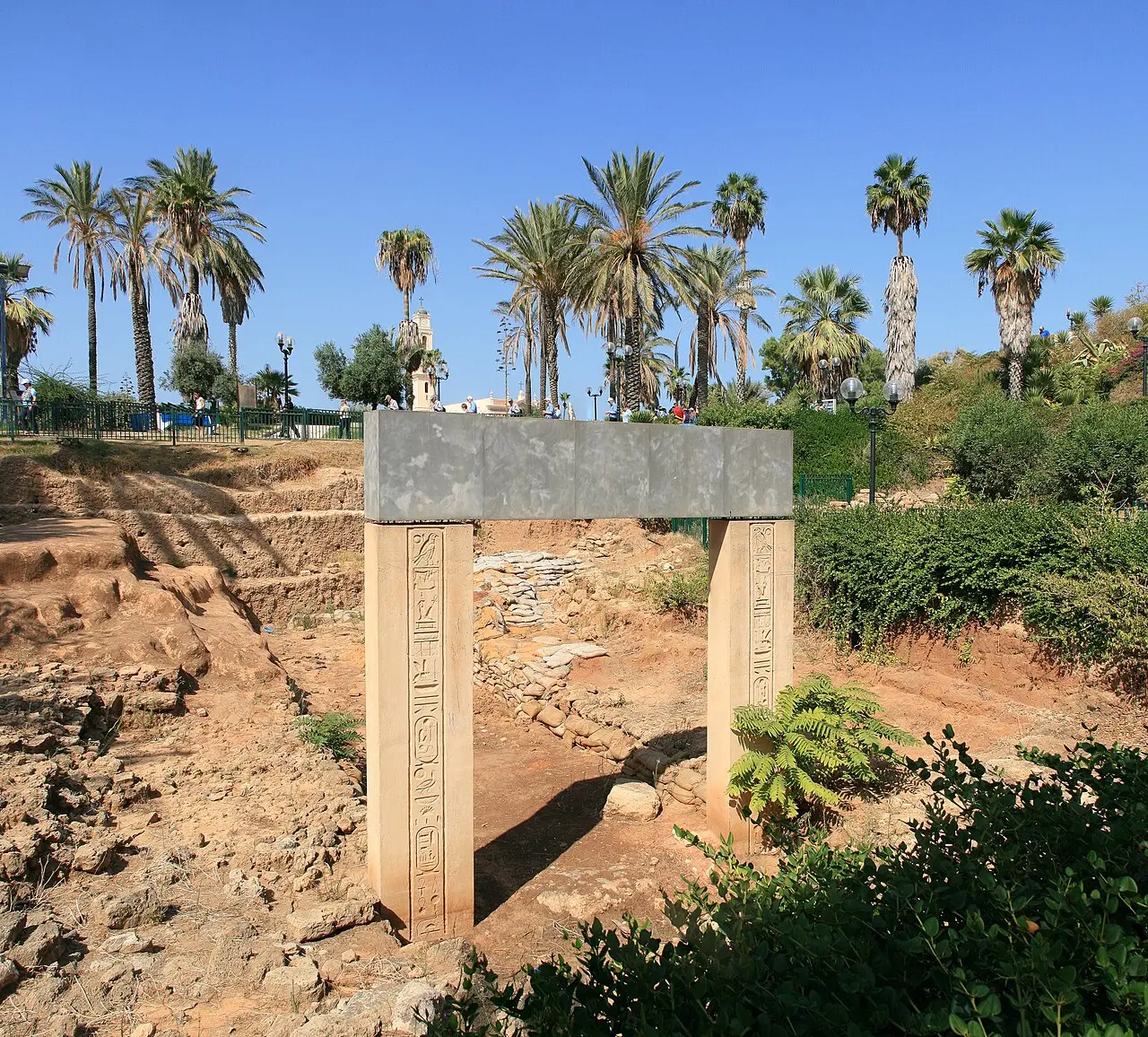
None of this is easy to see today. The gate area has been partly reconstructed, and the antiquities collection in a former Ottoman building on the way into the old town (a post office and prison in the eighteenth century, later a soap factory) gives context, but expect a few courses of stone and a long caption. The story is worth more than the ruin.
Ludvig14 / CC BY-SA 4.0 · Wikimedia Commons
Ottoman
The town Napoleon broke and Abu Nabbut rebuilt
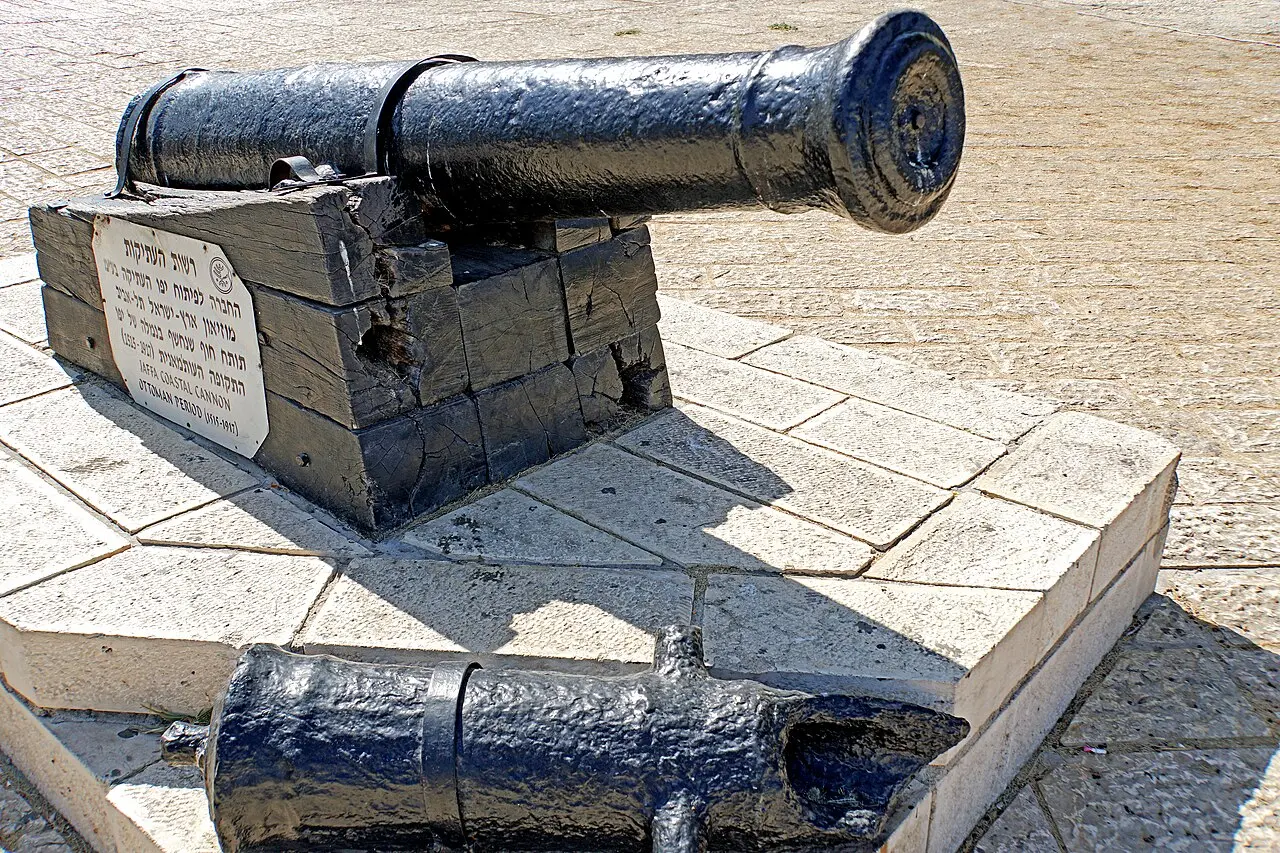
Almost every stone you admire in Old Jaffa post-dates a catastrophe. Napoleon Bonaparte took the city in 1799 during his Syrian campaign, and the reconstruction under the governor known as Abu Nabbut ('father of the club', for the stick he was never seen without) gave Jaffa the shape it still broadly has. The municipal tourism service credits him with rebuilding the Mahmoudiya Mosque after Napoleon's invasion left much of the town in ruins.
Then came the century that made Jaffa rich. Britannica records that Ottoman-era Jaffa exported soap of olive oil, sesame, barley, watermelons, wine and especially oranges, becoming one of the most active ports on the eastern Mediterranean and the second largest city in Palestine. The infrastructure followed the trade. The first passenger train ran from Jaffa to Jerusalem on 27 August 1892, with the official ceremony that September: fifty-three miles of track that cut a two-day journey to about four hours, according to the Center for Israel Education, and the first railway project in the Levant. It was built to serve this harbour.
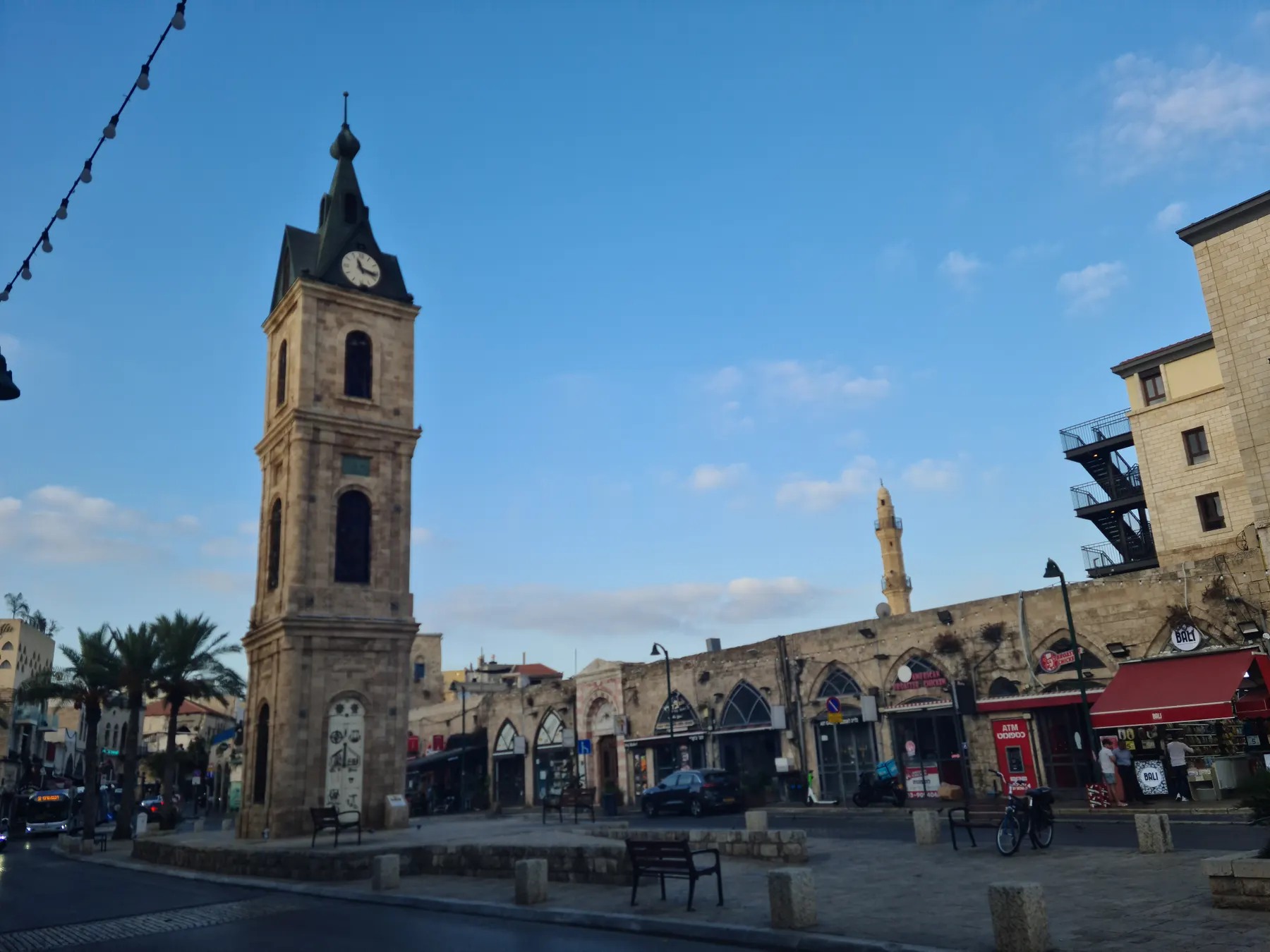
The clock tower at the top of Yefet Street belongs to the same confident decade. The Tel Aviv-Yafo tourism service dates it to 1902 and ties it to the thirtieth anniversary of Sultan Abdülhamid II's accession; its windows illustrate episodes from the city's history, from ships carrying Lebanese cedars to Simon the Maccabee, who took the port for the Hasmoneans. It is the natural place to start a walk, if only because everything else in Jaffa is downhill from it.
St Peter's Church, the Franciscan building whose facade dominates Kedumim Square, tells the same story of repeated rebuilding. A church was raised here in 1654 over the ruins of a Crusader church, destroyed in the late eighteenth century, and rebuilt between 1888 and 1894, with further renovation in 1903. Its altar faces west rather than east: an unusual orientation, and by tradition one that turns the church towards the sea and the house of Simon the Tanner, where the apostle Peter is said to have lodged.
- 1799: Napoleon takes Jaffa
- Early 1800s: Abu Nabbut rebuilds; the Mahmoudiya Mosque restored
- 1892: first Jaffa–Jerusalem train, 53 miles, about four hours
- 1902: clock tower, per the municipal tourism service
- 1888–1894: St Peter's Church rebuilt over Crusader ruins
Dennis G. Jarvis / CC BY-SA 2.0 · Wikimedia Commons

Shuk HaPishpeshim
The flea market, and what happened to it
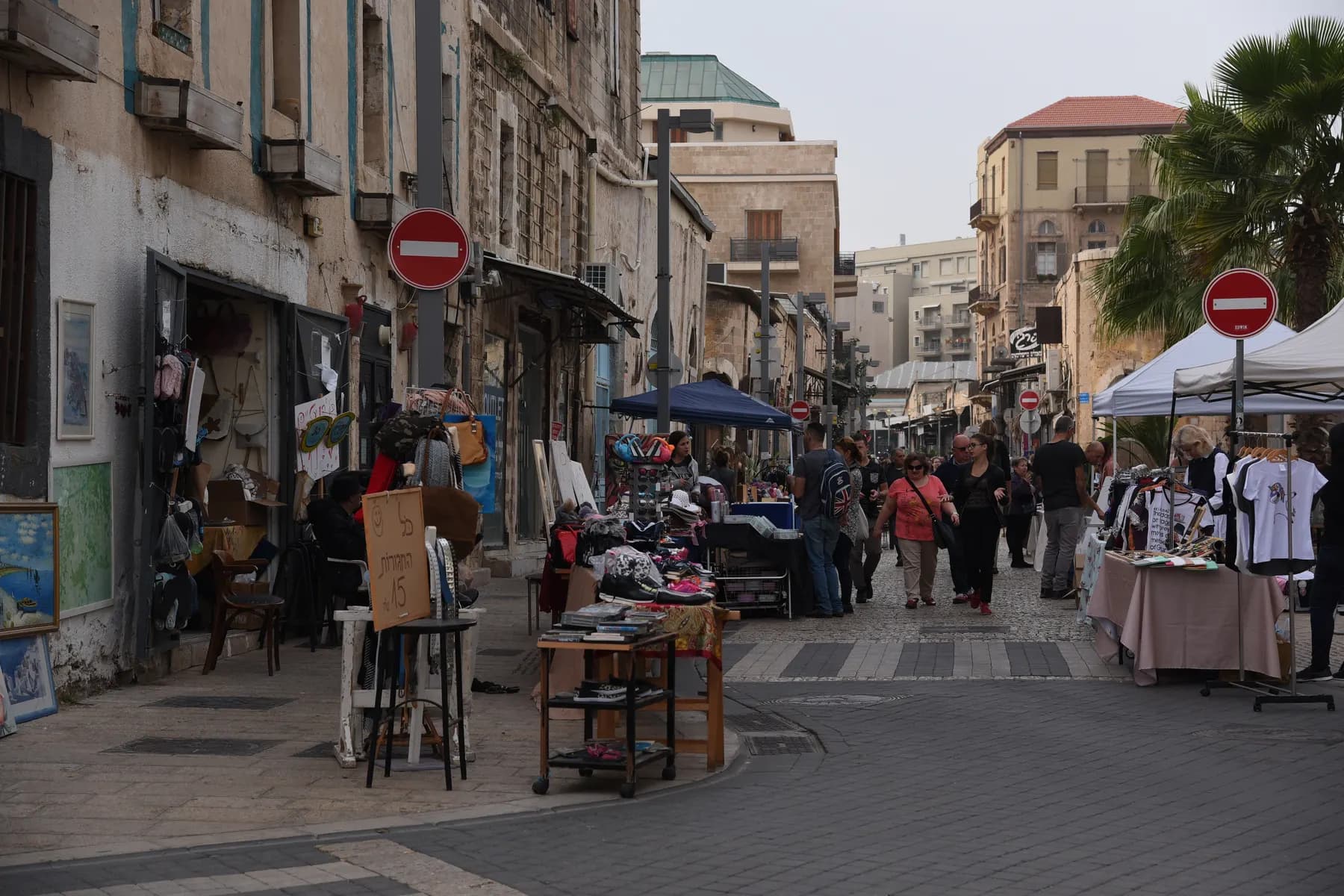
Southeast of the clock tower, a grid of shallow lanes holds the flea market. Its origin is administrative rather than romantic: the Tel Aviv-Yafo tourism service explains that the older marketplace was dispossessed by the Ottoman government from the ground where the clock tower now stands, in the late nineteenth century, and moved to part of its present site. It has operated as a flea market for more than seventy years.
For most of that time it was exactly what the name promises, a place for used tools, mismatched crockery, brass, bedheads and clothes sold off tarpaulins. Much of that survives, particularly in the covered aisles and on the stalls that spill into the roadway in the morning. But the surrounding streets have filled with bars, restaurants and design shops, and the market has expanded to take in the adjoining Greek Market, where the municipality's own tourism service says plans call for turning further streets over to restaurants and lifestyle businesses.
Practically, the market rewards a weekday morning and a Friday morning above all; things wind down for Shabbat on Friday afternoon and much of the retail stays shut on Saturday, though the restaurants do not. In July and August the municipality runs Thursday-night market events with music, street theatre and special illumination. Haggling is expected on the second-hand stalls and pointless in the design shops.
1948
The rupture, and the mixed city that followed
Jaffa in the 1940s was a large, predominantly Arab city (Britannica calls it the second largest city in Palestine) and under the 1947 United Nations partition plan, on Britannica's account, it was designated an exclave of the proposed Arab state, surrounded by the proposed Jewish one. What happened next is the central fact of the modern town, and the figures cited for it differ, so it is worth naming who says what.
Britannica records that the Irgun Zvai Leumi attacked Jaffa on 26 April 1948, that nearly all of the city's 70,000 Arab Muslims and Christians were displaced in the battle, and that on 13 May the city was securely under the control of Jewish paramilitaries; it puts the number who remained at 4,000, concentrated in the Ajami neighbourhood south of the old city. The Associated Press, in reporting carried by The Times of Israel in April 2021, describes a predominantly Arab city of some 100,000 people before 1948 from which tens of thousands of Palestinian residents fled or were forced from their homes. Both accounts agree on the outcome: only a small remnant of the pre-war Arab population stayed.
The legal aftermath shaped the streets you walk. Under a 1950 absentee property law, the AP reports, the new Israeli government confiscated thousands of empty properties and handed them to state-run public housing companies. In the same year Jaffa was united with Tel Aviv, which is why the city's formal name is Tel Aviv-Yafo and why Jaffa has no mayor of its own.
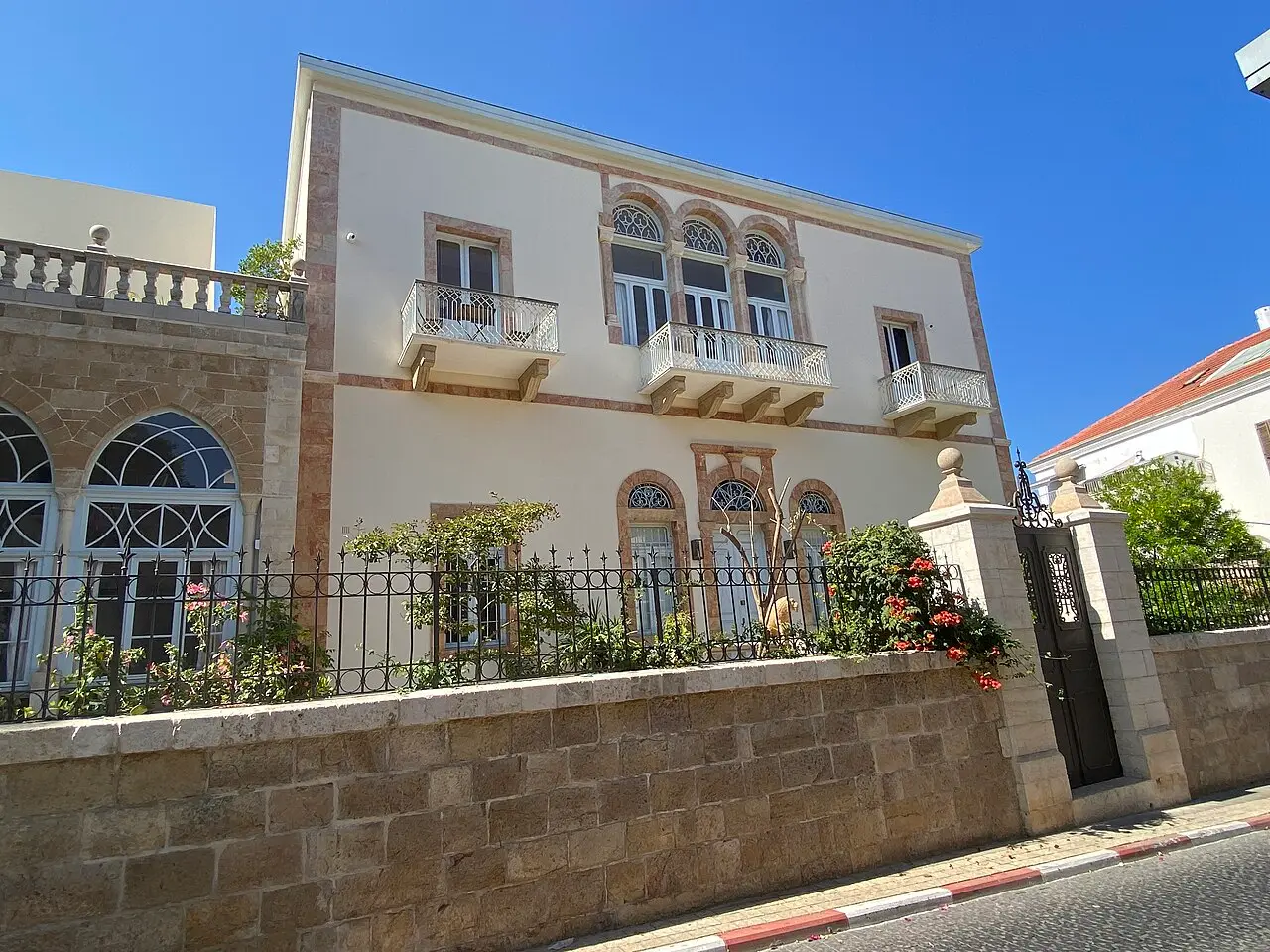
Today roughly 20,000 Arab residents live in Jaffa, a minority within a Tel Aviv-Yafo of about 468,000 people at the 2021 estimate. It is one of Israel's mixed cities, and the friction is documented: Arab residents interviewed by the AP in 2021 described rents beyond the reach of working-class families and a market that has priced them out of restored quarters, while the same restoration is what draws visitors. Read the renovated courtyard houses of Ajami with that in mind.
שלמה רודד / CC BY 2.5 · Wikimedia Commons

The rock
Andromeda's rock, Jonah's ship, and a bad harbour
Look north-west from the harbour wall and a cluster of rocks breaks the water a short way offshore. These are Andromeda's rocks, and the association is genuinely ancient rather than a modern tourist invention. Josephus, writing in the first century CE, says of Joppa that great stones jut out into the sea and that here 'the chains wherewith Andromeda was bound have left their footsteps, which attest to the antiquity of that fable'. Perseus, in the myth, arrives in time to kill the sea monster; the town kept the story and, for centuries, showed the marks.
Josephus is equally clear that Jaffa was a poor natural harbour. He describes a shore that is not naturally a haven and a wind that sailors called 'the black north wind', which dashes mighty waves against the rocks; in the episode he is narrating, the ships sheltering at Joppa were destroyed by exactly that storm, their crews caught between the rocky shore and the Roman army. Anyone who has watched the swell come into the little port in winter will recognise the description.
The Hebrew Bible uses the same harbour twice in ways worth knowing before you visit. In II Chronicles, Huram of Tyre undertakes to cut the cedars of Lebanon and 'deliver them to you as rafts by sea to Jaffa' for onward carriage to Jerusalem. And in Jonah, the prophet 'went down to Joppa and found a ship going to Tarshish': the voyage that ends with the fish. Both stories only work because this was the port for the interior, which is exactly what the archaeology and the 1892 railway say too.
Shamouti
The orange that took the city's name
The Jaffa orange is a real cultivar with a real origin, and the origin is here. Its proper name is Shamouti, and the Citrus ID reference guide records that it arose some time before 1844 in an orchard near Jaffa, presumably as a limb sport (a spontaneous mutation on a single branch) in a tree of the local beledi variety. It is thick-skinned, seedless or nearly so, and shaped distinctively enough that Citrus ID calls the form a natural trademark. It also ships well, which is the whole point.
That last quality made it an export crop. Shipped out of this harbour, the fruit reached European markets under the port's name rather than the variety's, and Citrus ID notes that the usage is now too entrenched to change. Britannica lists oranges among the exports that made Ottoman Jaffa prosperous, alongside olive-oil soap, sesame, barley, watermelons and wine.
The groves were Arab-owned and Jewish-owned in turn and in parallel, and the fruit is claimed as heritage by Palestinians and Israelis alike, which is why it turns up on both sides of a great deal of packaging and polemic. The botany is not in dispute: a single mutated branch near Jaffa, propagated by grafting, is the ancestor of the Shamouti trees grown around the Mediterranean.
The orchards are gone from the immediate hinterland, built over by the twentieth-century city. What you will find instead is the fruit in the market, wooden crate labels on the flea market's antique stalls, and the name on juice bars from here to Bat Yam.
שלמה רודד / CC BY 2.5 · Wikimedia Commons

The harbour
A working quay, and what to eat off it
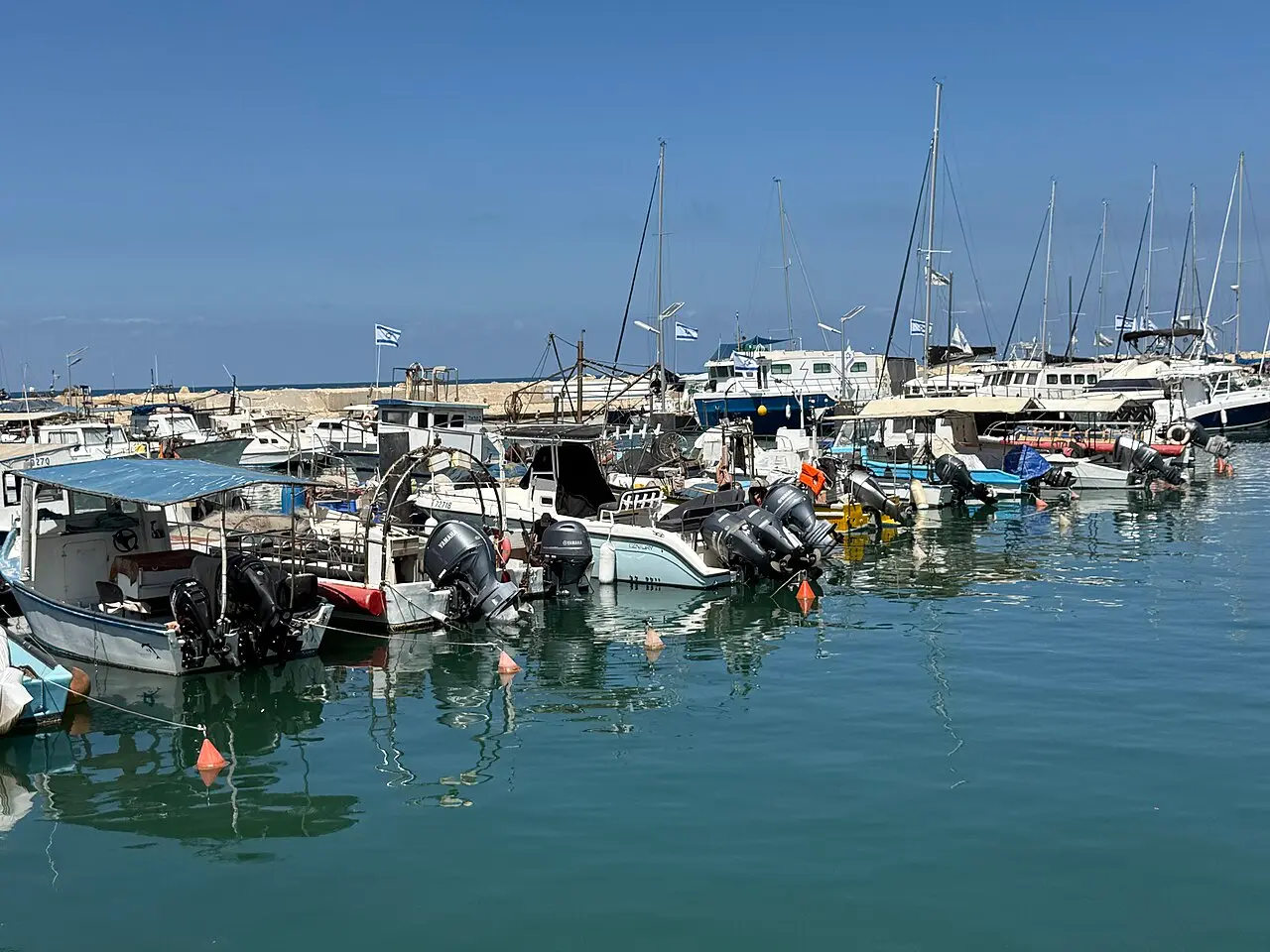
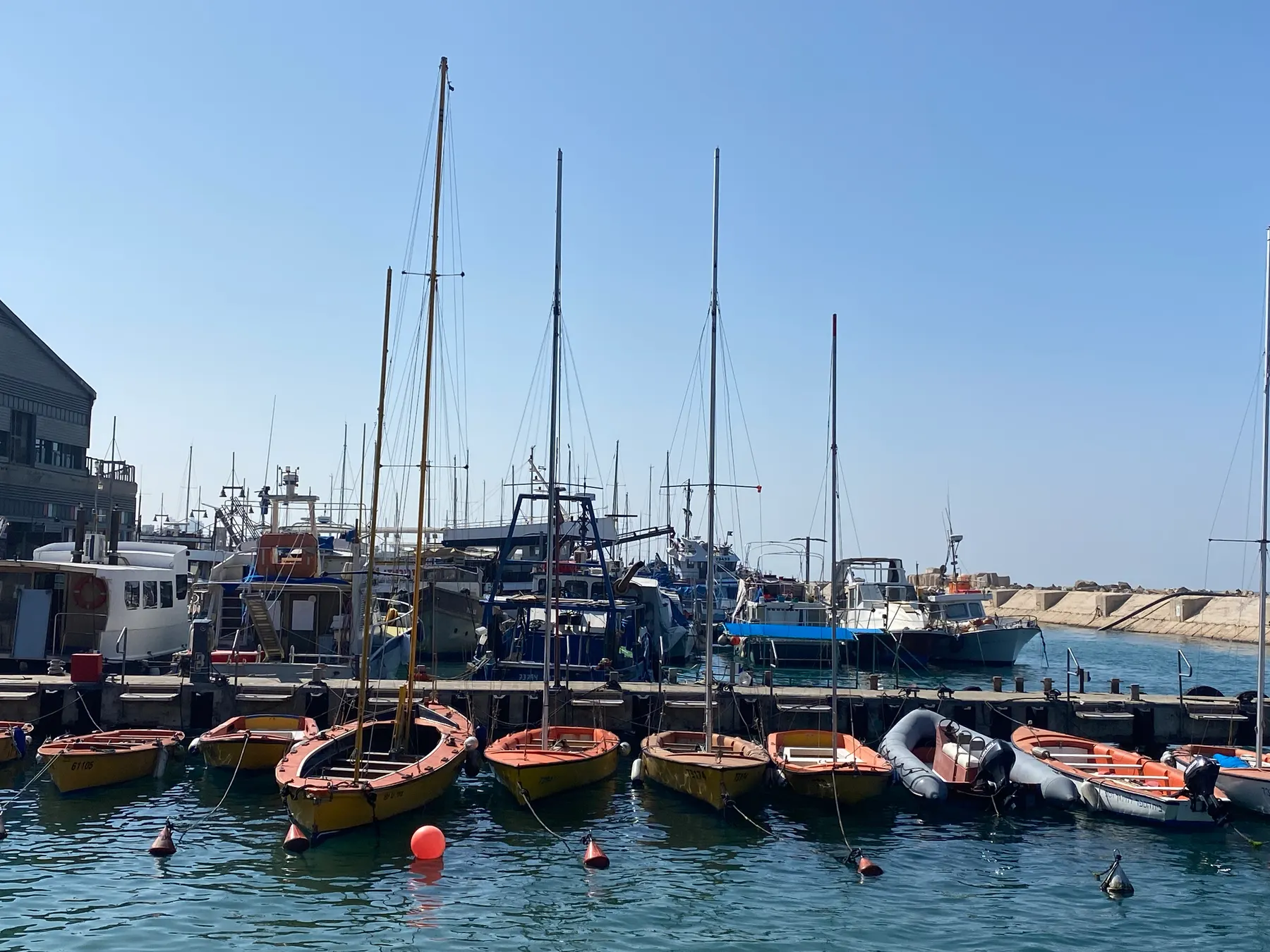
Jaffa Port ceased all commercial activity in 1965. It had already been undercut: during the Arab Revolt of 1936, when Jewish traders could not use Jaffa, a replacement port was built up the coast in Tel Aviv, and the deep-water trade later went to Ashdod. What survives is a base for local fishermen, a yacht marina and a line of converted warehouses along the quay. The municipality's tourism service lists cruises, fishing excursions and seasonal tuna trips from here, alongside the restaurants.
One of the warehouses holds Na Laga'at, which translates as 'please touch': a theatre company whose ensemble of more than forty blind, deaf and deaf-blind actors and other employees performs with English translation shown overhead, with a café and restaurant in the same complex. It is the least touristic thing in a very touristic square kilometre and worth checking listings for before you come.
Eating in Jaffa splits three ways. On the quay it is fish, priced for the view. Around the flea market it is mezze, grills and a dense concentration of bars, busiest from early evening. And on Yefet Street it is the old-town staples: hummus counters that have been arguing about primacy for decades, bakeries selling sesame-crusted ka'ak, and the Abulafia bakery, which is as close as Jaffa comes to a civic institution: its hours are long and locally famous, but check them on the day.
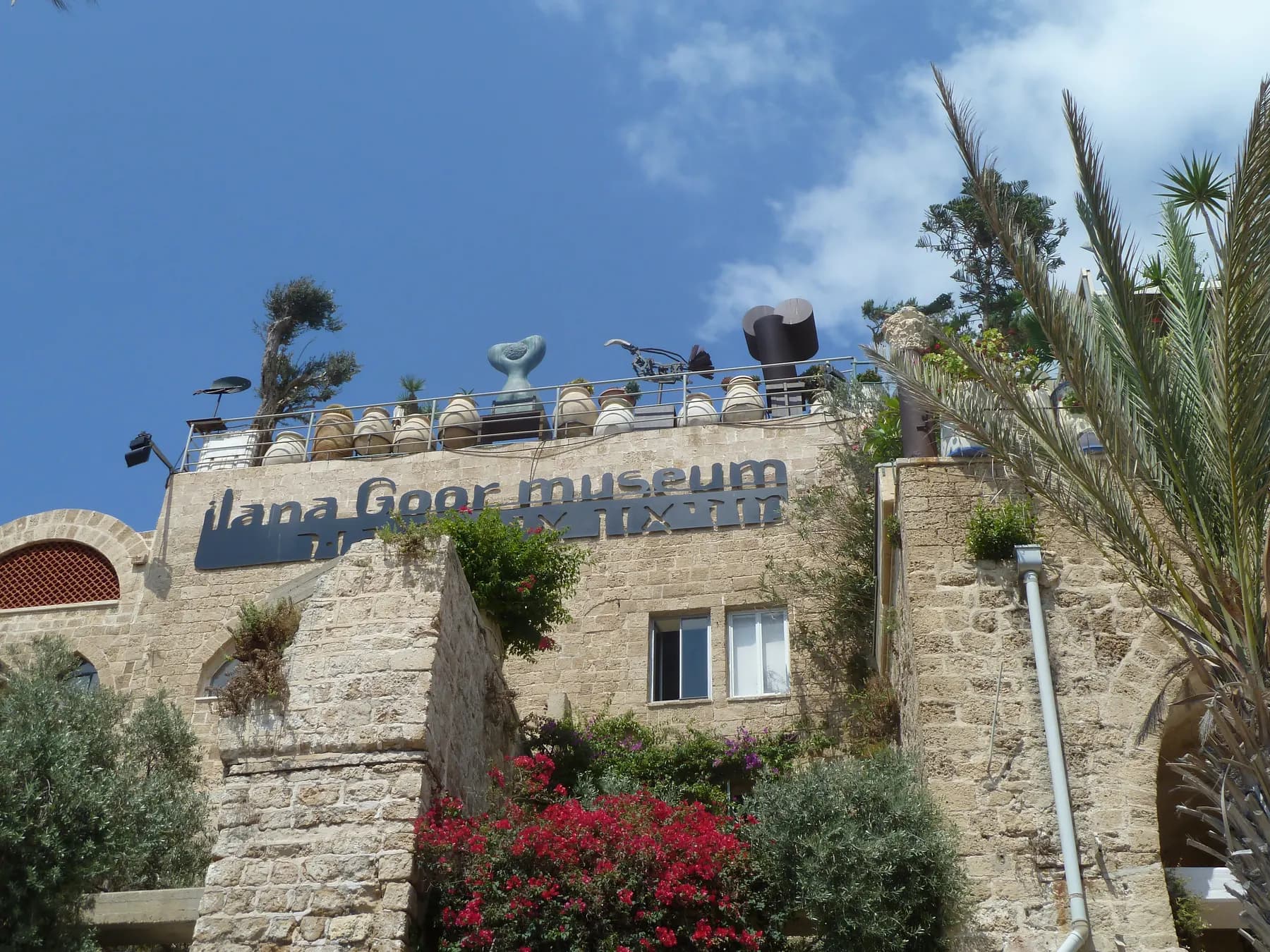
For art, the Ilana Goor Museum occupies an old stone house at 4 Mazal Dagim Street, with a rooftop over the sea. Its own website gives admission at 45 NIS for an adult and 20 NIS for a child aged five to seventeen, and hours of 10.00 to 16.00 Sunday to Thursday and Saturday, 10.00 to 14.00 on Friday, as published on the museum's site and checked in 2026, so confirm before you go.
On the ground
What to see at Jaffa
The things worth building a visit around, in the order most people reach them.
The clock tower and Yefet Street
The Ottoman tower the municipality dates to 1902 stands where the old town meets the modern one. Start here and walk downhill; its windows run through Jaffa's history in panels, from cedar ships to Simon the Maccabee.
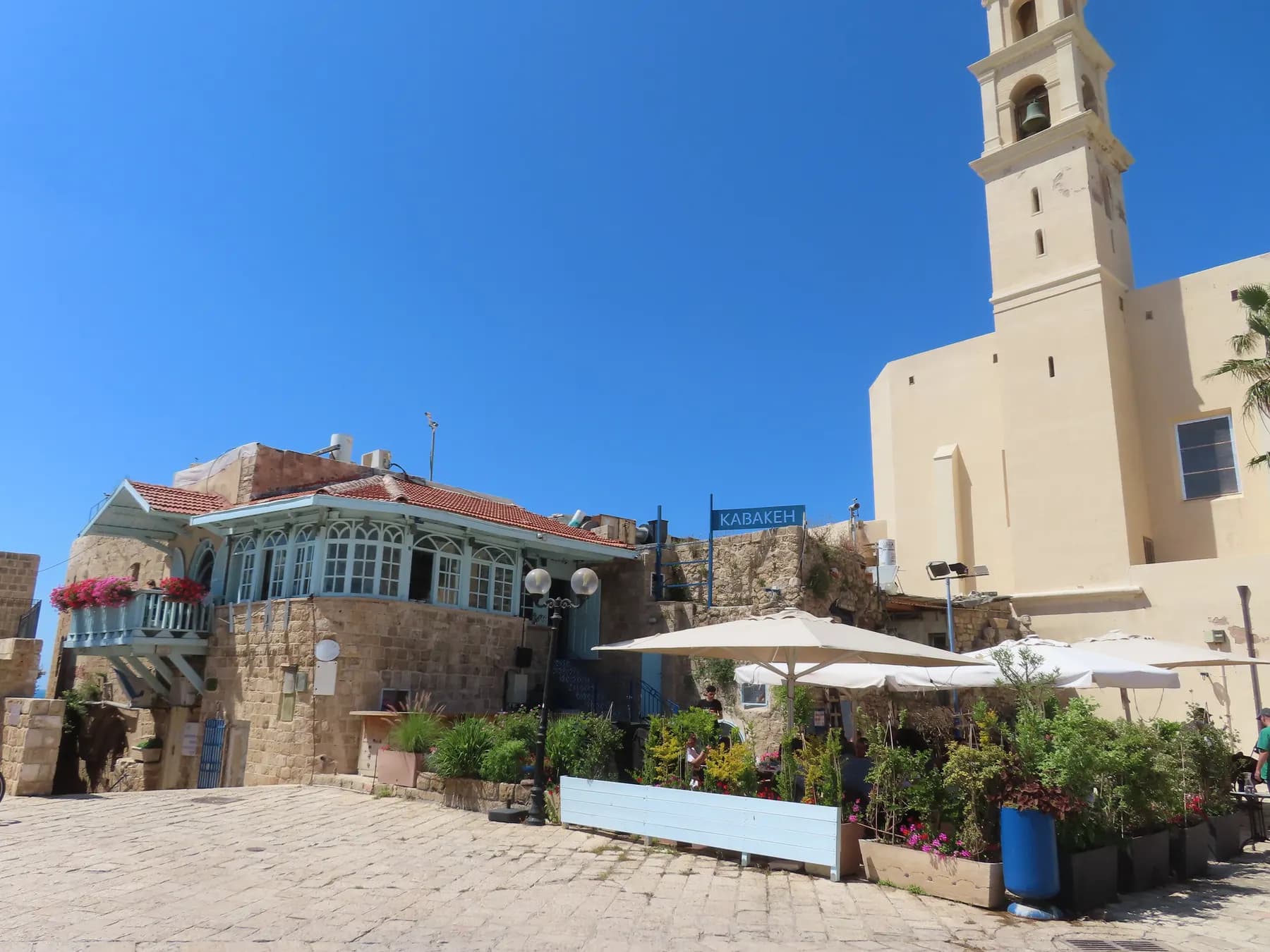
Kedumim Square and St Peter's
The old town's centre, with the Franciscan church rebuilt between 1888 and 1894 over Crusader ruins. Its altar faces west, unusually, towards the sea and the traditional site of Simon the Tanner's house.
The flea market
Shuk HaPishpeshim, moved here in the late nineteenth century when the Ottomans cleared the ground where the clock tower now stands. Weekday and Friday mornings for the stalls; evenings for the bars that have grown around them.
Andromeda's rocks
The outcrop off the harbour wall that Josephus already knew as the place where the marks of Andromeda's chains were shown. Best seen from the breakwater or the terrace above the port.
The fishing harbour
Closed to commercial traffic since 1965 and now a base for local fishermen with a marina and converted warehouses, including the Na Laga'at theatre and its blind, deaf and deaf-blind ensemble.
Ajami
The residential quarter south of the old town where Jaffa's remaining Arab population was concentrated after 1948. Restored stone houses, sea views, and an active argument about who can still afford to live there.
Go deeper
Every site in Jaffa, in full
10 places here have a page of their own: what survives, what it costs, when it opens and how long to give it.
שלמה רודד / CC BY 2.5 · Wikimedia Commons
Neighbourhood
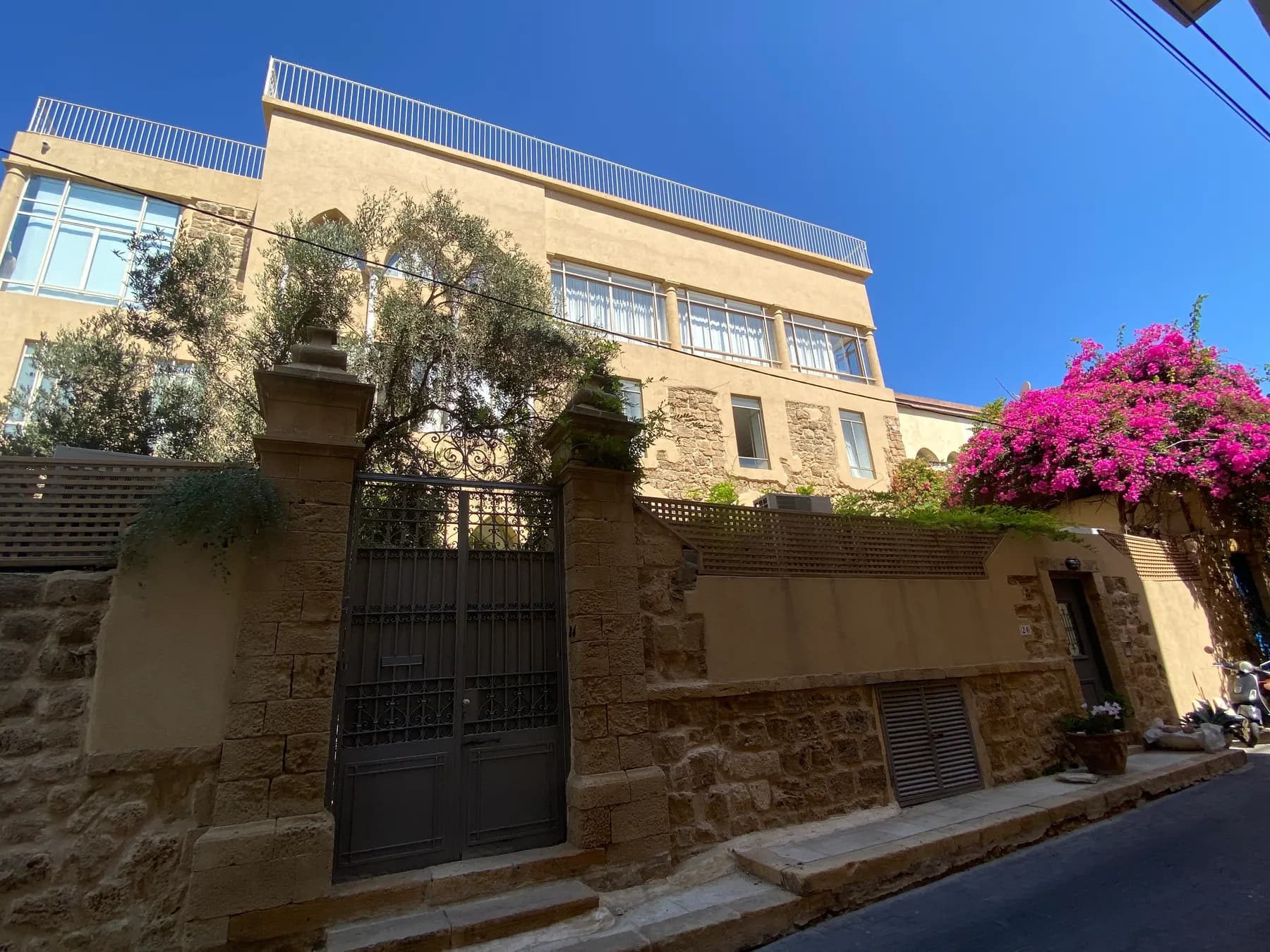
Ajami
The quarter south of Old Jaffa where the Arabs who stayed after 1948 were concentrated behind a fence, now a grid of kurkar villas above a coastal park built on forty years of construction rubble.
Anagoria / CC BY 3.0 · Wikimedia Commons
Viewpoint
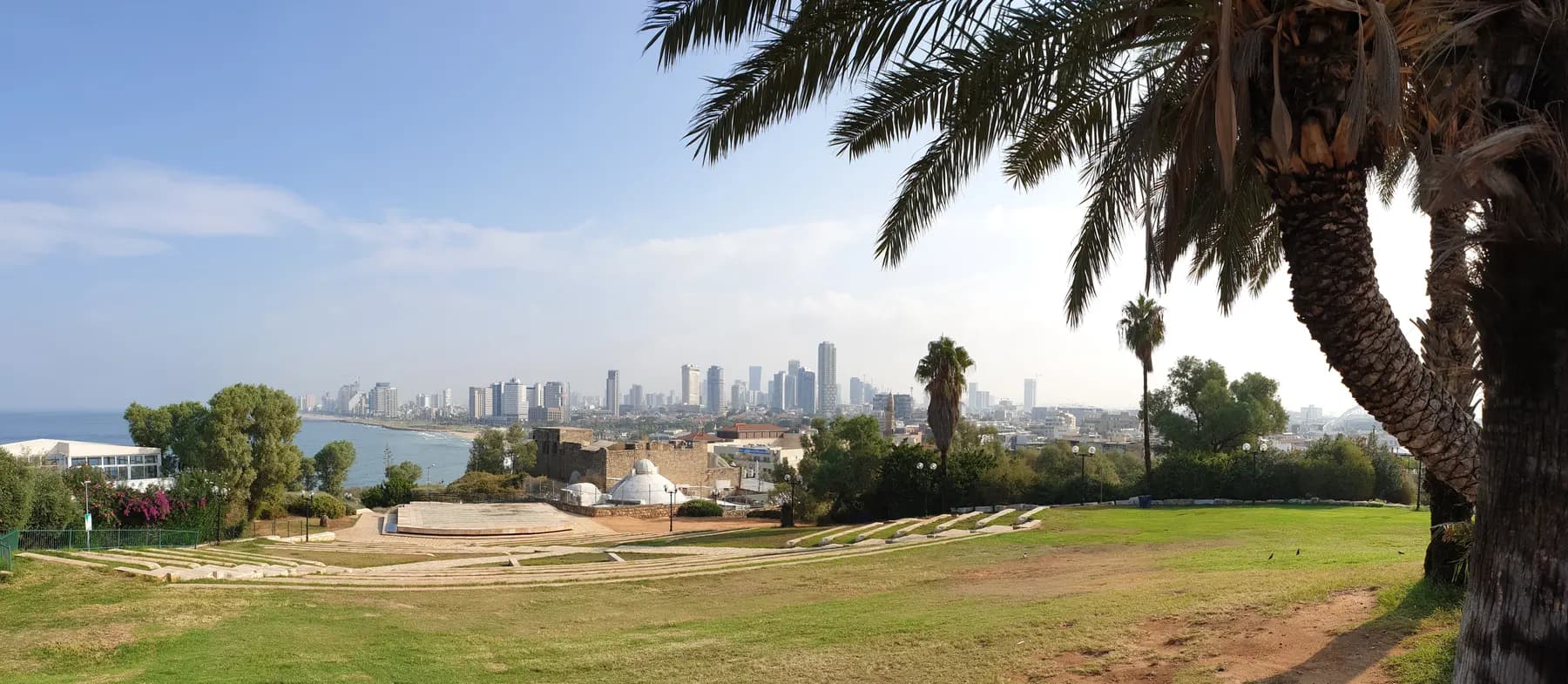
HaPisga Garden (Abrasha Park)
The lawns on top of Old Jaffa are not old: they are the ground left empty after the British blew a quarter of the town apart in June 1936, laid out as a public garden under a 1956 plan and planted by Tel Aviv's city gardener Avraham Karavan, whose nickname Abrasha the park still carries.
Deror_avi / CC BY-SA 3.0 · Wikimedia Commons
Museum
Ilana Goor Museum
A stone building of 1742, put up as an inn for Jewish pilgrims landing at Jaffa, which the sculptor Ilana Goor bought in two stages and opened as a museum of her own work and her collection in September 1995.
Sasha1506 / CC BY-SA 4.0 · Wikimedia Commons
Landmark
Jaffa Clock Tower
Built for the silver jubilee of Sultan Abdul Hamid II with money raised from Jaffa's Muslim, Jewish, Christian and Armenian residents, it was the first public clock in a town where until then only churches and mosques rang the hours.
Rakoon / CC0 · Wikimedia Commons
Market
Jaffa Flea Market
The market was pushed onto these streets in the late nineteenth century, when the Ottoman government cleared the ground where the clock tower now stands for its own administrative compound.
שלמה רודד / CC BY 2.5 · Wikimedia Commons
Landmark
Jaffa Port
The quay, the breakwater and the three long sheds along it are British work of the mid-1930s, built for the orange trade on ground reclaimed from the sea, and two of those sheds were taken down and built again between 2019 and 2023.
Fallaner / CC BY-SA 4.0 · Wikimedia Commons
Landmark
Kedumim Square
The flagged main square of Old Jaffa is a space the British made by demolition in June 1936, and the Israel Antiquities Authority excavation under its fountain found the drains of one of the houses that came down.
שלמה רודד / CC BY 2.5 · Wikimedia Commons
Museum
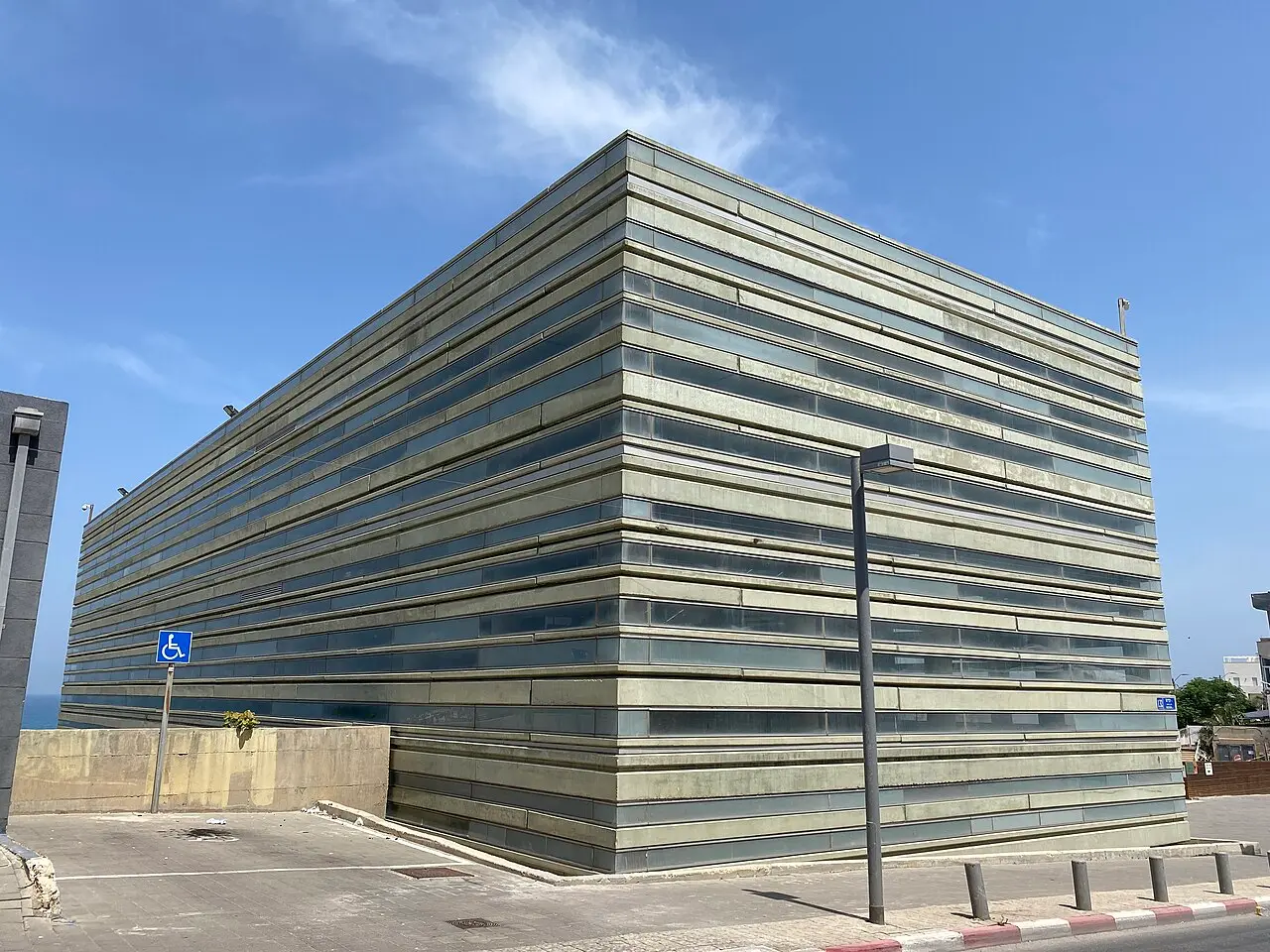
Peres Center for Peace and Innovation
The Israeli Innovation Center occupies four levels of the Peres Peace House, the building of alternating concrete and translucent glass that Massimiliano and Doriana Fuksas put on the Jaffa shore between 1999 and 2009.
leighklotz / CC BY 2.0 · Wikimedia Commons
Archaeological site
Ramses II Gate Garden
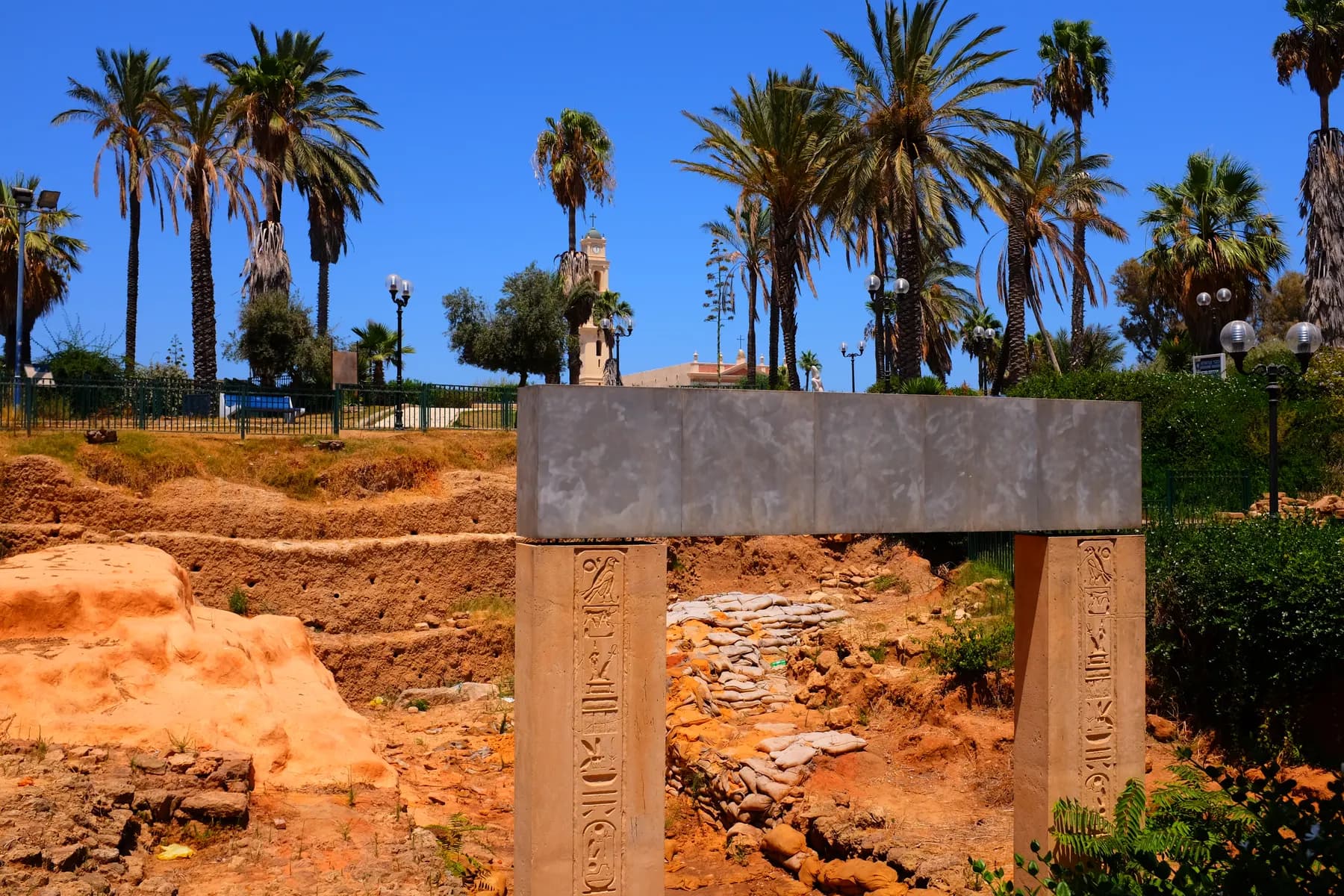
The inscribed portal standing in this excavation is a concrete reconstruction the Israel Antiquities Authority raised in the 1990s; the kurkar blocks that carried the titles of Ramesses II are in the Jaffa Museum of Antiquities.
שלמה רודד / CC BY 2.5 · Wikimedia Commons
Religious site
St Peter's Church
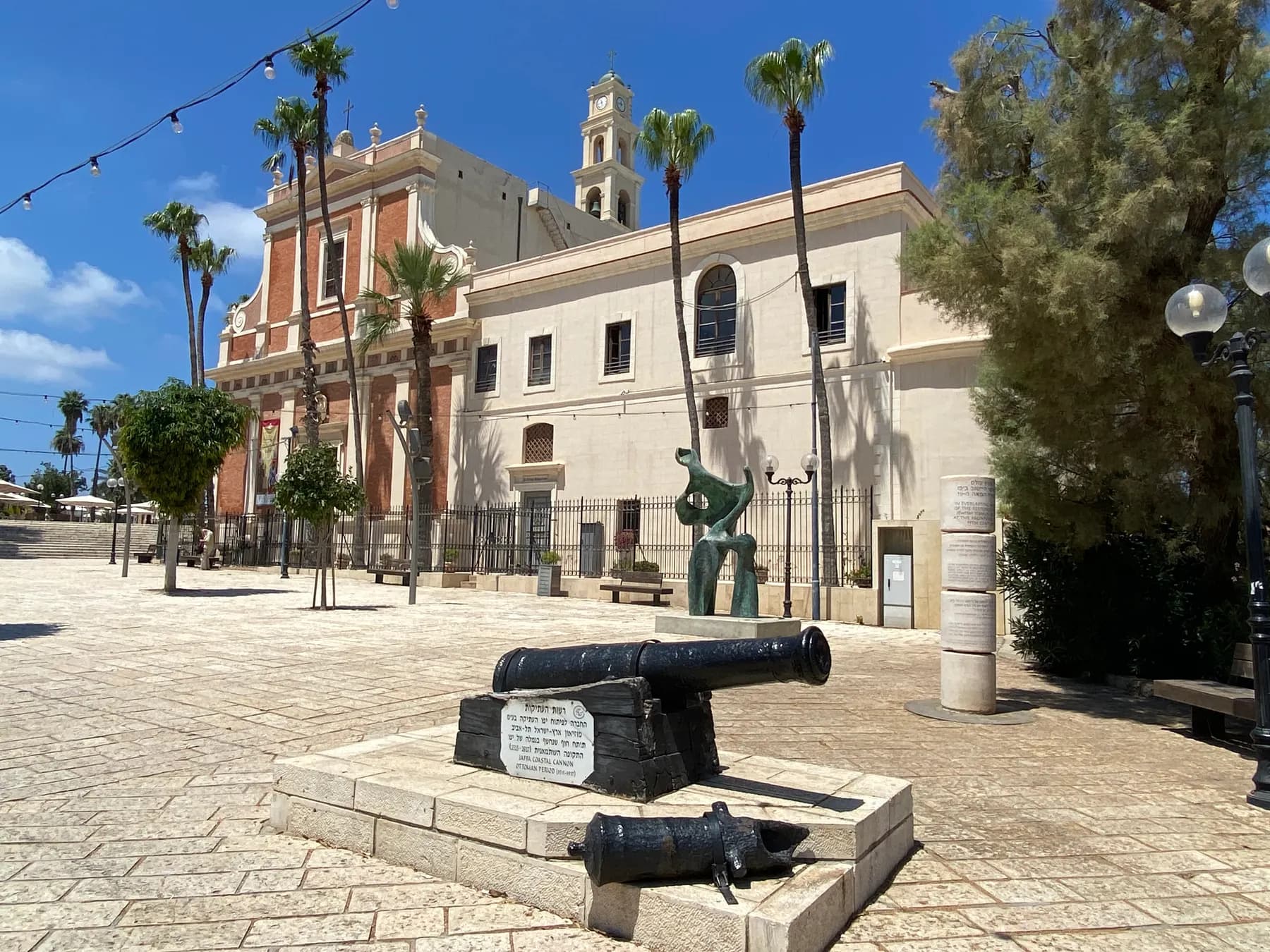
The Custody of the Holy Land runs this as a shrine rather than a parish: a Spanish-funded church of 1888 to 1894 standing on the citadel Louis IX rebuilt, with an altar that faces west instead of east.
The long view
Jaffa, in order
c. 1460 BCE
An Egyptian garrison is established at Jaffa, beginning more than three centuries of New Kingdom control at the harbour.
c. 1125 BCE
The fortress is destroyed for the second time in half a century; radiocarbon dates from the destruction layers are read as marking the end of Egyptian rule in Canaan.
10th century BCE (traditional)
In II Chronicles, Huram of Tyre undertakes to deliver the cedars of Lebanon 'as rafts by sea to Jaffa' for Solomon's Temple in Jerusalem.
1st century CE
Josephus describes Joppa's rocky shore, the black north wind that wrecked ships sheltering there, and the marks left by Andromeda's chains.
1099–1192
The Crusaders land at Jaffa in 1099 on their way to the Holy Land; the Battle of Jaffa in 1192 brings the Third Crusade to an end in a truce between Saladin and Richard I.
1799
Napoleon takes Jaffa during his Syrian campaign; the town is rebuilt afterwards under the governor known as Abu Nabbut, who restores the Mahmoudiya Mosque.
before 1844
The Shamouti orange appears in an orchard near Jaffa, presumably as a limb sport, and goes on to be exported to Europe under the port's name.
27 August 1892
The first passenger train reaches Jerusalem from Jaffa: 53 miles of track cutting a two-day journey to roughly four hours, the first railway project in the Levant.
26 April – 13 May 1948
The Irgun attacks Jaffa on 26 April; nearly all of the city's Arab population is displaced, and by 13 May Jaffa is securely under the control of Jewish paramilitaries.
1950
Jaffa is united with Tel Aviv into a single municipality; an absentee property law transfers thousands of emptied homes to state-run public housing companies.
1965
Jaffa Port ceases all commercial activity, leaving the quay to fishermen, and later to a marina and converted warehouses.
2011–2014
The Jaffa Cultural Heritage Project re-excavates the Egyptian fortress; the results are published in the American Journal of Archaeology in 2017.
August 2023
The Tel Aviv light rail's Red Line opens, running south through the city and turning towards Bat Yam just past Jaffa.
Getting there
- On foot from central Tel Aviv: the seafront promenade runs south without a break from the marina to Jaffa's harbour, which is the best approach and the one that shows you how the two cities join.
- By light rail: the Red Line opened in August 2023 and runs south through Tel Aviv, emerging to street level shortly before Jaffa and turning towards Bat Yam. Check current stations and fares with the operator before relying on it.
- By bus: city bus routes run down Yefet Street and Jerusalem Boulevard from central Tel Aviv; journeys are short but slow in traffic.
- By bicycle or scooter: the seafront cycle path runs the whole way and is flat until the final climb up to the old town.
- From Ben Gurion Airport: take the train to Tel Aviv HaHagana or Savidor Center and continue by bus, taxi or light rail; there is no direct rail to Jaffa.
Access
The old town is the difficulty: steep cobbled lanes, stepped alleys and uneven stone, with the hill rising sharply from the harbour to HaPisga garden. The seafront promenade from Tel Aviv, the port quayside and the main flea market streets are broadly level and manageable, and Jerusalem Boulevard is flat. Wheelchair users are best advised to approach along the promenade and stay low, and to ask individual museums about their own access before setting out.
When to go
Spring and autumn are the obvious choices, when the coast is warm rather than humid. For the flea market, come on a weekday or Friday morning; Friday afternoon closes down for Shabbat and most retail stays shut on Saturday, though restaurants do not. Late afternoon is the hour for the old town, when the light comes off the sea onto the stone and the Tel Aviv towers go gold behind you. In July and August the municipality runs Thursday-night events in the flea market.
Hours and cost
Old Jaffa is a neighbourhood, not a site: the lanes, Kedumim Square, HaPisga garden, the harbour and the flea market streets are open at all hours and free to walk. Individual attractions (the museums, St Peter's Church, the visitor centre in Kedumim Square with its multimedia presentation) keep their own hours and several close on Saturdays or for services. Check each operator's page before travelling.
Walking Old Jaffa, the harbour and the flea market costs nothing. Paid attractions are modest: the Ilana Goor Museum's own website lists 45 NIS for an adult, 25 NIS for a soldier, senior or student, and 20 NIS for a child aged five to seventeen, as published on its site and checked in 2026. Eating is where the money goes: quayside fish is priced for the view, while the hummus counters and bakeries on Yefet Street are among the cheapest good meals in greater Tel Aviv. Prices drift; confirm with the operator.
Opening times and prices change. Both are given as published by the operator and should be checked against its own page before you travel.

Practical
What people wish they had known about Jaffa
- Start at the clock tower and walk downhill; everything in Jaffa is below it and the route sorts itself out.
- Do the flea market in the morning and the old town in the late afternoon, not the other way round.
- Haggle on the second-hand stalls, do not bother in the design shops.
- Andromeda's rocks are best seen from the breakwater or the terrace above the harbour, not from the quay itself.
- Ajami is a residential neighbourhood with a difficult history, not an attraction; walk it quietly and do not photograph people's homes and families without asking.
- Book quayside fish restaurants for Friday evening or expect to queue.
- Carry cash for the market stalls; the restaurants and hotels take cards, the tarpaulins often do not.
The figures
Jaffa by the numbers
Each figure carries the year it belongs to and links the source it came from.
| Measure | Figure | As of | Source |
|---|---|---|---|
| Span of Egyptian control at Jaffa | c. 1460–1125 BCE | 2017 | ajaonline.org |
| Excavation of the New Kingdom fortress | 2011–2014 seasons, reappraising Kaplan's 1955–1962 work | 2017 | ajaonline.org |
| Arab residents displaced from Jaffa in 1948 | nearly all of the city's 70,000 Arab Muslims and Christians; 4,000 remained, in Ajami | 2024 | britannica.com |
| Arab residents of Jaffa today | about 20,000 | 2021 | timesofisrael.com |
| Population of Tel Aviv-Yafo | 467,875 | 2021 | citypopulation.de |
| Jaffa–Jerusalem railway | first passenger train 27 August 1892; 53 miles; journey cut from two days to about four hours | 1892 | israeled.org |
| Origin of the Shamouti (Jaffa) orange | arose before 1844 in an orchard near Jaffa, presumably as a limb sport | 2024 | idtools.org |
| Ilana Goor Museum adult admission | 45 NIS | 2026 | ilanagoormuseum.org |
Where this is
Jaffa in the length of the country
Israel runs about 420 km from its northern tip to Eilat. Here is where this one sits on that line.
Nearby
Where to go next

Central Mediterranean coast
Tel Aviv
A city laid out on empty dunes in 1909 that now runs on four thousand white apartment blocks, fourteen kilometres of seafront and an economy built on software.

Mediterranean coast
Caesarea
Herod poured a harbour into open water here, using volcanic ash shipped from the Bay of Naples. Most of it now lies more than five metres down.

Mount Carmel and Haifa Bay
Haifa
Israel's third city climbs a mountain: a World Heritage garden staircase on Mount Carmel, a working port at its foot, and a mixed Jewish and Arab downtown in between.
Sources and further reading
Every link below was opened and checked when this page was written. Official statements are marked as such: they are the subject's own account, not an independent one.
- OfficialVisit Tel Aviv, Tel Aviv-Yafo Municipalityvisit-tel-aviv.comJaffa Tel Aviv: Past and Future (the old city of Jaffa)
the 1902 clock tower, the thirtieth anniversary of Abdülhamid II's accession and the scenes in its windows, the Crusaders landing in 1099, and Napoleon in 1799
- OfficialVisit Tel Aviv, Tel Aviv-Yafo Municipalityvisit-tel-aviv.comOld Jaffa: meet the old city
Abu Nabbut and his rebuilding of the Mahmoudiya Mosque after Napoleon's 1799 invasion, Kedumim Square, HaPisga park, the antiquities museum in the former Ottoman post office and prison, and the visitor centre's multimedia presentation
- OfficialVisit Tel Aviv, Tel Aviv-Yafo Municipalityvisit-tel-aviv.comThe Jaffa Flea Market
the market's late nineteenth-century displacement from the clock tower area, more than seventy years as a flea market, the Greek Market and municipal plans for it, and the summer Thursday-night events
- OfficialVisit Tel Aviv, Tel Aviv-Yafo Municipalityvisit-tel-aviv.comJaffa Port
commercial activity ceasing in 1965, the replacement port built in Tel Aviv during the 1936 Arab Revolt, the fishing base, marina, cruises and seasonal tuna trips, and the Na Laga'at ensemble of more than forty blind, deaf and deaf-blind actors and staff
- OfficialTel Aviv-Yafo Municipalitytel-aviv.gov.ilLight Rail
the Red Line opening in August 2023 and the wider network planned to 2029
- OfficialIlana Goor Museum, Old Jaffailanagoormuseum.orgVisitor information
address at 4 Mazal Dagim Street, opening hours, and ticket prices in shekels as published when checked in 2026
- ReportingAssociated Press, via The Times of Israel (Ilan Ben Zion, 28 April 2021)timesofisrael.comAs tensions boil, Jaffa's Arab Israelis say gentrification is pushing them out
about 20,000 Arab residents today, a pre-1948 Arab city of some 100,000, the 1950 absentee property law and transfers to state-run housing companies, and rents pricing out working-class residents
- DataCity Population, citing the Central Bureau of Statistics, State of Israelcitypopulation.deTel Aviv-Yafo population statistics
population of Tel Aviv-Yafo, 467,875 at the 2021 estimate
- ReferenceAmerican Journal of Archaeology (Burke et al., vol. 121 no. 1, 2017)ajaonline.orgExcavations of the New Kingdom Fortress in Jaffa, 2011–2014: Traces of Resistance to Egyptian Rule in Canaan
Egyptian control c. 1460–1125 BCE, the two twelfth-century destructions and their radiocarbon dating, Jaffa as the only Egyptian fortress excavated in Canaan, and the reappraisal of Jacob Kaplan's 1955–1962 Ramesses Gate excavations
- ReferenceEncyclopaedia Britannicabritannica.comJaffa
New Kingdom administrative role and Ramesses II garrison, the 1192 Battle of Jaffa and truce, Ottoman exports including oranges and the 'second largest city in Palestine', the 1947 partition designation, the 26 April and 13 May 1948 events with the 70,000 displaced and 4,000 remaining in Ajami, and the 1950 union with Tel Aviv
- ReferenceWikisourceen.wikisource.orgJosephus, The War of the Jews, book 3 (Whiston translation), chapter 9
the rocky shore at Joppa, the footsteps left by Andromeda's chains, and the 'black north wind' that destroyed the ships sheltering there
- ReferenceSefariasefaria.orgII Chronicles 2:15
Huram's undertaking to deliver Lebanese cedar as rafts by sea to Jaffa for Solomon's Temple
- ReferenceSefariasefaria.orgJonah 1:3
Jonah goes down to Joppa and finds a ship going to Tarshish
- ReferenceCitrus ID, IDtoolsidtools.orgShamouti sweet orange
the variety's origin before 1844 near Jaffa as a presumed limb sport of the beledi orange, its seedlessness and trademark shape, and the entrenched 'Jaffa' trade name in Europe
- ReferenceCenter for Israel Educationisraeled.orgJaffa–Jerusalem railway line debuts
the first passenger train on 27 August 1892 with the official ceremony in September, the 53-mile route, the journey falling from two days to four hours, and the line as the first railway project in the Levant
- ReferenceBibleWalksbiblewalks.comJaffa: St Peter's Church
the 1654 church over the ruins of a Crusader church, destruction in the late eighteenth century, the 1888–1894 rebuilding and 1903 renovation, and the unusual westward altar towards Simon the Tanner's house
- ReferenceWikipediaen.wikipedia.orgRed Line (Tel Aviv Light Rail)
background only: the line opened on 18 August 2023, surfaces just before Jaffa and turns south towards Bat Yam; used alongside the municipality's own page
Jaffa: common questions
Is Jaffa a separate city from Tel Aviv?+
Not administratively. Jaffa was united with Tel Aviv in 1950, after the 1948 war, and the joint municipality is formally called Tel Aviv-Yafo. In practice Jaffa reads as a distinct place: older, lower, more Arab, and with its own street grid and rhythm.
How old is the port really?+
Older than the tour patter can precisely prove, but genuinely ancient. Excavation has documented an Egyptian garrison here from roughly 1460 BCE, and the Hebrew Bible uses Joppa as the sea gate for Jerusalem in both II Chronicles and Jonah. Claims that it is the oldest continuously inhabited port in the world are common in tourism material and are not something the excavation reports make, so treat them as marketing.
Can you swim at Jaffa?+
There are beaches immediately north of the headland (the Tel Aviv strip begins there) and a small stretch south towards Ajami and Bat Yam. The harbour itself is a working fishing port and marina and is not for swimming. Josephus already described what this shore does in a northerly.
When is the flea market open?+
Broadly weekday and Friday mornings, winding down for Shabbat on Friday afternoon, with most stalls shut on Saturday while restaurants and bars stay open. The municipality also runs Thursday-night market events in July and August. Individual traders keep their own hours, so a weekday morning is the reliable bet.
Where exactly is Andromeda's rock?+
Off the harbour's north-western wall, a short way offshore: a cluster of rocks rather than a single one. Josephus in the first century CE already reports that the marks of Andromeda's chains were shown here, which makes the association about two thousand years old.
Are Jaffa oranges still grown in Jaffa?+
No. The Shamouti variety originated in an orchard near the town before 1844 and was exported through this harbour, which is how the name stuck, but the groves in the immediate hinterland were built over by the twentieth-century city. The fruit is still grown elsewhere in Israel and around the Mediterranean.
Is Jaffa safe to visit?+
Old Jaffa, the harbour and the flea market are ordinary, busy tourist areas with the usual urban precautions. Jaffa has also seen the criminal violence affecting Arab communities across Israel, reported regularly in the Israeli press, and periods of political tension. Check current advice before travelling, as you would for anywhere in the country.
How long do I need in Jaffa?+
Half a day covers the clock tower, the old town, the harbour and Andromeda's rocks at a walking pace. A full day lets you add the flea market properly, a museum, and a long meal. If you are walking down from central Tel Aviv, add the best part of an hour each way and enjoy it.
What language will I hear?+
Hebrew and Arabic, often in the same conversation, plus a good deal of English in the restaurants and hotels. Jaffa is one of Israel's mixed cities, and the bilingualism is not a display for visitors.
Is there an entrance fee for Old Jaffa?+
No. The old town, Kedumim Square, HaPisga garden, the harbour and the flea market streets are public and free. Only the museums, the visitor centre presentation and organised tours charge.
Hotels & Stays
See all hotels & stays →Ecce Homo Pilgrim House
Jerusalem
A guesthouse on the Via Dolorosa, over Roman pavement
Jerusalem Hotel
Jerusalem
A stone-vaulted hotel in East Jerusalem, by the Old City
Jungle Jaffa Hostel
Tel Aviv
A social hostel in old Jaffa, ten minutes' walk from the beach
Matmon Barava
Ein Yahav
Desert cabins and a visitor centre in Ein Yahav, deep in the Arava