Museum · Tel Aviv
Eretz Israel Museum
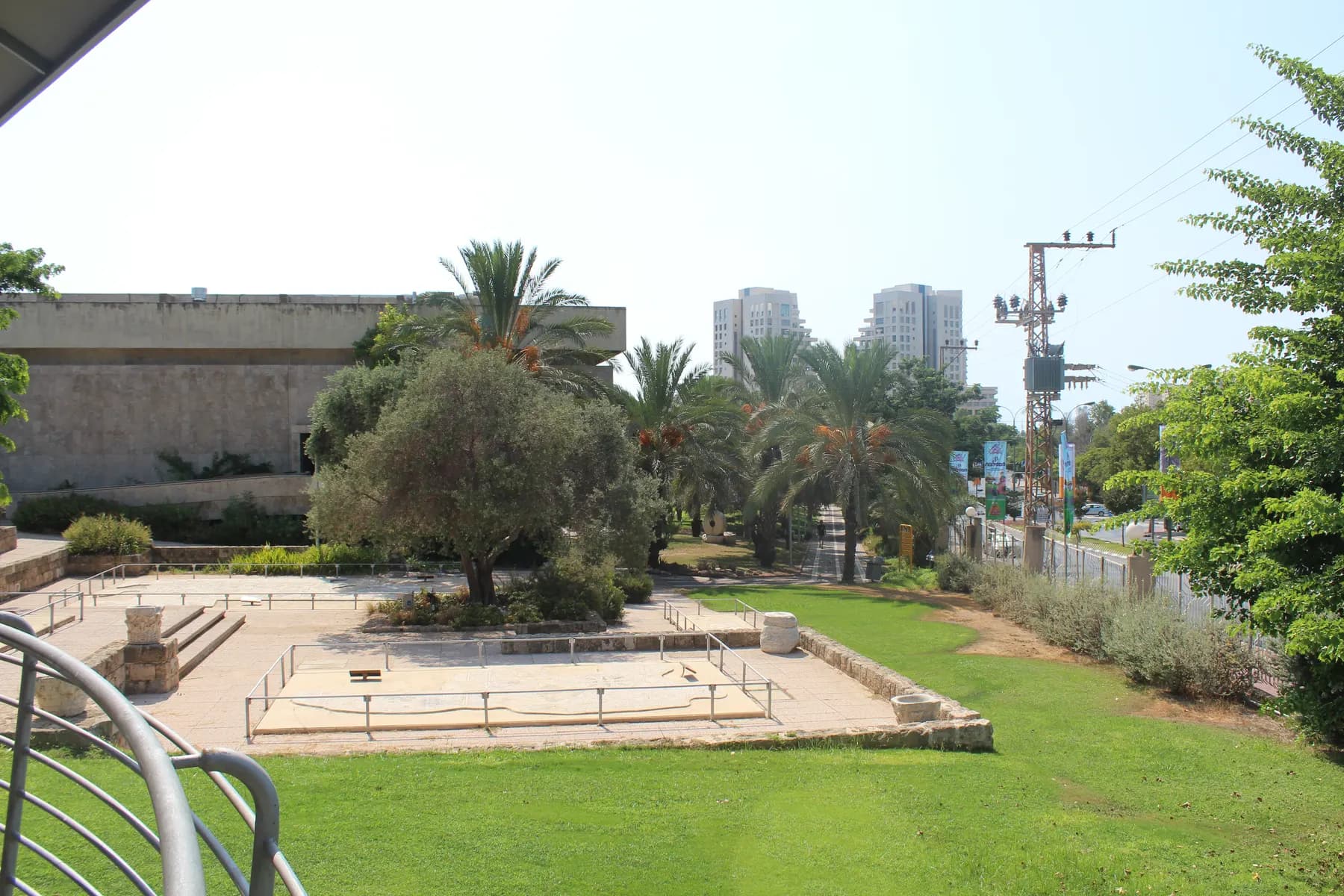
The first excavation permit issued by the State of Israel, in 1948, was for the mound that still stands at the centre of this museum's grounds in Ramat Aviv.
Deror_avi / CC BY-SA 4.0 · Wikimedia Commons
Founded
1958
around Walter Moses's glass collection; the Glass Pavilion opened first, in 1959
Permanent pavilions
Eight
glass, ceramics, coins, copper, crafts, folklore, postal history, photography
Tel Qasile
12 layers
the settlement mound on the grounds, dug from October 1948 onwards
Adult ticket
NIS 58
the price the museum has published since 1 January 2025; under-18s free
In short
- How long to give it
- about two to three hours for the pavilions and the tell, or under an hour if only the free park is walked
- Sunday
- Closed
- Adult
- NIS 58
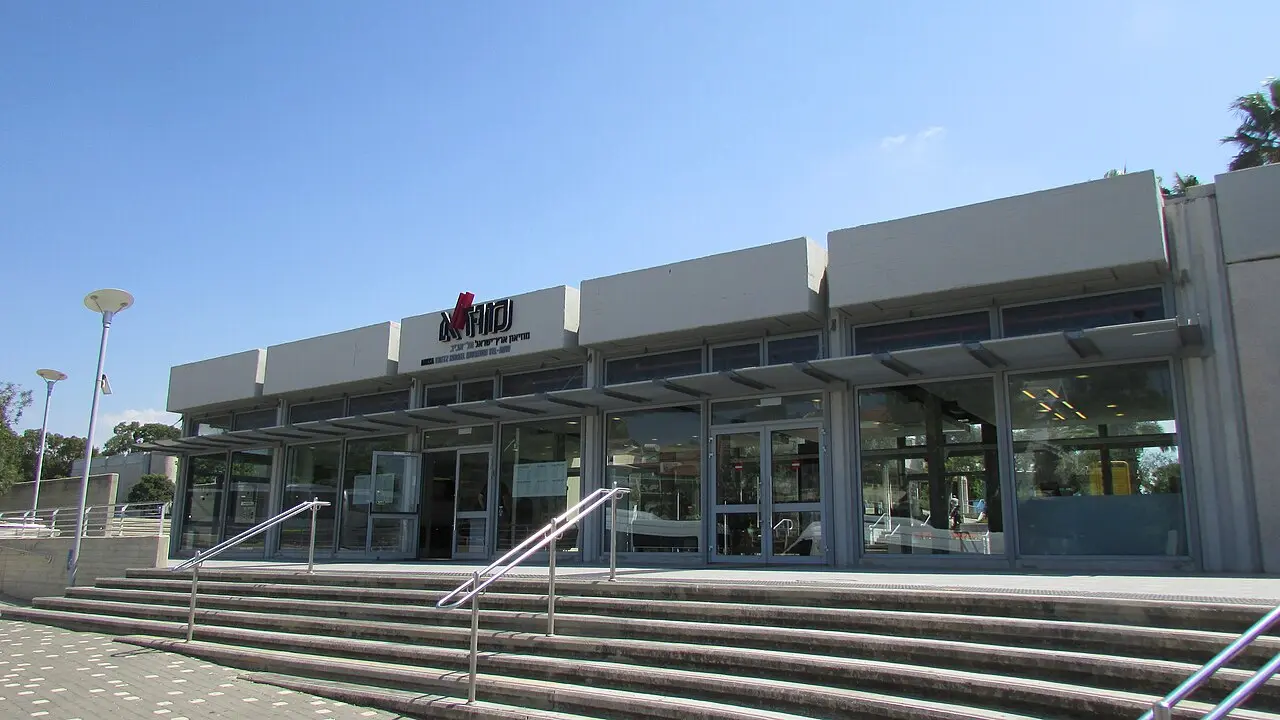
מוזיאון ארץ ישראל
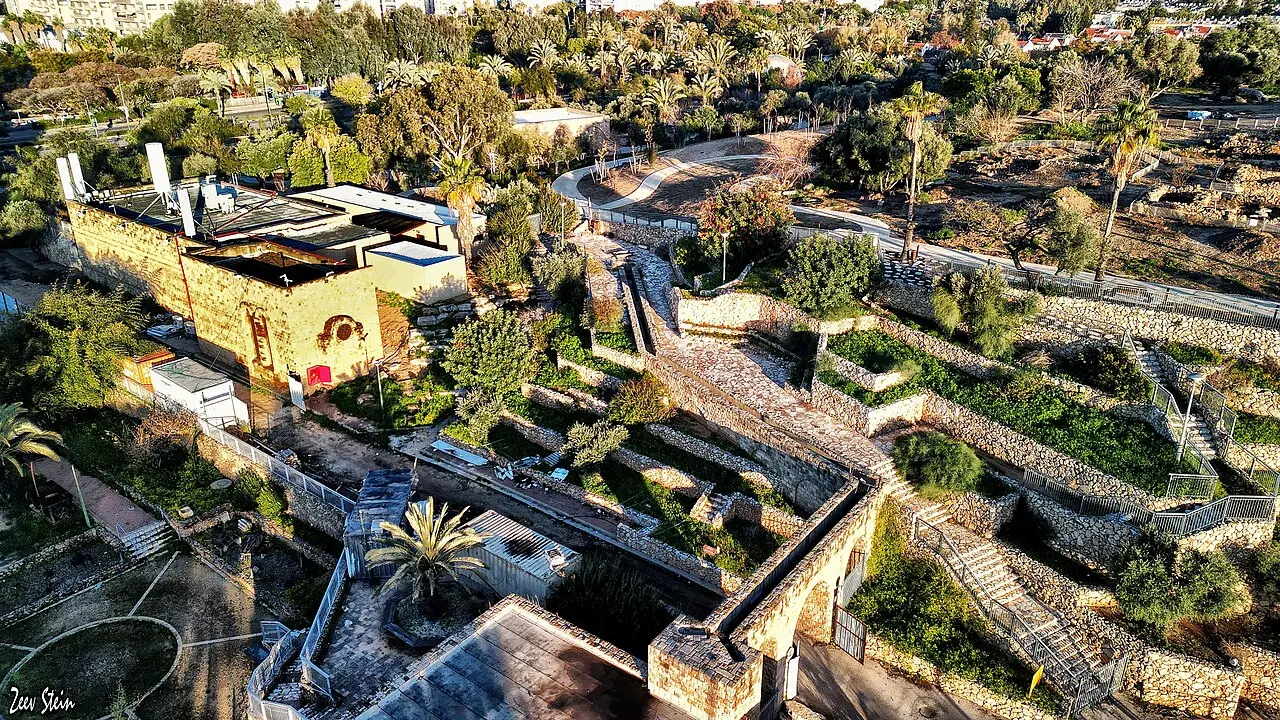
The Eretz Israel Museum, which has branded itself MUZA since 2015, is a campus rather than a building: eight permanent pavilions, a planetarium, several gardens and a set of reconstructed installations, spread over open ground in Ramat Aviv with the Yarkon river below it to the south. At the centre of the campus is Tel Qasile, a settlement mound of twelve archaeological layers that was being dug before the museum around it existed. Nothing here is arranged as a single route, and the pavilions are separate buildings on separate paths.
It was built around one man's collection. Walter Moses, a Jewish industrialist born in Berlin in 1892 who came to the country in 1926, kept a large holding of antique and rare glass in a flat on Bograshov Street. In December 1952 he signed a contract assigning the collection to the city of Tel Aviv and its residents, on condition that a public museum be built for it. The model he had in mind was the European Landesmuseum and the folklore museums of the nineteenth century: material culture of a region, from antiquity to the present, shown as one continuous story rather than as art.
The practical shape of a visit changed in 2023 and 2024. The grounds and the new MUZA Park are now free and open daily from 8:00 to 20:00 through five gates, while the pavilions, the planetarium and the temporary exhibitions are ticketed. That means the tell, the mosaics, the olive press, the flour mill and the pond can be walked without paying anything, and a visitor who wants the collections buys a ticket at the gate for those.
Founding
A collector's contract, and a museum that opened after he died
Moses set out more than a bequest. In his will he named the museum and fixed its purpose: it was to stand in Tel Aviv, become a cultural and academic institution of international standing, teach adults and children, and make archaeology and folklore part of contemporary culture rather than a specialism. His collection was valued in the 1952 contract at over a million dollars. He died suddenly in 1955 and never saw any of it built.
The dates around the founding do not line up cleanly, and it is worth saying so. The museum's own history gives 1958 as the year it was founded, with the Glass Pavilion the first to be dedicated, in 1959. The English-language Wikipedia article dates the institution's establishment to 1953, the year after the contract with the municipality was signed. The two accounts are probably describing different events, the transfer of a collection and the opening of a museum, rather than contradicting each other outright, but no single published date covers both.
The site itself carries a second history. The English Wikipedia article on the museum records that it was established on the site of the depopulated Palestinian village of al-Shaykh Muwannis, whose villagers left in March 1948 after a period of intimidation, and much of whose land is now occupied by Tel Aviv University immediately to the north. The museum's own account of its site does not mention the village; it explains the choice of ground by the tell and the view over the city.
The name has moved twice. It opened as the Haaretz Museum, was renamed the Eretz Israel Museum in 1983, and was rebranded MUZA in 2015, which is why maps, signs and tickets do not all agree. One further episode appears only in the Wikipedia account: Rehavam Ze'evi directed the museum from 1981 to 1989 and chaired it to 1994, the city put eleven million dollars into new buildings during that period, and construction damaged a Byzantine mosaic. The museum's own history passes over it.
יעקב / CC BY-SA 4.0 · Wikimedia Commons
Tel Qasile
Twelve layers, three temples, and an argument still open
The mound came before the museum. In the 1940s two potsherds carrying Hebrew inscriptions were picked up on the surface of the tell, not dug out of it. One of them reads, in the standard rendering, gold of Ophir for Beth Horon, thirty shekels, which is the only ancient reference to Ophir yet found outside the biblical text; the other is a receipt for oil issued for the king. On the museum's own account it was the interest those sherds attracted that led, in 1948, to the newly established State of Israel issuing its first excavation permit for this site.
Digging began in October 1948 under Benjamin Maisler, later Mazar, and continued through 1949 and 1950. Amihai Mazar led the later campaigns, from 1971 to 1974 and again from 1982 into the early 1990s, and it was those seasons that opened the sacred complex on the summit. Twelve layers of settlement have been distinguished. The museum describes the community they represent as small, carefully planned and busy across roughly 150 years.
What was found on top is a precinct of three temples built one above another, in sun-dried mud brick faced with plaster, with low benches running along the walls. A smaller temple stands beside the central one, possibly for a priest's own use or for a secondary god. In the courtyard there was an altar ringed with layers of ash and animal bone: sheep, goat, cattle, hippopotamus and camel, presumably sacrificed and then eaten. Later laboratory work on the material has identified cinnamon used to flavour wine, cedar imported for columns, and pigment on the temple walls.
The identity of the people who built it is the part most guidebooks settle too quickly. The pottery has Aegean and Cypriot traits, which is the basis for calling Qasile the northernmost Philistine centre yet found, and that is how the site is usually labelled. The museum itself will not go that far. Its own text calls the inhabitants' identity one of the principal questions still open, and argues that the settlement's history is probably more complex than one label: a local population that absorbed forms and technologies from around the Mediterranean rather than a transplanted one.
What survives
Which of this is ancient ground and which was built to explain it
The museum is unusually clear about the difference, and a visitor who reads the labels will not be confused. The tell is real ground and the excavated walls on it are the excavated walls. The mosaic in the Mosaic Square from a sixth-century Samaritan house of prayer is displayed in situ, where it was found, which the museum explains as a deliberate policy of leaving what is discovered inside its boundaries in place. Only about a third of that floor survives, carrying three inscriptions in Greek and Samaritan, one of them a blessing formula common in Jewish synagogues and appearing here, the museum says, in a Samaritan building for the first time.
The rest of the mosaics were brought in from elsewhere and are exhibits rather than remains: a floor found at Beit Guvrin in 1921, a sixth to eighth century synagogue floor from Tiberias with a Greek dedication to Proclus son of Crispus, two panels from a private Muslim prayer house at Ramla of the eighth century, and fragments from the church at Sukhmata in the Galilee. The third panel from the Ramla building, the one with the prayer niche and a Quranic verse, is in the Israel Museum in Jerusalem and not here.
The olive press complex and the flour mill are reconstructions, and are described as such. The Iron Age press in the southern courtyard reconstructs one of the eighth to seventh centuries BCE from Tell Batash, with a crushing basin and two weighted-beam extraction presses. The traditional Arab press in the northern wing uses a beam brought from Iksal in the Galilee that the museum calls one of the largest known in the country, and the southern wing holds the iron equipment that replaced it from the mid-nineteenth century onwards. The flour mill below the tell was reconstructed from the water-powered mills of northern Israel, and the museum notes what those mills meant socially: 30 to 50 kilogrammes of flour an hour against the single kilogramme a hand mill managed, a miller taking a tenth as his fee, and a queue that worked as a village meeting.
Yael Garden holds the best single object outdoors. The Bird Mosaic from Beit Guvrin, made in the sixth century, has vine tendrils rising from an amphora into eight medallions of birds and deer, and a Greek inscription naming Obodianus, a priest, as the man who paid for it. About a third has been lost. The Israel Antiquities Authority and UNESCO restored it as part of a wider project.
- Original: the tell and its excavated walls, and the Samaritan prayer-house mosaic left where it was found
- Moved here: the mosaics from Beit Guvrin, Tiberias, Ramla and Sukhmata
- Reconstructed: the Iron Age olive press after one from Tell Batash, and the water-powered flour mill
- Reused originals inside a reconstruction: the press beam from Iksal and the nineteenth-century iron equipment
- Restored: the Bird Mosaic, by the Israel Antiquities Authority with UNESCO
TijsB from Den Haag (The Hague), The Netherlands / CC BY-SA 2.0 · Wikimedia Commons
Collections
Eight pavilions, each built for the collection inside it
The original buildings were designed by Werner Joseph Wittkower and are now listed. Each was planned for its own collection, which is why they do not match: the museum's stated idea was that the structure should reflect the narrative of what it holds. They were dedicated over half a century, in the order the museum gives: Glass in 1959, the Kadman Numismatic Pavilion in 1962, Ethnographic and Folklore in 1963, Ceramics in 1966, the Man and His Work Center in 1982, the Nehushtan Pavilion in 1983, the Alexander Pavilion of Postal History and Philately in 1998, and the Rothschild Center in 2006.
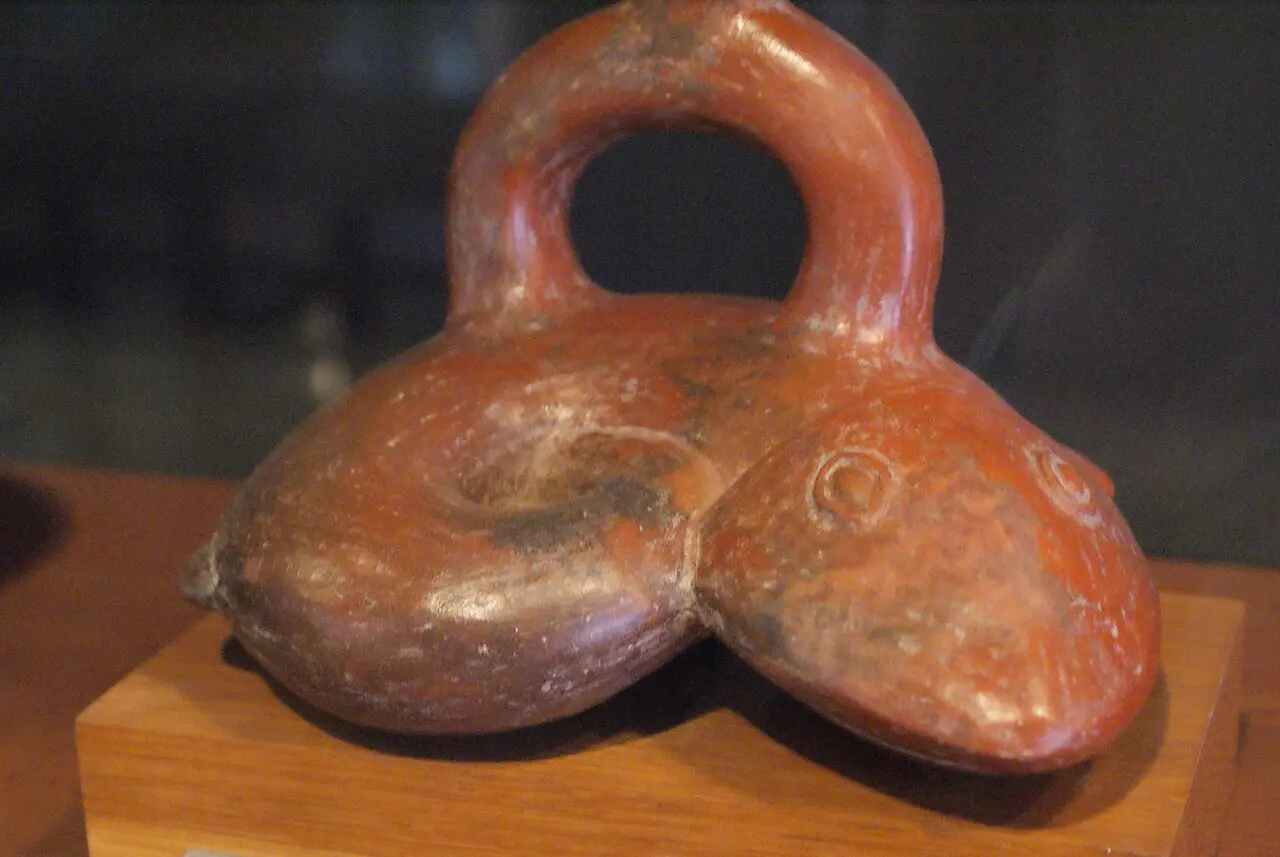
The Ceramics Pavilion is where the tell and the collections meet. Some of the rare offering and cult vessels lifted from the temples on the summit are displayed there, so the excavated precinct outside and the objects that came out of it can be seen in the same visit, which is not usually possible at an Israeli site of this age. The Kadman Numismatic Pavilion covers coinage, the Glass Pavilion the collection the whole museum grew from, and the Nehushtan Pavilion copper and its working.
The Jewish Culture and Folklore Pavilion sits in a historic building in the middle of the park and reopened in June 2024 after the building and its displays were rebuilt. The museum calls the Judaica, ethnography and folklore collection held there one of the largest in Israel. Photography is the other strength: the House of Photography is a departmental project building a digital lexicon of Israeli photography, and the annual Local Testimony exhibition of Israeli photojournalism runs here each winter.
Displays close and move more than at most museums, because the pavilions double as venues for the Tel Aviv Biennale of Crafts and Design. At the time of writing the museum's exhibitions page flags the ketubot display as temporarily closed for the Biennale and the philately display on the Alexander Pavilion's lower level as temporarily closed as well. Checking that page the morning of a visit is the difference between seeing a collection and reading a notice about it.
- The Ceramics Pavilion, holding cult vessels excavated from the Tel Qasile temples
- The Glass Pavilion, the Walter Moses collection the museum was founded to house
- The Kadman Numismatic Pavilion, coins and minting
- The Nehushtan Pavilion, copper
- The Man and His Work Center, ancient crafts and the tools that made them
- The Jewish Culture and Folklore Pavilion, reopened June 2024
- The Alexander Pavilion of Postal History and Philately
- The House of Photography
TijsB from Den Haag (The Hague), The Netherlands / CC BY-SA 2.0 · Wikimedia Commons
Planetarium
The Lasky Planetarium, and why it is not on your museum ticket
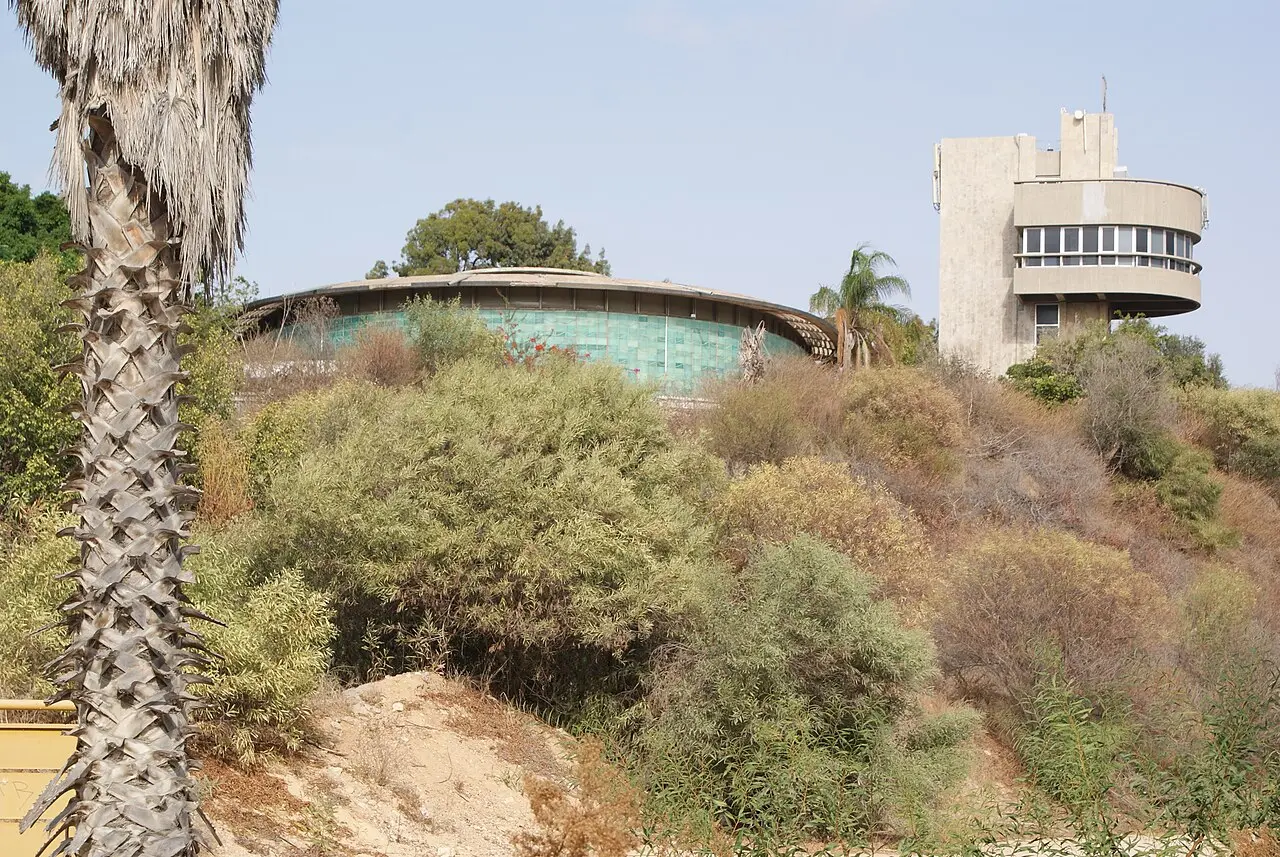
The planetarium opened to the public in May 1968, paid for by Harry and Sadie Lasky of Chicago, and it is the reason a good many Israeli schoolchildren have been here at least once. It runs two shows: Stars, a tour of the sky and the life cycle of stars, and Astronaut, on how astronauts train and what NASA trains them with. The museum recommends both from age five.
It is a separate transaction. Ordinary museum admission does not cover the planetarium; the museum sells a combined entry and activity ticket, and prices a child's planetarium seat at NIS 30. Hebrew is the working language. Screenings in English are offered on Saturdays at 13:30 and otherwise need booking in advance with a minimum number of participants, so a family turning up on a Tuesday expecting an English show will not get one.
Show times are concentrated at the weekend and in the school holidays: several Saturday screenings, one on the last Thursday of the month at 17:00, and extra Tuesday and Thursday screenings through July and August. The full current list is on the museum's planetarium page, and it changes with the school calendar.
MUZA Park
The 90,000 square metre park that took the fences down
The largest change here in decades is not an exhibition. The Jack, Joseph and Morton Mandel MUZA Park opened its first 50,000 square metres on 21 September 2023 and was completed in July 2024, giving 90,000 square metres of free public ground on a budget the museum puts at 74 million shekels. Boundary fences came down, five gates were opened around the perimeter, and the park now holds the pond, the reconstructed olive press and flour mill, Sundial Square, the planetarium and a scatter of archaeological exhibits, with paths, shade, drinking fountains and two toilet buildings.
The master plan behind it was chosen from a competition of seven firms and is the work of Kimmel Eshkolot with Studio de Lange. The next piece is a central building spanning the site, which the museum describes as about 7,000 square metres adding roughly 4,000 square metres of exhibition space, costed at about 120 million shekels and estimated at around four years from completion. A city square is planned on the Haim Levanon Street side to connect the campus to the Ramat Aviv HaYeruka neighbourhood.
The museum is explicit about what it wants from this: a place among Israel's top three museums, and between half a million and a million visitors a year. Both figures are stated as targets in the renewal documents rather than as counts, and the museum does not publish a current annual attendance figure beside them. What is already true is that the free park has changed who walks through the gates, because a resident of north Tel Aviv can now cross the grounds on the way somewhere else.
זאב שטיין / CC BY 2.5 · Wikimedia Commons
What to look for
Things not to walk past at Eretz Israel Museum
The details that repay knowing about before you are standing in front of them.
The summit of Tel Qasile
The excavated sacred complex at the top of the mound, where three temples were built one above another in mud brick. It is the reason the museum stands here, and a surprising number of visitors do the pavilions and never climb it.
The Samaritan prayer-house mosaic
A sixth-century floor left in the ground where it was found, carrying inscriptions in Greek and Samaritan. About a third of it survives.
The Bird Mosaic in Yael Garden
Vine tendrils rising from an amphora into eight medallions of birds and deer, made at Beit Guvrin in the sixth century and restored by the Israel Antiquities Authority with UNESCO. The Greek inscription names the priest who paid for it.
The olive press complex
Three technologies of oil production side by side: an Iron Age press reconstructed after one from Tell Batash, a traditional Arab beam-and-screw press built around a beam from Iksal, and the iron machinery that replaced them from the mid-nineteenth century.
The Ceramics Pavilion
Where the offering and cult vessels excavated from the Qasile temples are shown. Seeing the precinct outside and its contents indoors on one ticket is unusual.
The Lasky Planetarium
Open since May 1968 and still running two shows under the dome. It needs its own ticket, and English screenings need arranging in advance.
The long view
Eretz Israel Museum, in order
1945 to 1946
Two inscribed sherds are found on the surface of the tell. One records gold of Ophir for Beth Horon, thirty shekels.
October 1948
Benjamin Maisler (Mazar) begins digging Tel Qasile on what the museum calls the first excavation permit issued by the State of Israel.
December 1952
Walter Moses assigns his collection to the city of Tel Aviv on condition that a public museum is built for it.
1955
Moses dies suddenly, before anything is built.
1958
The museum is founded, as the Haaretz Museum.
1959
The Glass Pavilion, designed by Werner Joseph Wittkower, is the first to be dedicated.
1962 to 1966
The Kadman Numismatic Pavilion (1962), the Ethnographic and Folklore Pavilion (1963) and the Ceramics Pavilion (1966) open.
May 1968
The Lasky Planetarium opens, funded by Harry and Sadie Lasky of Chicago.
1971 to 1974
Amihai Mazar's excavations open the temple precinct on the summit of the tell.
1982 to 1983
The Man and His Work Center (1982) and the Nehushtan Pavilion (1983) open, and the museum is renamed the Eretz Israel Museum.
1982 to the early 1990s
Amihai Mazar returns for further seasons at Tel Qasile.
1998
The Alexander Pavilion of Postal History and Philately opens.
2006
The Rothschild Center opens.
2015
The museum rebrands as MUZA, Eretz Israel Museum, Tel Aviv.
21 September 2023
The first 50,000 square metres of the Jack, Joseph and Morton Mandel MUZA Park open to the public, free of charge.
June 2024
The Jewish Culture and Folklore Pavilion reopens after the building and its displays are rebuilt.
July 2024
The park is completed at 90,000 square metres.
Practical
Visiting Eretz Israel Museum
Where
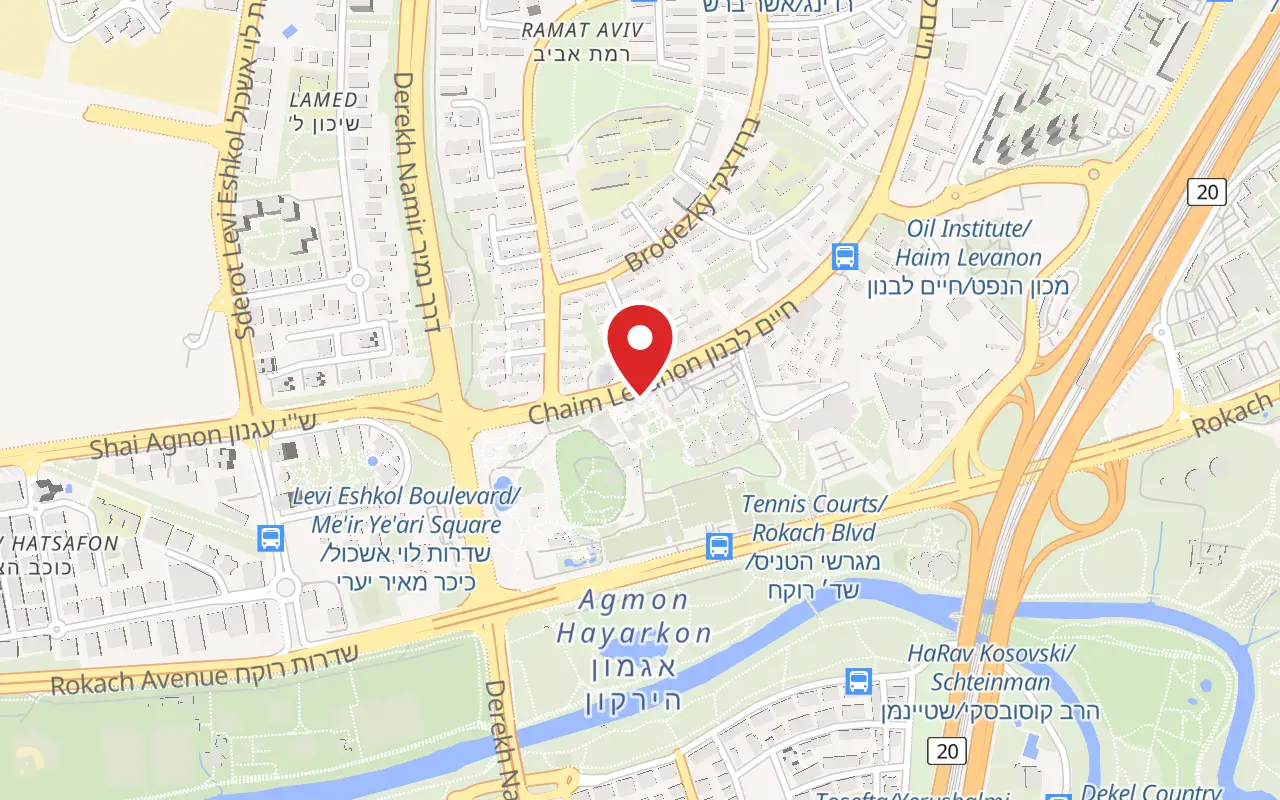
2 Haim Levanon Street, Ramat Aviv, Tel Aviv 6997501
What ticket you need
This is the reverse of the usual arrangement. The site is not inside a larger ticketed park: the park is inside it, and is free. Walking the MUZA Park, the tell, the Mosaic Square, Yael Garden, the olive press and the flour mill costs nothing between 8:00 and 20:00. The ticket buys the pavilions, the temporary exhibitions and the activities, and the planetarium is charged separately again.
Opening hours
- Sunday
- Closedsource
- Monday to Wednesday
- 10:00–16:00source
- Thursday
- 10:00–20:00source
- Friday
- 10:00–14:00source
- Saturday
- 10:00–16:00source
- Tuesdays in August
- Open until 20:00, per the notice on the museum's home pagesource
- MUZA Park and grounds
- 8:00–20:00 daily, free, through five gatessource
- Museum shop
- Sun to Wed 10:00–18:00, Thu 10:00–20:00, Fri 09:30–14:00, Sat 10:00–16:00source
Admission
- Adult
- NIS 58source
- Child under 18
- Free, but groups of any age paysource
- Adult resident of Tel Aviv
- NIS 47 on presentation of IDsource
- Student
- NIS 39 with a valid student cardsource
- Senior citizen
- NIS 29 with a valid Israeli IDsource
- Police officer
- NIS 29 with a valid Israeli IDsource
- Soldier
- Freesource
- Visitor with a disability, and escort
- Free with a disability cardsource
- Membership
- NIS 75 to 180source
- Planetarium
- Not covered by museum admission. A child's seat is NIS 30, or buy the combined entry and activity ticketsource
- Park and grounds
- Free. Payment is only for exhibitions and activitiessource
- Car park
- NIS 35 for the day, free for disability permit holderssource
Access
Good by Israeli museum standards, with one honest gap. The museum publishes lifts in the halls, the Rothschild Center and the Alexander Pavilion, all with audio guidance; two platform lifts outdoors where there are steps, at the fire truck plaza and the ascent to Yael Garden; accessible toilets marked on the museum map; tactile stainless steel warning studs and handrails along stairways and pavements; a wheelchair lent against ID; an electric buggy for visitors with mobility difficulties; and free car parking for disability permit holders. The gap is the tell itself, which is a climb up a mound, and the museum does not publish a step-free route to the summit, so anyone who needs one should ring the accessibility line before travelling.
On site
- Free lockers at the entrance
- Artsi cafe and restaurant by the entrance
- Museum shop
- Audio guide to selected exhibits
- Downloadable museum map (PDF)
- Two toilet buildings in the park, by the Folklore Pavilion and the Planetarium
- Paid car park
- Electric buggy and loan wheelchair
Booking
Tickets are sold online through the museum's own ticketing pages and at the ticket office on 03-745-5777. Planetarium screenings in English other than the Saturday 13:30 show have to be arranged in advance and need a minimum number of participants. Children under 13 must be accompanied by an adult, and each adult may bring no more than three children.
Hours and prices are given as the operator publishes them and change without much notice, particularly around Shabbat and the festivals. Check the operator's own page before you travel for this.
Official page at eretzmuseum.org.il →What people wish they had known
- Do not plan it for a Sunday. The museum is closed all day Sunday, which catches out visitors used to Israeli sites that close on Saturday instead. Thursday, closing at 20:00, is the only late evening in an ordinary week, with Tuesdays in August added in summer.
- Walk in without a ticket first. The park and the grounds are free from 8:00 to 20:00 through five gates, and the tell, the mosaics, the olive press, the flour mill and the pond are all on the free side of the line. Buy a ticket when you want the pavilions.
- Budget for the planetarium separately. It is not covered by museum admission, and English screenings other than the Saturday 13:30 show need arranging in advance with a minimum number of participants.
- Climb the tell. It is at the centre of the campus and it is the reason the museum is on this ground, yet it is easy to spend two hours moving between pavilions and never go up the mound they are arranged around.
- Check the exhibitions page the morning you go. The pavilions double as Biennale venues, so parts of the permanent displays close for months at a time: the ketubot display and the lower level of the philately pavilion are both flagged as temporarily closed at present.
- Come by train if the car park matters. Tel Aviv University station is the nearest railway station and a long list of bus routes stops nearby; the museum's own car park is NIS 35 for the day.
The figures
Eretz Israel Museum by the numbers
Each figure carries the year it belongs to and links the source it came from.
| Measure | Figure | As of | Source |
|---|---|---|---|
| Adult admission | NIS 58 | 2026 | eretzmuseum.org.il |
| Layers of settlement at Tel Qasile | 12 | 2026 | eretzmuseum.org.il |
| Permanent pavilions | 8 | 2026 | eretzmuseum.org.il |
| MUZA Park | 90,000 sq m, free to enter | 2024 | eretzmuseum.org.il |
| Park budget | NIS 74 million | 2023 | eretzmuseum.org.il |
| Planned central building | About 7,000 sq m at about NIS 120 million | 2026 | eretzmuseum.org.il |
| Museum garden built in the renewal | 9,000 sq m | 2026 | eretzmuseum.org.il |
| Car park | NIS 35 a day | 2026 | eretzmuseum.org.il |
While you are here
The rest of Tel Aviv
Everything else in this destination with a page of its own.
D. Benjamin Miller / CC0 · Wikimedia Commons
Museum
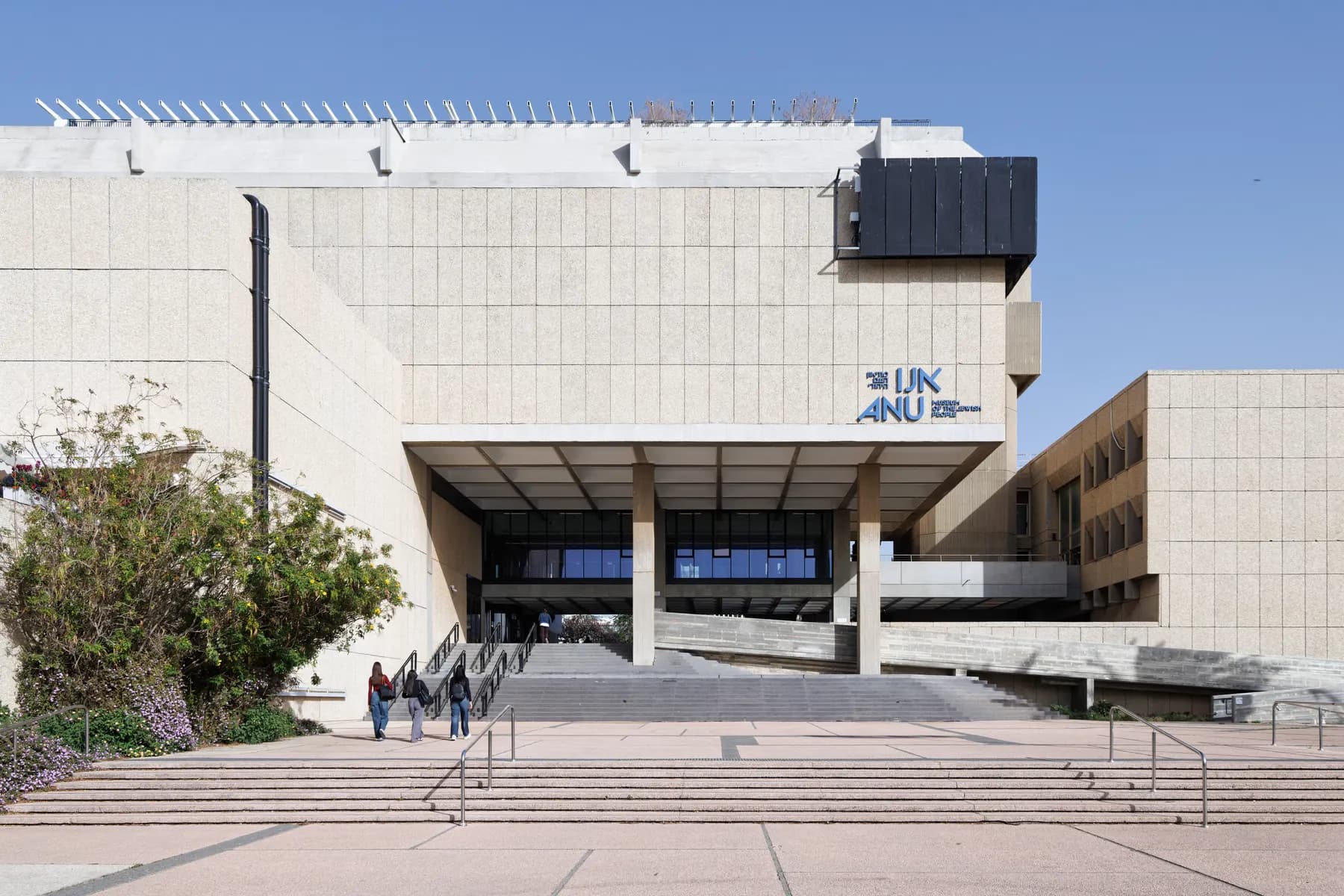
ANU, Museum of the Jewish People
The museum that opened in 1978 having deliberately decided not to collect objects reopened in 2021 with a 1,100-year-old Hebrew Bible as its centrepiece.
הרווי ספיר / CC BY 2.5 · Wikimedia Commons
Nature reserve
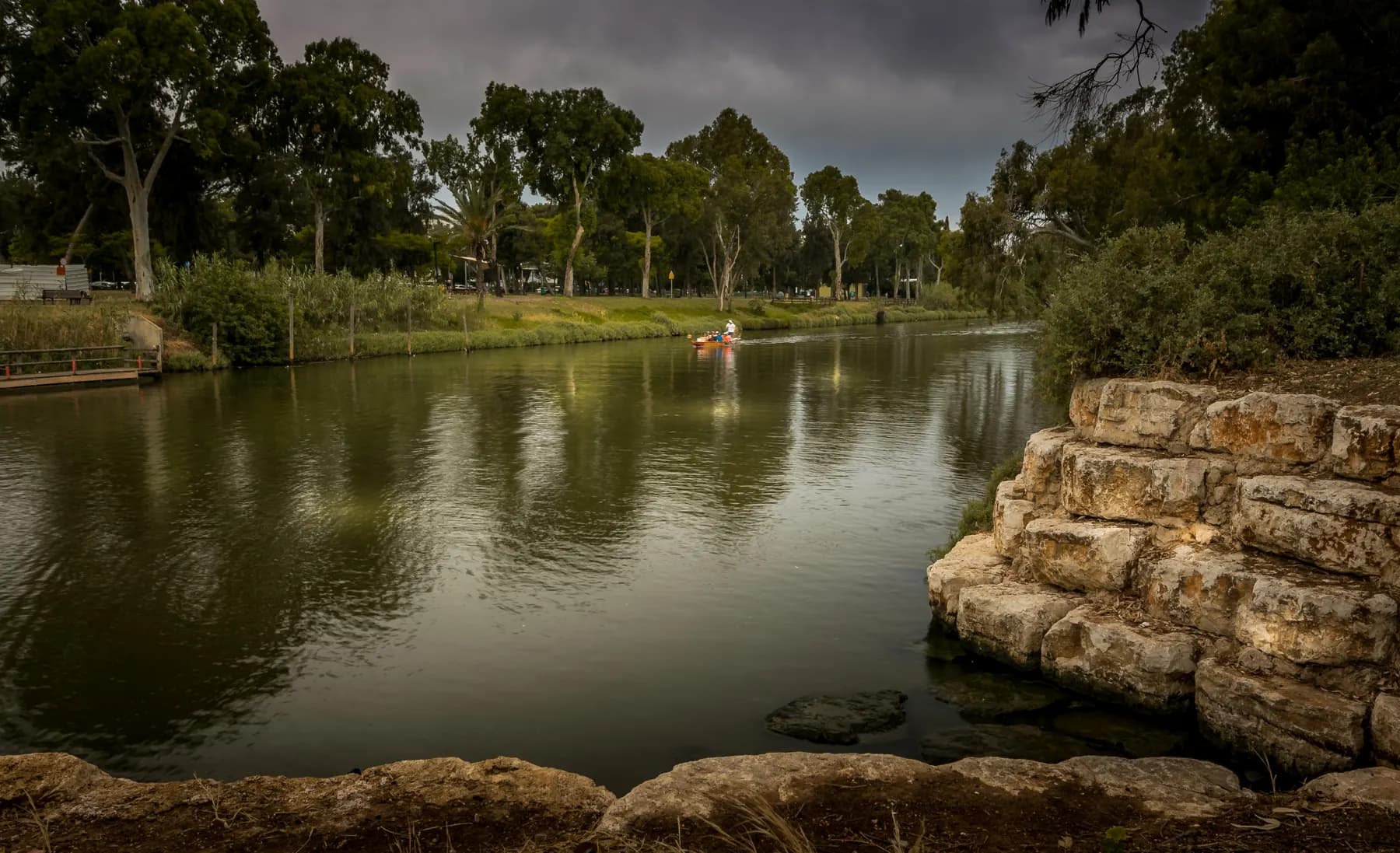
HaYarkon Park
The park runs about 3,800 dunams from the Geha road to the sea, and the river it is named for now carries roughly 5 per cent of the water it did before the Yarkon-Negev pipeline took the springs.
Romanhit / CC BY-SA 3.0 · Wikimedia Commons
Landmark
Tel Aviv Port
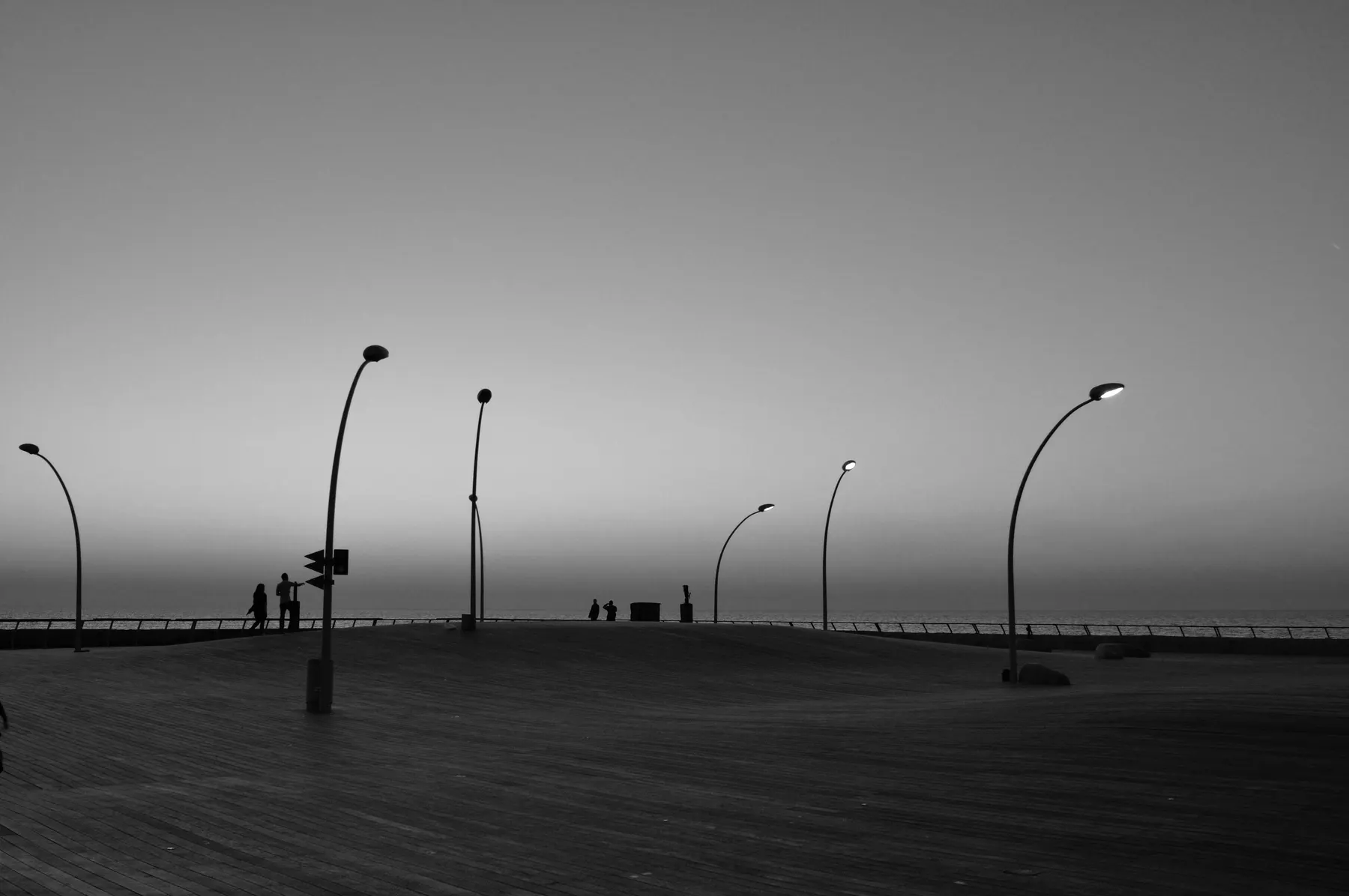
The first Jewish-run port on this coast landed its first cargo, a load of cement, on 19 May 1936, worked until 25 October 1965, and reopened as public space under a timber deck finished in 2008.
Sources and further reading
Every link below was opened and checked when this page was written. Official statements are marked as such: they are the subject's own account, not an independent one.
- OfficialMUZA, Eretz Israel Museum, Tel Aviveretzmuseum.org.ilVisit
opening hours by day, the full entrance fee table, parking charge, directions and services
- OfficialMUZA, Eretz Israel Museum, Tel Aviveretzmuseum.org.ilAbout MUZA
founding in 1958, Walter Moses, the December 1952 contract, the pavilion dedication dates and the architect Werner Joseph Wittkower
- OfficialMUZA, Eretz Israel Museum, Tel Aviveretzmuseum.org.ilThe Museum Grounds
Tel Qasile, the temples and finds, the mosaics, and which outdoor installations are reconstructions
- OfficialMUZA, Eretz Israel Museum, Tel Aviveretzmuseum.org.ilThe Jack, Joseph and Morton Mandel MUZA Park
free entry, 8:00 to 20:00 opening, five gates and what stands in the park
- OfficialMUZA, Eretz Israel Museum, Tel Aviveretzmuseum.org.ilRenewing MUZA
the 21 September 2023 opening, the 74 million shekel budget, the planned central building and the architects
- OfficialMUZA, Eretz Israel Museum, Tel Aviveretzmuseum.org.ilPlanetarium
the May 1968 opening, the Lasky donation, show times, languages and the separate charge
- OfficialMUZA, Eretz Israel Museum, Tel Aviveretzmuseum.org.ilAccessibility Accommodations
lifts, platform lifts, the loan wheelchair, the electric buggy, tactile surfaces and accessible parking
- OfficialMUZA, Eretz Israel Museum, Tel Aviveretzmuseum.org.ilExhibitions
the list of eight permanent pavilions and the current temporary closures
- OfficialMUZA, Eretz Israel Museum, Tel Aviveretzmuseum.org.ilHome page
the notice that the museum stays open until 20:00 on Tuesdays in August
- ReferenceWikipediaen.wikipedia.orgEretz Israel Museum
the 1953 establishment date, the Ze'evi directorship and the damaged Byzantine mosaic, none of which appear in the museum's own history
- ReferenceWikipediaen.wikipedia.orgTell Qasile
excavation seasons under Benjamin Mazar and Amihai Mazar, and the Philistine reading of the site
- ReferenceWikipedia (Hebrew)he.wikipedia.orgתל קסילה
the October 1948 start of digging, the 1971 to 1974 and 1982 onwards campaigns and the twelve layers
- ReferenceWikipediaen.wikipedia.orgTel Qasile ostraca
the 1945 to 1946 surface finds and the texts of both inscribed sherds
- ReferenceWikipediaen.wikipedia.orgOphir
independent confirmation of the wording and dating of the Ophir gold inscription from this mound
- ReferenceWikipediaen.wikipedia.orgSheikh Muwannis
the village depopulated in March 1948 whose land carries the museum and Tel Aviv University
Eretz Israel Museum: common questions
Is the Eretz Israel Museum worth visiting?+
It is worth it if you want the material history of the region rather than art, and if you like walking outdoors between buildings. The draw is the combination: an excavated Iron Age mound, ancient mosaics displayed in the open, reconstructed oil and flour installations, and eight separate collections from glass to postal history. It is a poor fit for anyone who wants one route through one building in an hour.
What is Tel Qasile and can you walk on it?+
Tel Qasile is the settlement mound at the centre of the museum grounds, with twelve archaeological layers and a precinct of three superimposed temples on its summit. It is open to walk on and is inside the free part of the site. Digging began there in October 1948, on what the museum describes as the first excavation permit issued by the State of Israel.
How much is a ticket to the Eretz Israel Museum?+
The museum publishes NIS 58 for an adult, NIS 47 for an adult resident of Tel Aviv with ID, NIS 39 for students, and NIS 29 for senior citizens and police officers with a valid Israeli ID. Children under 18 and soldiers go free, as do visitors with a disability card and their escort, though groups of any age pay. The adult price has been NIS 58 since 1 January 2025.
Is the museum open on Sunday?+
No. Sunday is the museum's closed day. It opens Monday to Wednesday 10:00 to 16:00, Thursday 10:00 to 20:00, Friday 10:00 to 14:00 and Saturday 10:00 to 16:00, and it adds Tuesday evenings until 20:00 through August.
Is the park free?+
Yes. Entry to the MUZA Park and the museum grounds is free, daily from 8:00 to 20:00, through five gates around the perimeter. Only the exhibitions, the planetarium and the organised activities are charged for. The park was completed in July 2024 at 90,000 square metres.
Is the planetarium included in the museum ticket?+
No, it is a separate charge. The museum sells a combined entry and activity ticket, and prices a child's planetarium seat at NIS 30. Shows run mainly on Saturdays and in the school holidays, in Hebrew, with an English screening on Saturday at 13:30 and other English shows by advance arrangement only.
How long do you need at the Eretz Israel Museum?+
About two to three hours covers the tell, the outdoor exhibits and two or three pavilions at a reasonable pace. Doing all eight pavilions properly takes most of a day, which the Thursday 20:00 closing makes possible. Walking only the free park and the mound takes well under an hour.
Is it wheelchair accessible?+
Most of it is. The museum publishes lifts in the halls, the Rothschild Center and the Alexander Pavilion, two outdoor platform lifts where there are steps, accessible toilets marked on the map, tactile warning studs and handrails, a loan wheelchair, an electric buggy and free parking for disability permit holders. The exception is the top of the tell, which is a climb, and no step-free route to the summit is published, so ring the accessibility line first if that matters.
Is this the same as ANU or the Tel Aviv Museum of Art?+
No, they are three separate museums. ANU, the Museum of the Jewish People, is a short walk away on the Tel Aviv University campus and covers Jewish life worldwide; the Tel Aviv Museum of Art is in the city centre and is an art museum. This one is archaeology, ethnography, crafts and local material culture, spread across a garden campus in Ramat Aviv.
How do you get there without a car?+
Tel Aviv University is the nearest railway station, and the museum lists bus routes from five operators stopping nearby, including Dan 7, 13, 24, 25, 45 and 127 and Egged 126, 171, 270 and 271. Neither the trains nor the scheduled buses run on Shabbat, which is worth planning around given that the museum itself opens on Saturday and closes on Sunday.