The Star of David is two triangles, and scholars still disagree about its origin
The Star of David, in Hebrew Magen David, “shield of David”, is a six-pointed star made of two interlocking equilateral triangles. It stands on the flag of Israel and in the emblem of Magen David Adom, and scholars disagree about how old it is as a Jewish symbol and what it first meant.1,2,3

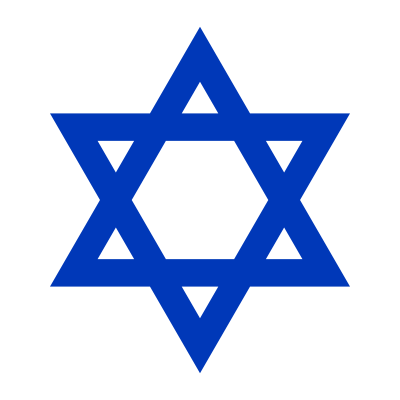
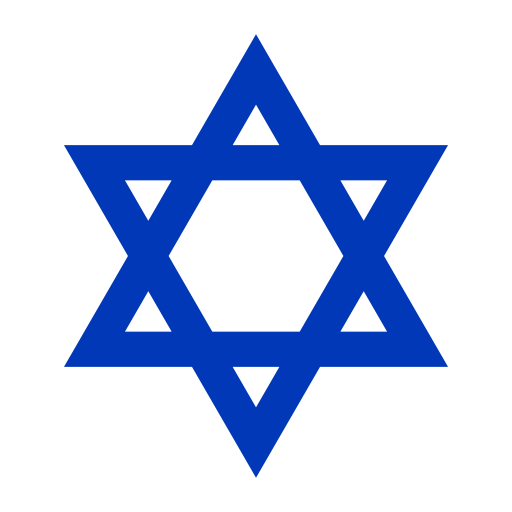
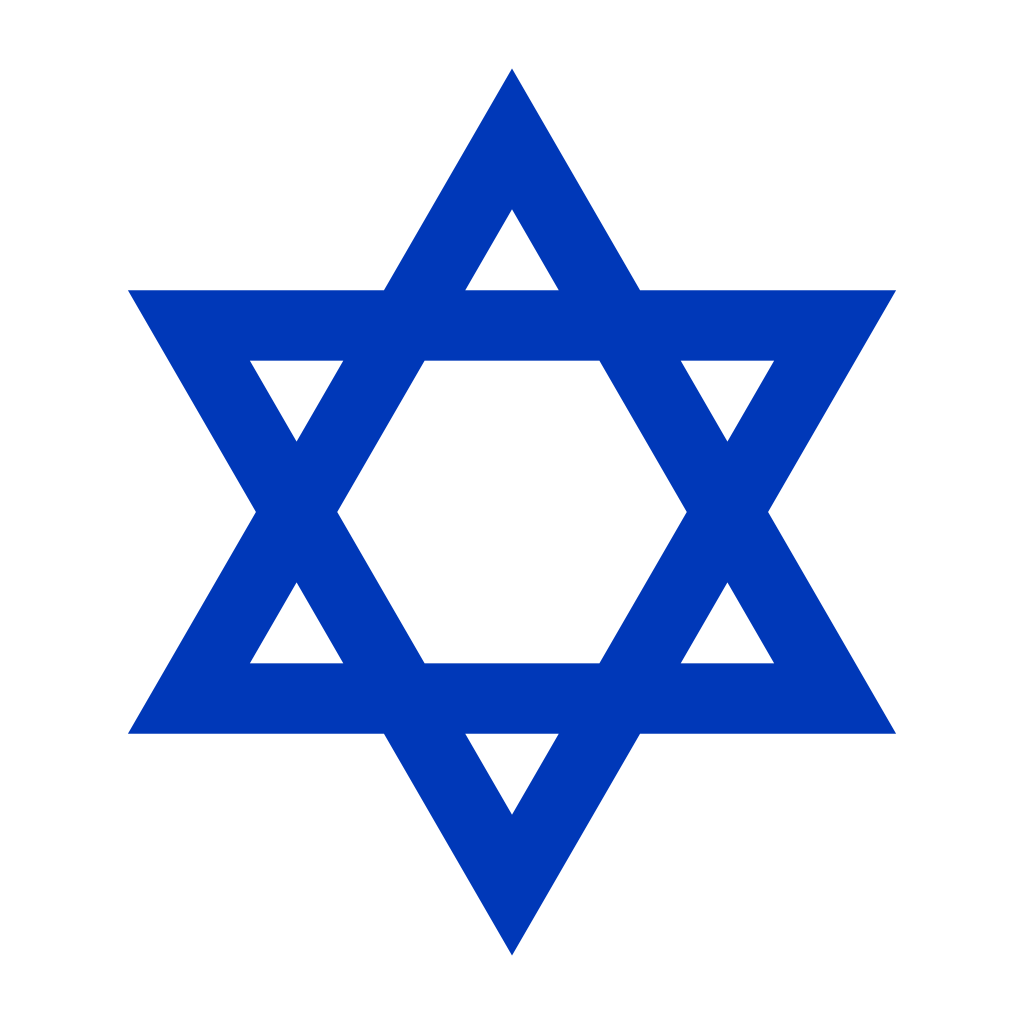


The star is two equilateral triangles, one pointing up and one down
One equilateral triangle with its point up and a second with its point down, sharing a centre, make a star with six points. In the flag of Israel the star is built of six bars 5.5 centimetres wide that form the two triangles, with their bases parallel to the stripes.3
The Hebrew name Magen David means “David’s shield”. The same figure has also been called the seal of Solomon. Gershom Scholem wrote that Jews took the name “seal of Solomon” from Islamic magic literature, and that he could not say whether “shield of David” began in Islamic or in Jewish mysticism. The name “seal of Solomon” goes with the legend of Solomon’s ring, engraved with the Ineffable Name, and his rule over spirits.2
- Draw a circle around the centre of the star.
- Set an equilateral triangle in the circle with its point up, its three corners on the circle.
- Set a second triangle in the same circle with its point down.
- Give each side the width of a bar, 5.5 centimetres in the flag. Here the bars are drawn centred on the sides.
Historians disagree about how old it is as a Jewish symbol
The Jewish Encyclopedia of 1906 notes that the shield of David is not mentioned in rabbinic literature, so it probably did not begin within rabbinic Judaism, and that a Jewish tombstone at Tarentum in southern Italy may be as old as the third century. It cites a mention in the book Eshkol ha-Kofer by the Karaite Judah Hadassi, in the middle of the twelfth century, where a sign called “David’s shield” is placed beside the names of angels, at that time a sign on amulets.1
Six-pointed stars are carved on stones of ancient synagogues, apparently as decoration. One from the arch of the synagogue at Khirbet Shura in Galilee is dated to the third or fourth century, and another is on the ancient synagogue at Capernaum, which the Jewish Encyclopedia calls Tell Hum. The same figure also decorates churches, such as the cathedral at Brandenburg.1,2
The Leningrad Codex, a manuscript of the Hebrew Bible dated 1008, has a decorated carpet page with a six-pointed star. Its use there as a meaningful Jewish symbol may be as early as the eleventh century, though that is not certain.2
Kabbalistic writings use the star to arrange the ten sefirot and place it on amulets. Researchers disagree on whether Isaac Luria’s arrangement of the seder plate in two triangles helped make it an emblem, Scholem arguing that Luria spoke of triangles one beneath the other and not of a hexagram.1,2
Old Jewish manuscripts and stones carry six-pointed stars like these
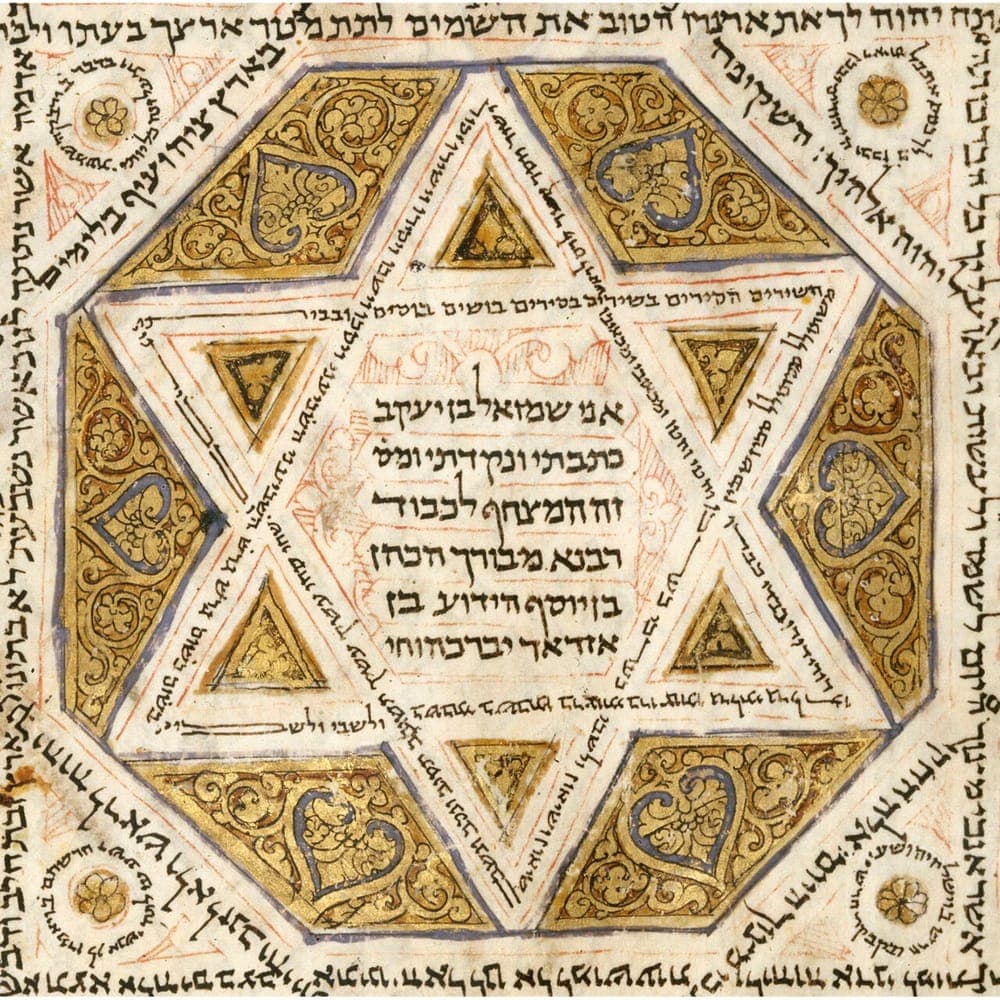
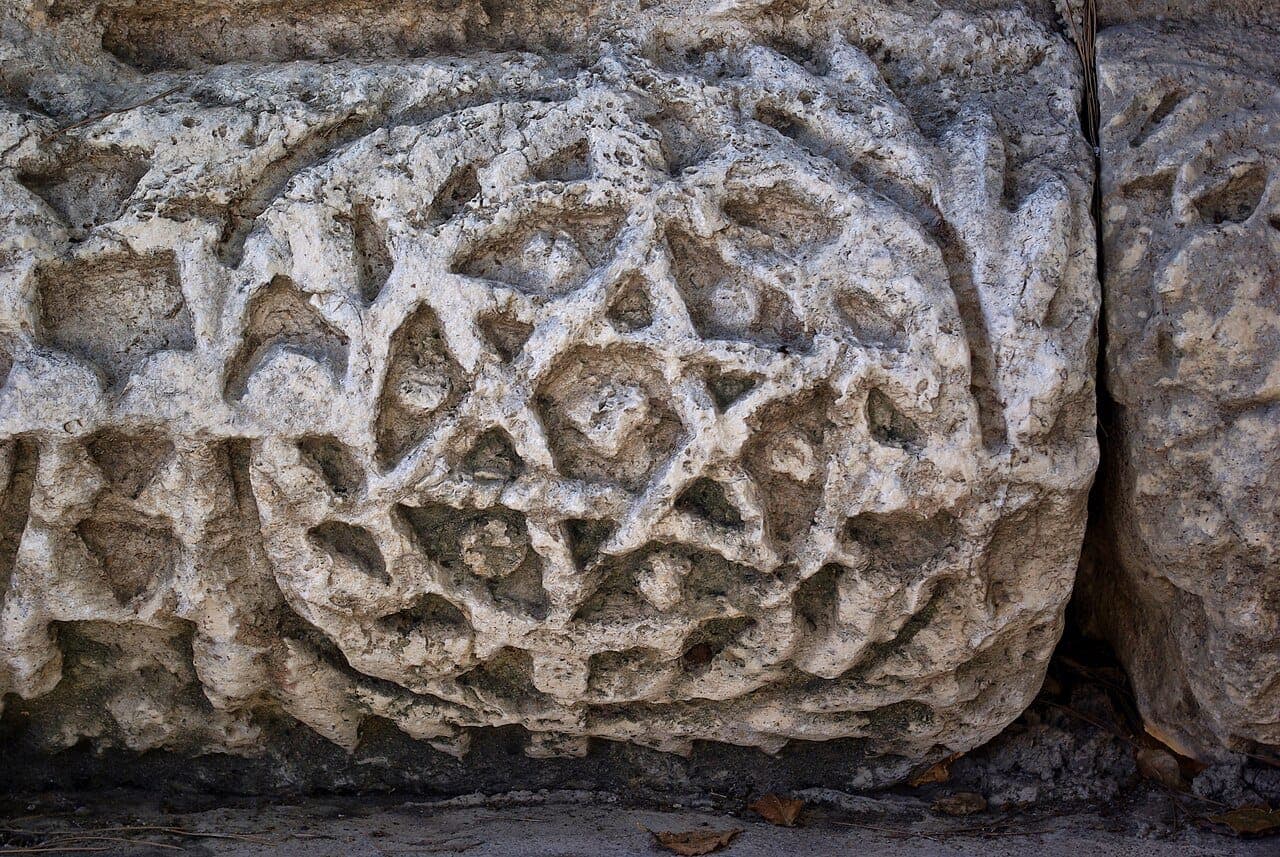
The star went from the Jews of Prague in 1354 to the flag of a state in 1948
1354
A king approves a flag for the Jews of Prague
King Charles IV of Bohemia approved a red flag with a hexagram for the Jews of Prague in 1354. The star’s use as a distinctive sign of Jewish communities seems to have started in Prague before the seventeenth century and spread from there to much of Eastern Europe.1,2
1873
A society adopts it as its device
The American Jewish Publication Society adopted the star as its device in 1873, the Jewish Encyclopedia notes. Mishory, summarising Scholem, writes that in the nineteenth century Jews wanted a symbol to set beside the Christian cross, and that the star came into wide use on synagogues and ritual objects.1,6
1897
The Zionist Congress picks it for a flag
The First Zionist Congress in Basel chose the star as the central symbol of a Jewish national flag. Two reasons are given: it was already used in some Jewish communities, and it had no specifically religious meaning.2,6
1 September 1941
A German decree turns it into a badge
A German decree of 1 September 1941 required Jews over the age of six in the Reich and in some annexed and occupied areas to wear a yellow six-pointed star in public. Mishory writes that the star gained a very powerful connotation precisely because of its abuse by the Nazis.6,7
28 October 1948
The star is set in the flag of the state
The proclamation of the flag of the State of Israel describes a Star of David of six bars in the middle of the white ground. The Basic Law of 2018 repeats it in the description of the flag.3,8
12 July 1950
Magen David Adom gets its law
Magen David Adom, Israel’s national emergency medical and blood service, takes its name from the star: it means “Red Shield of David”. A volunteer association with one branch in Tel Aviv in 1930, it was given official status by a law the Knesset passed on 12 July 1950.9,10
2005 and 2006
The red crystal lets Magen David Adom keep its red star
On 7 December 2005 states adopted a third emblem, the red crystal, and under that protocol Magen David Adom may keep its red star as its emblem within Israel. On 22 June 2006 it was recognised by the International Committee of the Red Cross and admitted to the International Federation of Red Cross and Red Crescent Societies.9
People ask these questions about the symbol
What does the Star of David mean?
No text fixes one meaning for it. It is used as a sign of Judaism and of the Jewish people, and on the flag of Israel the art historian Alec Mishory reads it as expressing Jewish unity. The name Magen David means “shield of David”.
How old is the Star of David?
Six-pointed stars appear on ancient synagogue stones, such as one at Khirbet Shura from the third or fourth century, and on a decorated page of the Leningrad Codex of 1008. As a sign of Jewish communities it seems to have started in Prague before the seventeenth century. Historians disagree about when it became a Jewish symbol.
Is the Star of David on the flag of Israel?
Yes. The proclamation of 1948 describes a Star of David of six bars 5.5 centimetres wide in the middle of the white ground, forming two equilateral triangles. A red six-pointed star is the emblem of Magen David Adom.
Was the six-pointed star always a Jewish symbol?
No. Mishory writes that it was never a uniquely Jewish symbol, and it decorates churches as well as synagogues. In the nineteenth century Jewish communities in Eastern Europe began to use it widely as a sign of Jewish identity.
The flag, the star and the anthem each have a page of their own
The sentences on this page rest on these sources
- 1.Magen Dawid, The Jewish Encyclopedia (1906)read 2 November 2026
- 2.Star of David, English Wikipediaread 2 November 2026
- 3.Proclamation of the Flag of the State of Israel, Official Gazette no. 32, 12 November 1948read 2 November 2026
- 4.UnicodeData.txt, Unicode Consortiumread 2 November 2026
- 5.Unicode emoji list (emoji-test.txt), Unicode Consortiumread 2 November 2026
- 6.Alec Mishory, Israel National Symbols: The Israeli Flag, Jewish Virtual Libraryread 2 November 2026
- 7.The German decree of 1 September 1941 on the Jewish badge, United States Holocaust Memorial Museumread 2 November 2026
- 8.Basic Law: Israel as the Nation State of the Jewish People, section 2, Knesset's English translationread 2 November 2026
- 9.Magen David Adom, English Wikipediaread 2 November 2026
- 10.Magen David Adom Law 5710-1950, Hebrew Wikisourceread 2 November 2026