Hatikvah is the national anthem of Israel, and these are its words
Hatikvah means “The Hope”. Its eight lines are a shortened and revised version of the opening of a nine-stanza poem by Naftali Herz Imber, sung to a melody adapted in Rishon LeZion by Shmuel Cohen. The Knesset made this text the anthem in law in 2004.1,2,3,4
Each of the eight lines is shown in Hebrew, in English letters and in plain English
Verse
כָּל עוֹד בַּלֵּבָב פְּנִימָה
Kol od ba-levav penimah
As long as, deep inside the heart,
נֶפֶשׁ יְהוּדִי הוֹמִיָּה,
nefesh yehudi homiyah,
a Jewish soul still yearns,
וּלְפַאֲתֵי מִזְרָח קָדִימָה
u-le-fa’atei mizrach kadimah
and onward, toward the edge of the east,
עַיִן לְצִיּוֹן צוֹפִיָּה,
ayin le-Tziyon tzofiyah,
an eye looks toward Zion,
Refrain
עוֹד לֹא אָבְדָה תִּקְוָתֵנוּ
od lo avdah tikvatenu,
our hope is not yet lost,
הַתִּקְוָה בַּת־שְׁנוֹת אַלְפַּיִם,
ha-tikvah bat shenot alpayim,
the hope that is two thousand years old,
לִהְיוֹת עַם חָפְשִׁי בְּאַרְצֵנוּ,
lihyot am chofshi be-artzenu,
to be a free people in our land,
אֶרֶץ צִיּוֹן וִירוּשָׁלַיִם.
eretz Tziyon vi-Yerushalayim.
the land of Zion and Jerusalem.
The English letters are Israel.com’s own transliteration, in modern Israeli pronunciation, and “ch” stands for the rough sound of the letter ח.
The Hebrew is the text in the schedule to the Flag, Emblem and Anthem Law, with vowel points.
The melody can be heard in a public domain recording
An instrumental performance by the United States Navy Band, a public domain recording. United States Navy Band, National Anthems Licence: Public domain. Recording on Wikimedia Commons
The words speak of a hope that has lasted two thousand years
The anthem is one sentence in eight lines: as long as a Jewish soul still yearns deep inside the heart, and an eye looks toward Zion at the edge of the east, our hope is not yet lost, the hope that is two thousand years old, to be a free people in our land, the land of Zion and Jerusalem.1,2
The line “our hope is not yet lost” may be an allusion to Ezekiel’s vision of the dry bones, in which the people say “our hope is lost”, and some compare it with the opening of the Polish national anthem, “Poland is not yet lost”.3
A poem written in 1877 or 1878 became the national anthem in law in 2004
1877 or 1878
Imber writes Tikvatenu
Naftali Herz Imber, a Jewish poet from Austrian Galicia, wrote the first version of the poem “Tikvatenu”, “Our Hope”, as a guest in Iași, Romania, in 1877 or 1878: the sources differ. The poem has nine stanzas, and it was printed in Jerusalem in 1886 in Imber’s first book, Barkai.3,4
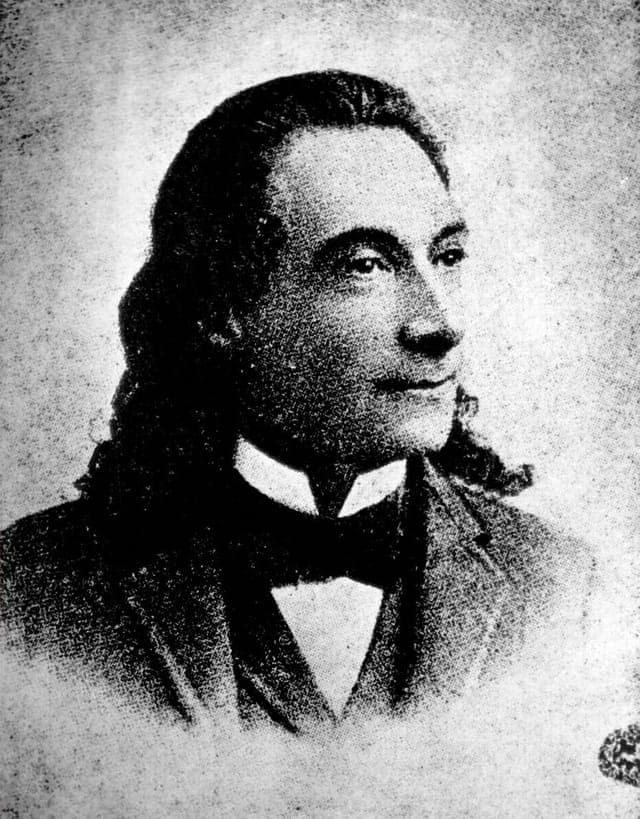
Naftali Herz Imber, between 1890 and 1900Public domain · Wikimedia Commons 1886, 1887 or 1888
A folk melody is set to the poem
Shmuel Cohen, a young farm worker in Rishon LeZion who had come from Bessarabia, today Moldova, read Imber’s Barkai and fitted the poem to a folk melody he knew from before he emigrated, known in Romanian as “Carul cu boi”, “the ox cart”. Sources date this to 1886, 1887 or 1888. Musicologists trace the tune further back, to an Italian song from around 1600, and the same melody has been used in other songs in Europe.3,4
1903
Opponents of the Uganda plan sing the poem at the Sixth Zionist Congress
At the Sixth Zionist Congress in Basel in 1903 the poem was sung by those who opposed the proposal of a Jewish state in Uganda.3,4
1907 or 1908
Imber signs a handwritten copy
A handwritten copy of the first verse and the refrain, signed by Imber in 1907 or 1908, survives.5
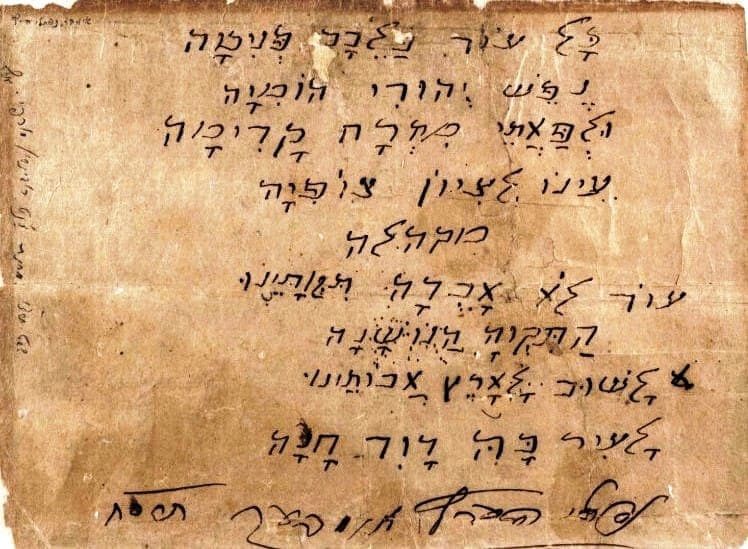
The first verse and the refrain of Tikvatenu in Naftali Herz Imber's own hand, signed, 1907 or 1908Naftali Herz Imber · Public domain · Wikimedia Commons Over the years
The refrain is reworded
Imber’s refrain originally ended with a hope “to return to the land of our fathers, to the city where David camped”. His friends David Yudilovitch, Israel Belkind and Mordechai Lubman reworded it with his approval into “the hope of two thousand years, to be a free people in our land”. Later, early in the British Mandate, the composer Hanina Karchevsky arranged the song for choir and added the word “bat” (בת) to the line, so that it reads “the hope that is two thousand years old”.3,4
1933
The Zionist movement adopts it as its anthem
The poem was sung at later congresses too. At the Eighteenth Zionist Congress in Prague in 1933 a motion passed that formally adopted Hatikvah as the anthem of the Zionist movement.3
14 May 1948
Those present sing it at the Declaration of Independence
At the opening of the ceremony of the Declaration of Independence on 14 May 1948, those present sang Hatikvah, and at its close the Palestine Philharmonic Orchestra played the anthem.4
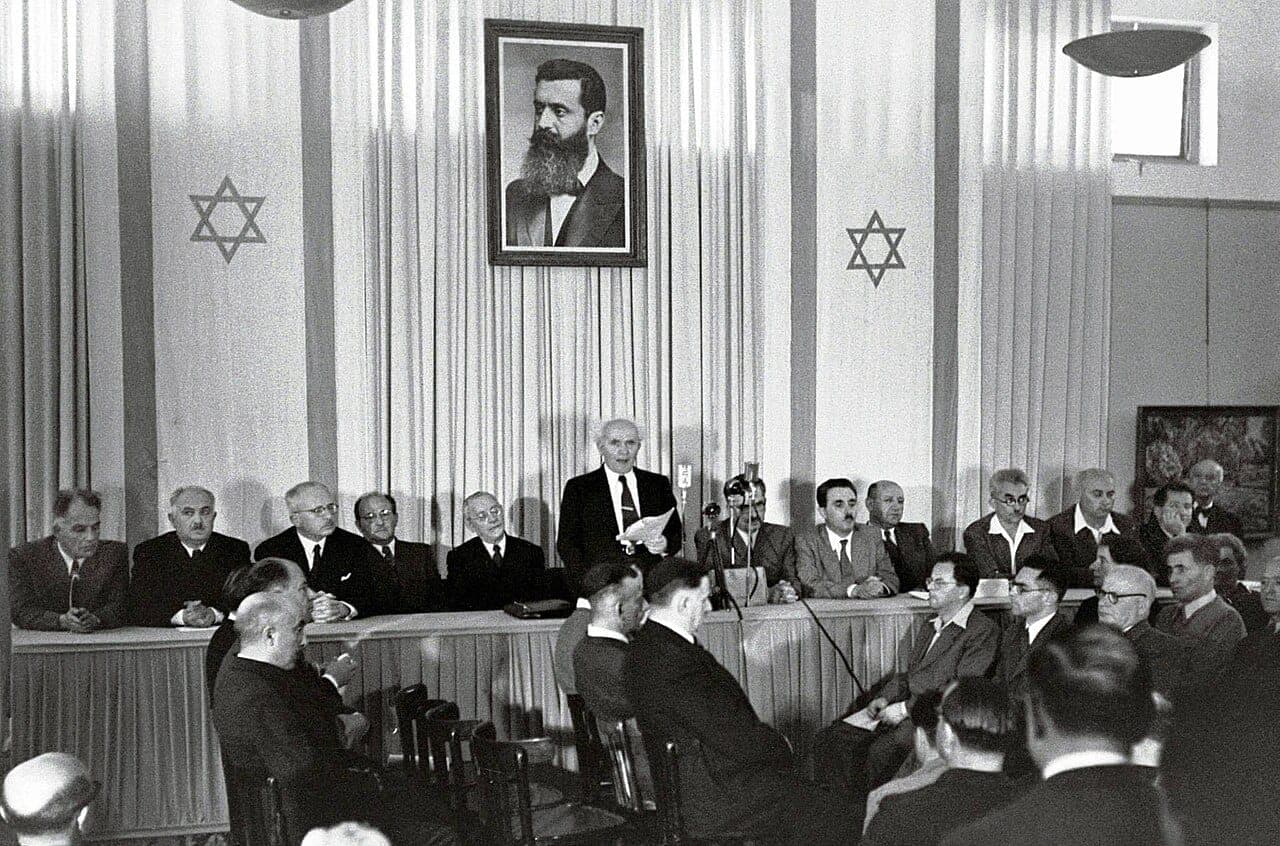
David Ben-Gurion reading the Declaration of Independence, 14 May 1948Rudi Weissenstein · Public domain · Wikimedia Commons 10 November 2004
The Knesset puts the text into law
The Knesset passed Amendment No. 4 to the Flag and Emblem Law on 10 November 2004. It added the text of Hatikvah, the eight lines above, in a schedule, and the law was renamed the Flag, Emblem and Anthem Law. The amendment was published in the Book of Laws, Sefer HaChukim, on 17 November 2004.1,2,3
2018
The Basic Law names the anthem
Section 2 of the Basic Law: Israel as the Nation State of the Jewish People says: “The national anthem is Hatikvah.”6
People ask these questions about the anthem
What are the words of Hatikvah?
Hatikvah has eight lines. In English letters they begin “Kol od ba-levav penimah, nefesh yehudi homiyah” and end “eretz Tziyon vi-Yerushalayim”. The whole text is at the top of this page in Hebrew with vowel points, in English letters and in plain English.
Who wrote Hatikvah and who composed its tune?
The words are from the poem “Tikvatenu” by Naftali Herz Imber, written in 1877 or 1878. Shmuel Cohen fitted it in Rishon LeZion to a folk melody he knew, which musicologists trace to an Italian song from around 1600.
Since when is Hatikvah the national anthem of Israel?
The Knesset made its text the anthem in law on 10 November 2004, in an amendment to the Flag and Emblem Law. It had been sung at the Declaration of Independence on 14 May 1948 and adopted by the Zionist movement in 1933, and the Basic Law of 2018 says the national anthem is Hatikvah.
What does Hatikvah mean?
“Hatikvah” means “the hope”. The anthem says the hope of two thousand years is not yet lost: to be a free people in our land, the land of Zion and Jerusalem.
The flag, the star and the anthem each have a page of their own
The sentences on this page rest on these sources
- 1.Flag and Emblem Law (Amendment No. 4) 5765-2004, with the anthem in its schedule, Knessetread 2 November 2026
- 2.Flag, Emblem and Anthem Law 5709-1949, as amended, Hebrew Wikisourceread 2 November 2026
- 3.Hatikvah, English Wikipediaread 2 November 2026
- 4.Hatikvah, Hebrew Wikipediaread 2 November 2026
- 5.The handwritten copy of Tikvatenu signed by Imber, Wikimedia Commonsread 2 November 2026
- 6.Basic Law: Israel as the Nation State of the Jewish People, section 2, Knesset's English translationread 2 November 2026