Ada Yonath, Nobel chemistry laureate and ribosome pioneer, dies
The Israeli Foreign Ministry and the Weizmann Institute of Science announced the death of Prof. Ada Yonath, the 2009 Nobel laureate in chemistry and the first Israeli woman to win the prize.

AI illustration, not a photo of the events.
Prof. Ada Yonath, the Israeli scientist whose work on the ribosome earned her the 2009 Nobel Prize in Chemistry, has died. Her death was announced in a series of posts published by the Israeli Foreign Ministry on X, which gave her dates as 1939 to 2026 and described her as the first Israeli woman to receive the award.
A separate statement circulated by the ministry came from the Weizmann Institute of Science, where Yonath worked. The institute said its community was mourning the death of Prof. Yonath of its Chemical and Structural Biology Department, and credited her with pioneering the study of the ribosome, which the statement described as the cell's protein factory.
What the sources posted


A trailblazer. A Nobel laureate. A source of immense pride for Israel. 🇮🇱 Prof. Ada Yonath’s brilliance changed science and left a legacy for all humanity. May her memory be a blessing 🕯️
On the ground

Israeli Nobel laureate Ada Yonath, pioneering ribosome researcher, dies at 87 The 2009 chemistry laureate transformed scientists’ understanding of the ribosome and helped reveal how antibiotics work, paving the way f... ynetnews.com/health_science…

What the ribosome is, and why the work mattered
The ribosome is the structure inside living cells that assembles proteins, the molecules that carry out most of the work of biology. The Weizmann Institute statement used the phrase "the cell's protein factory" to describe it, a formulation the Foreign Ministry repeated in its own posting. Mapping how that structure is built and how it operates is the field Yonath is credited with opening up, according to both statements.
Neither statement went into technical detail about her methods or her published findings. What they set out is the shape of the achievement: a body of research into the ribosome that led to the Nobel Prize in Chemistry in 2009, and a career spent at a single Israeli research institution.
The Weizmann Institute and the department she belonged to
The Weizmann Institute of Science is one of Israel's principal centres for basic research, working in the natural and exact sciences and training graduate students. Yonath was a member of its Chemical and Structural Biology Department, the institute said. Structural biology is the study of the three dimensional shapes of biological molecules, the discipline in which the architecture of the ribosome was eventually resolved.
Israel's week in five stories, every Friday
Sourced and checked by the Israel.com newsroom, with Shabbat times. Free, one-click unsubscribe.
One list, unsubscribe in a click. See our privacy policy.
The institute framed its announcement as one of collective loss rather than an individual tribute, speaking in the name of its community. The Foreign Ministry, posting for an international audience, framed hers as a national story, calling her a trailblazer and describing her as a source of immense pride for Israel.
A first for Israeli women in the sciences
The detail the ministry chose to emphasise in its longer post was that Yonath was the first Israeli woman to win the Nobel Prize. That distinction is why her name is familiar well beyond laboratories, and why the announcement of her death was carried by a state account rather than only by academic channels. The ministry also pointed to her teaching, saying her legacy continues through what it called the countless students she inspired.
Next story Government
Trump calls Nobel decision an 'indelible stain' on Norway after Pillay win
How the statements were worded
All three postings used the traditional Jewish formula of condolence, "may her memory be a blessing," a phrase said of the dead in Jewish practice and used routinely in Hebrew and in English by Israeli institutions. The ministry said it was joining the international scientific community, along with Yonath's family and friends, in mourning, and offered thoughts to those close to her.
The three items are short and overlapping. They agree on the central facts: the death, the 2009 Nobel Prize in Chemistry, the ribosome research, the Weizmann Institute affiliation and the status as Israel's first female laureate. There is no disagreement between them on any point.
What the reports do not say
The material available gives no cause of death, no place of death and no age at death, and it does not say when a funeral will be held or where. It names no surviving relatives.
It does not describe her early life, her education, the roles she held over her career or any prizes other than the Nobel. It does not name colleagues she worked with or anyone with whom the Nobel Prize may have been shared, and it does not describe the specific experiments behind the award. Nor does it say whether she was still active in research at the Weizmann Institute.
All of the information here comes from postings by a single organisation, the Israeli Foreign Ministry, one of which reproduced a statement attributed to the Weizmann Institute of Science. No independent confirmation from other bodies was available in the material reviewed.
Read next
All emergency →
Illustration
Emergency
Man about 35 killed as truck and car collide on Route 465 near Aboud

Illustration
Emergency
Man and woman killed in two-car collision near Sde Eliyahu, three hurt
File photo
Emergency
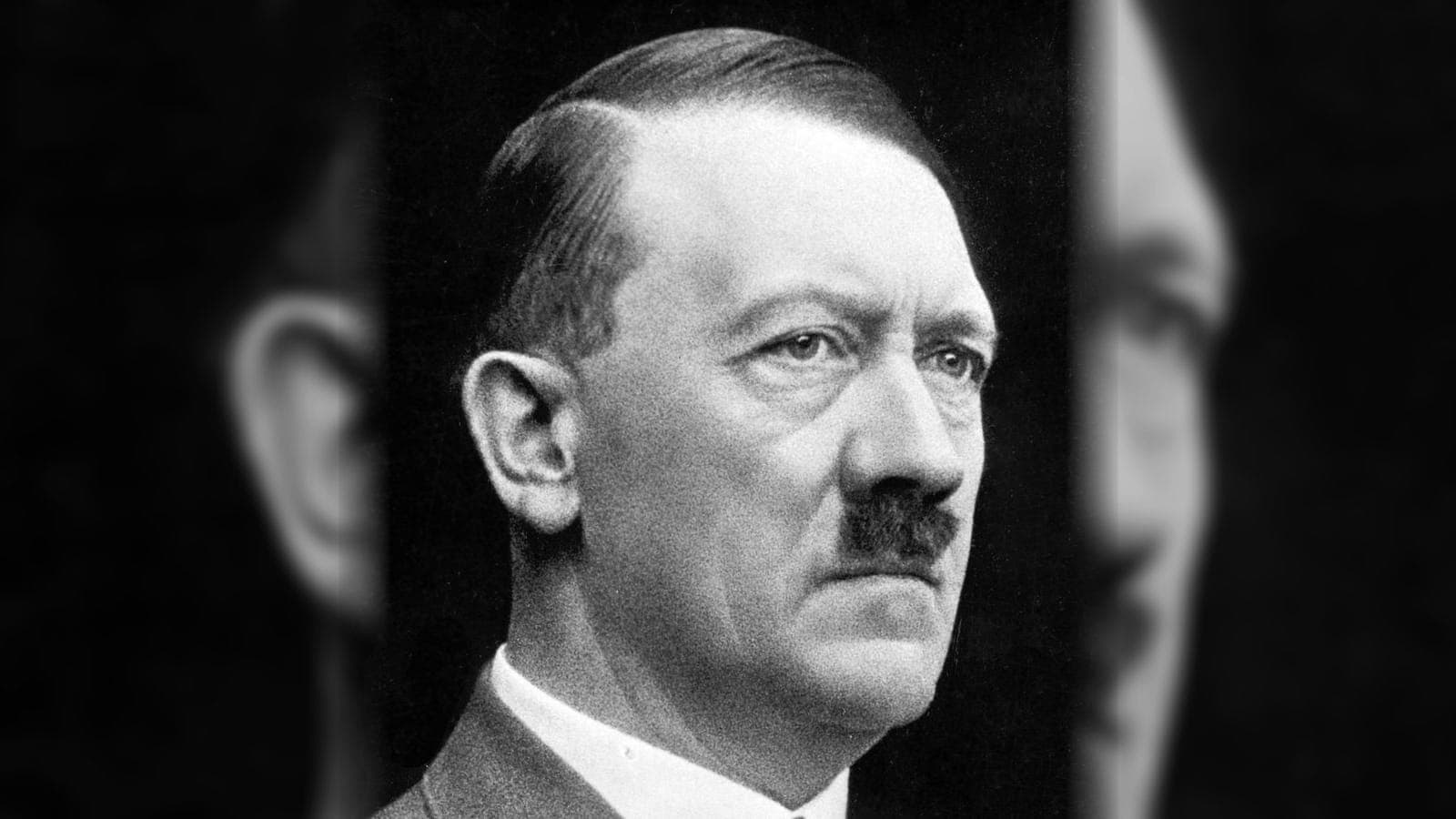
Fire at Hitler's Eagle's Nest retreat in Bavaria, 200 firefighters called in

Illustration
Emergency
Magnitude 7 earthquake in Tibet kills at least 16, injures 32
Sources and further reading
Every link below was opened and checked when this page was written. Official statements are marked as such: they are the subject's own account, not an independent one.
- Officialmfax.comIsrael Foreign Ministry on X
- Officialmfax.comIsrael Foreign Ministry on X
- Officialmfax.comIsrael Foreign Ministry on X
How we checked this
Every detail here comes from three posts by the Israeli Foreign Ministry on X, one of which carries a statement attributed to the Weizmann Institute of Science; the reports do not conflict with one another, and no independent confirmation from a second organisation was available.
Our sourcing and corrections policy →
The week from Israel, in one email
The stories that mattered, sourced and checked by the Israel.com newsroom. Free, weekly, one-click unsubscribe.
One list, unsubscribe in a click. See our privacy policy.
Latest
- Troops detain Palestinian suspected of planning imminent attack in Binyamin area
- Israeli forces keep Hebron under closure after attack that killed two soldiers
- Man of about 25 shot dead in Yafia, near Nazareth, during a taxi ride
- IDF says Gaza strikes killed two men who moved Iranian and Turkish money to Hamas
- Israeli and Greek navies practise sinking a hostile vessel in joint drill
- Kinneret Drops Another 4.0 cm to -213.715 m, Sitting 0.72 m Below the Lower Red Line