Zamir cites tense period across all arenas as IDF drill runs
The IDF has published an English statement quoting its chief of staff on a volatile period in all arenas as the surprise multi-front exercise continues.
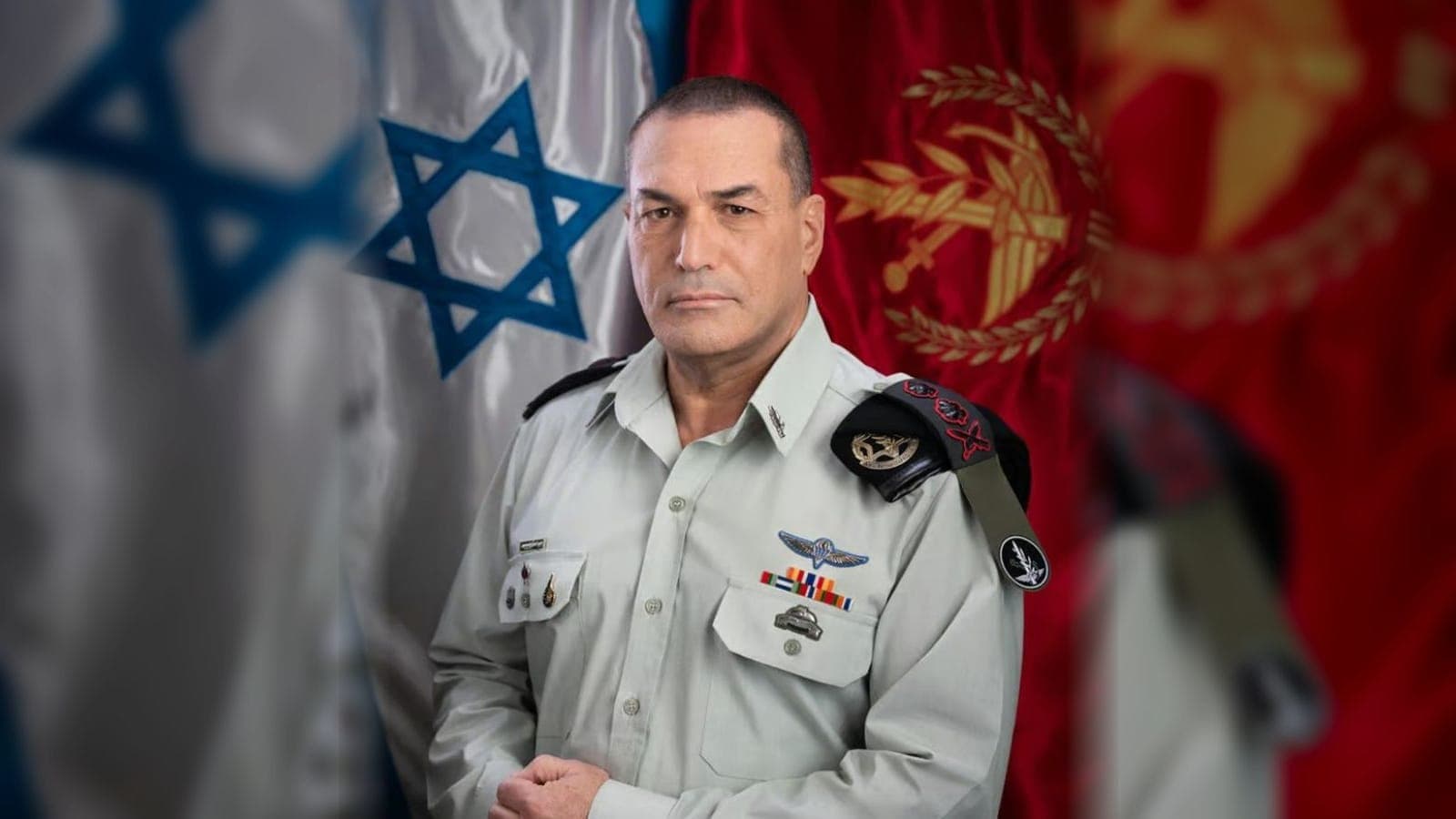
Eyal Zamir. File photo by IDF Spokesperson's Unit photographer, CC BY-SA 3.0, via Wikimedia Commons.
2 updates since publication
- IDF publishes English statement quoting Zamir on a tense and volatile period across all arenas.
- Zamir held a General Staff situational assessment during the drill; IDF now links it to October 7 lessons.
This story was added to as it developed. Earlier text is kept below the updates rather than rewritten, so what this page said at each point is still on it.
Update, 6 September, 16:08 Israel time
The IDF has now published an English-language account of the surprise exercise on its official account, adding a direct quote from the chief of the general staff that had not appeared in the earlier Hebrew material. In the post, the IDF quoted Lt. Gen. Eyal Zamir as saying that the military is in what he called a tense and volatile period across all arenas, and that it is preparing for the coming holiday period.
The English text describes the aim of the drill in the same terms used earlier, assessing the readiness of the general headquarters, the main headquarters and the order of standby forces, and the ability to respond to a sudden, complex and large-scale multi-front scenario. It does not repeat the reference to drawing lessons from the October 7 attack that the spokesperson made in the Hebrew statement carried by News.co.il, and it does not name the exercise.
What the sources posted

Under the direction of the Chief of the General Staff Lt. Gen. Eyal Zamir, a surprise exercise was launched early this morning to assess the readiness & preparedness of the IDF’s General Headquarters & main headquarters, the order of standby forces, & the ability to respond to a Show more


Early this morning, IDF Chief of Staff Lt. Gen. Eyal Zamir launched a snap drill testing the functioning of the military's top-level headquarters during a "sudden multi-front scenario." The IDF says the drill will "examine the alertness and readiness" of the headquarters, the Show more
On the ground

Israeli Chief of Staff Eyal Zamir has ordered an unannounced army exercise to test readiness for a "large-scale event". Named "Dawn Cost 2.0", the drill will involve reserve mobilisation and increased troop movement across Israel. 🔴 LIVE updates: aje.news/sfuj3n

The quoted remark is the first published comment from Zamir characterising the current security situation as the reason for the timing, alongside the holiday period. The IDF post still gives no end time for the drill, no assessment of how headquarters or forces performed, and no indication of which arenas the scenario is modelled on.
Update, 6 September, 15:08 Israel time
Chief of the General Staff Lt. Gen. Eyal Zamir convened a situational assessment with the General Staff Forum as part of the exercise, the IDF spokesperson said in a statement carried by News.co.il. During the assessment Zamir examined how the headquarters and forces handled an erupting multi-arena scenario and reviewed the military's readiness for a range of operational scenarios.
The same statement said the drill is being run in parallel with ongoing operational activity in the various sectors, meaning real-world missions are continuing alongside the simulated scenario. It also placed the exercise in a wider frame than the IDF's earlier announcement: the spokesperson quoted Zamir as saying the snap General Staff drill was activated against the background of the assessment for the approaching holiday period and as part of drawing lessons from October 7 and testing whether those lessons have been implemented. That is the first time the military itself has tied the exercise to the October 7 attack, a connection previously drawn by the Jerusalem Post rather than by the IDF.
Israel's week in five stories, every Friday
Sourced and checked by the Israel.com newsroom, with Shabbat times. Free, one-click unsubscribe.
One list, unsubscribe in a click. See our privacy policy.
The Hebrew statement renders the drill's name as "Alot HaShahar 2.0," the Hebrew original behind the English translations already circulating. The statement quoting Zamir is published only in part, and the reports still do not say when the exercise will end or what the assessment concluded.
The story as first reported
The Israel Defense Forces began a surprise military-wide exercise early on Sunday morning, testing how its senior headquarters and standby forces would function in what the army described as a sudden, complex and large-scale event on several fronts at once. The IDF spokesperson announced that the drill, named "Breaking Dawn 2.0," was launched under the direction of Chief of the General Staff Lt. Gen. Eyal Zamir and is designed to assess the readiness of the General Headquarters, the main headquarters and the order of standby forces.
Commanders of all of the military's regional commands, directorates and wings were ordered to report immediately to their headquarters when the exercise opened, The Times of Israel reported. The exercise had been kept secret until the moment it began, with only a small number of officers, including major generals, aware in advance, according to the military. All standby forces were being activated as part of the drill, including the movement of one battalion by helicopter. Zamir was observing from the military's main command centre and also visiting troops in the field.
What a General Staff surprise exercise is
The Israeli military periodically runs exercises initiated at the level of the Chief of the General Staff, the professional head of the IDF and its most senior uniformed officer. A "surprise" exercise of this type is not announced in advance to the units taking part: the point is to measure how quickly commanders reach their posts, how the chain of command functions under compressed timelines, and whether standby formations can be called up and moved without notice. Because the scenario is not published beforehand, even senior officers learn of it only when the alert goes out.
Standby forces, in Israeli usage, are units held at short notice to deploy, drawn on when an incident develops faster than routine deployment schedules allow. Activating all of them at once, as the IDF says it did here, is the practical test of whether the paper plan works.
Why the public will notice
The military warned that Israelis would see heavier than usual movement of security forces and aircraft around the country during the exercise. The Jerusalem Post also reported increased movement of military forces as part of the drill. Announcements of this kind are routine when large exercises are run inside Israel, to avoid unusual troop or air activity being mistaken for a real emergency by civilians or by observers abroad.
The timing: the Jewish holiday period
The IDF said the exercise is intended to improve preparedness ahead of the coming Jewish holiday period, according to The Times of Israel. The Hebrew month of Tishrei brings the year's densest cluster of festivals: Rosh Hashanah, the Jewish new year; Yom Kippur, the Day of Atonement, when the country largely shuts down; and Sukkot, the week-long festival of booths. For the Israeli security establishment this is a period of heightened alert every year, both because large numbers of civilians travel and gather and because staffing and routine are disrupted.
The Jerusalem Post framed the exercise in a different register, describing it as taking place ahead of the anniversary of the October 7 attack. The two framings are not contradictory, since the anniversary falls within the same holiday season, but the IDF's own statement referred to the holiday period rather than to the anniversary.
The name
The drill's title, given by the IDF spokesperson as "Breaking Dawn 2.0," was rendered by the Jerusalem Post in its headline as "Dawn 2.0." Israeli military operations and exercises are given Hebrew code names that are then translated into English, and small variations between translations of the same name are common in reporting.
What the reports do not say
The material published so far does not say how long the exercise will run, or when it is due to end. It does not specify which fronts or adversaries the multi-front scenario is modelled on, how many troops in total are involved, or which battalion was moved by helicopter. There is no indication in the reports of where in the country the exercise is concentrated, beyond the general warning of increased movement nationwide.
Nor do the reports state whether reserve soldiers, as distinct from standing standby forces, were called up, or whether the exercise involves the home front and civil defence bodies alongside the military. The IDF statement quoted in the reports is partial, and no assessment of the results has been published. Nothing in the material links the exercise to any specific current threat or intelligence indication.
Read next
All security →
File photo
Security
IDF chief warns of escalation before elections, condemns settler violence
File photo
Security
Italy widens flotilla abuse probe to Katz, IDF chief Zamir and police head

Illustration
Security
IDF says about 220,000 dunams of West Bank olives harvested so far

Illustration
Security
Troops detain Palestinian suspected of planning imminent attack in Binyamin area
Sources and further reading
Every link below was opened and checked when this page was written. Official statements are marked as such: they are the subject's own account, not an independent one.
- Officialidft.meIDF spokesperson
- Officialidfx.comIDF on X
- Reportingtoitimesofisrael.comThe Times of Israel
- Reportingtoit.meEmanuel Fabian, Times of Israel military correspondent
- Reportingjpostjpost.comThe Jerusalem Post
- Reportingnewssilt.meNews.co.il
- Reportingtoix.comEmanuel Fabian on X
How we checked this
All details of the exercise, including Zamir's quoted remarks, come from IDF statements; no independent confirmation of the scenario, scale or results has been published.
Our sourcing and corrections policy →The week from Israel, in one email
The stories that mattered, sourced and checked by the Israel.com newsroom. Free, weekly, one-click unsubscribe.
One list, unsubscribe in a click. See our privacy policy.
Latest
- Soldiers killed near Hebron named and buried as army operation goes on
- Truck driver arrested after fatal crash on Route 465 near Aboud
- Man of about 25 shot dead in Yafia, near Nazareth, during a taxi ride
- IDF says Gaza strikes killed two men who moved Iranian and Turkish money to Hamas
- Israeli and Greek navies practise sinking a hostile vessel in joint drill
- Kinneret Drops Another 4.0 cm to -213.715 m, Sitting 0.72 m Below the Lower Red Line