Israeli nuclear chief tells IAEA conference Iran is advancing a military program
Moshe Edri, head of the Israel Atomic Energy Commission, told the IAEA general conference in Vienna that Israel "will not sit idle" in the face of threats to destroy it.
Illustration
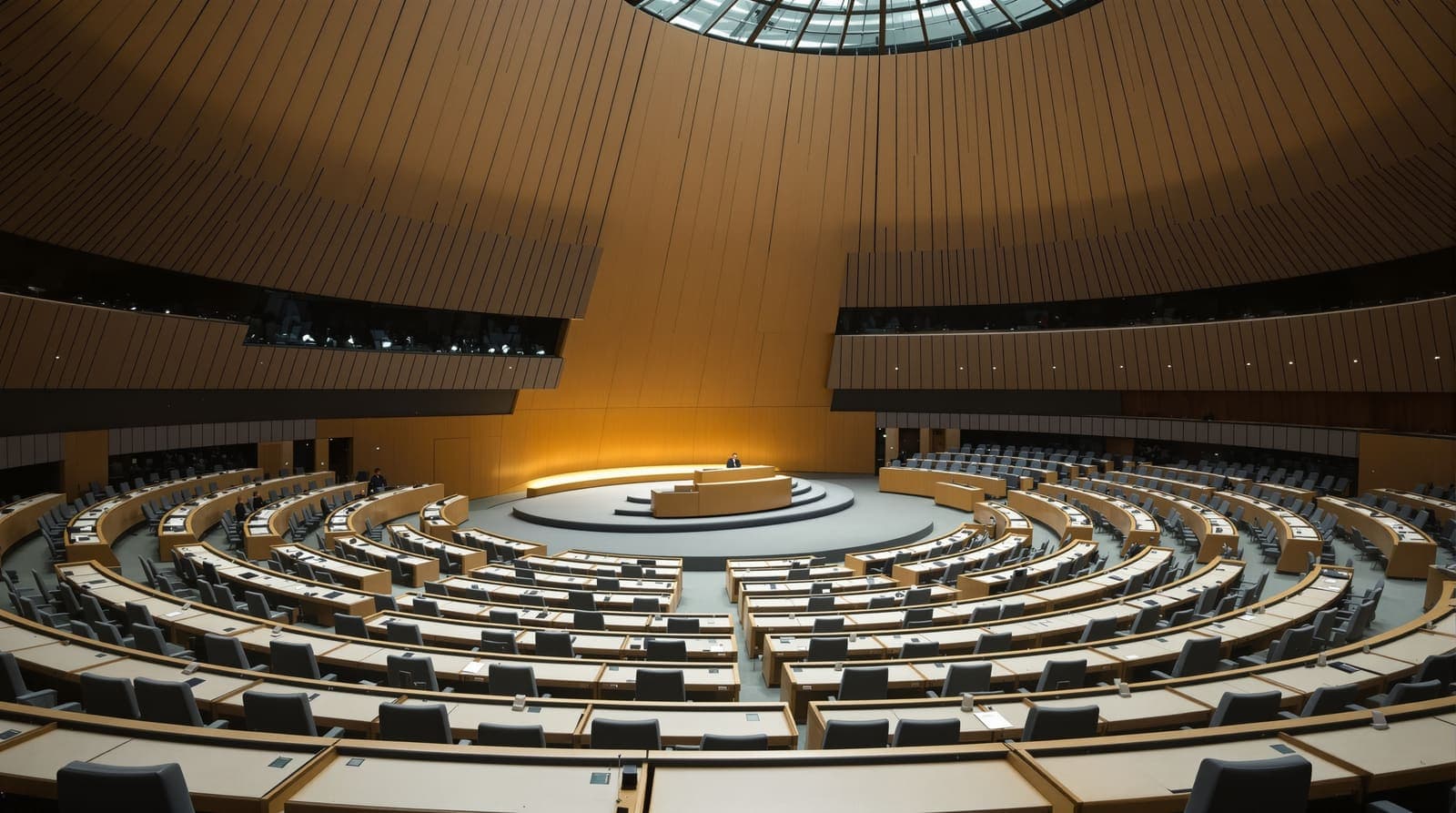
The head of the Israel Atomic Energy Commission, Moshe Edri, told the general conference of the International Atomic Energy Agency in Vienna that Iran is continuing to build infrastructure for missile production while seeking to advance a military nuclear program, and that Israel would act again if it judged its survival to be at stake. According to a statement issued by the Prime Minister's Office on behalf of the commission, Edri delivered the address as part of the general debate at the conference, heading an Israeli delegation that also included commission officials and representatives of the Ministry of Foreign Affairs.
Reporting on the address, The Jerusalem Post said the head of the atomic energy commission stated that Iran holds more than nine tons of nuclear material outside IAEA safeguards. That figure does not appear in the Israeli government's own published summary of the statement, which focuses instead on Iran's conduct toward inspectors and on the regional picture.
On the ground

Iran accused Austria of reversing its approval of an Iranian delegation to the IAEA under external pressure. Austria said Mohammed Eslami was denied entry after the UN Security Council rejected a request to exempt him from his existing travel ban.

Iran holds over nine tons of nuclear material outside of the IAEA's safeguards, accused Israel Atomic Energy Commission Director-General Moshe Edri at the agency's 70th general conference. jpost.com/middle-east/ar…
What the Israel Atomic Energy Commission is
The Israel Atomic Energy Commission, usually abbreviated IAEC, is the body responsible for Israel's nuclear affairs and reports to the Prime Minister's Office. Israel is not a party to the Nuclear Non-Proliferation Treaty and maintains a long-standing policy of ambiguity about its own capabilities, but it is a member state of the IAEA and sends a delegation to the agency's annual general conference each year. The commission's director general customarily delivers Israel's statement in the general debate.
The conference in Vienna
The IAEA is the United Nations nuclear watchdog, based in Vienna, Austria, and tasked with promoting peaceful uses of nuclear technology and with verifying, through a system of safeguards and inspections, that nuclear material in member states is not diverted to weapons. The government statement said the 70th annual general conference is running from September 15 to 18, 2026, and that Edri spoke on the opening day. Marking the agency's 70th anniversary, he congratulated the IAEA and its director general on what the statement described as seven decades of achievement, and pointed to Israeli cooperation with the agency on nuclear safety, nuclear security and peaceful applications of the technology.
The dispute over inspections in Iran
The core of the Iran section of the address, as summarised by the Prime Minister's Office, concerned safeguards. The statement referred to a resolution adopted more than a year earlier by the IAEA Board of Governors, the agency's 35-member governing body, finding Iran in non-compliance with its safeguards obligations. Edri said Iran had compounded the situation by blocking IAEA inspectors from reaching facilities that are meant to be verified under Iran's agreement with the agency, for a period of over a year, and that the Board of Governors had referred the matter to the United Nations Security Council.
He also set out what the statement called Iran's negative regional and global role, listing threats to destroy Israel, threats against neighbouring states and American forces, a drone attack on civilian nuclear facilities, and rocket and missile fire at civilian infrastructure carried out by proxies, naming Hezbollah, Hamas and the Houthis.
The language Israel used
The passage circulated most widely was the closing warning. In a Hebrew rendering published by the Israeli journalist Amit Segal, Edri is quoted saying that the radical Iranian regime continues to build infrastructure for missile production while simultaneously trying to advance its military nuclear program, and that "the State of Israel will not sit idle in light of threats to destroy it." The English text released by the Prime Minister's Office carries the same formulation, adding: "We have acted to ensure our survival in the past, and we will do it again if needed." The statement said the region and the wider world would be safer if Iran did not have a military nuclear program.
The Syria section
Edri devoted part of the address to Syria, citing an IAEA report on activity under the government of Bashar al-Assad, including what the Israeli statement called the clandestine construction of a reactor at Dair Alzour. Israel has long said it acted against that site. The commission's position, as set out in the statement, is that the agency's findings vindicate Israeli claims about a secret Syrian nuclear weapons program, and that the Assad government would otherwise possess military nuclear capabilities today.
What the reports do not say
The material does not explain the basis for the nine-ton figure reported by The Jerusalem Post: it does not say what kind of nuclear material is meant, at what level of enrichment, how the quantity was calculated, or whether the number is drawn from Israeli assessments or from IAEA reporting. Because the figure appears in one report and not in the government's published summary, it rests on that single account.
The material also contains no Iranian response, no comment from the IAEA or its director general on the Israeli statement, and no indication of what the Security Council has done since the referral described by Edri. Nothing in the reports specifies what action Israel might take, or when.
Sources and further reading
Every link below was opened and checked when this page was written. Official statements are marked as such: they are the subject's own account, not an independent one.
- Officialgov.ilgov.ilIsraeli government press release
- Reportingjpostjpost.comThe Jerusalem Post
- Reportingamitsegalt.meAmit Segal
How we checked this
The substance of the address is taken from the statement published by Israel's Prime Minister's Office on behalf of the Israel Atomic Energy Commission, with the quoted passage also circulated in Hebrew by journalist Amit Segal. The figure of more than nine tons of nuclear material outside IAEA safeguards is attributed to The Jerusalem Post alone and does not appear in the government text.
Our sourcing and corrections policy →The week from Israel, in one email
The stories that mattered, sourced and checked by the Israel.com newsroom. Free, weekly, one-click unsubscribe.
One list, unsubscribe in a click. See our privacy policy.
More in Security
All security →
Latest
- Smotrich posts AI video of judges dragged away, then hits back at critics
- Israel says it killed Hamas's Jabalia Battalion commander in Gaza strike
- Diplomatic officials say Israel is aiding Saudi Arabia with Houthi intelligence
- IDF says it killed two Hamas commanders, one who trained operatives before Oct 7
- IDF confirms rockets aimed at Israel in south Lebanon position it destroyed
- Car and tractor collide at entrance to Golan moshav, about ten hurt