Netanyahu Asks Herzog for a Pardon Without Admitting Guilt
The prime minister's application asks the president to end his corruption trial in the public interest, and split Israel's political class the moment it landed.
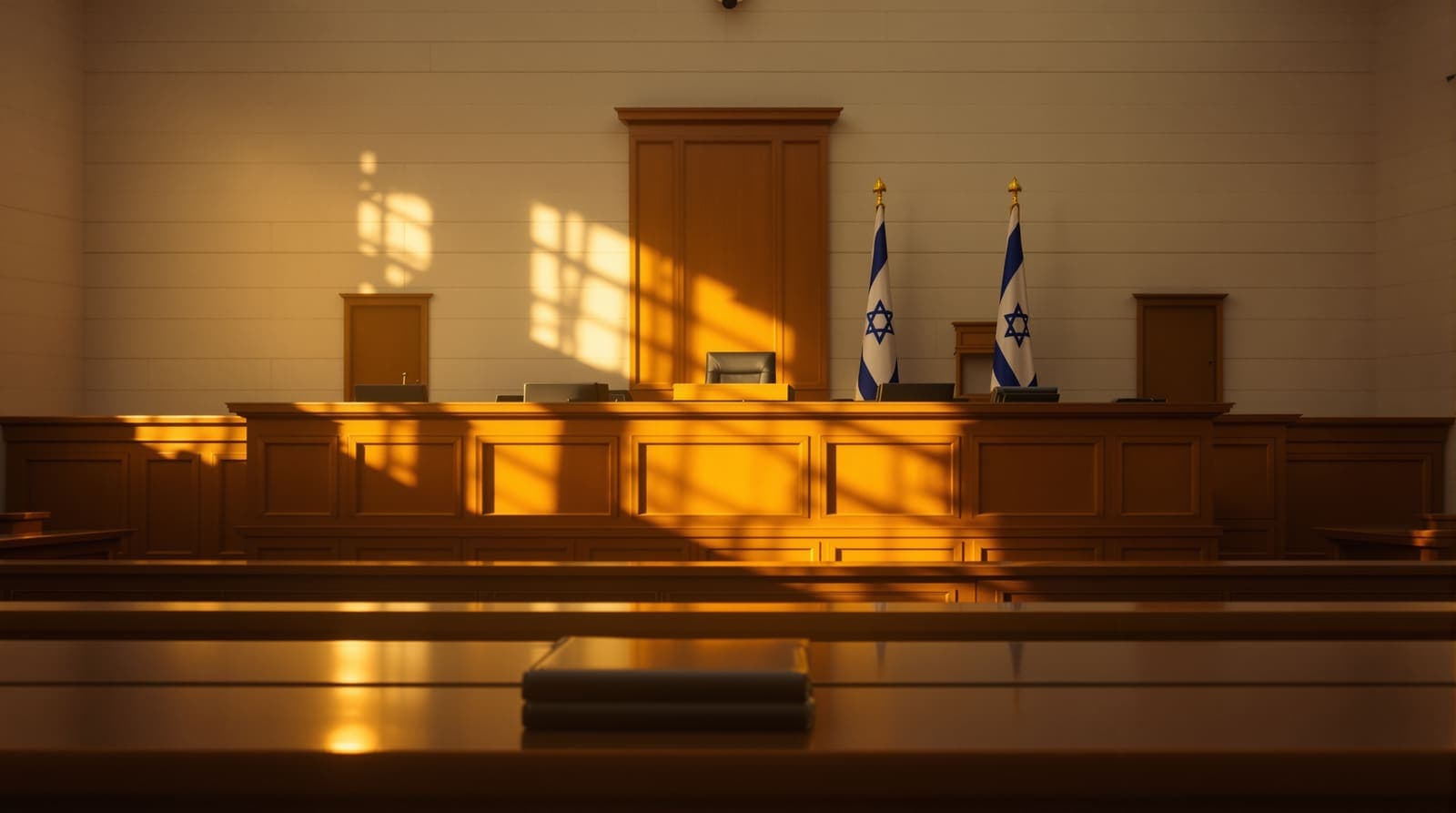
AI illustration, not a photo of the events.
Israel’s politics erupted on Sunday after Prime Minister Benjamin Netanyahu asked President Isaac Herzog for a pardon. In a signed one-page letter, Netanyahu neither admitted wrongdoing nor apologised for any alleged offence, instead invoking what he called his “broad public and ethical responsibility” for the political tensions surrounding his corruption trial.
The application ran to 111 pages: the letter signed by Netanyahu, and a second, more detailed submission signed by his lawyer, Amit Hadad. It asked Herzog to bring the trial to an end, arguing that the proceedings hampered the prime minister’s ability to lead and that closing them served the public interest. “In recent years, tensions and disputes have increased between different segments of the nation and between the various branches of the state,” Netanyahu wrote. “I am aware that the proceedings being conducted in my case have become a focal point for confrontations.” Facing charges of fraud, breach of trust and bribery, he said that despite a personal wish to continue the trial and prove his innocence, “closing down the trial will lower the flames of political disagreement” at a moment of security challenges and diplomatic opportunity.
How an Israeli presidential pardon works, and why this one is unusual
The Israeli president’s power of clemency is broad and subject to little oversight, but the convention around it is narrow. As a rule the president considers a pardon request only after all legal proceedings have ended, and pardons granted before conviction are rare and exceptional, PBS NewsHour reported. A pardon also cannot by itself stop a trial: only the attorney general can halt proceedings. Procedurally the request goes first to the Justice Ministry’s pardons department, which gathers professional opinions from the relevant authorities; those are passed to the president’s legal adviser, who prepares a further recommendation before Herzog decides, The Times of Israel reported. No admission of guilt is technically required.
The three cases
Netanyahu faces charges of fraud, accepting bribes and breach of trust arising from three separate police investigations, and denies all wrongdoing. In the case known as the Bezeq affair, he is accused of granting regulatory benefits to the telecommunications company Bezeq while serving as communications minister, in return for favourable coverage on the Walla news site from Bezeq’s majority shareholder, Shaul Elovitch, who owned it. In the Yediot affair, he is accused of advancing newspaper distribution regulations that favoured the publisher of Yediot Aharonot, Arnon Mozes, in exchange for friendlier coverage. In the gifts affair, widely regarded as the most serious, Netanyahu and his wife, Sara, are accused of accepting $200,000 in gifts from the Hollywood producer Arnon Milchan in return for help with a United States visa and tax changes that benefited him.
The reaction, along familiar lines
Senior figures in Netanyahu’s government backed the request. Defence Minister Israel Katz called it essential to national security, saying Israel faced a more complex security reality than ever before. Finance Minister Bezalel Smotrich said Netanyahu had been “persecuted for years by a corrupt judicial system that fabricated political cases against him”, and said his Religious Zionism party would keep pressing for judicial overhaul regardless of the outcome.
Israel's week in five stories, every Friday
Sourced and checked by the Israel.com newsroom, with Shabbat times. Free, one-click unsubscribe.
One list, unsubscribe in a click. See our privacy policy.
The opposition took the opposite view. Opposition Leader Yair Lapid appealed publicly to Herzog, arguing that a pardon without an admission of guilt or a complete withdrawal from political life would undermine the rule of law: “The president cannot pardon Netanyahu without accountability.” Yair Golan, chairman of the Democrats party, called the request a plain evasion of responsibility, said “only the guilty seek a pardon” and urged Netanyahu to leave public life. Avigdor Liberman of Yisrael Beytenu accused him of distracting from the economy, military operations and the dispute over conscription of ultra-Orthodox men. The Movement for Quality Government warned that a pardon granted mid-trial would be “a deadly blow to the rule of law and to the principle of equality before the law”.
The letter from Washington
The request followed an unusual intervention. United States President Donald Trump had written to Herzog urging clemency for Netanyahu; Herzog replied that no pardon could be considered unless Netanyahu first formally admitted guilt and asked for clemency himself. Netanyahu had previously ruled out seeking clemency if it meant admitting guilt, and his application contained no such admission. Jewish Insider reported that Trump’s letter described the prosecution as political and unjustified, and that Herzog’s office called it an extraordinary request carrying significant implications, which the president would consider responsibly once he had all the relevant opinions.
Next story Government
Government releases Mount Herzl speeches by Netanyahu and Herzog after heckle
The comparison Israelis reach for is Ehud Olmert, who stepped down as prime minister in 2008 ahead of his own corruption indictment. Olmert was eventually convicted and served two-thirds of a 27-month prison sentence.
What is still unclear
Neither Netanyahu’s letter nor the surrounding statements set out what he would do if the pardon were granted: he did not offer to leave office or politics. There was no timetable for a decision, and no indication of what position the attorney general (the only official who can actually stop the trial) would take. The application also did not address what a pardon would mean for the co-defendants in the same cases.
Read next
All courts & crime →
File photo
Government
Netanyahu, Herzog and US envoy honour passengers who subdued flydubai pilot
File photo
Government
Herzog visits Budapest, meets President Baka as Hungary vows stable ties
File photo
Government
Herzog meets Aliyev and Bahrain's foreign minister at Baku summit
Illustration
Courts & Crime
Man of about 25 shot dead in Yafia, near Nazareth, during a taxi ride
Sources and further reading
Every link below was opened and checked when this page was written. Official statements are marked as such: they are the subject's own account, not an independent one.
- ReportingThe Times of Israeltimesofisrael.comNetanyahu requests presidential pardon in corruption trial; doesn't admit guilt
The request itself and the route it takes through the Justice Ministry and president's office
- ReportingPBS NewsHourpbs.orgWhat to know about Netanyahu's request for a presidential pardon in corruption trial
Scope of the presidential pardon power and why a pre-conviction pardon is exceptional
- ReportingJewish Insiderjewishinsider.comNetanyahu asks Herzog for pardon amid ongoing corruption trial
Trump's letter to Herzog and the president's office's response
How we checked this
The contents of the pardon application, the quotations from Netanyahu and from ministers and opposition figures, and the descriptions of the three cases are as set out in the report of 30 November 2025. The mechanics of the Israeli pardon power and the handling of Trump's letter were checked against The Times of Israel, PBS NewsHour and Jewish Insider. Netanyahu denies all wrongdoing and has not been convicted.
Our sourcing and corrections policy →The week from Israel, in one email
The stories that mattered, sourced and checked by the Israel.com newsroom. Free, weekly, one-click unsubscribe.
One list, unsubscribe in a click. See our privacy policy.
Latest
- Trump urges Israelis to 'vote for Bibi' in new post a day before the election
- IDF fires interceptor at suspected aerial target over southern Lebanon
- Soldiers killed near Hebron named and buried as army operation goes on
- Truck driver arrested after fatal crash on Route 465 near Aboud
- IDF says about 220,000 dunams of West Bank olives harvested so far
- Troops detain Palestinian suspected of planning imminent attack in Binyamin area