Kabbalist Rabbi Amos Gueta Killed in His Netanya Study Hall
The 75-year-old was stabbed at dawn inside his own study hall in Netanya; a suspect in his twenties was arrested about two hours later.
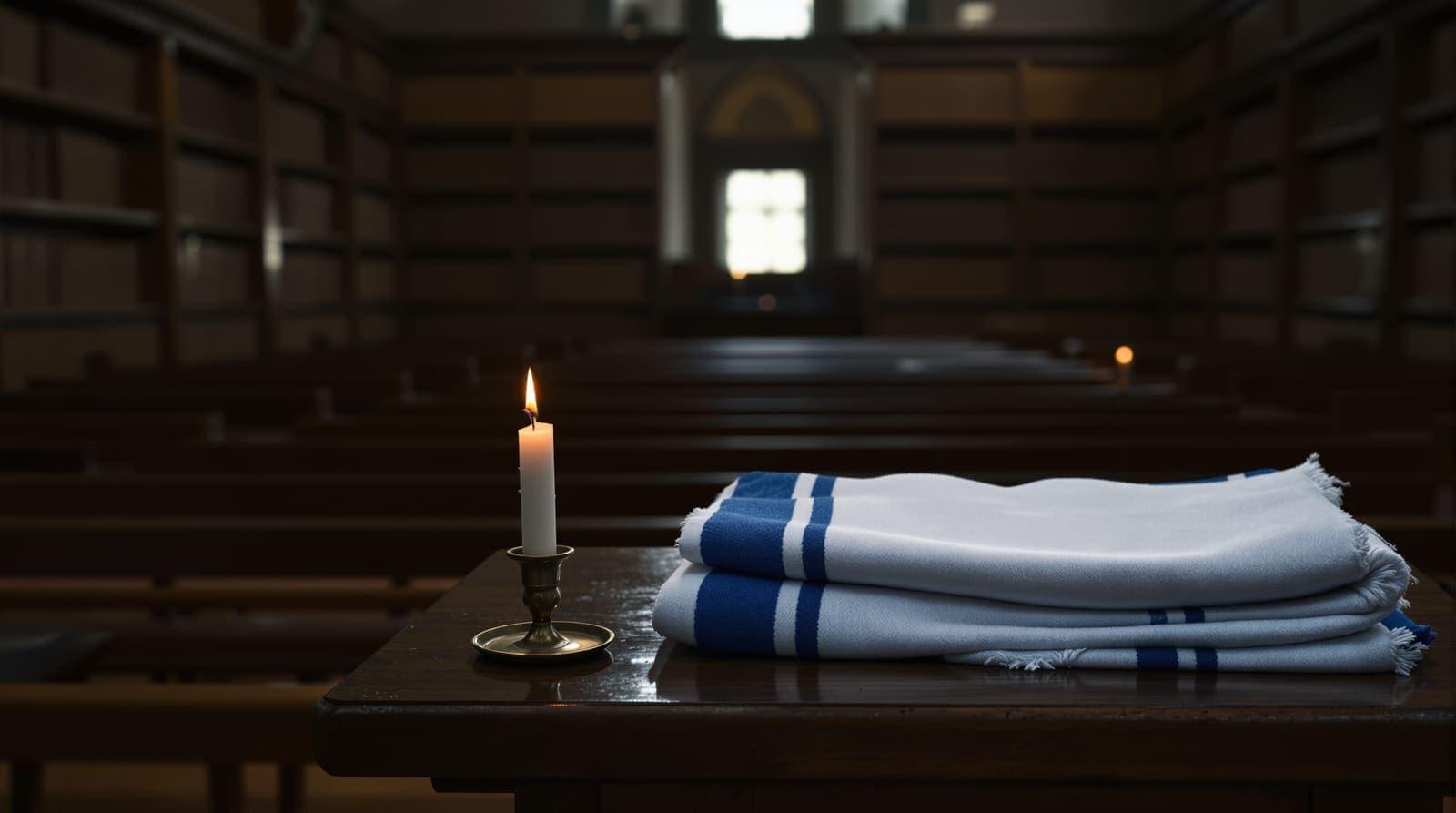
AI illustration, not a photo of the events.
Rabbi Amos Gueta, a Kabbalist and spiritual leader in the coastal city of Netanya, was stabbed to death early on Wednesday inside his religious study hall on Bar Yochai Street. Magen David Adom, Israel's national ambulance service, said its paramedics were called at 5.45am and found Gueta, 75, with multiple stab wounds. He was taken to Laniado Hospital in Netanya while resuscitation was attempted, and was pronounced dead soon after arrival. A suspect in his twenties was arrested about two hours later after a police manhunt.
According to initial findings reported at the time, the man had prayed alongside Gueta before drawing a knife and stabbing him several times. The rabbi's aide, who tried to intervene, was wounded. Police said they were examining whether the suspect had a history of mental health problems. Officers from the Sharon District were preparing arrangements for a funeral procession expected to draw thousands. The same study hall was the scene of a fatal stabbing in 2009, when one student killed another.
A rabbi at the centre of a community that no longer has a country
Gueta was born in Libya in 1951 and came to Israel as a young man. He studied conventional medicine for several years before leaving it for religious study, and later founded and led a community study centre in Netanya named for a historic Libyan Jewish sage. He became a central figure among Jews of North African descent and among followers of Jewish mysticism, a mekubal, or Kabbalist, known for combining intensive study with public outreach. His community said he regularly received people seeking counsel, including the homeless, the poor and those in emotional or mental distress.
The community he served in Israel is what remains of one that was destroyed elsewhere. Libya had some 38,000 Jews in 1948; a pogrom in Tripoli in November 1945 killed more than 140 of them, riots in June 1948 killed a dozen more and destroyed hundreds of homes, and after Libyan independence in 1951 and again after the 1967 war almost all who were left departed, according to the Jewish Virtual Library. Reporting his death, JNS noted that the Shas party described Gueta as the rabbi of Libyan Jewry.
Why the argument over the autopsy was not a technicality
Dozens of Gueta's followers gathered at Laniado Hospital and protested at plans to move his body to the Abu Kabir Institute of Forensic Medicine in Tel Aviv for examination. Authorities then took the unusual step of sending a forensic team to the hospital to carry out the examination on site.
Israel's week in five stories, every Friday
Sourced and checked by the Israel.com newsroom, with Shabbat times. Free, one-click unsubscribe.
One list, unsubscribe in a click. See our privacy policy.
That objection reflects a long-running tension in Israel between criminal investigation and religious practice, which holds that a body should be buried whole and promptly. The institute at the centre of it, formally the L. Greenberg National Institute of Forensic Medicine, was established in the 1950s and performs roughly 2,000 autopsies a year; Wikipedia also records a series of scandals in its history, including a former director's admission in 2005 that organs and tissue had been removed from bodies without authorisation, a memory that still shapes how bereaved families react to the word Abu Kabir.
A killing in a month of killings
The death was one of three reported in Israel that morning, alongside shootings in Shfaram and Yagur, and the police commissioner convened senior commanders on the campaign against organised crime and violence in Arab society, The Jerusalem Post reported on 1 July 2026. The wider backdrop is a homicide rate that has climbed steeply: 74 killings were recorded in Arab communities in 2018 and 252 in 2025, The Media Line reported in February 2026. Nothing in the police account connects the Netanya case to that violence; the two simply share a calendar.
What is still unclear
Police did not give a motive, name the suspect, or describe any relationship between him and the rabbi beyond his presence at prayers. The condition of the wounded aide was not stated. Whether the suspect has a documented psychiatric history was, at the time of the statement, still being checked rather than established.
More on Netanya: Places and businesses in Netanya · Shabbat times in Netanya
Read next
All courts & crime →
Illustration
Elections
Rabbi Abergil's Ahi party quits the Knesset race and backs Likud

Illustration
Religion
Haredi leader Rabbi Dov Lando, 96, faces backlash over recorded attack on Zionism
Illustration
Courts & Crime
Man of about 25 shot dead in Yafia, near Nazareth, during a taxi ride
Courts & Crime
More than 400,000 protest across France as Paris clashes continue
Sources and further reading
Every link below was opened and checked when this page was written. Official statements are marked as such: they are the subject's own account, not an independent one.
- ReportingJNSjns.org'Rabbi of Libyan Jewry' stabbed to death in Netanya
Independent report of the killing and of how Shas described the rabbi
- ReportingThe Jerusalem Postjpost.comPolice arrest suspect in Netanya rabbi's murder as at least three killings recorded in one day
The day's other killings and the police commissioner's response
- DataThe Media Linethemedialine.org35 Killings in 36 Days Bring Israel's Arab Crime Crisis Into the National Arena
Homicide totals for 2018, 2022 and 2025 and comparative rates
- ReferenceJewish Virtual Libraryjewishvirtuallibrary.orgThe Jews of Libya
History of the Libyan Jewish community and its departure for Israel
- ReferenceWikipediaen.wikipedia.orgAbu Kabir Forensic Institute
The institute's official name, caseload and past controversies
How we checked this
The account of the killing, the arrest, the hospital protest and the rabbi's biography is taken from the original report of 1 July 2026 and nothing has been added to it; the killing was independently reported the same day by JNS and The Jerusalem Post. Background on Libyan Jewry, on the Abu Kabir forensic institute and on Israel's homicide figures comes from the Jewish Virtual Library, Wikipedia and The Media Line.
Our sourcing and corrections policy →The week from Israel, in one email
The stories that mattered, sourced and checked by the Israel.com newsroom. Free, weekly, one-click unsubscribe.
One list, unsubscribe in a click. See our privacy policy.
Latest
- Trump urges Israelis to 'vote for Bibi' in new post a day before the election
- IDF fires interceptor at suspected aerial target over southern Lebanon
- Soldiers killed near Hebron named and buried as army operation goes on
- Truck driver arrested after fatal crash on Route 465 near Aboud
- IDF says about 220,000 dunams of West Bank olives harvested so far
- Troops detain Palestinian suspected of planning imminent attack in Binyamin area