Beach · Haifa
Dado Beach
Haifa's busiest free beach was built by the municipality and opened in the summer of 1979, and it is named for David Elazar, the chief of staff the Agranat Commission blamed for the Yom Kippur War.
Gal Ben-David / CC BY-SA 4.0 · Wikimedia Commons
Opened
August 1979
built with Haifa municipality money, at a reported cost of 10 million lira
Admission
Free
a municipal beach, with free car parks behind the sand
Lifeguard towers
Five
spread along the joined Dado and Zamir strip, per the municipality
Promenade
about 2 km
lawns, an amphitheatre, a dance plaza and a paddling pool, 2026
In short
- How long to give it
- about 2 hours for the promenade and a swim, or a half day with children
- Lifeguard cover, bathing season
- 08:00 to 18:00
- Entry to the beach
- Free
חוף דדו
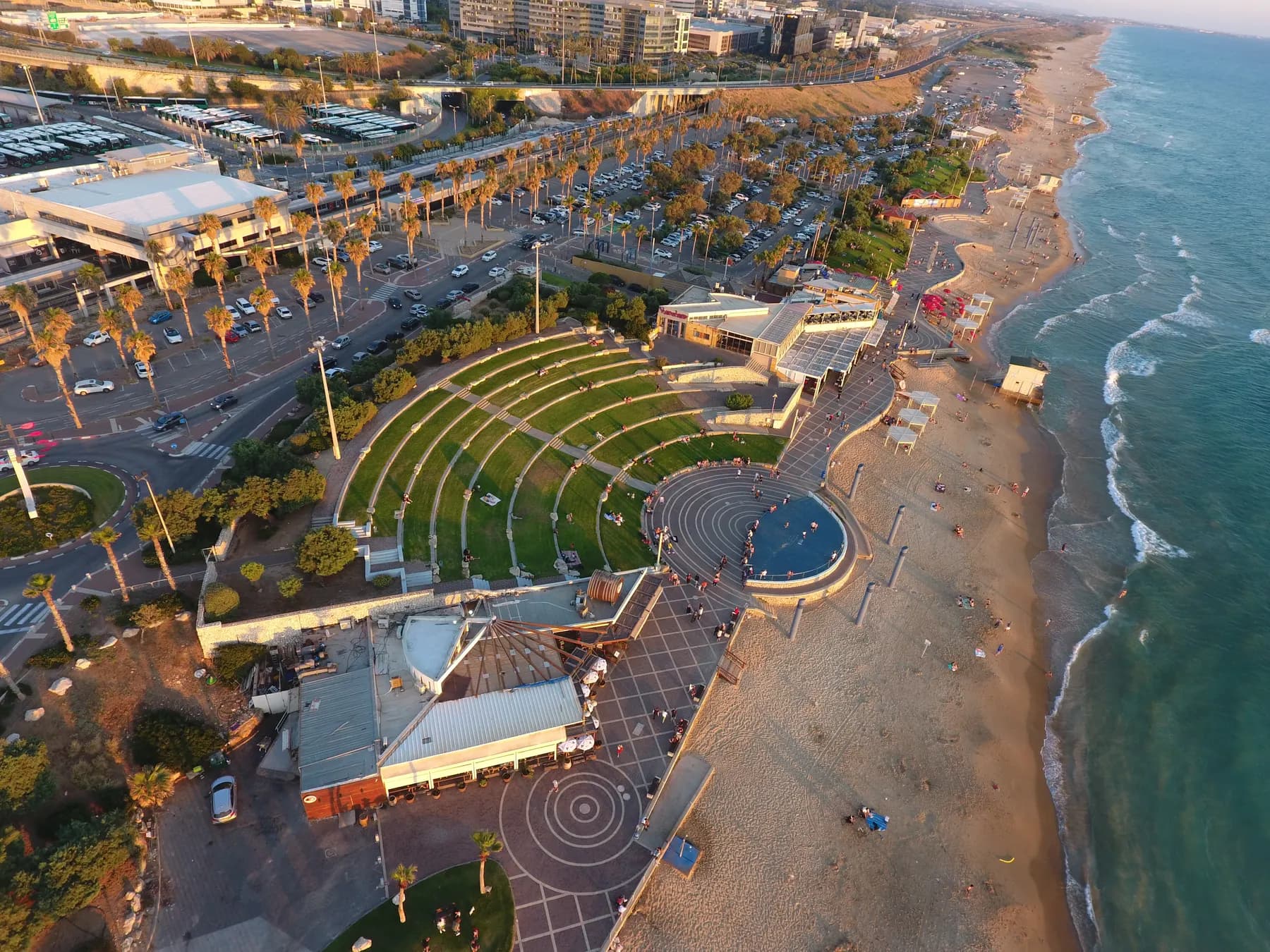
Dado Beach is the main free municipal bathing beach on Haifa's western shore, a run of sand and lawn between the Hof HaCarmel railway station in the south and the Leonardo Plaza hotel in the north. The Haifa municipality runs it, publishes its hours, and treats it as one site with Zamir Beach next door: a single strip with a promenade of about two kilometres along the back of it and five lifeguard towers numbered along the front. Entry costs nothing and so does the parking.
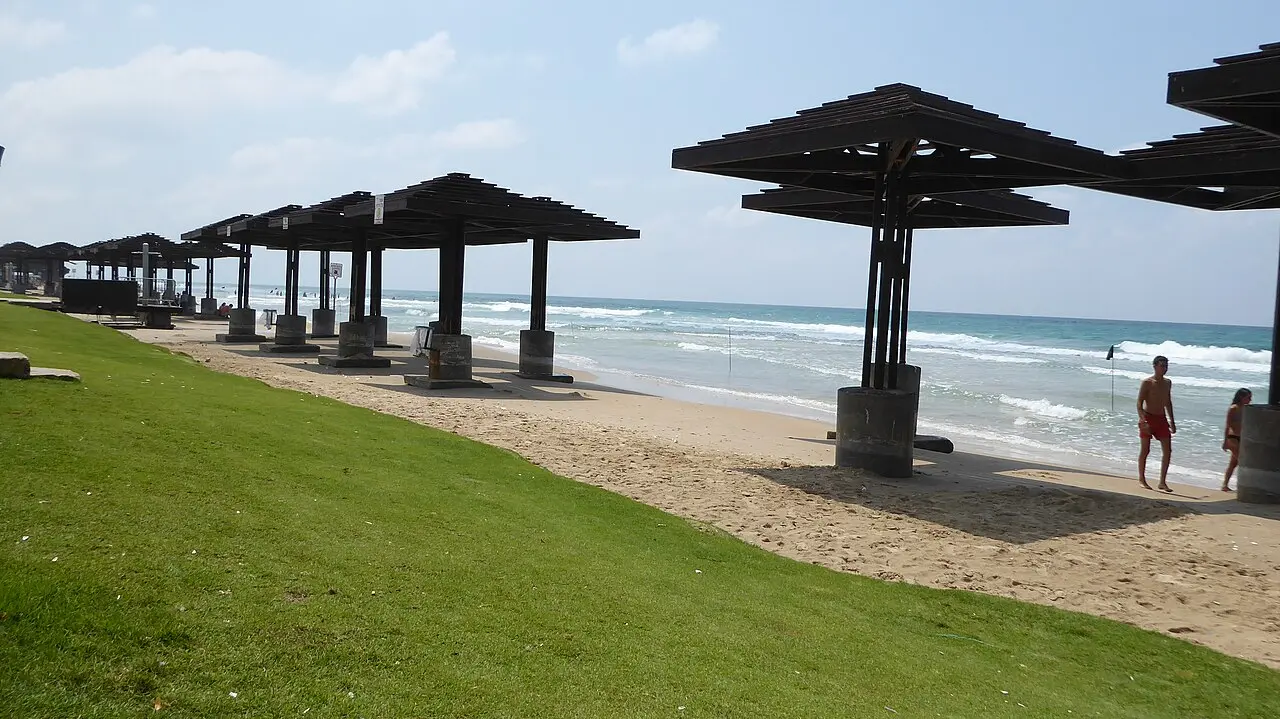
It is an engineered beach rather than a found one. Stone breakwaters lie offshore, and the water they shelter behaves less like open Mediterranean and more like a series of shallow pools, which is the reason families with small children come here rather than to the exposed shore further north. Behind the sand the municipality has put a paddling pool, an amphitheatre, a paved dance plaza, volleyball courts, outdoor gym equipment and long stretches of watered grass. Very little about the place is accidental.
The name commemorates Lieutenant General David Elazar, known throughout his career as Dado, who was chief of staff of the Israel Defense Forces during the 1973 war and resigned in April 1974 after the Agranat Commission's interim report held him personally responsible for the army's readiness. He died two years later, at fifty, of a heart attack while swimming. The beach opened three years after that, in the summer of 1979, and Haifa has been using it ever since without much thought for whom it is named.
On the ground
A city park that happens to end in the sea
The first thing to understand about Dado is that the sand is only part of it. The municipality's own description of the site is mostly a list of things that are not beach: cafes and restaurants, benches, lawns, seating areas, a dance plaza, an amphitheatre, sports and fitness areas, lockers and toilets, and a shallow pool for toddlers. The promenade running behind all of it is about two kilometres long, and on a summer evening it carries more walkers, runners and cyclists than the water carries swimmers.
The strip is continuous with Zamir Beach to the south and is signed and administered as one place, Dado Zamir. Numbered lifeguard towers are how anyone navigates it. The municipality publishes five towers along the joined beach; the 2026 Blue Flag list names Zamir 1, Zamir 2 and Zamir 3 at the southern end and Dado 4 and Dado 5 at the northern, which is the numbering used on the ground. TheMarker's 2026 guide to Haifa's beaches counts six towers rather than five, and the discrepancy is not resolved by anything either publisher prints.
The amphitheatre sits at the centre of Dado and marks the boundary between the main beach and the southern section, and it is used through the summer for children's and family programming put on by the city, alongside private events. The paved plaza is a fixed weekend feature: Israeli folk dancing, in the open, in numbers, which is a thing Haifa does at this beach and not at its others.
For all the infrastructure, the setting is plain. The shore faces west into open sea, the Carmel ridge rises behind the coast road, and the industrial bay and the port are round the headland and out of sight. There is no ruin here, no gate, and nothing to queue for.
- Five numbered lifeguard towers along the joined Dado and Zamir strip
- Paddling pool for toddlers, freshwater, at the Zamir end
- Amphitheatre at the centre of Dado, used for summer programming
- Paved dance plaza, used for folk dancing at weekends
- Beach volleyball courts and outdoor gym equipment along the promenade
- Toilets, showers and changing rooms, most of them wheelchair accessible
Chenspec / CC BY-SA 4.0 · Wikimedia Commons
1979
The beach the city paid for, and the general it is named after
Haifa's western shore was in private hands for most of the twentieth century. The stretch immediately north of here was Khayat Beach, laid out under the British Mandate by the Khayat family, who owned the land and ran it as a managed beach with changing rooms and a restaurant; entry was charged, which the mayor Abba Hushi defended in 1951 on the grounds that the fees paid for cleaning, maintenance and lifeguards. In 1966 the operating company fenced the compound and closed the walk along the shore to the beaches on either side.
Dado was the municipal answer to that. It was built immediately to the south with Haifa municipality funding and opened in the summer of 1979. Maariv reported in July that year that the works were still being finished and that ten million lira had gone into them, and reported the inauguration on 15 August 1979. The Hebrew Wikipedia account of Khayat Beach carries both references, and they are the clearest dating of the beach available in print.
The landscape architecture practice Miller Blum, founded in 1961 by Zvi Miller, who had run Haifa's parks department under Abba Hushi before going into private work, lists Dado Beach among its projects alongside the Louis Promenade on the Carmel ridge. Neither the practice nor the city publishes a design date for the beach, and the promenade in its present form is later than the beach itself.
David Elazar was born in Sarajevo in 1925 and was the ninth chief of staff of the Israel Defense Forces, from January 1972. The Agranat Commission's interim report of 1 April 1974 found he bore personal responsibility for the assessment of the situation and the readiness of the army before the Yom Kippur War, and he resigned two days later, disputing the finding on the ground that the commission had recommended nothing against the political level. He was chairman of the Zim shipping company when he died on 15 April 1976, aged fifty, of a heart attack while swimming in a pool in Tel Aviv. More than ten thousand people followed his coffin at Mount Herzl.
Engineering
Why the water is flat, and where the sand keeps going
The calm that Dado is known for is manufactured. Stone breakwaters lie offshore along this stretch, one of them separating Dado from Zamir, and they cut the swell down to something closer to a lagoon. In practice the water inshore of them is shallow, slow and warm, which is why this is the beach Haifa families take children to, and why anyone looking for surf goes north to Bat Galim instead. Neither the municipality nor iNature, which describes the barrier, publishes a construction date for the breakwaters, and no reliable published date was found for this page.
The other half of the engineering story is less comfortable. The unbuilt land immediately north of Dado is the Carmel Beach towers site, a development that reclaimed ground from the sea and built its own breakwater. That structure interrupted the sand moving along the coast, and the recognised consequence was the loss of sand from Dado Beach to the south of it. By 2008 the developer's proposal for fixing it was to move about 500,000 cubic metres of sand dredged from deepening works at the port and use it to rebuild and widen the shore, a plan that would also have pushed the water line far enough out to satisfy the hundred-metre building setback and unlock further towers.
It did not happen on those terms. The Society for the Protection of Nature opposed the widening on the grounds that sand added in one place is taken from another, and in February 2019 the appeals subcommittee of the National Planning and Building Council finally rejected the scheme to reclaim more sea for the project. Two of the planned towers stand; the rest do not. In December 2022 the compound changed hands, sold by Yitzhak Tshuva to the businessman Adi Tzim.
What this means for a visitor is nothing dramatic and worth knowing anyway. The beach in front of the towers is a made shoreline in the middle of an argument that has run for decades, and the width of the sand at Dado is a function of structures put in the water for other reasons.
shani ofer / CC BY 2.5 · Wikimedia Commons
Access
The rare Israeli beach you can reach by train
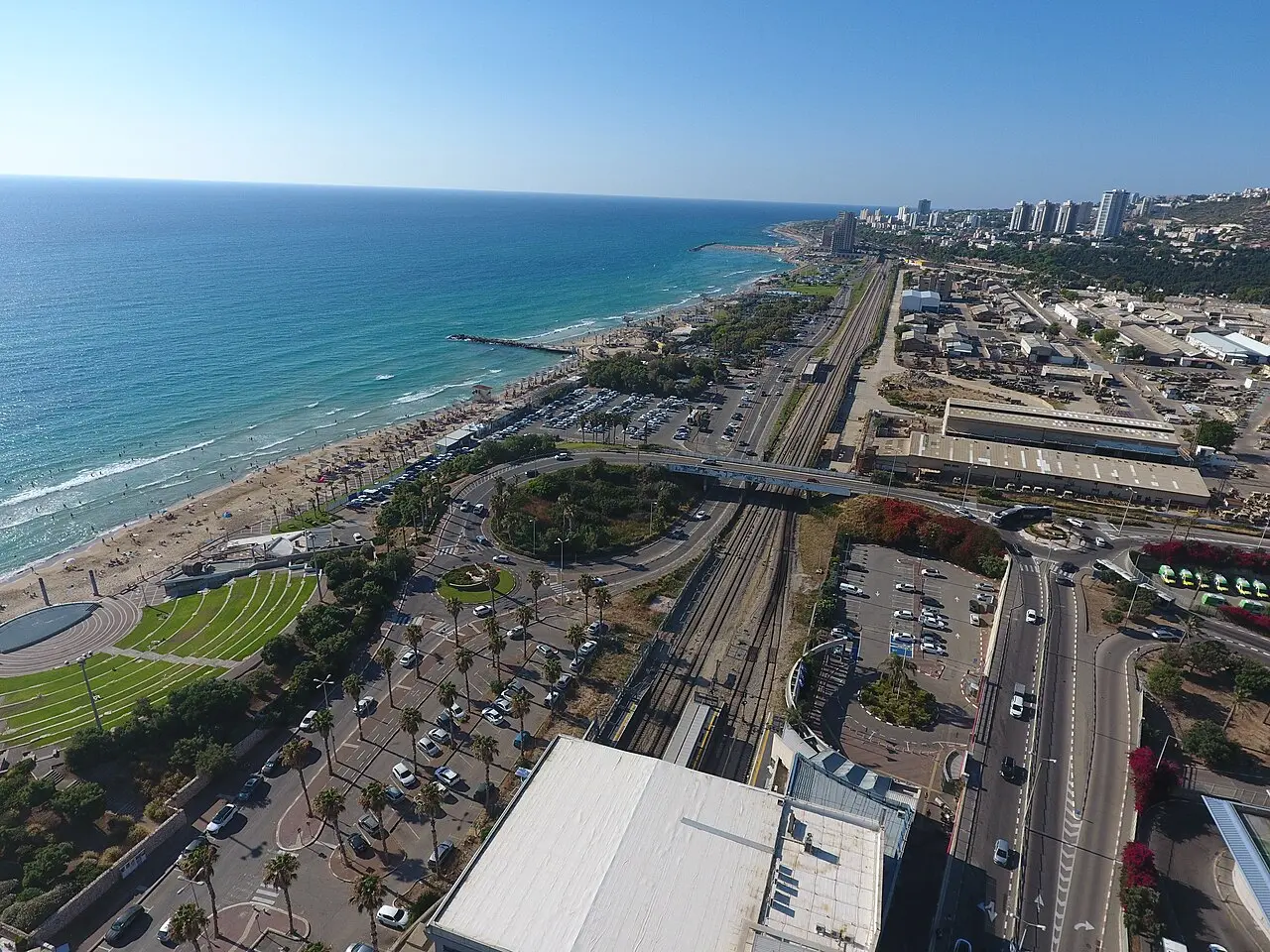
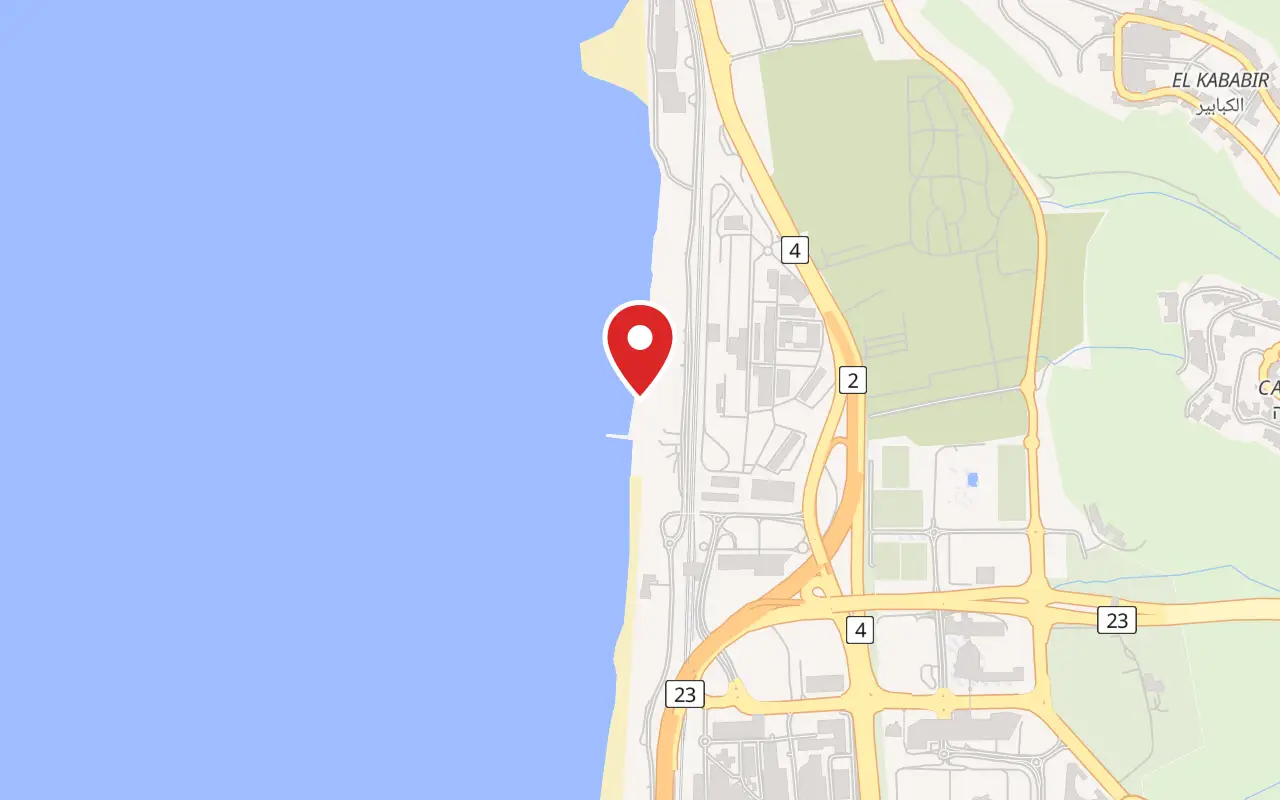
Hof HaCarmel railway station stands about 150 metres from the southern end of the strip, and the Hof HaCarmel bus terminal is immediately east of the station with an underground passage running through to the shore. That combination is unusual: this is a Mediterranean beach that a traveller from Tel Aviv or Akko can reach on a single train and a five-minute walk, with no car, no taxi and no bus connection at the far end.
Drivers have large free car parks behind the sand, with marked disabled bays. The pressure point is the southern car park nearest the railway station, which fills with commuters during the working week; on a summer weekend the northern lots are the better bet. Coming off the Carmel ridge, the approach is by Andrey Sakharov Street; coming up the coast road, by Meir Zorea Street.
The beach is flat, at sea level, and there is no climb, no steps and no path to walk in from a distant car park. The municipality publishes accessible parking, accessible toilets and showers, a ramped entry onto the sand and a beach wheelchair that allows a user to get into the water. Its own page places that chair at tower 3; TheMarker's guide describes the accessible kit at the northern station. Either way there is one such setup on the strip rather than one at every tower, so it is worth confirming which tower has it on the day.
Gal Ben-David / CC BY-SA 4.0 · Wikimedia Commons
Season
Lifeguard hours, blue flags and the jellyfish month
The municipality publishes lifeguard cover at its declared beaches from 08:00 to 18:00 through the bathing season, extended to 19:00 in July and August. At Dado one tower, number 3, stays staffed through the winter, from November to April, from 08:00 to 15:30. Outside those hours the sand is open and nobody is watching the water, and the city states plainly that swimming without lifeguard supervision is prohibited and dangerous.
Haifa has roughly 17 kilometres of coast inside the city boundary, of which about 2.8 kilometres are declared and regulated bathing beach. Water quality on those beaches is sampled weekly during the season and published by the Health Ministry, and the city has been putting the results forward for Blue Flag certification, the international mark administered in Israel by EcoOcean for the Foundation for Environmental Education. Haifa's own page records twelve blue flags recommended to the international committee for its beaches; the 2026 national list, which covered 62 beaches and three marinas across the country, includes Zamir 1, 2 and 3 and Dado 4 and 5 among them.
The seasonal hazard here is not surf, it is jellyfish. Swarms of the nomad jellyfish, Rhopilema nomadica, arrive along the Israeli coast around the summer solstice and thicken from there, and the Haifa area is regularly among the places reporting moderate to high concentrations. The monitoring is done by the University of Haifa's applied marine ecology laboratory, which runs a public reporting site, so it is possible to check the state of the water before setting out in late June and July rather than discovering it at knee depth.
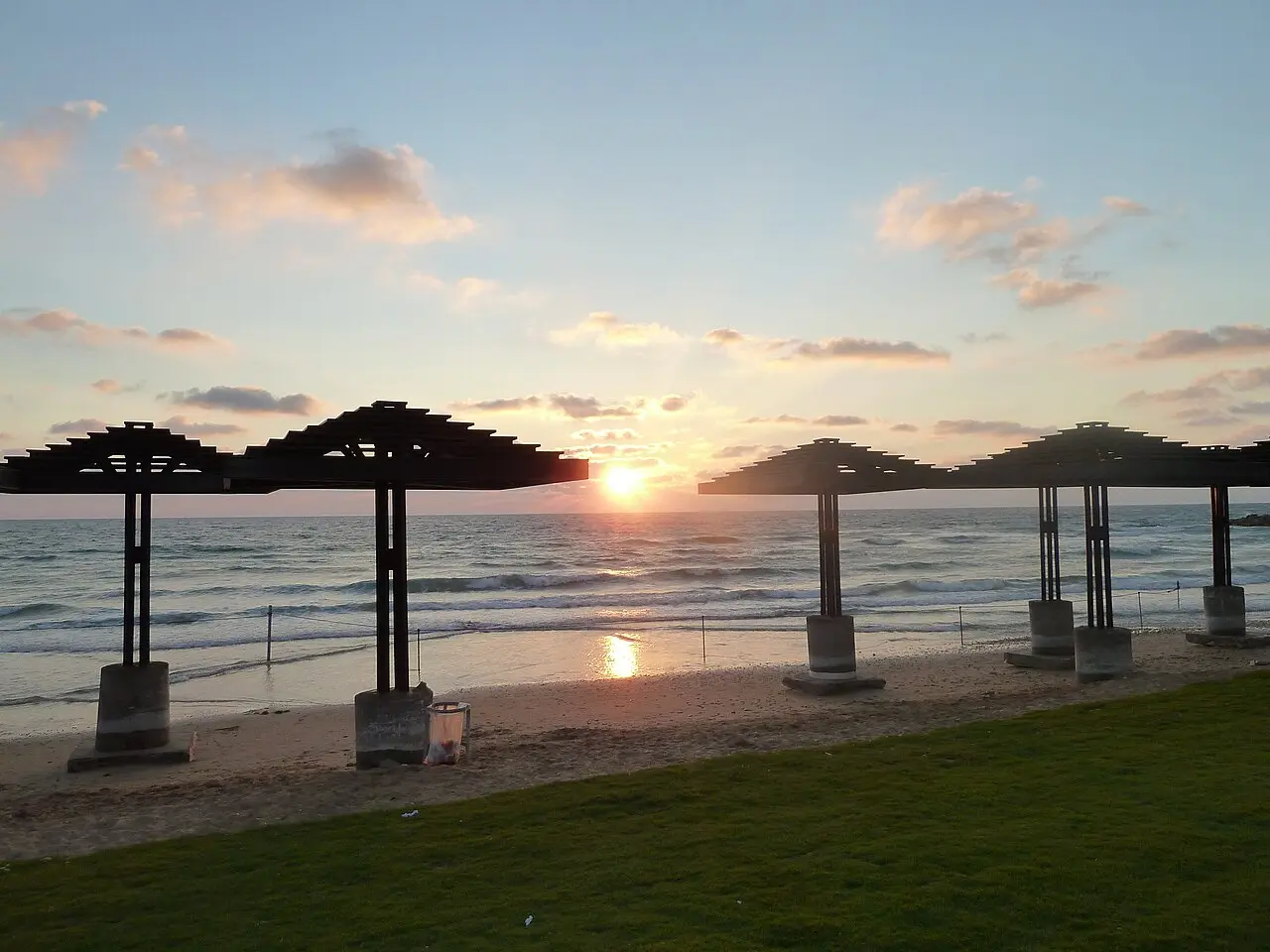
Winter is the season nobody writes about and it is arguably the better one. The promenade is designed for walking, the lawns stay green, the cafes stay open, and the shore faces due west, which puts the sunset at the end of the sand rather than behind a headland.
deror_avi / CC BY-SA 3.0 · Wikimedia Commons
What to look for
Things not to walk past at Dado Beach
The details that repay knowing about before you are standing in front of them.
The lagoon inshore of the breakwaters
The stone barriers offshore flatten the swell into shallow, slow water, which is the single reason this beach is the one Haifa families with small children use. One of the breakwaters is what physically separates Dado from Zamir.
The dance plaza at weekends
The paved circle on the promenade is used for open-air Israeli folk dancing at weekends, in numbers. It is the most distinctive thing that happens on this beach and it costs nothing to stand and watch.
The amphitheatre at the centre of Dado
It marks the boundary between the main beach and the southern section, and the municipality programmes children's and family events in it through the summer alongside private hires.
The toddlers' paddling pool
A shallow freshwater pool set behind the sand towards the Zamir end, separate from the sea entirely. It is the reason a lot of parents choose this strip over the open shore further north.
Tower 3 in January
One lifeguard tower on the strip stays staffed from November to April, 08:00 to 15:30, which makes this one of the few places on the northern coast where winter swimming is supervised rather than merely tolerated.
The walk north towards the towers
The promenade runs north past the Carmel Beach towers site, two buildings out of a scheme that was cut down by the courts and finally refused more reclaimed sea in 2019. The made shoreline in front of them is the argument itself, in sand.
The long view
Dado Beach, in order
1931
The Khayat family opens a managed beach on the shore immediately north of the future Dado, with changing rooms, a restaurant and an entry charge.
1966
The company running Khayat Beach fences the compound and blocks the walk along the shore to the beaches on either side of it.
15 April 1976
David Elazar, chief of staff during the Yom Kippur War and by then chairman of Zim, dies of a heart attack while swimming, aged fifty.
July 1979
Maariv reports that work on the new municipal beach is still being completed and that ten million lira have gone into it.
15 August 1979
Dado Beach is inaugurated, the first free municipal bathing beach on this part of the Haifa shore.
2001
Globes reports the Meridian hotel, later Leonardo Plaza Haifa, opening that June at the northern end of the strip. A district court ruling stops the rest of the Carmel Beach towers scheme.
September 2008
A plan surfaces to move about 500,000 cubic metres of dredged sand onto the shore, repairing the sand lost from Dado and widening the beach enough to unlock more towers.
February 2019
The appeals subcommittee of the National Planning and Building Council rejects the plan to reclaim further sea for the project.
December 2022
Yitzhak Tshuva sells the Carmel Beach towers compound to the businessman Adi Tzim.
May 2026
Zamir 1, 2 and 3 and Dado 4 and 5 appear on the national Blue Flag list, one of 62 beaches and three marinas certified for the season.
Practical
Visiting Dado Beach
Where
Dado Zamir Beach, between the Hof HaCarmel railway station and the Leonardo Plaza hotel, western shore of Haifa
What ticket you need
Dado is not a separate site with its own gate. It is the northern half of a single municipal strip signed as Dado Zamir, which the city administers, staffs and certifies as one beach with numbered towers running from Zamir 1 in the south to Dado 5 in the north. Directions, lifeguard hours and Blue Flag listings all use those tower numbers rather than the two names.
Opening hours
Admission
Access
Flat throughout, at sea level, with no climb, no steps and no long approach from the car park, which makes this the most straightforwardly accessible site in Haifa. The municipality publishes accessible parking, accessible toilets and showers, lockers, a ramped entry onto the sand and a beach wheelchair that allows a user to get into the water. There is one such setup on the strip rather than one per tower: the city's own page puts it at tower 3, while TheMarker's 2026 guide describes it at the northern station, so confirm on arrival. Loose dry sand between the promenade and the water line is still loose dry sand, and an unassisted manual chair will not cross it away from the ramp.
On site
- Five lifeguard towers
- Toilets and showers
- Changing rooms
- Lockers
- Toddlers' paddling pool
- Amphitheatre
- Dance plaza
- Beach volleyball
- Outdoor gym equipment
- Lawns and shade shelters
- Cafes and restaurants
- Free car parks
- Accessible entry and beach wheelchair
Booking
Nothing here is ticketed or booked. The constraint is parking rather than capacity: the southern car park nearest the railway station fills with commuters on weekdays.
Hours and prices are given as the operator publishes them and change without much notice, particularly around Shabbat and the festivals. Check the operator's own page before you travel for this.
Official page at haifa.muni.il →What people wish they had known
- Come by train. Hof HaCarmel station is about 150 metres from the southern end of the beach with an underground passage through from the bus terminal, and almost every visitor drives instead and then hunts for a space.
- If you are driving on a weekday, skip the southern car park by the station. It fills with commuters rather than with beachgoers, and the lots further north are usually open.
- Check the tower number before agreeing to meet someone. The strip is signed as one beach with towers running from Zamir 1 in the south to Dado 5 in the north, and 'Dado Beach' on its own covers close to a kilometre of sand.
- Do not assume a lifeguard in the water hours. Cover runs 08:00 to 18:00 in season and to 19:00 in July and August; outside that the sand is open, unsupervised, and the municipality is explicit that swimming then is prohibited.
- Look up the jellyfish before a late June or July swim. The nomad jellyfish arrives around the solstice, the Haifa area is regularly among the worst affected, and the University of Haifa laboratory that monitors it publishes reports the public can check.
- Winter is not a write-off here. One tower stays staffed from November to April, the promenade and the lawns are the point rather than the water, and the shore faces due west for the sunset.
The figures
Dado Beach by the numbers
Each figure carries the year it belongs to and links the source it came from.
| Measure | Figure | As of | Source |
|---|---|---|---|
| Promenade length | about 2 km | 2026 | haifa.muni.il |
| Lifeguard towers on the Dado Zamir strip | 5 | 2026 | haifa.muni.il |
| Coastline inside the Haifa city boundary | about 17 km | 2026 | haifa.muni.il |
| Of that, declared and regulated bathing beach | about 2.8 km | 2026 | haifa.muni.il |
| Blue flags recommended for Haifa's beaches | 12 | 2026 | haifa.muni.il |
| Blue Flag beaches nationally | 62 beaches and 3 marinas | 2026 | travel.walla.co.il |
| Reported cost of building the beach | 10 million lira | 1979 | he.wikipedia.org |
| Dredged sand proposed for rebuilding the shore | about 500,000 cubic metres | 2008 | ynet.co.il |
While you are here
The rest of Haifa
Everything else in this destination with a page of its own.
Orenshani7 / CC BY-SA 3.0 · Wikimedia Commons
Activity
Haifa Cable Car
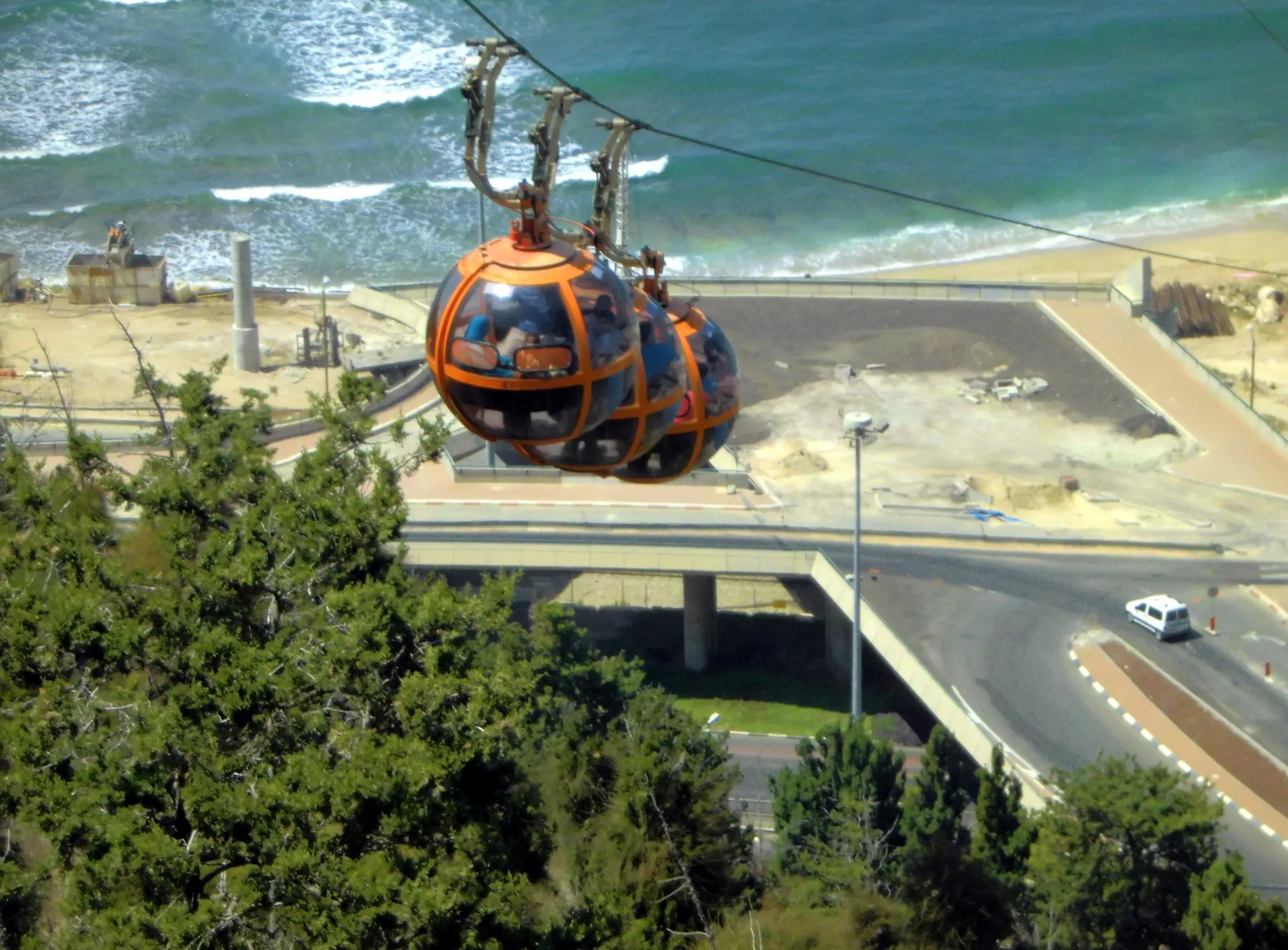
Six spherical cabins have been running the 355 metres from the Bat Galim promenade up to Stella Maris since 1986, three in each direction, and Haifa still calls them Gurel's eggs.
זאב שטיין / CC BY 2.5 · Wikimedia Commons
Religious site
Stella Maris Carmelite Monastery
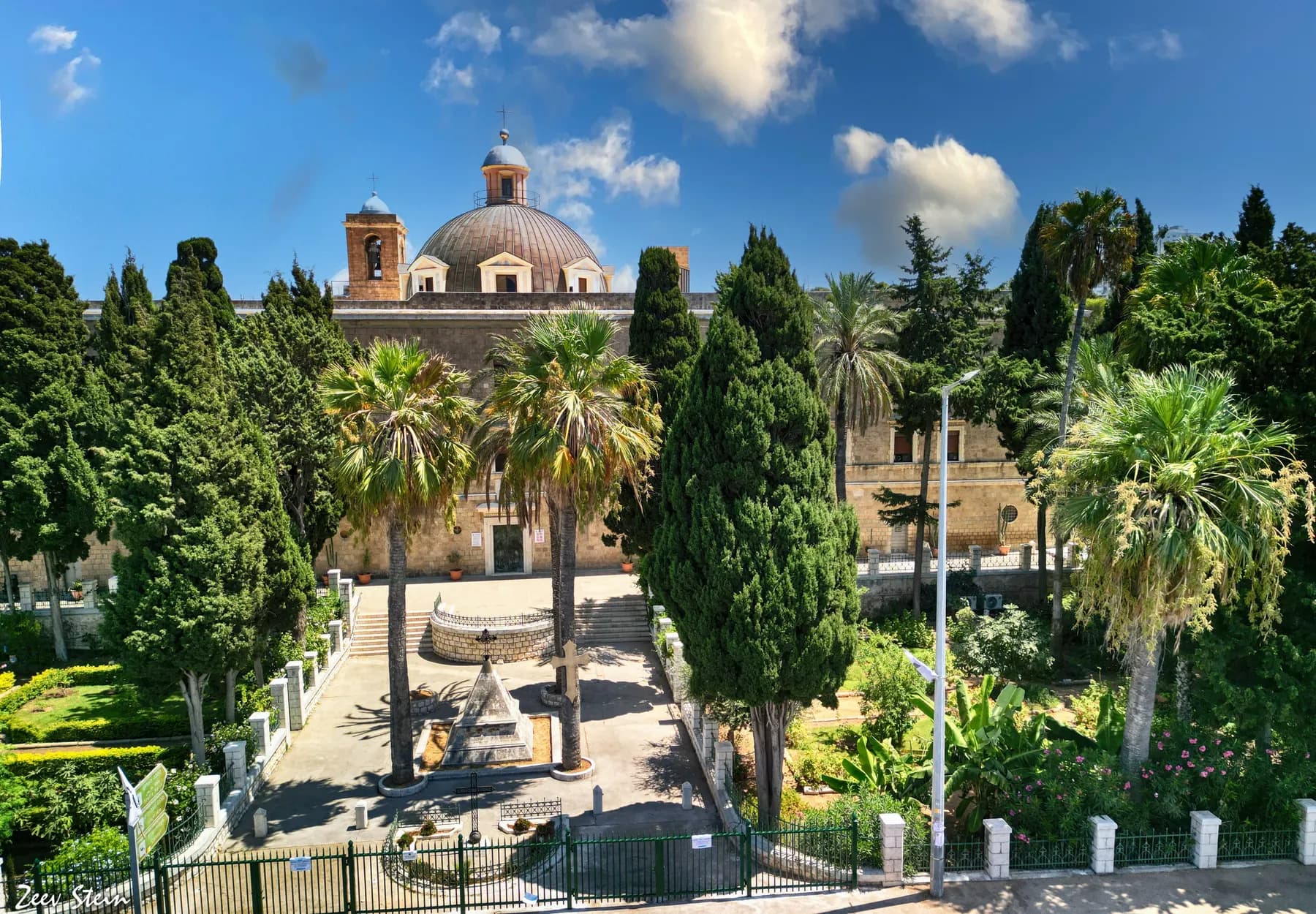
The mother house of the Discalced Carmelites stands on the seaward end of Mount Carmel over a grotto associated with Elijah, under a dome painted by the Maltese friar Luigi Poggi between 1924 and 1928.
מיכל פריימן / CC BY 2.5 · Wikimedia Commons
Religious site
Elijah's Cave
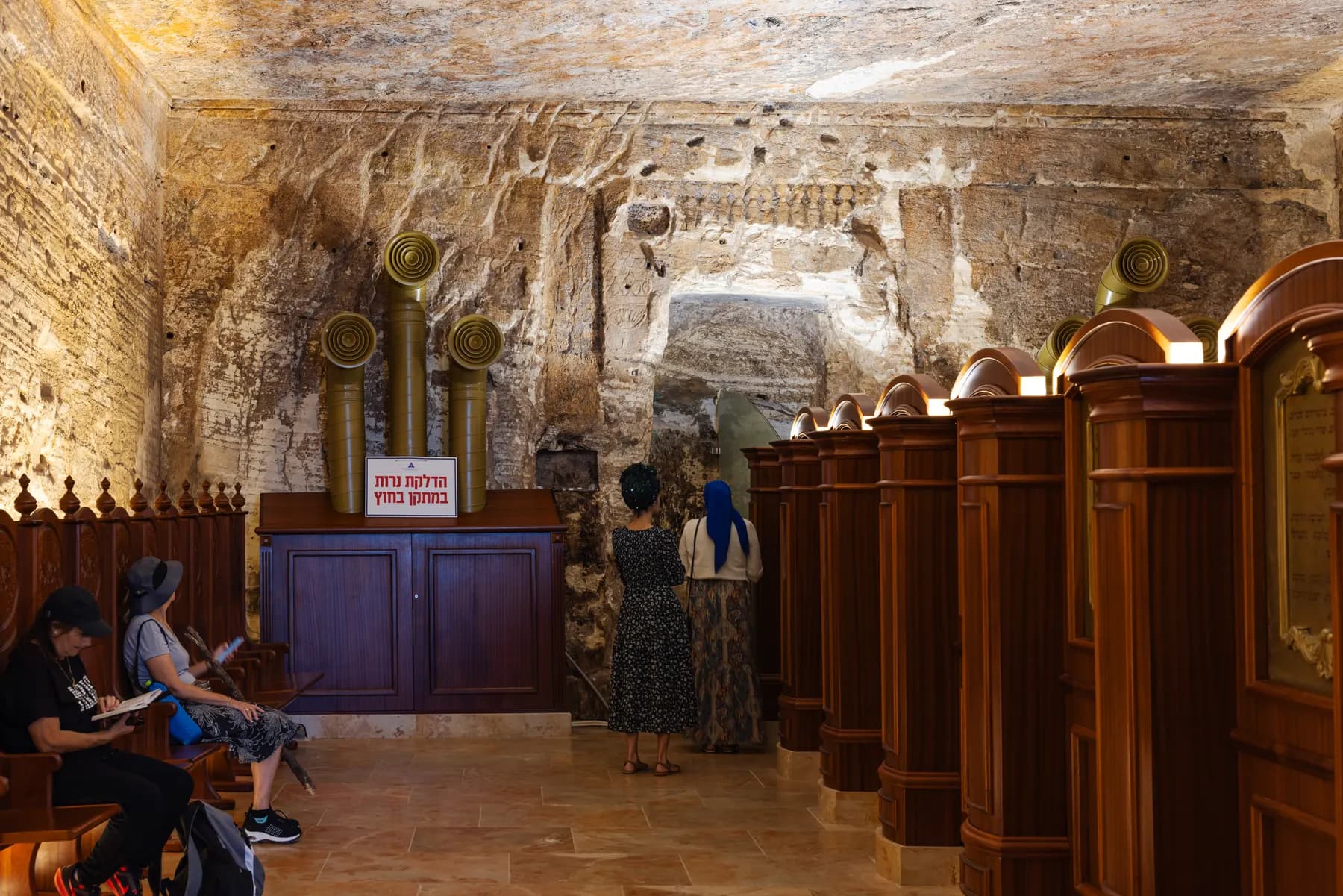
A rock chamber at road level under Cape Carmel, measured by the Israel Antiquities Authority at 13.5 by 8.7 metres, whose walls carry about 150 graffiti in Greek, Latin, Hebrew and Arabic left by pilgrims of four religions.
Sources and further reading
Every link below was opened and checked when this page was written. Official statements are marked as such: they are the subject's own account, not an independent one.
- OfficialHaifa Municipalityhaifa.muni.ilחוף דדו זמיר
The operator's page: lifeguard hours, winter cover at tower 3, five towers, the 2 km promenade, facilities and accessibility.
- OfficialHaifa Municipalityhaifa.muni.ilחופים וים
The city's beaches index: 17 km of coast, 2.8 km declared bathing beach, weekly water sampling and twelve blue flags recommended.
- OfficialEcoOceanecoocean.orgתוכנית הדגל הכחול
The programme operator in Israel for the Foundation for Environmental Education, and its criteria on water quality, safety and accessibility.
- ReportingYnetynet.co.ilחיפה: שיקום החוף יכשיר את בניית המגדלים
The 2008 proposal to move about 500,000 cubic metres of dredged sand onto the eroding shore, and the objections to it.
- ReportingTheMarkerthemarker.comבאיזה חוף אתם? המדריך לחופי הים של חיפה
A 2026 survey of Haifa's beaches: six towers rather than five, the accessible kit at the northern station, and the separate quiet and dog beaches.
- ReportingWalla Traveltravel.walla.co.ilללכת רק אליהם: אלה החופים הנקיים והבטוחים בישראל ל-2026
The 2026 Blue Flag list: 62 beaches and three marinas nationally, including Zamir 1 to 3 and Dado 4 and 5.
- ReportingYnetnewsynetnews.comUnfazed by war: First jellyfish swarms of the season spotted along Israeli coast
Nomad jellyfish arriving around the summer solstice, Haifa among the areas reporting high concentrations, and the University of Haifa monitoring laboratory.
- ReferenceiNatureinature.infoחוף דדו וחוף זמיר
Free entry and free parking, the stone breakwater between the two beaches, and the 150 m distance from Hof HaCarmel station.
- ReferenceHebrew Wikipediahe.wikipedia.orgחוף כיאט
Cites the Maariv reports of July and August 1979 for the building and inauguration of Dado, the 1966 fencing of Khayat Beach, and the sand lost to the Carmel Beach towers breakwater.
- ReferenceCarmel Tunnelscarmeltunnels.co.ilחוף דדו וחוף זמיר
Tourism page for the beach: free sun loungers, the volleyball court, the amphitheatre programming and the approach by road.
- ReferenceHebrew Wikipediahe.wikipedia.orgדוד אלעזר
Resignation on 3 April 1974, the Zim chairmanship, and death on 15 April 1976 of a heart attack while swimming, aged fifty.
- ReferenceEnglish Wikipediaen.wikipedia.orgDavid Elazar
Born Sarajevo 1925, chief of staff from January 1972, and the Agranat Commission interim report of 1 April 1974.
- ReferenceHebrew Wikipediahe.wikipedia.orgמילר בלום תכנון סביבתי
The landscape practice founded in 1961 by Zvi Miller, formerly head of Haifa's parks department, which lists Dado Beach among its projects.
Dado Beach: common questions
Is Dado Beach free?+
Yes. It is a municipal beach run by the Haifa municipality and there is no entry charge, no gate and no ticket desk. The car parks behind the sand are free as well, including the marked disabled bays. Sun loungers are also free, according to the Carmel Tunnels tourism guide to the beach.
What are the lifeguard hours at Dado Beach?+
The municipality publishes 08:00 to 18:00 during the bathing season, extended to 19:00 through July and August. One tower, number 3, is also staffed in winter, from November to April, 08:00 to 15:30. The beach itself has no closing time, but swimming outside lifeguard hours is prohibited and the city says so plainly.
Can you swim at Dado Beach in winter?+
Yes, and it is supervised, which is unusual. Tower 3 runs from November to April, 08:00 to 15:30, so there is lifeguard cover on this strip all year. The sea off Haifa in January is cold rather than dangerous, and the winter regulars here are a recognised feature of the beach.
Is the water calm enough for young children?+
Yes, and that is the main reason Haifa families use this beach. Stone breakwaters lie offshore and flatten the swell into shallow, slow water inshore of them. There is also a separate freshwater paddling pool for toddlers set behind the sand, which takes the sea out of the equation entirely.
How do you get to Dado Beach without a car?+
Take the train to Hof HaCarmel station, which is about 150 metres from the southern end of the beach. The Hof HaCarmel bus terminal sits immediately east of the station with an underground passage through towards the shore, so buses from the rest of Haifa land in the same place. This is the easiest beach in northern Israel to reach on public transport.
Is Dado Beach wheelchair accessible?+
Largely, yes. The whole site is flat and at sea level with no climb and no steps, and the municipality publishes accessible parking, accessible toilets and showers, a ramped entry onto the sand and a beach wheelchair for getting into the water. There is one such setup on the strip rather than one at every tower, and the sources differ on which tower has it, so confirm on arrival. Loose sand away from the ramp will still stop an unassisted manual chair.
Why is it called Dado Beach?+
After David Elazar, known as Dado, the ninth chief of staff of the Israel Defense Forces, who commanded the army during the 1973 Yom Kippur War. He resigned in April 1974 after the Agranat Commission's interim report found he bore personal responsibility for the army's readiness, and he died of a heart attack in April 1976 at fifty. The beach opened three years later.
How old is Dado Beach?+
It opened in the summer of 1979, and was inaugurated on 15 August that year. It was built with Haifa municipality money at a reported cost of ten million lira, as a free public alternative to the privately run Khayat Beach immediately north, which charged for entry and had fenced off the shore walk in 1966.
Is there shade at Dado Beach?+
Yes, more than at most Israeli beaches. There are shade shelters on the sand and long stretches of watered lawn with trees and seating along the promenade behind it, which is where most people spend the middle of the day in August. It is still the eastern Mediterranean in summer, and the shelters go early on a Saturday.
Is Dado Beach worth it if you only have one day in Haifa?+
Only if the day includes an evening. The Bahai terraces, the German Colony and Wadi Nisnas are the reasons people come to Haifa and none of them is here. What Dado offers is the end of the day: a flat two kilometre promenade facing due west, a swim, and dinner on the water, all reachable by train, which is a better close than climbing back up the mountain.