Activity · Haifa
Haifa Cable Car
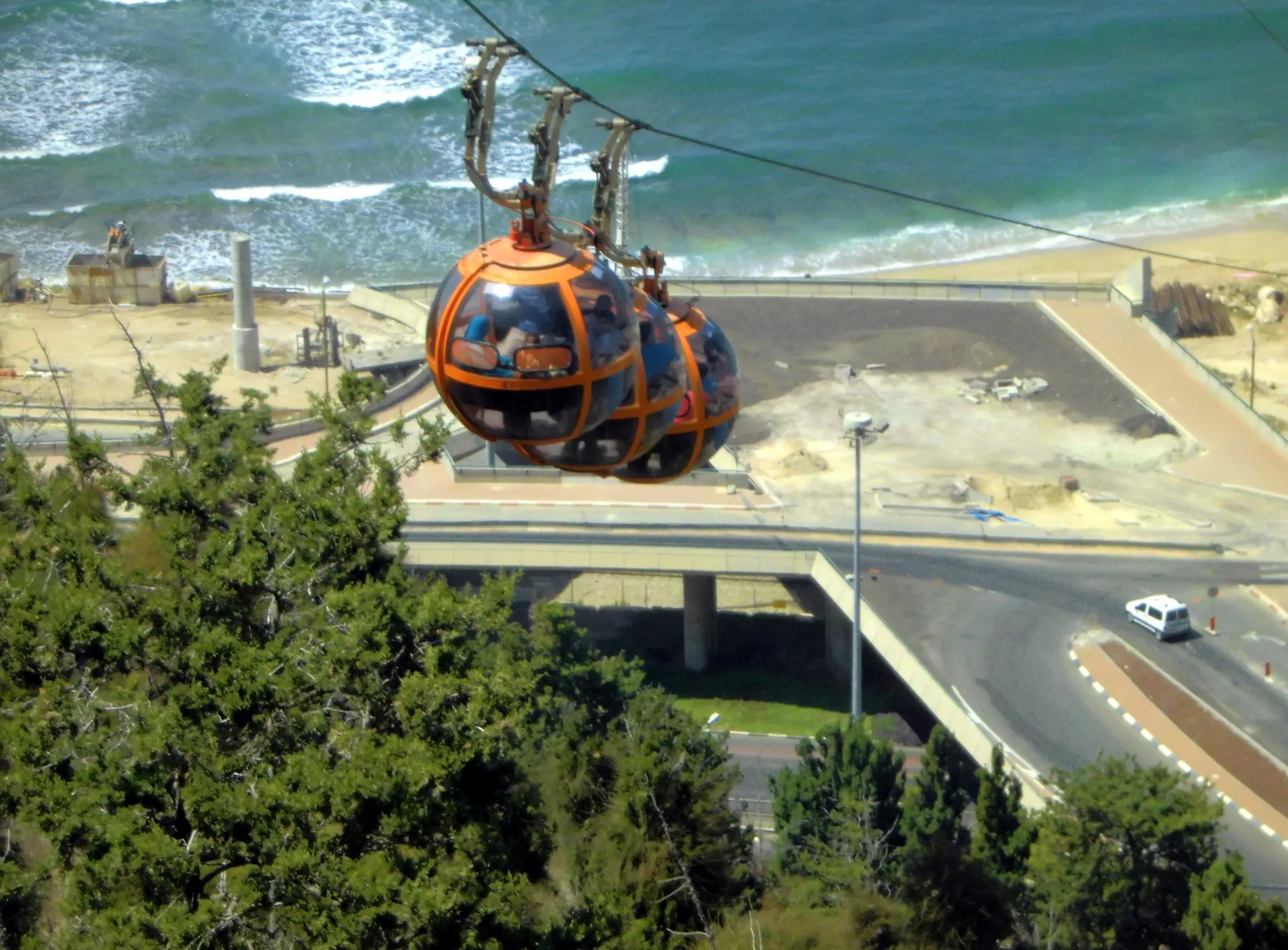
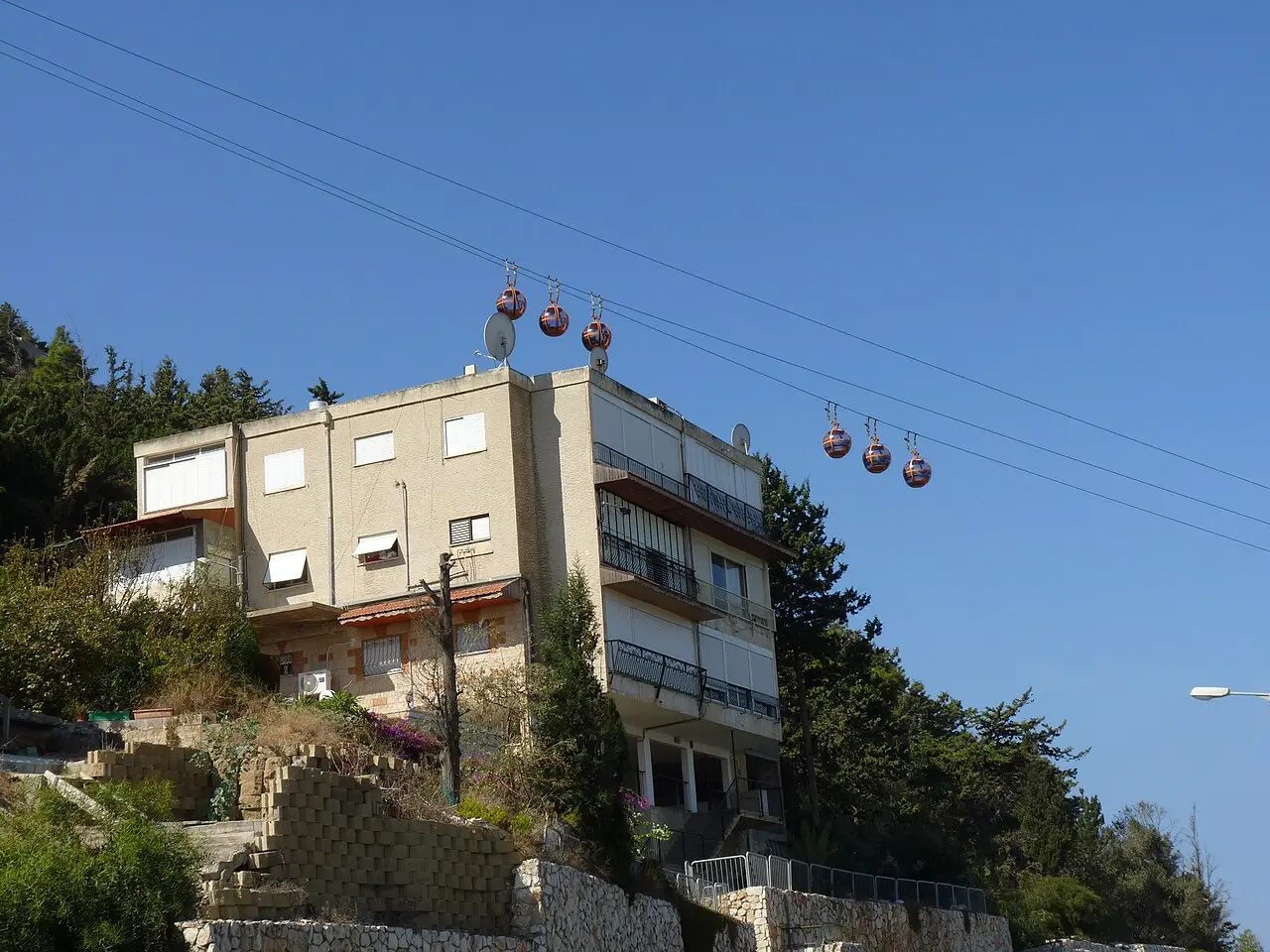
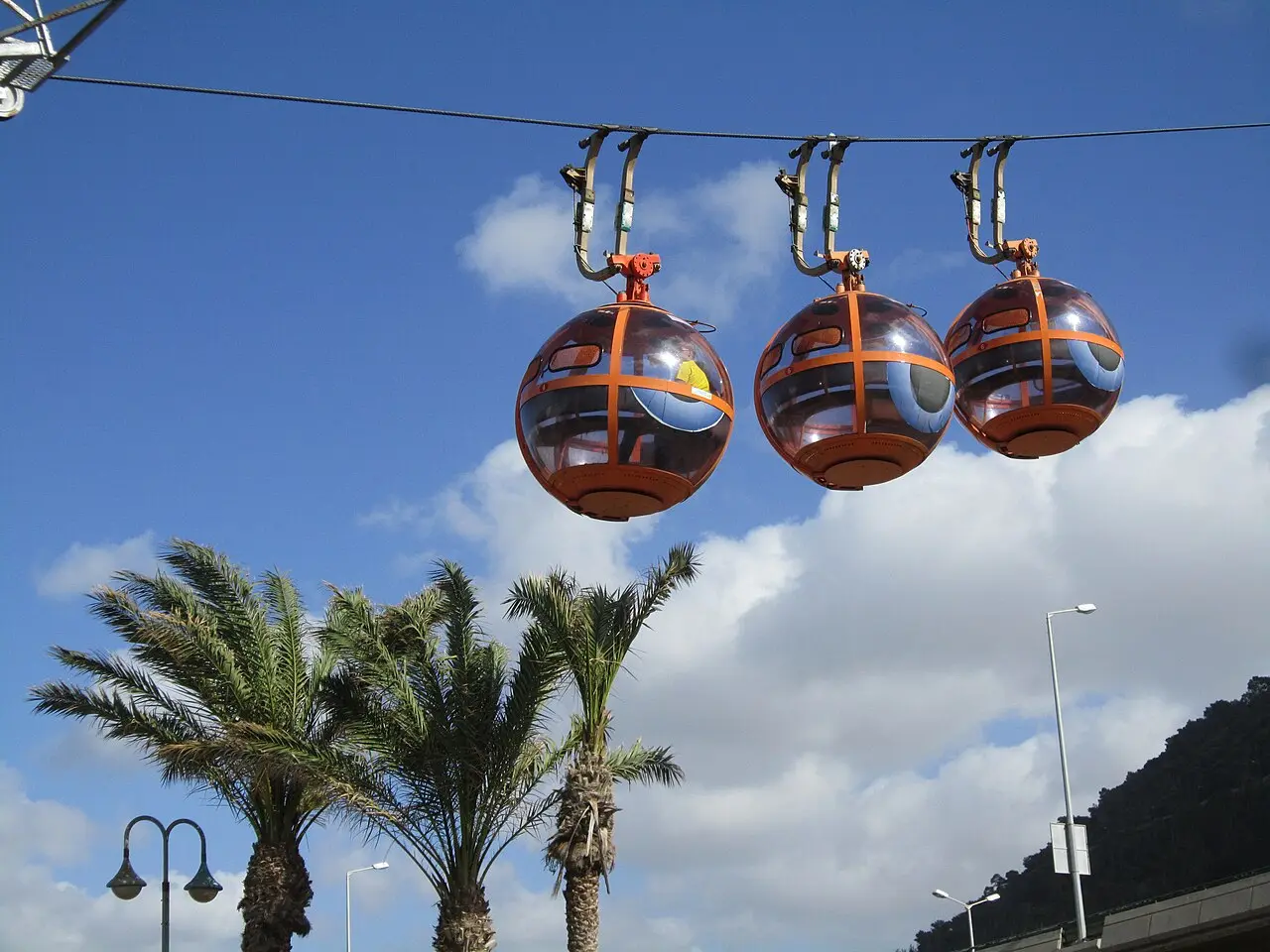
Six spherical cabins have been running the 355 metres from the Bat Galim promenade up to Stella Maris since 1986, three in each direction, and Haifa still calls them Gurel's eggs.
Orenshani7 / CC BY-SA 3.0 · Wikimedia Commons
Opened
1986
built for tourism while Arie Gurel was mayor of Haifa
Line length
355 m
the figure ynet, Israel National News and English Wikipedia all give
Height gained
130 m
between the Bat Galim station and the Stella Maris station
Cabins
six spheres
three running each way, leaving each station every quarter of an hour
In short
- How long to give it
- about five minutes in the cabin each way, and 60 to 90 minutes for a return ride with a look at Stella Maris and the bay lookout at the top
- Every day, as the operator publishes it
- 08:30 to 19:00
- Return ticket
- ₪35
רכבל חיפה
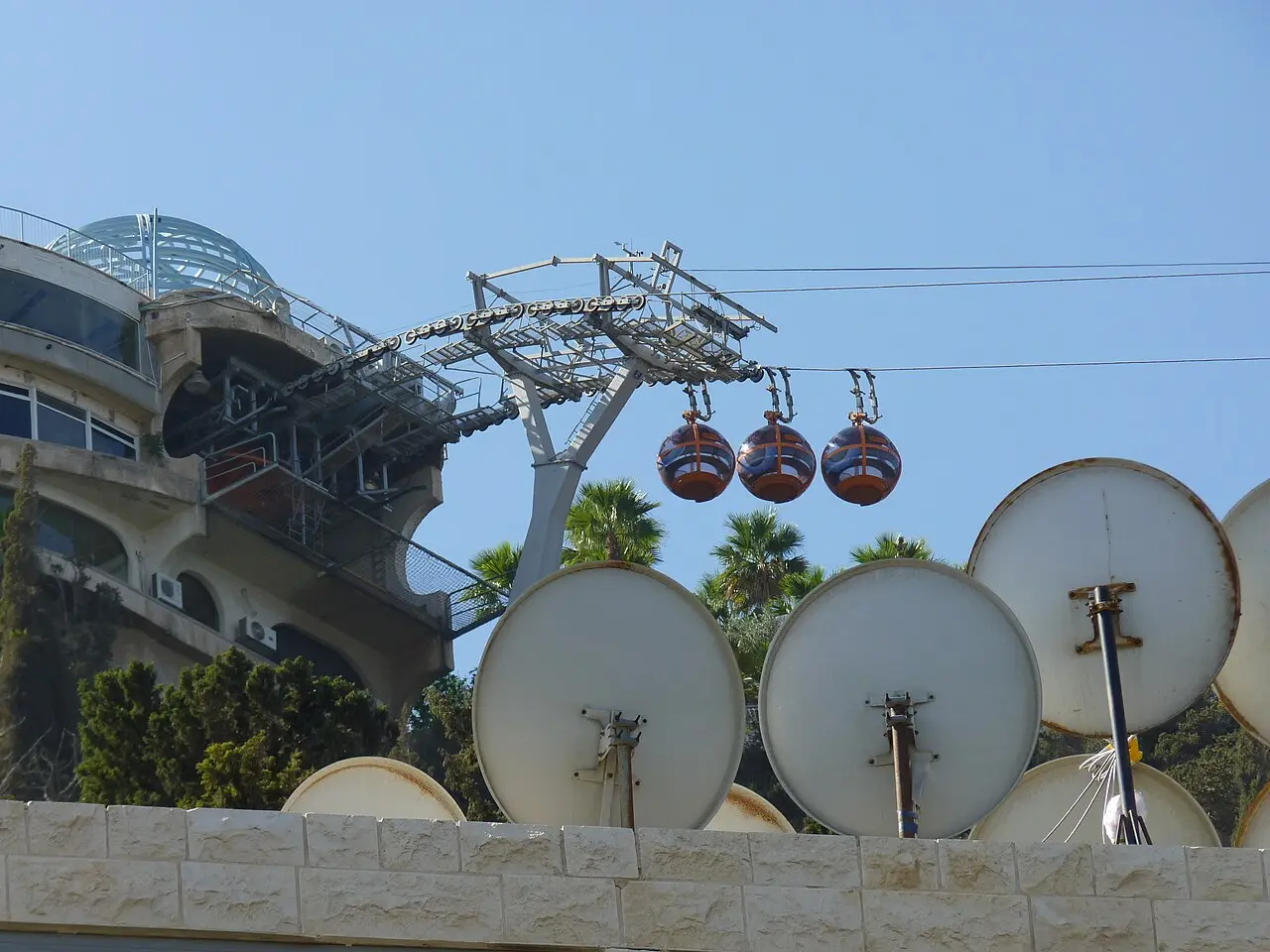
The Haifa cable car is a short tourist ropeway up the western face of Mount Carmel, running from the Bat Galim promenade at sea level to Stella Maris, the headland neighbourhood where the Carmelite monastery stands. Six spherical cabins hang from the wire, three travelling in each direction, and the operator gives the crossing as five minutes. It opened in 1986, which makes it a generation older than the Rakavlit, the commuter gondola that started carrying students across the other side of the city in April 2022, and the two are constantly confused.
It is a private business rather than a municipal service. The operator publishes a return ticket at ₪35 and a single at ₪25, opening hours of 08:30 to 19:00 every day of the week, group rates from 50 people, and a note that a child from the age of two needs a ticket. Nothing is booked in advance: tickets are bought at whichever station you start from, and you board in the order you arrive. The Haifa Tourism Association's own page for the same attraction prints the closing time an hour earlier, at 18:00, which is worth knowing before planning a late descent.
The line is 355 metres long and gains 130 metres between its two stations, figures that a philatelic note, a 2002 stamp story and a 2008 ynet round-up of Israeli cable cars all agree on, although the Hebrew Wikipedia infobox says 375 metres. Because the cabins are spheres rather than boxes, Haifa named them after the mayor who had them built: Arie Gurel, in office from 1978 to 1993, and forty years on they are still Gurel's eggs.
The ride
Five minutes across a bare face of Mount Carmel
The wire crosses the steep, largely undeveloped western flank of the Carmel between the seafront and the ridge. There is nothing much underneath it: rock, scrub and the paths that run down towards Elijah's Cave. The stated line length is 355 metres and the rise between the stations 130 metres, and those are the numbers repeated by Israel National News in 2002, by ynet in 2008 and by the English Wikipedia entry. Hebrew Wikipedia's infobox gives 375 metres while its own text gives 355, so the discrepancy is inside a single source rather than between two.
The cabins are the point. Six spheres run on the line, three in each direction, and they travel as one group rather than independently, leaving each station every quarter of an hour. They are glazed most of the way round, which is what ynet meant in describing a 360 degree outlook over Haifa Bay and north along the coast as far as Rosh Hanikra. Capacity is small: when the college scheme described below began, ynet put the number who could go up at any one time at 18 to 20 people across the three cabins on that side.
How long the crossing takes depends on who is asked, and the gap is large enough to be worth stating. The operator's own site sells it as a five minute ride between sky and earth. The public relations officer for Gordon Academic College, describing the same machine in December 2016, gave a cycle of three to five minutes. Ynet's 2008 survey printed fifteen minutes for the 355 metres, which does not fit either of the other two and looks like the quarter-hour departure interval recorded elsewhere.
- 355 m of line, 130 m of height between the stations
- Six spherical cabins, three running each way as a single group
- Departures every 15 minutes from each station
- About five minutes in the cabin, on the operator's own figure
- 18 to 20 passengers at a time in the three cabins on one side, as reported in 2016
1986
The mayor, the architect and the eggs
The cable car was put up for tourism during the mayoralty of Arie Gurel, to a design by the architect Amnon Galpman, and was built by the Economic Company for Haifa. Gurel was born in Poland in 1918, reached the country at seventeen, served in the Haganah and trained as an electronic engineer before going into public life. He won three consecutive elections and was mayor from 1978 until 1993, and he died in Haifa on 28 October 2007. Ynet's obituary lists the cable car alongside the Bat Galim promenade and the Bahai terraces among the works of those fifteen years, and records what the city called it: because the cabins are round, they became the mayor's eggs, or Gurel's eggs.
Ownership has been private throughout. Hebrew Wikipedia names the owner as Y. BaIr Holdings 1995 Ltd, trading as Yotvata, the company behind the Yotvata BaIr restaurant chain, and cites the receipts passengers are handed. Ynet's 2008 round-up located the lower station inside the Yotvata BaIr restaurant complex on the promenade, which is the same arrangement described from the other direction. The practical consequence is that this line has never been part of Haifa's public transport network, and no municipal travel card is valid on it.
Hebrew Wikipedia opens its account of the line not with engineering but with fiction, quoting the passage in Theodor Herzl's 1902 novel Altneuland, in Nahum Sokolow's translation, in which a great iron carriage is seen flying above palm trees, suspended from a vast iron bridge. The article's claim is that Haifa's cable car realised the image, down to the palms planted at the Bat Galim station. That is an editorial reading rather than a documented intention, and it is the article's own, but the palms are there.
The reception at the time was not uncritical. Carmel Magazine's history of the line records that residents were sceptical of the idea of getting about the city this way, and that it settled instead into a straightforward tourist attraction. The nickname is the part that lasted.
Dickelbers / CC BY-SA 3.0 · Wikimedia Commons
Since then
What stopped working, and the two times it stopped altogether
The machine is substantially the one built in 1986: the same alignment, the same two stations, the same six spheres. What has gone is the way it was meant to be used. In its original configuration the cabins were to move almost without pause, with a commentary on the landscape playing inside them as passengers crossed. By the 2000s, Hebrew Wikipedia records, the cabins left each station once every fifteen minutes, travelled as a single group, and the sound system had stopped working. Nobody has replaced it.
There have been two long stoppages. The first came with the Second Lebanon War in 2006, when the line was shut. Hebrew Wikipedia says it returned to service around eighteen months later. Ynet's national survey of cable cars, published on 30 January 2008, still described it as closed following war damage and not operating at the time of writing, which sets the lower bound on that outage independently of the encyclopaedia. The second was shorter and stranger: on 1 January 2016 the cable car's communications cable was torn by high winds and the line shut for about two months. The operator's site still carries a warning that opening hours may change according to the weather.
The maker is worth a caveat. Hebrew Wikipedia attributes the cable car to the Austrian and Swiss firm Doppelmayr/Garaventa, and English Wikipedia files the page in the same group's category. That group has existed in that form only since 2002, when Doppelmayr of Wolfurt merged with Garaventa AG of Switzerland, so the attribution names the company as it is now rather than telling you which of the two supplied a machine erected in 1986. Neither encyclopaedia goes further, and the operator publishes nothing at all about who built it.
- Kept: the 1986 alignment, both stations, and the six spherical cabins
- Gone: the near-continuous running, and the recorded commentary inside the cabins
- Shut from 2006 for roughly eighteen months, after the Second Lebanon War
- Shut for about two months from 1 January 2016, when wind tore the communications cable
Commuters
The month the tourist ride became a student shuttle
In December 2016 the line acquired a second job. Gordon Academic College sits on the French Carmel, a few minutes' walk from the upper station, and had spent years in a parking crisis serious enough to produce disputes with neighbours and student protests. The college's answer was to send its people the long way round: park free among the hundreds of spaces near the Bat Galim promenade, ride up, and walk in. The college paid the fares during the pilot, 2,500 students and staff were issued cards identifying them, and the cable car's management extended the operating day to 07:30 to 19:30 to fit the timetable.
Ynet, reporting from the first morning on 6 December 2016, found students who had got up half an hour later than usual and still arrived on time, and named the obvious weakness of the scheme in the same breath: only 18 to 20 people can go up at once in the three cabins available on that side. The college's spokeswoman said the cycle ran between three and five minutes, so the queue moved.
The arrangement never extended beyond the college. Hebrew Wikipedia is explicit that the free travel applies only to Gordon's students and staff and is not included in the arrangements covering the city's other transport. For everyone else this remains a ticketed attraction bought at the door, which is the single most common misunderstanding about it.
Either end
A beach at the bottom, a monastery at the top
The lower station stands on the Bat Galim promenade, and what waits there is the sea. The operator's own description of the neighbourhood is unusually honest about the seasons: a beach that fills with holidaymakers in summer, and surfers who come mainly in winter for the high waves that break in this corner of the bay. The promenade itself was one of the projects of the same mayoralty that built the cable car.
The upper station opens onto Stella Maris, at the seaward end of the Carmel. Across the road is the Carmelite monastery and church, the mother house of the order worldwide, and beside it the lookout over Haifa Bay that most people came up for. Two things catch visitors out. The church closes from 12:00 to 15:00 every day, so a lunchtime ride arrives at a locked door. And the lighthouse next to it is a working military installation rather than part of the visit.
Between the two stations, on the slope the cable car crosses, is Elijah's Cave, a rock-cut chamber holy to Jews, Christians, Muslims and Druze, where visitors leave written petitions in the walls. The operator describes it as reachable by an easy stepped path and notes the seasonal flowering along the tracks that run down to it from Stella Maris. That makes the useful ticket a single rather than a return: ride up for ₪25, walk down past the cave, and finish on the promenade.
What to look for
Things not to walk past at Haifa Cable Car
The details that repay knowing about before you are standing in front of them.
The eggs themselves
The spherical cabins are the reason the line has a nickname at all. Ynet's obituary of Arie Gurel records that Haifa called them the mayor's eggs while he was still in office, and the name has outlived both the mayor and the audio commentary.
The view north to Rosh Hanikra
The cabins are glazed most of the way round. Ynet described the outlook as a 360 degree panorama over Haifa Bay running north along the coast as far as the Rosh Hanikra grottoes, which is roughly the whole of the Israeli coastline above the city.
Stella Maris across the road
The upper station puts you within a few minutes of the Carmelite mother house, its church and the bay lookout. Time it around the midday closure, which runs from 12:00 to 15:00 every day.
Elijah's Cave on the way down
The cave sits on the slope between the two stations and is holy to four communities. A stepped path connects it to Stella Maris above and Bat Galim below, which turns a single ticket into a walk rather than a dead end.
The palms at the bottom station
Hebrew Wikipedia reads the whole thing as a realisation of the flying iron carriage in Herzl's Altneuland of 1902, and points out that palm trees were duly planted at the Bat Galim station. Whether that was anyone's intention is not documented, but the palms are there.
The long view
Haifa Cable Car, in order
1978
Arie Gurel becomes mayor of Haifa. He will hold the office through three elections until 1993.
1986
The cable car opens between Bat Galim and Stella Maris, built by the Economic Company for Haifa to a design by the architect Amnon Galpman, and owned privately by the company behind the Yotvata BaIr restaurants.
2006
The line is shut during the Second Lebanon War. Hebrew Wikipedia gives the closure as about eighteen months.
28 October 2007
Arie Gurel dies in Haifa at 89. Ynet's obituary names the cable car, the Bat Galim promenade and the Bahai terraces as works of his fifteen years, and records the nickname.
30 January 2008
Ynet's survey of Israeli cable cars still lists the Haifa line as closed after war damage and not operating.
1 January 2016
High winds tear the cable car's communications cable and the line closes. It reopens after roughly two months.
December 2016
Gordon Academic College starts paying for its 2,500 students and staff to ride up from free parking at Bat Galim. The operator extends the day to 07:30 to 19:30.
April 2022
The Rakavlit opens on the other side of the city, a 4.4 km public transport gondola from HaMifratz to the Technion and the University of Haifa. It is a separate system on separate tickets.
Practical
Visiting Haifa Cable Car
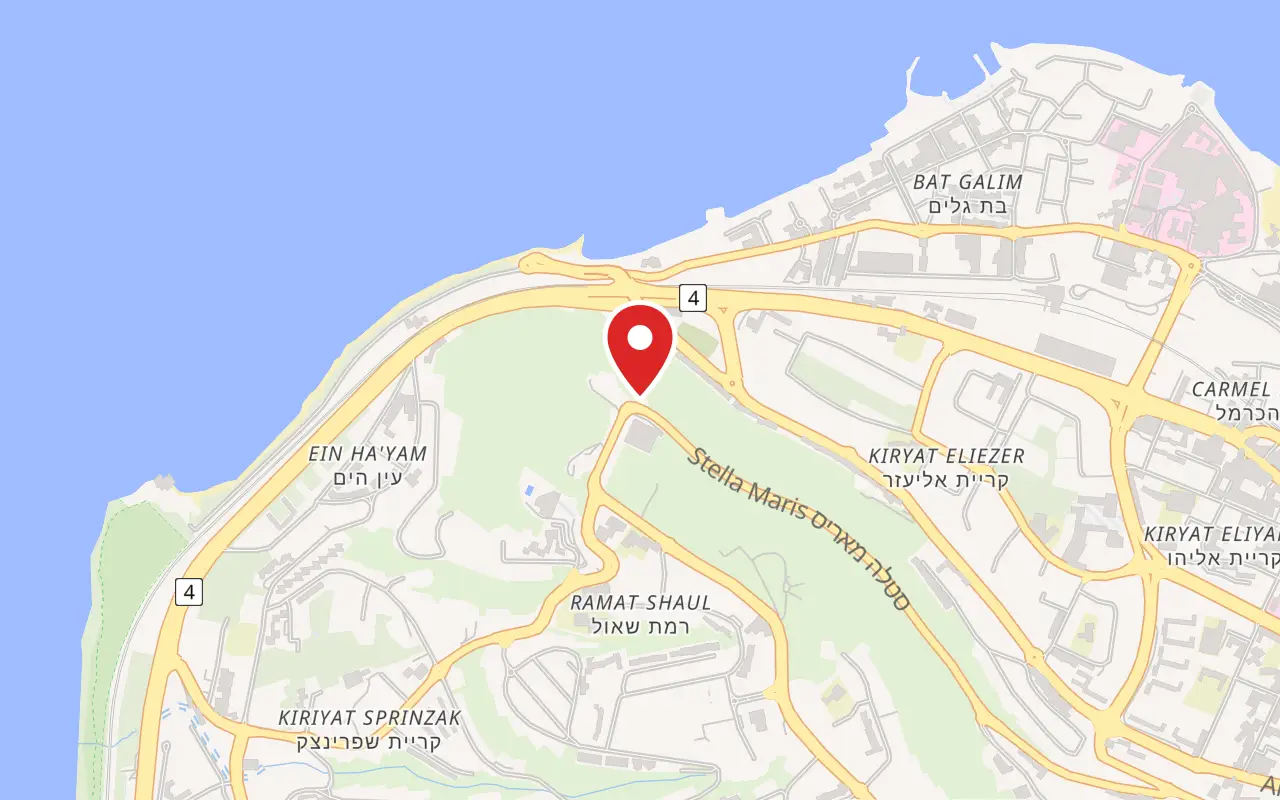
Where
Bat Galim promenade (lower station) or Stella Maris (upper station), Haifa
Opening hours
- Every day, as the operator publishes it
- 08:30 to 19:00source
- Every day, as the Haifa Tourism Association publishes it
- 08:30 to 18:00source
- Weather
- The operator warns that opening hours may change according to weather conditionssource
- Departures
- every 15 minutes from each station, the cabins running as one groupsource
Admission
Access
The operator states that both stations are accessible for pushchairs and wheelchairs, and it is the only step-free way between Bat Galim and Stella Maris: the alternative is a steep climb up the western face of the Carmel, and the paths that link the two ends by way of Elijah's Cave are stepped. Nothing is published about how a wheelchair is handled at the moment of boarding a moving group of cabins, so ring 04-8335970 first if that matters. At the top, the Carmelite church is entered at street level but its grotto is down a flight of steps with no lift.
On site
- Ticket desk at both stations
- Step-free access at both stations, per the operator
- Restaurants at the Stella Maris end
- Public parking beside the Bat Galim promenade
- Bat Galim beach below the lower station
- Group bookings by telephone from 50 people
Booking
Nothing is reserved. The operator says tickets are bought on the spot before boarding at either station, that there is no need to book places, and that boarding is in the order of the queue. Groups of 50 or more are the exception and are arranged by telephone.
Hours and prices are given as the operator publishes them and change without much notice, particularly around Shabbat and the festivals. Check the operator's own page before you travel for this.
Official page at cablecar-haifa.co.il →What people wish they had known
- The two published closing times do not agree. The operator says 19:00 every day and the Haifa Tourism Association says 18:00, so anyone planning the last ride down should ring 04-8335970 rather than trust either page.
- This is not the Rakavlit and not the Carmelit. A Rav-Kav will not get you aboard, the fare is paid at the station in cash or card, and the Gordon Academic College free travel covers only that college's own students and staff.
- Buy a single rather than a return if the plan is to walk. Riding up for ₪25 and coming down the stepped paths past Elijah's Cave costs ₪10 less than the return and is the better half of the day.
- Time the top around the monastery, not the cable car. The Carmelite church at Stella Maris shuts from 12:00 to 15:00 daily, and a midday ride arrives at a closed door.
- Wind stops this line. It was shut for about two months from 1 January 2016 when high winds tore the communications cable, and the operator still warns that hours change with the weather.
- Children pay from the age of two, and there is no published concession for students, seniors or Haifa residents. Budget the full fare per head.
The figures
Haifa Cable Car by the numbers
Each figure carries the year it belongs to and links the source it came from.
| Measure | Figure | As of | Source |
|---|---|---|---|
| Return ticket | ₪35 (one way ₪25) | 2026 | cablecar-haifa.co.il |
| Published opening hours | 08:30 to 19:00 every day, subject to weather | 2026 | cablecar-haifa.co.il |
| Line length | 355 m | 2002 | israelnationalnews.com |
| Height gained between stations | 130 m | 2008 | ynet.co.il |
| Cabins | six, three running in each direction, departures every 15 minutes | 2026 | he.wikipedia.org |
| Passengers who can travel at once | 18 to 20 across the three cabins on one side | 2016 | ynet.co.il |
| Cards issued for the Gordon Academic College scheme | 2,500 students and staff | 2016 | ynet.co.il |
| Group rate threshold | from 50 people | 2026 | cablecar-haifa.co.il |
While you are here
The rest of Haifa
Everything else in this destination with a page of its own.
זאב שטיין / CC BY 2.5 · Wikimedia Commons
Religious site
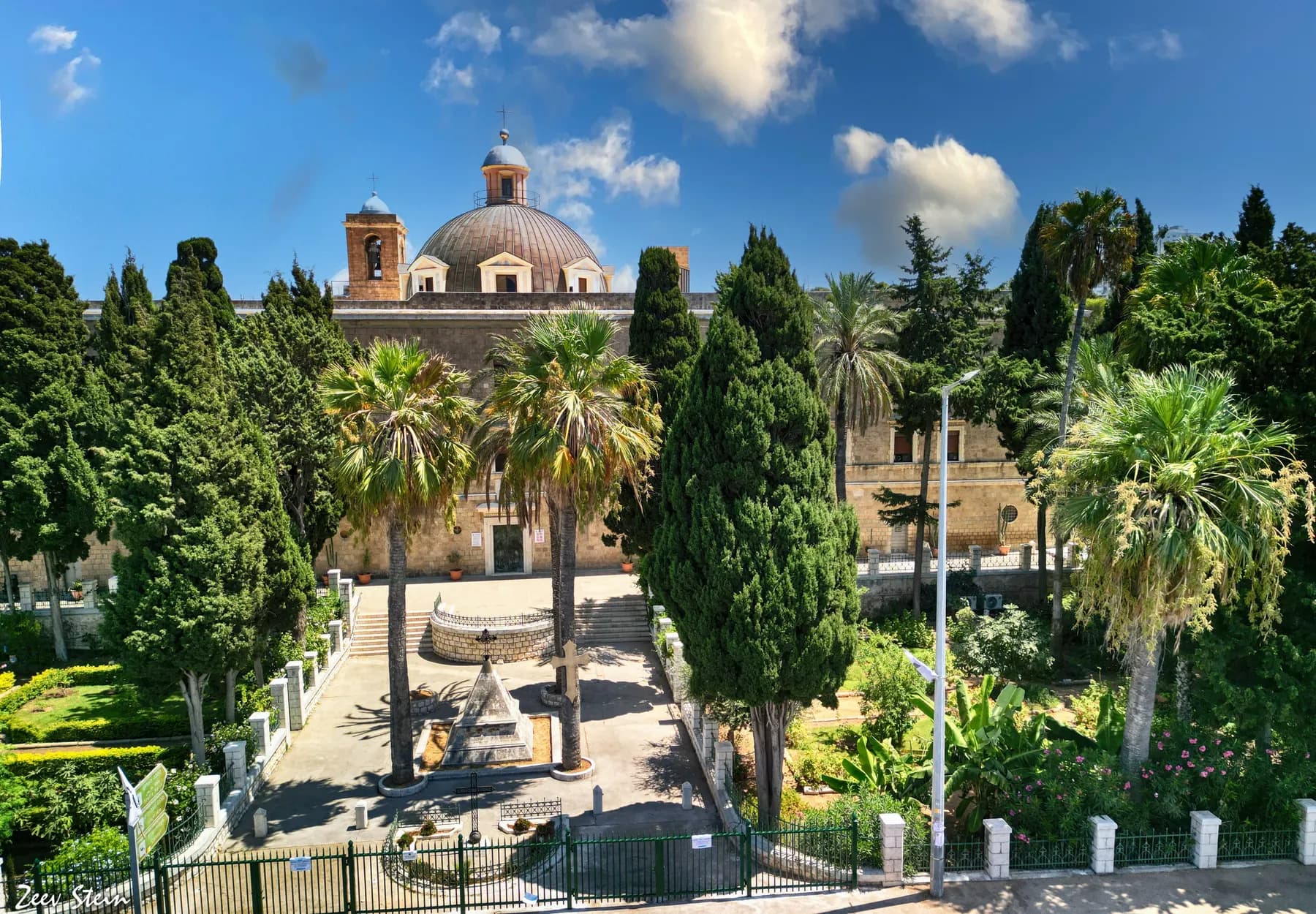
Stella Maris Carmelite Monastery
The mother house of the Discalced Carmelites stands on the seaward end of Mount Carmel over a grotto associated with Elijah, under a dome painted by the Maltese friar Luigi Poggi between 1924 and 1928.
מיכל פריימן / CC BY 2.5 · Wikimedia Commons
Religious site
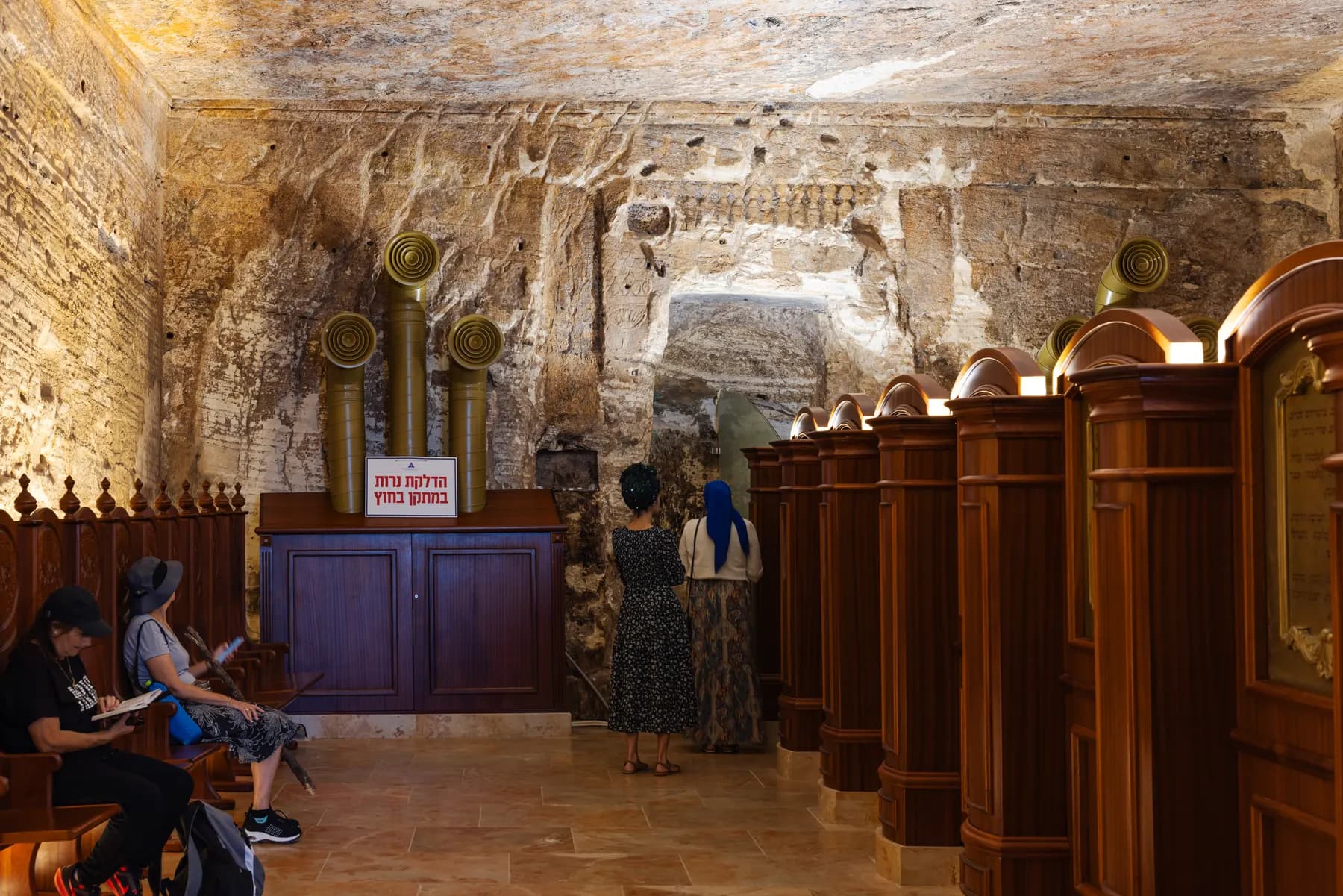
Elijah's Cave
A rock chamber at road level under Cape Carmel, measured by the Israel Antiquities Authority at 13.5 by 8.7 metres, whose walls carry about 150 graffiti in Greek, Latin, Hebrew and Arabic left by pilgrims of four religions.
זאב שטיין / CC BY 2.5 · Wikimedia Commons
Museum
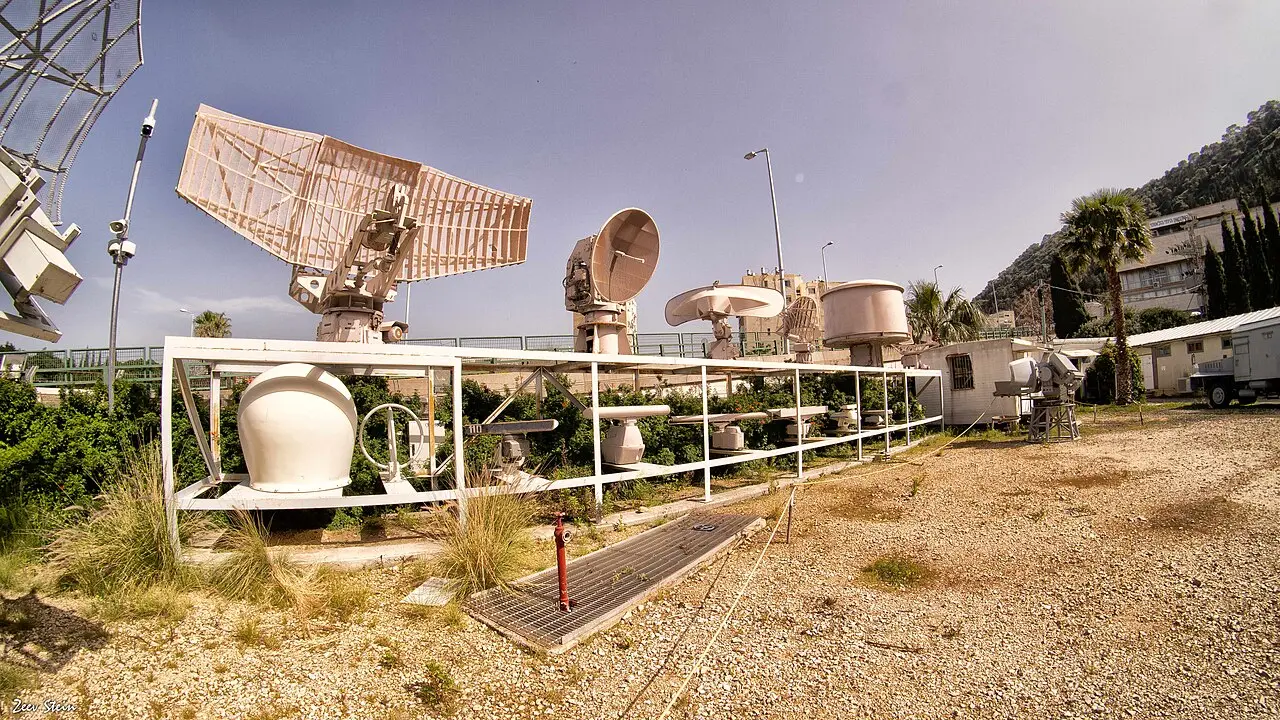
Clandestine Immigration and Naval Museum
A Ministry of Defence museum built around Af Al Pi Chen, a Royal Navy tank landing craft that sailed from Italy in September 1947 with 434 Holocaust survivors aboard and was boarded before she reached the coast.
Sources and further reading
Every link below was opened and checked when this page was written. Official statements are marked as such: they are the subject's own account, not an independent one.
- OfficialHaifa Cable Carcablecar-haifa.co.ilרכבל חיפה (Haifa Cable Car)
The operator's own site: the five-minute ride between the Bat Galim promenade and the edge of Mount Carmel, hours of 08:30 to 19:00 every day with a weather caveat, ₪35 return and ₪25 one way, special rates from 50 people, a ticket required from age two, tickets bought on the spot at either station with no reservation, both stations accessible for pushchairs and wheelchairs, the telephone number 04-8335970, and its own descriptions of the beach below and of Stella Maris and Elijah's Cave above
- OfficialHaifa Tourism Associationvisit-haifa.orgרכבל חיפה (Haifa Cable Car)
The city tourism association's listing for the same attraction, which gives the opening hours as 08:30 to 18:00 rather than 19:00, and the address as the Bat Galim promenade or Stella Maris
- OfficialDiscalced Carmelites, Holy Landcarmelholylanddco.orgStella Maris Church
The order's own page for the monastery at the upper station: the church open every day from 06:00 to 12:00 and from 15:00 to 18:00, which is the midday closure that catches out visitors riding up at lunchtime
- ReportingYnet, Michal Ben Ariynet.co.ilרק רכבל (Just a cable car)
A national survey of Israeli cable cars published on 30 January 2008: the Haifa line built in 1986, 130 metres of height difference, 355 metres of length, three transparent cabins with a 360 degree outlook over Haifa Bay and north to Rosh Hanikra, the nickname, the lower station inside the Yotvata BaIr restaurant complex on the promenade, and the statement that the line was closed after Second Lebanon War damage and still not operating at the time of writing
- ReportingYnet, Ahiya Ravedynet.co.ilמת ראש עיריית חיפה לשעבר, אריה גוראל (Former Haifa mayor Arie Gurel dies)
The obituary of 28 October 2007: Gurel born in Poland in 1918, mayor of Haifa from 1978 to 1993 across three elections, dead at 89, with the cable car, the Bat Galim promenade and the Bahai terraces listed among the projects of his term and the cabins nicknamed the mayor's eggs for their round shape
- ReportingYnet, Ahiya Ravedynet.co.ilבשל מצוקת חניה: נסיעה חינם ברכבל לסטודנטים בחיפה (Free cable car rides for Haifa students)
Reporting from the first morning of the pilot on 6 December 2016: Gordon Academic College on the French Carmel, years of parking shortage producing disputes and protests, hundreds of free spaces near the Bat Galim promenade, the college paying the fares, 2,500 students and staff issued identifying cards, hours extended to 07:30 to 19:30, only 18 to 20 people able to travel at once in the three cabins on that side, and a cycle of three to five minutes
- ReportingCarmel Magazinecarmelmagazine.infoWhere will Gurel's eggs fly
An English-language history of the line: operating from 1986 between the Bat Galim shore and the Stella Maris monastery, 355 metres with a rise of 130 metres, the mayor's eggs nickname after Arie Gurel, and the note that residents were sceptical of the idea of moving about the city this way
- ReportingIsrael National Newsisraelnationalnews.comIsrael Puts Cable Cars On Display
Reporting of 5 June 2002 on a set of four stamps of Israeli cable cars designed by Meir Eshel, which gives the Haifa line as built in 1986, 355 metres long and climbing and descending 130 metres between the Bat Galim promenade and the top of the Carmel
- ReferenceHebrew Wikipediahe.wikipedia.orgרכבל חיפה (Haifa cable car)
The fullest account: six cabins running three each way, departures every quarter of an hour as a single group with the sound system no longer working, 355 metres in the text against 375 in the infobox, 130 metres of rise, the 1986 construction by the Economic Company for Haifa to Amnon Galpman's design under Arie Gurel, private ownership by Y. BaIr Holdings 1995 Ltd trading as Yotvata, the Altneuland framing and the palms at Bat Galim, the eighteen-month closure after the Second Lebanon War, the cable torn by wind on 1 January 2016, the Doppelmayr/Garaventa attribution, and the note that the Gordon college scheme sits outside the city's transport arrangements
- ReferenceWikipediaen.wikipedia.orgBat Galim cable car
The English entry: operating since 1986, a route of 355 metres, running from the top of the Carmel across from the Stella Maris Carmelite monastery down to Bat Galim, and the explicit statement that this is one of two cable car systems in Haifa and separate from the Rakavlit
- ReferenceWikipediaen.wikipedia.orgRakavlit
The other Haifa cable car, for the comparison this page has to make: opened April 2022, 4.4 km and 460 metres of climb from the HaMifratz hub to the Technion and the University of Haifa, cabins of ten every fifteen seconds, and single tickets at ₪8 on the ordinary transport fare system
- ReferenceWikipediaen.wikipedia.orgDoppelmayr/Garaventa Group
The basis for the caveat about who built the line: the group was formed in 2002 when Doppelmayr of Wolfurt in Austria merged with Garaventa AG of Switzerland, sixteen years after the Haifa cable car was erected
Haifa Cable Car: common questions
How much does the Haifa cable car cost?+
A return is ₪35 and a one-way ticket ₪25, on the operator's own price list. Children from the age of two need a ticket, and groups from 50 people get a special rate arranged by telephone on 04-8335970. No student, senior or resident concession is published, and tickets are bought at the station rather than online.
What are the opening hours?+
The operator publishes 08:30 to 19:00, every day of the week, with a warning that the hours can change according to the weather. The Haifa Tourism Association's page for the same attraction gives 08:30 to 18:00. The two have not been reconciled, so treat 18:00 as the safe assumption for a last ride and telephone if the trip depends on it.
How long does the ride take?+
About five minutes each way, which is the figure the operator gives. Cabins leave each station every quarter of an hour and travel as one group, so the realistic time from queue to street is more like fifteen minutes per direction. A ynet round-up in 2008 printed fifteen minutes for the crossing itself, which appears to be the departure interval rather than the ride.
Where are the two stations?+
The lower station is on the Bat Galim promenade at sea level, in the western part of the city, and the upper station is at Stella Maris on the seaward end of Mount Carmel, across the road from the Carmelite monastery. The line covers 355 metres and gains 130 metres between them. You can start from either end and buy a ticket there.
Is the Haifa cable car the same as the Rakavlit?+
No, and confusing the two is the commonest mistake. The Rakavlit is a public transport gondola that opened in April 2022 and runs 4.4 km from the HaMifratz transport hub up to the Technion and the University of Haifa on ordinary transport fares. This one is a privately owned tourist line of 355 metres on the opposite side of the city, opened in 1986, on its own ticket.
Does it run on Shabbat?+
Yes. The operator states that the cable car is open every day of the week on the same 08:30 to 19:00 timetable, with no separate Friday or Saturday hours listed. That is a straightforward consequence of its being a private business rather than part of the municipal transport network, on which Saturday service is a different question entirely.
Is it wheelchair accessible?+
The operator states that both stations are accessible for pushchairs and wheelchairs, and no other step-free route exists between Bat Galim and Stella Maris. Nothing is published about boarding a cabin in a group that keeps moving, so telephone ahead on 04-8335970. At the top, the Carmelite church is entered at street level but the grotto under its altar is down steps with no lift.
Why is it called Gurel's eggs?+
Because the cabins are spheres and Arie Gurel was the mayor who had them built. Gurel led Haifa from 1978 to 1993, and ynet's obituary of him in October 2007 records the cable car among the works of his term along with the nickname the city gave it. Carmel Magazine's history notes that residents were sceptical of the thing at the time; the name is what stuck.
Can you walk between the two stations instead?+
You can, but it is a steep climb up the western face of the Carmel, and the paths are stepped rather than graded. The usual compromise is to buy a single ticket up and walk down by way of Elijah's Cave, which sits on the slope the cable car crosses and is reached by a stepped path from Stella Maris. Doing it in that direction saves the ascent and ₪10.
Is it worth it?+
It is worth it as transport with a view rather than as an attraction in itself: five minutes, one wire and a bay. What justifies the fare is what sits at each end, the monastery and the lookout above and the beach and promenade below, and the fact that the alternative is a hard climb. Anyone chasing the biggest view over Haifa without a ticket should go to the Louis Promenade on the ridge instead.