Neighbourhood · Haifa
Wadi Nisnas
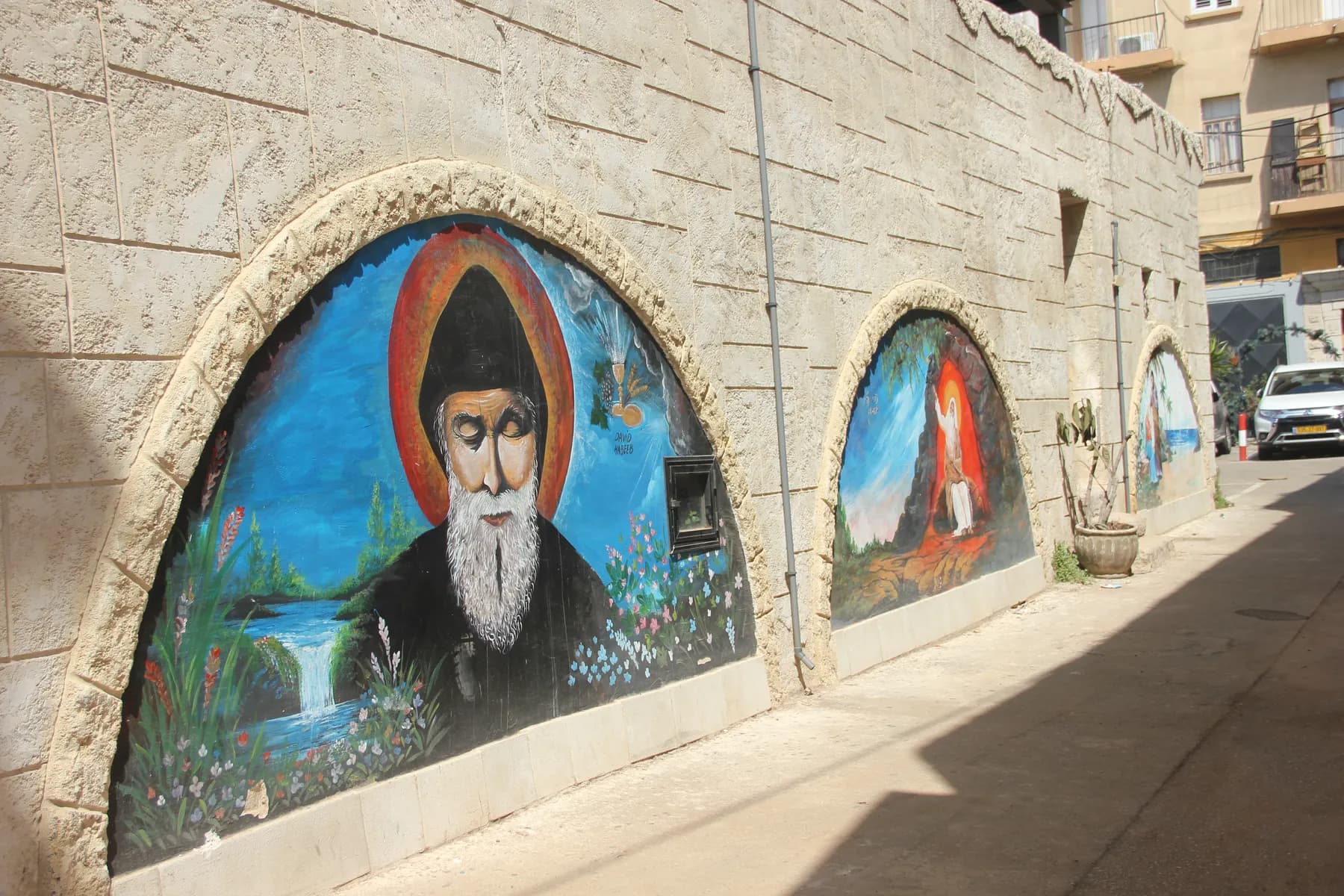
More than 50,000 Arabs lived in Haifa before the 1948 war and about 3,000 stayed; they were concentrated into this one valley, whose lanes have carried a permanent open-air art exhibition since the 1990s.
אושרי רייכר / CC BY 2.5 · Wikimedia Commons
Residents
about 8,000
roughly two-thirds Christian and just under a third Muslim, on census figures cited by Wikipedia
Arabs left in Haifa after 1948
about 3,000
out of more than 50,000 before the war, per Britannica; most of those who stayed ended up here
Works on the art route
about 30
Beit Hagefen's own count for the Museum Without Walls; reporting has put the permanent outdoor works above 60
Holiday of Holidays
since 1993
December weekends, run by Beit Hagefen with Haifa municipality
In short
- How long to give it
- about 90 minutes for the market and the art route at a walking pace, or half a day with Beit Hagefen's gallery, a long lunch and the German Colony added
- The neighbourhood and its outdoor artworks
- Open at all hours. These are public lanes with no gate and no ticket, and the Museum Without Walls works stand in them permanently
- Walking the neighbourhood and the art route
- Free. Wadi Nisnas is public street, not a ticketed attraction, and the Museum Without Walls is in the open air
ואדי ניסנאס · وادي النسناس
Wadi Nisnas is the valley neighbourhood immediately uphill of Haifa's German Colony, and it is the historic core of Arab Haifa: about 8,000 people, roughly two-thirds of them Christian and just under a third Muslim, living in stone houses along a slot of a valley with a street market running down the middle of it. The name is Arabic and means the valley of the nisnas, a mongoose that was native here. Almost nothing about it is arranged for visitors, which is the point.
Three things bring people up from the boulevard. The market on HaWadi and Yohanan HaKadosh streets, embedded in the residential lanes rather than housed in a hall, where the city buys its vegetables, spices, cheese, pastry and falafel. The Museum Without Walls, a set of permanent artworks fixed to the walls, stairways and courtyards of the neighbourhood by the Beit Hagefen Arab-Jewish cultural centre at the foot of the wadi. And December, when the Holiday of Holidays festival puts a Christmas tree, a menorah and a crescent into the same few hundred metres of street.
None of that is separable from what happened here in April 1948. Britannica records that of more than 50,000 Arabs living in Haifa before the war, about 3,000 remained under Israeli rule; the Hebrew reference account puts the figure nearer 3,500 and states that those who stayed were concentrated in Wadi Nisnas and the neighbouring Wadi Salib. Wadi Salib was later largely emptied and demolished. Wadi Nisnas was not, and that is why it is still standing to be walked through.
The wadi
A village-shaped valley wedged into the middle of a city
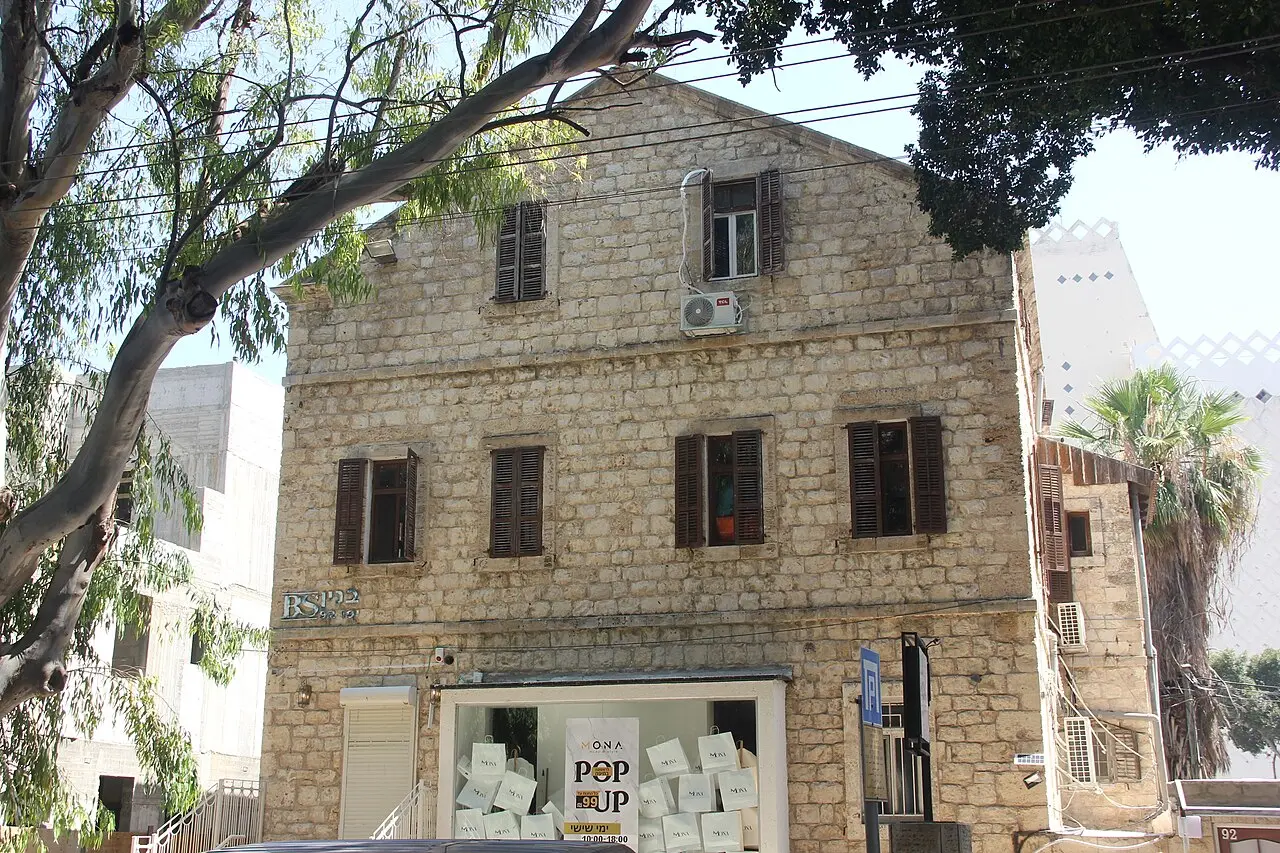
The neighbourhood occupies a shallow watercourse running down the lower slope of Mount Carmel, bounded roughly by Herzl Street, Shabtai Levi Street and HaNevi'im Street, with the German Colony and Ben Gurion Boulevard below it and the dense inter-war district of Hadar above. It is the joint between Haifa's lowest and middle tiers, which is exactly why the older guidebooks describe it as a village dropped into the middle of a city: the houses are limestone, the balconies are arched, the lanes are too narrow for two cars, and the connections to the streets above are flights of public steps rather than roads.
Those steps are what first-time visitors misjudge. The Haifa Trail's twentieth section walks the descent as a single 4.8 km leg from the Bahai gardens observation point on Yefe Nof Street, at 265 m above sea level, to UNESCO Square at 45 m: a drop of 220 m, taken partly on named stairways including the Gedera, Koresh and Bunyak steps. Coming in from above means some version of that. Coming in from the German Colony means walking on the level.
The name is straightforwardly descriptive. Wadi is a valley; nisnas is the Arabic for the mongoose that was native to it, and there is no agreed English transliteration, which is why the neighbourhood turns up spelled several different ways on maps. The Carmelit's HaNevi'im and Solel Boneh stations sit on the streets directly above, which makes the wadi an easy add-on to a day spent on the Carmel ridge.
1860s to 1948
A Christian Arab quarter built outside the old walls
Wadi Nisnas grew at the end of the nineteenth century as a Christian Arab neighbourhood outside the walls of the Ottoman town, at a moment when Haifa was expanding fast in every direction: the German Templers laid out their colony at the foot of the mountain in 1868, the port trade was growing, and the old walled town could not hold the population. The Hebrew reference account describes the wadi's original character as working class rather than merchant, which fits the housing: small stone dwellings packed tight along the valley floor, with vines and pomegranates in the yards.
The churches followed the people, and they are the most substantial buildings here. The Melkite Greek Catholic cathedral of St Elijah, designed by the architect Sammihom Atallah, was begun in 1938 and finished in 1939, with the biblical story of the prophet Elijah worked into its portal. It became the seat of the Melkite Archeparchy of Akka after 1948, when most of the community moved down into the lower city. An Anglican church of St John the Baptist and the Sisters of Nazareth convent school stand nearby, and the Haifa Museum of Art is on Shabtai Levi Street at the upper edge.
What the wadi did not have, and still does not have, is a monumental centre: no square, no gate, no set-piece frontage. It was built as housing and it reads as housing. A visitor who comes looking for a landmark will not find one; a visitor who comes looking for a working residential quarter of a Middle Eastern port city will find that in full.
אושרי רייכר / CC BY 2.5 · Wikimedia Commons
April 1948
The month a city's Arab population became one neighbourhood
Haganah forces took Arab Haifa on 22 April 1948. Most of the city's Arab residents left or were expelled in the days around it, in one of the largest single displacements of the war, and the remnant was gathered into the wadi. Britannica states the outcome without ornament: of more than 50,000 Arabs living in Haifa before the war, only about 3,000 subsequently chose to remain under Israeli rule. The Hebrew reference account gives roughly 3,500 and specifies that they were concentrated into Wadi Nisnas and Wadi Salib. Neither figure is a census, so the honest reading is that a city's Arab population fell by something like ninety-four per cent inside a month.
The word used for what followed is contested. The English reference account describes the concentration of the remaining population into this one neighbourhood as a process of ghettoisation; Israeli official accounts describe the same period as consolidation under military administration. Researchers still differ over how much of the movement was ordered, how much was the effect of curfews and closed zones, and how much was people choosing to be near what was left of their community. The site does not need to settle that to tell a visitor why an Arab quarter of 8,000 people sits inside a city of nearly 300,000.
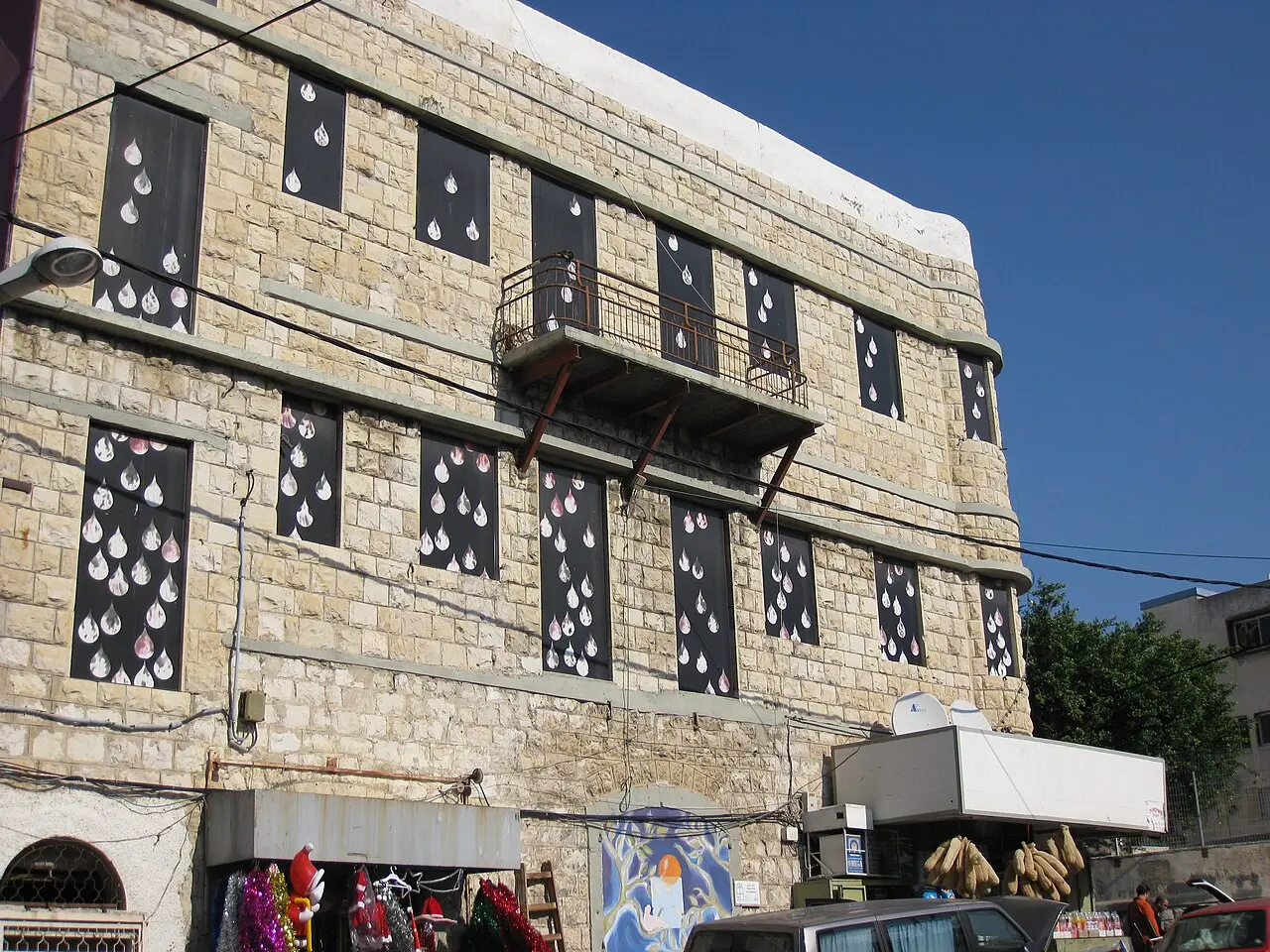
What survives is unusually intact for the period, and that is largely negative luck. Wadi Salib, immediately to the east, was progressively emptied and much of it demolished. Wadi Nisnas stayed occupied and stayed standing, so its late-Ottoman and Mandate-era housing is still there in bulk, including buildings shut since 1948 and never reoccupied. Some of those blank facades are exactly where the neighbourhood's murals were later painted, which is not an accident and is not presented as one.
The art
Sculpture and murals bolted to the lanes
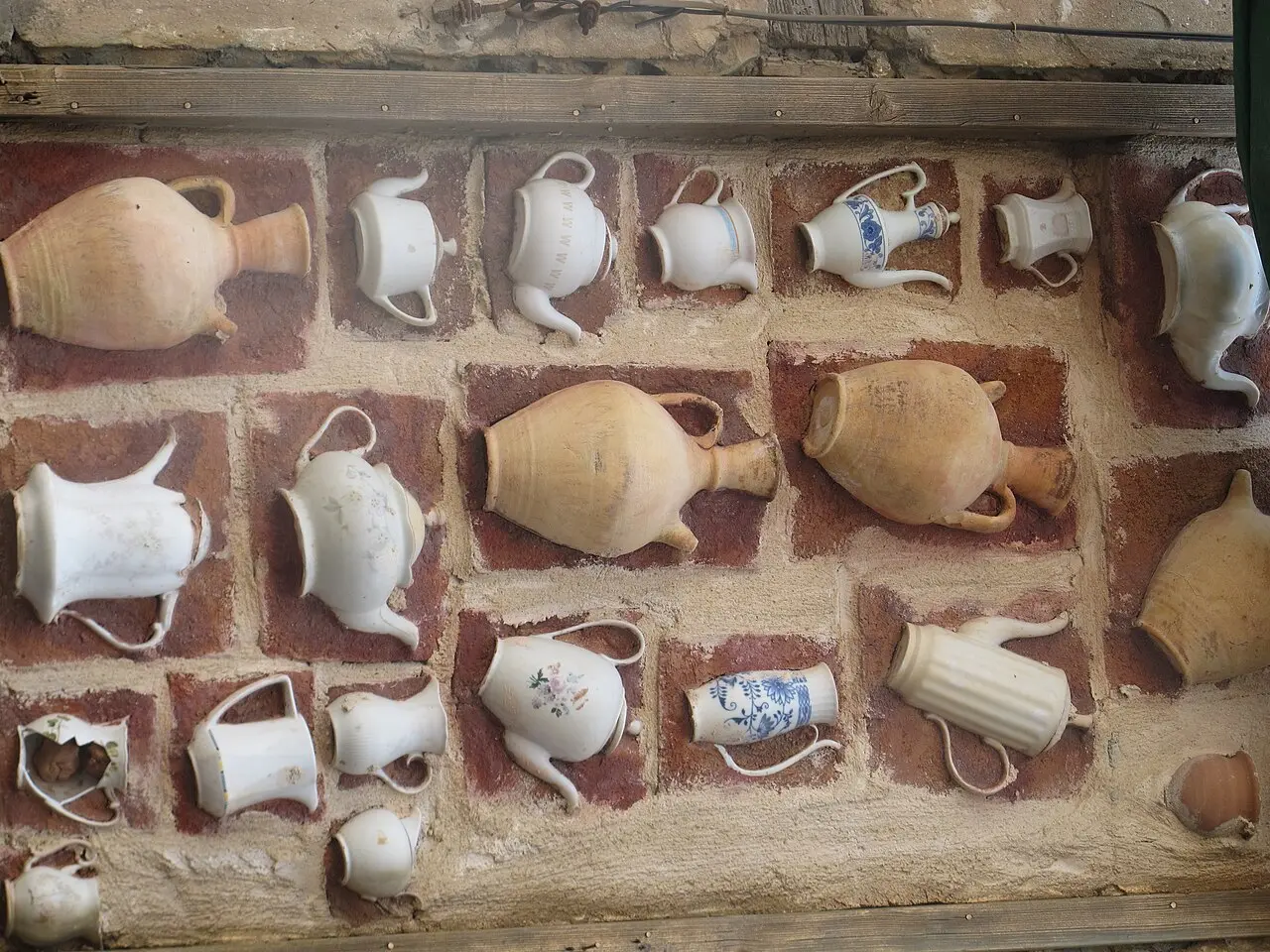
The Museum Without Walls is a permanent outdoor exhibition threaded through the neighbourhood's streets, courtyards and stairways, run by Beit Hagefen, the Arab-Jewish cultural centre at 2 HaGefen Street, founded in 1963 by the Haifa mayor Abba Hushi. Beit Hagefen describes it on its own site as a platform for research and production of artworks in public space, and puts about 30 works on the route, saying it began in 1993 alongside the first Holiday of Holidays.
Independent accounts count it differently. Middle East Eye dates the project to 1996, describes more than 60 permanent outdoor works, and says over 800 works by 500 artists have been shown along it, more than a hundred of them repeatedly. The gap between about 30 and more than 60 is probably the difference between the signed route and everything still physically attached to the neighbourhood; the gap between 1993 and 1996 is simply unresolved.
What is not in dispute is the character of it. The works are fixed to the walls of houses people live in, to the risers of public steps, and to buildings that have stood empty since 1948. They are by Arab and Jewish artists, Israeli and foreign, and the project was one of the first venues in the country to show established and emerging Arab Palestinian and Jewish artists together as a matter of routine. There is no ticket and no closing time, because there is no building: the exhibition is the street.
Beit Hagefen itself is worth ten minutes. Its contemporary art gallery opens Sunday to Thursday 10:00 to 15:00 and Friday 10:00 to 14:00 on the centre's own published hours, and it runs guided tours of the wadi under its Keys to Haifa programme.
- Beit Hagefen's own count: about 30 works on the route, begun 1993
- Middle East Eye's count: more than 60 permanent outdoor works, project dated 1996
- More than 800 works by 500 artists shown since the project began
Deror avi / CC BY-SA 3.0 · Wikimedia Commons
The market
Two falafel counters facing each other across one street
The market is not a hall and has no perimeter. It runs along HaWadi Street and Yohanan HaKadosh Street and spills into the alleys off them: greengrocers, spice sellers, butchers, fishmongers, bakeries turning out za'atar and cheese pastry, coffee roasters, sweet shops and prepared food. Haifa municipality, which has no obvious reason to undersell its other markets, calls this the smallest and most worthwhile market in the country. Time Out Israel supplies the hours the municipality does not: roughly 09:00 to 19:00 daily, with some shops shut on Sundays. There is no official timetable, because every trader sets their own.
The falafel is the neighbourhood's own claim to fame and it is a rivalry rather than a single address. Falafel HaZkenim was opened in 1950 by George and Najala Afara and had neither sign nor name for years: Jewish customers called it the old folks' place, Arab customers named it for Najala, and when a sign finally went up it carried both. The childless couple sold the stand, and the recipe, to a long-standing customer, Afif Sabit, in 1984, and every guest still gets a free ball dipped in tahini on arrival. A competing counter faces it across the street. Which of the two is better is a Haifa argument of long standing that no one has ever settled, and the correct response to it is to eat at both.
Because the traders are overwhelmingly Christian and Muslim, the market keeps working on Saturday, when much of Jewish Haifa is closed. That single fact explains most of the weekend crowd, and it is why the quiet day here is Sunday. Morning is when the produce is on the pavement; by late afternoon a good deal of it has packed up.
December
Three festivals in one street, and the argument about it
The Holiday of Holidays has been staged in Haifa every December since 1993, launched jointly by the municipality and Beit Hagefen and timed to the weeks when Hanukkah, Christmas and, in some years, Ramadan run close together. Wikipedia's account of Beit Hagefen dates the first festival to 1994 rather than 1993, a one-year discrepancy that has never been tidied up. The events run on December weekends across Beit Hagefen, Wadi Nisnas and the German Colony, and by 2019 attendance had reached about 150,000 visitors per weekend.
For the wadi itself this is transformative and not always comfortable. The lanes are residential and narrow, and a festival weekend puts tens of thousands of people through them; residents of the adjoining German Colony have complained publicly about the congestion and noise. Anyone coming for the market rather than the festival should pick a different weekend.
The festival also carries a live argument about what it is for. The anthropologist Rolly Rosen and the Palestinian activist Shahira Shalabi have argued that it functions mainly as commercial tourism branding and obscures the national tensions underneath it, and attendees have noted how few specifically Islamic elements appear in the programme against a great deal of northern European Christmas imagery: snow, reindeer, trees. Haifa's reputation for coexistence is genuine, long-standing and contested all at once, and Wadi Nisnas is where all three of those things are most visible.
The neighbourhood has one more claim on the country's imagination, and it is a novel. Sami Michael set A Trumpet in the Wadi here in 1987, a love story between a Russian Jewish immigrant and an Arab Christian woman in these streets on the eve of the 1982 Lebanon war. It was adapted five times for the stage and filmed in 2001 by Lena and Slava Chaplin, taking the Israeli Academy award for best drama. For a great many Israeli readers, the wadi is that book before it is anything else.
אהובה כץ / CC BY 2.5 · Wikimedia Commons
What to look for
Things not to walk past at Wadi Nisnas
The details that repay knowing about before you are standing in front of them.
The market on HaWadi Street
Vegetables, spices, cheese, olives, pastry and prepared food sold straight off the residential street rather than from a market hall. Roughly 09:00 to 19:00, with some shops shut on Sundays, and the produce is out early.
The Museum Without Walls
Permanent sculpture and murals fixed to house walls, stairways and courtyards throughout the neighbourhood, curated by Beit Hagefen. Free, unenclosed and never closed, because there is no building to close.
Beit Hagefen's gallery
The Arab-Jewish cultural centre at 2 HaGefen Street, founded in 1963 by mayor Abba Hushi, shows contemporary work Sunday to Thursday 10:00 to 15:00 and Friday 10:00 to 14:00. It is also where the art route is organised from.
St Elijah Melkite cathedral
Built 1938 to 1939 to a design by Sammihom Atallah, with the story of the prophet Elijah on its portal. It became the seat of the Melkite Greek Catholic Archeparchy of Akka after 1948.
The falafel counters
Falafel HaZkenim, opened in 1950 by George and Najala Afara and sold with its recipe to Afif Sabit in 1984, faces a rival counter across the street. Every guest gets a free ball dipped in tahini on arrival.
The stairways down from Hadar
The Gedera, Koresh and Bunyak steps drop off the Hadar streets into the wadi's lanes. They are the fastest way in from above and the reason the neighbourhood feels sealed off from the city around it.
The long view
Wadi Nisnas, in order
Late 19th century
The wadi is settled as a Christian Arab quarter outside the walls of the Ottoman town, in the same wave of expansion that produced the German Colony below it.
1938 to 1939
The Melkite Greek Catholic cathedral of St Elijah is built to a design by Sammihom Atallah.
22 April 1948
Haganah forces take Arab Haifa. Most of the city's Arab population leaves or is expelled; Britannica records about 3,000 remaining out of more than 50,000.
1948 onwards
Those who stayed are concentrated into Wadi Nisnas and Wadi Salib. Wadi Salib is later largely emptied and demolished; Wadi Nisnas is not.
1950
George and Najala Afara open the falafel stand later known as Falafel HaZkenim. It runs without a sign for years.
1963
Mayor Abba Hushi founds Beit Hagefen as an Arab-Jewish cultural centre at the foot of the wadi.
1984
The Afaras, having no children, sell the falafel stand and its recipe to a regular customer, Afif Sabit.
1987
Sami Michael publishes A Trumpet in the Wadi, set in these streets; it is adapted five times for the stage and filmed in 2001.
1993
The first Holiday of Holidays is staged by the municipality with Beit Hagefen. Beit Hagefen dates the start of the Museum Without Walls art route to the same year.
1996
The date given by Middle East Eye for the founding of the Museum Without Walls, one of the first venues in the country to show Arab Palestinian and Jewish artists together as a matter of routine.
2019
Holiday of Holidays attendance reaches about 150,000 visitors per weekend, its pre-pandemic peak.
Practical
Visiting Wadi Nisnas
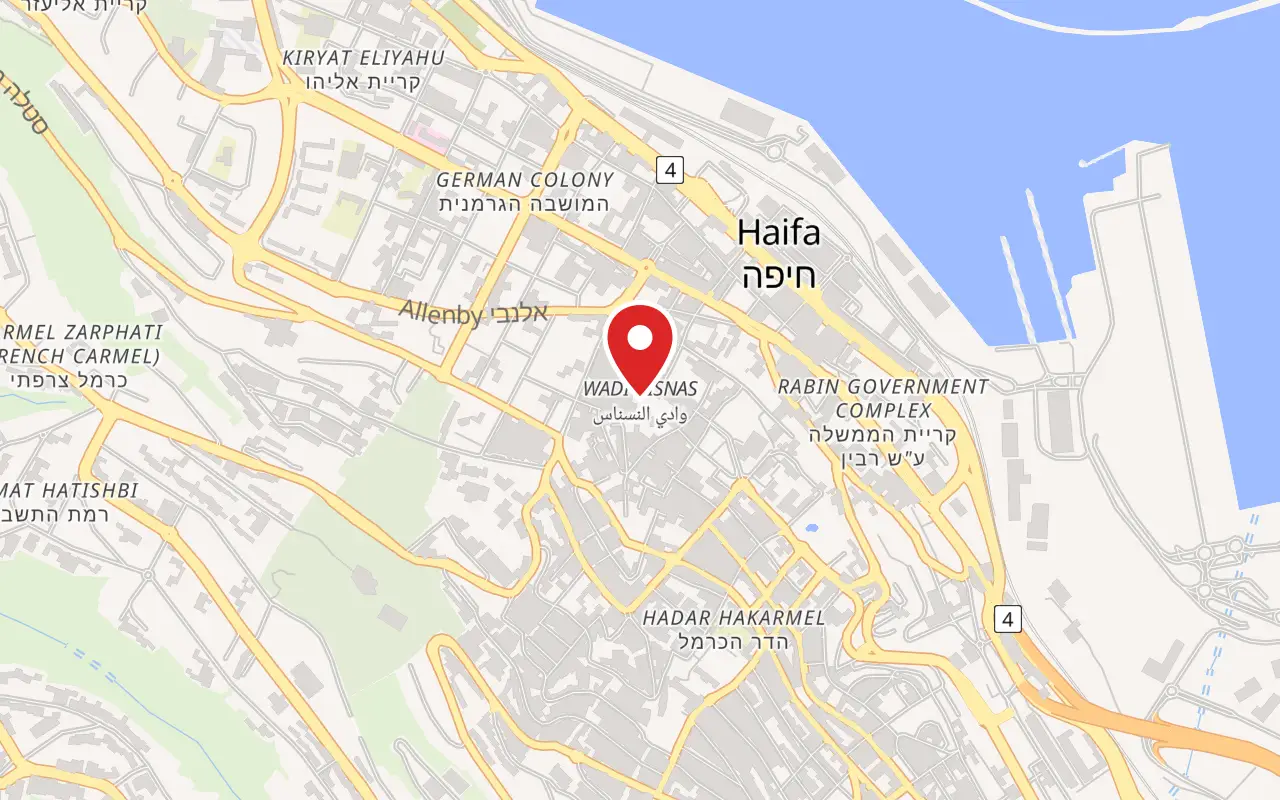
Where
HaWadi Street and Yohanan HaKadosh Street, Wadi Nisnas, Haifa; Beit Hagefen at 2 HaGefen Street
What ticket you need
Wadi Nisnas is not inside a ticketed park and needs no ticket of its own. It does sit one street from a place that has rules: the German Colony Plaza gate of the Bahai Gardens is at 21 HaGefen Street, a few doors from Beit Hagefen, and from that gate onwards a dress code applies and there is no food, no smoking and no chewing gum. Buying lunch in the wadi and eating it in the gardens is not an option.
Opening hours
- The neighbourhood and its outdoor artworks
- Open at all hours. These are public lanes with no gate and no ticket, and the Museum Without Walls works stand in them permanentlysource
- Market shops
- Roughly 09:00 to 19:00 daily, with some shops shut on Sundays. There are no official market hours: each trader sets their ownsource
- Market, as the municipality puts it
- From the morning hours until evening, with no stated closing daysource
- Beit Hagefen contemporary art gallery
- Sunday to Thursday 10:00 to 15:00, Friday 10:00 to 14:00. Hours are extended during festivals and evening performancessource
- Holiday of Holidays
- December weekends, across Beit Hagefen, Wadi Nisnas and the German Colonysource
Admission
- Walking the neighbourhood and the art route
- Free. Wadi Nisnas is public street, not a ticketed attraction, and the Museum Without Walls is in the open airsource
- Beit Hagefen contemporary art gallery
- Beit Hagefen publishes no admission charge for the gallery on its own page. Take money for the market insteadsource
- The market
- Free to walk through. Stalls price in shekels and the cheap counters are cash-friendlysource
- Guided tours
- Beit Hagefen runs a tour of Wadi al-Nisnas under its Keys to Haifa programme but publishes no price; book through the centre on 04-8525252source
Access
Mixed, and worse than it looks on a map. The valley floor along HaWadi and Yohanan HaKadosh streets is close to level and a wheelchair user can work along it, but the lanes are narrow, the surfaces are uneven, pavements are intermittent and delivery vans park on what pavement there is. Every approach from above is stairs: the Haifa Trail's route into the wadi drops 220 m from Yefe Nof Street to UNESCO Square using the Gedera, Koresh and Bunyak steps, and the shortest way down from the Carmelit stations above is a flight of public steps rather than a ramped street. A wheelchair user, or anyone with a pushchair or bad knees, should enter on the level from Ben Gurion Boulevard and HaGefen Street at the bottom and come back out the same way rather than attempting the climb to Hadar.
On site
- Street market: greengrocers, butchers, fishmongers, bakeries, spice and coffee sellers
- Falafel, hummus and shawarma counters
- Bakeries and sweet shops
- Beit Hagefen Arab-Jewish cultural centre, gallery, theatre and library
- Haifa Museum of Art at the upper edge, on Shabtai Levi Street
- Churches, including the Melkite cathedral of St Elijah
- Carmelit stations HaNevi'im and Solel Boneh above the neighbourhood
- Restaurants and cafes on Ben Gurion Boulevard, one street below
Booking
Nothing is booked and nothing is ticketed. The market and the outdoor artworks need no arrangement at all. Beit Hagefen's guided tour of the wadi is arranged directly with the centre, which publishes a telephone number rather than an online booking form, so ring ahead rather than turning up expecting a tour to be running.
Hours and prices are given as the operator publishes them and change without much notice, particularly around Shabbat and the festivals. Check the operator's own page before you travel for this.
Official page at beit-hagefen.com →What people wish they had known
- Come in the morning. The market trades from about 09:00 and a good deal of it has packed up by late afternoon, so an afternoon visit gets the lanes without the produce.
- Sunday is the quiet day, not Saturday. The traders are mostly Christian and Muslim, so the market works through Saturday when much of Jewish Haifa closes, and some shops then shut on Sunday instead.
- Enter from the bottom. Walking in from Ben Gurion Boulevard and HaGefen Street is level; every route down from Hadar or the Carmel ridge is public stairways, and the full descent from Yefe Nof Street loses 220 m.
- Do not plan the visit around a December weekend unless the festival is the point. Holiday of Holidays put about 150,000 people per weekend through these streets in 2019, and the market is not what you came to see under those conditions.
- Treat it as somebody's street. The murals are on the walls of occupied houses and the courtyards are private, so photograph the art rather than through people's windows, and expect residents rather than a visitor attraction.
- Do not expect a signposted circuit. Beit Hagefen counts about 30 works on the route and reporting counts more than 60 attached to the neighbourhood, so the sensible method is to wander the lanes off HaWadi Street rather than hunt a list.
The figures
Wadi Nisnas by the numbers
Each figure carries the year it belongs to and links the source it came from.
| Measure | Figure | As of | Source |
|---|---|---|---|
| Residents of Wadi Nisnas | about 8,000 | 2026 | en.wikipedia.org |
| Religious composition | about 66 per cent Christian, 31.5 per cent Muslim, the remainder Jewish, on census figures | 2026 | en.wikipedia.org |
| Arabs living in Haifa before the 1948 war | more than 50,000 | 1948 | britannica.com |
| Arabs remaining in Haifa under Israeli rule | about 3,000 on Britannica's figure, roughly 3,500 on the Hebrew reference account, concentrated in Wadi Nisnas and Wadi Salib | 1948 | he.wikipedia.org |
| Works on the Museum Without Walls route | about 30, on Beit Hagefen's own count | 2026 | beit-hagefen.com |
| Works and artists shown since the project began | more than 800 works by 500 artists, over 100 of them exhibited repeatedly, with more than 60 permanent outdoor works | 2026 | middleeasteye.net |
| Descent into the wadi on Haifa Trail section 20 | 4.8 km from Yefe Nof Street at 265 m to UNESCO Square at 45 m, a drop of 220 m | 2026 | haifatrail.com |
| Holiday of Holidays attendance | about 150,000 visitors per weekend at its pre-pandemic peak | 2019 | qantara.de |
While you are here
The rest of Haifa
Everything else in this destination with a page of its own.
אושרי רייכר / CC BY 2.5 · Wikimedia Commons
Neighbourhood
German Colony
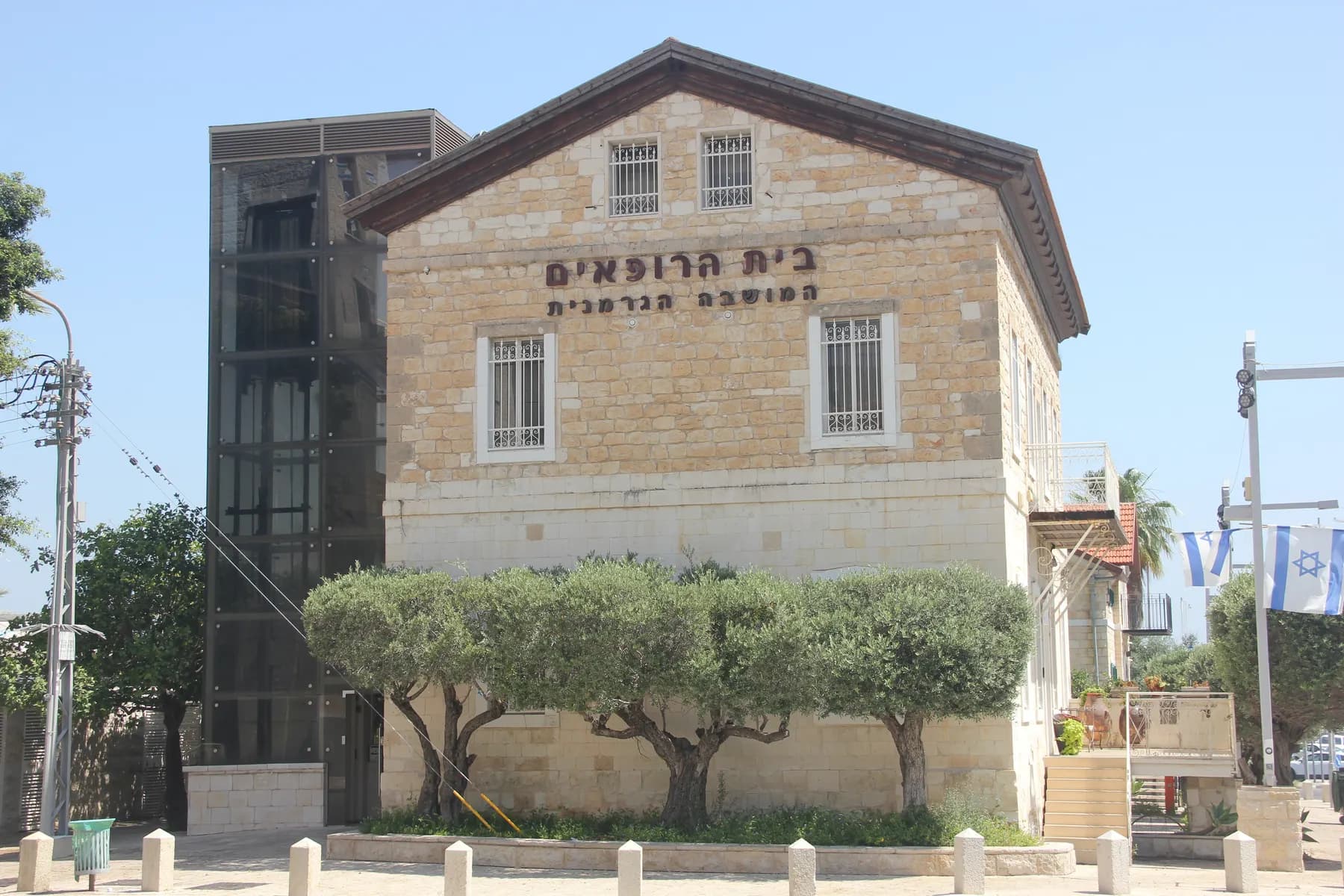
A German Templer settlement of 1868 whose main street was laid out 30 metres wide, pointing from the anchorage straight up Mount Carmel at ground that was then the colony's vineyards and is now the Bahai terraces.
Chris Yunker from St. Louis, United States / CC BY-SA 2.0 · Wikimedia Commons
Religious site
Bahai Gardens and the Shrine of the Bab
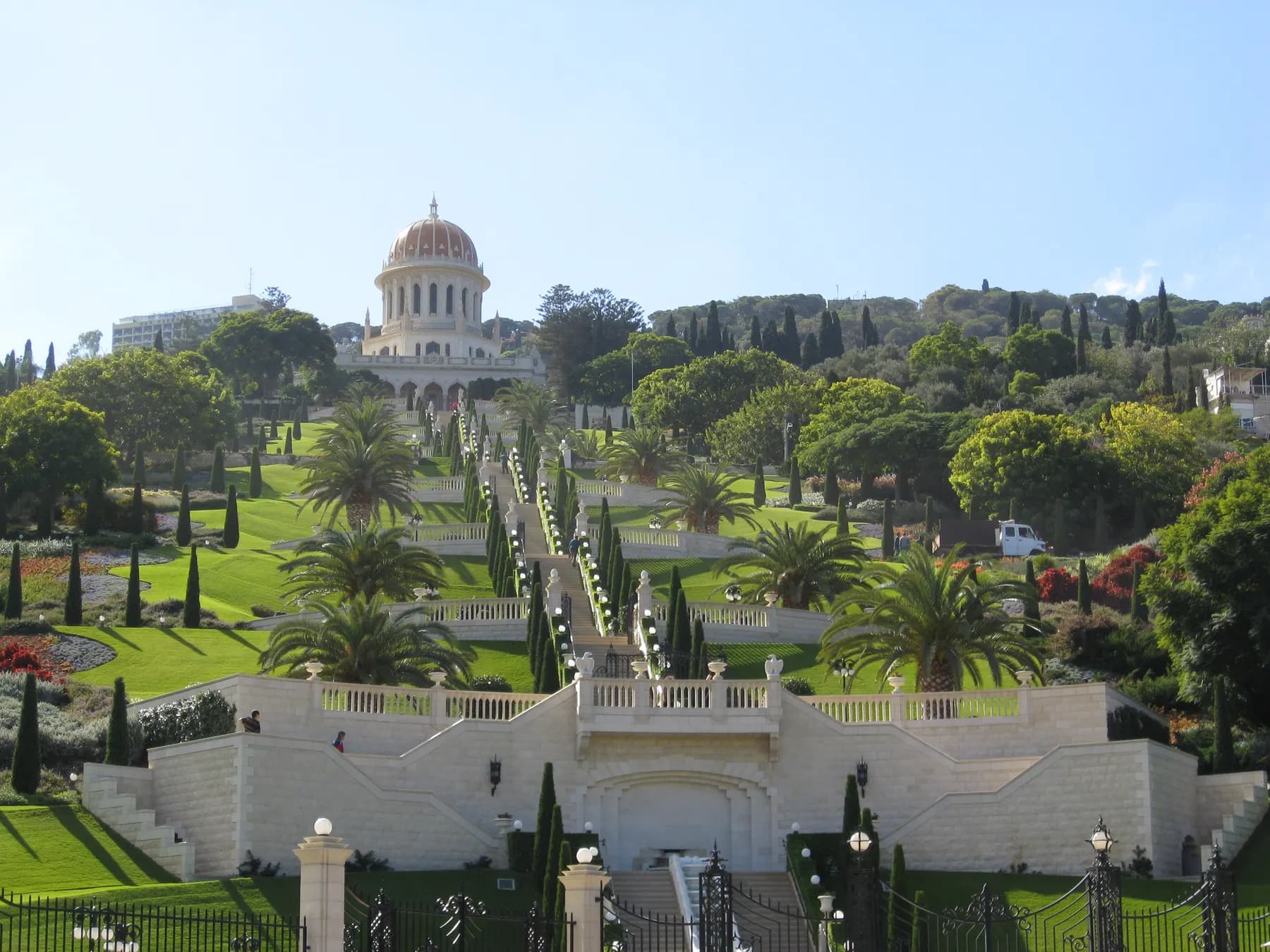
Nineteen terraces climb 225 vertical metres of Mount Carmel around a shrine whose stone core was built to receive a body that had been hidden for most of a century.
Oshri Reicher (אושרי רייכר) / CC BY 2.5 · Wikimedia Commons
Museum
MadaTech, the Israel National Museum of Science
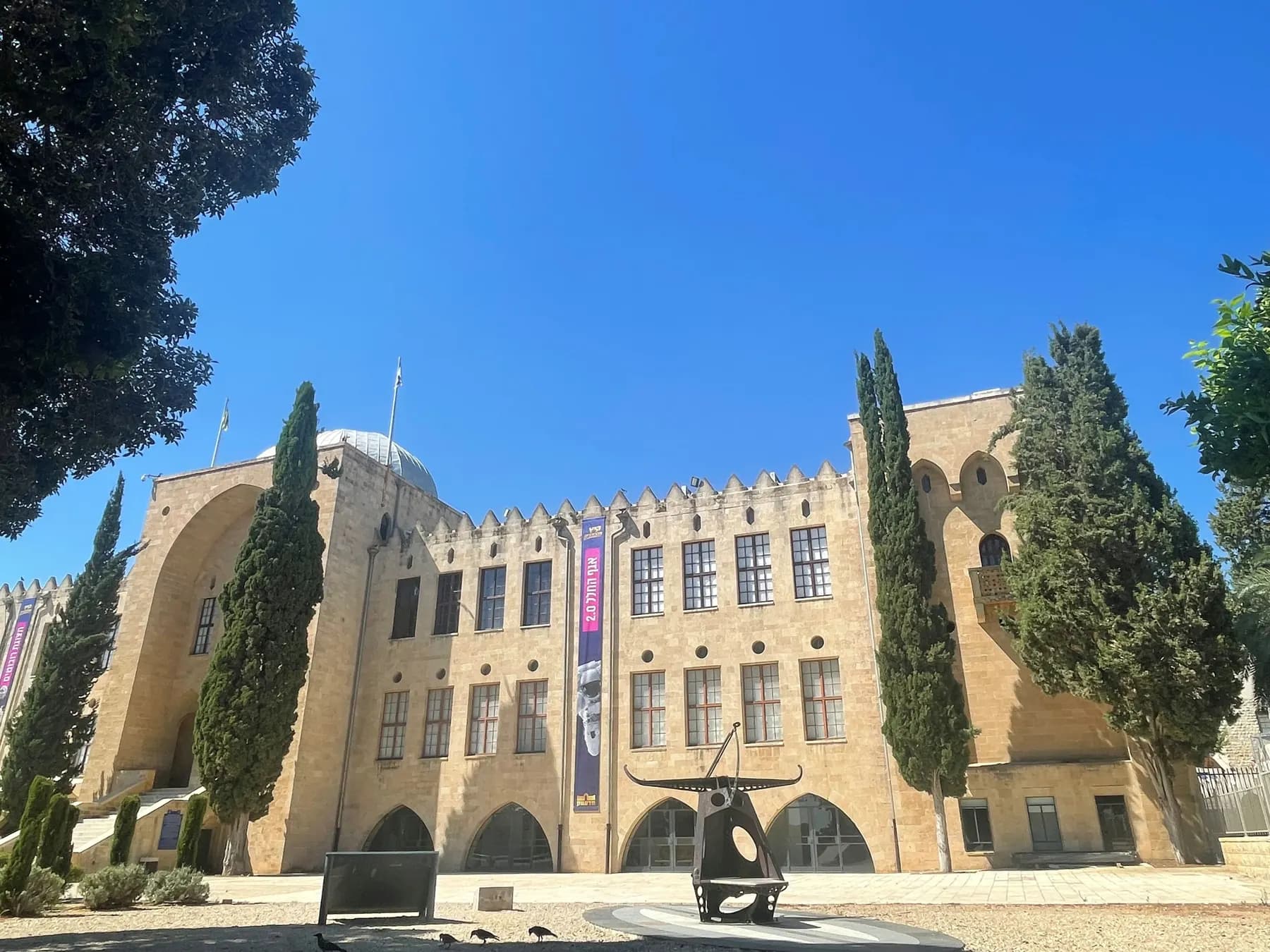
Israel's national science museum works out of the building the Technion was born in, a domed block in Hadar whose cornerstone was laid on 11 April 1912, and most of its exhibitions sit in rooms that were lecture halls.
Sources and further reading
Every link below was opened and checked when this page was written. Official statements are marked as such: they are the subject's own account, not an independent one.
- OfficialBeit Hagefenbeit-hagefen.comBeit Hagefen, Arab-Jewish Cultural Center
The centre's own site: address at 2 HaGefen Street, telephone, departments, and the Tour of Wadi al-Nisnas under its Keys to Haifa programme
- OfficialBeit Hagefenbeit-hagefen.comBeit Hagefen Art Gallery
Published gallery hours, Sunday to Thursday 10:00 to 15:00 and Friday 10:00 to 14:00, and the description of the Museum Without Walls as a platform for art in public space
- OfficialBeit Hagefenbeit-hagefen.comMuseum Without Walls
The operator's own account: about 30 works on the route through Wadi Nisnas, begun in 1993 alongside the first Holiday of Holidays
- OfficialHaifa Municipalityhaifa.muni.ilWadi Nisnas market
The city's own listing: morning until evening, and the inventory of produce, coffee, falafel and shawarma stands, workshops and cheese counters
- OfficialHaifa Trailhaifatrail.comHaifa Trail, section 20: down the steps to Wadi Nisnas
4.8 km from Yefe Nof Street at 265 m to UNESCO Square at 45 m, the Gedera, Koresh and Bunyak steps, and the street names through the wadi
- ReportingMiddle East Eyemiddleeasteye.netIn pictures: in Haifa, a Museum Without Walls
Dates the project to 1996, counts more than 60 permanent outdoor works and over 800 works by 500 artists since it began, and describes murals on buildings abandoned since 1948
- ReportingQantaraqantara.deHaifa's Holiday of Holidays: the festival where everyone is welcome
The festival since 1993, about 150,000 visitors a weekend in 2019, and the criticism from Rolly Rosen and Shahira Shalabi that it works as tourism branding
- ReportingTime Out Israeltimeout.comWadi Nisnas market
Daily 09:00 to 19:00 with some shops closed on Sundays, the HaWadi and Yohanan HaKadosh street addresses, and the market being embedded in the neighbourhood rather than housed
- ReferenceWikipediaen.wikipedia.orgSt. Elijah Cathedral, Haifa
The Melkite Greek Catholic cathedral in Wadi Nisnas: built 1938 to 1939 to a design by Sammihom Atallah, and the seat of the Archeparchy of Akka after 1948
- ReferenceEncyclopaedia Britannicabritannica.comHaifa
More than 50,000 Arabs in Haifa before the 1948 war and about 3,000 remaining under Israeli rule
- ReferenceWikipediaen.wikipedia.orgWadi Nisnas
Population of about 8,000, the census breakdown of 66 per cent Christian and 31.5 per cent Muslim, the mongoose etymology, and the description of the post-1948 concentration as ghettoisation
- ReferenceWikipediahe.wikipedia.orgWadi Nisnas, in Hebrew
The fall of Arab Haifa on 22 April 1948, roughly 3,500 remaining and their concentration into Wadi Nisnas and Wadi Salib, the neighbourhood boundaries and its working-class origins
- ReferenceWikipediaen.wikipedia.orgBeit-HaGefen Arab Jewish Culture Center
Founded in 1963 by mayor Abba Hushi, its departments, and the first Holiday of Holidays dated to 1994 rather than 1993
- ReferenceWikipediaen.wikipedia.orgFalafel HaZkenim
Opened in 1950 by George and Najala Afara, unnamed for years, and sold with its recipe to Afif Sabit in 1984
Wadi Nisnas: common questions
Is Wadi Nisnas free to visit?+
Yes. It is a residential neighbourhood of public streets with no gate, no ticket and no closing time, and the Museum Without Walls artworks stand in the open air. The only money you need is for the market and for lunch. Beit Hagefen's gallery publishes no admission charge on its own page.
What are the opening hours of Wadi Nisnas market?+
There are no official hours, because every trader sets their own. Time Out Israel gives the market as roughly 09:00 to 19:00 daily with some shops shut on Sundays, and Haifa municipality says only that it runs from the morning hours until evening. Morning is when the produce is actually out.
Is the market open on Saturday?+
Yes, and that is a large part of why visitors end up here at the weekend. The traders are overwhelmingly Christian and Muslim, so the wadi keeps working on Shabbat when much of Jewish Haifa is closed. Sunday is the day some shops take off instead.
How long does Wadi Nisnas take?+
About 90 minutes covers the market streets and the outdoor artworks at a walking pace. Half a day is realistic if you add Beit Hagefen's gallery, a proper lunch at one of the falafel or hummus counters, and the German Colony immediately below. It is a small neighbourhood and the time goes on eating and looking rather than on distance.
Can you do it in a wheelchair?+
Partly, and only from the bottom. The valley floor along HaWadi and Yohanan HaKadosh streets is close to level, but the lanes are narrow and uneven, pavements are intermittent and vans park across them. Every approach from Hadar or the Carmel ridge is public stairways, including the Gedera, Koresh and Bunyak steps, so enter and leave from Ben Gurion Boulevard and HaGefen Street.
What is the Museum Without Walls?+
It is a permanent open-air exhibition of sculpture and murals fixed to the walls, stairways and courtyards of Wadi Nisnas, run by the Beit Hagefen Arab-Jewish cultural centre. Beit Hagefen puts about 30 works on the route and dates it to 1993; Middle East Eye counts more than 60 permanent outdoor works and dates the project to 1996. Some of the works are on buildings that have stood empty since 1948.
Is Wadi Nisnas safe?+
It is an ordinary working neighbourhood in an Israeli city and is walked daily by residents, shoppers and visitors, including at the December festival when tens of thousands come through. The practical hazards are the ones any dense old quarter has: narrow lanes shared with delivery vans, uneven surfaces and unlit stairways after dark. Normal city sense covers it.
Why do so many of Haifa's Arab residents live here?+
Because of April 1948. Haganah forces took Arab Haifa on 22 April, most of the city's Arab population left or was expelled, and the few thousand who stayed were concentrated into Wadi Nisnas and the neighbouring Wadi Salib. Britannica gives about 3,000 remaining out of more than 50,000; the Hebrew reference account gives roughly 3,500. Wadi Salib was later largely demolished and this one was not.
Where is the famous falafel?+
On HaWadi Street, where two rival counters face each other. Falafel HaZkenim was opened in 1950 by George and Najala Afara, went unnamed for years until customers named it for them, and was sold with its recipe to a regular customer, Afif Sabit, in 1984. Which of the two counters is better is an argument the neighbourhood has been having for decades, so the sensible answer is to try both.
Is it worth going if the December festival is not on?+
Yes, and arguably more so. The Holiday of Holidays brings the crowd but it also fills the lanes with about 150,000 people a weekend at its peak, which is not the condition in which to see a working market. Outside December the wadi is a quiet morning of produce, pastry, murals and stone, and the artworks are permanent.