Archaeological site · The Sea of Galilee
Capernaum
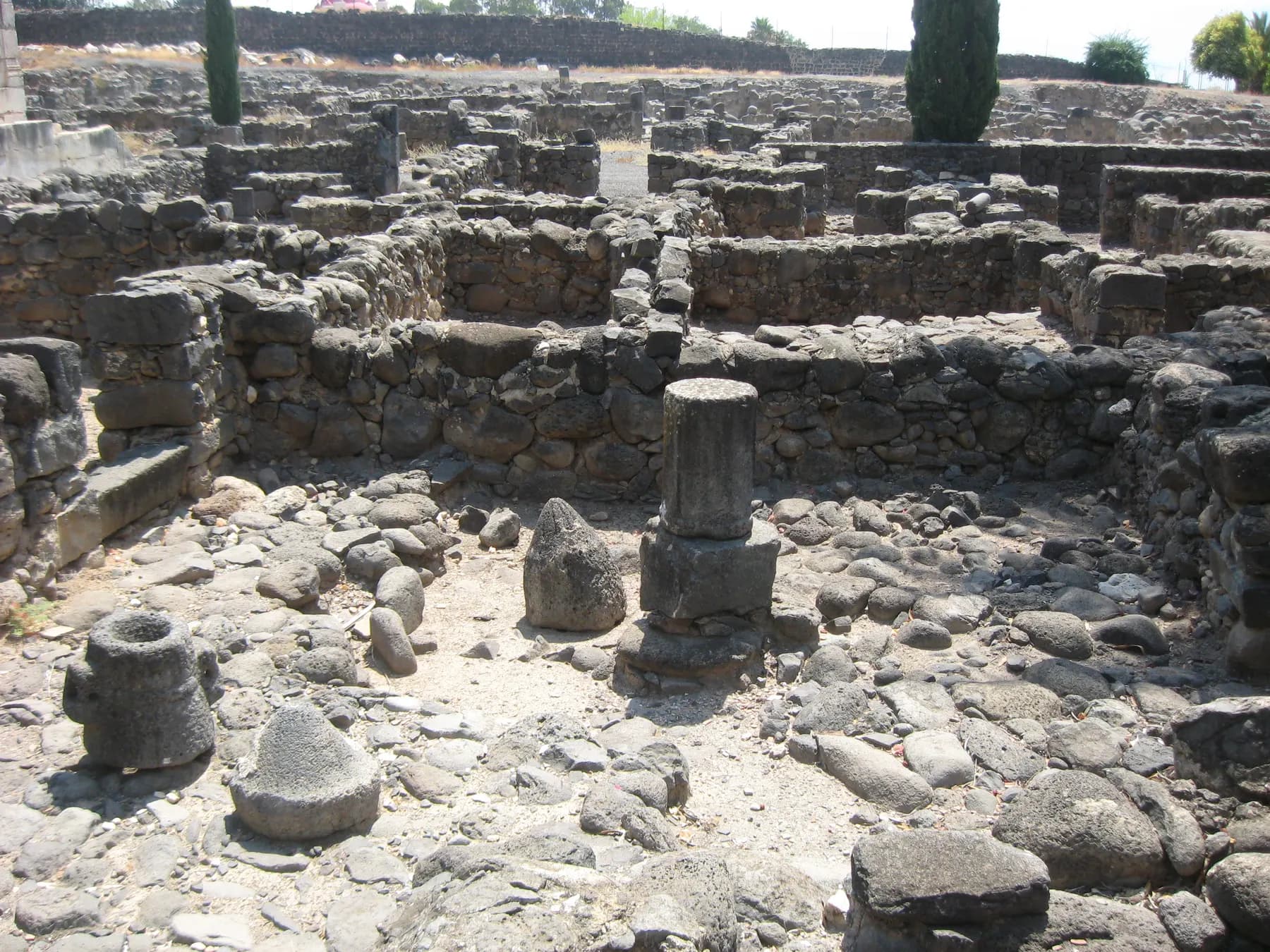
Two thirds of the ruined village belongs to the Franciscans, who finally got the title deeds on 19 September 1894 after eight years of Ottoman paperwork and have dug it in twenty-three seasons since 1968.
Tracy Hunter from Spokane, USA / CC BY 2.0 · Wikimedia Commons
Extent of the ruins
about 7 hectares
two thirds Franciscan, the eastern part Greek Orthodox, per the Custody of the Holy Land in 2026
Coins found under the synagogue floor
more than 20,000
the Custody's figure; a Franciscan guidebook cited by Vatican News puts it above 30,000
Excavation seasons
23
19 under Virgilio Corbo, 1968 to 1986, and four under Stanislao Loffreda, 2000 to 2003
Admission
10 ILS
as listed by the Custody's Christian Information Centre on 7 August 2026
In short
- How long to give it
- about 60 to 90 minutes, and closer to two hours if you sit at the lakeside afterwards
- Every day, morning
- 08:00 to 12:00, last entry 11:45
- Entrance to the Franciscan site, per person
- 10 ILS
כפר נחום
Capernaum is the excavated shell of a lakeside fishing village on the northwestern shore of the Sea of Galilee, owned and run by the Franciscan Custody of the Holy Land, open daily for a 10 shekel ticket. The Gospels make it the base of Jesus's Galilean ministry, and the visit turns on two buildings a short walk apart: a synagogue of white limestone raised on a platform above the black basalt of everything around it, and, some 30 metres to the south, a first-century room that Franciscan archaeologists identify as the house of Simon Peter.
The ruins cover roughly seven hectares, of which two thirds belong to the Custody and the eastern part to the Greek Orthodox Patriarchate of Jerusalem, according to the account the Custos of the Holy Land, Fr Francesco Patton, published through Vatican News in August 2026. The site sits about 16 kilometres from Tiberias, three from Tabgha and five from the point where the Jordan enters the lake, roughly 210 metres below sea level. It is small, flat and quickly walked, which is why it repays knowing in advance which stones are ancient and which were put back up in the twentieth century.
Almost everything on the page below rests on one long excavation. The Custody bought the ruins from the Samakieh Bedouin in the 1890s, dug the synagogue before the First World War and again in the 1920s, then stopped for more than forty years. Work resumed on 16 April 1968 under Fr Virgilio Corbo, with Fr Stanislao Loffreda beside him, and within a week the trenches under the Byzantine octagon were producing painted plaster scratched with the names of pilgrims. Nineteen campaigns ran to 1986 and four more from 2000 to 2003.
Ownership
Three Capernaums share one shoreline, and only one of them charges 10 shekels
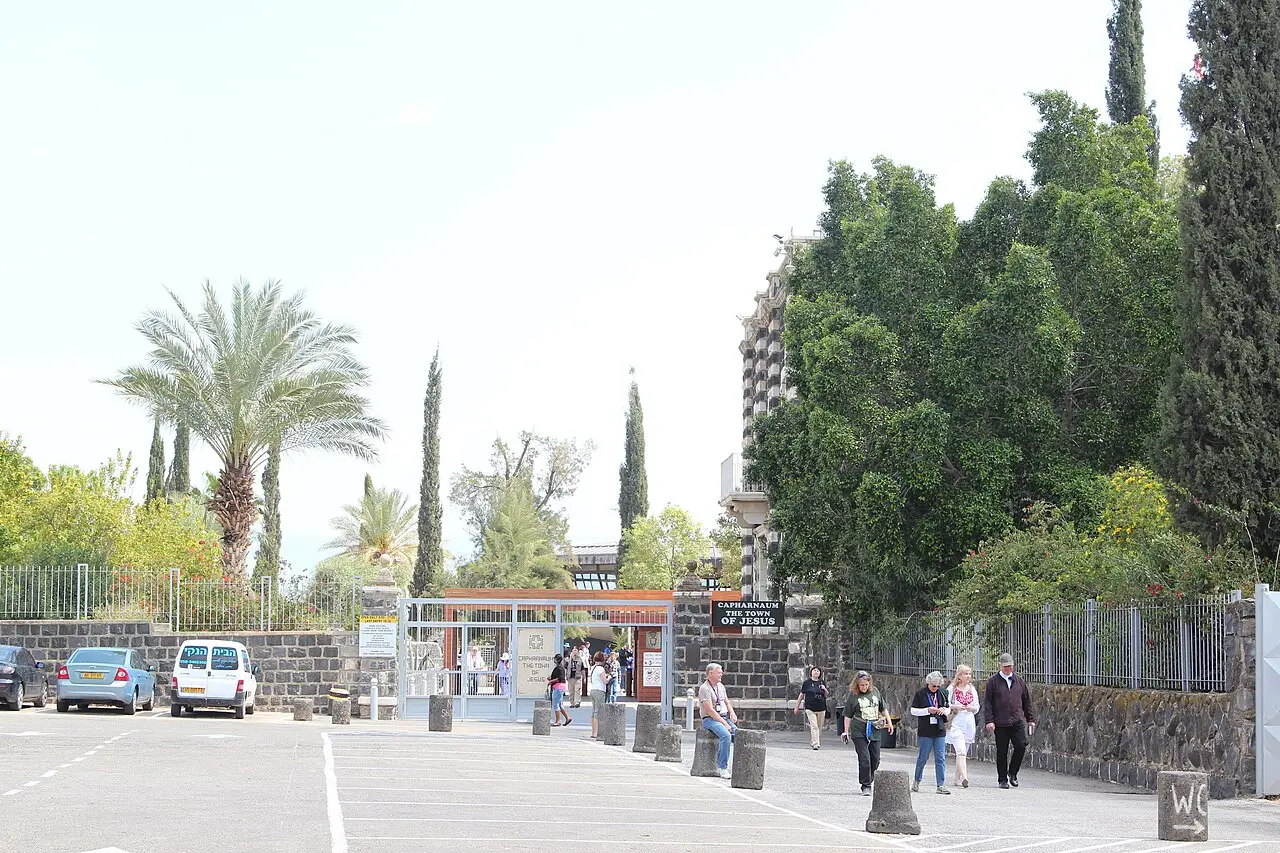
The place a visitor means by Capernaum is the Franciscan enclosure: the gate, the white synagogue, the excavated street and the memorial church. It is a sanctuary of the Custody of the Holy Land, listed by the Custody's own Christian Information Centre as 'Capernaum: House of Peter and the Eucharistic Promise', with a 10 shekel entrance fee and a friary on site. It is not a national park, no Israeli parks pass covers it, and it shuts for two hours in the middle of the day.
East of it, on the shore, stand the red domes and white walls of the Greek Orthodox Church of the Holy Apostles, built in 1931 on the Patriarchate's share of the site. The Greek Orthodox land was excavated separately between 1978 and 1987 by Vassilios Tzaferis, whose team uncovered a seawall some 200 metres long with two piers running out into the lake, and a hoard of 282 gold dinars from the Arab and Byzantine transition. The monastery's own site says visits are arranged in advance by telephone with the superior rather than by turning up.
Then there is Kfar Nahum (Capernaum) National Park, which is a real Israel Nature and Parks Authority site and a different place. The authority describes its main area as about 80 dunams, or 20 acres, northeast of the antiquities, prepared to complement a visit to the ruins rather than to replace it, with a floating dock that rises and falls with the lake so boats can come in from Tiberias and Ein Gev. Its published hours run to 16:00 and its telephone number is not the friary's.
- Franciscan enclosure: the synagogue, the village street and the memorial church, 10 ILS, closed 12:00 to 14:00
- Greek Orthodox Church of the Holy Apostles: built 1931, east of the antiquities, visits by prior telephone arrangement
- Kfar Nahum (Capernaum) National Park: about 80 dunams northeast of the ruins, run by the parks authority, with the boat dock
Fallaner / CC BY-SA 4.0 · Wikimedia Commons
The synagogue
White limestone on black basalt, and a century of argument about the date
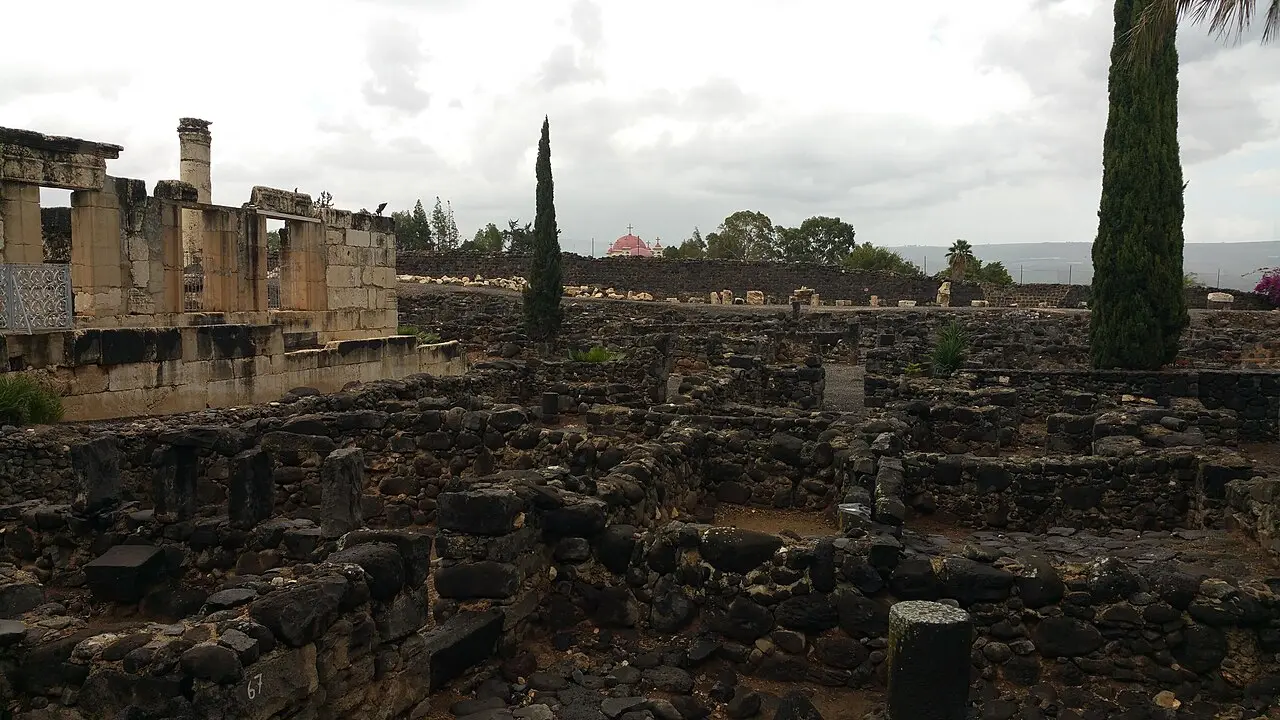
The synagogue is the reason the site was found at all: Edward Robinson noted its ruins in 1838 without connecting them to the Gospels, and Charles William Wilson, who made a small excavation inside it in 1866, was the first to identify Tell Hum as Capernaum. The prayer hall measures 23 by 17.28 metres, is floored in white limestone slabs and was divided by sixteen columns on three sides. The stone is not local. Blocks weighing up to four tonnes were brought from quarries several kilometres away, in a village that built everything else out of the black basalt lying under its feet.
The date is genuinely contested, and the contest is worth understanding before you look at the carving. Britannica still gives the second or third century CE, with an older synagogue possibly buried beneath. The Franciscan excavations overturned that from below. The Custody's own account says more than 20,000 coins were found under the floor, along with pottery, and puts completion in the last quarter of the fifth century. The Franciscan guidebook quoted by Vatican News reports more than 30,000 coins on the pavement, dated to 383 to 395, and reads the same evidence as a late fourth-century building. Jodi Magness has argued the construction may be later still, in the sixth century or after. Four positions, one floor. The difference decides whether this is a building of the Mishnaic age or one raised while the octagonal church a minute away already stood.
What nobody disputes is that this is not the synagogue of Mark 1. Under the central nave the excavators found a wide basalt cobble pavement of the first century, too large for a private house, and around the outside of the standing building run formidable walls of squared basalt on a different alignment, clearest at the southwest corner. Corbo thought those walls belonged to the same first-century building as the pavement. Loffreda thought they were an intermediate stage between it and the fifth-century synagogue. The Custody prints the disagreement rather than resolving it.
The carving repays a slow circuit. Two inscribed columns stand at the front, one in Greek recording that 'Herod (the son) of Monimos and his son Justus together with their children erected this column', the other placed by the Department of Antiquities in memory of Fr Gaudenzio Orfali. A separate Aramaic inscription names Alphaeus son of Zebedee son of John. Among the cornice medallions is a block carved with a small temple on a cart, an ancient image of the Ark being carried to Jerusalem. Almost every figurative motif has been systematically chiselled away, which the Custody reads as the mark of an iconoclastic movement that the community here took part in.
Peter's house
The room under the octagon, and how far the identification actually goes
Thirty metres south of the synagogue, under the foundations of a Byzantine octagonal church, Corbo's team reopened the ground in 1968 and worked downwards through four phases. A house of the late Hellenistic period. Then, from the end of the first century, one of its rooms plastered floor to ceiling and given over to gatherings rather than to living, its cooking pots replaced by storage jars and lamps. Then, in the fourth century, that room enlarged into a domus ecclesiae and walled off from the rest of the village. Then, in the second half of the fifth century, the whole block levelled and an octagonal church built with its inner octagon directly over the room, floored with a mosaic peacock.
The case for calling it Peter's house is cumulative rather than documentary. Fr Emmanuele Testa analysed 454 fragments of painted plaster from the fourth-century phase; the parks authority's summary counts 173 fragments carrying inscriptions, mostly Greek, with others in Syriac, Aramaic and Latin. They include the name and monogram of Jesus, liturgical phrases such as Amen and Kyrie Eleison, and, the excavators said, references to Peter. Around 380 the pilgrim Egeria was shown a house of the prince of the apostles that had been made into a church, its walls still standing. The Biblical Archaeology Society, reviewing the same evidence, notes there is no definitive proof, calls it layer upon layer of circumstantial evidence, and adds that many scholars now dispute the readings that find Peter's name in the graffiti.
The modern building over all this is a deliberate piece of engineering rather than a shelter. Designed by the Italian architect Ildo Avetta, worked out with the engineer Cesare Pocci and the Technion in Haifa, and built by Solel Boneh under the supervision of the Nazareth engineer Anis Sruji, its main volume was conceived as a ship's hull hovering above the apostle's house. It was consecrated by Cardinal Lourdusamy on 29 June 1990, a date cut into the facade as BEATO PETRO APOSTOLO A.D. MCMXC DICATUM. Visitors see the remains twice: from a path at ancient street level that passes underneath, and from above, through an opening in the floor of the memorial. Corbo died in 1991 and is buried at Capernaum beside the venerated room.
What is real
How much of the standing synagogue was put back up by the diggers
The facade that photographs so well is a reconstruction, and the Custody says so plainly: the synagogue has been partly rebuilt by Franciscan architects using the original blocks that lay scattered over the site. The work began with Orfali, who excavated in 1921 and 1926, published a monograph on the synagogue and started its restoration; the memorial column raised by the Department of Antiquities stands to him because he died in 1926 and the work stopped with him.
The reassembly is honest about itself if you know where to look. Segments of the great arch and tympanum that once crowned the front were laid out on the ground in the area behind the synagogue rather than lifted back into place. The sculpted lintels from the doorways of the prayer hall and the courtyard were replaced in situ. Loose architectural fragments were set out around the site so that visitors could see them, a decision Corbo took alongside the digging, and Fr Eugenio Alliata later catalogued the entire stone inventory.
The same distinction applies at the octagon. The mosaics were lifted in 1968 to allow deeper excavation and to preserve them, so what lies under the memorial church is a stripped stratigraphy rather than a Byzantine floor. Nothing at Capernaum stands above head height as it was found. The village walls run knee to waist high, the synagogue is a facade and a colonnade, and the newest thing on the site is a concrete hull from 1990.
The village
A basalt fishing town on the imperial road, and how it ended
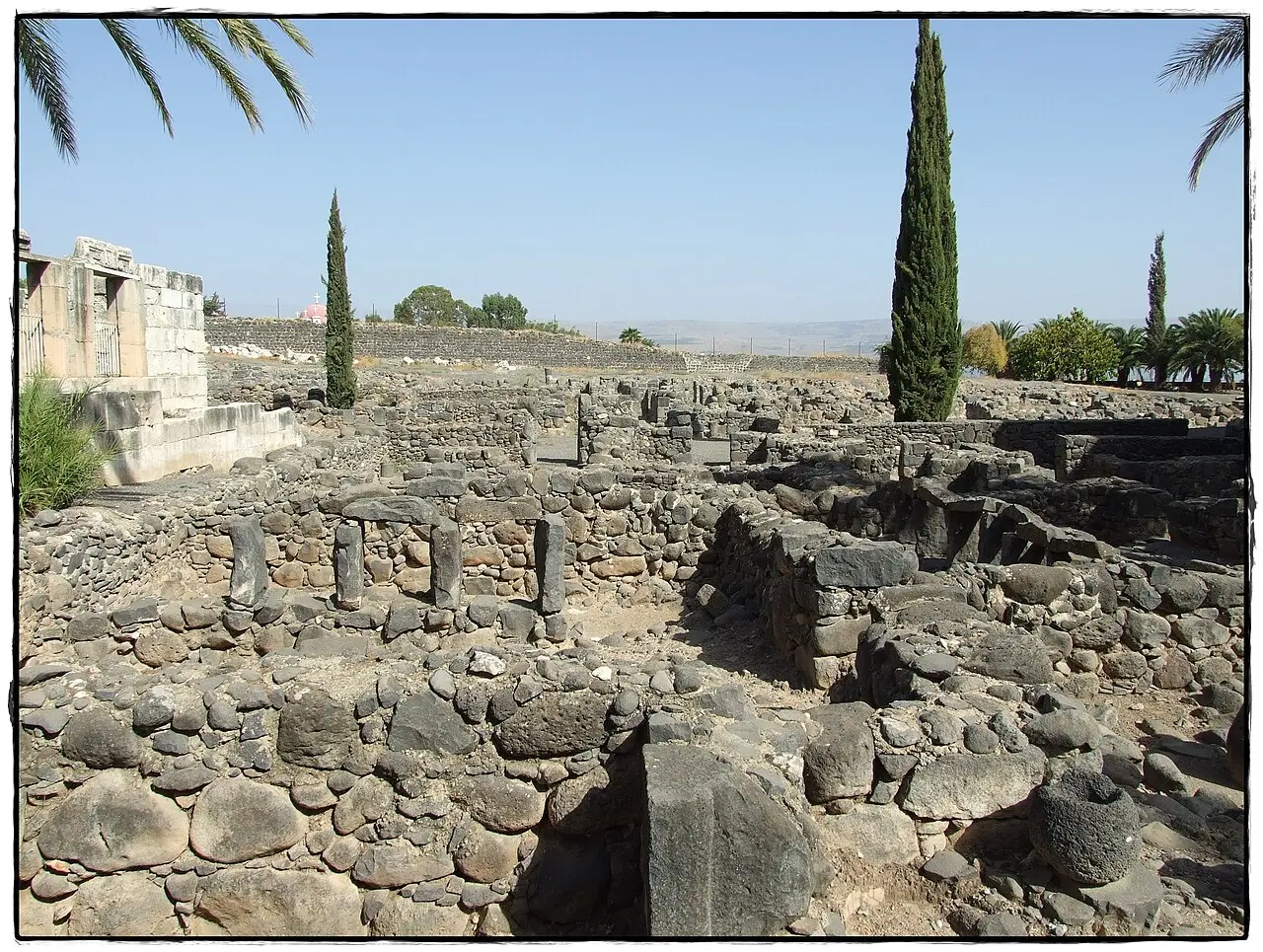
Settlement here began in the second century BC. The village lived off the lake and off the traffic on a branch of the Via Maris that ran to Damascus, which is why the Gospels put both a customs post and a Roman detachment in it. A milestone bearing the name of the emperor Hadrian, who reigned from 117 to 138, was found in 1975 about 100 metres northwest of the synagogue, confirming the imperial road. About 110 metres of the main street, made of small stones and gravel and sloping down to the shore so that it drained into the lake, has been cleared. Houses of undressed basalt set in mud open off it in blocks, several families to a compound, courtyards with bread ovens, and basalt millstones and olive and grape presses left where they were found.
The excavated coins and pottery describe a village that traded with Upper Galilee, the Golan, Syria, Asia Minor, Cyprus, Africa and the Phoenician coast, and, as Loffreda found striking, barely at all with central and southern Palestine. Between the fourth and seventh centuries a mostly Christian community and a smaller Jewish one lived side by side here, which was unusual in a region where communities tended to occupy separate villages: crosses scratched on pottery turn up across the Franciscan sector, and the synagogue was in use at the same time.
The ending is dated differently by different accounts, and the disagreement is not resolved. The Custody's history has the village losing importance from the seventh century, under the Arab period, and permanently abandoned in the thirteenth, with the last fishermen gone no later than the fourteenth. Wikipedia's summary of the archaeological literature gives abandonment in the eleventh century, before the First Crusade. Vatican News, following Loffreda, says the village was abandoned about a thousand years ago, though some Arab families of the Semekiyeh tribe remained on the land until the 1948 war. What all of them agree on is that the site was never built over again, which is the accident of history that leaves a first-century street plan legible at all.
Magrietha Knight / CC BY-SA 4.0 · Wikimedia Commons
What to look for
Things not to walk past at Capernaum
The details that repay knowing about before you are standing in front of them.
The basalt walls outside the synagogue
Squared black blocks running around the outside of the white building on a slightly different alignment, clearest at the southwest corner. Corbo took them for the first-century synagogue, Loffreda for something in between; either way they are the older building and most visitors walk past them looking up.
The Ark on a cart
Among the reassembled cornice blocks is a carving of a small temple being carried on a wheeled cart, read as the Ark of the Covenant on its way to Jerusalem. Nearly every other figurative carving on the building has been chiselled out.
The opening in the memorial floor
Ildo Avetta's 1990 church is held above the ruins so that the venerated room can be seen from inside it, through an opening in the floor, and again from the path that runs underneath at ancient street level.
The inscribed columns
One column carries a Greek dedication by Herod son of Monimos and his son Justus; another was set up by the Department of Antiquities in memory of Fr Gaudenzio Orfali, who dug here in 1921 and 1926 and died before he could finish.
Corbo's grave
Virgilio Corbo, who directed nineteen excavation campaigns from 1968 to 1986 and saw the memorial finished, died in 1991 and is buried at Capernaum beside the room he spent his life excavating.
The shoreline and the Greek Orthodox domes
A short path leads from the ruins to the water, where the Golan wall is visible across the lake. East along the shore stand the red domes of the Church of the Holy Apostles, built in 1931 on the Patriarchate's share of the site.
The long view
Capernaum, in order
2nd century BC
A settlement grows on the lakeshore in the Hasmonean period, living off fishing, farming and the traffic on a branch of the Via Maris.
1st century CE
The village of the Gospels: a customs post, a Roman detachment, a synagogue on a basalt pavement, and a house whose main room is plastered over and turned to gatherings at the end of the century.
c. 380
The pilgrim Egeria is shown a house of the prince of the apostles that has been made into a church, its walls still standing.
4th century
The venerated room is enlarged into a domus ecclesiae and separated from the village by an enclosure wall; pilgrims scratch names and invocations into its painted plaster in Greek, Syriac, Aramaic and Latin.
Second half of the 5th century
An octagonal church is built over the room, with a peacock mosaic in the inner octagon. The white limestone synagogue is dated by the Franciscan excavators to this century, though other scholars place it a century earlier or later.
7th century onwards
The village declines under the Arab period; the synagogue falls out of use and Arabic graffiti appear on its stylobates.
11th to 14th centuries
Capernaum is abandoned, on dates that the sources still disagree about, and is never built over again.
1838 and 1866
Edward Robinson records the synagogue ruins without linking them to the Gospels; Charles William Wilson digs inside it and identifies Tell Hum as Capernaum.
19 September 1894
After eight years of negotiation with the Samakieh Bedouin and the Ottoman authorities, all titles to the land pass to the Custody of the Holy Land.
1905
Heinrich Kohl and Carl Watzinger excavate the synagogue for the Deutsche Orient-Gesellschaft; fra Wendelin von Menden completes and extends the work.
1921 and 1926
Fr Gaudenzio Orfali uncovers the Byzantine church, publishes the synagogue and begins its reconstruction. He dies in 1926 and the excavations stop for more than forty years.
16 April 1968
Fr Virgilio Corbo reopens the site with Fr Stanislao Loffreda; within a week they have painted plaster carrying Christian graffiti, and below it a first-century house.
1975
A milestone naming the emperor Hadrian is found about 100 metres northwest of the synagogue.
1978 to 1987
Vassilios Tzaferis excavates the Greek Orthodox sector, finding a seawall about 200 metres long with two piers and a hoard of 282 gold dinars.
29 June 1990
The memorial church designed by Ildo Avetta is consecrated over the house of Peter by Cardinal Lourdusamy.
2000 to 2003
Fr Loffreda directs four more seasons on the Byzantine and Arab levels east of Peter's house and the synagogue. He died in 2025.
Practical
Visiting Capernaum
Where
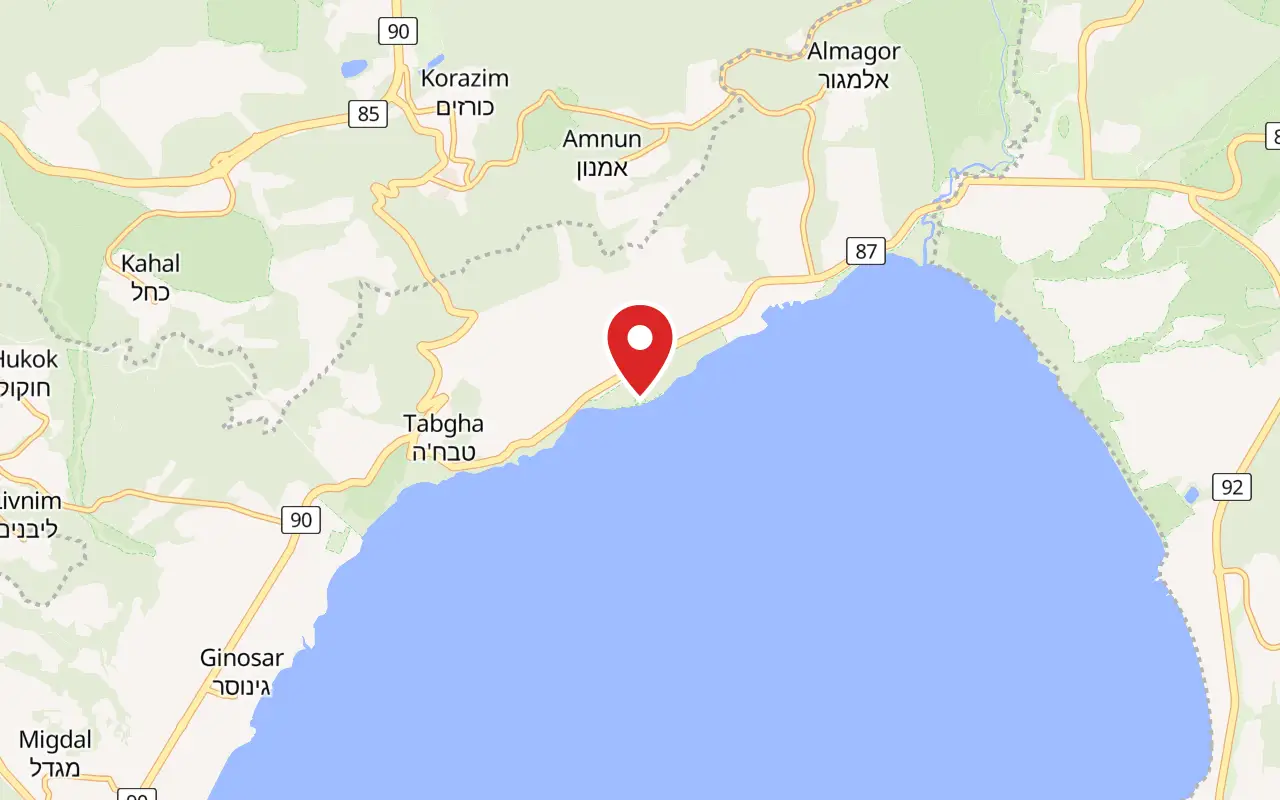
Capernaum (Kfar Nahum), northwestern shore of the Sea of Galilee. From Route 90 at Capernaum junction, turn east onto Route 87 and drive 4 km; the site is about 16 km from Tiberias.
What ticket you need
Capernaum is not inside a larger ticketed park, and that catches people out. The Franciscan enclosure is a sanctuary of the Custody of the Holy Land with its own 10 shekel ticket and its own midday closure. The Israel Nature and Parks Authority's Kfar Nahum (Capernaum) National Park is a separate 80 dunam site immediately northeast, with the boat dock and the planned visitor facilities, its own hours and its own telephone number. A national parks pass buys nothing at the Franciscan gate.
Opening hours
- Every day, morning
- 08:00 to 12:00, last entry 11:45source
- Every day, afternoon
- 14:00 to 17:00, last entry 16:30source
- Closed
- Yom Kippur, Christmas Day (25 December) and New Year's Day (1 January)source
- Holy Week, Thursday to Saturday
- 08:00 to 12:00 onlysource
- 24 and 31 December
- 08:00 to 12:00, last entry 11:40source
- Kfar Nahum National Park next door, a separate site
- Sunday to Thursday and Saturday 08:00 to 16:00, entry closing an hour earlier, with shorter hours on Fridays and holiday eves. The parks authority's English page prints its summer Friday line back to front, so telephone 04-6793865 if that day matterssource
Admission
- Entrance to the Franciscan site, per person
- 10 ILSsource
- Israeli national parks passes
- Not valid here. This is a sanctuary of the Custody of the Holy Land, not a parks authority site, and the ticket is sold at the gatesource
- Kfar Nahum (Capernaum) National Park
- The parks authority publishes hours and a telephone number for the park but no entrance feesource
- Greek Orthodox Church of the Holy Apostles
- No fee published; the monastery says visits are arranged in advance by telephone with the superiorsource
Access
The ground is flat, which is the good news: the site is on the shore, the made paths between the gate, the synagogue and the memorial are level, and there is no climb of any kind. The excavated village is another matter, being uneven basalt with kerbs, thresholds and low walls, and the synagogue stands on a raised platform reached by steps. The memorial church is held above the ruins on pillars, with a lower route passing underneath at ancient street level and an upper level inside the building. The Custody publishes no access statement for Capernaum, so a visitor who needs to know whether the upper level can be reached without steps should telephone the friary on 04 672 1059 before travelling. There is very little shade anywhere on the site.
On site
- Ticket desk at the gate
- Franciscan friary and sanctuary on site
- Memorial church over Peter's house, open to visitors
- Lakeside area with simple facilities for prayer groups
- Floating dock for boats from Tiberias and Ein Gev, in the adjoining national park
- Souvenir shop, toilets and a snack bar being set up in the adjoining national park
Booking
Individual visitors need no booking: pay at the gate and walk in. Groups wanting Mass in the memorial church book through the Custody's Christian Information Centre in Jerusalem, which runs the Franciscan Pilgrims Office reservation system for the holy places. The friary can be reached on 04 672 1059 or capernaum@custodia.org.
Hours and prices are given as the operator publishes them and change without much notice, particularly around Shabbat and the festivals. Check the operator's own page before you travel for this.
Official page at custodia.org →What people wish they had known
- Check the clock before you set off. The gate shuts at noon and reopens at 14:00, and the last entries are 11:45 and 16:30, so an arrival at half past twelve buys a wait or a wasted drive.
- Do not turn up with a national parks pass expecting it to work. This is a Franciscan sanctuary with a 10 shekel ticket; the national park of the same name is the separate site next door, and directions given to a driver should say which one.
- The white building is not the synagogue of the Gospels. Walk the outside of it first and find the squared black basalt walls on their slightly different alignment, then the first-century pavement under the central nave, before going up the steps.
- Treat the facade as a reconstruction, because it is one. The arch and tympanum were reassembled on the ground behind the building rather than lifted back, which is the easiest place to see how much of it came out of a rubble field.
- Dress as you would for a church. The enclosure is a working sanctuary with a friary and daily pilgrim Masses, not only an excavation.
- Pair it with Tabgha, three kilometres west, and the Mount of Beatitudes above, and consider arriving by boat: the dock in the national park takes launches from Tiberias and Ein Gev.
The figures
Capernaum by the numbers
Each figure carries the year it belongs to and links the source it came from.
| Measure | Figure | As of | Source |
|---|---|---|---|
| Extent of the ancient ruins | about 7 hectares, two thirds Franciscan and the eastern part Greek Orthodox | 2026 | vaticannews.va |
| Entrance fee | 10 ILS per person | 2026 | cicts.org |
| Coins recovered from beneath the synagogue floor | more than 20,000 | 2026 | custodia.org |
| Prayer hall of the white synagogue | 23 by 17.28 m, with sixteen columns on three sides | 2026 | custodia.org |
| Heaviest limestone blocks, brought from quarries several kilometres away | up to 4 tonnes | 2026 | vaticannews.va |
| Main street cleared | about 110 m | 2026 | custodia.org |
| Seawall found in the Greek Orthodox sector by Vassilios Tzaferis | about 200 m long, with two piers, alongside a hoard of 282 gold dinars | 2026 | vaticannews.va |
| Main area of the adjoining national park | about 80 dunams (20 acres) | 2026 | en.parks.org.il |
While you are here
The rest of The Sea of Galilee
Everything else in this destination with a page of its own.
יוסי רון / CC BY 2.5 · Wikimedia Commons
Religious site
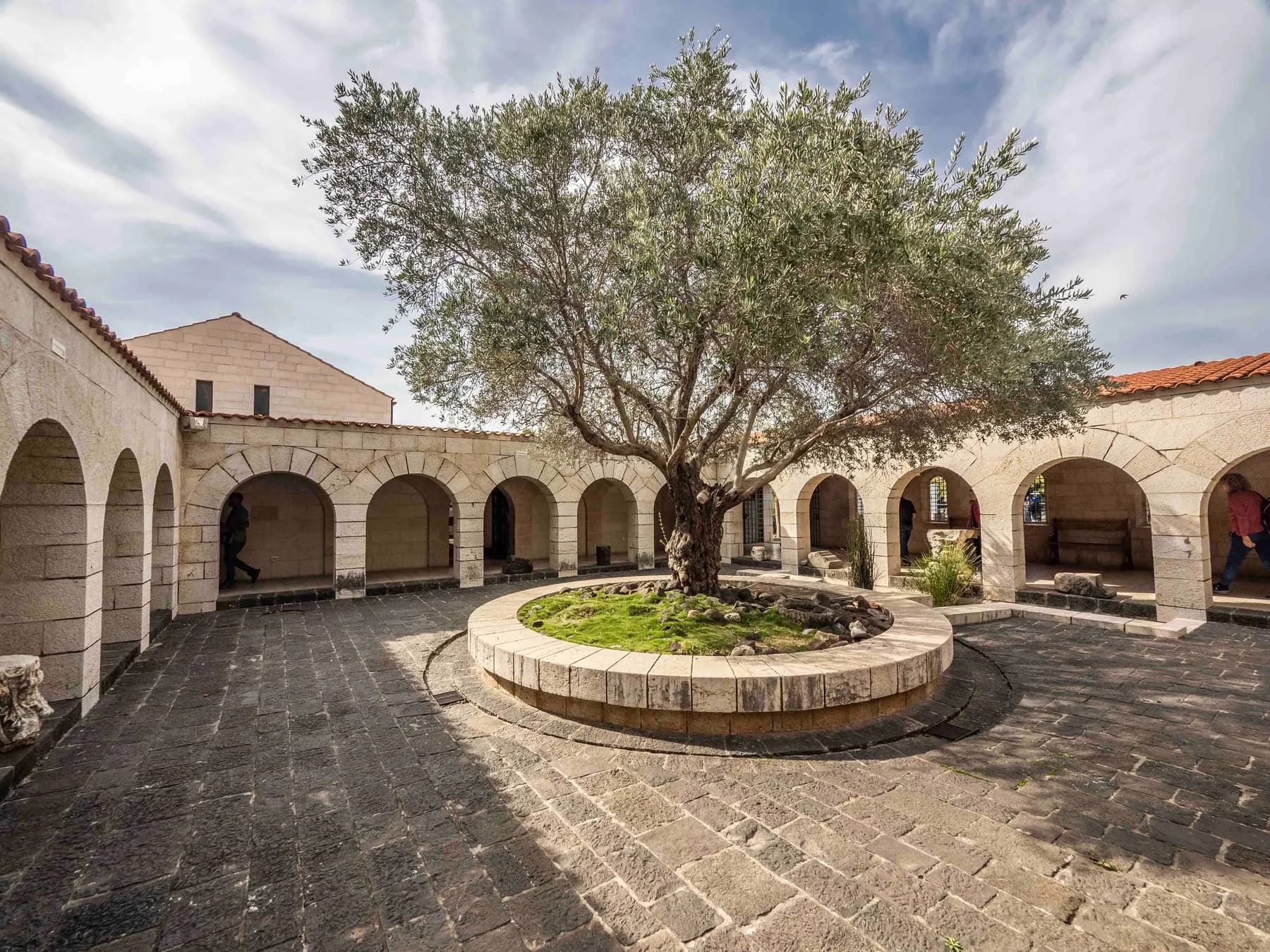
Tabgha
The mosaic in front of the altar shows a basket of four loaves, not the five of the Gospel account, and the usual reading is that the fifth is the one consecrated on the altar above it.
Commander, U.S. Naval Forces Europe-Africa/U.S. 6th Fleet / Public domain · Wikimedia Commons
Religious site
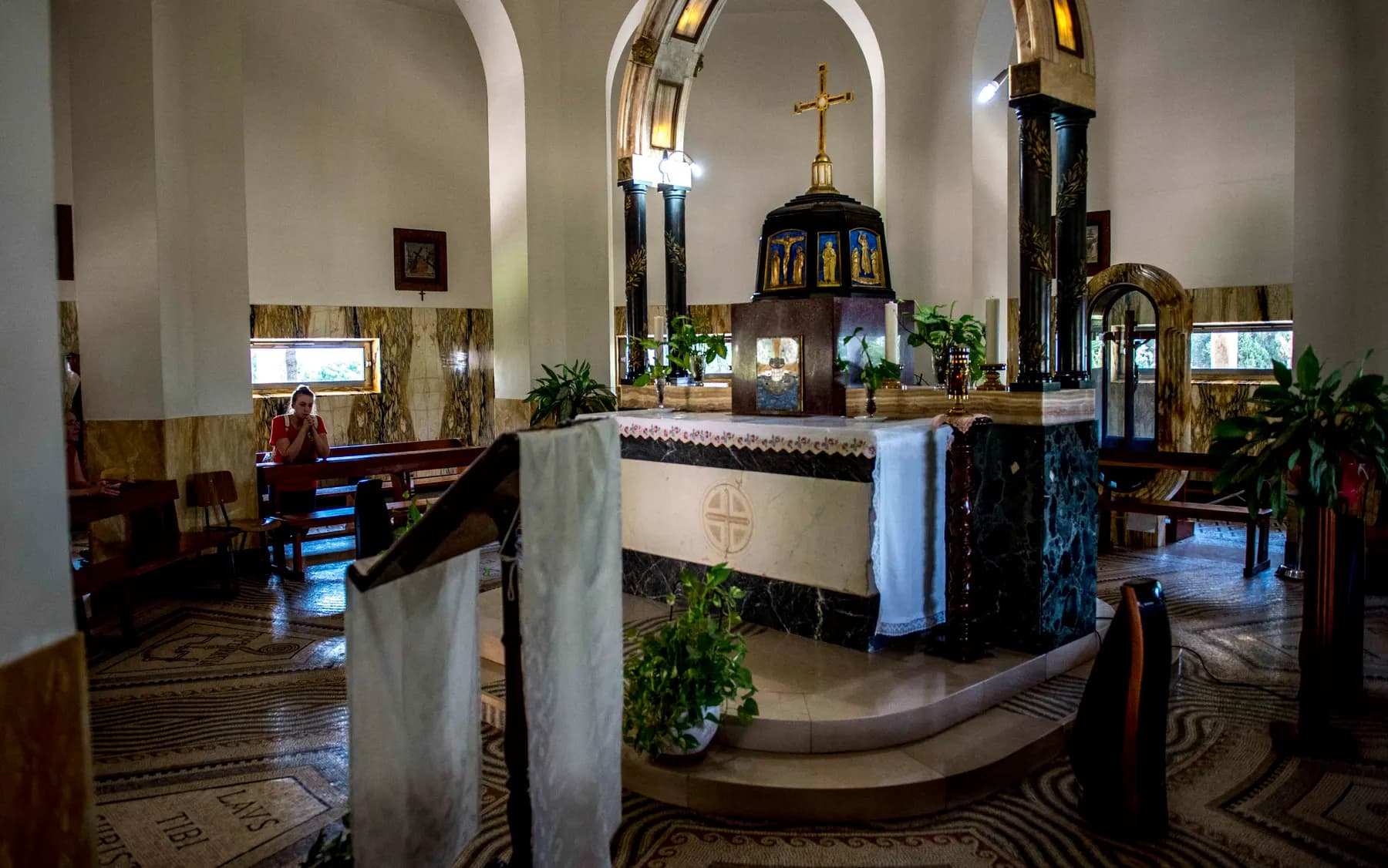
Mount of Beatitudes
Antonio Barluzzi gave the church eight sides for the eight beatitudes and set it on a hill about 25 metres below sea level, which makes the summit one of the lowest in the world.
זאב שטיין / CC BY 2.5 · Wikimedia Commons
Archaeological site
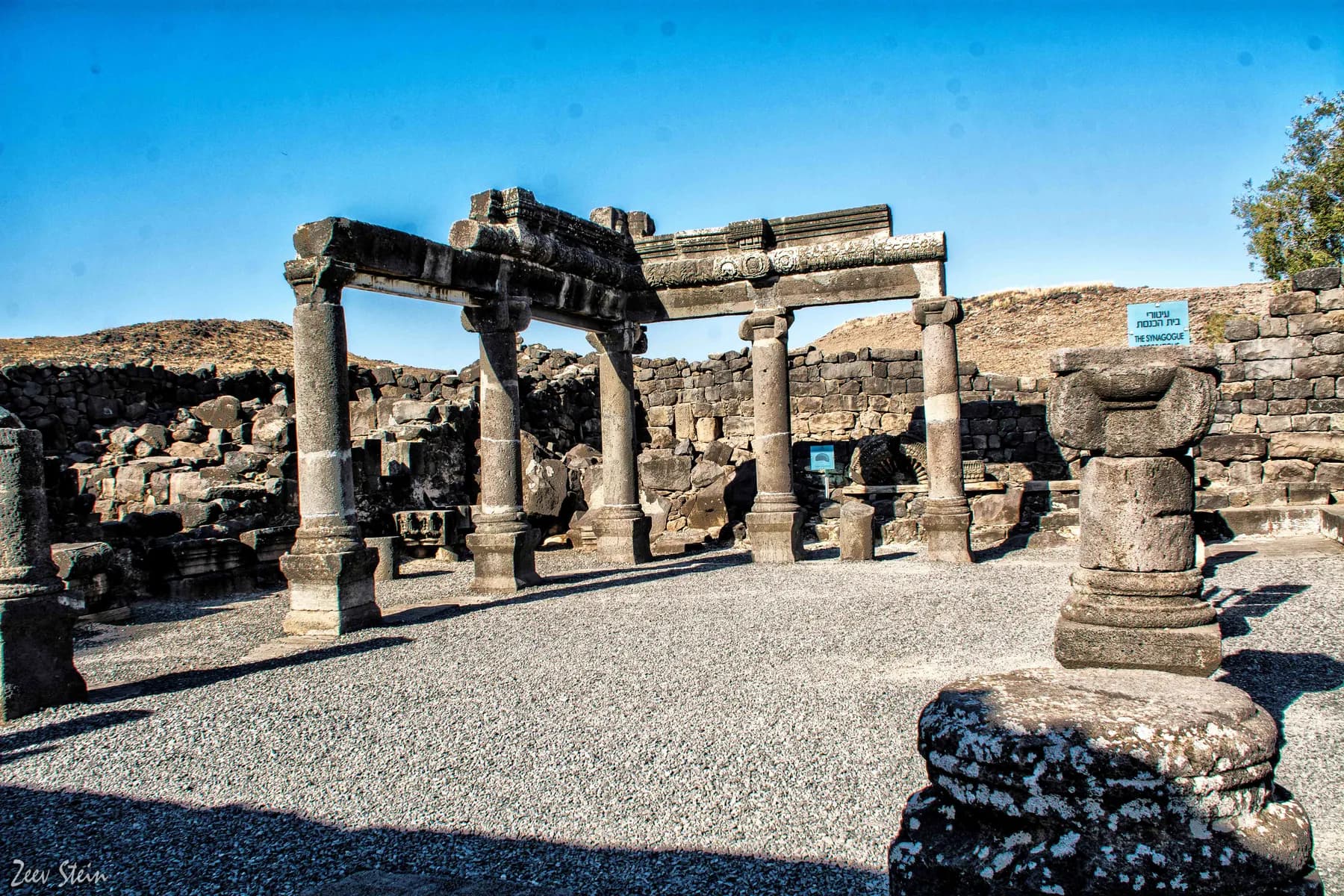
Korazim
A Talmudic-era town built entirely out of the black basalt it stands on, remembered in the Babylonian Talmud for its wheat and in the Gospels for refusing to listen.
Sources and further reading
Every link below was opened and checked when this page was written. Official statements are marked as such: they are the subject's own account, not an independent one.
- OfficialCustody of the Holy Landcustodia.orgCapernaum
The operator's own account: the acquisition of the site concluded on 19 September 1894 after eight years of negotiation, the excavation history from Robinson in 1838 and Wilson in 1866 through Kohl and Watzinger in 1905, Orfali in 1921 and 1926, Corbo's nineteen campaigns from 16 April 1968 to 1986 and Loffreda's four from 2000 to 2003, more than 20,000 coins beneath the synagogue floor and completion in the last quarter of the fifth century, the 23 by 17.28 m prayer hall, the basalt walls and the Corbo and Loffreda disagreement about them, the chiselled figurative carvings, the reassembly of the arch and tympanum on the ground, the four phases of the insula sacra, and the memorial designed by Ildo Avetta with Cesare Pocci and the Technion, built by Solel Boneh and consecrated on 29 June 1990
- OfficialCustody of the Holy Landcustodia.orgCapernaum: Monastery
Contact details for the friary that runs the site: telephone 04 672 1059, capernaum@custodia.org, and the list of what the community is responsible for, including the memorial of Saint Peter's house and the synagogue ruins
- OfficialChristian Information Centre, Custody of the Holy Landcicts.orgOpening Hours of Holy Places and Tourist Sites in the Holy Land
The Custody's own current list, in the edition dated 7 August 2026: Capernaum, House of Peter and the Eucharistic Promise, open 8:00 to 12:00 with last entry at 11:45 and 14:00 to 17:00 with last entry at 16:30, entrance fee 10 ILS, telephone 04 672 1059, closed on Yom Kippur, 25 December and 1 January, mornings only during the Triduum of Holy Week and on 24 and 31 December
- OfficialChristian Information Centre, Custody of the Holy Landcicts.orgOpening hours outside Jerusalem, 7 August 2026
The dated document behind the page above, downloaded and read for this page; it is the source of the hours, the last entry times and the 10 ILS fee quoted here
- OfficialIsrael Nature and Parks Authorityen.parks.org.ilKfar Nahum (Capernaum) National Park
The separate state-run park beside the antiquities: a main area of about 80 dunams (20 acres) northeast of the ruins, a floating dock built to rise and fall with the lake for boats from Tiberias and Ein Gev, an information booth, souvenir shop, toilets and snack bar being established, hours running to 16:00 with entry closing an hour earlier, the telephone number 04-6793865, and directions via Route 90 to Capernaum junction and 4 km east on Route 87. Also the authority's note that 173 inscribed plaster fragments were found in the venerated room and that scholars differ over whether the earlier synagogue is third or fourth century
- OfficialCapernaum Monastery of the Holy Apostles (Greek Orthodox)capernaum.infoOpening Hours and Contacts
The Greek Orthodox monastery's own page: visits by prior telephone arrangement with the superior, Monk Irinarchos, rather than fixed opening hours, with a postal address at Tiberias and no admission fee stated
- ReportingVatican Newsvaticannews.vaFollowing in Jesus's Footsteps: Capernaum, the Town of Jesus
Published 7 August 2026 and written by Fr Francesco Patton, Custos of the Holy Land, drawing on Loffreda's guide: ruins of about seven hectares, two thirds Franciscan and the eastern part Greek Orthodox, 16 km from Tiberias and three from Tabgha, limestone blocks up to four tonnes brought from quarries kilometres away, more than 30,000 coins of 383 to 395 under the synagogue pavement and a late fourth-century date, the Hadrian milestone found in 1975 about 100 m northwest of the synagogue, Tzaferis's excavations of 1978 to 1987 with a 200 m seawall, two piers and 282 gold dinars, the Semekiyeh families remaining until 1948, and Loffreda's dates, 1932 to 2025
- ReportingBiblical Archaeology Societybiblicalarchaeology.orgThe House of Peter: The Home of Jesus in Capernaum?
An independent assessment of the identification: the first-century house plastered floor to ceiling with its pottery changing from domestic ware to storage jars and lamps, over a hundred graffiti in Greek, Syriac and Hebrew, the fifth-century octagonal martyrium above it, and the judgement that there is no definitive proof, only layer upon layer of circumstantial evidence, with many scholars now disputing the readings that find Peter's name
- ReferenceEncyclopaedia Britannicabritannica.comCapernaum
The older dating still carried by a standard reference work: a rectangular synagogue of the 2nd to 3rd century CE with an older synagogue from the time of Christ possibly buried beneath its foundation, and the excavation begun in 1905 by Kohl and Watzinger and completed by Franciscan archaeologists
- ReferenceJewish Virtual Libraryjewishvirtuallibrary.orgArchaeology in Israel: The Synagogue at Capernaum
Imported white limestone on basalt foundations, Corinthian capitals and carved reliefs, the Aramaic donor inscription naming Halfu son of Zebida, and the argument that the coins and pottery under the floor may have arrived during repairs after the earthquake of 363 rather than at construction
- ReferenceWikipediaen.wikipedia.orgCapernaum
Used for the division of the site between the Franciscans and the Greek Orthodox Patriarchate, the Greek Orthodox Monastery of the Holy Apostles and its church built in 1931, and the abandonment date of the eleventh century, which differs from the Custody's thirteenth and is flagged as disputed on this page
Capernaum: common questions
Is the synagogue at Capernaum the one Jesus taught in?+
No, not the standing building. The Franciscan excavators date the white limestone synagogue to the fifth century, and other scholars have argued for the late fourth or as late as the sixth. What was found underneath it is the relevant part: a wide basalt cobble pavement of the first century, too large to belong to a house, which Corbo and Loffreda accepted might be the synagogue built by the centurion and used by Jesus.
How much does it cost to visit Capernaum?+
10 shekels a head, as listed by the Custody of the Holy Land's Christian Information Centre in August 2026. There is no online booking for individuals and no parks pass that covers it, because the site belongs to the Franciscans rather than to the Israel Nature and Parks Authority.
What time is Capernaum open?+
Every day from 08:00 to 12:00 and again from 14:00 to 17:00, with last entry at 11:45 and 16:30. It closes on Yom Kippur, Christmas Day and New Year's Day, runs mornings only from Thursday to Saturday of Holy Week, and closes at noon on 24 and 31 December.
Is Capernaum a national park?+
The ruins with the synagogue and Peter's house are not. They belong to the Franciscan Custody of the Holy Land, which charges its own fee and keeps its own hours. There is a Kfar Nahum (Capernaum) National Park run by the parks authority, about 80 dunams immediately northeast of the antiquities, which holds the boat dock and the planned visitor facilities and is a different gate with different hours.
Is it really Peter's house?+
The evidence is circumstantial and the excavators knew it. A first-century room was plastered over and turned from a dwelling into a meeting place at the end of that century, then walled off in the fourth and built over by an octagonal church in the fifth, and hundreds of fragments of its plaster carry pilgrims' graffiti in Greek, Syriac, Aramaic and Latin. Egeria was shown the house of the prince of the apostles here around 380. The Biblical Archaeology Society calls it layer upon layer of circumstantial evidence with no definitive proof, and notes that many scholars now dispute the readings that find Peter's name in the graffiti.
How long do you need at Capernaum?+
Sixty to ninety minutes covers it properly. The site is about seven hectares, flat and compact, and the two set pieces are a few minutes' walk apart. Groups doing the synagogue, the memorial church and the shore in half an hour are the norm, and they miss the basalt walls and the reassembled arch.
Can you get there without a car?+
Yes, though not conveniently. The site is 4 kilometres east of Capernaum junction on Route 87, about 16 kilometres from Tiberias, and most independent visitors arrive by taxi or on an organised tour. Tourist launches from Tiberias and Ein Gev use the floating dock in the adjoining national park, which rises and falls with the lake level.
Is there a dress code?+
Dress for a church. Capernaum is a sanctuary of the Custody of the Holy Land, with friars resident, a memorial church over Peter's house and Masses celebrated for pilgrim groups, so shoulders and knees covered is the sensible default. Group Masses are booked through the Christian Information Centre in Jerusalem rather than at the gate.
Why is everything black except the synagogue?+
Because the village was built out of what was underfoot. Capernaum sits on basalt, and its houses, walls and street were made of undressed black basalt set in mud. The synagogue is the exception: white limestone in blocks weighing up to four tonnes, quarried several kilometres away and hauled in, which is precisely what made it a statement in a village of dark stone.
Is there anything to see at the water's edge?+
A short path from the ruins reaches the shore, with the Golan escarpment visible across the lake and a quiet area the friars keep for prayer groups. The excavated harbour works are mostly on the Greek Orthodox side, where Vassilios Tzaferis traced a seawall some 200 metres long with two piers running into the water between 1978 and 1987.