IDF chief Eyal Zamir visits wounded soldiers at Sheba before Rosh Hashanah
The military said Lieutenant General Eyal Zamir met wounded troops, including commanders, at Sheba Medical Center at Tel Hashomer in the days before the Jewish new year.
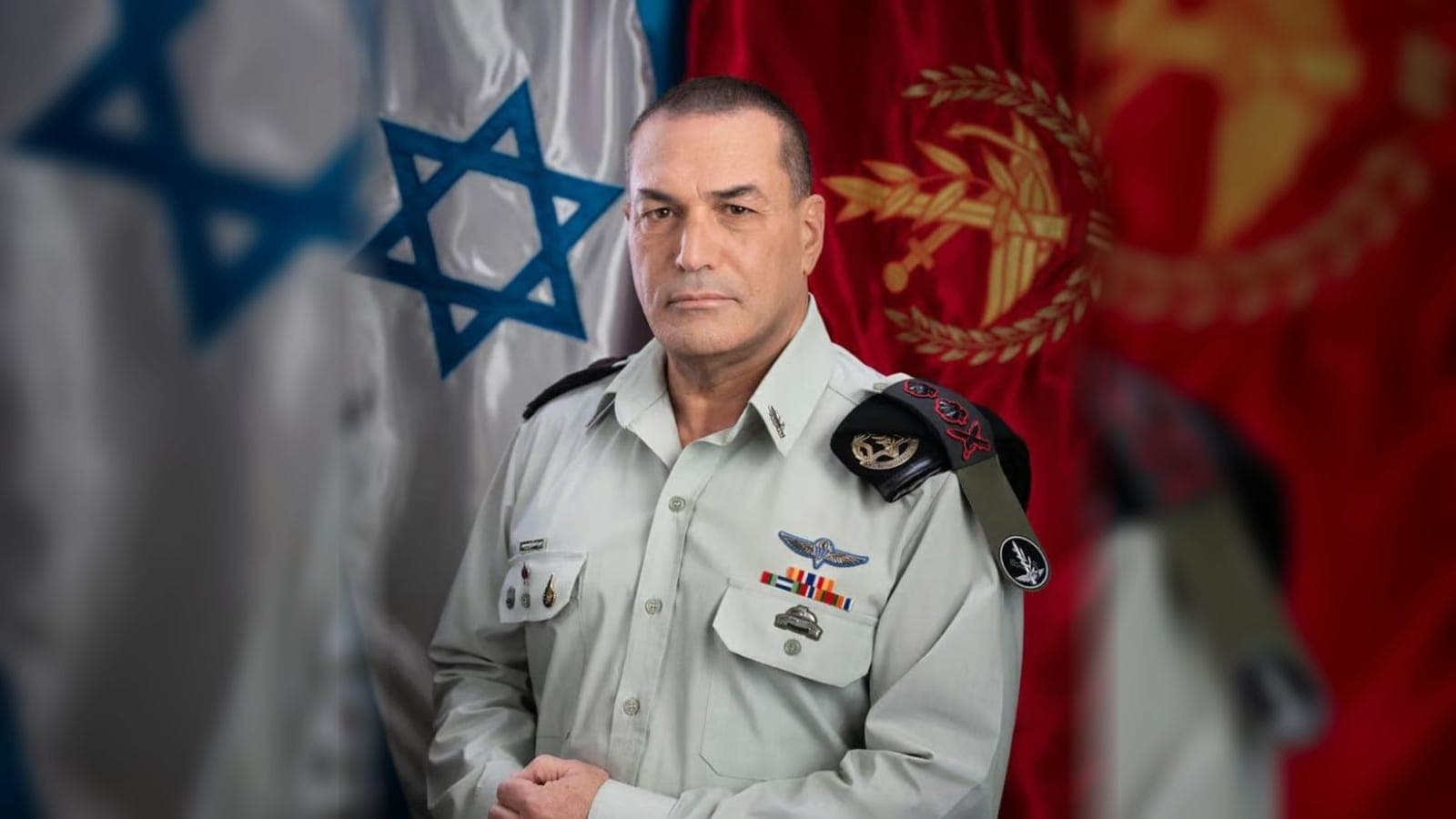
Eyal Zamir. File photo by IDF Spokesperson's Unit photographer, CC BY-SA 3.0, via Wikimedia Commons.
Israel's most senior serving officer visited wounded soldiers in hospital in the days before Rosh Hashanah, the Jewish new year, the military said. According to a statement from the Israel Defense Forces spokesperson, the Chief of the General Staff, Lieutenant General Eyal Zamir, went to Sheba Medical Center at Tel Hashomer, where he met wounded troops, among them commanders.
The statement quoted Zamir addressing the soldiers he met about their service and their recovery. "There are troops here who stood on the front lines, led, and risked their lives in combat against the enemy," he said, describing that as bravery in battle. He went on to tell them that recovering from their injuries was itself "an operation that requires further bravery." The military's account of the visit, distributed on its official Telegram channel, is brief and does not describe the visit beyond the meeting and the remarks.
On the ground

IDF Chief of Staff Lt. Gen. Eyal Zamir announces that the military will soon inaugurate a new "unmanned systems and artificial intelligence" branch. "The battlefield is changing at a dizzying pace, and we are changing with it. We understand that the future includes unmanned Show more

Who the Chief of the General Staff is
The Chief of the General Staff, known in Hebrew as the Ramatkal, is the commander of the Israel Defense Forces and the country's highest-ranking soldier, appointed by the government and reporting to the defence minister. The role combines operational command with a highly public function inside Israeli society, where military service is compulsory for most Jewish citizens and the army is closely tied to civilian life. Visits by the chief of staff to hospitals, bases and bereaved families are a routine and heavily publicised part of the job, particularly around the Jewish holidays.
Lieutenant General Eyal Zamir holds the post. His rank, rav aluf in Hebrew, is the only three-star rank in the Israeli military and is held by one officer at a time.
Where the visit took place
Sheba Medical Center at Tel Hashomer is one of Israel's largest hospitals, located in Ramat Gan in the Tel Aviv metropolitan area. It sits on a site that also houses a military base, and it has a long-standing role in treating wounded soldiers, including rehabilitation for orthopaedic and neurological injuries. Because of that role, it is a frequent destination for official visits to the wounded.
Israel's week in five stories, every Friday
Sourced and checked by the Israel.com newsroom, with Shabbat times. Free, one-click unsubscribe.
One list, unsubscribe in a click. See our privacy policy.
The military statement names the hospital as the location and says the chief of staff met wounded IDF troops there, including commanders. It does not say which units the soldiers came from, where they were wounded, or when.
Why Rosh Hashanah matters here
Rosh Hashanah is the Jewish new year and the start of the High Holy Days, a period of reflection that culminates in Yom Kippur. It is a family-centred holiday marked with festive meals, synagogue attendance and the sounding of the shofar, a ram's horn. In Israel it is a public holiday, and for soldiers on active duty and for wounded troops in hospital it is one of the points in the calendar when absence from home is most visible.
For that reason, the period before the holiday has become a fixed slot in the Israeli official calendar for visits to hospitals, military positions and bereaved families by the president, the prime minister, the defence minister and the chief of staff. The IDF spokesperson framed this visit in exactly those terms, presenting it as taking place ahead of the holiday.
How this fits what is already known
The Israeli military publishes short items of this kind through the IDF spokesperson, the unit responsible for the army's public communications, and distributes them in Hebrew and English on social platforms including Telegram. Such items are official announcements rather than independent reporting, and they carry the military's own selection of detail and its own framing.
In this case the material available is a single official notice. The language Zamir used, drawing a line between combat and rehabilitation and describing both as requiring bravery, addresses the population of wounded soldiers in long-term recovery, a group whose numbers and needs have been a subject of sustained public attention in Israel. The statement itself does not discuss the wider rehabilitation system or offer any figures.
What the statement does not say
The IDF spokesperson's notice is short, and several basic points are left open. It does not say how many wounded soldiers Zamir met, name any of them, or identify their units or ranks beyond noting that commanders were among them. It does not describe the nature or severity of their injuries, or say where or in what circumstances they were wounded.
The statement also does not say who accompanied the chief of staff, whether he met medical staff or families, or how long the visit lasted. The published text of the remarks is partial, so it is not clear whether Zamir said more than the sentences the military released. No other organisation's account of the visit is available in the material reviewed here, so every detail above rests on the military's own description. Israel.com has not independently confirmed the visit or the wording of the remarks.
Read next
All security →
File photo
Security
IDF chief warns of escalation before elections, condemns settler violence

Illustration
Courts & Crime
Rosh HaAyin accountant suspected of omitting NIS 60 million in share income
File photo
Security
Italy widens flotilla abuse probe to Katz, IDF chief Zamir and police head
Illustration
Security
IDF says about 220,000 dunams of West Bank olives harvested so far
Sources and further reading
Every link below was opened and checked when this page was written. Official statements are marked as such: they are the subject's own account, not an independent one.
- Officialidft.meIDF spokesperson
How we checked this
The visit and the quoted remarks come from a single official source, a statement by the IDF spokesperson published on the military's Telegram channel; no independent account was available and Israel.com has not verified the details separately.
Our sourcing and corrections policy →
The week from Israel, in one email
The stories that mattered, sourced and checked by the Israel.com newsroom. Free, weekly, one-click unsubscribe.
One list, unsubscribe in a click. See our privacy policy.
Latest
- Soldiers killed near Hebron named and buried as army operation goes on
- Truck driver arrested after fatal crash on Route 465 near Aboud
- Troops detain Palestinian suspected of planning imminent attack in Binyamin area
- Man of about 25 shot dead in Yafia, near Nazareth, during a taxi ride
- IDF says Gaza strikes killed two men who moved Iranian and Turkish money to Hamas
- Israeli and Greek navies practise sinking a hostile vessel in joint drill