Iran says tanker struck mines and caught fire in Strait of Hormuz
The Revolutionary Guards say a tanker exploded in a zone they declared off limits, as Oman prepares talks on restoring shipping through the waterway.
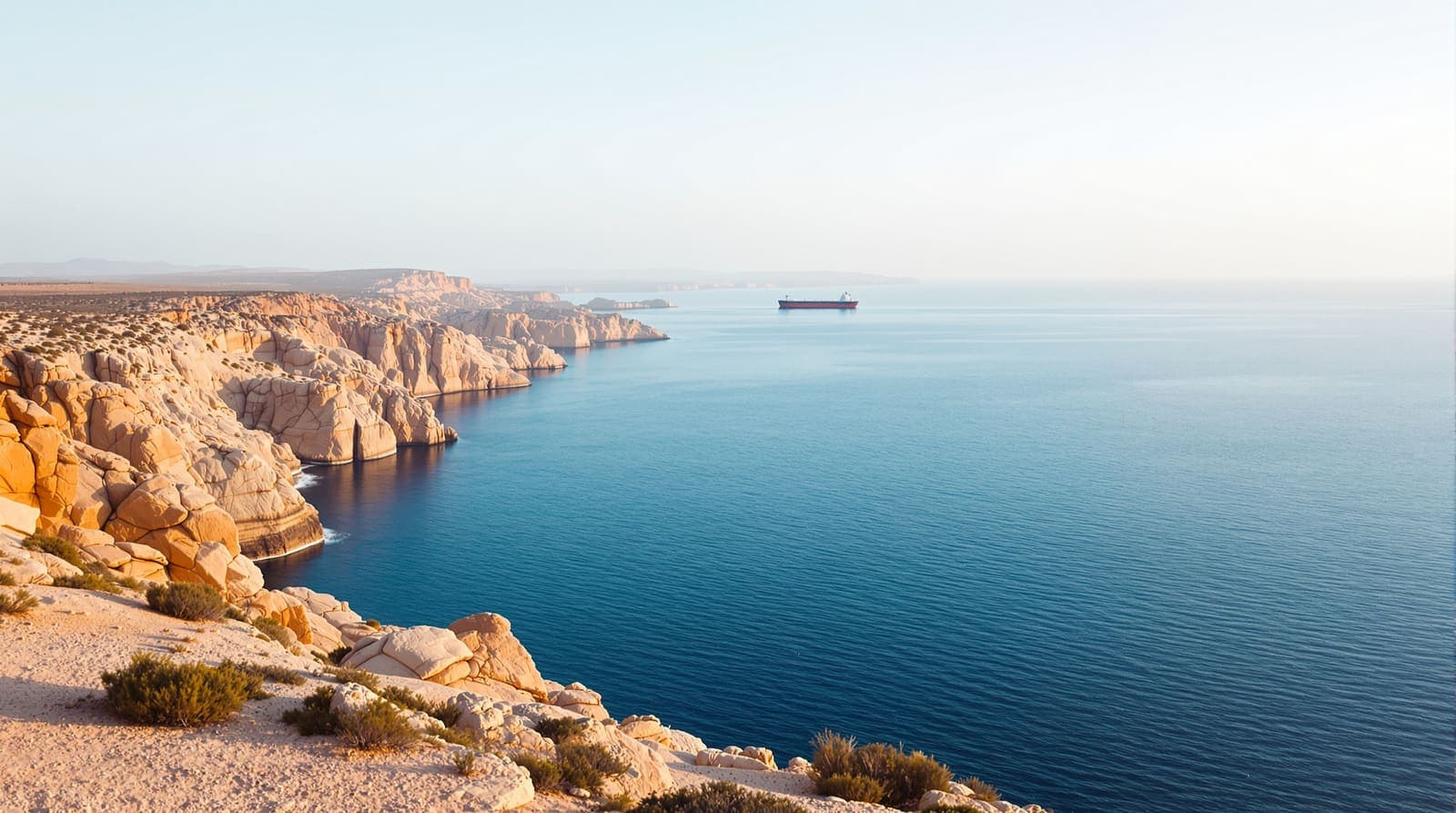
Illustration
Iran's Islamic Revolutionary Guard Corps, the branch of the country's armed forces that operates separately from its regular army and navy, says an oil tanker exploded and caught fire after striking mines in the Strait of Hormuz. The claim was carried by Fars, a news agency affiliated with the Iranian state, and reported by The Times of Israel, which noted that the Iranian account did not say when the incident took place.
According to the Israeli broadcaster N12, the Revolutionary Guards' naval arm said the vessel had attempted to pass through a prohibited area in the southern part of the strait and detonated naval mines, that attempts to bring the fire under control failed, and that a warning about the danger of using what the Guards called an illegal route had been issued beforehand. Ynet reported the same account and identified the ship as the EL GAIA, saying it had last been tracked at a port in Oman and that the tanker was entirely in flames.
On the ground

About 20 percent of the world’s oil passes daily through the Strait of Hormuz between Iran and Oman. Alternative pipelines and routes exist but cannot match its capacity, so any disruption there poses a major risk to global energy supplies. Al Jazeera’s Osama Bin Javaid Show more
Video from Al Jazeera English. Tap to play. Nothing from it is shown until you do.
A disagreement over the ship's name
The Israeli outlets do not give the same name for the vessel. Ynet wrote that the tanker was the EL GAIA, while N12's report rendered the name as Algaya. Neither the English-language reports from The Times of Israel nor The Jerusalem Post named the ship at all. The discrepancy has not been resolved in the material available, and no operator, flag state or cargo has been identified in any of the reports.
What the Strait of Hormuz is
The Strait of Hormuz is the narrow sea passage connecting the Persian Gulf to the Gulf of Oman and, beyond it, the Arabian Sea. It is bordered on its northern side by Iran and on its southern side by Oman's Musandam peninsula and the United Arab Emirates. A very large share of the world's seaborne crude oil and liquefied natural gas moves through it, which is why incidents there are followed closely far beyond the Gulf: insurance rates, tanker routing and oil prices respond to events in the channel.
The Iranian statement's reference to a forbidden or illegal route indicates that shipping in part of the strait is currently restricted, and that the Revolutionary Guards regard the tanker as having entered water it had been told to avoid. The reports do not describe who set those restrictions, how they were communicated to commercial shipping, or when they came into force.
Talks in Oman on reopening the waterway
The incident comes as regional diplomacy over the strait is under way. Israel Hayom reported, citing CNN, that regional envoys and Iranian representatives were preparing for discussions in Oman on Monday aimed at restoring routine oil transport through Hormuz, and that the United States had deliberately kept itself out of those talks in order to prioritise future negotiations on Iran's nuclear programme. The same report described an indefinite delay to the reopening and said Washington was treating the maritime blockade as leverage over Tehran.
Oman, a sultanate on the southeastern corner of the Arabian peninsula, has for years served as a discreet intermediary between Iran and Western governments, hosting contacts that neither side wished to conduct publicly. The reports do not say whether the reported tanker explosion will affect the timing or the agenda of the discussions.
A second Iranian report on fishing boats
Ynet reported that Iranian media subsequently said two fishing boats had been attacked by drones. The report gives no location for that incident, no casualty information, and no indication of who Iran holds responsible. It is carried in the Israeli material as an Iranian claim and nothing further.
What the reports do not say
None of the accounts here is independently confirmed. Every detail about the explosion traces back to statements by the Revolutionary Guards relayed through Iranian state-affiliated media, and then reported by Israeli outlets. There is no independent confirmation from a shipping authority, a maritime security firm, a naval force operating in the region or the vessel's owner.
The reports do not say when the explosion occurred, where the tanker was bound, what it was carrying, or how many crew were aboard. There is no information on injuries or deaths, on whether anyone was rescued, or on whether the fire was later extinguished. They do not say who laid the mines the Guards describe, nor do they attribute the drone attack on the fishing boats to any party. Until an independent source addresses these points, the account of the incident rests on a single body with a direct interest in how the strait is policed.
Sources and further reading
Every link below was opened and checked when this page was written. Official statements are marked as such: they are the subject's own account, not an independent one.
- Reportingyediothynet.co.ilYnet
- Reportingyediotht.meYnet alerts
- Reportingtoitimesofisrael.comThe Times of Israel
- Reportingjpostjpost.comThe Jerusalem Post
- Reportingkeshett.meN12
- Reportingisraelhayomisraelhayom.comIsrael Hayom
How we checked this
The explosion is reported by The Times of Israel, The Jerusalem Post, Ynet and N12, but in every case the account originates with Iran's Revolutionary Guards via the state-affiliated Fars agency and is not independently confirmed. The Israeli reports differ on the vessel's name, and no timing, casualty or ownership details are given.
Our sourcing and corrections policy →The week from Israel, in one email
The stories that mattered, sourced and checked by the Israel.com newsroom. Free, weekly, one-click unsubscribe.
One list, unsubscribe in a click. See our privacy policy.
More in Security
All security →


Latest
- Netanyahu to fly to New York next week for UN General Assembly address
- Israeli forecasters warn of heat stress across most of the country
- US airman shot down over Iran tells 60 Minutes of his rescue
- Chief of staff Eyal Zamir to weigh response to NAZA documentary
- IDF says Hebron raid stopped a planned shooting attack over Rosh Hashanah
- Swedish center-left edges ahead as count narrows to a few seats