Rabbi Lando Orders His Party to Vote Down the Death Penalty Bill
Rabbi Dov Lando told Degel HaTorah's lawmakers to vote against the government-backed bill, arguing that executing terrorists would put Jews elsewhere in danger.
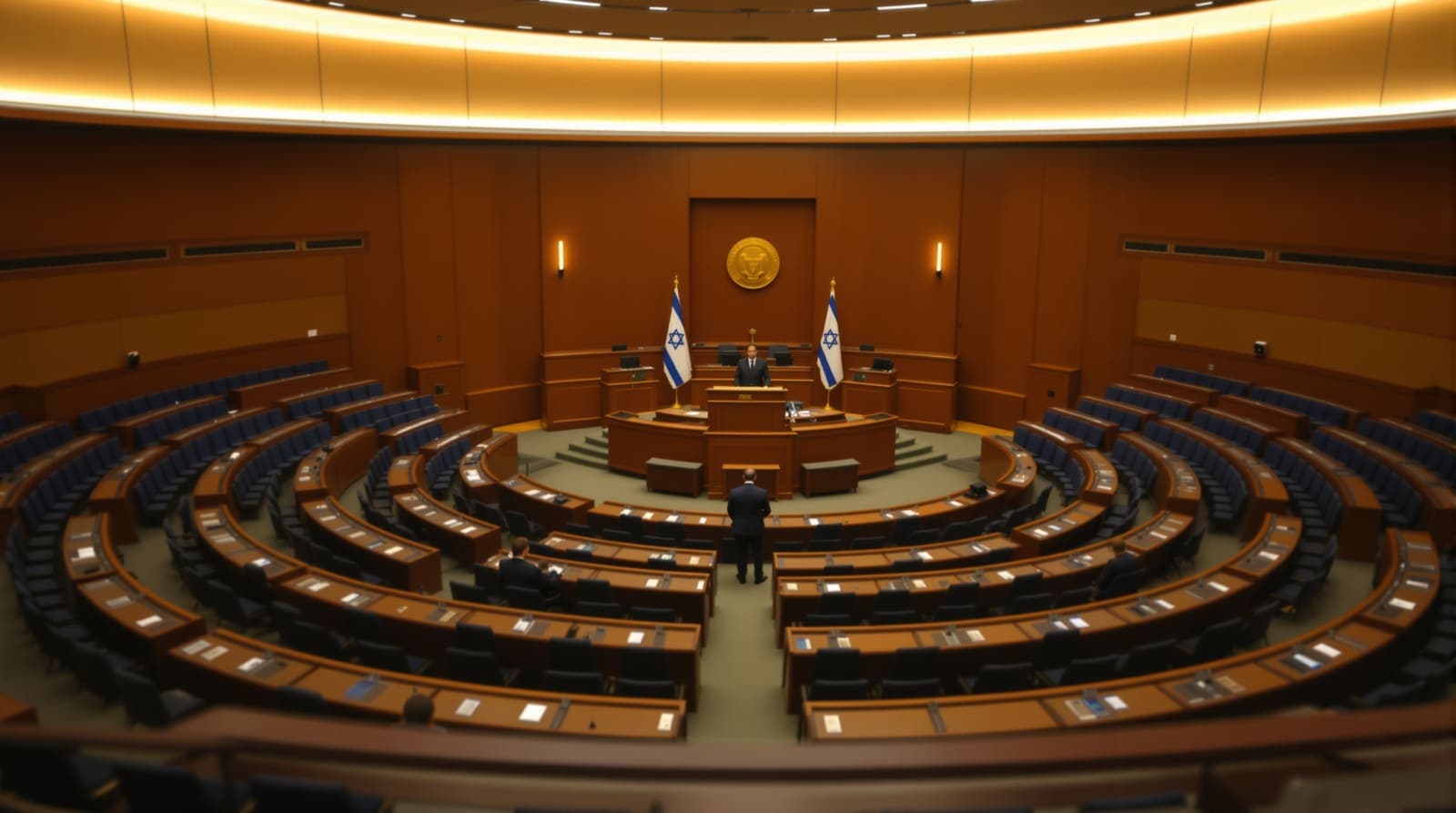
AI illustration, not a photo of the events.
Rabbi Dov Lando, the spiritual leader of the Degel HaTorah faction within the Orthodox United Torah Judaism party, instructed his lawmakers to vote against a government-backed bill imposing the death penalty on terrorists who kill Israelis. The instruction, reported on 10 November 2025, put him in open conflict with National Security Minister Itamar Ben-Gvir, who is pushing the legislation with the backing of Prime Minister Benjamin Netanyahu.
Ben-Gvir warned that his Otzma Yehudit party would stop voting with the coalition if the bill did not pass its first reading that week. A spokesman for Lando said the rabbi believes the policy "would endanger Jewish lives, because if Arabs around the world see that we are doing such a thing, it could lead to bloodshed." Despite Degel HaTorah's opposition, the measure could still advance with support from some opposition members.
What the bill would do
The bill's explanatory notes provide that terrorists convicted of murder motivated by racism or hostility toward the public, and committed with the aim of harming the State of Israel, would receive a mandatory death sentence. The law would allow a death sentence to be imposed by majority vote rather than unanimously, and would remove any possibility of mitigation once a sentence is final. The Knesset's National Security Committee had recently approved advancing the bill.
Reporting on the vote, the Times of Israel said three versions of the measure passed their first reading, the leading one by 39 votes to 16, with most of the opposition boycotting the vote. The paper noted that Netanyahu had opposed such legislation in 2023 over concerns about hostage negotiations and reversed his position after Ben-Gvir's ultimatum in October 2025.
The hostage question, and a changed mind
Brigadier General (res.) Gal Hirsch, the government's coordinator for hostages and missing persons, had previously opposed the legislation. He told the committee that his position had shifted after all the hostages returned from Gaza, a reminder that the strongest practical argument against the bill had been the fear of what it would mean for Israelis held captive.
Israel's week in five stories, every Friday
Sourced and checked by the Israel.com newsroom, with Shabbat times. Free, one-click unsubscribe.
One list, unsubscribe in a click. See our privacy policy.
Israel has almost never executed anyone
Israel has carried out a single civil execution in its history, that of Adolf Eichmann, the Nazi official who organised the deportation of Europe's Jews. He was hanged in 1962 after being convicted of genocide and crimes against humanity, and his ashes were scattered at sea. An Israeli court sentenced John Demjanjuk to death in 1988 for crimes against humanity committed at concentration camps, but the Supreme Court overturned the sentence in 1993; Israel extradited him, and he was later convicted in Germany as an accessory to the murder of more than 28,000 Jews at Sobibor, dying while appealing.
Israel abolished capital punishment for ordinary murder in 1954, keeping it for war crimes, crimes against humanity, crimes against the Jewish people, treason and certain wartime military offences, according to a reference survey of the subject, which also records one earlier execution, of the army officer Meir Tobianski in 1948, who was posthumously exonerated. No prosecutor has sought a death sentence since the 1990s.
Why the Orthodox parties hold the balance
United Torah Judaism and the Sephardi Orthodox party Shas were already partially boycotting coalition votes to press Netanyahu into passing legislation granting broad military draft exemptions to yeshiva students. That dispute, not this bill, is the fault line that has repeatedly threatened the government's ability to legislate at all.
What happened afterwards
The bill did not die with the rift. A reference record of the legislation states that after committee approval in March 2026 the Knesset passed it by 62 votes to 48 on 30 March 2026 and it took effect on 17 May 2026, when the head of Israeli Central Command signed the implementing order. It prescribes execution by hanging, sets that as the default sentence in military courts, where only Palestinians are tried, and applies more narrowly in civilian ones; petitions against it were filed at Israel's Supreme Court by the Association for Civil Rights in Israel and Adalah.
What is still unclear
The report did not say how many Degel HaTorah lawmakers were bound by the instruction, or whether UTJ's other faction shared the position. It did not say which opposition members were expected to supply the missing votes, and it gave no response from Netanyahu's office to Ben-Gvir's threat to withhold coalition support.
Read next
All government →
Illustration
Elections
Rabbi Abergil's Ahi party quits the Knesset race and backs Likud

File photo
Government
Report says Netanyahu told diplomats to back Argentina on Falklands talks

Illustration
Government
Paris shops board up and the Louvre shuts as France braces for weekend protests

File photo
Government
US memo on Iranian plots against officials informs Mideast embassy staffing
Sources and further reading
Every link below was opened and checked when this page was written. Official statements are marked as such: they are the subject's own account, not an independent one.
- ReportingTimes of Israeltimesofisrael.comKnesset advances bill mandating death penalty for terrorists who killed Israelis
First-reading vote figures and the positions of Ben-Gvir, Netanyahu and UTJ
- ReferenceWikipediaen.wikipedia.orgDeath Penalty for Terrorists Law
Final passage of the bill in 2026 and the legal challenges to it
- ReferenceWikipediaen.wikipedia.orgCapital punishment in Israel
1954 abolition for murder, remaining capital offences and Israel's executions
How we checked this
Rabbi Lando's instruction, Ben-Gvir's threat, the bill's provisions and the historical cases of Eichmann and Demjanjuk are all as reported on 10 November 2025. The first-reading vote figures come from Times of Israel reporting from the Knesset that day, and the bill's later passage and Israel's wider record on capital punishment from reference records read directly.
Our sourcing and corrections policy →
The week from Israel, in one email
The stories that mattered, sourced and checked by the Israel.com newsroom. Free, weekly, one-click unsubscribe.
One list, unsubscribe in a click. See our privacy policy.

Israel.com is free, and readers like you keep it that way.
The Israel.com newsroom checks every story against its sources and publishes it free. If this one helped, a contribution of any size keeps the next one free too.
One payment, nothing to sign up for. Another amount
Latest
- IDF fires interceptor at suspected aerial target over southern Lebanon
- Soldiers killed near Hebron named and buried as army operation goes on
- Truck driver arrested after fatal crash on Route 465 near Aboud
- IDF says about 220,000 dunams of West Bank olives harvested so far
- Troops detain Palestinian suspected of planning imminent attack in Binyamin area
- Man of about 25 shot dead in Yafia, near Nazareth, during a taxi ride