Joint List backs Eisenkot, offers to support his government from outside
In consultations with President Herzog, the Arab-majority alliance recommended the Yashar leader and said it would not bring down a change government even in wartime.

Gadi Eisenkot. File photo by יהב טרודלר (Yahav Trudler - Yahav Studio), CC BY-SA 3.0, via Wikimedia Commons.
The Joint List, which brings together several Arab-majority parties, told President Isaac Herzog on Thursday that it recommends Gadi Eisenkot, leader of the Yashar party, as the person to form Israel's next government. According to The Times of Israel, the delegation said it would back such a government from outside the coalition rather than join it, with the aim of replacing Prime Minister Benjamin Netanyahu's government, while acknowledging deep differences with Eisenkot.
Haaretz reported that the recommendation followed an earlier endorsement of Eisenkot by the United Arab List, meaning all the Arab-majority parties have now named him in their talks with the president. The meeting took place at the President's Residence in Jerusalem on November 5, 2026, The Times of Israel reported.
On the ground

Herzog launches coalition talks; Eisenkot leads in endorsements to form gov't haaretz.com/israel-news/el…
What the president's consultations are
After a Knesset election, Israel's president holds a round of meetings with each party that won seats. Every delegation tells the president which lawmaker it wants to see given the task of assembling a governing coalition. The president then weighs those recommendations before handing the mandate to a candidate. The meetings are partly public, and the president often uses them to question parties on how they intend to behave in the next parliament, which is what happened on Thursday.
Why the Joint List says it chose Eisenkot
Party chair Yousef Jabareen framed the decision as a response to what Arab voters wanted. The Times of Israel reported that he pointed to racism, discrimination, crime and exclusion faced by Arab citizens under the outgoing coalition, and said the Arab public had turned out at the polls because it wanted change.
He did not present the endorsement as an embrace of Eisenkot. Jabareen acknowledged disagreements with the Yashar leader on a range of issues, and, according to The Times of Israel, faulted him for not taking a firm position against incitement aimed at Arab citizens during the election campaign. He described the choice as one between "bad and even worse."
Get an email the day Israel has a new government.
Coalition talks can take weeks. When a government is sworn in, Israel.com's newsroom emails who leads it, which parties are in and who got which ministry, then the Friday email each week. Free, and one click unsubscribes.
One list, unsubscribe in a click. See our privacy policy.
Speaking after the meeting, Joint List lawmaker Tibi gave a similar account. N12 reported that he said the party recommended Eisenkot despite opposing some of his views, describing it as a choice between bad and less bad, and stating that the goal was to bring Netanyahu down. The two leaders' phrasing differs slightly in the reports, one speaking of "even worse" and the other of "less bad", though both make the same point.
The question of war
Herzog asked the delegation how the party would act if Israel were engaged in a significant security campaign. The answer, as relayed by political commentator Amit Segal and Ynet, was that the party's voters had not elected it in order to topple a government and return Netanyahu to power. The Times of Israel summarised the position as a pledge not to bring down a government it supports from outside, even during a war. News.co.il carried the same exchange, describing it as a message that the party would not serve as a lifeline for Netanyahu.
Next story Government
Eisenkot's Yashar! finishes first round of talks with three change-bloc parties
Supporting a government "from outside" generally means a party does not take cabinet posts or formally join the coalition, but votes to keep the government in place. The question put by Herzog goes to whether such backing would hold if a minority partner's voters objected to military operations.
Conditions on other Knesset votes
Tibi also signalled that the party's votes would come with an expectation of recognition. According to N12, he said that anyone seeking the Joint List's support to replace the speaker of the Knesset, Israel's parliament, or to establish a state commission of inquiry must treat those votes as legitimate. A state commission of inquiry is the most senior form of official investigation in Israel, with independent powers.
An unanswered question on identity
Not every exchange produced a direct reply. Amit Segal reported that Herzog asked Tibi whether Arab society in Israel had undergone a process of "Israelization" since the seventh of October, and that Tibi did not answer directly. Segal attributed this to the Joint List's platform, which he said explicitly opposes the Israelization of the country's Arab citizens. That explanation is Segal's own reading; the reports do not carry a response from Tibi or the party on it.
What the reports do not say
None of the reports carries a response from Eisenkot or Yashar to the endorsement or to the conditions Tibi set out. They also do not say whether Eisenkot has accepted, or would accept, outside support from the Arab-majority parties, or when Herzog will decide whom to task with forming the government.
More on Jerusalem: Places and businesses in Jerusalem · Shabbat times in Jerusalem
Read next
All elections →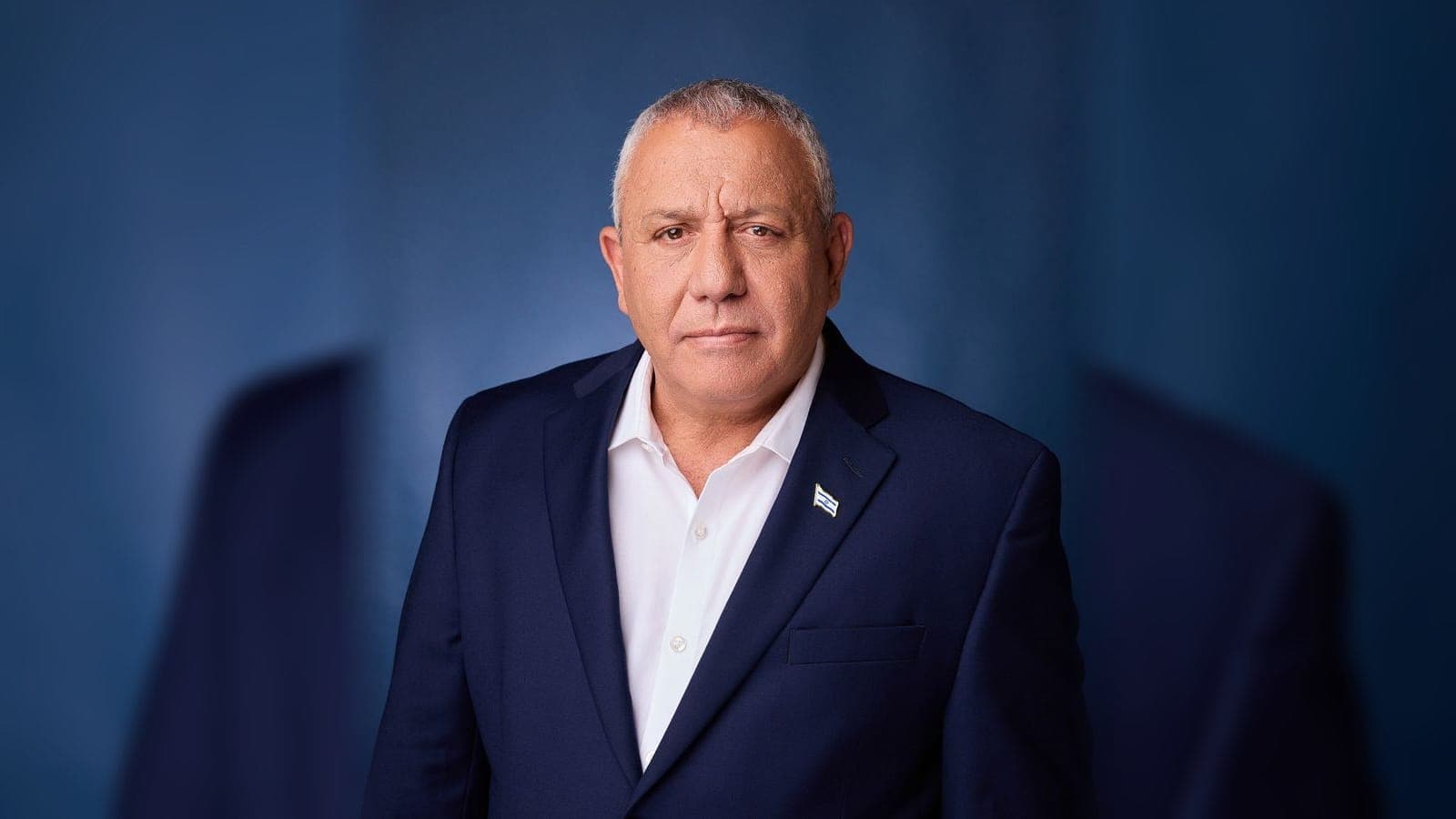
File photo
Elections
Eisenkot says change bloc will move fast on emergency government and Knesset

File photo
Security
Ra'am's Mansour Abbas backs Eisenkot for prime minister, says Hamas must disarm

File photo
Security
Joint List accuses Shin Bet chief Zini of serving Netanyahu over reported probe

File photo
Elections
Netanyahu offers broad government talks, rules out Ra'am and the Joint List
Sources and further reading
Every link below was opened and checked when this page was written. Official statements are marked as such: they are the subject's own account, not an independent one.
- Reportingyediotht.meYnet alerts
- Reportinghaaretzhaaretz.comHaaretz
- Reportingamitsegalt.meAmit Segal
- Reportingamitsegalt.meAmit Segal
- Reportingkeshett.meN12
- Reportingkeshett.meN12
- Reportingtoitimesofisrael.comThe Times of Israel
- Reportingnewssilt.meNews.co.il
How we checked this
The Joint List's recommendation of Eisenkot was reported by Haaretz, The Times of Israel, N12, Ynet, Amit Segal and News.co.il. The United Arab List's earlier endorsement is attributed to Haaretz, and the explanation of Tibi's unanswered question rests on Amit Segal alone.
Our sourcing and corrections policy →The week from Israel, in one email
The stories that mattered, sourced and checked by the Israel.com newsroom. Free, weekly, one-click unsubscribe.
One list, unsubscribe in a click. See our privacy policy.

Israel.com is free, and readers like you keep it that way.
The Israel.com newsroom checks every story against its sources and publishes it free. If this one helped, a contribution of any size keeps the next one free too.
One payment, nothing to sign up for. Another amountGive monthly
Latest
- Israel's US arms orders run about $10 billion past the current aid deal
- Bennett and Lapid's faction tells Herzog it backs Eisenkot, rejects unity talk
- Tel Aviv and Wall Street stocks drop sharply as the shekel weakens
- Putin hosts Iran's security council secretary Mohsen Rezaei at the Kremlin
- Houthis seek $51 billion and recognition from Saudi Arabia in truce talks
- Rubio weighing exit from Trump administration ahead of 2028, reports say