Mizrahi music singer
Haim MosheSongs, albums, age and where shows are announced
Israeli singer of Mizrahi music since the 1970s, known for Ahavat Hayai, Linda, Toda, Nishba and HaKolot shel Pireus.
Israel.com does not list Haim Moshe's shows yet. New dates are announced first on the official pages below.
Watch Haim Moshe's newest video
These are Haim Moshe's official accounts, with the latest from each
Posts, videos and songs straight from Haim Moshe's own pages, as they publish them.
Haim Moshe went from weddings and clubs to some of the best-loved songs in Israeli music
Haim Moshe was born in 1955 in Ramat HaSharon, to a family that came from Yemen, and grew up there. As a young man he sang Greek, Turkish and Arabic songs at weddings and family events, and in the 1970s he joined singer Daklon and guitarist Moshe Ben Mosh in the band Tzlilei HaKerem, which played clubs and events until it broke up in 1982. His first solo album, Shevach Ashir, came out in 1979.
His breakthrough came in 1983 with Ahavat Hayai, which included Linda, one of the first songs in Arabic by an Israeli singer to become a hit. A run of hit albums followed: Ten LaZman Lalechet (1984), Toda (1986), whose title song by Uzi Hitman became a classic of Israeli music, Nishba (1988), with music by Yair Klinger, and HaBayta (1990), whose hit HaKolot shel Pireus gave its name to a second album that year.
Later came Divri Elai (1994), whose title song has words by Ehud Manor, HaTmunot SheBaAlbum (1998) and Sogrim Ma'agal (2000), on which he and Daklon re-recorded the songs of Tzlilei HaKerem. In 2021 he received the AMI union's lifetime achievement award, and in 2025 he had club shows booked at Zappa in Tel Aviv and Gray in Yehud and Modi'in.
Born
20 September 1955, in Ramat HaSharon Hebrew Wikipedia
First band
Tzlilei HaKerem, with Daklon and guitarist Moshe Ben Mosh Hebrew Wikipedia
Breakthrough
Ahavat Hayai (1983), with Linda Hebrew Wikipedia
Award
AMI union lifetime achievement award, 2021 Hebrew Wikipedia
Writers of his hits
Avihu Medina, Uzi Hitman and Yair Klinger, among others Hebrew Wikipedia
Genre
Mizrahi music Wikidata
His path runs from his first solo album in 1979 to club shows in 2025
1979
Released his first solo album, Shevach Ashir, with songs written for him by Avihu Medina. Hebrew Wikipedia
1983
Broke through with Ahavat Hayai, which included Linda, one of the first songs in Arabic by an Israeli singer to become a hit. Hebrew Wikipedia
1984
Released Ten LaZman Lalechet, mostly written and composed by Avihu Medina; its title song became one of the songs most identified with him. Hebrew Wikipedia
1986
Released Toda, an album of Greek melodies with words by Uzi Hitman, and came third at the pre-Eurovision with LeHaim. Hebrew Wikipedia
1988
Released Nishba, whose title song with music by Yair Klinger is still a favourite at weddings. Hebrew Wikipedia
1990
HaKolot shel Pireus became a big hit, and a second album that year was named after it. Hebrew Wikipedia
1994
Released Divri Elai, whose title song has words by Ehud Manor, and sang Yarok BaEinayim, Maccabi Haifa's championship song by Uzi Hitman. Hebrew Wikipedia
1998
Released HaTmunot SheBaAlbum, with songs by Uzi Hitman, Ehud Manor and Ze'ev Nehama. Hebrew Wikipedia
2000
Reunited with Daklon on Sogrim Ma'agal, new versions of the songs of Tzlilei HaKerem. Hebrew Wikipedia
2025
Had club shows booked at Zappa in Tel Aviv and Gray in Yehud and Modi'in for May and June, and a part in the Kesem HaMizrach show at the Ashdod amphitheatre. Walla, 14 May 2025
These are Haim Moshe's best-known albums and songs
Eich SheBat
Album · 2012 · Hebrew Wikipedia
Sogrim Ma'agal, with Daklon
Album · 2000 · Hebrew Wikipedia
HaTmunot SheBaAlbum
Album · 1998 · Hebrew Wikipedia
Divri Elai
Album · 1994 · Hebrew Wikipedia
HaKolot shel Pireus
Album · 1990 · Hebrew Wikipedia
Nishba
Album · 1988 · Hebrew Wikipedia
Toda
Album · 1986 · Hebrew Wikipedia
Ten LaZman Lalechet
Album · 1984 · Hebrew Wikipedia
Linda
Song · 1983 · Hebrew Wikipedia
Ahavat Hayai
Album · 1983 · Hebrew Wikipedia
His official channel has his songs and clips
2024
2024
2024
These are the questions people ask about Haim Moshe
Where does Haim Moshe announce new shows?
New dates are announced first on Haim Moshe's official pages: Facebook and YouTube. Israel.com does not list these shows yet.
Where can I listen to Haim Moshe's songs?
Haim Moshe's songs are on Spotify and YouTube, on the official artist pages linked here.
How old is Haim Moshe?
Haim Moshe was born on 20 September 1955 and is 71 years old.
What are Haim Moshe's best-known songs?
Among them are Ahavat Hayai and Linda (1983), Ten LaZman Lalechet (1984), Toda (1986), Nishba (1988) and HaKolot shel Pireus (1990).
Who wrote Toda for Haim Moshe?
Uzi Hitman wrote the words, to a Greek melody, for Moshe's 1986 album Toda, all of whose lyrics are Hitman's. The song became a classic of Israeli music.
What was Tzlilei HaKerem?
The band Haim Moshe sang in from the 1970s with singer Daklon and guitarist Moshe Ben Mosh, playing mostly clubs and events until it broke up in 1982. In 2000 he and Daklon re-recorded its songs on Sogrim Ma'agal.
Did Haim Moshe sing in Arabic?
Yes. Linda, from his 1983 album Ahavat Hayai, was one of the first songs in Arabic sung by an Israeli singer, and it was a great success.
Where is Haim Moshe from?
He was born in 1955 in Ramat HaSharon, to a family that came from Yemen, and grew up there. As a young man he sang Greek, Turkish and Arabic songs at weddings and family events.
More performers you can follow on Israel.com
Lead singer of Ethnix
Ze'ev Nehama
Singer-songwriter
Alma Gov
Hasidic singer and composer
Mordechai Ben David

Singer and actress
Shiri Maimon
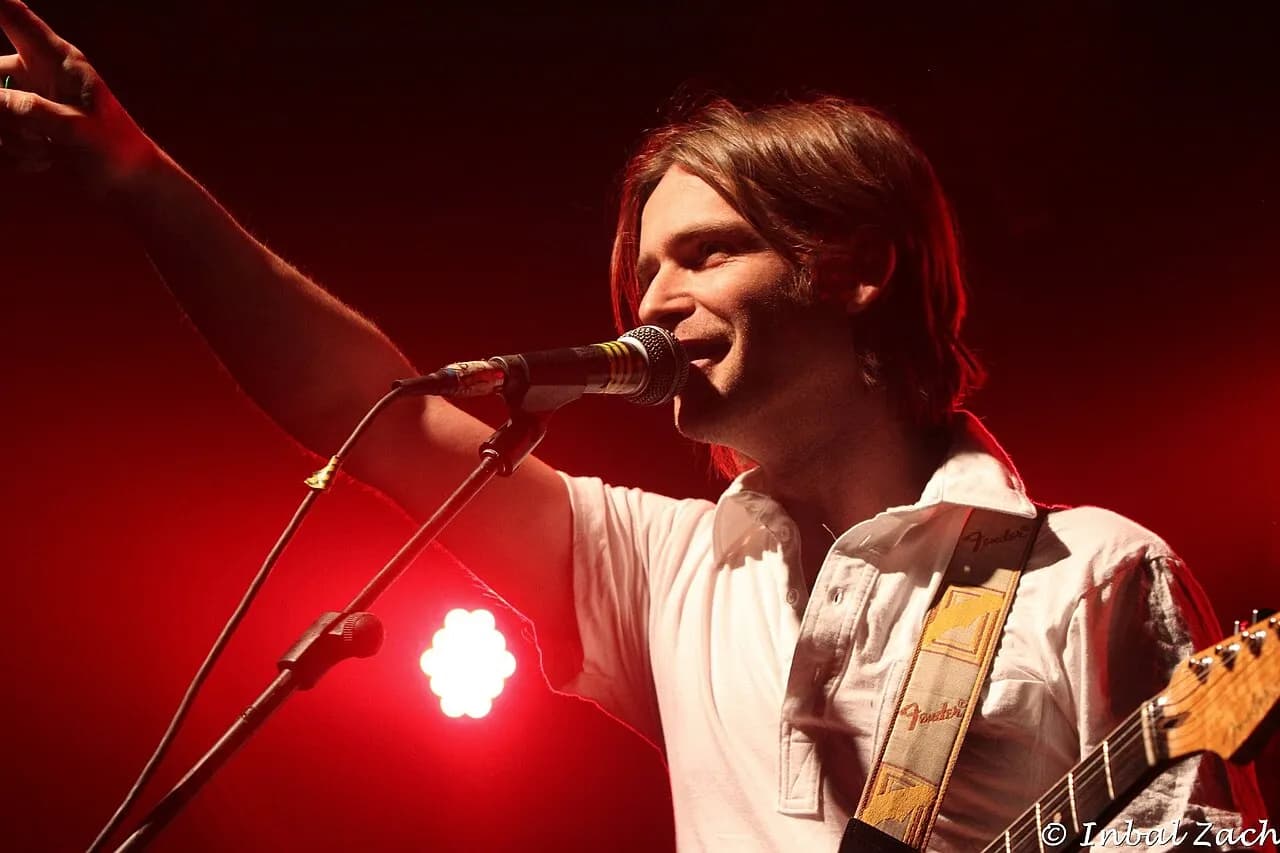
Singer, guitarist and producer
Peter Roth
Where these facts come from
- Hebrew Wikipedia · read 17 October 2026
- Wikidata · read 17 October 2026
- Walla, 14 May 2025 · read 17 October 2026