Museum · Jaffa
Ilana Goor Museum
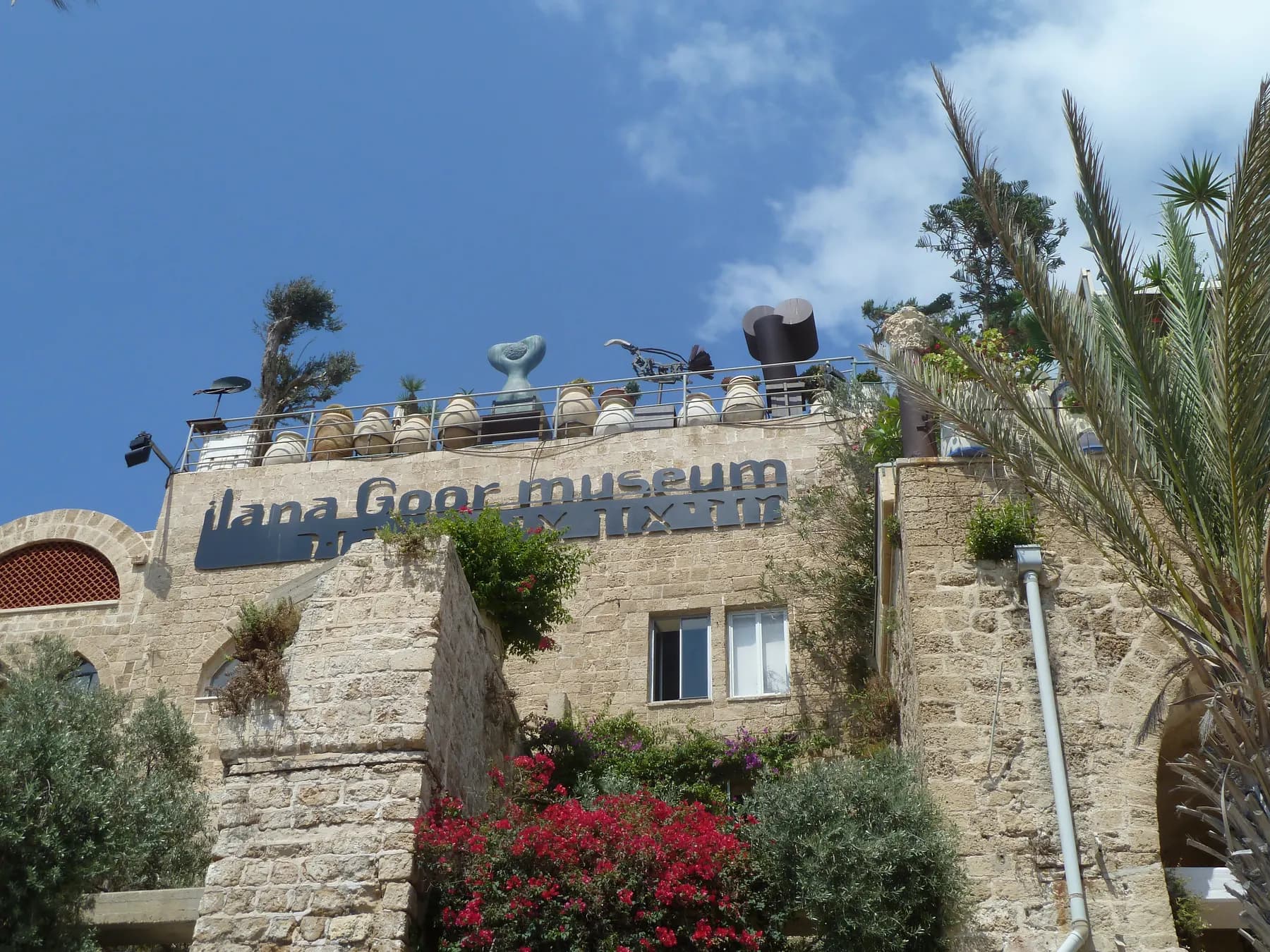
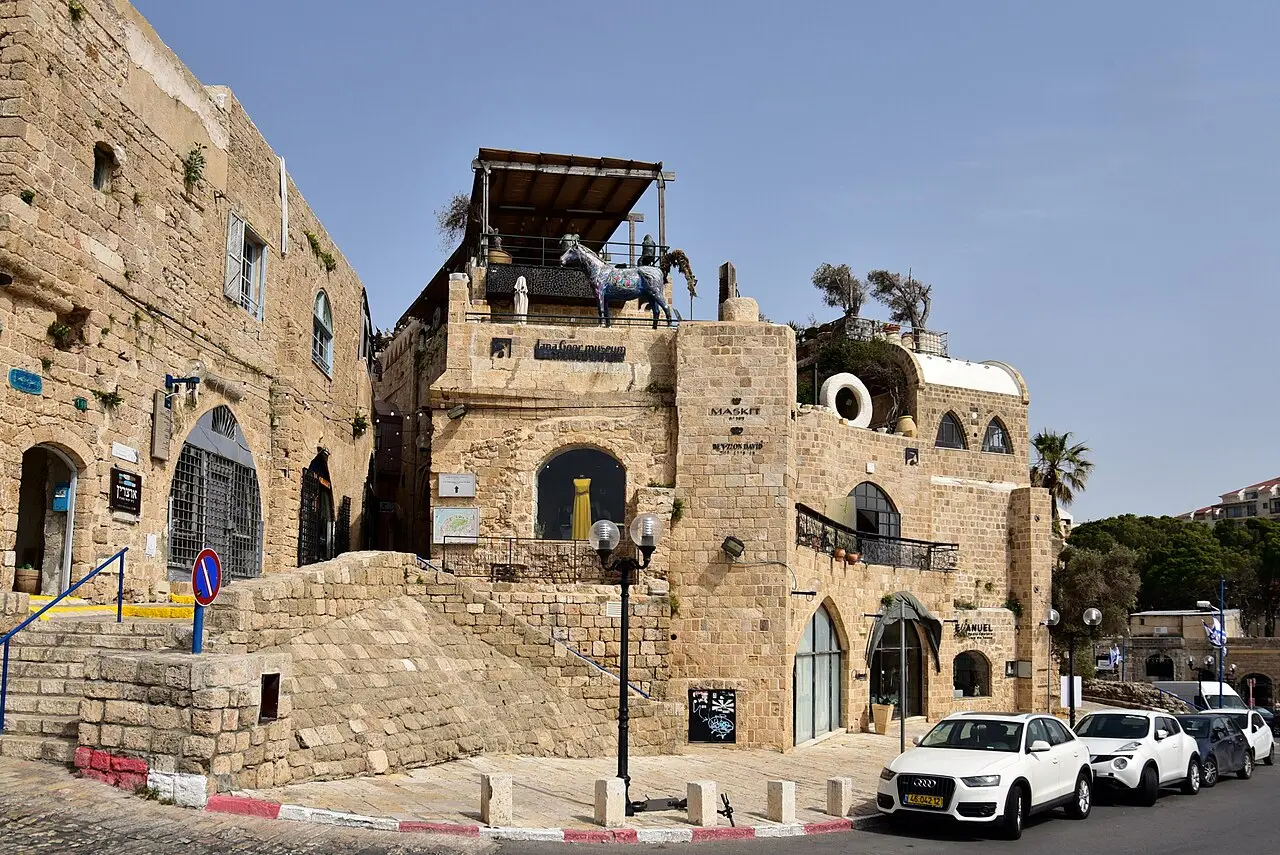
A stone building of 1742, put up as an inn for Jewish pilgrims landing at Jaffa, which the sculptor Ilana Goor bought in two stages and opened as a museum of her own work and her collection in September 1995.
Deror_avi / CC BY-SA 3.0 · Wikimedia Commons
Building
1742
the year the museum gives for the pilgrims' inn built here by the merchant Yaakov Zonana
Museum opened
September 1995
after Ilana Goor bought the rest of the building in the early 1990s and spent about three years on it
Works held
more than 500
the museum's own count, including some 300 sculptures, gathered over fifty years
Adult ticket
45 NIS
as published by the museum on its visitor information page, checked in 2026
In short
- How long to give it
- about 60 to 90 minutes
- Sunday to Thursday
- 10.00 to 16.00
- Adult
- 45 NIS
מוזיאון אילנה גור
The Ilana Goor Museum is a house museum on the ridge of Old Jaffa, a few lanes above the fishing harbour, holding more than 500 works of art inside a stone building the museum dates to 1742 and describes as an inn for Jewish pilgrims who landed at Jaffa on their way to Jerusalem. Almost everything in it was chosen by one person. Ilana Goor, a sculptor and designer born in Tiberias in 1936, bought part of the building in 1983 to live in, bought the rest in the early 1990s, restored it over roughly three years and opened the museum in September 1995.
It is not a museum in the ordinary sense of a collection assembled by a committee and captioned by scholars. The Tel Aviv-Yafo municipality's tourism service describes it as sitting in the private home of the artist it is named for, and the English Wikipedia entry gives its fuller title as the Ilana Goor Residence and Museum. Her own iron and bronze work stands among pieces she gathered over fifty years of travelling: sculpture by Henry Moore and Diego Giacometti, a chair by Frank Gehry, work by Anselm Kiefer and Josef Albers, Israeli painting and sculpture from Menashe Kadishman to Fatma Shanan, and a large holding of ethnic art from Africa and South America.
The practical shape of a visit is small and fixed. One building on several levels, a roof sculpture garden with the Mediterranean below it, a shop, and an adult ticket the museum publishes at 45 NIS. It shuts at 16.00, and at 14.00 on Friday, which catches out visitors who treat Old Jaffa as an evening destination. It does open on Saturday, which a good deal of the surrounding retail does not.
1742
Built for people coming off the ships
The museum's account of its own building starts with a date and a name. It was raised in 1742 by Yaakov Zonana, who is described as head of the Committee of Officers in Constantinople, and it worked as a pilgrimage inn: shelter for travellers who had come ashore at Jaffa and still had the road to Jerusalem in front of them. The Hebrew Wikipedia entry calls it the first Jewish inn in Jaffa and describes three storeys behind very heavy walls.
The walls are the part of the story that explains the rest. The inn stood outside the town walls, which is why the Jewish Virtual Library's account of the building stresses its massive construction and its function as protection from robbers as much as accommodation. Jaffa was the landing point for the interior, and an eighteenth-century pilgrim arriving by sea was at his most exposed in the hours between the boat and the road.
How much of this is documented and how much is house tradition is worth stating plainly. The chronology above comes from the museum's own page on the building, and the encyclopaedia entries that repeat it draw on the same source. There is no published excavation of the site, no antiquities file the museum points visitors to, and no survey separating one building phase from another. The 1742 date is the museum's, consistently given, and it is the only date on offer.
- 1742: built as an inn for Jewish pilgrims, per the museum
- Three storeys behind heavy walls, per the Hebrew Wikipedia entry
- Outside the town walls, so built for protection as well as lodging
- No published excavation or building survey of the site
Bahnfrend / CC BY-SA 4.0 · Wikimedia Commons
After the inn
Soap, a synagogue, and a building nobody wanted
In the second half of the nineteenth century the inn became a factory making soap and perfume from olive oil, which was one of the region's export goods in that period. The Hebrew Wikipedia entry says the works were run by an established Muslim family. The trace of that industry is still in the building: a stone oven survives in a basement that Goor says she found during the restoration, sealed off from the rest of the house.
The twentieth century used it as housing and then as a shell. From 1949, part of the building served as a synagogue for immigrants from the Jewish community of Libya. In the 1950s families arriving from the Balkans were housed in it, in what both the museum and the Hebrew entry describe as poor sanitary conditions. In the 1970s artists began moving into Old Jaffa generally, which is the context for what happened next.
By the time Goor came to buy the remainder, in the early 1990s, that remainder was abandoned. The museum's own version is that she bought it without knowing what was inside, and the Hebrew entry adds the detail that getting in meant drilling through a wall. Two and a half centuries of continuous use had ended not in preservation but in a locked ruin in the middle of a tourist quarter.
Rebuilt
What survived, and what is Goor's
Goor bought her first portion of the building in 1983 as a private home, at a point when the rest of it was somebody else's problem. She acquired the remainder in the early 1990s and put about three years into reconstruction, working, on the museum's account, to keep the old architectural character while making the place habitable. The museum opened in September 1995.
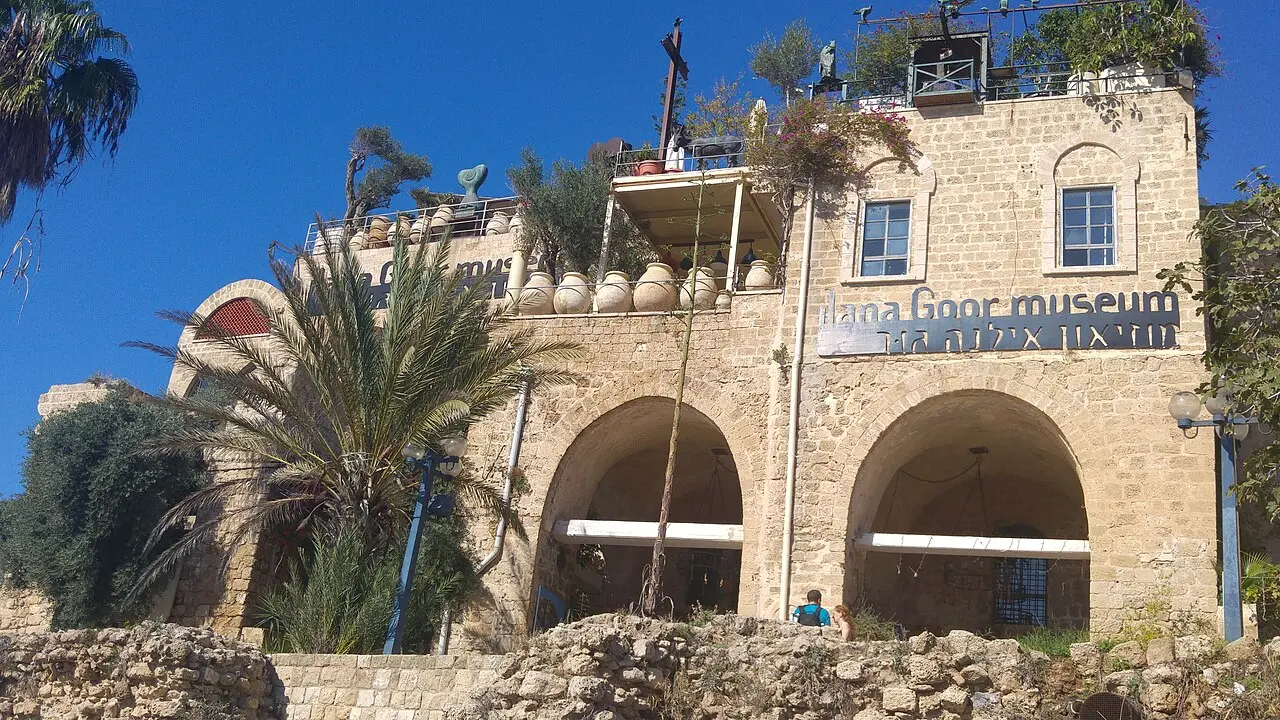
A handful of features are presented as genuinely old, and they are the things to look for. The ceiling in the sculpture room is an eighteenth-century construction using what the museum calls the beehive technique, with amphorae set into the fabric to lighten the span and insulate it. The basement oven belongs to the soap and cosmetics period. A lattice screen the museum dates to the nineteenth century, and describes as a place from which Muslim women could watch without being seen, is now hung with conceptual work about gender. Rooms and blocked openings turned up during the works.
Everything else is a 1990s intervention, and the museum does not pretend otherwise. The circulation, the lighting, the stair runs, the roof sculpture garden and the whole arrangement of objects are hers. No conservation report has been published that separates original fabric from new work room by room, so the honest reading for a visitor is this: the shell and the specific features named above are old, the museum inside them is thirty years old, and the two were never meant to be told apart by eye.
That is also the argument for coming. A restored courtyard house in Old Jaffa is usually a hotel lobby or a gallery with white walls. This one kept its awkward levels, its low doorways and its dark corners, and then filled them.
- 1983: Goor buys part of the building as a home
- Early 1990s: buys the rest, then about three years of reconstruction
- Old: the amphorae ceiling, the basement oven, the nineteenth-century lattice screen
- New: the layout, lighting, stairs and roof garden
Laliv Gal / CC BY 2.5 · Wikimedia Commons
The collection
Five hundred works chosen by one pair of eyes
The museum states a holding of more than 500 works, accumulated over fifty years of travel in Israel and abroad, with some 300 of them sculpture. The rest is paintings, drawings, video, design objects, antiques and a substantial body of ethnic art from Africa and South America, which the museum names as a dominant theme rather than a sideline.
The names run a long way in both directions. Alongside Goor's own iron and bronze there is Henry Moore, Diego Giacometti, Alexander Archipenko, Josef Albers, Anselm Kiefer, Gerrit Rietveld and Frank Gehry; on the Israeli side Menashe Kadishman, Uri Lifshitz and Ya'acov Dorchin among the established figures, and Sigal Avni, Vered Aharonovitch, Fatma Shanan and Lior Shtainer among the newer ones. The stated criterion is a strong sense of self-expression and social or political awareness, which is a collector's rule rather than a curator's, and the results look like it.
The building is divided into named rooms rather than chronological galleries. There is a central space of monumental sculpture, a design room of lighting and ironwork, a monks' room where original monks' tables carry Goor's installation The Morning After, a library of Hebrew and foreign literature dedicated to her grandfather, the ethnic art rooms, the sculpture room under the amphorae ceiling, the lattice space, an upper-level passage hung with Israeli artists, a room of crucifixes and relics, and the roof garden. English Wikipedia records that the mixture has been called an artistic jungle, and that Goor has called it her own university.
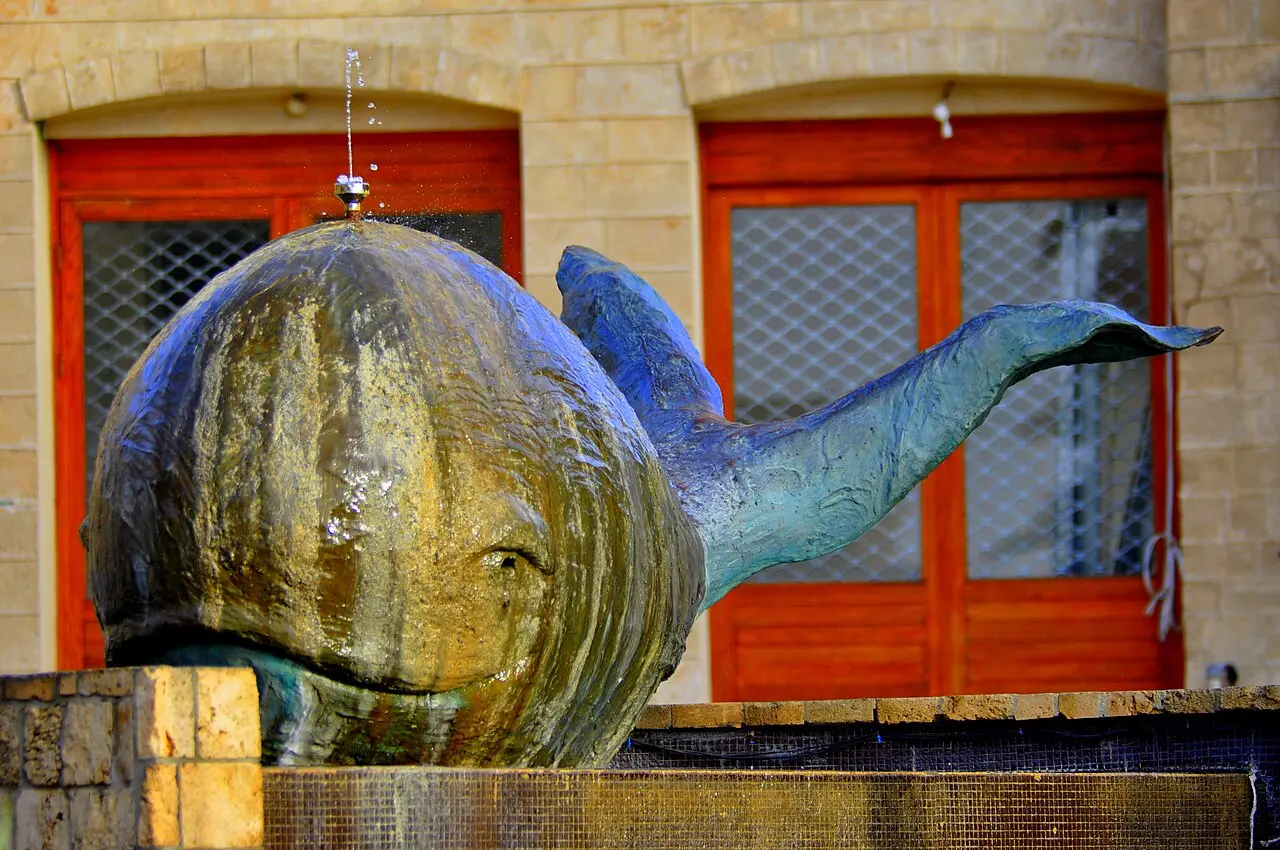
Her own standing is easy enough to check outside the building. Never Again stands at Yad Vashem, Woman Against the Wind at Charles Clore Park on the Tel Aviv seafront, and the Smiling Whale of 1985 in Old Jaffa itself, a short walk from the museum door and free to look at. On formal training the accounts differ: her museum biography and the English Wikipedia entry both describe her as an autodidact who did not complete art studies, while the curriculum vitae published on the same site lists Bezalel in Jerusalem in 1955 and 1956.
Tomer600 / CC BY-SA 3.0 · Wikimedia Commons
On the day
Short hours, stepped lanes, no lift
The museum publishes 10.00 to 16.00 from Sunday to Thursday and on Saturday, and 10.00 to 14.00 on Friday. Admission is 45 NIS for an adult, 35 NIS for a resident of Tel Aviv-Yafo, 25 NIS for a soldier, a senior or a student, 20 NIS for a child aged five to seventeen, and 100 NIS for a family ticket covering two adults and three children. The museum says tickets are sold at the door and nothing needs booking in advance.
Guided tours run 45 to 60 minutes, in Hebrew and English as standard and in Spanish, Portuguese or Russian on request, and they carry an extra charge arranged through the museum's tours office. The museum has also advertised a Friday tour at noon included in the admission price, with a note that it is on hold until further notice, so it is not something to build a Friday around without ringing first.
Access is the honest weak point, and the museum's own accessibility statement, dated 27 July 2023, is the document to read. It lists disabled parking in an adjacent car park and an accessible entrance through the museum shop at 1 Mazal Arieh Street rather than the main door at 4 Mazal Dagim, and it states that there are no lifts. A three-storey house with a roof terrace and no lift means most of the display is reached by stairs, and the lanes outside are stepped and cobbled. Wheelchair users should phone the accessibility coordinator before coming.
Getting there is a walk in every case. The museum lists the Jaffa Port, goldsmiths' and flea market car parks and the seafront lots by Charles Clore Park, Dan bus routes 10, 18, 41 and 44 to the Yefet and Louis Pasteur stop, and the light rail Red Line to Bloomfield Stadium with a walk in from there. The street names are worth decoding on the way: Mazal Dagim is Pisces and Mazal Arieh is Leo, because the lanes on this side of Old Jaffa carry the signs of the zodiac.
What to look for
Things not to walk past at Ilana Goor Museum
The details that repay knowing about before you are standing in front of them.
The amphorae ceiling
The sculpture room is roofed by what the museum calls the beehive technique, an eighteenth-century ceiling with clay amphorae built into it to lighten and insulate the span. Miniatures by Henry Moore and Diego Giacometti sit under it.
The roof sculpture garden
The top of the house is an open terrace of sculpture, old stone and planting, with the Mediterranean below. It is also where the museum stages its jazz evenings.
The lattice space
A nineteenth-century screen the museum describes as a point from which Muslim women could watch the room unobserved, kept in place and now used to show conceptual work about gender.
The basement oven
A stone oven from the building's years as a soap and cosmetics works, found sealed away during the restoration. It is the only substantial trace of the nineteenth-century factory.
The monks' room
Original monks' tables carry Goor's installation The Morning After, which the museum presents as a piece about the cycle of life and death and as social criticism.
The Smiling Whale, outside
Goor's whale fountain of 1985 stands in Old Jaffa a short walk from the museum, and costs nothing to look at. It is the easiest way to see her public work without buying a ticket.
The long view
Ilana Goor Museum, in order
1742
The merchant Yaakov Zonana builds an inn for Jewish pilgrims outside the walls of Jaffa
Second half of the 19th century
The building becomes a works making soap and perfume from olive oil
1949
Part of it serves as a synagogue for immigrants from the Jewish community of Libya
1950s
Families arriving from the Balkans are housed in the building in poor conditions
1983
Ilana Goor buys a portion of the building as a private home
Early 1990s
She buys the abandoned remainder and begins about three years of reconstruction
September 1995
The Ilana Goor Museum opens to the public
2016
Goor is named Yakir Tel Aviv-Yafo, the city's honorary citizen award
Practical
Visiting Ilana Goor Museum
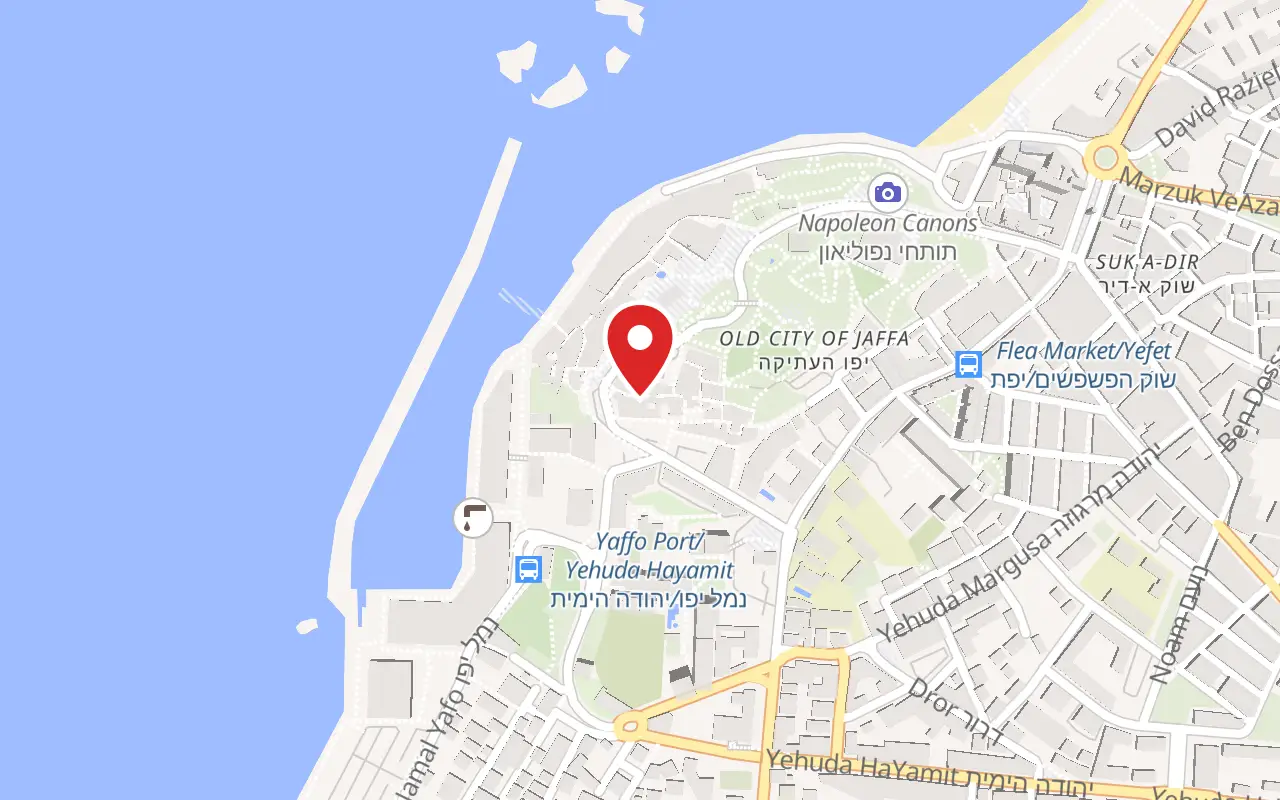
Where
4 Mazal Dagim Street, Old Jaffa, Tel Aviv-Yafo 68036
Opening hours
Admission
Access
The museum's accessibility statement, dated 27 July 2023, lists disabled parking in an adjacent car park and an accessible entrance through the museum shop at 1 Mazal Arieh Street, and states that there are no lifts. The house runs to three storeys plus a roof terrace, so most of the display is reached by stairs, and the surrounding lanes are stepped and cobbled. The statement names an accessibility coordinator to call before visiting.
On site
- Museum shop
- Roof sculpture garden
- Guided tours, extra charge
- Concerts and private events
- No lift
Booking
The museum says tickets are sold on site with no advance reservation needed. Guided tours and group visits are arranged beforehand by phone or email through its tours office.
Hours and prices are given as the operator publishes them and change without much notice, particularly around Shabbat and the festivals. Check the operator's own page before you travel for this.
Official page at ilanagoormuseum.org →What people wish they had known
- Treat it as a morning or early afternoon stop. The doors shut at 16.00, and at 14.00 on Friday, while the bars and restaurants around it are only starting; visitors who leave Jaffa's museums until the evening do not get in.
- It opens on Saturday, unlike much of the retail in the flea market quarter, which makes it one of the more reliable Shabbat options on this side of the city.
- Buy the family ticket if it applies. At 100 NIS for two adults and three children it undercuts the same group bought singly, and the museum lists it plainly.
- Do not turn up expecting the free Friday tour. The museum has advertised a guided tour at noon on Friday included in admission, with a notice that it is suspended until further notice, so ring before planning around it.
- Drive to a car park, not to the door. The museum lists the port, goldsmiths' and flea market lots and the seafront parking by Charles Clore Park; Mazal Dagim itself is a narrow lane.
- Anyone with limited mobility should call first. There is no lift in a three-storey house with a roof terrace, and the accessible way in is through the shop on Mazal Arieh rather than the main entrance.
The figures
Ilana Goor Museum by the numbers
Each figure carries the year it belongs to and links the source it came from.
| Measure | Figure | As of | Source |
|---|---|---|---|
| Year the building was raised | 1742, as an inn for Jewish pilgrims | 2026 | ilanagoormuseum.org |
| Museum opened | September 1995 | 2026 | en.wikipedia.org |
| Works held | more than 500, of which some 300 are sculpture | 2026 | ilanagoormuseum.org |
| Adult admission | 45 NIS | 2026 | ilanagoormuseum.org |
| Child admission, ages 5 to 17 | 20 NIS | 2026 | ilanagoormuseum.org |
| Length of a guided tour | 45 to 60 minutes | 2026 | ilanagoormuseum.org |
| Goor buys her first part of the building | 1983 | 2026 | ilanagoormuseum.org |
| Date of the published accessibility statement | 27 July 2023 | 2023 | ilanagoormuseum.org |
While you are here
The rest of Jaffa
Everything else in this destination with a page of its own.
Fallaner / CC BY-SA 4.0 · Wikimedia Commons
Landmark
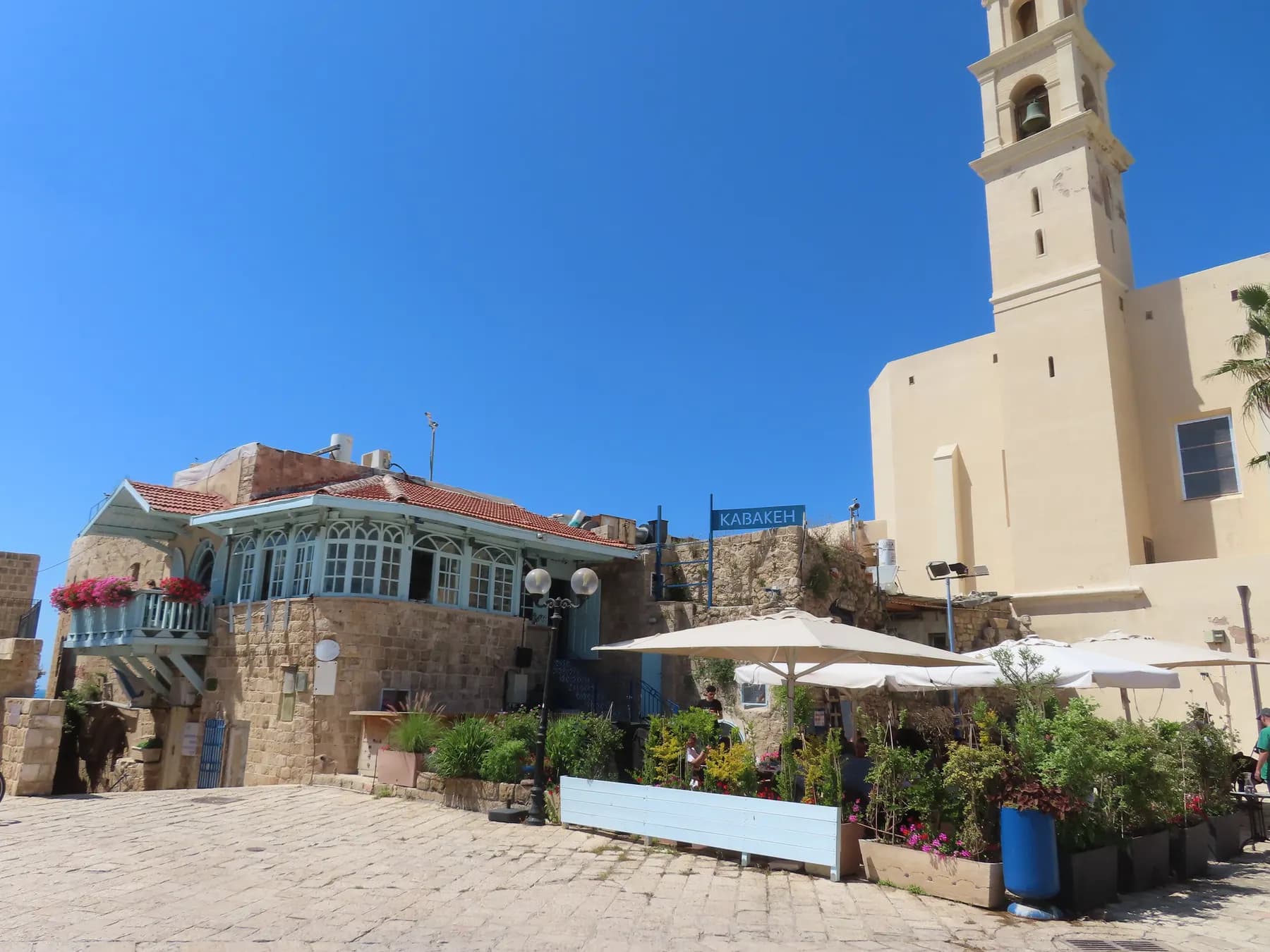
Kedumim Square
The flagged main square of Old Jaffa is a space the British made by demolition in June 1936, and the Israel Antiquities Authority excavation under its fountain found the drains of one of the houses that came down.
שלמה רודד / CC BY 2.5 · Wikimedia Commons
Landmark
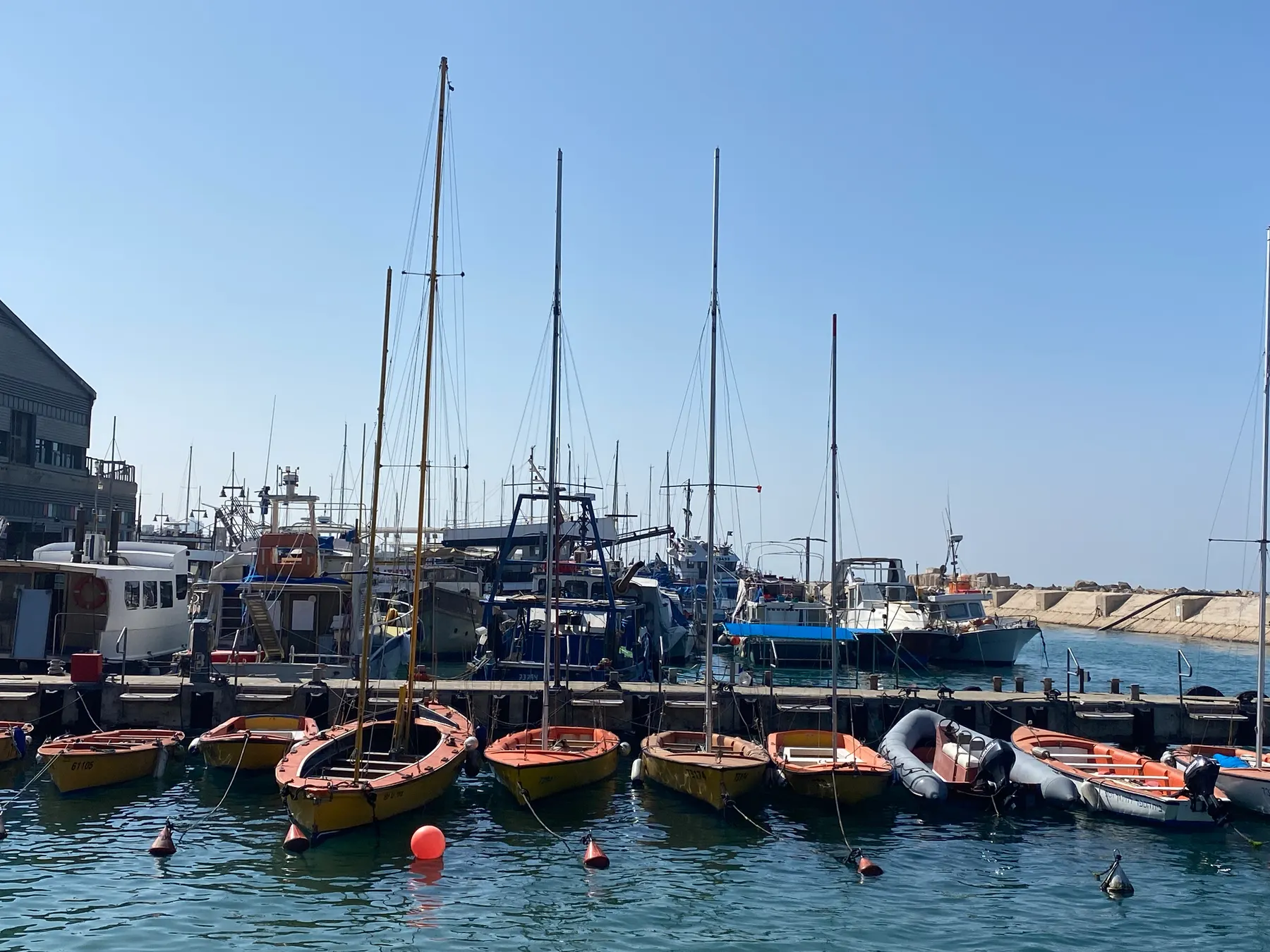
Jaffa Port
The quay, the breakwater and the three long sheds along it are British work of the mid-1930s, built for the orange trade on ground reclaimed from the sea, and two of those sheds were taken down and built again between 2019 and 2023.
שלמה רודד / CC BY 2.5 · Wikimedia Commons
Religious site
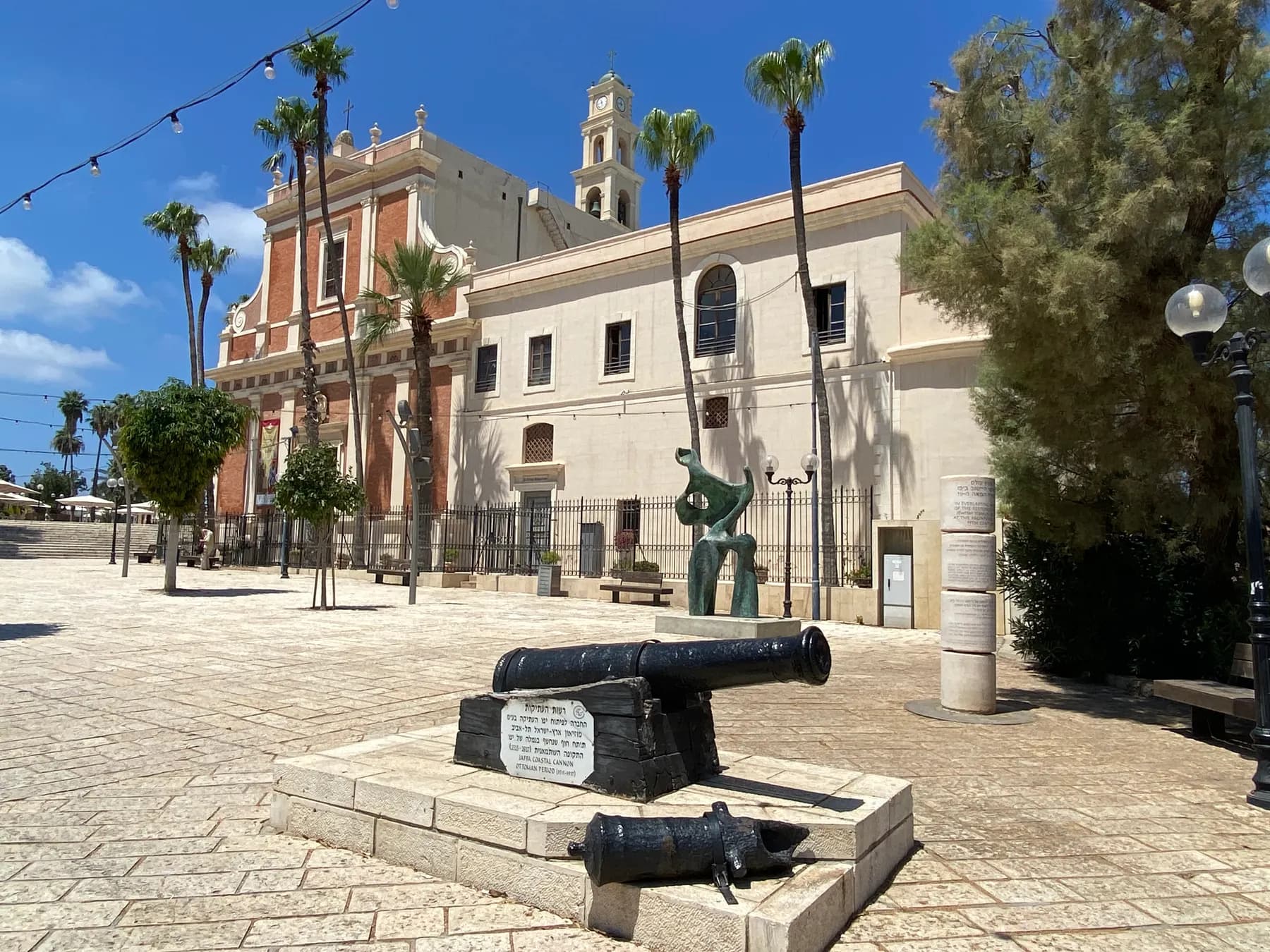
St Peter's Church
The Custody of the Holy Land runs this as a shrine rather than a parish: a Spanish-funded church of 1888 to 1894 standing on the citadel Louis IX rebuilt, with an altar that faces west instead of east.
Sources and further reading
Every link below was opened and checked when this page was written. Official statements are marked as such: they are the subject's own account, not an independent one.
- OfficialIlana Goor Museumilanagoormuseum.orgVisitor information
opening hours for every day, the full ticket tariff in shekels, the address at 4 Mazal Dagim Street, car parks, bus and light rail routes, and the statement that tickets need no advance booking
- OfficialIlana Goor Museumilanagoormuseum.orgThe building
1742 and Yaakov Zonana, the pilgrimage inn, the nineteenth-century soap and perfume works, the 1949 Libyan synagogue and 1950s Balkan housing, Goor's 1983 purchase and the early 1990s acquisition, three years of reconstruction, the amphorae ceiling and the basement oven
- OfficialIlana Goor Museumilanagoormuseum.orgOur collections
more than 500 works over fifty years of collecting, the named Israeli and international artists, the African and South American ethnic art, and the stated selection criterion
- OfficialIlana Goor Museumilanagoormuseum.orgThe rooms
the central space, design room, monks' room and The Morning After, the library dedicated to her grandfather, the sculpture room and its beehive ceiling, the lattice space, the Christian room and the roof sculpture garden
- OfficialIlana Goor Museumilanagoormuseum.orgGuided tours
tours of 45 to 60 minutes, Hebrew and English as standard with Spanish, Portuguese and Russian on request, the additional charge, the children's discovery tour and the booking contacts
- OfficialIlana Goor Museum online shopilanagoormuseum.orgTickets
the same five ticket categories and prices sold online, used to confirm the figures on the visitor information page
- OfficialIlana Goor Museumilanagoormuseum.orgAccessibility statement
in Hebrew: disabled parking in an adjacent car park, the accessible entrance through the museum shop at 1 Mazal Arieh Street, the statement that there are no lifts, the named accessibility coordinator, and the statement date of 27 July 2023
- OfficialIlana Goor Museumilanagoormuseum.orgIlana Goor
born in Tiberias, self-taught, the move to the United States, the 1972 first solo exhibition, the work in iron and bronze, and the public sculptures Never Again and Woman Against the Wind
- OfficialIlana Goor Museumilanagoormuseum.orgIlana Goor: curriculum vitae
born 1936, Bezalel listed for 1955 and 1956, the exhibition record, the design and production years, and the 2016 Tel Aviv-Yafo honour
- OfficialIlana Goor Museumilanagoormuseum.orgOutdoor sculptures
the list of permanent public works with locations and years, including the Smiling Whale of 1985 in Old Jaffa and Woman Against the Wind at Charles Clore Park
- OfficialVisit Tel Aviv, Tel Aviv-Yafo Municipalityvisit-tel-aviv.comMuseums in Tel Aviv
the municipality's description of the museum as being in the private home of the artist it is named for, showing her works alongside her private collection
- ReferenceWikipediaen.wikipedia.orgIlana Goor Museum
the museum inaugurated in September 1995, the fuller name Ilana Goor Residence and Museum, the 1742 building and its later uses, and the artistic jungle and university descriptions
- ReferenceHebrew Wikipediahe.wikipedia.orgמוזיאון אילנה גור
three storeys and heavy walls, the inn as the first Jewish one in Jaffa, the soap works run by an established Muslim family, the Balkan immigrants of the 1950s, and the abandoned building entered by drilling through a wall
- ReferenceWikipediaen.wikipedia.orgIlana Goor
born 10 July 1936 in Tiberias, the grandfather associated with the founding of Bezalel, the account of her as an autodidact, the public sculptures, the 2016 Yakir Tel Aviv-Yafo honour and her time divided between Jaffa and New York
Ilana Goor Museum: common questions
What is the Ilana Goor Museum?+
It is a private house museum in Old Jaffa holding more than 500 works of art, both by the sculptor and designer Ilana Goor and collected by her over fifty years. The building was raised in 1742 as an inn for Jewish pilgrims and later served as a soap works and a synagogue. Goor restored it and opened it to the public in September 1995. The Tel Aviv-Yafo municipality describes it as being in the artist's private home.
How much does it cost to get in?+
The museum publishes 45 NIS for an adult, 35 NIS for a resident of Tel Aviv-Yafo, 25 NIS for a soldier, senior or student, and 20 NIS for a child aged five to seventeen. A family ticket for two adults and three children is 100 NIS. Guided tours carry an additional charge. Prices are as published on the museum's visitor information page and are worth re-checking on the day.
What are the opening hours?+
Sunday to Thursday and Saturday are 10.00 to 16.00, and Friday is 10.00 to 14.00, as the museum publishes them. The short closing time is the thing most visitors get wrong, because the streets outside stay busy long after the museum has locked up. There is no published evening opening.
Is it open on Shabbat?+
Yes, the museum lists Saturday hours of 10.00 to 16.00, the same as its weekday hours. That is unusual enough in the surrounding quarter to be worth planning around, since much of the flea market's retail stays shut on Saturday while the restaurants do not.
How long does a visit take?+
About an hour is enough to walk the rooms and the roof, and 90 minutes is realistic with a guided tour, which the museum says runs 45 to 60 minutes. The building is one house rather than a campus, and the interest is in density rather than distance. Visitors who read labels and sit on the roof stay longer.
Does Ilana Goor still live in the building?+
The museum is described by the Tel Aviv-Yafo municipality's tourism service as being in the artist's private home, and English Wikipedia gives its longer name as the Ilana Goor Residence and Museum, adding that Goor divides her time between Jaffa and New York. The museum's own pages do not state where she is living at any given moment, so the sensible expectation is a house museum rather than an encounter with the artist.
Is it wheelchair accessible?+
Only partly, and the museum says so itself. Its accessibility statement lists disabled parking in a nearby car park and an accessible entrance through the museum shop at 1 Mazal Arieh Street, and states that the building has no lifts. Since the house runs to three storeys and a roof terrace, most of the collection is up stairs, and the lanes outside are stepped. Phone the museum's accessibility coordinator before making the trip.
Is it worth it if you have never heard of Ilana Goor?+
Probably yes, if the building interests you as much as the art. What makes the place unusual is the combination of an eighteenth-century pilgrims' inn kept in its awkward original shape and a collection assembled entirely to one person's taste, from Henry Moore and Anselm Kiefer to African and South American ethnic pieces. Visitors who want a survey of Israeli art with wall texts and a chronology will find the Tel Aviv Museum of Art a better fit.
Can you take children?+
Yes. The museum sells a child ticket for ages five to seventeen and a family ticket, and its tours page lists a children's discovery tour among the guided options. The practical constraints are the stairs and the fact that much of the collection is at reachable height and unglazed, so small children need holding onto.
How do you get there without a car?+
The museum lists Dan bus routes 10, 18, 41 and 44 to the Yefet and Louis Pasteur stop, and the light rail Red Line to Bloomfield Stadium followed by a walk. From the clock tower or Kedumim Square it is a short walk downhill through the lanes. Old Jaffa's alleys are named after the signs of the zodiac, and the museum is at 4 Mazal Dagim, which is Pisces.