
Museum · Jaffa
Peres Center for Peace and Innovation
The Israeli Innovation Center occupies four levels of the Peres Peace House, the building of alternating concrete and translucent glass that Massimiliano and Doriana Fuksas put on the Jaffa shore between 1999 and 2009.
Building
1999 to 2009
the project years given by Studio Fuksas; the Peres Center's offices moved in during December 2009
Floor area
2,500 sq m
over five floors on a site of 7,000 sq m, per the architects' own project data
Innovation Center
inaugurated 25 October 2018
the ceremony reported by Ynet; Hebrew Wikipedia dates the opening to visitors to 2019
Standard ticket
69 NIS
as published on the centre's English visitor information page, checked in 2026
In short
- How long to give it
- about 1 hour 45 minutes for the standard guided tour, and 1 to 3 hours for group and delegation programmes
- Published opening hours
- None. The centre says hours vary and follow the tours listed on its booking page
- Standard ticket
- 69 NIS
מרכז פרס לשלום ולחדשנות
The Peres Center for Peace and Innovation is two separate things at one address, and almost everyone who buys a ticket comes for the second. The first is the peacebuilding organisation Shimon Peres founded in 1996, which has its offices and his archive here. The second is the Israeli Innovation Center, a ticketed exhibition about Israeli technology on four of the building's levels, entered only on a guided tour of an hour and three quarters booked online in advance. The address is 132 Kedem Street, on the shore at the southern end of Jaffa.
The building is the reason a page like this exists at all. What a visitor sees from the promenade is a low horizontal stack: alternating bands of concrete and translucent glass, which the architects describe as strata, filtering daylight inward by day and pushing it back out at night. The offices moved in during December 2009, and in March 2010 the building took first place in the building category of Israel's Emilio Ambasz Prize for green architecture.
Nothing on this plot is old. The ground was part of the government hospital in Jaffa, which closed in the 1980s; the cornerstone went down in 2003. The exhibition inside is newer still, fitted out between 2016 and 2018 into rooms that had stood largely empty. That matters for expectations: this is a designed audiovisual attraction with screens, holograms and virtual reality headsets rather than a collection of objects, and the guided tour is the only way in.
Fuksas
Strata of concrete and translucent glass
The architects' account of the building is short and unusually explicit about intention. Studio Fuksas describes a building that represents time and patience in strata of alternating materials representing places that have suffered heavily, with a stone basement as its foundation and two long staircases leading to a place of rest, lit from above. The facade, in their words, uses alternate layers of concrete and translucent glass, so that daylight is filtered inward during the day and sent back outside after dark.
The reading that stuck locally is geological rather than historical. Reporting in April 2016, the Ynet architecture supplement xnet described the concept as geological layers of concrete and glass in the colours of the water and the rocks visible through the sea-facing windows. That is the version most guides use, and it is easy to check against the view.
The project figures do not agree. Studio Fuksas gives 1999 to 2009, a site of 7,000 square metres, a floor area of 2,500 square metres over what Hebrew Wikipedia counts as five floors, and a cost of 15 million dollars. The xnet report of 2016 put the investment at about 16 million and said other estimates were higher. English Wikipedia records an initial estimate of 6 million dollars and three years, citing Haaretz reporting of August 2009 that both had been heavily underestimated. Only the first is the builder's own number.
The Emilio Ambasz Prize list of March 2010 places the building first in its category, credited to Massimiliano Fuksas Architects with Yoav Messer as architect of record in Israel. First place for landscape on the same list went to the rehabilitation of the Jaffa slope and beach, the works that produced the park immediately north of here.
- Architects: Massimiliano and Doriana Fuksas, with Yoav Messer as architect of record
- Project years: 1999 to 2009, per Studio Fuksas
- 2,500 square metres of floor area over five floors, on a 7,000 square metre site
- Cost: 15 million dollars per the architects, about 16 million per xnet in 2016
- Emilio Ambasz Prize 2010, first place in the building category
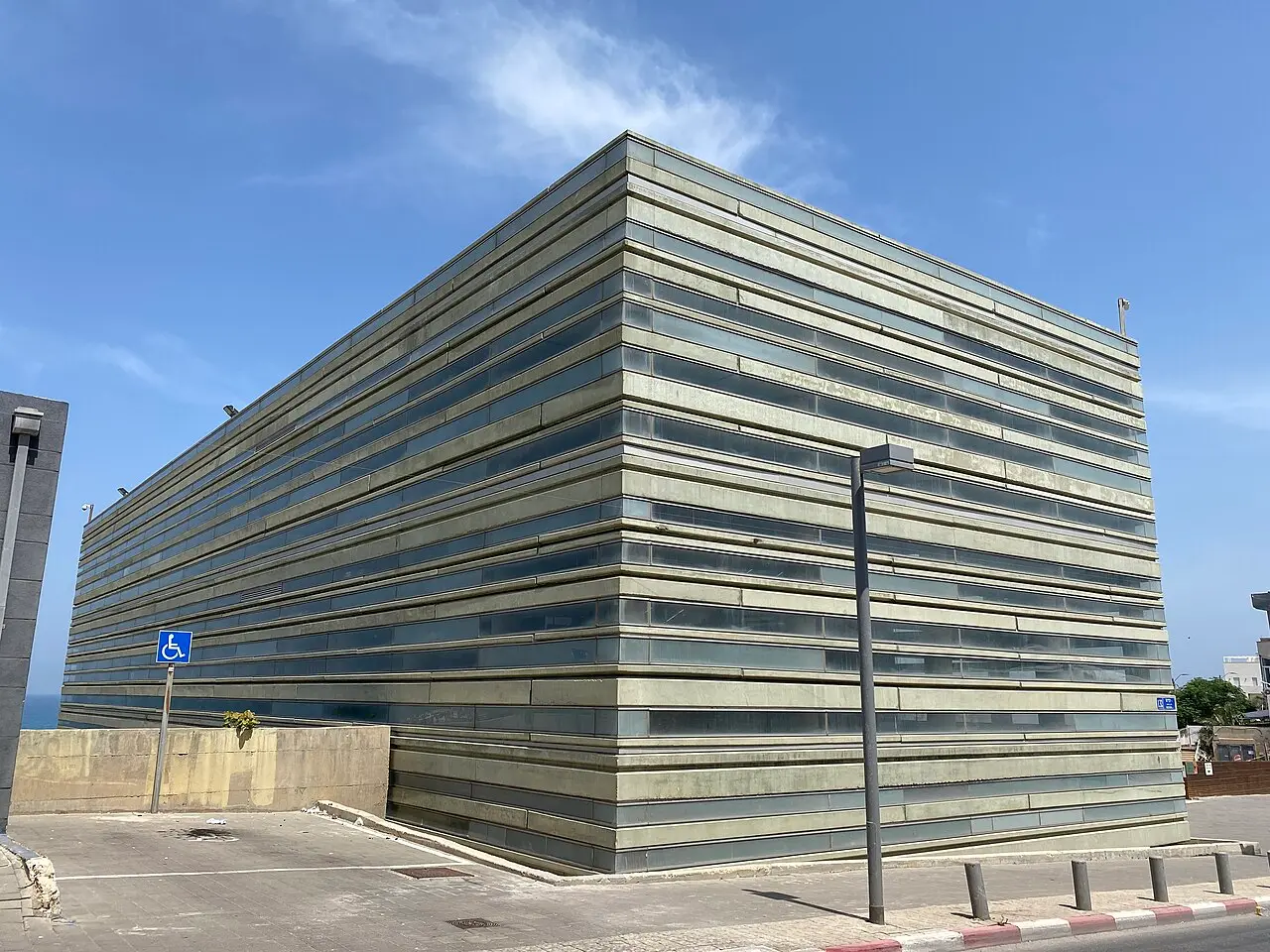
שלמה רודד / CC BY 2.5 · Wikimedia Commons
The shore
A closed hospital, a cemetery, and a park that runs to the water
The plot was part of the government hospital in Jaffa, which shut in the 1980s. Hebrew Wikipedia records the cornerstone ceremony for the Peres Peace House in 2003 and places it in the Givat Aliya neighbourhood; the English entry puts the building in Ajami. Both names describe the same stretch of south Jaffa, and the difference is a fair warning that boundaries here are argued about. The xnet report adds that the land was leased from the Tel Aviv-Yafo municipality.
The immediate neighbours are worth knowing before arriving. A Muslim cemetery adjoins the building on the south side, visible from the auditorium along with the open sea. Around the building is a public park, called the Peace Park on the Hebrew side, which runs to the shoreline and costs nothing to walk. Inland are the housing blocks of Givat Aliya and, more recently, expensive residential projects.
The building's relationship with that neighbourhood has been the main criticism of it, and it was made at length before the exhibition existed. In April 2016 xnet described a prestigious architectural object that had never integrated with its surroundings, sitting on a large plot facing the sea and turning a blank back to Jaffa's Arab residents, standing empty most days of the year and used by roughly forty people, with attempts at dialogue with the neighbours reported as unsuccessful and the garden down to the beach named as the neighbourhood's only real gain. That article was itself an argument for converting the building, so weigh it as reporting from before the change rather than as a verdict on what is there now. The geometry has not changed: the entrance faces inland from Kedem Street, the views face west, and the walk to the water is the part of the site open to anyone.
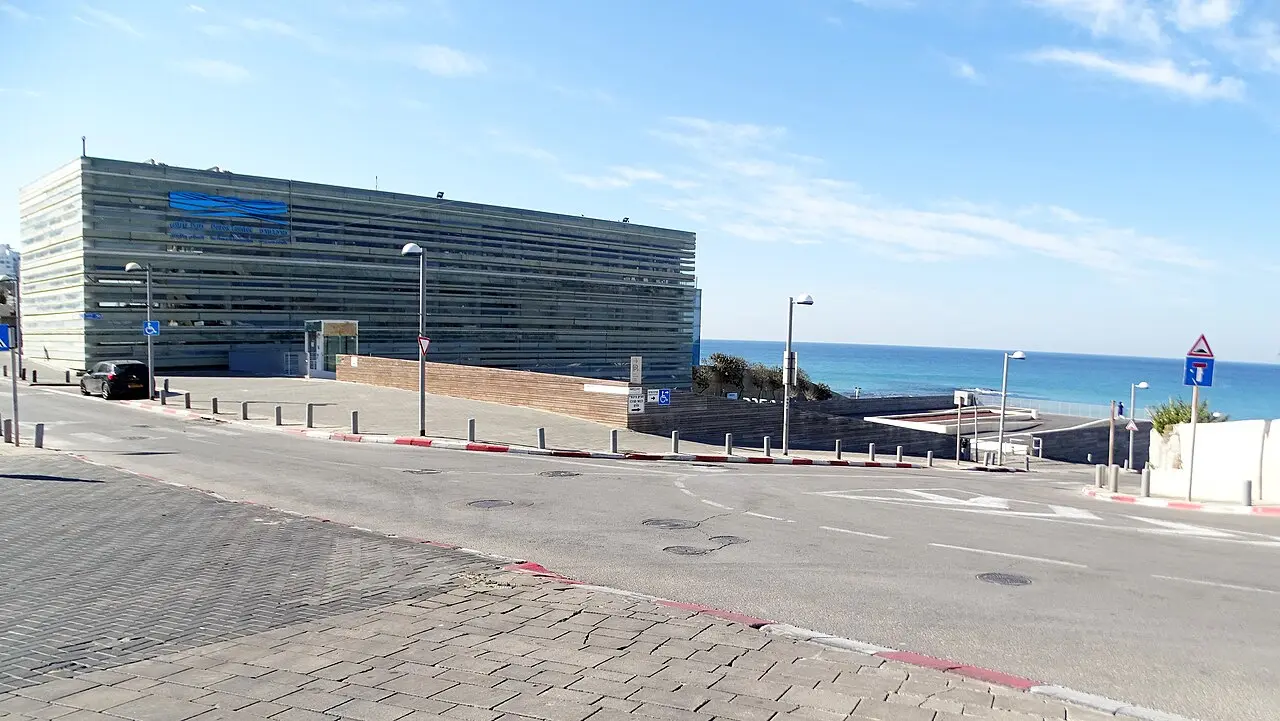
israel zeller ישראל זלר / CC BY 2.5 · Wikimedia Commons
2016 to 2019
How a peace building became a technology museum
The pivot was reported before it was announced. In April 2016 xnet wrote that the organisation was working on turning the building into an innovation centre telling the story of the start-up nation, possibly with a technology hub inside it, that the works would take roughly two years, and that the investment was then estimated at about 10 million shekels. It also recorded that the new name had not yet been settled.
In June 2016 the Peres Center announced the Israeli Innovation Center, according to Hebrew Wikipedia, and the organisation took the name it now uses. Shimon Peres, who had laid the cornerstone for the new project, died on 28 September 2016 and did not see it open. The Nobel Foundation's record of him is the short version of why the building carries his name: born 16 August 1923 in Vishneva, foreign minister at the time of his award, and one of three who shared the 1994 Nobel Peace Prize for their efforts to create peace in the Middle East.
The official inauguration was held on 25 October 2018. Ynet, reporting from the ceremony that morning, put the prime minister, the vice president of China and figures from the international technology industry in attendance, among them Alibaba's founder Jack Ma and Google's Eric Schmidt. Hebrew Wikipedia dates the opening to ordinary visitors to 2019: an inauguration in late 2018, general admission the following year.
So the two halves of the site have quite different ages. The shell, the layered facade, the auditorium and the park are as built in 2009. Everything a ticket buys is an interior fit-out carried out between 2016 and 2018 and refreshed since, in rooms that had been offices and empty lobby. Nothing here was reconstructed from anything older: the hospital that stood on the ground was gone decades before the first drawing.
- April 2016: conversion reported, investment then estimated at about 10 million shekels
- June 2016: the Israeli Innovation Center announced
- 28 September 2016: Shimon Peres dies
- 25 October 2018: official inauguration ceremony
- 2019: opens to ordinary visitors
The tour
Four levels, six named spaces, and a president's office
The exhibition is organised as named rooms rather than galleries, and the Hebrew site sets them out by level: the Innovation Nation on floor 1, the Capsule on floor 2, the contemporary innovation gallery on level minus 1, and the Secrets of Innovation on the entrance floor. That makes four levels of the five-floor building, matching Ynet's description at the opening. The English pages number some of the same rooms differently, so treat the floor labels as approximate and follow the guide.
What each room does is stated plainly enough by the centre. The Inspiration Hall surrounds visitors with floor-to-ceiling screens. The Innovation Nation is an interactive timeline with games covering high technology, medicine, agriculture and society; Ynet reported 100 events displayed along it at the opening. The Secrets of Innovation is a digital encounter in which pioneers of Israeli innovation answer questions, and Hebrew Wikipedia names the holograms as including Gil Shwed, Ruth Arnon and Amnon Shashua. The Capsule is the virtual reality room, a journey through digital medicine, food technology, smart transport, nano-robots and space travel. The Israeli Expo on the lowest level shows working start-ups in rotating cohorts; Ynet reported a floor of the 50 newest developments at the opening.
The Study is the room that is not about technology. The centre presents it as an opportunity to visit the office of President Shimon Peres, with an audiovisual display about his life. What is not published is how much of the room stands as he left it, and the accounts even differ on which floor his office was, with Hebrew Wikipedia putting it on the third and the 2016 xnet report on the top one. Treat it as a presentation of the man rather than a preserved interior.
The centre also lists a separate exhibition by the photographer Ziv Koren on 7 October 2023 and after, which it describes as memorialising the greatest disaster that has ever occurred in the State of Israel, with part of the proceeds going to the Hostages and Missing Families Forum. Its page carries a warning that the exhibition includes content that is not easy to view. It is ticketed separately at 40 NIS and is not part of the standard tour.
- Entrance floor: the Secrets of Innovation, the hologram encounter
- Floor 1: the Innovation Nation, the interactive timeline
- Floor 2: the Capsule, the virtual reality room
- Level minus 1: the Israeli Expo of working start-ups
- The Study: an audiovisual room presented as Shimon Peres's office
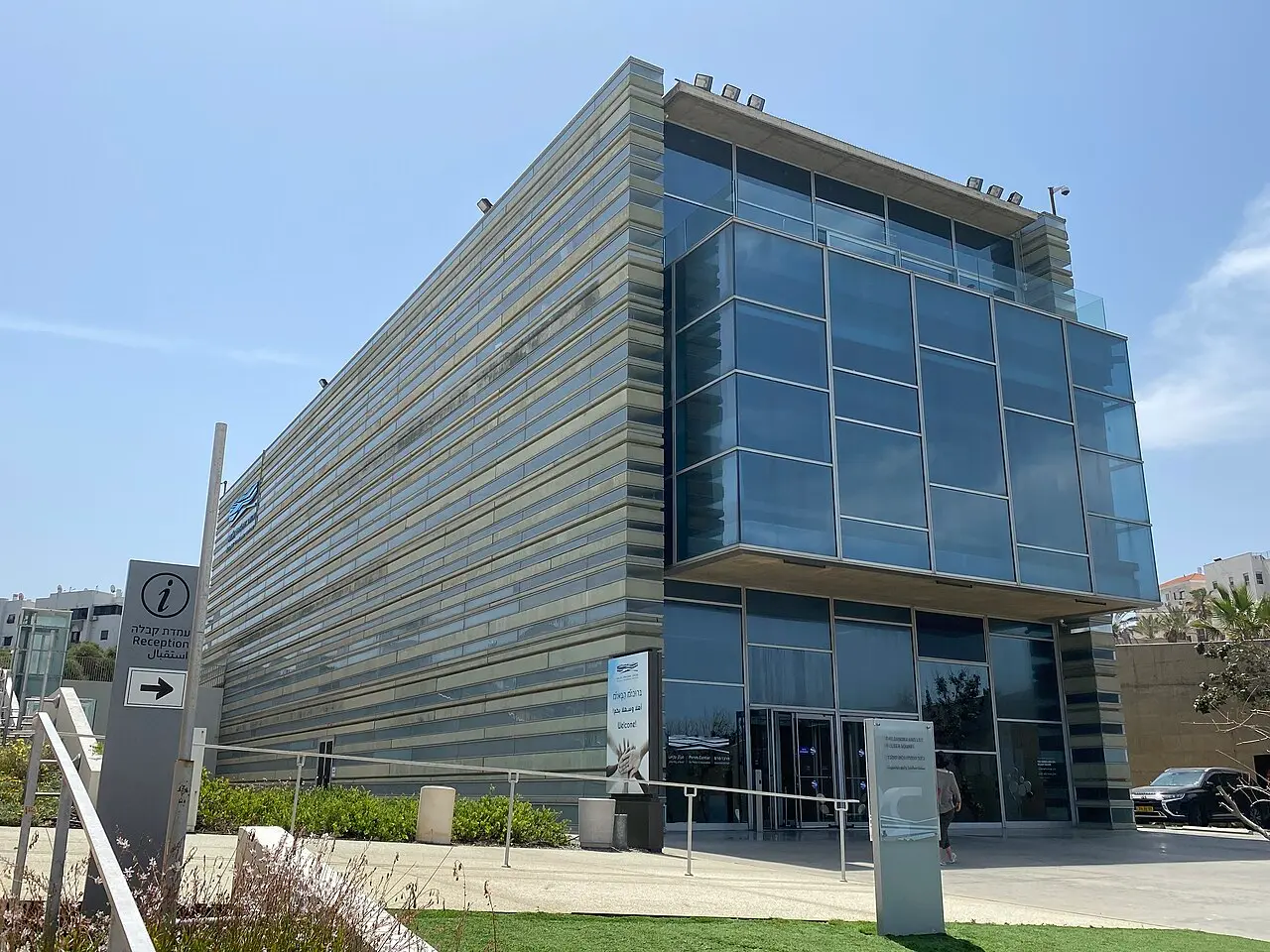
שלמה רודד / CC BY 2.5 · Wikimedia Commons
On the day
Booked online, or not at all
The practical fact that catches people out is that there is no walk-up admission. Both language versions say visits must be pre-booked through the website, and the Hebrew ticket page states outright that tickets cannot be bought on site.
There are also no fixed opening hours to quote, because the centre does not publish any. Its English visitor information page says opening hours vary and can be found on the booking page; the Hebrew page puts it more precisely, that operating hours follow the tours and events listed on the ticket-purchase pages. Read on 13 August 2026, that booking system listed tours Sunday to Friday with none on Saturday, starting between 10.00 and 15.30 from Sunday to Thursday and between 10.00 and 12.30 on Friday. Those were the sessions on sale that day, not a published timetable.
Language is the other thing to settle at the point of booking. The centre advertises tours in English, Hebrew, Arabic and Chinese, and says video content is subtitled in Hebrew, Arabic, English and Spanish. The calendar read on 13 August 2026 was mostly Hebrew sessions with a smaller number in English and a single Spanish one, so an English tour on a particular morning is not a given.
The published prices do not match between the centre's two language sites. Both give 69 NIS for a standard ticket, but the English page discounts online booking to 54 NIS where the Hebrew page says 58, and the two also disagree on the child, senior, student and resident rates and on the age band a child ticket covers. Both were live in August 2026. Check the total before paying.
On access, the centre states that it is fully accessible to people with disabilities and that a storage service is available, and publishes nothing more detailed than that, which is worth knowing if a specific need has to be confirmed. The virtual reality room carries its own restrictions, and they too differ between the language versions: the English page sets the headsets at ages 13 and up, the Hebrew page at 10 and up, and both bar them for pregnant women and people with epilepsy.
What to look for
Things not to walk past at Peres Center for Peace and Innovation
The details that repay knowing about before you are standing in front of them.
The layered facade from the park
The alternate bands of concrete and translucent glass are the point of the building and cost nothing to look at, since the park around it is open. After dark the glass layers push the interior light back out, which is the effect the architects describe.
The Study
An audiovisual room the centre presents as the office of President Shimon Peres, with the story of his life. It is the only part of the tour that is about a person rather than a technology.
The Capsule
The virtual reality room on floor 2, in which visitors work through future problems in medicine, food, transport and space travel. Headsets are barred to pregnant women and people with epilepsy, and the minimum age differs between the centre's English and Hebrew pages.
The Israeli Expo
The lowest level shows working start-ups in rotating cohorts, grouped by the centre under humanity and earth, society, machine and body. It is the part of the exhibition that changes, so it is the reason to return.
The Secrets of Innovation
The hologram room, where recorded figures from Israeli technology answer questions put to them. Hebrew Wikipedia names Gil Shwed, Ruth Arnon and Amnon Shashua among them.
The park down to the shore
The public garden around the building runs to the waterline and is free. In 2016 xnet called it the one clear gain the building brought its neighbourhood, and it connects north towards the rehabilitated Jaffa slope.
The long view
Peres Center for Peace and Innovation, in order
1996
Shimon Peres founds the Peres Center for Peace, with Uri Savir as its first director general
Late 1997
The organisation is inaugurated at the first conference of its international board of governors
1999
Studio Fuksas date the start of the Peres Peace House project to this year
2003
The cornerstone is laid on the Jaffa shore, on ground that had been part of the government hospital closed in the 1980s
December 2009
The building opens and the Peres Center's offices move in
March 2010
The building takes first place in the building category of the Emilio Ambasz Prize for green architecture in Israel
April 2016
Ynet's xnet reports that the near-empty building is to be converted into an innovation centre
June 2016
The Peres Center announces the Israeli Innovation Center and takes its present name
28 September 2016
Shimon Peres dies, two years before the centre he initiated is inaugurated
25 October 2018
The Israeli Innovation Center is formally inaugurated at a ceremony attended by the prime minister and international technology figures
2019
The Innovation Center opens to ordinary visitors
Practical
Visiting Peres Center for Peace and Innovation
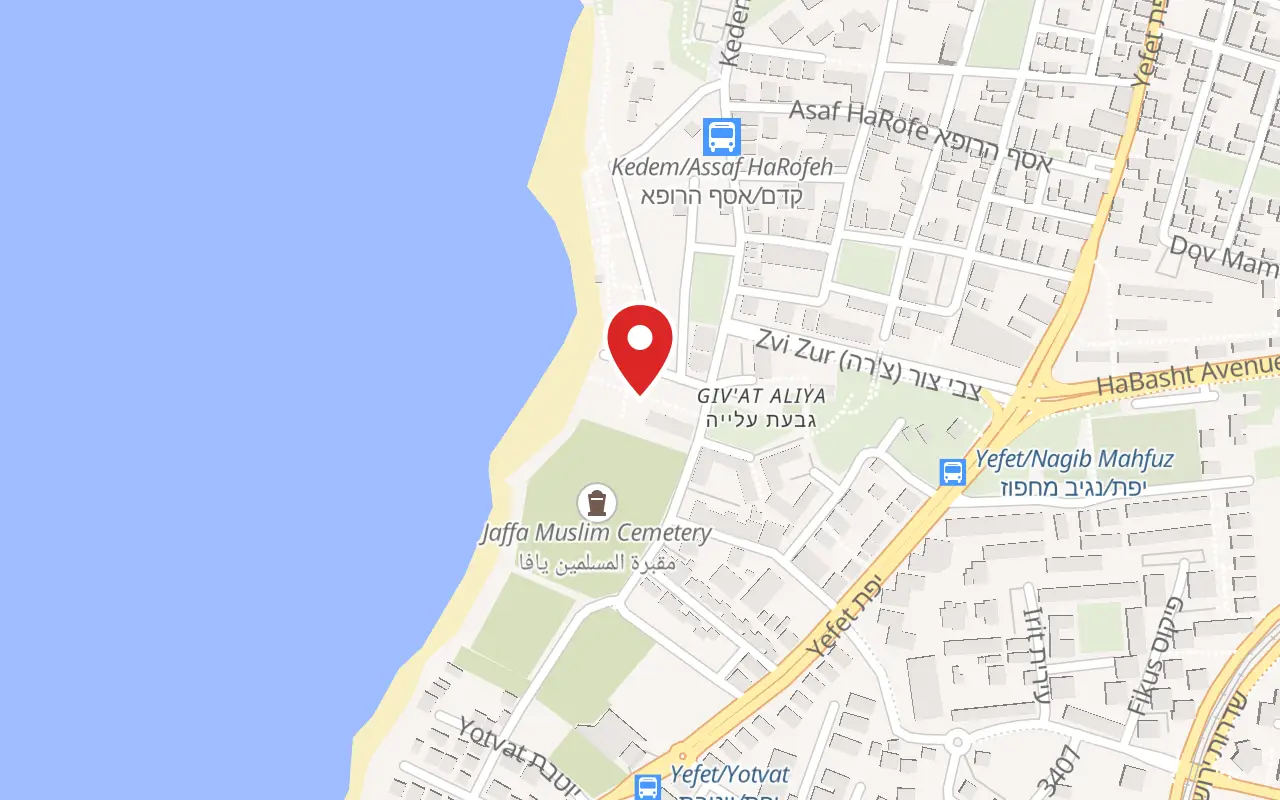
Where
132 Kedem Street, Tel Aviv-Jaffa
What ticket you need
The ticket buys the guided tour of the Israeli Innovation Center only. The rest of the building is the working headquarters of the Peres Center for Peace and Innovation, including its offices and the Shimon Peres archive, and is not open to visitors. The park around the building, which runs down to the waterline, is public and free.
Opening hours
- Published opening hours
- None. The centre says hours vary and follow the tours listed on its booking pagesource
- Tour days listed on the booking system, read 13 August 2026
- Sunday to Friday, with no Saturday sessions on salesource
- Tour start times, same listing
- 10.00 to 15.30 Sunday to Thursday, 10.00 to 12.30 on Fridaysource
- Length of the standard tour
- 1 hour 45 minutessource
Admission
- Standard ticket
- 69 NISsource
- Standard ticket booked online
- 54 NIS on the English page, 58 NIS on the Hebrew pagesource
- Child
- 45 NIS for ages 6 to 16 on the English page, 48 NIS for ages 6 to 12 on the Hebrew pagesource
- Senior
- 40 NIS on the English page, 44 NIS on the Hebrew pagesource
- Student, or visitor with a disability
- 40 NIS on the English page, 42 NIS on the Hebrew page, which also lists 42 NIS for a soldiersource
- Tel Aviv-Jaffa resident
- 42 NIS on the English page, 45 NIS for a Digitel card holder on the Hebrew pagesource
- Family of more than four
- 45 NIS a head on the English page, 48 NIS a head on the Hebrew pagesource
- Ziv Koren October 7th exhibition
- 40 NIS, ticketed separatelysource
Access
The centre states that it is fully accessible to people with disabilities, and lists a storage service. It publishes no detailed accessibility statement beyond that line, so a specific requirement is worth confirming by phone on +972-3-568-0685 before booking. The approach from the car park and the park is level rather than stepped, unlike the lanes of Old Jaffa. Virtual reality headsets are barred to pregnant women and people with epilepsy, and the minimum age for them is given as 13 on the English page and 10 on the Hebrew page; that room can be skipped without missing the rest of the tour.
On site
- Guided tours only
- Storage service
- Auditorium and event spaces
- Public park down to the shore
- Car park at Givat Aliya beach
- No tickets sold on site
Booking
Tickets must be bought in advance through the centre's website, which feeds a booking system listing individual tour sessions by date, time and language. The Hebrew ticket page states that tickets cannot be bought on site. Groups and delegations are arranged separately by contacting the centre, on +972-3-568-0685 or visits@peres-center.org, and run 1 to 3 hours.
Hours and prices are given as the operator publishes them and change without much notice, particularly around Shabbat and the festivals. Check the operator's own page before you travel for this.
Official page at peres-center.org →What people wish they had known
- Book before leaving your hotel. There is no ticket desk: the Hebrew ticket page states that tickets for the tour can be bought only online and not on site, and the exhibition is entered on a scheduled guided tour rather than at will.
- Check the language on the specific session, not the website. The centre advertises tours in English, Hebrew, Arabic and Chinese, but the live calendar read in August 2026 was mostly Hebrew, with fewer English slots and a single Spanish one.
- Do not plan this for a Saturday. The sessions on sale in August 2026 ran Sunday to Friday only, and Friday tours all started before 13.00.
- Compare the two language pages before paying. The English and Hebrew tariffs differ on almost every category, including the online discount and the child age band, and both were live in August 2026.
- Treat the virtual reality room as optional. Headsets are barred to pregnant women and people with epilepsy, and the published minimum age is 13 on the English page and 10 on the Hebrew one, so a family can split at that door.
- Arrive as if visiting the shore, not the old town. This sits south of the fishing harbour on Kedem Street, with buses to the Yefet and HaBesht stop, a car park at Givat Aliya beach, and a walk of about 15 minutes from the light rail stops the centre names.
The figures
Peres Center for Peace and Innovation by the numbers
Each figure carries the year it belongs to and links the source it came from.
| Measure | Figure | As of | Source |
|---|---|---|---|
| Floor area of the building | 2,500 square metres, over five floors | 2026 | fuksas.com |
| Site area | 7,000 square metres | 2026 | fuksas.com |
| Project years given by the architects | 1999 to 2009 | 2026 | fuksas.com |
| Cost, as published by the architects | 15,000,000 US dollars | 2026 | fuksas.com |
| Cost, as reported by xnet | about 16 million US dollars, with other estimates said to be higher | 2016 | xnet.ynet.co.il |
| Original estimate for the building | 6 million US dollars and three years | 2026 | en.wikipedia.org |
| Standard admission | 69 NIS | 2026 | peres-center.org |
| Length of the standard guided tour | 1 hour 45 minutes | 2026 | peres-center.org |
While you are here
The rest of Jaffa
Everything else in this destination with a page of its own.
שלמה רודד / CC BY 2.5 · Wikimedia Commons
Neighbourhood
Ajami
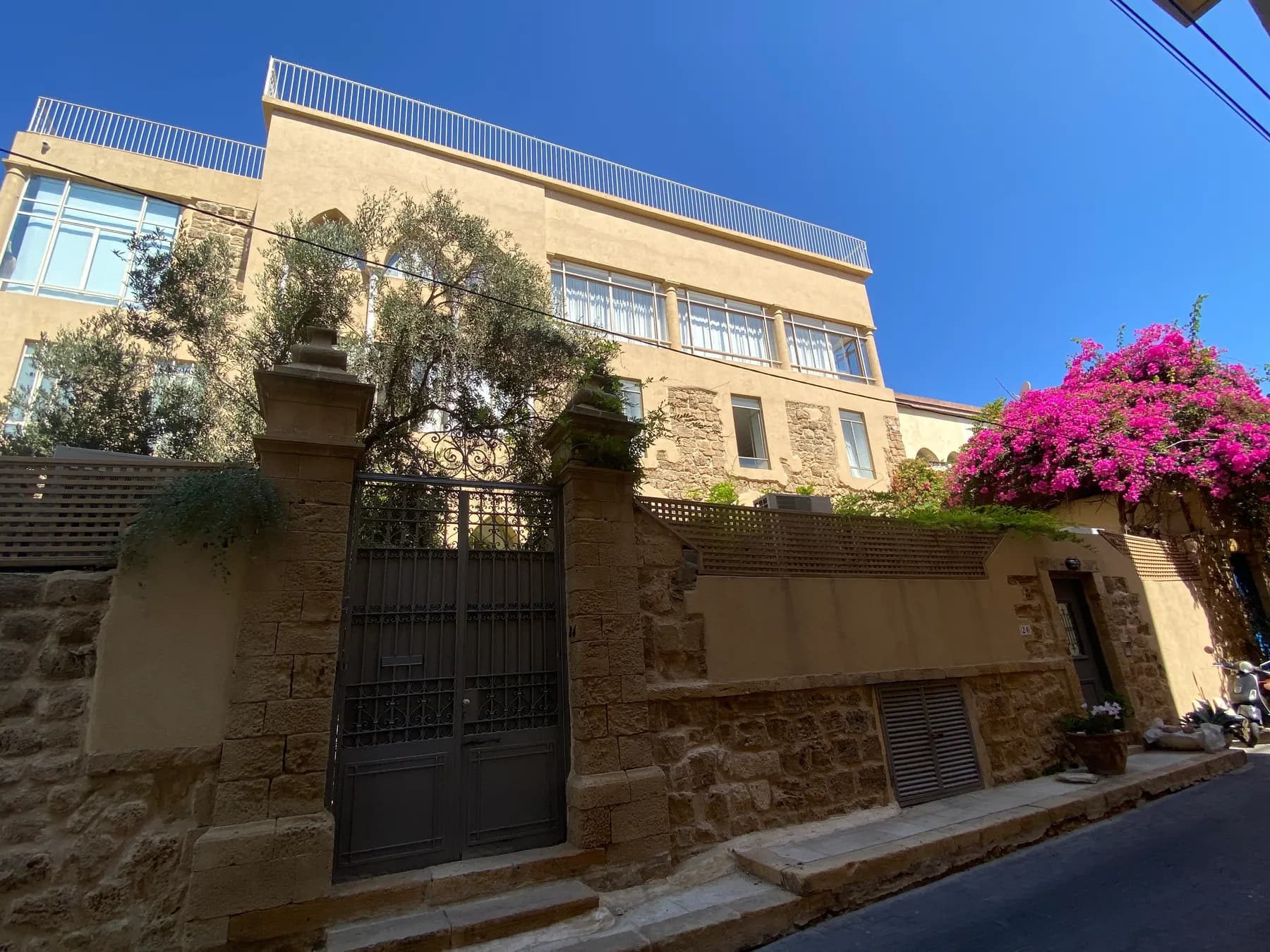
The quarter south of Old Jaffa where the Arabs who stayed after 1948 were concentrated behind a fence, now a grid of kurkar villas above a coastal park built on forty years of construction rubble.
שלמה רודד / CC BY 2.5 · Wikimedia Commons
Landmark
Jaffa Port
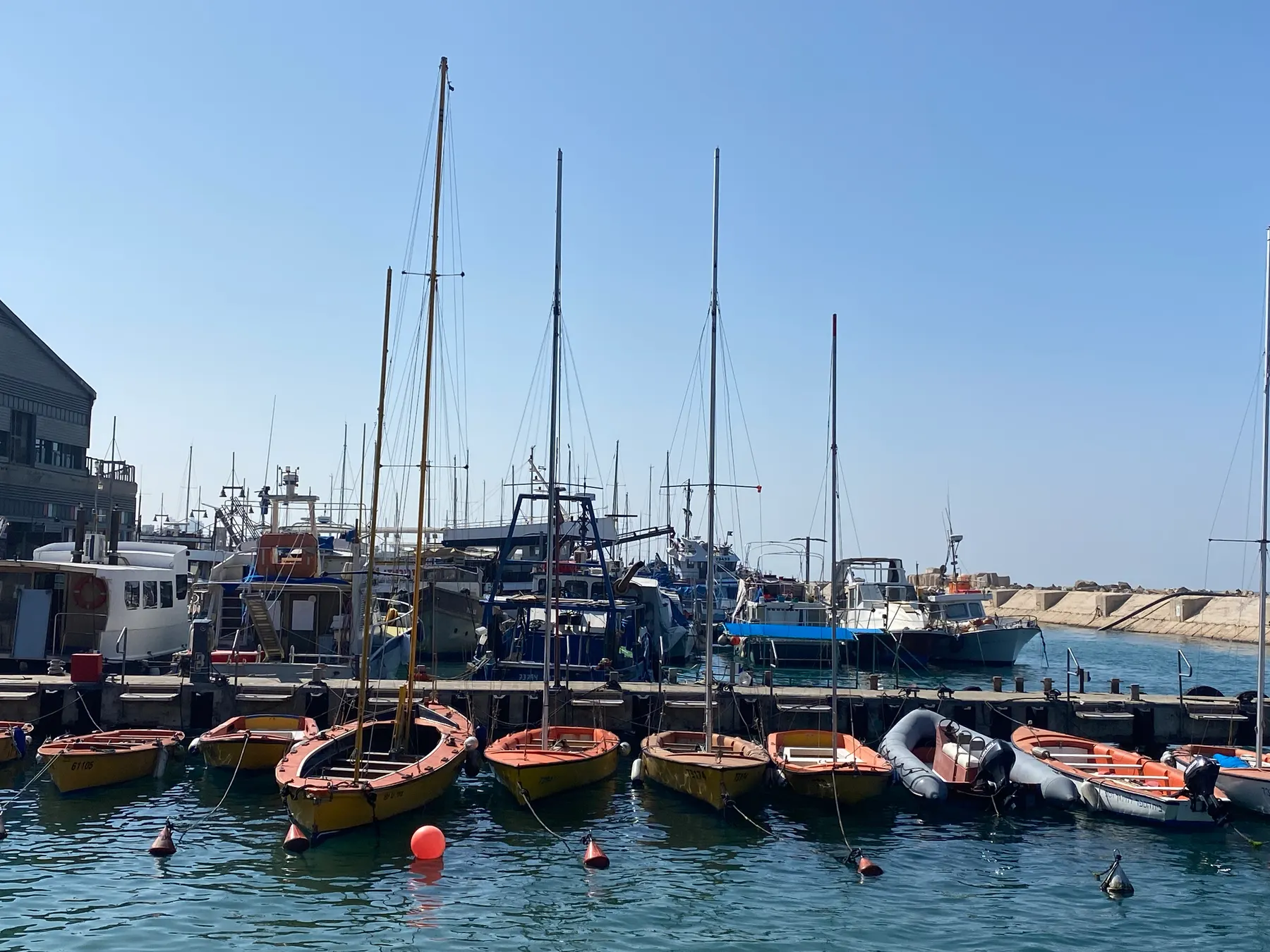
The quay, the breakwater and the three long sheds along it are British work of the mid-1930s, built for the orange trade on ground reclaimed from the sea, and two of those sheds were taken down and built again between 2019 and 2023.
Deror_avi / CC BY-SA 3.0 · Wikimedia Commons
Museum
Ilana Goor Museum
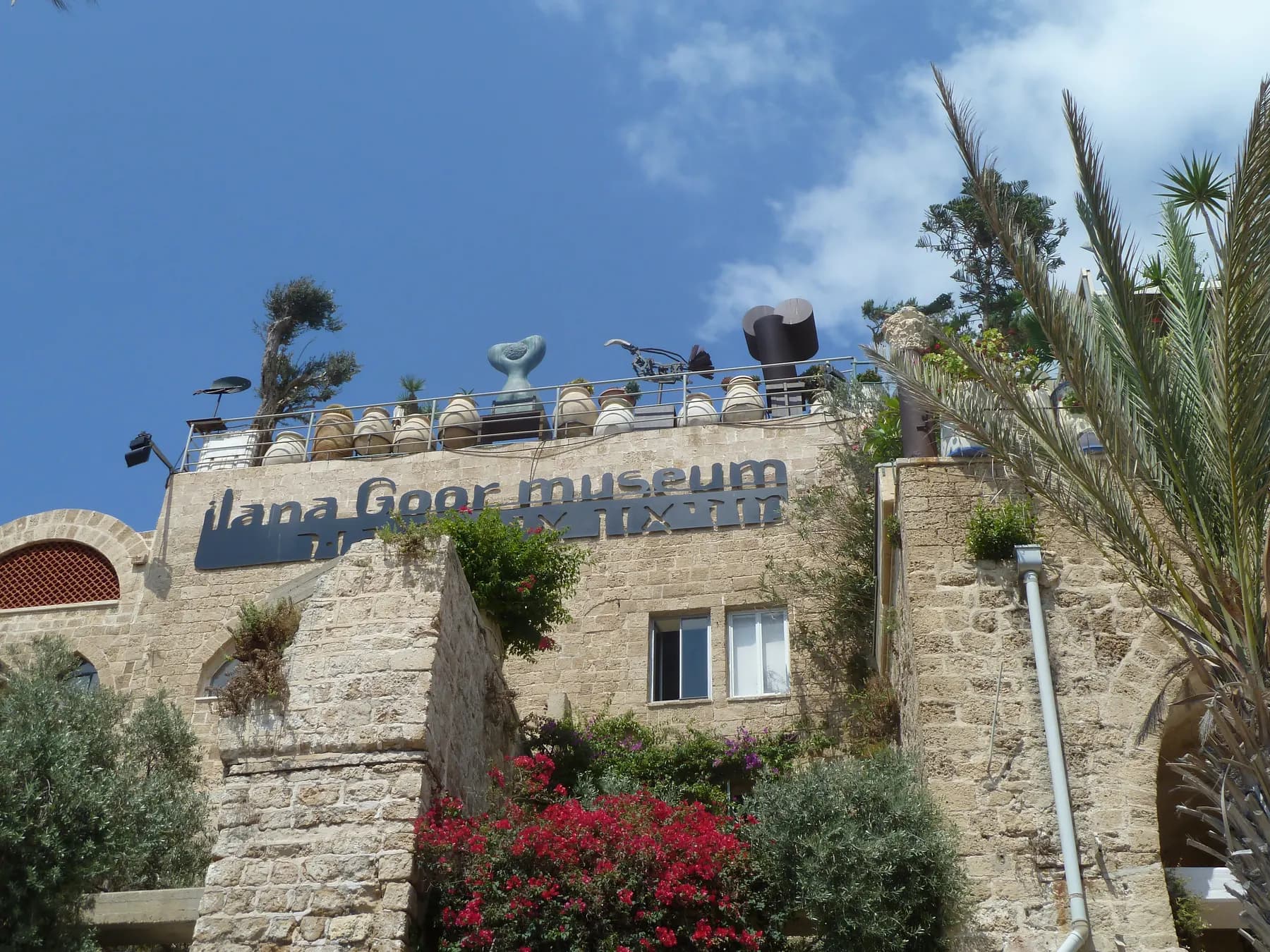
A stone building of 1742, put up as an inn for Jewish pilgrims landing at Jaffa, which the sculptor Ilana Goor bought in two stages and opened as a museum of her own work and her collection in September 1995.
Sources and further reading
Every link below was opened and checked when this page was written. Official statements are marked as such: they are the subject's own account, not an independent one.
- OfficialPeres Center for Peace and Innovationperes-center.orgVisitor information, Israeli Innovation Center
the English tariff in shekels for every category, the address at 132 Kedem Street, the statement that opening hours vary and are on the booking page, the pre-booking requirement, bus routes, the four tour languages, the age guidance, the statement of full accessibility and the virtual reality restrictions
- OfficialPeres Center for Peace and Innovationperes-center.orgמידע למבקר, מרכז החדשנות של ישראל
in Hebrew: the statement that operating hours follow the tours on the ticket pages, the Hebrew tariff which differs from the English one, the soldier and Digitel rates, the light rail stops and the 15 minute walk, the Givat Aliya beach car park, subtitling in four languages and the age of 10 and up for the virtual reality headsets
- OfficialPeres Center for Peace and Innovationperes-center.orgרכישת כרטיסים
in Hebrew: the notice that tickets for the tour can be bought here only and cannot be bought on site, and the link into the booking system
- OfficialPeres Center booking system, Attractinetweb.attractinet.co.ilTour booking calendar
the live session list read on 13 August 2026: tours Sunday to Friday with no Saturday sessions, starts from 10.00 to 15.30 on Sunday to Thursday and 10.00 to 12.30 on Friday, and sessions in Hebrew, English and Spanish
- OfficialPeres Center for Peace and Innovationperes-center.orgExplore the Israeli Innovation Center
the six named spaces and what each contains: the Inspiration Hall, the Secrets of Innovation, the Innovation Nation, the Capsule, the Study and the Israeli Expo, with the Expo's four thematic groupings
- OfficialPeres Center for Peace and Innovationperes-center.orgמרכז החדשנות של ישראל
in Hebrew: the level assignments used on this page, with the Innovation Nation on floor 1, the Capsule on floor 2, the contemporary innovation gallery on level minus 1 and the Secrets of Innovation on the entrance floor
- OfficialPeres Center for Peace and Innovationperes-center.orgOctober 7th, Ziv Koren
the separately ticketed exhibition at 40 NIS, the centre's own description of it, the warning that it includes content that is not easy to view, and the donation of part of the proceeds to the Hostages and Missing Families Forum
- OfficialStudio Fuksasfuksas.comPeres Peace House, project sheet
the architects' own data and description: Massimiliano and Doriana Fuksas, 1999 to 2009, a 7,000 square metre site, 2,500 square metres of floor area, a cost of 15,000,000 dollars, the stone basement, the two long staircases and the alternate layers of concrete and translucent glass
- Reportinge-architecte-architect.comEmilio Ambasz Prize: Israel architecture awards, winners
the winners list dated 2 March 2010: first place in the building category to the Peres Peace Building, Jaffa, credited to Massimiliano Fuksas Architects of Italy with Yoav Messer as architect of record in Israel, and first place in the landscape category to the Jaffa slope and beach rehabilitation by Alisa Braudo and Ruth Maoz; the page also describes the prize as an initiative of Architecture of Israel Quarterly with the European Union and the Association of Engineers and Architects in Israel
- ReportingYnet, Guy Levy, 25 October 2018ynet.co.ilעבר, הווה ועתיד הטכנולוגיה הישראלית במרכז החדשנות של פרס
the official inauguration ceremony that morning, the attendance of the prime minister, the vice president of China, Jack Ma and Eric Schmidt, the centre built over four floors with 100 events along the timeline, the interactive holograms, the start-up floor of 50 recent developments and the virtual reality time capsule
- Reportingxnet, Ynet, Hila Shemer and Itai Katz, 30 April 2016xnet.ynet.co.ilאל נא תאמר לי שלום: הבניין של מרכז פרס ביפו יהפוך למרכז חדשנות
the conversion plan and its estimated cost of about 10 million shekels, the building on the ruins of the government hospital on land leased from the municipality at an investment of about 16 million dollars, the concept of geological layers of concrete and glass in the colours of the water and rocks, Yoav Messer as local partner, the criticism that the building stands empty and turns its back on Jaffa's Arab residents, and the garden to the beach as the neighbourhood's one gain
- ReferenceWikipediaen.wikipedia.orgPeres Center for Peace
founded 1996 by Shimon Peres, the building opened in December 2009 in Ajami at 2,500 square metres, the initial estimate of 6 million dollars and three years and the Haaretz report of August 2009 that both were heavily underestimated, and the 2010 Emilio Ambasz and Yesodot Ha'emek architecture awards
- ReferenceHebrew Wikipediahe.wikipedia.orgמרכז פרס לשלום ולחדשנות
the 1997 inauguration with Uri Savir, the 2003 cornerstone in Givat Aliya on the site of the government hospital closed in the 1980s, five floors and 2,500 square metres, the Peace Park running to the shoreline, Peres's office on the third floor, the announcement of the Innovation Center in June 2016 and its opening to visitors in 2019, and the named holograms
- ReferenceThe Nobel Prizenobelprize.orgShimon Peres, facts
born 16 August 1923 in Vishneva, died 28 September 2016 in Tel Aviv, foreign minister at the time of the award, and a one third share of the 1994 Nobel Peace Prize with Yitzhak Rabin and Yasser Arafat for their efforts to create peace in the Middle East
Peres Center for Peace and Innovation: common questions
What is the Peres Center for Peace and Innovation?+
It is the headquarters of the peacebuilding organisation Shimon Peres founded in 1996, and since 2018 it also houses the Israeli Innovation Center, a ticketed exhibition about Israeli technology on four of the building's levels. Visitors see the exhibition only, on a guided tour. The building, on the Jaffa shore at 132 Kedem Street, was designed by Massimiliano and Doriana Fuksas and opened in December 2009.
Can you just turn up and buy a ticket?+
No. Both the English and Hebrew pages say visits must be pre-booked through the website, and the Hebrew ticket page adds that tickets cannot be bought on site. Sessions are individually listed by date, time and language, and popular slots sell out, so book before travelling out to Kedem Street.
How much does it cost?+
The centre's English page publishes 69 NIS for a standard ticket, 54 NIS booked online, 45 NIS for a child aged 6 to 16, 40 NIS for a senior, a student or a visitor with a disability, 42 NIS for a Tel Aviv-Jaffa resident and 45 NIS a head for families over four. Its Hebrew page publishes a different set for most of those categories, including 58 NIS online and 48 NIS for a child aged 6 to 12. Both were live in August 2026, so check the total on the page you book from.
What are the opening hours?+
The centre publishes none, and says so: its visitor information page states that opening hours vary and can be found on the booking page. Read on 13 August 2026, the booking system listed tours Sunday to Friday, starting between 10.00 and 15.30 from Sunday to Thursday and between 10.00 and 12.30 on Friday. Those were the sessions on sale that day rather than a fixed timetable.
Is it open on Shabbat?+
No Saturday tours were on sale when the booking system was read in August 2026, and Friday sessions all began before 13.00. If a Saturday visit to Jaffa is the plan, the Ilana Goor Museum in the old town does publish Saturday hours, and the park around the Peres Center is open in any case.
How long does a visit take?+
The standard guided tour runs 1 hour 45 minutes, as the centre publishes it, and the programmes for business and international delegations run 1 to 3 hours. There is no way to move faster, since the tour moves as a group through rooms that run to a schedule. Allow extra time for the walk in from parking or the bus stop.
Is it suitable for children?+
The centre recommends the tour for ages 10 and up and sells a child ticket from age 6, and labels several rooms as family friendly. The practical constraint is the virtual reality room: the English page sets the headsets at 13 and up, the Hebrew page at 10 and up, and both bar them for pregnant women and people with epilepsy. Under-tens will get the screens and the games rather than the argument.
Is it wheelchair accessible?+
The centre states that it is fully accessible to people with disabilities, and unlike Old Jaffa's stepped lanes the approach here is a level modern site with an adjacent car park. It publishes no detailed accessibility statement beyond that single line, so anyone with a specific requirement should phone the visits office on +972-3-568-0685 before booking.
Is it worth it if you are not interested in technology?+
Probably only for the building, which is the strongest reason to make the trip and can be seen from the free public park without a ticket. The exhibition inside is a designed audiovisual experience about Israeli innovation, with screens, holograms, an interactive timeline and a virtual reality room, and it has no historic objects. Visitors who want old Jaffa should spend the time in the flea market and on the hill instead.
How do you get there from Old Jaffa or central Tel Aviv?+
The centre lists Dan bus routes 10, 18, 44 and 46 and Egged routes 83 and 88, alighting at the Yefet and HaBesht stop, and on its Hebrew page the light rail with a walk of about 15 minutes from the Mahrozet or HaBesht stops. By car there is a paid municipal car park at Givat Aliya beach next to the building. On foot it is a walk south along the shore from the fishing harbour, past the rehabilitated Jaffa slope, rather than anything inside the old town.