
Activity · The Sea of Galilee
Hamat Gader
The water reaches the surface here at 42 degrees all year, and the Roman bath complex excavated beside the modern pools was begun in the second century by the Tenth Legion, garrisoned at Gadara on the ridge that is now in Jordan.
Water at the source
42°C
year round, on the operator's own figure for the spring that fills the pools
Sulphur concentration
4.7 per cent
as the operator publishes it, alongside the springs' mineral load
Bath complex begun
2nd century CE
by the Tenth Legion, garrisoned at Gadara above the valley
Present park opened
July 1977
years late: the newly built bathhouse was blown up in May 1969
In short
- How long to give it
- About three hours for the water alone, four to five with the ruins, the crocodile farm and lunch
- Park, Monday, Wednesday, Thursday and Friday
- 09:00 to 22:00
- Adult, Monday to Wednesday
- ₪127
חמת גדר · الحمّة
Hamat Gader is a thermo-mineral bathing park in the Yarmouk valley, at the south-eastern corner of the Sea of Galilee basin, run by kibbutzim of the southern Golan, with an excavated Roman bath complex inside its fence. The operator publishes the spring temperature as 42 degrees all year and the sulphur concentration as 4.7 per cent. What the ticket buys is a day at the water: a bubble lake, a waterfall, jacuzzi points, submerged massage beds, a cold pool with a slide in season, and a crocodile farm.
It is not an antiquities park, and the difference is worth knowing before setting out. The operator's own website has pages for the springs, the pools, the crocodiles, the spa and the tent village, and no page at all for the ruins. The Roman baths, an Ottoman bathhouse over one of the springs and the railway station of the village of al-Hamma sit in the same narrow valley, and none of them is what the day is priced on.
The bathing is old in a way little else in the country is. Eunapius, writing in the fourth century, put Gadara's warm baths second only to Baiae on the Bay of Naples, and the empress Eudocia had a sixteen-line Greek poem cut into a marble slab where bathers would read it on the way in. Then earthquakes, silt, a thousand years of almost nothing, an armistice line, two wars, and a gate that opened in July 1977.
The water
Five springs, and only one of them is the one people sit in
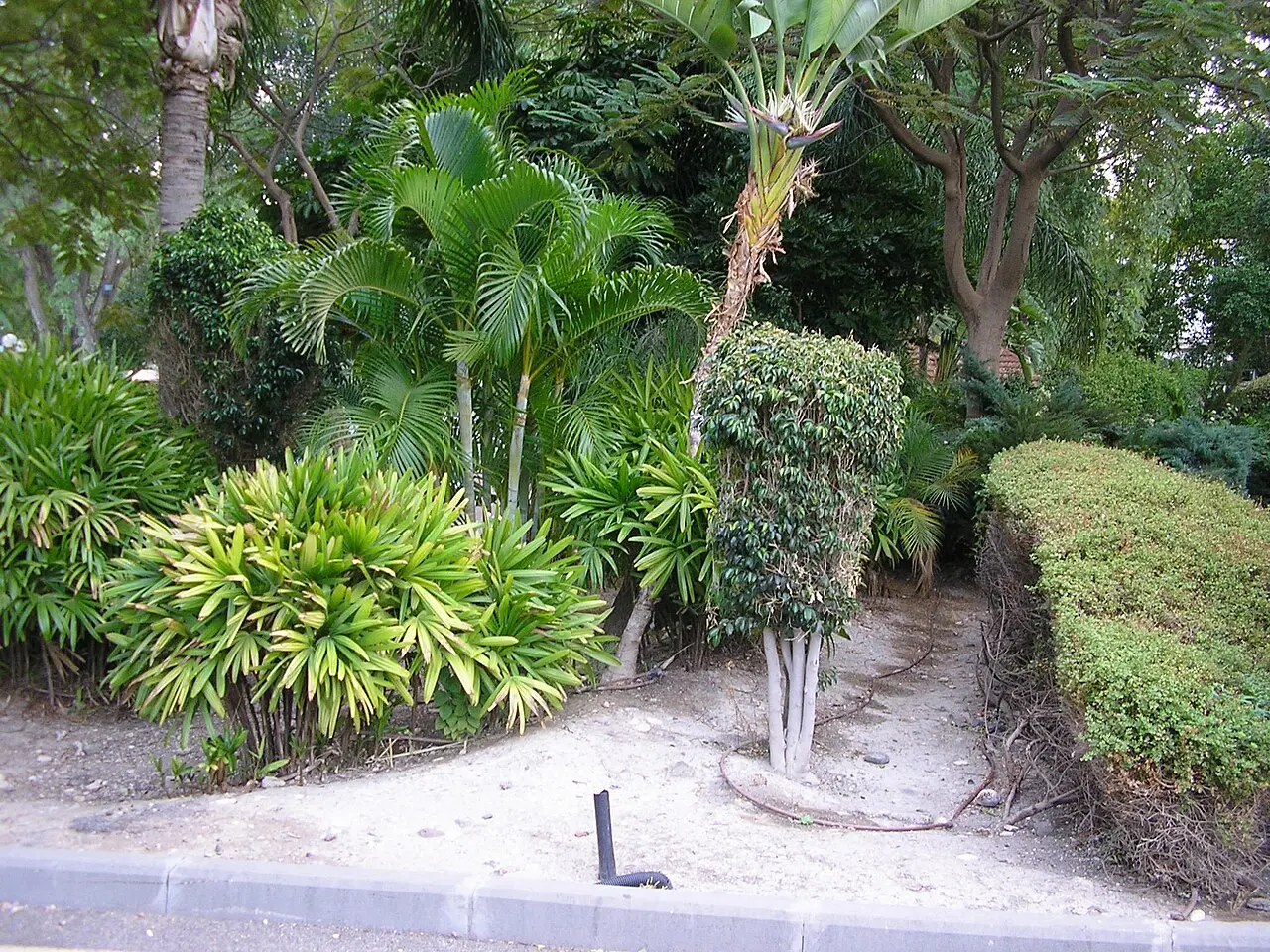
The operator's springs page counts five springs at Hamat Gader: four mineral and rich in sulphur, one fresh. The Hebrew Wikipedia article, which carries the fullest published account of the hydrology, names them and gives their temperatures, and the useful point for a visitor is that the hottest is not the one they will be sitting in. Ein el-Maqla, also called the frying pan, reaches 52 degrees and fed the Roman bathhouse; the modern pools are filled from Ein Balzam, the spring of perfume, cooler at 40.6 to 42 degrees and far higher yielding at 500 to 700 cubic metres an hour.
The heat is not volcanic. These are fault springs, breaking out along a secondary fracture of the Yarmouk within the Jordan Rift, and the water is thought to rise from an estimated depth of two kilometres or more, where the rock is simply hot. The same mechanism feeds Hammat Tiberias up the lake.
Beyond heat and minerals the Hebrew account adds a property the operator does not mention: measurable radioactivity, from isotopes of radium and radon dissolved out of uranium in the rock at depth. The health claims on the operator's pages are the operator's own. Its practical advice is firmer: bathing is not for people with heart conditions or blood pressure problems, for pregnant women or for those recovering from a stroke, and a doctor should be consulted first.
- Ein el-Maqla (Hamat Gader 1): up to 52°C, the hottest, used by the Roman baths
- Ein Balzam or Ein el-Jarab (Hamat Gader 2): 40.6 to 42°C, 500 to 700 cubic metres an hour, fills the modern pools
- Ein e-Rih (Hamat Gader 3): about 37°C, closed to visitors, with an Ottoman bathhouse over it
- Ein Sakhna (Hamat Gader 4): about 28°C, used for fish ponds
- Ein Bulus: about 25°C, fresh water, for drinking
geagea / CC BY 3.0 · Wikimedia Commons
Antiquity
What the Tenth Legion built, and what the empress wrote on the wall
Construction began in the second century CE under the Tenth Legion, garrisoned at Gadara, the Decapolis city on the ridge four kilometres away at what is now Umm Qais in Jordan. An inscription at the site names the emperor Antoninus Pius, who reigned from 138 to 161. The Israeli Foreign Ministry's account is clear that the baths only became popular later, in the Byzantine period of the fifth and sixth centuries.
The plan is legible on the ground. The Foreign Ministry puts the complex at over 500 square metres, reached from the north by a paved street twelve metres wide. Each pool sat in its own hall, and the halls were linked so that a bather could work gradually towards the hottest water. The marble fountains that ringed the long cool pool were all found broken and defaced, which the excavators read as the work of iconoclasts.
The writing is why the place is quoted so often. Dozens of Greek inscriptions and some in Arabic were set into the floors and walls. Eudocia's poem, on a marble slab 1.81 by 0.71 metres, praises the spring it calls Clibanus and enumerates sixteen parts of the complex, fourteen of them named: from Hygieia, the pagan goddess of health, to holy Elijah, a nun and a patriarch. Pagan and Christian in the same list, on the same wall, in the fifth century.
The second famous text is Umayyad, set in the same hall, recording repairs made under the caliph Mu'awiya by order of the local governor: Hebrew Wikipedia dates it to 5 December 662, the English article gives the restoration as 663. Antoninus of Placentia, a pilgrim who came in 570, described a pool for lepers that the excavators later matched on the ground. By the tenth century al-Muqaddasi was writing in the past tense: the people of Tiberias, he reported, say the waters were once surrounded by buildings, each one for a particular disease.
Standing today
What was dug up, what was rebuilt and what is not here at all
The first excavation was not of the baths. In 1932 Eleazar Sukenik dug the synagogue on the mound south of them: an almost square hall, 13.90 by 13 metres, facing Jerusalem, with an apse in the southern wall and a raised bema before it. Its mosaic floor carried geometric and floral carpets, the one in front of the bema flanked by two cypresses and two lions around a wreathed dedication ending: 'May the King of the Universe bestow the blessing upon their work. Amen. Amen. Selah.' The date is not settled: the Foreign Ministry puts the building in the fifth or sixth century, the English Wikipedia article in the fifth and the Hebrew article in the fourth. The best of that floor is not here in any case; its restored upper section is installed in the entrance hall of the Supreme Court in Jerusalem.
Excavation of the bath complex itself began in 1979, under Yizhar Hirschfeld and Giora Solar for the Hebrew University, the Israel Exploration Society and the antiquities authority, and ran seven seasons. Hirschfeld's own view was that more is still buried, including the main entrance gate. The Foreign Ministry's account says the exposed structures were restored and opened to visitors; the operator's current website does not describe them, publish hours for them or price them separately, so what is walkable on any given day is worth confirming at the ticket office.
Digging has continued in a smaller way: in 2001 Moshe Hartal excavated 400 square metres east of the hot pool of 'Ein el-Jarab for the Israel Antiquities Authority and found four strata running from the fourth century to a complex destroyed in the earthquake of 1033, which he read as dressing or massage rooms. Two later bathhouses close the sequence and neither is in use: the Ottoman hammam in basalt over Ein e-Rih, now roofless and closed, and an unfinished twentieth-century one abandoned in the scrub nearby.
- Ancient and standing: the bath halls, their pools and the stone and lead water system, excavated from 1979 and preserved in places to a height of several metres
- Ancient and excavated, on the mound: the synagogue plan, its apse and bema
- Ancient but not here: the best of the synagogue mosaic, restored and installed at the Supreme Court in Jerusalem
- Ottoman and ruined: the basalt hammam over Ein e-Rih, closed
- Twentieth century and abandoned: the unfinished modern bathhouse in the scrub
- Wholly modern: every pool a visitor actually bathes in, the crocodile farm, the hotel, the restaurants and the car park
1905 to 1977
A village, a demilitarised zone and a gate that took years to open
Before 1949 the springs belonged to al-Hamma, a Palestinian Arab village on a narrow salient in the Yarmouk valley with Syria to the north and Transjordan to the south and east. It had a railway: the Jezreel Valley line opened in 1905, running from Haifa via Samakh and al-Hamma to the Hejaz Railway at Dera'a, and the station building still stands, with bridges over the Yarmouk and short tunnels visible from the road east. Who redeveloped the springs under the Mandate is recorded two ways: a Lebanese businessman, Sulayman Nasif, granted a concession in 1936 in the English account, and Suleiman Nadif Bey leasing the land in the 1920s in the Hebrew one.
On the night of 16 to 17 June 1946 the Palmach blew up eleven bridges across the country. One was the al-Hamma bridge over the Yarmouk, 130 metres long and then the longest in the land. It was never rebuilt.
Under the 1949 armistice the valley fell inside the demilitarised zone between Israel and Syria, and the demilitarisation clause was worded vaguely enough for both sides to read it their own way. Article V formally protected the villagers and their property, but Israel wanted the area's 2,200 Palestinian inhabitants moved to Syria, and Walid Khalidi's account has them driven out over the following years. On 4 April 1951 Israel sent a two-vehicle patrol, its soldiers dressed as policemen because troops were not permitted in the zone, to assert sovereignty. The Syrians opened fire and seven Israeli soldiers were killed.
Israel took the area in the Six-Day War in 1967 and work began on new baths, but the border stayed live. On 2 May 1969 two squads crossed the Yarmouk from Jordan before dawn, fought the Golani company holding the position and destroyed the newly completed bathhouse with explosives. The resort finally opened in July 1977, years late, set up by three kibbutzim of the southern Golan: Mevo Hama, Kfar Haruv and Afik. Its first manager, from 1976 to 1979, was Pamela Trenter of Mevo Hama, who had come from Britain with a Habonim group during the Yom Kippur War. Kibbutz Metzar joined later, and on the Hebrew account all four were running the place as of 2017, across roughly 150 dunams.
Crocodilians
The crocodile farm, and why the published counts do not agree
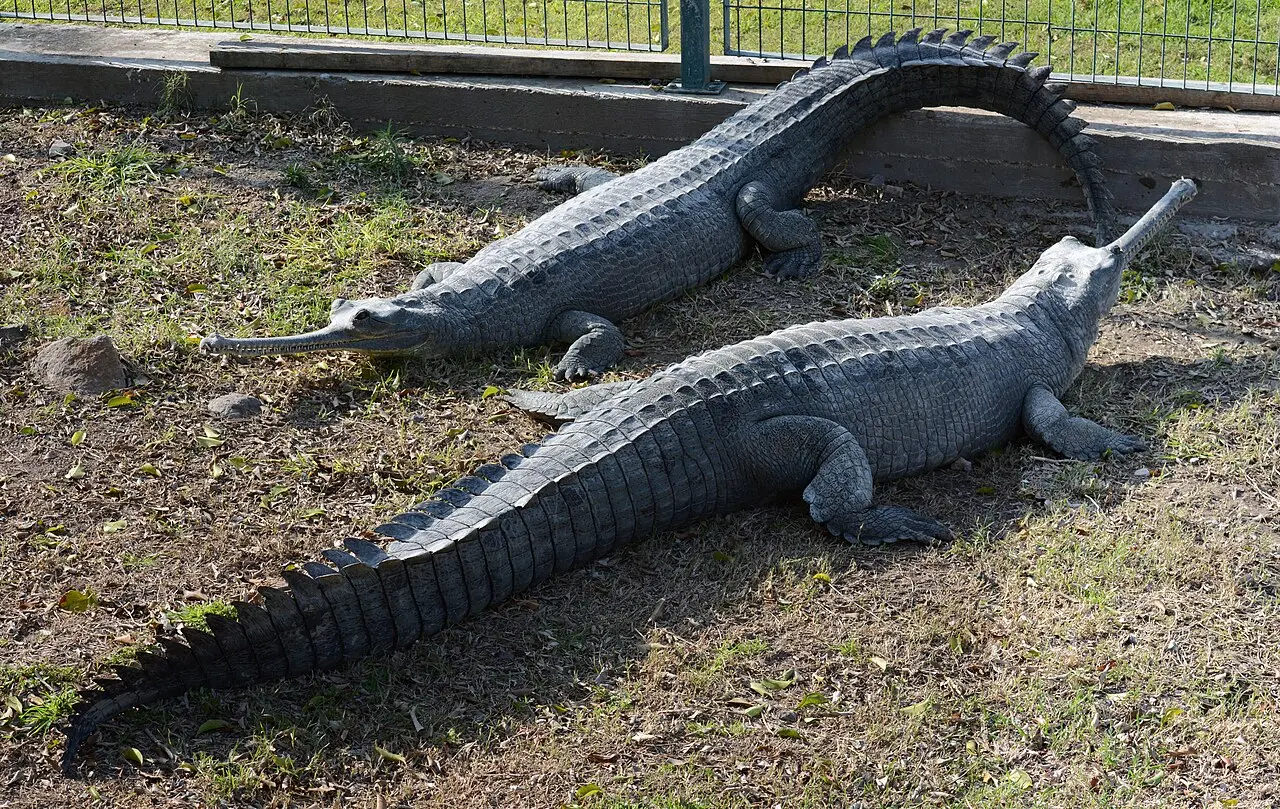
The farm dates from 1981, when members of Kibbutz Mevo Hama added a tourist crocodile farm to the springs. It began with a few dozen American alligators brought from Florida. Nile crocodiles from Africa and caimans from South America followed, and in 1996 two more species arrived from India, the gharial and the saltwater crocodile.
How many animals are there now is a question with three published answers and no way for a visitor to settle it. The operator's own page says the farm held about 80 crocodilians in 2007 and holds about 40 today, of three kinds. The Hebrew Wikipedia article says about 120 and calls it the largest crocodilian farm in the Middle East. The English article says about 200, and flags that sentence as unsourced.
The layout is a set of fenced pools, separated by species with some mixed, and a walkway over the top from which the animals are watched at a distance. The alligators have the largest pool, with a shaded terrace above it and talks in Hebrew and English. Feeding runs from May to November. Through the winter the animals slow their metabolism and are not fed at all, so a January visit is a visit to a yard of motionless reptiles. The farm also keeps shorter hours than the park, Monday to Saturday from 9am to 4pm.
Staselnik / CC BY-SA 3.0 · Wikimedia Commons
The park
What the ticket actually buys, and what it costs
At the centre is the natural thermo-mineral pool, welling up year round. From the source the water runs into a covered area where submerged jacuzzi beds are built around a central pillar, then into the large open pool, with water cannons aimed at the neck and shoulders, jacuzzi points along the wall and a bubble lake. The Splash is the counterweight: a cold fresh-water pool with a ten-metre spiral slide, open in season and restricted to ages ten and over.
Admission runs on three tiers by day of the week, cheapest Monday to Wednesday and dearest on Friday, festivals and the intermediate days of festivals, with concessions for senior citizens, disabled visitors and soldiers on production of a card. Children up to one metre tall enter free. Parking is free, and the park is closed on Sundays.
Two things beyond the pools carry their own conditions. Spa Village, a boutique hotel of 31 suites opened in 2001, has its own pools, jacuzzis, saunas and treatment rooms, and its day packages are priced separately; the Hebrew price list restricts it to adults from 18, the older English page says 16, so confirm which applies before booking for a teenager. The tent village is the cheap way to stay, with air-conditioned tents for up to five people and mattresses but no bedding.
One recent episode explains the signage about water standards. In November 2005 and again in April 2006 the health ministry's northern district physician ordered the baths shut after testing the water. The operator went to the magistrates' court in Nazareth and argued that the standard for a thermo-mineral site is the one for sea bathing beaches, not the one for fresh-water pools. The court accepted that both times.
Olga1969 / CC BY 4.0 · Wikimedia Commons
What to look for
Things not to walk past at Hamat Gader
The details that repay knowing about before you are standing in front of them.
The bath halls above the Yarmouk
The excavated Roman complex, more than 500 square metres of linked halls each holding its own pool, preserved in places to a height of several metres in basalt and trimmed limestone. The passageways between them were the point: a bather worked up to the hottest water by degrees.
The hall of fountains
Where the Greek inscriptions were found, including Eudocia's sixteen-line poem on a marble slab 1.81 by 0.71 metres and the Umayyad text recording Mu'awiya's repairs. The cool pool nearby was ringed by 32 marble fountains carved with human and animal heads, all of them found smashed.
Ein el-Maqla
The hottest spring on the site at up to 52 degrees, known locally as the frying pan. It is the one the Roman bathhouse was built around, and it is not the one the modern pools use: that is Ein Balzam, cooler and far higher yielding.
The synagogue mound
South of the baths, the excavated plan of a hall 13.90 by 13 metres facing Jerusalem, dug by Eleazar Sukenik in 1932. Its best mosaic is not here: the restored upper section stands in the entrance hall of the Supreme Court in Jerusalem.
The walkway over the crocodile pools
A bridge across the fenced enclosures, with a shaded terrace over the alligator pool and talks in Hebrew and English. Feeding is a May to November affair; in winter the animals are not fed at all.
The Ottoman hammam and the railway station
A basalt bathhouse of two halls built over Ein e-Rih, now roofless in its larger hall and closed to visitors, and the station of the 1905 line that ran from Haifa through this valley to the Hejaz Railway at Dera'a, whose building still stands.
The long view
Hamat Gader, in order
2nd century CE
The Tenth Legion, garrisoned at Gadara above the valley, begins the bath complex. An inscription at the site names Antoninus Pius, emperor from 138 to 161.
3rd century CE
A theatre of about 2,000 seats is recorded at the site, and Origen mentions the place in his commentary on John.
4th century CE
Eunapius visits and ranks Gadara's warm baths second only to Baiae on the Bay of Naples.
mid-5th century CE
The empress Eudocia's poem is cut on a marble slab where bathers read it on the way in. A synagogue is built on the mound to the south, dated by different accounts to the fourth, fifth or sixth century.
570 CE
The pilgrim Antoninus of Placentia describes the site, including a pool for lepers that the excavators later matched on the ground.
December 662
An inscription in the hall of fountains records repairs to earthquake damage under the caliph Mu'awiya, ordered by the local governor. Some English accounts date the restoration to 663.
749
The Galilee earthquake wrecks the Umayyad buildings on the site.
9th to 10th century
The baths go out of use and silt buries them. Al-Muqaddasi writes of them in the past tense.
1905
The Jezreel Valley railway opens, with a station at al-Hamma on the line from Haifa to the Hejaz Railway at Dera'a.
1932
Eleazar Sukenik excavates the synagogue and its Aramaic mosaic inscriptions.
16 to 17 June 1946
On the Night of the Bridges the Palmach destroys the al-Hamma bridge over the Yarmouk, 130 metres long and then the longest in the country. It is never rebuilt.
1949
The armistice with Syria places the valley inside the demilitarised zone. Article V protects the villagers and their property on paper; the Palestinian population of al-Hamma is nonetheless displaced over the following years.
4 April 1951
An Israeli patrol disguised as police is ambushed at al-Hamma and seven soldiers are killed. A memorial, Yad LaShiv'a, is raised at the spot in 2015.
1967
Israel takes the area in the Six-Day War and work starts on new baths.
2 May 1969
Militants cross the Yarmouk from Jordan and blow up the newly completed bathhouse, delaying the opening by years.
July 1977
The resort opens to the public, founded by Kibbutzim Mevo Hama, Kfar Haruv and Afik, under its first manager Pamela Trenter.
1979
Yizhar Hirschfeld and Giora Solar begin seven seasons of excavation on the Roman baths.
1981
Members of Kibbutz Mevo Hama start the crocodile farm with American alligators brought from Florida.
1996
Gharials and saltwater crocodiles are brought from India to the farm.
2001
The Spa Village boutique hotel opens, and the antiquities authority digs four strata east of the 'Ein el-Jarab pool.
2005 to 2006
The health ministry twice orders the baths shut over water quality; the court sets both orders aside.
Practical
Visiting Hamat Gader
Where
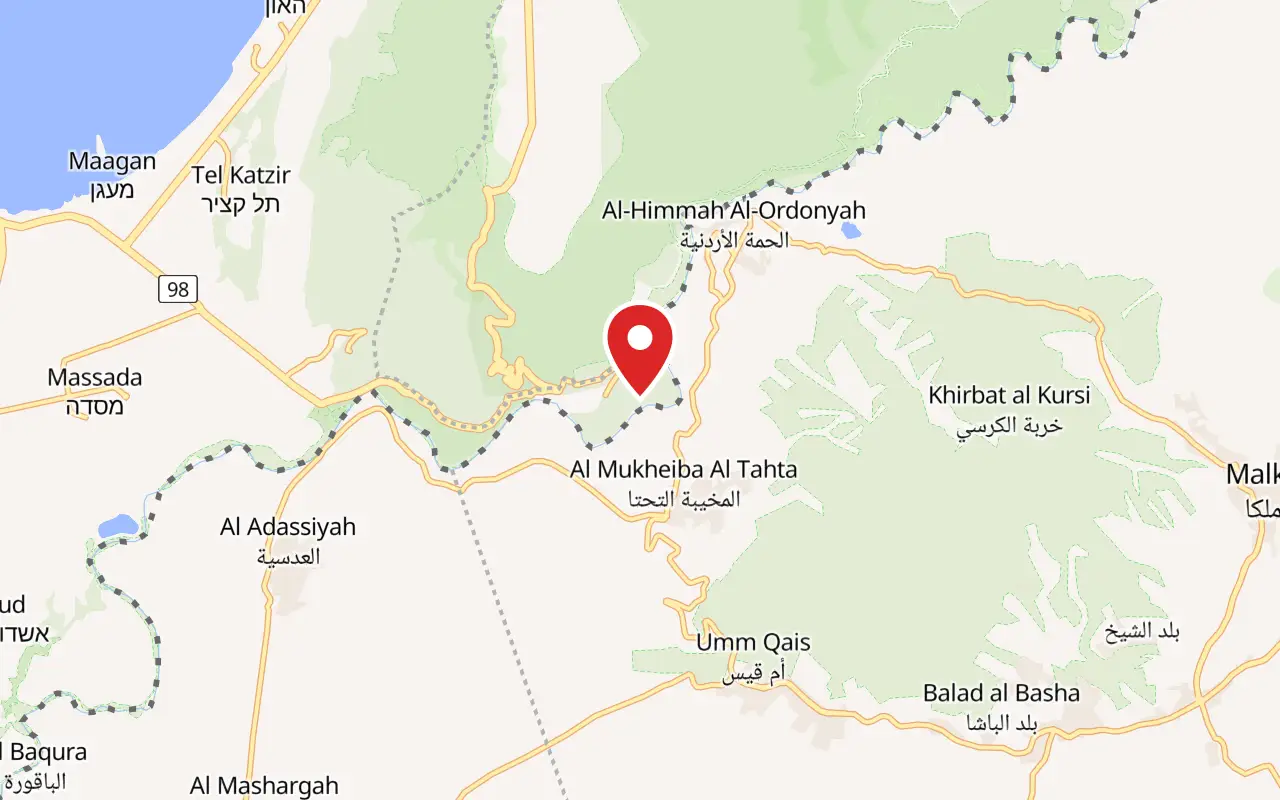
Hamat Gader, Yarmouk valley, southern Golan, reached south from Tzemah junction on the road signposted from the Kinneret circuit
What ticket you need
The excavated Roman baths, the synagogue mound and the Ottoman hammam all lie inside the fenced resort, and the operator publishes no separate antiquities ticket and no separate hours for them. In practice the price of seeing them is the price of a day at the pools, which is set as a leisure admission rather than a heritage one.
Opening hours
- Park, Monday, Wednesday, Thursday and Friday
- 09:00 to 22:00source
- Park, Tuesday and Saturday
- 09:00 to 17:00source
- Sunday
- Closedsource
- Leaving the water
- Half an hour before closingsource
- The Splash, the cold pool
- 09:00 to 20:00, in seasonsource
- Crocodile farm
- Monday to Saturday, 09:00 to 16:00source
- Café Agam (dairy) and Agam Grill (meat)
- 09:00 to 16:00 and 11:00 to 16:00, on the operator's English pagesource
Admission
- Adult, Monday to Wednesday
- ₪127source
- Adult, Thursday and Saturday
- ₪139source
- Adult, Friday, festivals, festival eves and intermediate days
- ₪149source
- Senior citizen, disabled visitor or soldier, on production of a card
- ₪108 Monday to Wednesday, ₪119 Thursday and Saturday, ₪128 Friday and festivalssource
- Children up to one metre tall
- Free; from one metre upwards a ticket is requiredsource
- Spa Village day packages
- Priced separately from park entry; the operator's English list, headed 2023, starts at ₪310 midweek for entry onlysource
- Parking
- Freesource
Access
Better than most sites in the north, with one large exception. The operator's accessibility statement lists a pool hoist for the hot and cold pools beside Café Agam, accessible parking bays in the eastern part of the car park near the main ticket offices, ramps, accessible reception desks at both the park tills and the hotel, lifts, adapted rooms, hearing systems, accessible lavatories and changing rooms, and accessible drinking fountains, benches and tables, and it names an accessibility officer who can be contacted directly. The exception is the antiquities: the excavated bath complex is a ruin of steps, sills and worn paving on the valley slope, and it appears nowhere in that list of adapted facilities.
On site
- Free car park
- Electric vehicle charging points, run by an outside operator
- Changing rooms, lockers and showers
- Pool hoist beside Café Agam
- Café Agam, dairy
- Agam Grill, meat
- Lev HaPark shop, with towels, robes and swimwear to buy and robes to hire
- Cold pool and spiral slide, seasonal, slide from age 10
- Crocodile farm
- Spa treatment rooms
- Spa Village boutique hotel, 31 suites
- Tent village camping, up to five people per tent
- Designated picnic and barbecue area
- Free Wi-Fi in the pool area
Booking
Tickets can be bought online in advance or at the park tills on the day, and the operator recommends buying online. Groups of 20 or more get a group rate by prior arrangement and a single payment, booked through the group office. Spa treatments are booked and cancelled through the reservations centre, with cancellations up to 24 hours before the treatment.
Hours and prices are given as the operator publishes them and change without much notice, particularly around Shabbat and the festivals. Check the operator's own page before you travel for this.
Official page at hamat-gader.com →What people wish they had known
- Check the Hebrew opening hours page, not the English one. The English site still carries a timetable headed March 2024 giving Monday to Saturday, 9am to 5pm, while the Hebrew information page gives 9am to 10pm on Monday, Wednesday, Thursday and Friday and 9am to 5pm on Tuesday and Saturday. Both agree on the thing that ruins a day trip: the park is shut on Sundays.
- Do not come for the antiquities without asking at the till first. The operator sells water, food and a hotel, and gives the excavated Roman baths no page, no hours and no ticket of their own, so the sensible move is to ask on arrival what is open before walking the grounds looking for it.
- The synagogue mosaic everyone has seen a photograph of is in Jerusalem. Its restored upper section stands in the entrance hall of the Supreme Court, not at Hamat Gader.
- Treat 42 degrees as a dose, not a swim. The operator states plainly that bathing here is not suitable for people with heart conditions or blood pressure problems, for pregnant women or for those recovering from a stroke, and advises consulting a doctor first; the usual practice is short spells in the water rather than a long soak.
- Pick the day by price as well as by crowd. Monday to Wednesday is the cheapest tier, Thursday and Saturday cost more, and Friday, festival eves and the intermediate days of festivals cost most of all.
- Without a car there is one bus each way. The operator lists line 24 leaving Tiberias central station for Hamat Gader via Tzemah at 09:15 and returning from Hamat Gader at 13:50, Sunday to Friday, with nothing on Shabbat or festivals, and says to confirm the timetable with the bus company rather than with the park.
The figures
Hamat Gader by the numbers
Each figure carries the year it belongs to and links the source it came from.
| Measure | Figure | As of | Source |
|---|---|---|---|
| Adult admission, Monday to Wednesday | ₪127 | 2026 | hamat-gader.com |
| Adult admission, Friday and festivals | ₪149 | 2026 | hamat-gader.com |
| Water temperature at the source | 42°C | 2026 | hamat-gader.com |
| Sulphur concentration in the water | 4.7 per cent | 2026 | hamat-gader.com |
| Flow of Ein Balzam, the spring that fills the pools | 500 to 700 cubic metres an hour | 2026 | he.wikipedia.org |
| Hottest spring on the site, Ein el-Maqla | up to 52°C | 2026 | he.wikipedia.org |
| Area of the Roman bath complex | over 500 square metres | 1999 | jewishvirtuallibrary.org |
| Crocodilians on the site, on the operator's own count | about 40, of three kinds | 2026 | hamat-gader.com |
While you are here
The rest of The Sea of Galilee
Everything else in this destination with a page of its own.
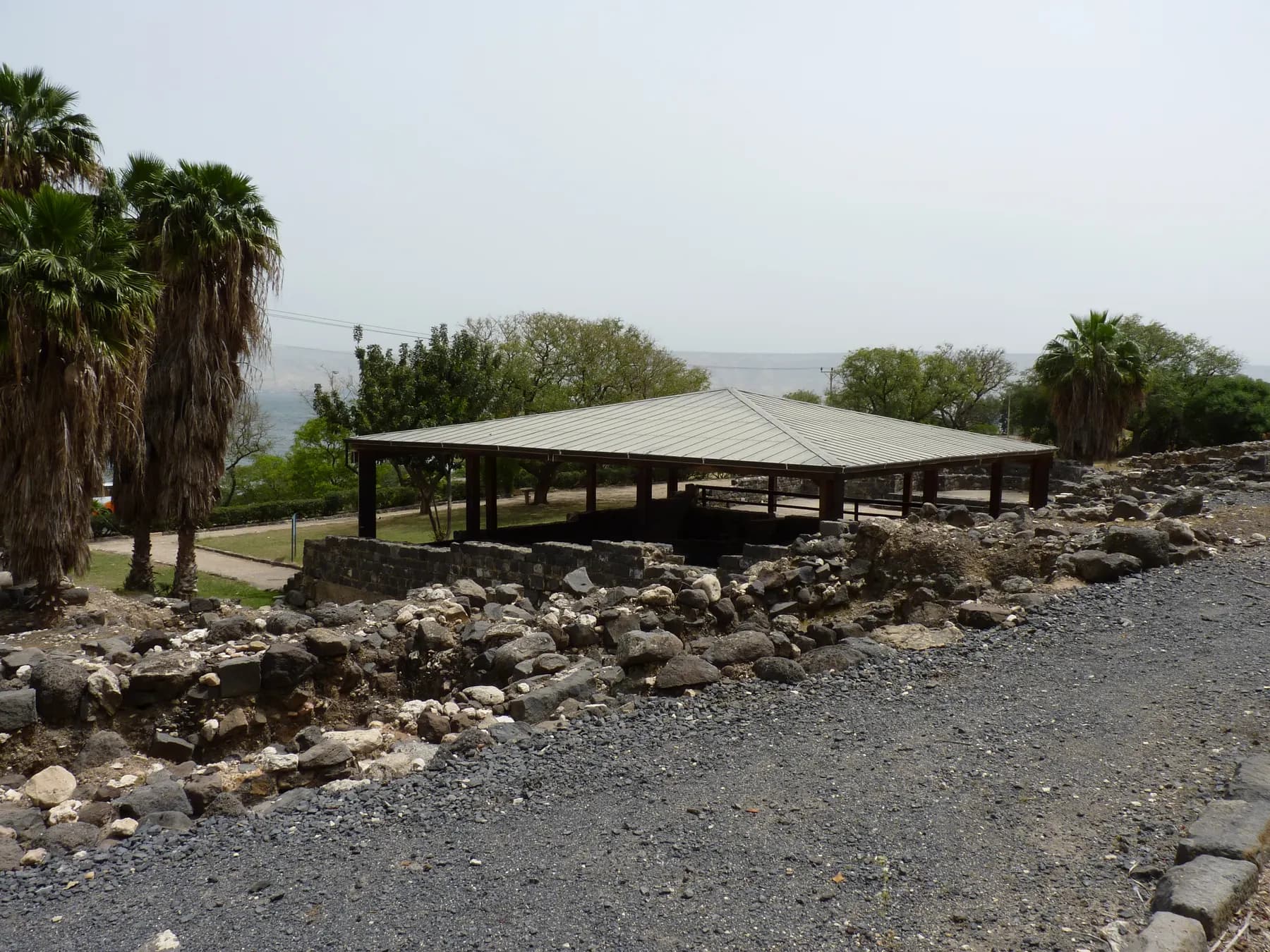
Archaeological site
Hamat Tiberias
Seventeen springs come out of the ground here at about 60 degrees Celsius, and the synagogue beside them has a mosaic floor that puts a zodiac wheel around the sun god Helios.
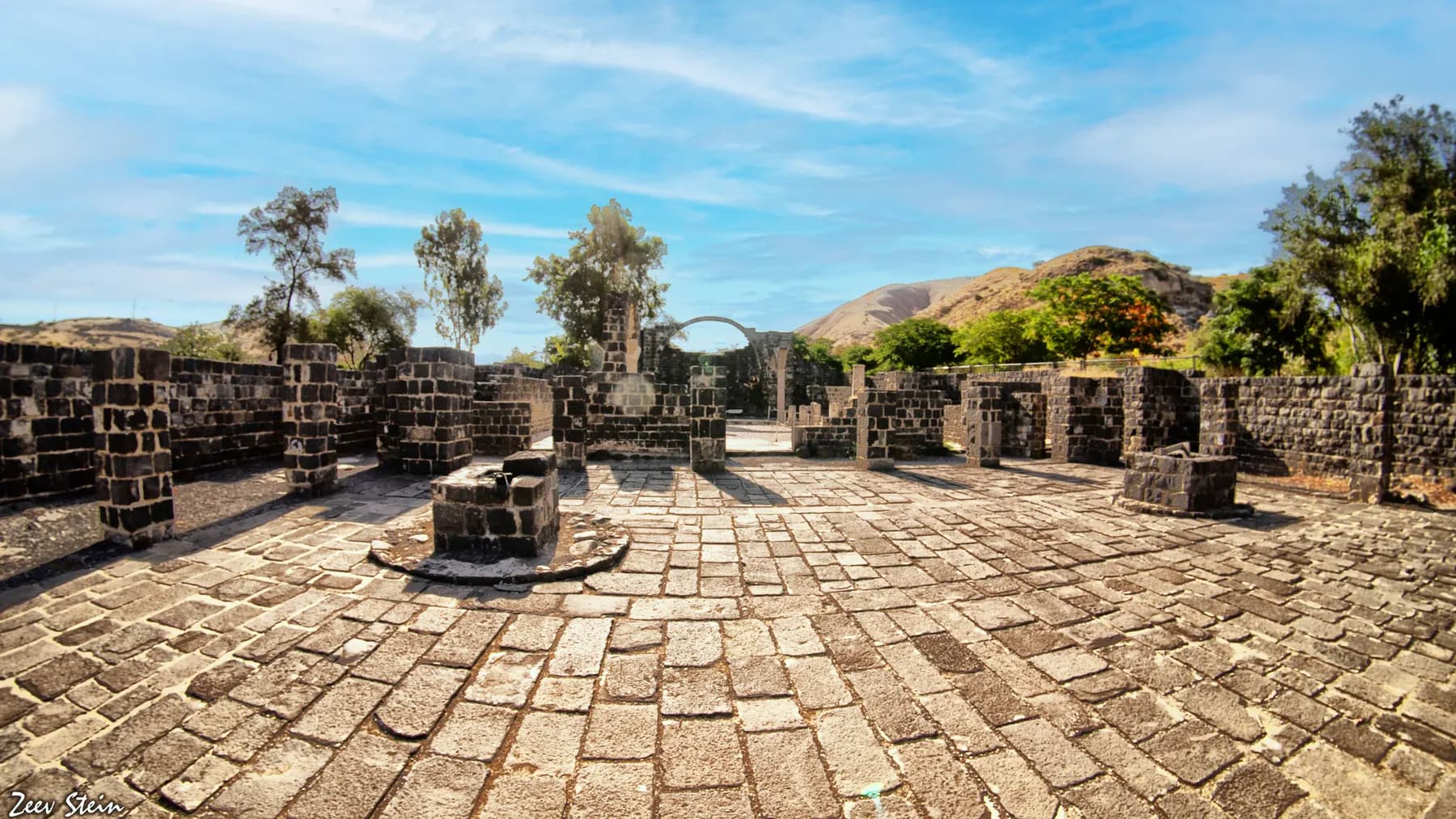
זאב שטיין / CC BY 2.5 · Wikimedia Commons
Archaeological site
Kursi
A bulldozer cutting a new road to the Golan hit its wall in 1970, and what came out was a walled Byzantine monastery of 145 by 123 metres that the parks authority calls the largest known in the Holy Land.
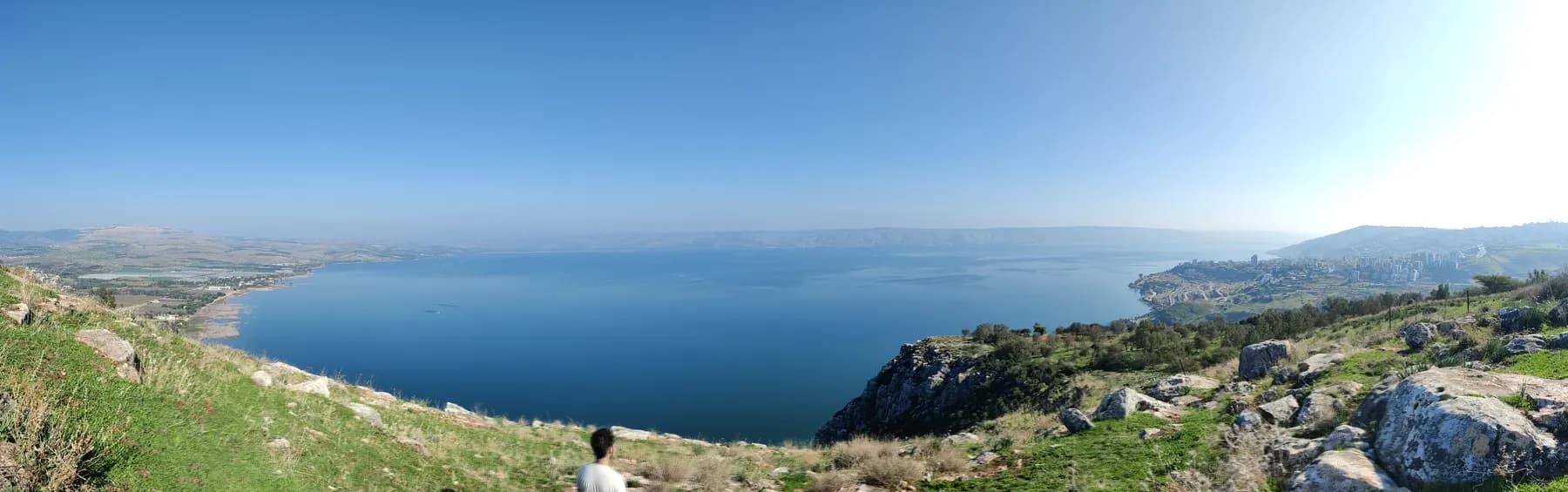
Yinonk / CC BY 4.0 · Wikimedia Commons
Viewpoint
Mount Arbel
A limestone and dolomite cliff standing 181 metres above sea level and about 390 metres above the Sea of Galilee, with several hundred caves cut into its face and a seventeenth-century fortress built across them.
Sources and further reading
Every link below was opened and checked when this page was written. Official statements are marked as such: they are the subject's own account, not an independent one.
- OfficialHamat Gaderhamat-gader.comHamat Gader price list 2026
the three 2026 admission tiers, the concession rates and the free entry for children under a metre
- OfficialHamat Gaderhamat-gader.comImportant information and questions and answers
current opening hours by day, water temperature, bathing restrictions, free parking and the line 24 bus times
- OfficialHamat Gaderhamat-gader.comHamat Gader, a holiday park for the whole family
the English-language description, restaurant hours and the older March 2024 opening timetable
- OfficialHamat Gaderhamat-gader.comThermo-mineral springs in the north
the 42 degree figure, the 4.7 per cent sulphur concentration, the count of five springs and the health claims
- OfficialHamat Gaderhamat-gader.comThe crocodile farm at Hamat Gader
the farm's founding in 1981, the species brought in, the counts for 2007 and today, and its own opening hours
- OfficialHamat Gaderhamat-gader.comSplash, the cold pool
the cold fresh-water pool, the ten-metre spiral slide and its age limit
- OfficialHamat Gaderhamat-gader.comAccessibility statement
the pool hoist, accessible parking, adapted rooms and the named accessibility officer
- OfficialHamat Gaderhamat-gader.comPricing (English)
the English package list, headed 2023, including the Spa Village day rates and the age-16 line that the Hebrew page gives as 18
- ReferenceJewish Virtual Library, from the Israeli Foreign Ministryjewishvirtuallibrary.orgArchaeology in Israel: Hamat Gader
the plan of the bath complex, the 32 marble fountains, the inscriptions naming Eudocia, Anastasius and Mu'awiya, and the synagogue
- ReferenceHadashot Arkheologiyot, Israel Antiquities Authorityhadashot.iaa.org.ilHammat Gader, 'Ein el-Jarab: final report
Moshe Hartal's 2001 excavation and its four strata, from the fourth century to the earthquake of 1033
- ReferenceWikipediahe.wikipedia.orgHamat Gader (Hebrew)
the five named springs with temperatures and flows, the 1979 excavation seasons, the 1969 attack, the 1977 opening and the 2005 water quality case
- ReferenceWikipediaen.wikipedia.orgHamat Gader
the Tenth Legion's construction, the theatre, Sukenik's 1932 dig and the crocodilian count flagged there as unsourced
- ReferenceWikipediaen.wikipedia.orgAelia Eudocia
the text of the Hamat Gader poem in translation and the sixteen parts of the bath complex it names
- ReferenceWikipediaen.wikipedia.orgAl-Hamma, Tiberias
the village, the 1905 railway, the census figures, the Mandate spring concession and the 1949 demilitarised zone
Hamat Gader: common questions
Is Hamat Gader open on Sunday?+
No. The park, the spa and the crocodile farm are all closed on Sundays, on both the Hebrew and the English pages of the operator's site. The rest of the week the park runs from 9am, closing at 10pm on Monday, Wednesday, Thursday and Friday and at 5pm on Tuesday and Saturday, according to the Hebrew information page. Bathers are asked to leave the water half an hour before closing.
How much does it cost to get in?+
Adult admission in 2026 is 127 shekels Monday to Wednesday, 139 shekels on Thursday and Saturday and 149 shekels on Friday, festivals, festival eves and the intermediate days of festivals. Senior citizens, disabled visitors and soldiers pay 108, 119 and 128 shekels respectively on production of a card. Children up to a metre tall go free, and above that height they need a ticket. Parking costs nothing.
Can you see the Roman baths on an ordinary ticket?+
The excavated complex lies inside the fenced resort and the operator publishes no separate antiquities ticket, so there is no second gate to pay at. What is less clear is what is open: the Israeli Foreign Ministry's account says the exposed structures were restored and opened to visitors, but the operator's own website does not describe the ruins, give them hours or mention them in what the ticket includes. Ask at the ticket office on the day.
How hot is the water and how long can you stay in it?+
The spring that fills the pools reaches the surface at 42 degrees and holds that temperature all year, on the operator's own figure, and one spring on the site runs to 52 degrees, though nobody bathes in that one. Fifteen minutes at a stretch is the commonly cited limit for water this hot. The operator restricts bathing for people with heart conditions or blood pressure problems, pregnant women and people recovering from a stroke, and advises asking a doctor first.
Is it worth it if you are not interested in spas?+
It depends on what else you would do with the day. As a piece of history the valley is remarkable: a bath complex begun by a Roman legion, an empress's poem cut in marble, an Umayyad repair inscription, a synagogue, an Ottoman hammam and a Hejaz railway station within a few hundred metres of each other. As a visit it is packaged as a water park, with the ruins as scenery, and a traveller who wants an interpreted archaeological site will find Beit She'an or Zippori a better use of an afternoon.
Is there anything here for children?+
Yes, and it is the main reason Israeli families come. The Splash is a cold fresh-water pool with a ten-metre spiral slide, open in season, with the slide limited to ages ten and over, and the crocodile farm has a walkway over the enclosures with talks given in Hebrew and English. Children up to a metre tall enter free. The hot pools themselves are less useful for small children, and the operator's health warnings apply to adults as much as anyone.
How many crocodiles are there?+
The operator's own page says about 40, of three kinds, and that the farm held about 80 in 2007. Other published figures are higher and older: the Hebrew Wikipedia article says about 120 and the English one says about 200, with that claim flagged there as unsourced. Nothing available from outside reconciles them, so the operator's count is the one worth using. Feeding is done between May and November; in winter the animals are not fed at all.
Can you get there without a car?+
Barely. The operator lists a single bus each way: line 24 from Tiberias central station via Tzemah, leaving at 09:15 and returning from Hamat Gader at 13:50, Sunday to Friday only, with no service on Shabbat or festivals. That gives roughly four hours on site and no margin for error, and the operator disclaims responsibility for the timetable. Most visitors drive, and the car park is free.
Is Hamat Gader wheelchair accessible?+
The modern park largely is. The operator's accessibility statement lists a pool hoist for the hot and cold pools next to Café Agam, accessible parking in the eastern part of the car park by the main tills, ramps, accessible reception desks, lifts, adapted rooms, hearing systems and accessible lavatories, changing rooms, drinking points, benches and tables, with a named accessibility officer to call in advance. The excavated Roman baths are a different matter and are not in that list.
What is the difference between Hamat Gader and Hammat Tiberias?+
They are two separate thermal sites about a dozen kilometres apart, fed by the same kind of fault spring along the rift. Hammat Tiberias, on the lake shore south of Tiberias, is a national park built around excavated springs and a famous synagogue mosaic floor. Hamat Gader, in the Yarmouk valley to the south-east, is a commercial bathing park run by Golan kibbutzim, with a much larger Roman bath complex on its grounds and pools people actually swim in.