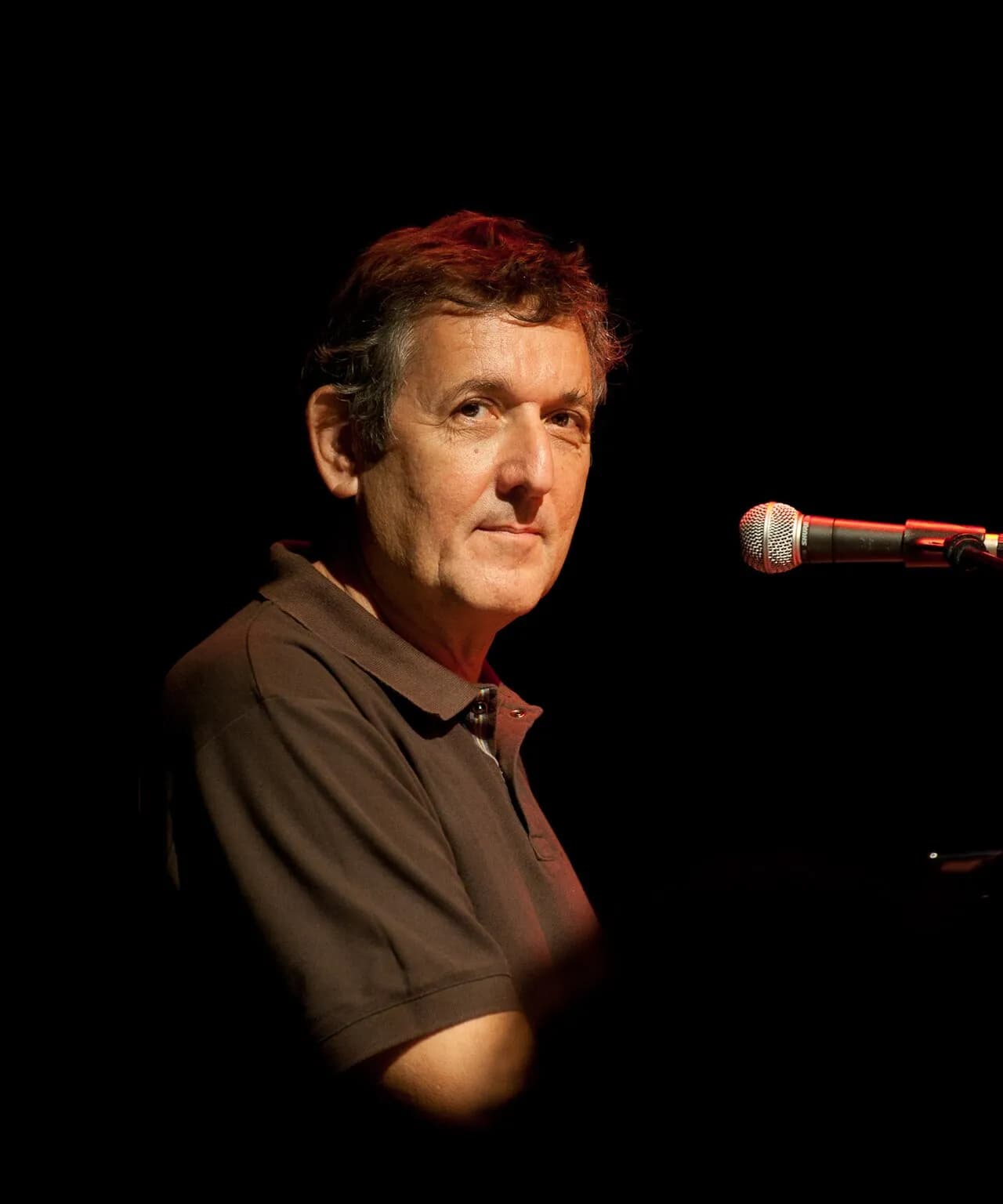
Composer and pianist
Yoni RechterConcerts 2026: every date and ticket
Israeli composer, pianist and singer, a member of Kaveret, who composed Atur Mitzchech and most of HaKeves HaShisha Asar.
Yoni Rechter has no dates announced right now. Subscribe below and new dates land in your calendar.
Watch Yoni Rechter's newest video
Yoni Rechter has no dates announced right now
The list is checked for new dates every few hours. Last checked 5 November, 10:36 Israel time.
Follow Yoni Rechter
Every new date lands in your calendar by itself.
Add the calendar once. When a show is announced, it appears there with its ticket link.
These are Yoni Rechter's official accounts, with the latest from each
Posts, videos and songs straight from Yoni Rechter's own pages, as they publish them.
- Instagram@yoni.rechter
- YouTubeOfficial page
- FacebookOfficial page
- SpotifyOfficial page
- Official siteyoni-rechter.com
Yoni Rechter joined Kaveret after the army and went on to write some of Israel's best-loved songs
Yoni Rechter was born in Tel Aviv in 1951. He studied classical piano as a child and jazz as a teenager, played keyboards in the Artillery Corps troupe while studying at the music academy in Tel Aviv, and after his release joined Kaveret, where he played keyboards and piano from 1972 until the band broke up in 1976. At the 1974 Eurovision Song Contest he conducted Kaveret's entry.
From 1976 he worked with Arik Einstein for 17 years, composing, arranging and producing albums such as HaAhava Panim Rabot La and HaYiti Pa'am Yeled, and his setting of Avraham Chalfi's poem Atur Mitzchech became a classic. In 1978 he composed and arranged most of HaKeves HaShisha Asar, Yehonatan Geffen's poems for children, and produced Gidi Gov's first album. His own debut, Hitkavnut, came out in 1979, the year of his show and live album with Yehudit Ravitz, Be'ofen Kavua VeChad Pe'ami.
He has released four solo albums, the latest Svivenu (2017), and has written for theatre, film, dance and orchestras: the Israel Philharmonic staged his children's operas Itamar Pogesh Arnav (2009) and Ma'ase BeShlosha Egozim (2017), and the Israeli Opera staged his opera Schitz in 2015. In 2025 he premiered HaIkar Ze HaMilim, his settings of poems by Dalia Ravikovitch, Avraham Chalfi and Eli Mohar, with the Revolution Orchestra.
Born
18 November 1951, in Tel Aviv Hebrew Wikipedia
Band
Kaveret, keyboards and piano, 1972 to 1976 Hebrew Wikipedia
Solo albums
4, the latest Svivenu (2017) Yoni Rechter's official site, biography
EMET Prize
ACUM prizes
Composer of the year (1990), lifetime achievement (1992), children's music (2014) Yoni Rechter's official site, biography
Honorary doctorates
Hebrew University, Weizmann Institute (2017) Yoni Rechter's official site, biography
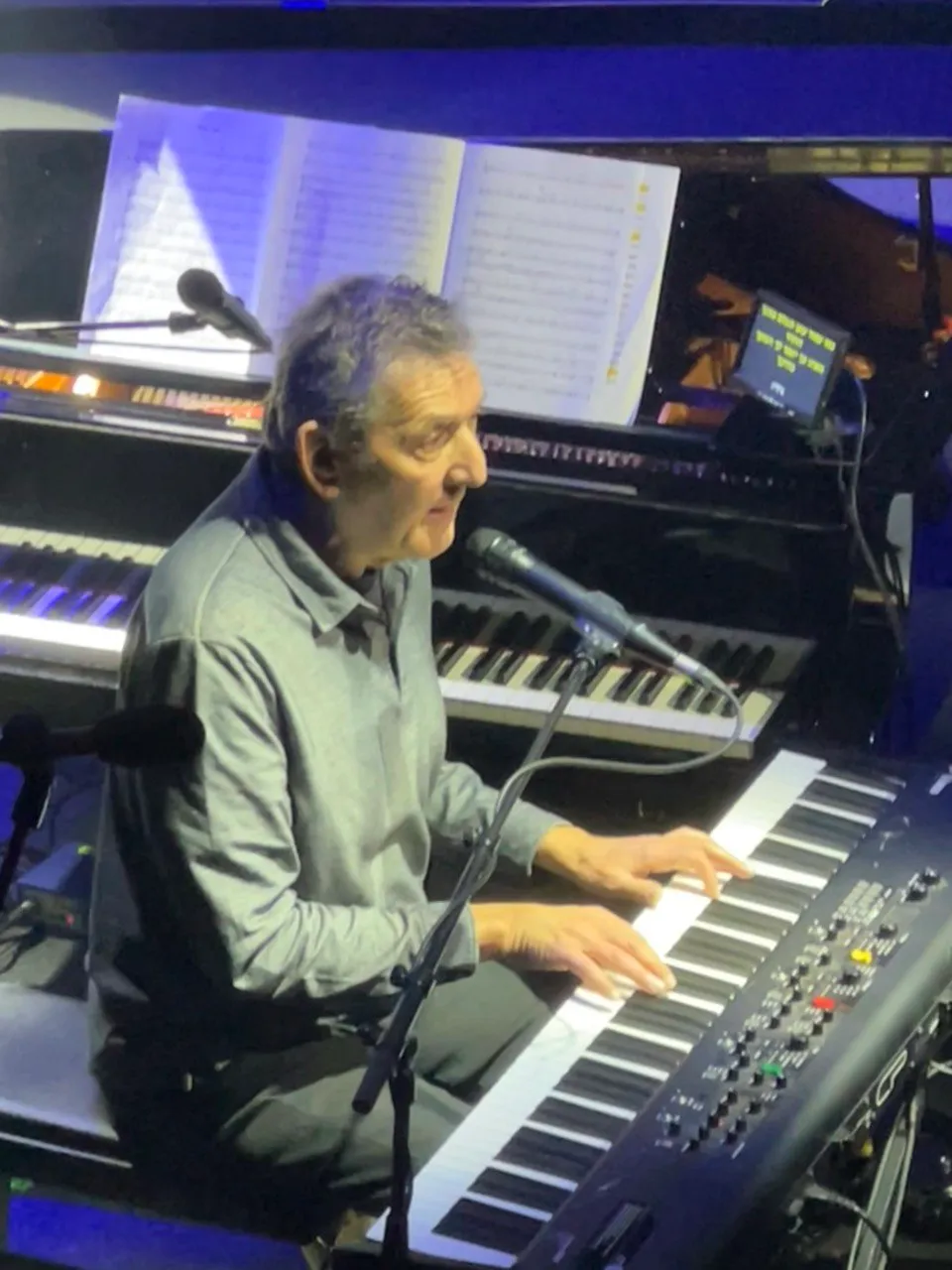
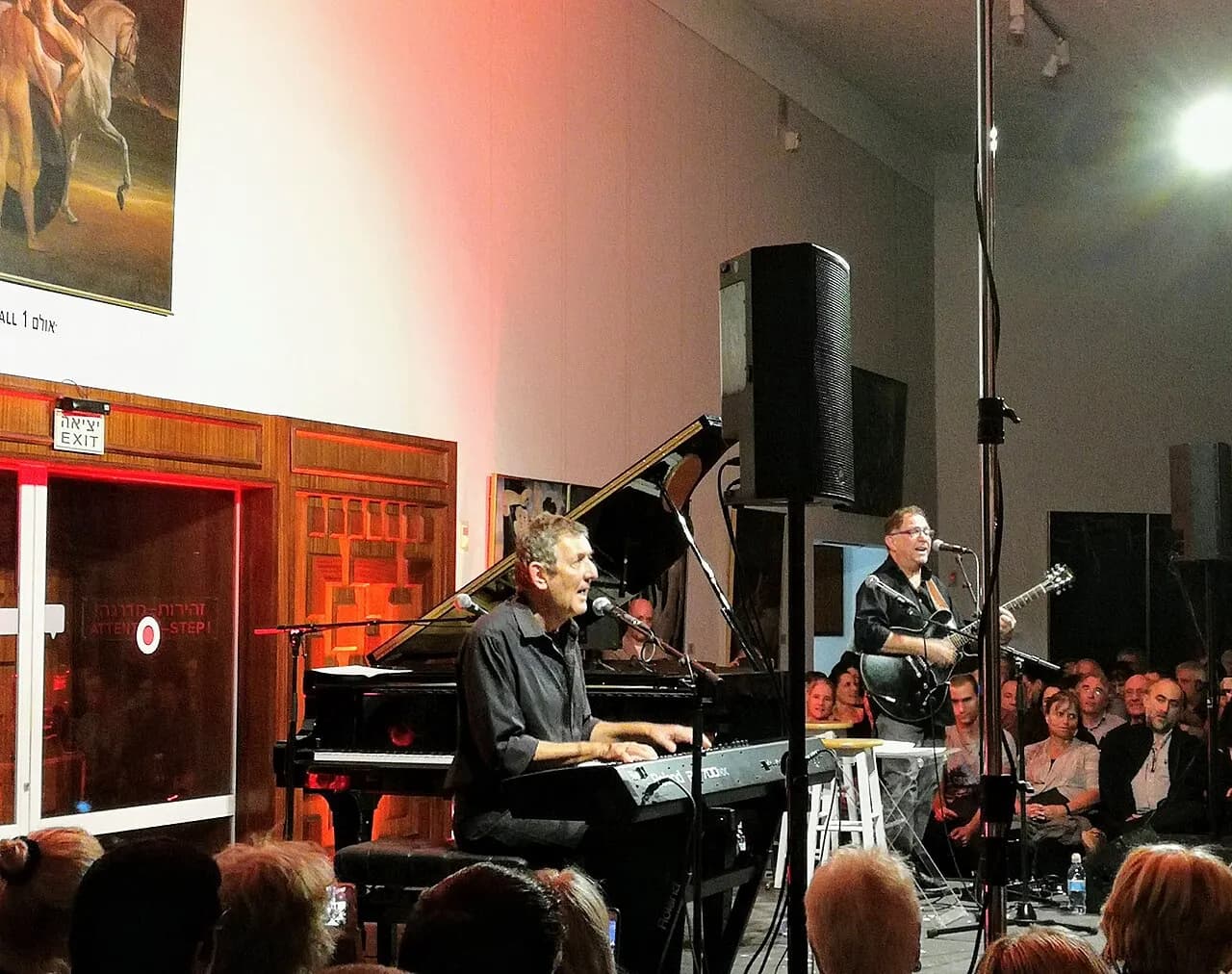
Yoni Rechter's career runs from Kaveret in 1972 to a new evening of poems set to music in 2025
1972
Joined Kaveret as its keyboardist and pianist. Yoni Rechter's official site, English biography
1974
Conducted Kaveret's entry at the Eurovision Song Contest. Wikipedia
1976
Composed, arranged and produced Arik Einstein's HaAhava Panim Rabot La, with Ma Osot HaAyalot and Zo Ota HaAhava. Hebrew Wikipedia
1977
Composed Atur Mitzchech, to a poem by Avraham Chalfi, for Arik Einstein. Hebrew Wikipedia
1978
HaKeves HaShisha Asar came out, Yehonatan Geffen's poems for children set almost entirely to his music; he also produced Gidi Gov's first album. Hebrew Wikipedia
1979
Released his first solo album, Hitkavnut, and the live album Be'ofen Kavua VeChad Pe'ami with Yehudit Ravitz. Hebrew Wikipedia
1983
Composed the theme song of Rechov Sumsum, to words by Eli Mohar. Hebrew Wikipedia
1989
Made the children's album HaYiti Pa'am Yeled with Arik Einstein, with Adon Shoko, Shabbat BaBoker and Geveret Im Salim. Hebrew Wikipedia
2015
The Israeli Opera staged his opera Schitz, after the play by Hanoch Levin. Yoni Rechter's official site, biography
2025
Premiered HaIkar Ze HaMilim with the Revolution Orchestra, with Alon Eder and Aya Korem as soloists. ynet, June 2025
These are Yoni Rechter's best-known albums and songs
Svivenu (Around Us)
Album · 2017 · Yoni Rechter's official site, biography
Schitz, opera
Stage show · 2015 · Yoni Rechter's official site, biography
HaIkar Ze HaMuzika (live)
Album · 2012 · Hebrew Wikipedia
Od Sipur (Another Story)
Album · 2002 · Hebrew Wikipedia
BeGova HaEinayim, with Eli Mohar
Album · 1985 · Hebrew Wikipedia
Hitkavnut (Intending)
Album · 1979 · Hebrew Wikipedia
Be'ofen Kavua VeChad Pe'ami, with Yehudit Ravitz
Album · 1979 · Hebrew Wikipedia
HaKeves HaShisha Asar (The Sixteenth Lamb)
Album · 1978 · Hebrew Wikipedia
HaYalda HaChi Yafa BaGan
Song · 1978 · Hebrew Wikipedia
Atur Mitzchech (Your Brow Is Adorned)
Song · 1977 · Hebrew Wikipedia
Yoni Rechter's performances and recordings are on his own YouTube channel
2026
2026
2026
These are the questions people ask about Yoni Rechter
When is Yoni Rechter's next show?
{name} has no dates announced right now. This page checks for new dates every few hours, and a reader subscribed to the calendar feed gets them added automatically.
What is Yoni Rechter's Instagram?
Yoni Rechter's official Instagram account is @yoni.rechter. The latest posts from it are on this page.
Where can I listen to Yoni Rechter's songs?
Yoni Rechter's songs are on Spotify and YouTube, on the official artist pages linked here.
How old is Yoni Rechter?
Yoni Rechter was born on 18 November 1951 and is 74 years old.
What is Yoni Rechter's best-known song?
Atur Mitzchech (Your Brow Is Adorned). His official site says it has repeatedly been voted the most popular Israeli song of all time.
Was Yoni Rechter a member of Kaveret?
Yes. He played keyboards and piano in Kaveret from 1972 until the band broke up in 1976. In the band he composed Sof HaHatzaga HaLayla and, with Danny Sanderson, Medina Ktana.
What is HaKeves HaShisha Asar?
A 1978 album of Yehonatan Geffen's poems for children, which Rechter composed, musically directed and performed in. His official site calls it Israel's most popular album of children's songs, more than 40 years on.
Has Yoni Rechter written operas?
Yes, three. The Israel Philharmonic staged his children's operas Itamar Pogesh Arnav (2009), after David Grossman's book, and Ma'ase BeShlosha Egozim (2017), after Leah Goldberg, and the Israeli Opera staged Schitz, after Hanoch Levin's play, in 2015.
What prizes has Yoni Rechter won?
The EMET Prize (2008); three ACUM prizes, for composer of the year (1990), lifetime achievement (1992) and a special contribution to Israeli children's music (2014); and honorary doctorates from the Hebrew University and the Weizmann Institute (2017).
More performers you can follow on Israel.com
Singer-songwriter
Ariel Horowitz
Singer and composer
Ofer Levi
Rock singer-songwriter
Si Heiman
Stand-up comedian
Tamir Bar
Where these facts come from
- Hebrew Wikipedia · read 17 October 2026
- Yoni Rechter's official site, biography · read 17 October 2026
- Yoni Rechter's official site, English biography · read 17 October 2026
- Wikipedia · read 17 October 2026
- ynet, June 2025 · read 17 October 2026