
The Old City of Jerusalem
Things to do in The Old City of Jerusalem
Every site here that is worth building time around, each one with a page of its own covering what it is, what survives, when it opens and what it costs.
Sites covered
11
each with its own page
Ticketed
11
0 free to walk into
Sourced figures
88
each with its year and source
Citations
140
opened and checked
The Old City of Jerusalem is not one attraction. It is 11 of them, and they do not reward the same amount of time or the same time of day. This page is the index: what each one is in a sentence, how long it takes, and what it costs, so that the choosing happens here and the reading happens on the page for whichever you pick.
Every site below has been checked against its operator's own published information. Where a site charges admission, the price on its page is the operator's published price with the year it was taken. Where it sits inside a larger park, its page says which ticket covers it.
3 sites
The ruins and excavations
Davidbena / CC BY-SA 4.0 · Wikimedia Commons
Archaeological site
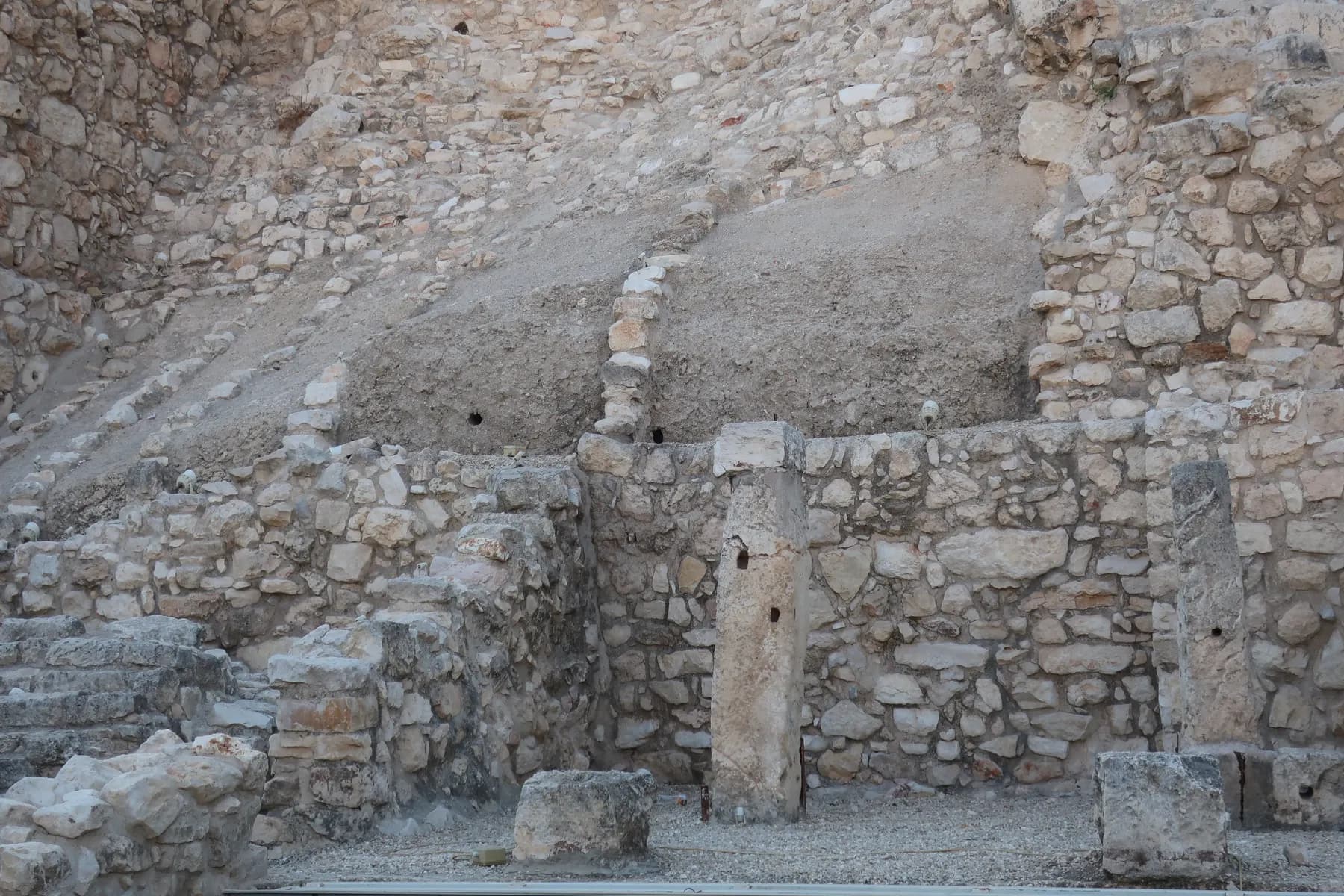
City of David
The ridge where Jerusalem began, outside the Ottoman walls and below Dung Gate, with a water tunnel 533 metres long that visitors still wade in water up to 70 centimetres deep.
- Time:
- about 90 minutes for the self-guided route, about three hours guided, plus two hours if the Pilgrimage Road is added
- Entry:
- ₪31
4.4 on Google, 69 ratings
Mohammad Shad Siddiqui / CC BY-SA 4.0 · Wikimedia Commons
Archaeological site
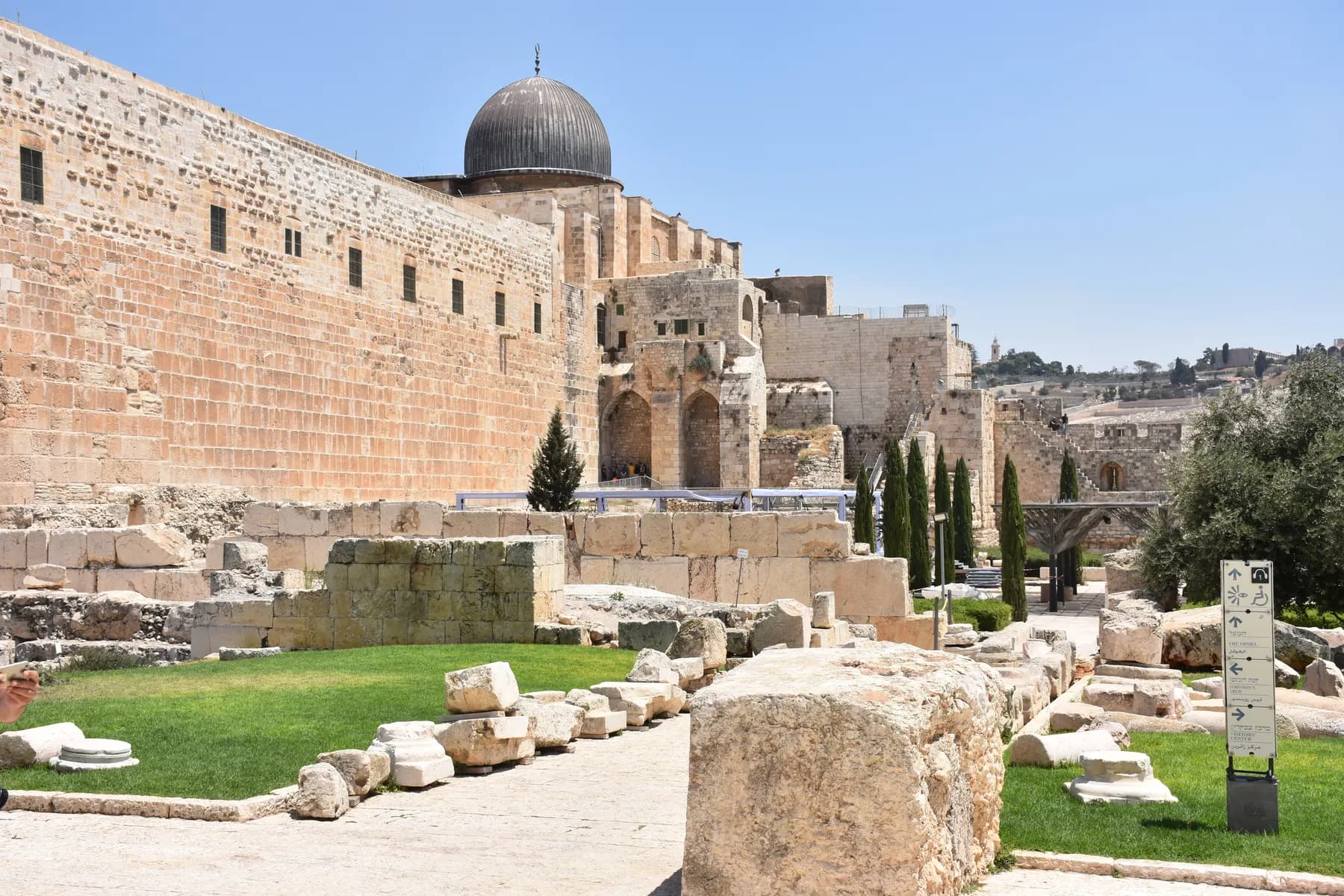
Jerusalem Archaeological Park, Davidson Center
The excavated corner where the Temple Mount's southern and western walls meet, with the paving of the Herodian street still under the heap of masonry the Romans pushed off the top in 70 CE.
- Time:
- about 90 minutes, which is what the operator allows for its guided tour; its own English page suggests 30 minutes for a quick look at the garden alone
- Entry:
- ₪40
3.1 on Google, 14 ratings
Archaeological site
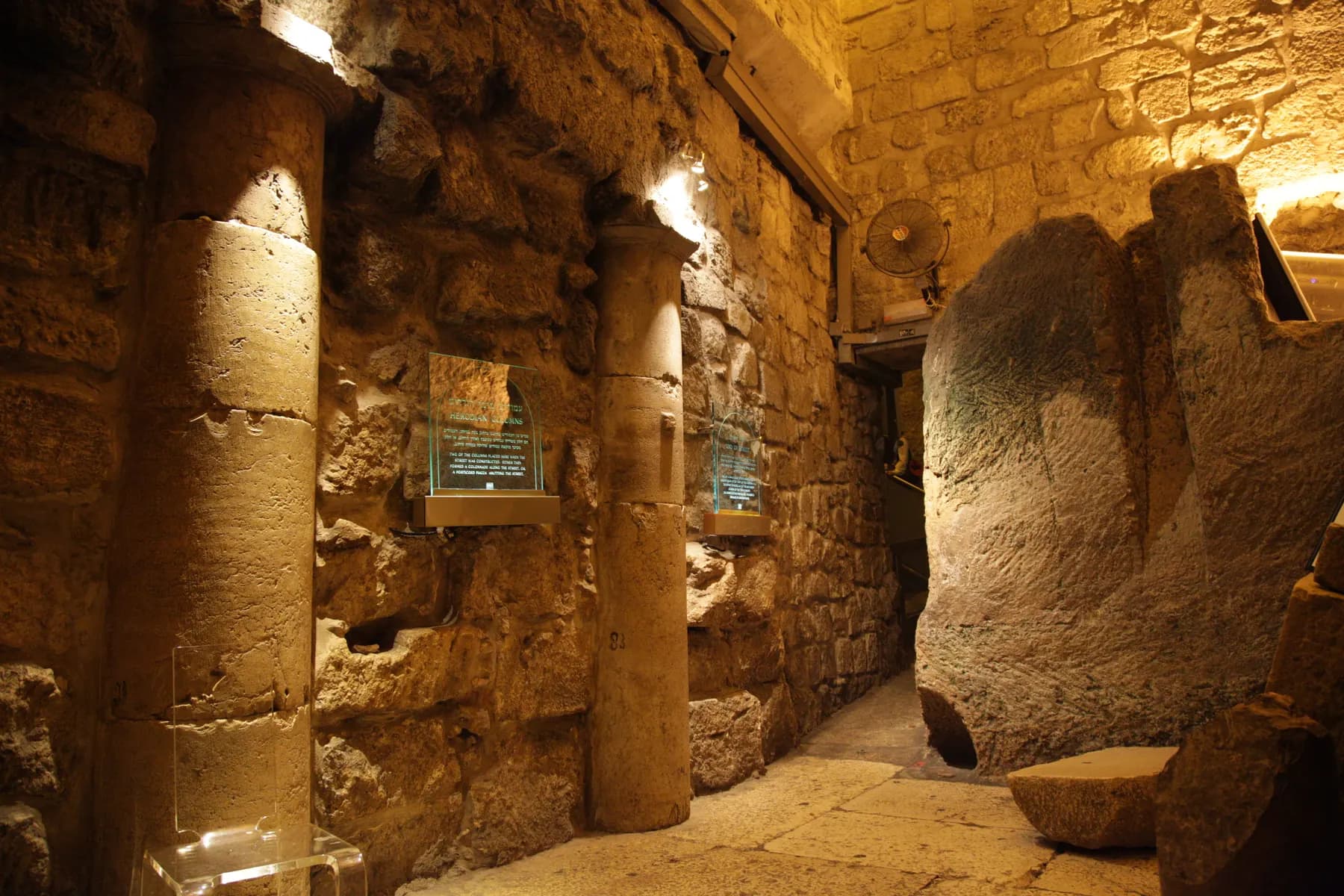
Western Wall Tunnels
A guided walk along the buried continuation of the Western Wall, past a single limestone block about 13.6 metres long that is among the largest building stones ever set in place by hand.
- Time:
- about 70 minutes underground on the Foundation's own figure, and closer to an hour and a half door to door once the security check at the plaza and the wait for the guide are counted
- Entry:
- ₪38, with a local guide
4.7 on Google, 619 ratings
5 sites
Churches, synagogues and holy places
שלמה רודד / CC BY 2.5 · Wikimedia Commons
Religious site
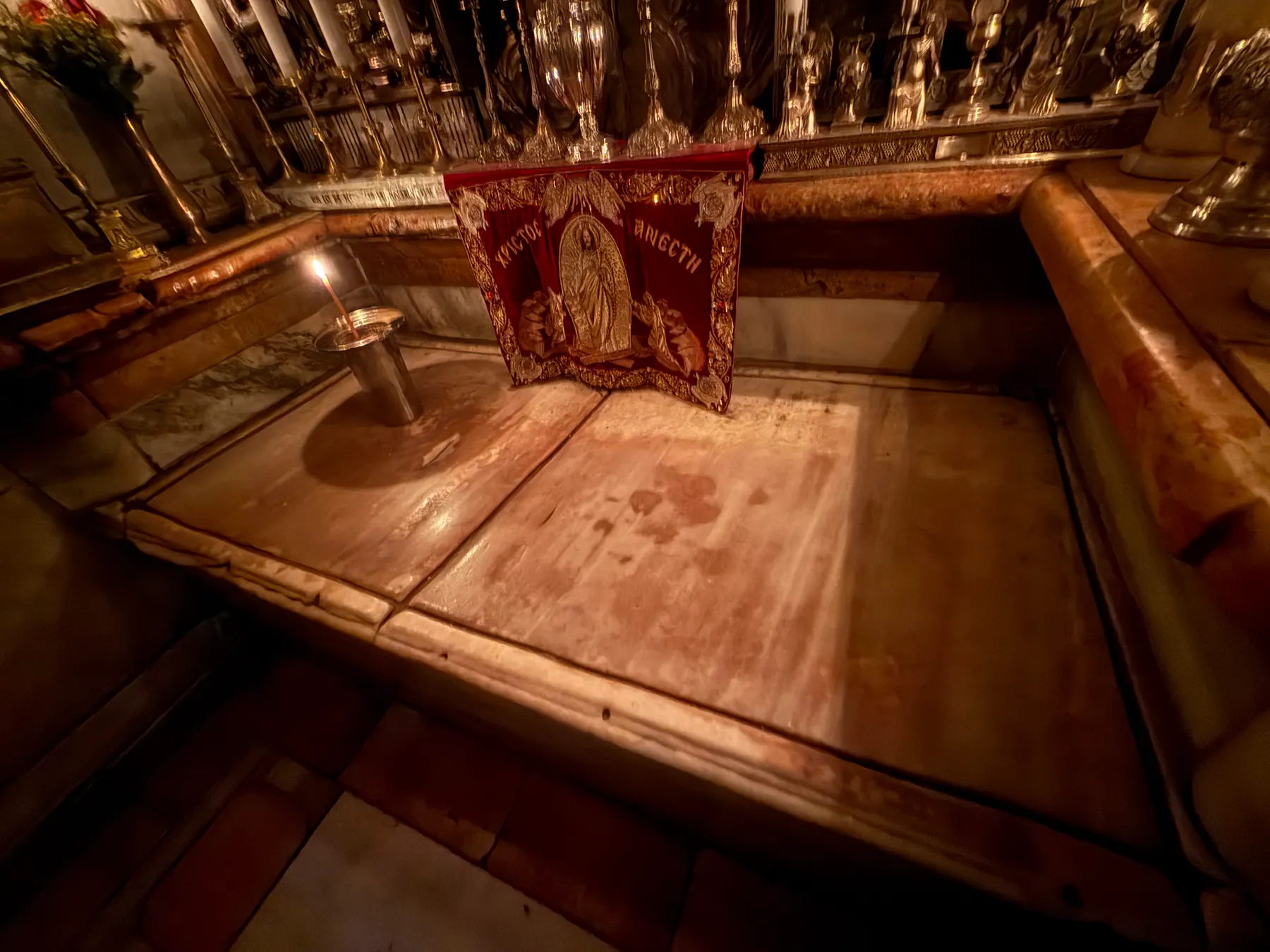
Church of the Holy Sepulchre
Six Christian communities share one building over Golgotha and the tomb, the doors are opened by two Muslim families, and nobody has been charged to walk in since 1831.
- Time:
- about 60 to 90 minutes for Calvary, the Stone of Unction, the Rotunda and the two lower chapels, plus however long the queue for the tomb is running
- Entry:
- Free. No ticket, no reservation and no timed entry
4.7 on Google, 25,076 ratings
Abruth / CC BY-SA 3.0 · Wikimedia Commons
Religious site
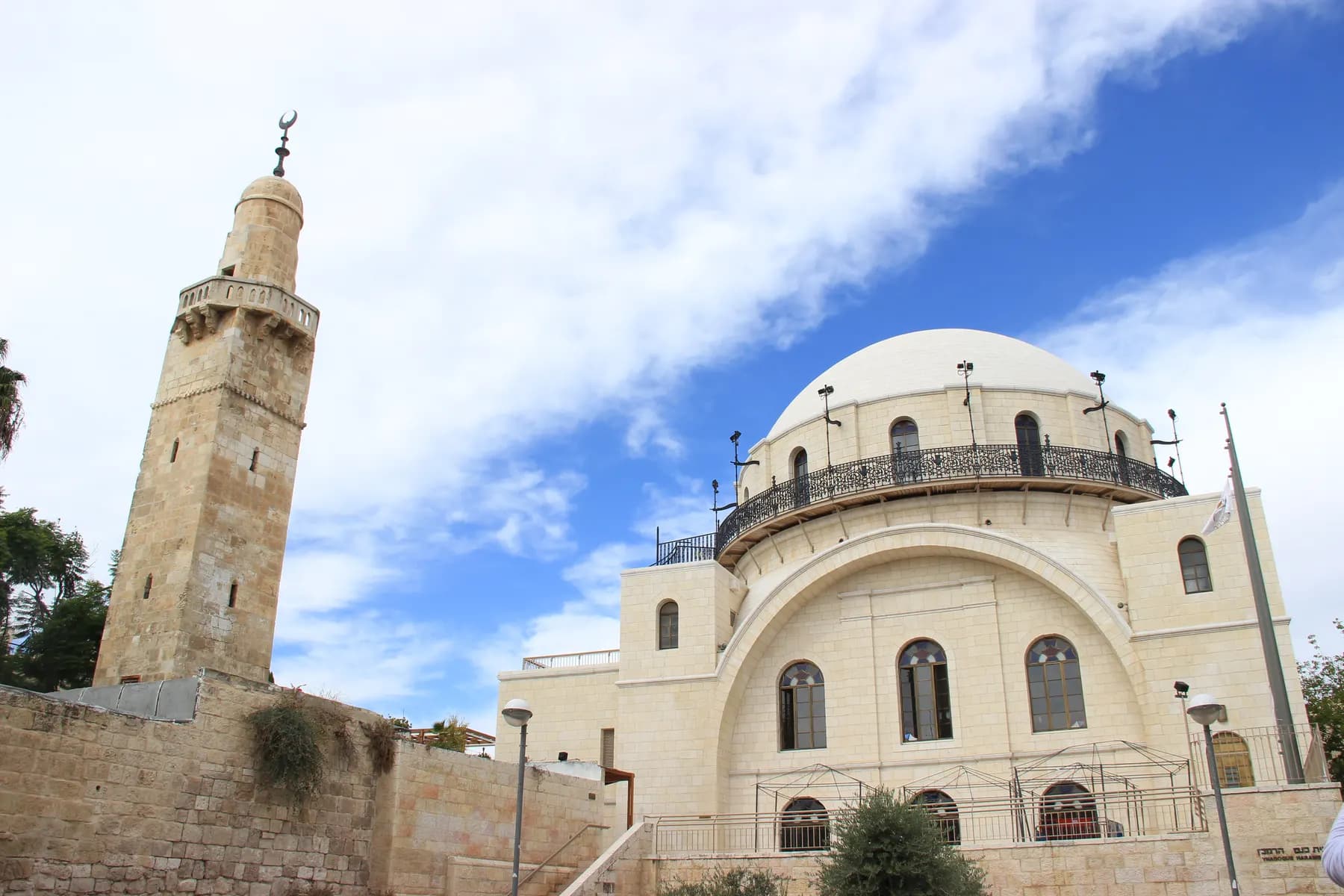
Hurva Synagogue
The Jewish Quarter's landmark synagogue was blown up by the Jordanian Arab Legion on 27 May 1948 and rebuilt to its nineteenth-century design, reopening on 15 March 2010 with a walkway round the base of its dome.
- Time:
- about 40 minutes
- Entry:
- ₪24
arikb / CC BY-SA 3.0 · Wikimedia Commons
Religious site
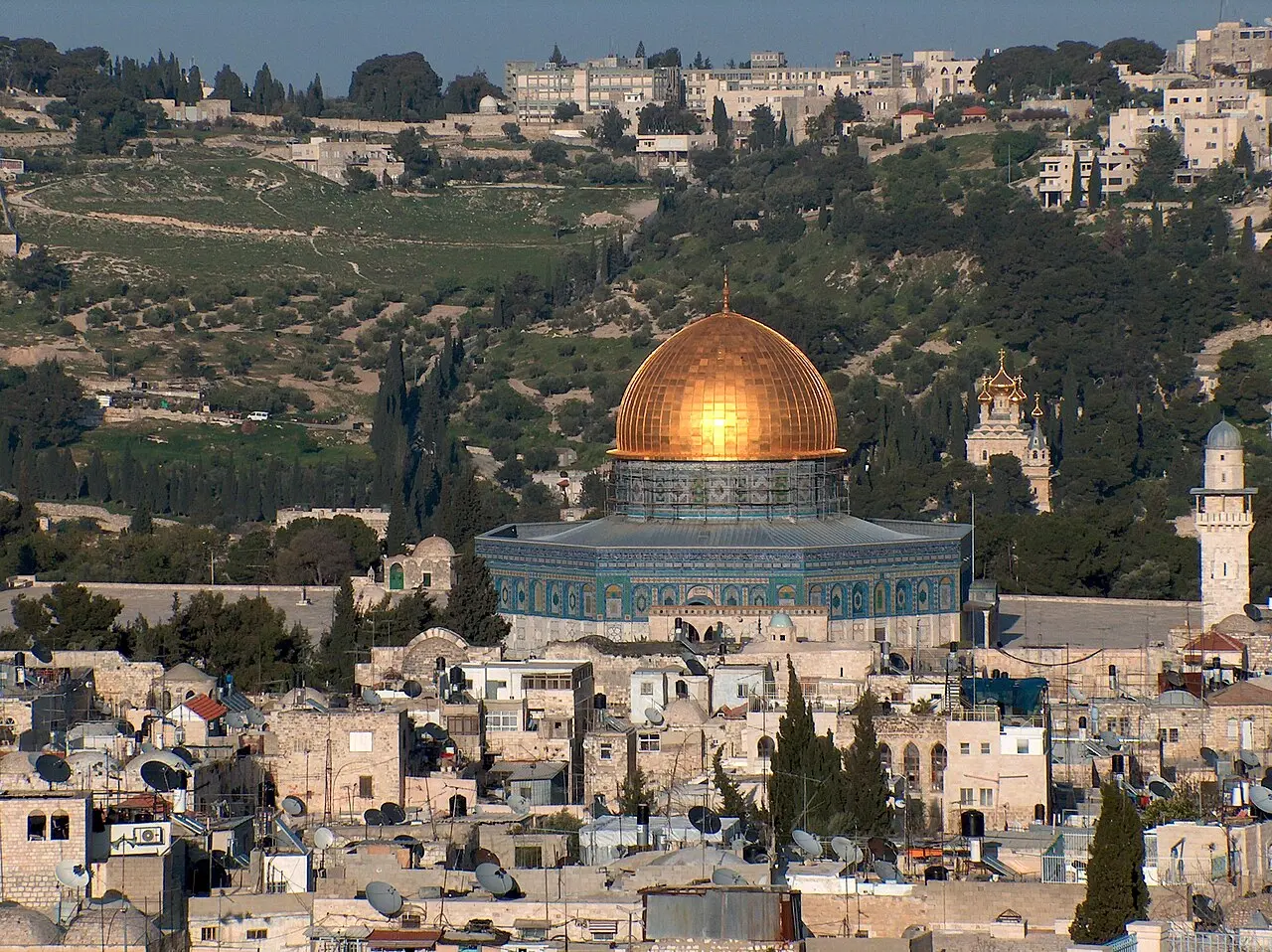
The Temple Mount and Haram al-Sharif
Everything standing on the esplanade is later than the esplanade itself, which Herod's engineers made from about 19 BCE by wrapping a hilltop in four retaining walls and filling in behind them.
- Time:
- about 60 minutes on the esplanade, plus a queue at the ramp that can be as long again
- Entry:
- Free entry, no ticket sold
רחל וייסלר / CC BY 2.5 · Wikimedia Commons
Religious site
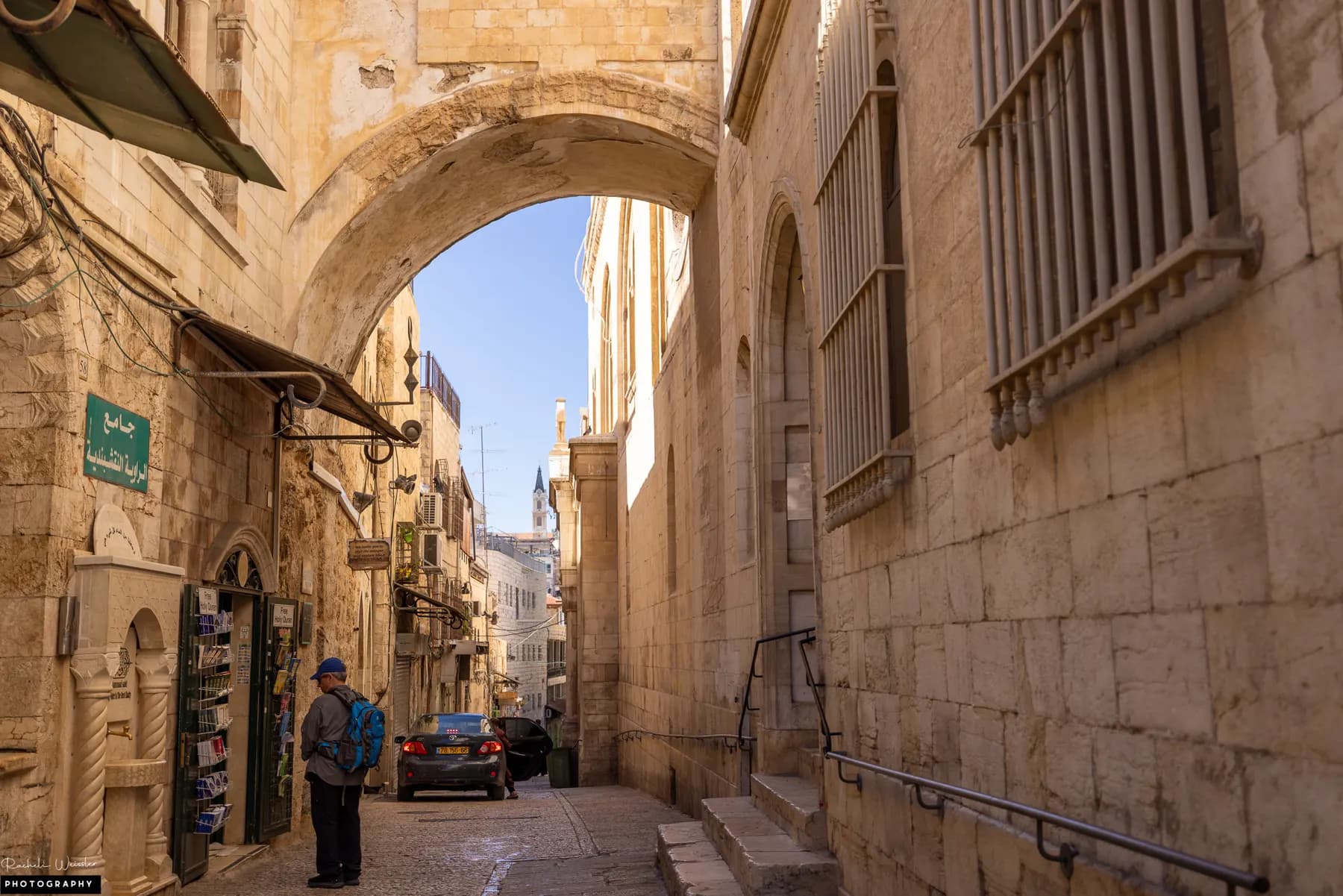
Via Dolorosa
Fourteen stations over roughly half a kilometre of working market lanes, of which nine are in the street and the last five are inside the Church of the Holy Sepulchre.
- Time:
- about 90 minutes at a walking pace with short stops, or half a day if the chapels, the Lithostrotos, the Terra Sancta Museum and a proper look at the Holy Sepulchre are included
- Entry:
- Free
patano / CC BY-SA 3.0 · Wikimedia Commons
Religious site
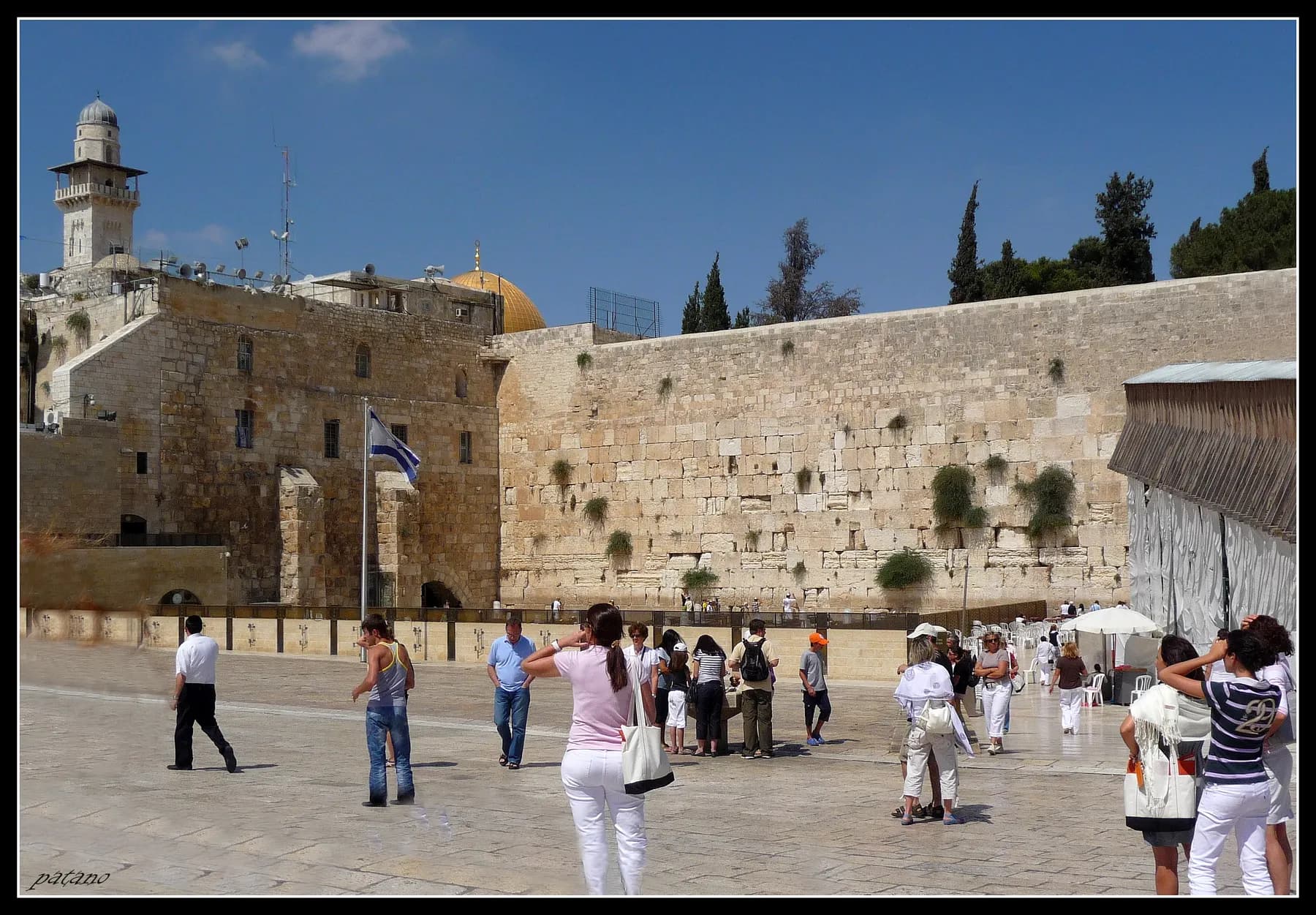
The Western Wall
The prayer plaza shows about 50 metres of a retaining wall that runs 488 metres in total, and it is open free of charge at every hour of every day of the year.
- Time:
- about 45 minutes for the plaza, the prayer area and the hall under Wilson's Arch, and about two and a half hours if the Tunnels tour is added
- Entry:
- Free. No ticket and no reservation, at any hour
4.8 on Google, 11,689 ratings
1 site
Museums and collections
זאב שטיין / CC BY 2.5 · Wikimedia Commons
Museum
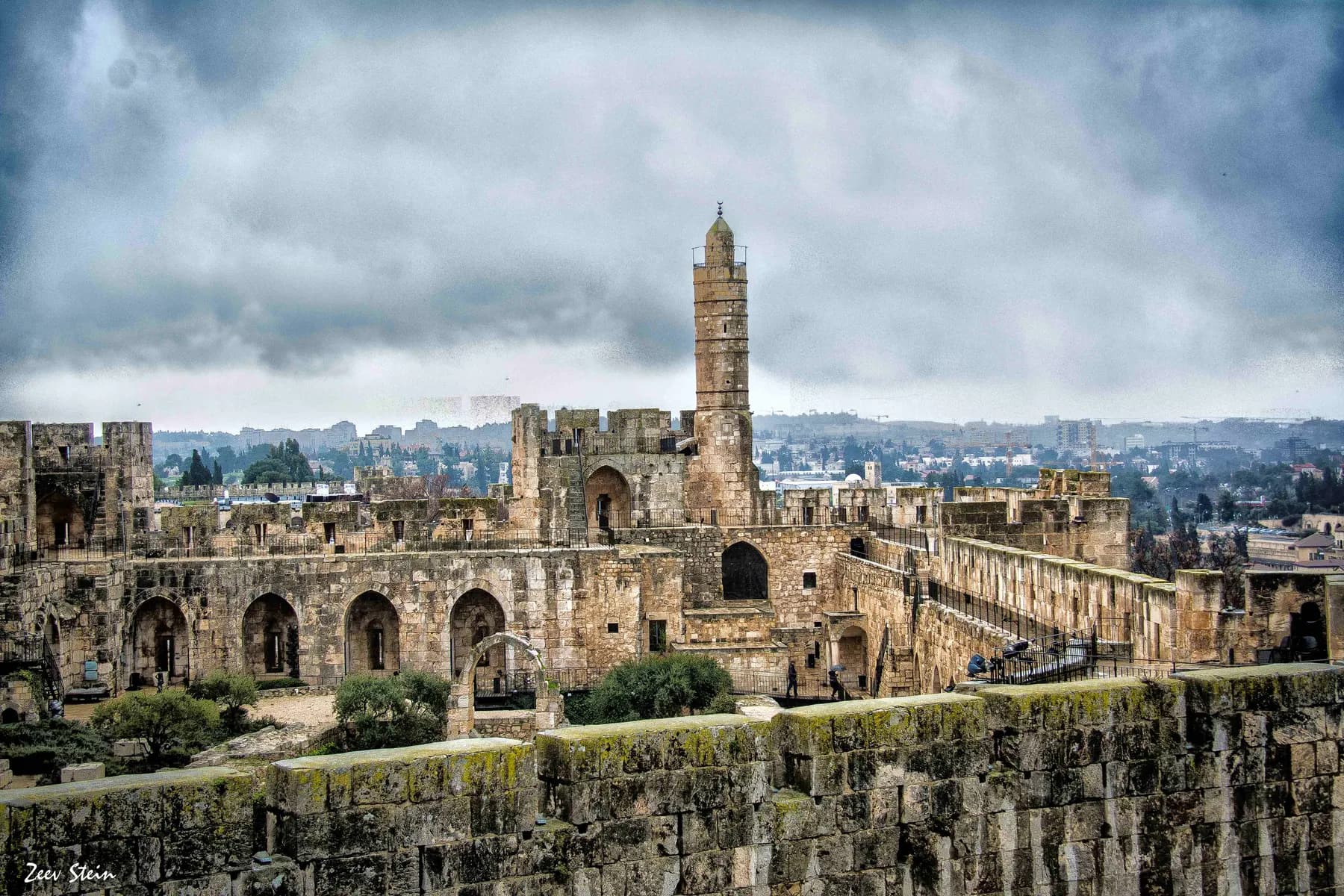
Tower of David Museum
The citadel beside Jaffa Gate is Mamluk and Ottoman work standing on the stump of a Herodian tower, and its museum reopened on 1 June 2023 with a new display of ten galleries.
- Time:
- about 90 minutes, and longer with the Kishle and the tower climb; the city's tourism listing suggests one to one and a half hours
- Entry:
- ₪55, or ₪50 at the advance price
4.6 on Google, 8,461 ratings
1 site
Markets
שלמה רודד / CC BY 2.5 · Wikimedia Commons
Market
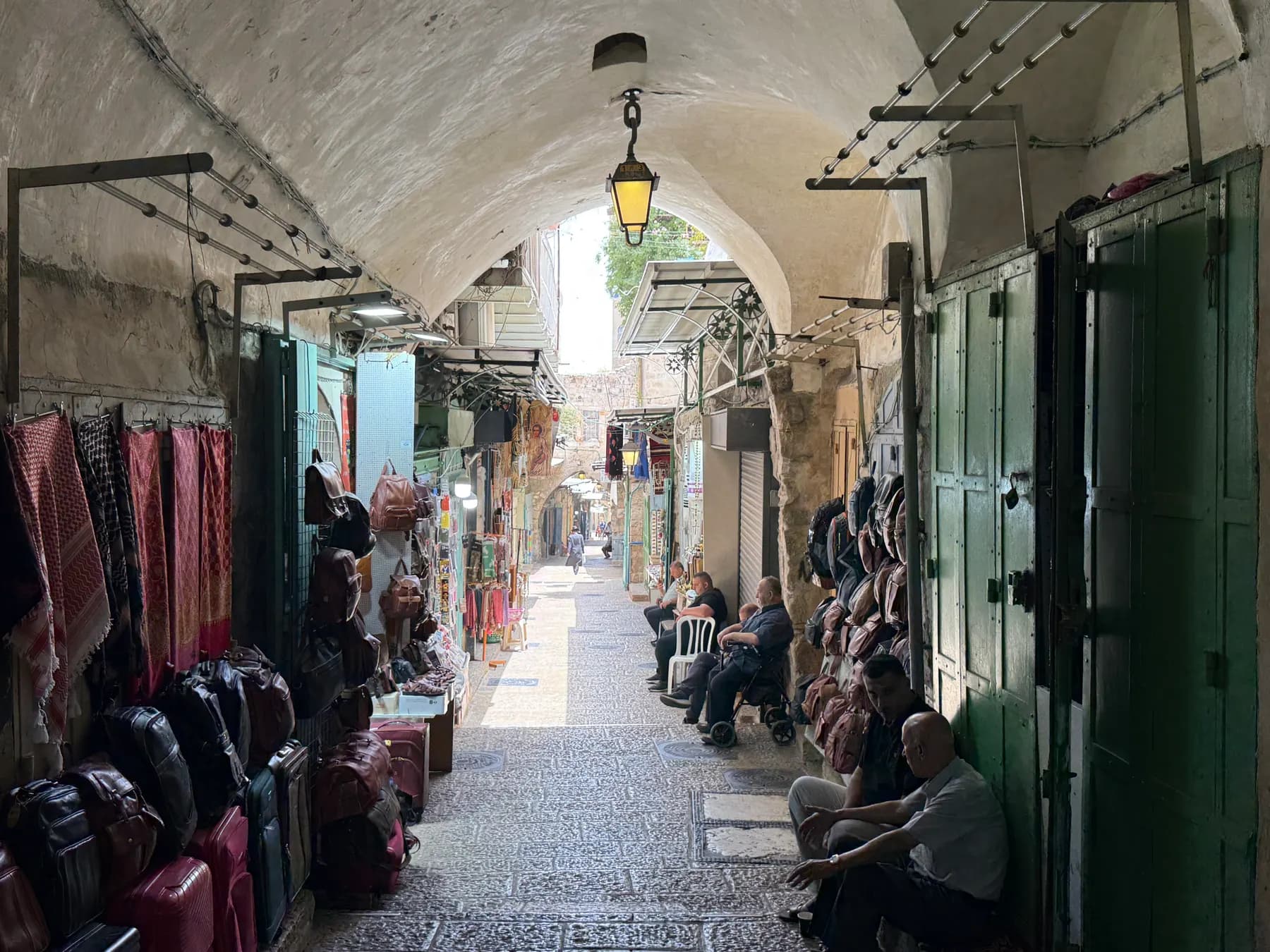
The Arab Souk and the Old City markets
The three parallel covered lanes at the centre of the souk were built as one market in 1152 by Melisende, Queen of Jerusalem, who hired Muslim labourers from Magna Mahomeria, the village now called al-Bireh, to build it.
- Time:
- about 90 minutes
- Entry:
- Free. These are public streets inside the Old City walls, with no gate, no ticket and no operator selling one.
1 site
Things to do rather than see
Unknown author / CC BY 2.5 · Wikimedia Commons
Activity
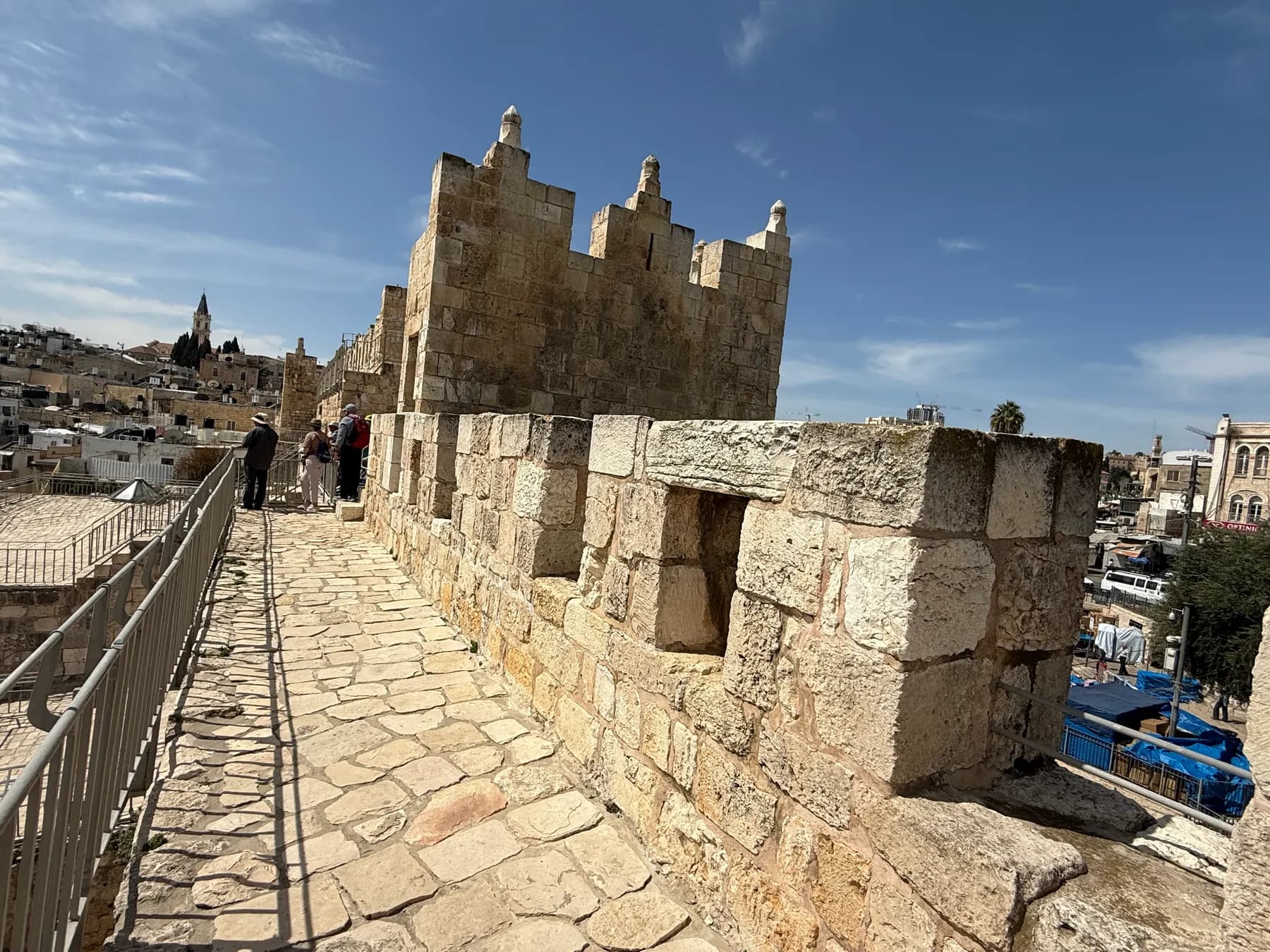
The Ramparts Walk
A ticketed footpath along the Ottoman patrol path on top of the Old City wall, walked in two sections that both start at Jaffa Gate and never meet, because the eastern stretch along the Temple Mount is closed to walkers.
- Time:
- about an hour for each section, or about two hours for both
- Entry:
- ₪25, including the Roman Square at Damascus Gate
4.4 on Google, 130 ratings
Planning the rest of it
Seeing the sites is one part of a day here. These cover the others.
Sources and further reading
Every link below was opened and checked when this page was written. Official statements are marked as such: they are the subject's own account, not an independent one.
- OfficialiTravelJerusalem, Jerusalem Development Authorityitraveljerusalem.comThe Old City Three Markets: Butchers' Market, Perfume Market, Goldsmiths' Market
Jerusalem's own tourism site on the three roofed parallel lanes, what each sells now, and the observation that their combined width matches the Roman and Byzantine Cardo.
- OfficialiTravelJerusalem, Jerusalem Development Authorityitraveljerusalem.comSuq Khan A-Zeit (Beit Habad Street)
The Damascus Gate to Jewish Quarter run, the Friday produce trade, and the Cardo beneath it.
- OfficialEnjoy Jerusalemenjoyjerusalem.orgSuq al-Qattanin (Cotton Market)
The 1336–37 date, Tankiz, the 95 metres, the 60 shops over two levels, the two baths, and what the shops sell today.
- OfficialEnjoy Jerusalemenjoyjerusalem.orgMarkets and Bazaars
The named suqs one by one, including the finding that only the southern part of Suq al-Khawajat is now open and that it sells carpets and textiles.
- OfficialAccess Israelaisrael.orgThe Old City of Jerusalem: accessible tourism
The 4 kilometres of adapted street, the 2 kilometres of handrails, the Accessible JLM app in eight languages and the free printed map at the Jaffa Gate information centre.
- OfficialCustody of the Holy Landcustodia.orgBasilica of the Holy Sepulchre
The published opening and closing times including the feast-day exceptions, the statement that winter time is used inside the church all year, the daily procession at 17:00 and 16:00, the confession hours, the history from the quarry to the 1959 agreement, the 1831 abolition of the door fee, the simple and solemn opening rituals, the 29-metre bell tower, the rock of Golgotha at about 5 metres, the Chapel of the Angel at roughly 3.5 by 4 metres and the 43 lamps over the burial bed
- OfficialChristian Information Centre, Custody of the Holy Landcicts.orgOpening Hours of Holy Places and Tourist Sites in Jerusalem
The list updated 7 August 2026: summer 5:00 to 20:45 with October closing at 20:00, winter 4:00 to 19:00 with March closing at 19:30, the 8:00 opening on Christmas Day and 2 February, the procession times, and the entrance fees printed against neighbouring churches (₪5 at St Alexander Nevsky, ₪7.50 at the Redeemer tower) with none against the Holy Sepulchre
- OfficialCustody of the Holy Land / Sapienza University of Romecustodia.orgReport on the archaeological excavation work in the Basilica of the Holy Sepulchre
Francesca Romana Stasolla's report of 14 June 2023: excavation continuous from May 2022, day and night, tied to the floor restoration by the Venaria Reale foundation of Turin, the areas dug so far, and the two fragmentary bricks stamped by the Legio X Fretensis
- OfficialCustody of the Holy Land / Sapienza University of Romecustodia.orgHoly Sepulchre: Statement on the work in progress
The January 2023 statement: the quarry face in the southern Rotunda falling from north-west to south-east and ranging from a few centimetres to over two metres deep, the Hadrianic-period Roman foundations resting directly on it, the lifting of the concrete slab over Coüasnon's 1974 trench, and the circular reused-marble pavement found beneath the present Edicule
- OfficialCustody of the Holy Land / Sapienza University of Romecustodia.orgThe Holy Sepulchre, news on the area of the Rotunda and the Hadrian structure
The progress report of 7 November 2024: the site as a worked quarry with dry-stone walls for small cultivation plots, the Hadrianic cult area smaller than Corbo proposed and hard to identify as the Capitolium, and the reconstruction of the first shrine as a round sanctuary with a three-step antechamber ringed by twelve columns
- OfficialCustody of the Holy Land / Sapienza University of Romecustodia.orgCommuniqué after the visit to the archaeological site of the Holy Sepulchre
The August 2024 statement: excavation resumed on 4 December 2023, the Stone of Unction lifted and restored by Daniela Russo of the Venaria Reale foundation and its medieval position established nearby, the Roman wall cutting the Calvary rock, and the southern section of the Constantinian Martyrium apse
- ReportingShomrimshomrim.newsNo tourists, no income: the collapse of livelihoods in Jerusalem's Old City
April 2026 investigation: Jerusalem's 4.4 million visitors in 2019 against 330,000 in 2024, the competing shop counts of 2,075, about 1,400 and 1,896, the 2,600 to 3,700 workers, and Hijazi Rashq on closure rates.
- ReportingJerusalem Storyjerusalemstory.comJerusalem's Old City economy is in shambles
October 2025: 80 per cent of Old City businesses ceased operating, and the 5,920 economic establishments of East Jerusalem with about 40 per cent of them in tourism.
- ReportingTime Out Israeltimeout.comOld City Market (Arab Souq)
The only published hours found for the market as a whole: daily 08:30 to 19:00, with some shops closed for Friday prayers.
- ReportingNational Geographic (Kristin Romey)nationalgeographic.comExclusive: Age of Jesus Christ's purported tomb revealed
Mortar sampled between the tomb's original limestone surface and the marble slab covering it dated to around 345 CE, against a historical account of the tomb being enshrined around 326, and the caution that archaeology cannot identify the individual buried there
- ReportingThe Guardian (Harriet Sherwood)theguardian.comJesus's tomb unveiled after $4m restoration
The nine-month restoration by about 50 experts from the National Technical University of Athens, the World Monuments Fund's oversight and Bonnie Burnham's warning of a possible collapse, the night working, the marble slab lifted in October 2016 and the window cut for pilgrims
- ReferenceDiscover Islamic Art, Museum With No Frontiersislamicart.museumwnf.orgSuq al-Qattanin (Market of the Cotton Merchants)
The barrel vault in 30 skylit bays, the muqarnas and ablaq of Bab al-Qattanin, and the judgement that the market has not fundamentally changed since it was built.
- ReferenceWikipediaen.wikipedia.orgButchers' market (Jerusalem)
Carries the measurements and shop counts from Norman Dlin's 1987 GeoJournal study, Benvenisti on the Street of Herbs and on the 1970 condition, Hanauer 1891, the 1860 coppersmiths, the 2016 Al Jazeera closure figure and the 2023 Kuwaiti-funded renovation.
- ReferenceWikipediaen.wikipedia.orgPerfumers' Market
Carries Magness and Boas on the 1152 Triple Market and the Malquisinat, the Templar and Teutonic marks, the SCA ANNA inscriptions, Saladin's 1188 waqf, Amnon Cohen on the 1565 rebuilding and the 1582 and 1587 records, and Tobler's 67 medicinal substances.
- ReferenceWikipediaen.wikipedia.orgSuq Khan az-Zait
The Roman origin, the roughly 400 metre length, the 108 active retail establishments counted in 2019, the Mamluk olive khan and press, and the seventh Station of the Cross.
- ReferenceWikipediaen.wikipedia.orgChain Gate street (Tariq Bab al-Silsila)
Carries Nazmi Jubeh's Jerusalem Quarterly portrait of the suq: the 308 metres, the 110 shops, Khan al-Sultan's 1386–87 renovation and Suleiman's 1537 sabil.
- ReferenceWikipediaen.wikipedia.orgMuristan
Suq Aftimos built by the Greek Orthodox Patriarchate in 1903 on ground assigned to it in 1868, its present leather trade and the fountain at its centre.
- ReferenceWikipediaen.wikipedia.orgChurch of the Holy Sepulchre
The 1149 completion under Queen Melisende, the 1809 to 1810 rebuilding by Nikolaos Komnenos of Mytilene after the 1808 fire, the iron girders fitted in 1947 and removed in 2016 to 2017, the six denominations and which three hold the major shares, the Stone of Unction added in 1810 and attested only from 1288, the catholicon dome at 19.8 metres and the 1970 to 1978 confirmation that the site was a meleke quarry
- ReferenceWikipediaen.wikipedia.orgImmovable Ladder
The ladder in place since at least the 1720s, the Custody's dating of Elzéar Horn's engraving to 1728, the Armenian claim through their right of access to the cornice, and Amos Elon's 1995 argument that it is Greek Orthodox property
Things to do in The Old City of Jerusalem: common questions
How many days do you need in The Old City of Jerusalem?+
There are 11 sites here with a page of their own, and giving each the time its own page suggests comes to more than one day. Most visitors pick three or four and treat the rest as a return trip. The per-site pages each carry a "how long to give it" figure, which is the number to add up.
What does it cost to see The Old City of Jerusalem?+
11 of the 11 sites listed here charge admission and 0 do not. Every ticketed one has its published price on its own page, with the operator's page linked beside it. Israel's national parks also sell a multi-site pass, which pays for itself at roughly the third park.
Are these sites open on Shabbat and holidays?+
Most national parks and museums keep shortened Friday hours and either close on Saturday or open late. Each page carries the hours as the operator publishes them, and the operator's own page is linked, which is the only version that will be current on the day you go.
Where do the opening hours and prices on these pages come from?+
From the operator: the Israel Nature and Parks Authority, the museum, the municipality or the site's own management, whichever publishes them. Each figure links the page it was taken from. Ratings and review counts, where a page shows them, come from a dated snapshot of Google Maps and are labelled as such rather than presented as current.
Which one is worth it if you only see one thing in The Old City of Jerusalem?+
The Arab Souk and the Old City markets is the one this guide would keep. The three parallel covered lanes at the centre of the souk were built as one market in 1152 by Melisende, Queen of Jerusalem, who hired Muslim labourers from Magna Mahomeria, the village now called al-Bireh, to build it.
Is there anything worth seeing that is not on this list?+
Plenty, and that is deliberate. A site earns a page here when a visitor could reasonably spend half an hour there, when there is enough documented substance to write a real page about it, and when the operator publishes something a visitor can plan against. Things that fail those tests are covered on the The Old City of Jerusalem overview instead of padded out into pages of their own.