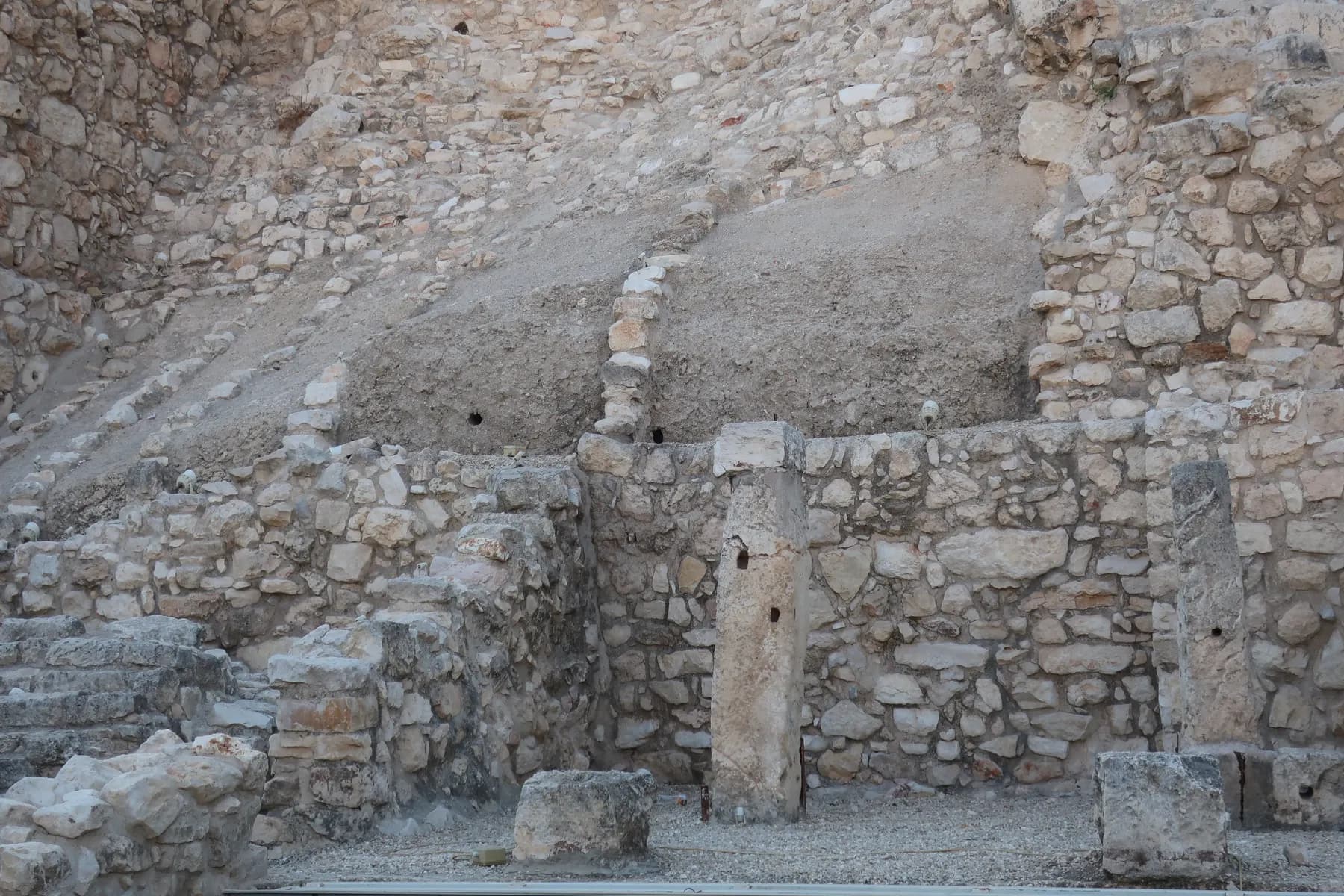
Archaeological site · The Old City of Jerusalem
City of David
The ridge where Jerusalem began, outside the Ottoman walls and below Dung Gate, with a water tunnel 533 metres long that visitors still wade in water up to 70 centimetres deep.
Davidbena / CC BY-SA 4.0 · Wikimedia Commons
Adult admission
₪31
child ₪16, student ₪26, Israeli senior ₪16, in the Nature and Parks Authority's 2026 fee table
Hezekiah's Tunnel
533 m
320 m as the crow flies, per the Israel Nature and Parks Authority
Pilgrimage Road
about 600 m
opened to the public on 20 January 2026 after roughly two decades of excavation
Radiocarbon dates published
103
from five excavation areas on this ridge, in PNAS, April 2024
In short
- How long to give it
- about 90 minutes for the self-guided route, about three hours guided, plus two hours if the Pilgrimage Road is added
- Sunday to Thursday
- 08:00 to 17:00
- Adult
- ₪31
עיר דוד
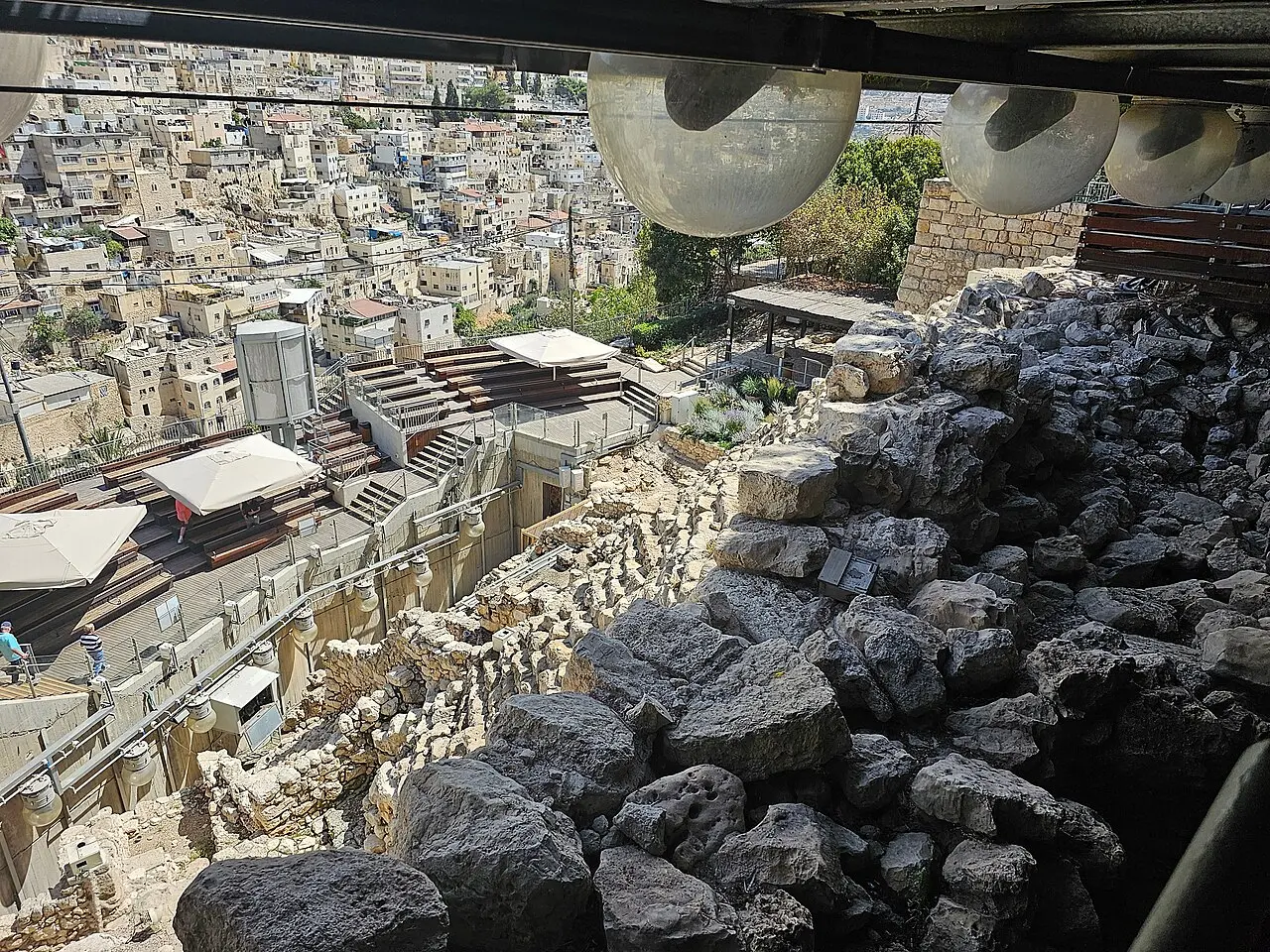
The City of David is the narrow rock spur south of the Old City walls where Jerusalem actually began, and almost none of it is inside the walls a visitor has just been walking around. The entrance is a two-minute walk from Dung Gate, and the site drops away downhill from there into the Kidron Valley through the Palestinian neighbourhood of Silwan. The reason the city started here rather than on the more defensible ground above is the Gihon Spring, which the Israel Nature and Parks Authority describes as one of the largest and most abundant springs of the central mountain ridge, and which is still running at the bottom of the slope.
Physically, the visit is a descent and then a climb back. From the visitor centre a path leads down past excavation areas to the underground water systems, into either Hezekiah's Tunnel with water in it or the dry Canaanite channel beside it, and out at the Pool of Siloam at the bottom of the hill. From there the return is on foot, by a paid shuttle, or, on a separate ticket, uphill along the Pilgrimage Road, the Second Temple period stepped street that opened to the general public on 20 January 2026.
It is also the most politically loaded archaeological park in Israel, and that is not a detail a visitor can leave at the gate. The park is state land under the Nature and Parks Authority, but it is run by Elad, a settler organisation founded in 1986 whose declared aim is to renew Jewish presence in Silwan, and the excavation of the Pilgrimage Road was tunnelled beneath houses whose residents objected. A UN commission of inquiry criticised the site in 2024 for presenting only its Jewish history. The archaeology is real and unusually well dated. The framing around it is contested, and this page keeps the two apart.
Orientation
A spring, a spur and about eighty metres of vertical drop
Ancient Jerusalem was small. The whole Iron Age city sat on this one ridge between the Kidron Valley on the east and the Tyropoeon on the west, and the Temple Mount platform that dominates every photograph of the Old City is a later extension north of it. The practical consequence for a visitor is that the site is steep. Everything of interest is below the ticket desk, and the way out at the bottom, at the Pool of Siloam, is a long way down.
The Nature and Parks Authority lists the main points of interest as the Gihon Spring and its fortifications, Warren's Shaft, Hezekiah's Tunnel, the Pool of Siloam, the central drainage channel of the late Second Temple period, Area G on the eastern slope, and sections of city wall from both the Canaanite period and the Kingdom of Judah. Area G is where Kathleen Kenyon dug in the 1960s and Yigal Shiloh from 1978 to 1985, and where the building known as the House of Ahiel was found, named after a potsherd carrying that name.
The operator sells the ground floor of all this as a self-guided visit of about an hour and a half. That covers the lookout, the Mazar excavations, the underground water system, one of the two tunnels and the Pool of Siloam. The guided version runs three hours. Neither includes the Jerusalem Archaeological Park at the Davidson Center, which is a separate ticket unless it is bought as part of the Pilgrimage Road route.
- Visitor centre and lookout, at the top by Dung Gate
- Area G and the Mazar excavations, on the eastern slope
- The Gihon Spring, Warren's Shaft and the Canaanite pool
- Hezekiah's Tunnel (wet) or the Canaanite channel (dry)
- The Pool of Siloam, at the bottom, and the shuttle or the climb back
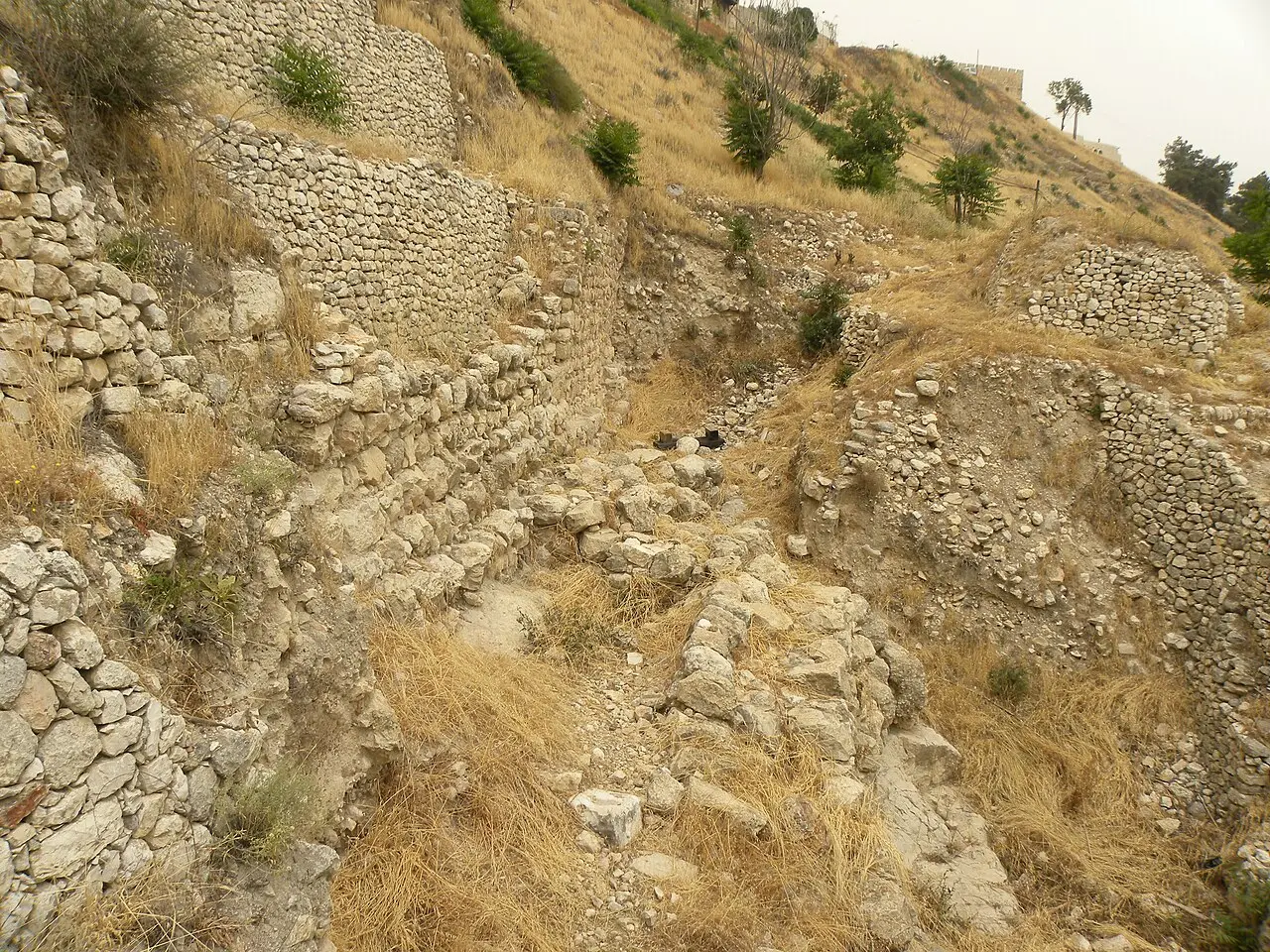
Ian Scott / CC BY-SA 2.0 · Wikimedia Commons
The water
A tunnel cut from both ends, and an argument about who cut it
Hezekiah's Tunnel is the reason most people buy a ticket. The Nature and Parks Authority gives it as 533 metres long against a straight-line distance of 320 metres, cut to carry the Gihon Spring's water from the Kidron Valley outside the city walls to the Pool of Siloam inside them. It is the engineering that impresses rather than the scale: two teams cut towards each other from opposite ends, through solid rock, and met.
That much is not inference. An inscription found in the tunnel in 1880 by Jacob Eliyahu, a teenage student of the German missionary and architect Conrad Schick, records the moment the two crews broke through, describing the stone-cutters striking towards each other axe against axe. The stone was chiselled out of the tunnel wall in July 1890 and broke into several pieces in the process. It has been in the Istanbul Archaeology Museum ever since, and Turkey has refused Israeli requests for its return. What is on the wall today is not it.
The date is genuinely open. The traditional attribution rests on 2 Kings 20:20 and 2 Chronicles 32:30, which credit Hezekiah with bringing the Gihon's water into the city, and radiometric work by Amos Frumkin, Aryeh Shimron and Jeff Rosenbaum, published in Nature in September 2003, supported a date around 700 BCE using radiocarbon from plaster and uranium-thorium dating of speleothems. Ronny Reich and Eli Shukron argued in Tel Aviv in 2011 for a date several decades earlier, in the late ninth or early eighth century BCE. Both readings are live in the literature.
Warren's Shaft, higher up the same system, has had its interpretation overturned outright. It was found by Charles Warren in 1867 and long explained as the way besieged Canaanites reached the spring in safety. The Nature and Parks Authority now states that since the 1995 excavations the accepted view is that the shaft was cut only in the period of the Kingdom of Judah, and that the Canaanites drew their water instead from a large rock-cut pool inside the fortifications. The Authority gives the shaft's height as 30 metres; the English Wikipedia entry describes the vertical shaft itself as about 13 metres, which suggests the two are measuring different things.
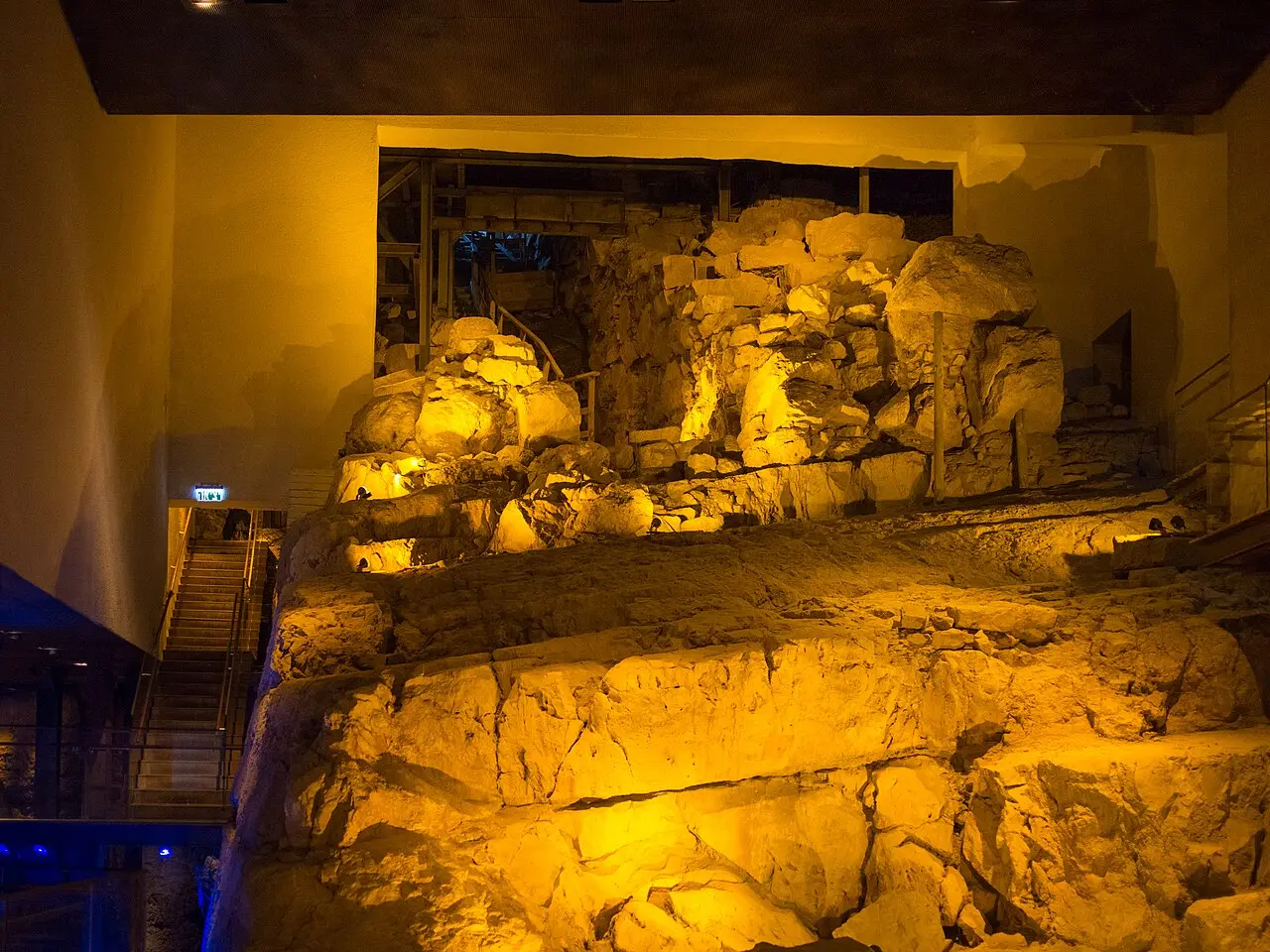
Rhododendrites / CC BY-SA 4.0 · Wikimedia Commons
First Temple
What the radiocarbon says, and what it does not settle
Dating Iron Age Jerusalem is unusually hard: the ridge is dense, still inhabited, and the radiocarbon calibration curve flattens across part of the relevant centuries. In April 2024 a team led by Johanna Regev and Elisabetta Boaretto, with Yuval Gadot and Joe Uziel among the authors, published 103 radiocarbon dates from five excavation areas on this ridge in the Proceedings of the National Academy of Sciences, backed by 100 single-ring measurements between 624 and 572 BCE.
Their results give settlement here in the twelfth to tenth centuries BCE, and show that the city had already begun expanding westwards in the ninth century, earlier than had been assumed, with extensive building across the ridge in that period and a monumental structure they label Building 100 dated to roughly 900 to 850 BCE. They place the mid-eighth century earthquake at 766 to 750 BCE, and find the city rebuilt, heavily fortified and flourishing after it, until the Babylonian destruction of 586 BCE.
None of that resolves the site's loudest argument. The Stepped Stone Structure, the tall curved retaining mass on the eastern slope first dug by R. A. S. Macalister in the 1920s and re-excavated by Kenyon and Shiloh, has been dated to the start of Iron Age II by Kenyon, to the twelfth century BCE by Jodi Magness, and, in its upper part, to the Hasmonean period by Israel Finkelstein and colleagues. Eilat Mazar's Large Stone Structure above it, which she announced in 2005 and read as a tenth-century royal palace, drew a direct rebuttal from Finkelstein, Lily Singer-Avitz, Ze'ev Herzog and David Ussishkin in Tel Aviv in 2007, under the title "Has King David's Palace in Jerusalem been Found?".
The fortifications around the Gihon Spring are contested the same way. The Nature and Parks Authority dates the Spring Tower, whose walls are about seven metres thick, to the Canaanite period in the eighteenth century BCE. Radiocarbon samples taken from sediment sealed beneath its foundation stones, published by Regev, Uziel, Szanton and Boaretto in Radiocarbon in 2017, produced dates whose latest fall in the terminal ninth century BCE. Reich replied in Tel Aviv the following year defending the Middle Bronze date. A visitor will hear one of these on the tour.
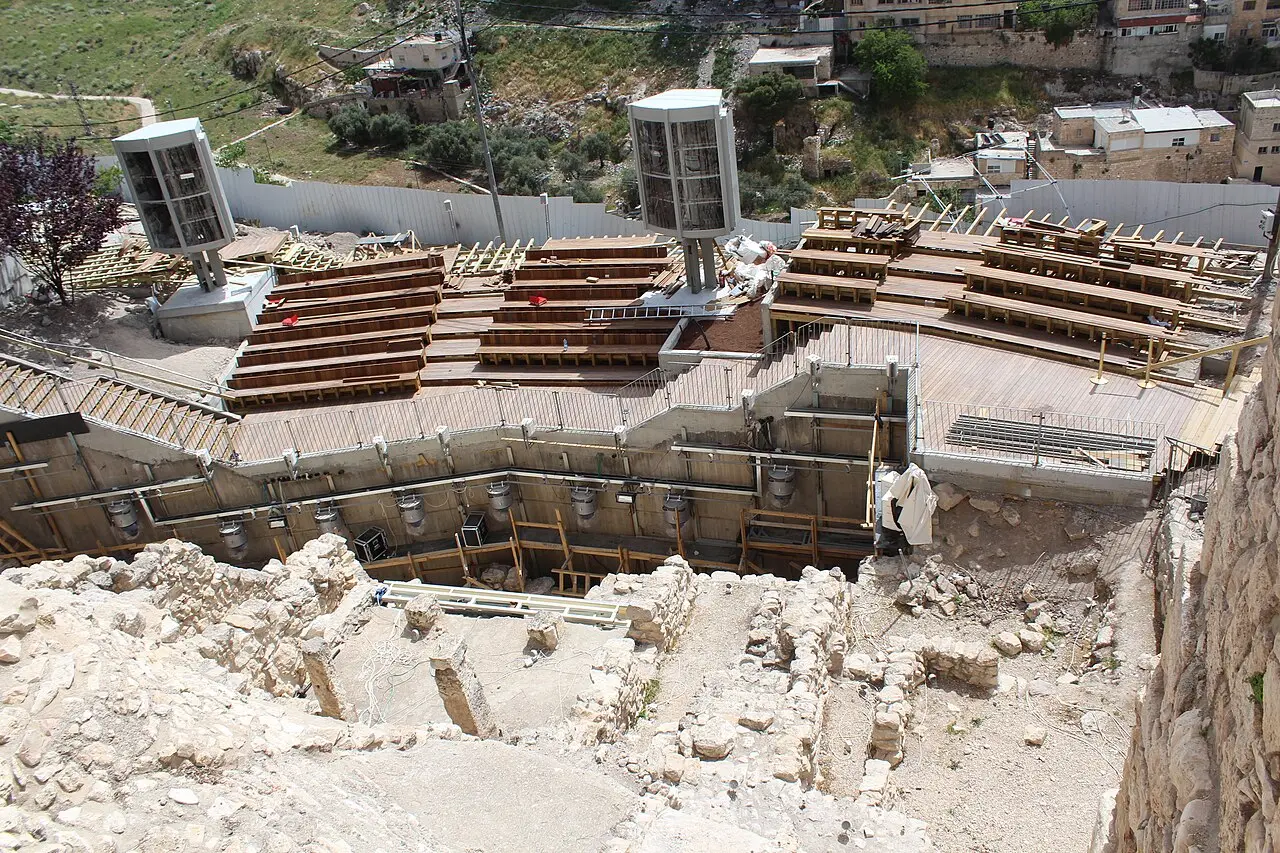
Deror_avi / CC BY-SA 4.0 · Wikimedia Commons
Second Temple
The stepped street that took twenty years to dig and opened in 2026
The Pilgrimage Road is the newest thing here and the reason the site is in the news. It is the monumental stepped street that climbed from the Pool of Siloam towards the Temple Mount in the first century CE, about 600 metres of it now walkable, with an original roadway around eight metres wide. Excavation ran for roughly two decades, directed on the Israel Antiquities Authority side by Amit Re'em, the Authority's chief archaeologist for the Jerusalem district, who called it one of the most magnificent archaeological discoveries in Jerusalem in recent decades.
Its date is tighter than almost anything else on the ridge. Nahshon Szanton, Moran Hagbi, Joe Uziel and Donald Ariel published the coin evidence in Tel Aviv in 2019 under the title "Pontius Pilate in Jerusalem: The Monumental Street from the Siloam Pool to the Temple Mount", placing construction in the years of the Roman prefect rather than of Herod. The paving is well preserved partly because the street went out of use so completely after 70 CE.
How it was dug is the objection. Because the street runs beneath the built-up Palestinian neighbourhood of Silwan, the excavation proceeded as a tunnel, shored as it went, under houses whose residents said the work was damaging their buildings. The archaeologists and the site's operators reject that. Alon Arad of Emek Shaveh, an Israeli organisation of archaeologists critical of the use of archaeology in the conflict, told the Guardian in September 2025 that excavating in tunnels under people's houses without their permission is bad archaeology on its own terms, because a tunnel gives the excavator a very narrow view of what is around it.
The public opening was preceded by two ceremonies. In 2019 the American ambassador David Friedman broke through a wall with a sledgehammer to open a section. On 15 September 2025 Benjamin Netanyahu had the American secretary of state, Marco Rubio, inaugurate the route, which Rubio called perhaps one of the most important archaeological sites on the planet. The road opened to ordinary ticket holders on 20 January 2026. The guided route ends at the Davidson Center, and that admission is included in the ticket.
The operator
A national park managed by the state and run by a settler organisation
The land is a national park, Jerusalem Walls and City of David, and the Israel Nature and Parks Authority publishes its fee table and its opening hours. Day-to-day operation, the tours, the ticketing and much of the excavation funding come from the Ir David Foundation, usually called Elad, founded in 1986 by David Be'eri. Elad describes its purpose as strengthening the Jewish connection to Jerusalem and renewing Jewish presence in the City of David area of Silwan; it also buys property in the neighbourhood, which is why the arrangement is disputed rather than merely unusual.
The arrangement has been through the courts. The state sued Elad in 1997 over damage to archaeological remains, and a proposed 1998 contract was rejected by the Israel Antiquities Authority before a revised agreement was approved in 2002. In 2010 campaigning organisations petitioned Israel's High Court over transfers of authority to Elad that had not been made public, and the court required changes, after which a new three-year contract was signed. Criticism has come from inside the discipline as well: Eilat Mazar, who excavated here, publicly protested in 2011 at what she described as a lack of commitment to scientific archaeological work.
Visitor numbers grew with the operation. Figures compiled for the foundation give 25,000 visitors in 2001, 250,000 in 2006, 350,000 in 2007 and 450,000 in 2011. Leaked FinCEN documents indicated that companies linked to Roman Abramovich donated in the region of 100 million dollars to Elad between 2003 and 2018.
For a visitor this is not an abstraction. The guiding is the operator's, the narrative it presents is the one the UN commission of inquiry criticised in 2024 for focusing only on the site's Jewish history and disregarding other periods and cultures, and the neighbourhood the path runs through is somebody's home. Going is a defensible choice. Going without knowing any of this is not really a visit to the place.
Jprg1966 / CC BY-SA 4.0 · Wikimedia Commons
What to look for
Things not to walk past at City of David
The details that repay knowing about before you are standing in front of them.
Hezekiah's Tunnel
533 metres of hand-cut channel with the spring water still flowing through it, up to 70 centimetres deep at its highest. The tunnel is unlit, so a torch is not optional.
The Gihon Spring and its tower
The perennial spring that put a city on this ridge, wrapped in fortification walls about seven metres thick. Whether they are eighteenth century BCE or as late as the ninth is an open argument between the excavators and the radiocarbon.
Warren's Shaft
Found by Charles Warren in 1867 and explained for a century as the Canaanites' secret route to water. Since the 1995 excavations the Nature and Parks Authority accepts it was cut later, under the Kingdom of Judah.
The Pool of Siloam
The tunnel's outlet, and the bottom of the site. The stepped Second Temple period pool, about 69 metres across, was found by accident during sewer works in 2004 and announced in August 2005; the small pool beside it is a fifth-century Byzantine replacement.
The Pilgrimage Road
The stepped first-century street from the pool up towards the Temple Mount, dated by its coins to the years of Pontius Pilate. Sold as a separate ticket, and the only route here that ends inside the Davidson Center.
Area G and the Stepped Stone Structure
The tall retaining mass on the eastern slope, dug by Macalister, Kenyon and Shiloh in turn, and dated by different scholars anywhere from the twelfth century BCE to the Hasmonean period.
The long view
City of David, in order
18th century BCE
Fortifications built around the Gihon Spring. The Nature and Parks Authority dates the Spring Tower and its associated walls to the Canaanite period. Radiocarbon from sediment sealed under its foundations, published in 2017, produced later dates, and the question is not settled.
12th to 10th centuries BCE
Settlement on the ridge. Evidence for occupation in this window, from the 2024 PNAS radiocarbon programme covering five excavation areas.
c. 900 to 850 BCE
The city expands westwards. Extensive building across the southeastern ridge, including the monumental Building 100, dated by radiocarbon earlier than the westward growth had previously been placed.
766 to 750 BCE
Earthquake damage, then rebuilding. The mid-eighth century earthquake shows across several excavation areas as collapse, after which the city was heavily fortified and continued to flourish.
c. 700 BCE
The Siloam Tunnel is cut. Frumkin, Shimron and Rosenbaum dated the tunnel to around this point in Nature in 2003. Reich and Shukron argued in 2011 for the late ninth or early eighth century instead.
586 BCE
Babylonian destruction. The historically fixed horizon that the 2024 radiocarbon programme used to calibrate the rest of the sequence.
c. 30 CE
The stepped street is built. Coins sealed under the paving date the Pilgrimage Road's construction to the prefecture of Pontius Pilate, published in Tel Aviv in 2019.
5th century CE
The Byzantine pool. A smaller pool built at the tunnel's outlet under the empress Aelia Eudocia, mistaken for the Gospel pool until the larger Second Temple one was found.
1867
Charles Warren descends the shaft. Warren's exploration for the Palestine Exploration Fund gave the shaft its name and opened modern work on the ridge.
1880
The Siloam inscription is found. Discovered in the tunnel by Jacob Eliyahu, a student of Conrad Schick. Cut out of the wall in July 1890, broken in the process, and held in Istanbul ever since.
1961 to 1985
Kenyon, then Shiloh. Kathleen Kenyon excavated for six seasons from 1961 to 1967; Yigal Shiloh worked here from 1978 to 1985, largely in Area G.
1986
Elad is founded. David Be'eri establishes the Ir David Foundation, which from 2002 holds the contract to run the national park.
2004
The Second Temple Pool of Siloam turns up. Exposed during sewer works and excavated by Eli Shukron and Ronny Reich for the Israel Antiquities Authority, announced on 9 August 2005.
2005
Eilat Mazar announces the Large Stone Structure. Read by Mazar as a tenth-century royal palace, and rebutted in Tel Aviv in 2007 by Finkelstein, Singer-Avitz, Herzog and Ussishkin.
15 September 2025
The Pilgrimage Road is inaugurated. Netanyahu had the American secretary of state Marco Rubio open the route, six years after ambassador David Friedman broke through a wall with a sledgehammer to open an earlier section.
20 January 2026
The road opens to the public. About 600 metres of first-century street, walkable on a normal ticket, after roughly twenty years of tunnelled excavation under Silwan.
Practical
Visiting City of David
Where
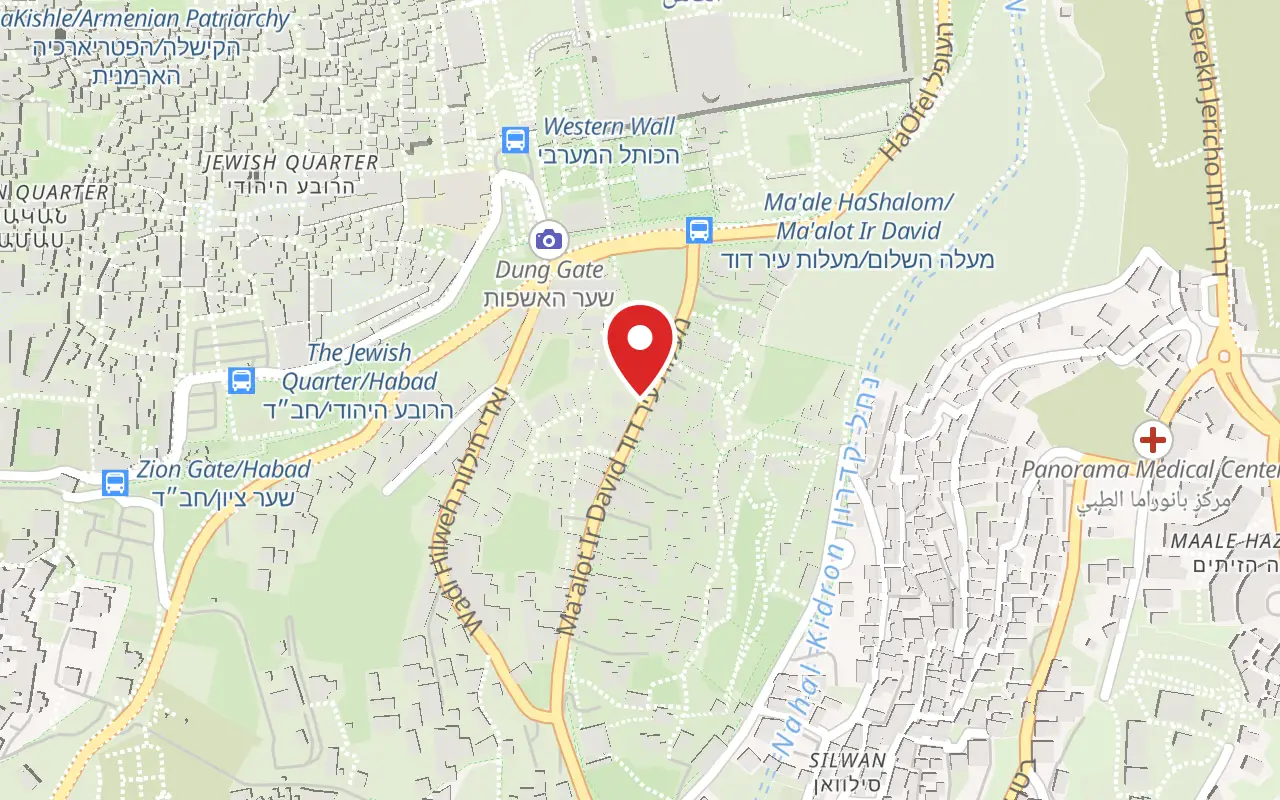
City of David National Park, Silwan, a two-minute walk downhill from Dung Gate, Jerusalem
What ticket you need
This is the main site inside Jerusalem Walls and City of David National Park, so the Israel Nature and Parks Authority's entrance fee applies and an Israel Pass or Matmon annual pass covers it, including the Siloam Tunnel. It does not cover the Jerusalem Archaeological Park at the Davidson Center, which is a separate ticket except on the Pilgrimage Road routes, where admission is bundled in.
Opening hours
- Sunday to Thursday
- 08:00 to 17:00source
- Friday
- 08:00 to 14:00source
- Saturday
- Closedsource
- Last entry to the water system
- an hour and a half before closingsource
- The Nature and Parks Authority's own listing, which differs
- summer 08:00 to 19:00 Sunday to Thursday and 08:00 to 16:00 on Friday and holiday eves; winter 08:00 to 17:00 and 08:00 to 14:00; ticket booths close two hours before the site doessource
Admission
- Adult
- ₪31source
- Child
- ₪16source
- Student
- ₪26source
- Israeli senior
- ₪16source
- In a group
- ₪26 adult, ₪14 childsource
- Self-guided visit, as the operator sells it
- from ₪16 per personsource
- Biblical City of David guided tour, three hours
- from ₪45 per personsource
- Pilgrimage Road, guided
- from ₪45 per person, Davidson Center admission includedsource
- Pilgrimage Road, self-guided
- from ₪28 per personsource
- Shuttle back up from the Pool of Siloam
- ₪7source
- 3D film or spring presentation, add-on
- ₪15 per person, only with a park ticketsource
Access
Not accessible. The operator states plainly that the route includes steps and walking in an underground tunnel, and the descent to the Pool of Siloam is steep. Wheelchairs cannot do this site, pushchairs are not permitted anywhere on the route and there is nowhere to leave one; babies may be carried in a front carrier only. Hezekiah's Tunnel is narrow, low in places, unlit and holds water up to 70 centimetres deep, and the dry Canaanite channel beside it is the alternative rather than an easier version.
On site
- Toilets
- Snack bar
- Gift shop
- Paid lockers
- Protected shelter area
- Paid shuttle from the Pool of Siloam
Booking
Tickets are sold online by the City of David Foundation and at the visitor centre. Guided tours run to fixed departure times with limited places, so book those ahead; the self-guided ticket can normally be bought at the gate. Bring shoes that can get soaked and a change of clothes for the wet route, and a torch, which can also be bought at the ticket office.
Hours and prices are given as the operator publishes them and change without much notice, particularly around Shabbat and the festivals. Check the operator's own page before you travel for this.
Official page at cityofdavid.org.il →What people wish they had known
- Check the closing time before choosing a departure. The water system shuts an hour and a half before the site does, so a Thursday arrival at half past three buys a walk round the excavations and no tunnel at all.
- Bring shoes you are happy to soak and a change of clothes. The wet route runs in water up to 70 centimetres deep and there is no way to keep dry feet in it.
- Buy or bring a torch. Hezekiah's Tunnel is unlit for its whole length, phone lights run flat, and the ticket office sells torches for a reason.
- If water, dark or tight spaces are a problem, take the dry Canaanite channel instead. It runs beside the tunnel and reaches the same place, and asking at the ticket desk is easier than turning back halfway.
- Plan the way back before going down. The exit is at the Pool of Siloam at the bottom of the hill, and the choice is a steep walk up, the ₪7 shuttle, or the Pilgrimage Road on a separate ticket.
- Do not assume the standard ticket covers the Davidson Center. It does not, unless the Pilgrimage Road route was booked, in which case that admission is included and the tour ends there.
The figures
City of David by the numbers
Each figure carries the year it belongs to and links the source it came from.
| Measure | Figure | As of | Source |
|---|---|---|---|
| Adult admission | ₪31 (child ₪16, student ₪26, Israeli senior ₪16) | 2026 | en.parks.org.il |
| Length of Hezekiah's Tunnel | 533 m, against 320 m as the crow flies | 2026 | en.parks.org.il |
| Deepest water on the wet route | up to 70 cm | 2026 | cityofdavid.org.il |
| Height of Warren's Shaft, as the park authority gives it | 30 m | 2026 | en.parks.org.il |
| Walkable length of the Pilgrimage Road | about 600 m, roadway about 8 m wide | 2026 | timesofisrael.com |
| Radiocarbon dates published from the ridge | 103, plus 100 single-ring measurements between 624 and 572 BCE | 2024 | pmc.ncbi.nlm.nih.gov |
| Thickness of the Spring Tower walls | about 7 m | 2017 | doi.org |
| Annual visitors, as compiled for the operator | 25,000 in 2001, rising to 450,000 | 2011 | en.wikipedia.org |
While you are here
The rest of The Old City of Jerusalem
Everything else in this destination with a page of its own.
Mohammad Shad Siddiqui / CC BY-SA 4.0 · Wikimedia Commons
Archaeological site
Jerusalem Archaeological Park, Davidson Center
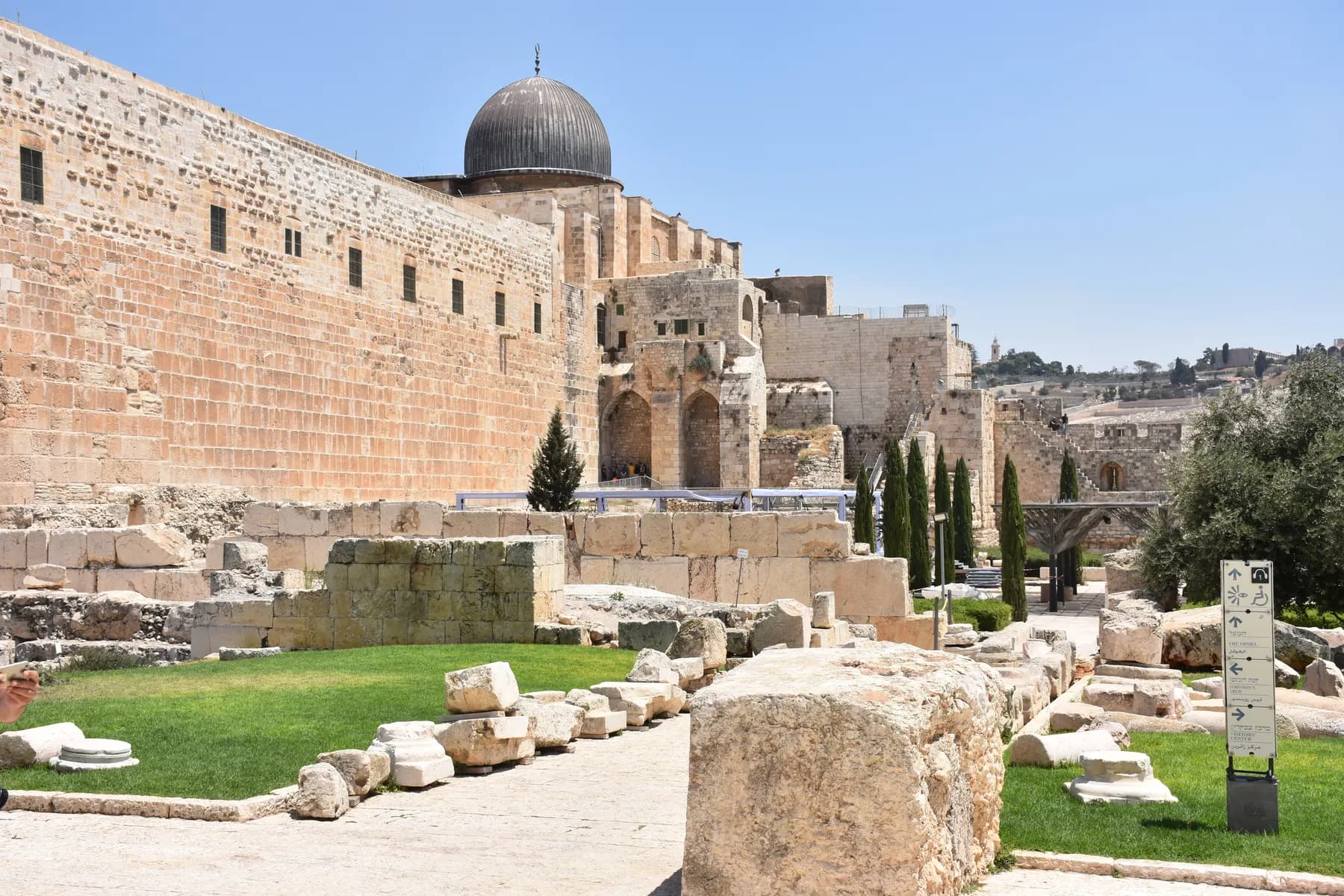
The excavated corner where the Temple Mount's southern and western walls meet, with the paving of the Herodian street still under the heap of masonry the Romans pushed off the top in 70 CE.
patano / CC BY-SA 3.0 · Wikimedia Commons
Religious site
The Western Wall
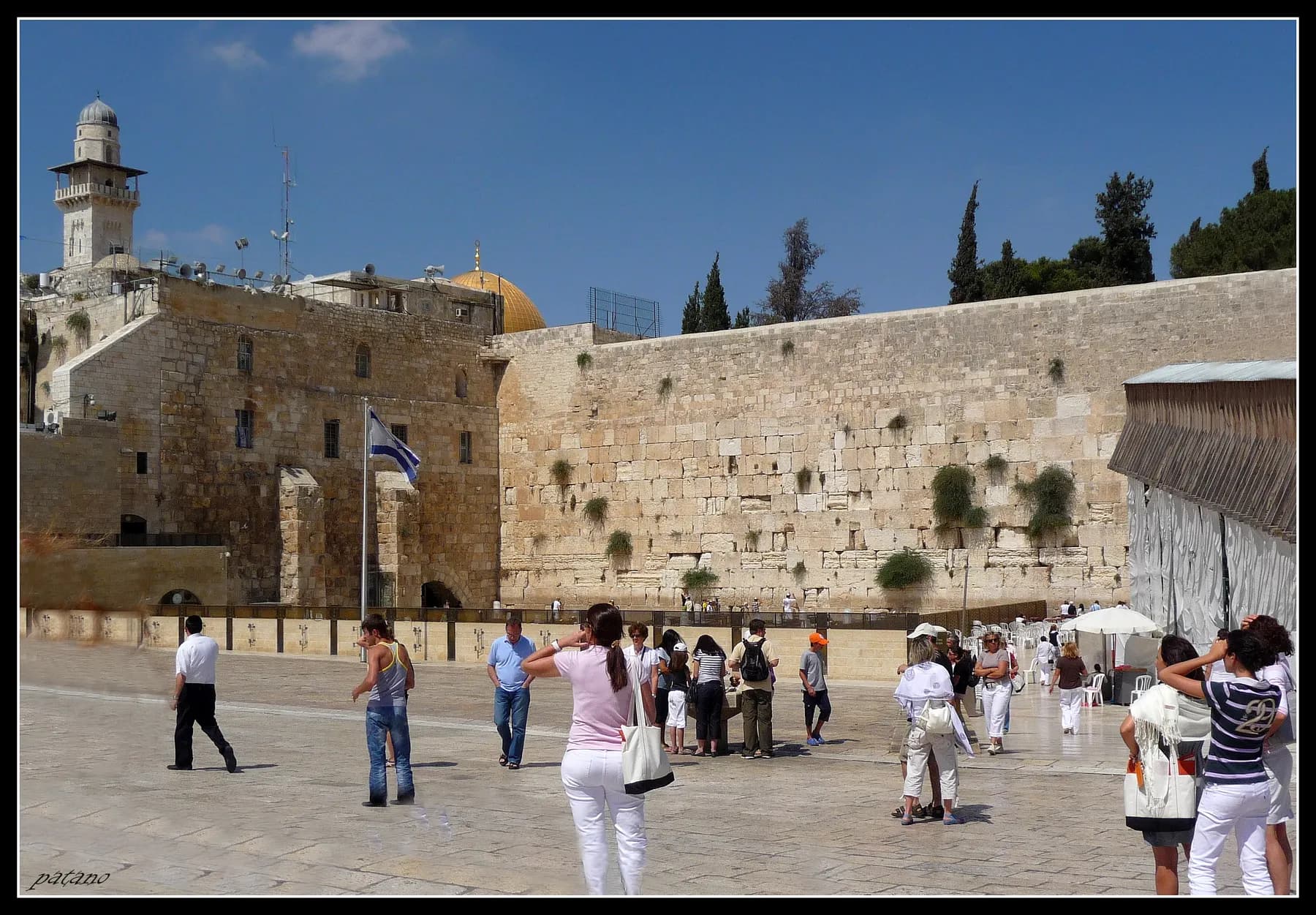
The prayer plaza shows about 50 metres of a retaining wall that runs 488 metres in total, and it is open free of charge at every hour of every day of the year.
arikb / CC BY-SA 3.0 · Wikimedia Commons
Religious site
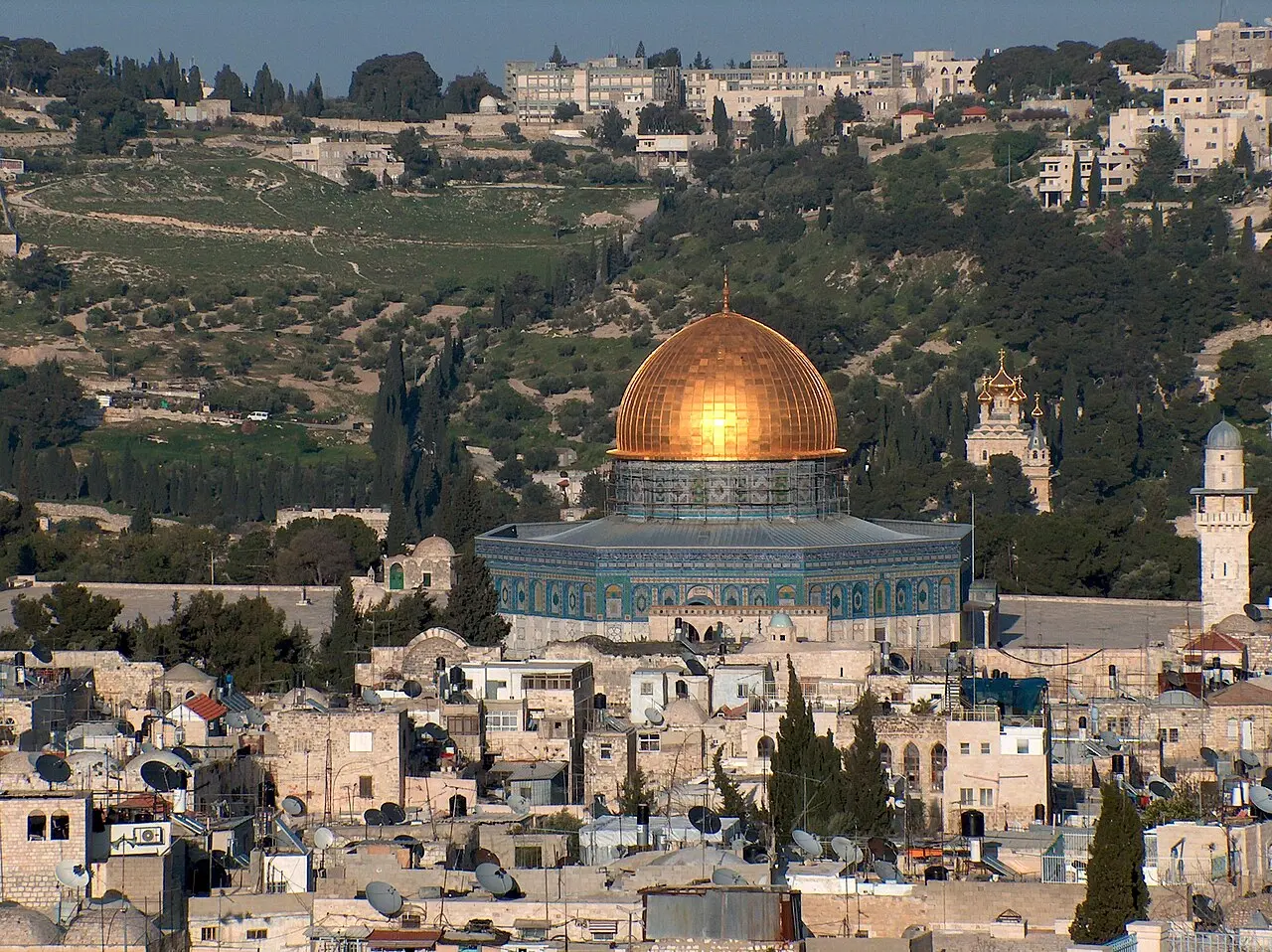
The Temple Mount and Haram al-Sharif
Everything standing on the esplanade is later than the esplanade itself, which Herod's engineers made from about 19 BCE by wrapping a hilltop in four retaining walls and filling in behind them.
Sources and further reading
Every link below was opened and checked when this page was written. Official statements are marked as such: they are the subject's own account, not an independent one.
- OfficialIsrael Nature and Parks Authorityen.parks.org.ilJerusalem Walls National Park
The 2026 entrance fee table (adult ₪31, child ₪16, group ₪26 and ₪14, student ₪26, Israeli senior ₪16), summer and winter opening hours with the two-hour ticket booth cutoff and Saturday closure, Hezekiah's Tunnel at 533 m against 320 m in a straight line, Warren's Shaft at 30 m and its reinterpretation after the 1995 excavations, the Gihon Spring fortifications dated to the eighteenth century BCE, Area G and the House of Ahiel, and the central drainage channel
- OfficialCity of David Foundation (Elad)cityofdavid.org.ilCity of David National Park
Opening hours as the operator publishes them, Sunday to Thursday 08:00 to 17:00 and Friday 08:00 to 14:00, last entry to the water system an hour and a half before closing, the bus routes, and the price band for each tour
- OfficialCity of David Foundation (Elad)cityofdavid.org.ilCity of David Self Guided Visit
From ₪16 per person, about an hour and a half, the route from the lookout through Warren's Shaft and the spring house to the Pool of Siloam, the exclusion of the Davidson Archaeological Park, the ₪7 shuttle back, the ₪15 add-on for the 3D show, water up to 70 cm, lockers, no pushchairs, and free entry on the Matmon pass
- OfficialCity of David Foundation (Elad)cityofdavid.org.ilThe Biblical City of David Guided Tour
From ₪45 per person for three hours, the wet Siloam tunnel or the dry Canaanite channel, torches on sale at the ticket office, and the statement that the tour is not accessible
- OfficialCity of David Foundation (Elad)cityofdavid.org.ilThe Pilgrimage Road, Guided Tour
From ₪45 per person for two hours, or from ₪28 on the self-guided version of the same route, roughly 600 m of mostly uphill walking from the Pool of Siloam, the mix of open-air and underground sections, the lit route, the front carrier rule, and Davidson Center admission included in the ticket
- ReportingThe Times of Israeltimesofisrael.com2,000-year-old Pilgrimage Road to Temple Mount opens to public after years of digging
The 20 January 2026 public opening, about 600 m of road and a roadway about 8 m wide, roughly twenty years of excavation, Amit Re'em of the Israel Antiquities Authority directing, and the objections of Silwan residents living above the tunnel
- ReportingThe Guardiantheguardian.com'Tunnel vision': how Israel is using archaeology to win US support for goals
The September 2025 inauguration of the Pilgrimage Road by Marco Rubio with Benjamin Netanyahu, David Friedman's 2019 sledgehammer opening, Alon Arad of Emek Shaveh on tunnel excavation as bad archaeology, and the 2024 UN commission of inquiry finding that the site presents only its Jewish history
- ReferenceRegev, Gadot, Uziel and others, Proceedings of the National Academy of Sciences, via PubMed Centralpmc.ncbi.nlm.nih.govRadiocarbon chronology of Iron Age Jerusalem reveals calibration offsets and architectural developments
103 radiocarbon dates from five excavation areas on the southeastern ridge, published 29 April 2024: settlement in the twelfth to tenth centuries BCE, westward expansion already under way in the ninth, Building 100 at roughly 900 to 850 BCE, the earthquake at 766 to 750 BCE, and 100 single-ring measurements bracketing the 586 BCE destruction
- ReferenceRegev, Uziel, Szanton and Boaretto, Radiocarbon (Cambridge University Press)doi.orgAbsolute Dating of the Gihon Spring Fortifications, Jerusalem
The Spring Tower's walls given as about 7 m thick, the discovery that part of it stands on sediment rather than bedrock, and radiocarbon from beneath the foundation stones whose latest dates fall in the terminal ninth century BCE rather than the Middle Bronze Age
- ReferenceWikipediaen.wikipedia.orgSiloam tunnel
The tunnel at 533 m with a 0.06 per cent gradient, the 2003 Nature dating by Frumkin, Shimron and Rosenbaum from plaster radiocarbon and uranium-thorium dating of speleothems, and Reich and Shukron's 2011 argument for a late ninth or early eighth century date
- ReferenceWikipediaen.wikipedia.orgSiloam inscription
Found in 1880 by Jacob Eliyahu, a student of Conrad Schick; the text describing the two crews meeting axe against axe; cut out of the tunnel wall in July 1890 and broken in the process; held in the Istanbul Archaeology Museum, with a replica in Jerusalem
- ReferenceWikipediaen.wikipedia.orgPool of Siloam
The Second Temple period pool about 69 m across, found during sewer works in autumn 2004, excavated by Eli Shukron and Ronny Reich and announced on 9 August 2005, and the smaller fifth-century Byzantine pool built under Aelia Eudocia that was long taken for the Gospel pool
- ReferenceWikipediaen.wikipedia.orgStepped Stone Structure
The excavation sequence from Macalister in the 1920s through Kenyon and Shiloh, and the competing datings by Kenyon, Jodi Magness and Israel Finkelstein, together with Eilat Mazar's reading of the Large Stone Structure above it as a tenth-century palace
- ReferenceWikipediaen.wikipedia.orgIr David Foundation
Elad founded in 1986 by David Be'eri, the 1997 lawsuit and the contract rejected in 1998 then approved in 2002, the 2010 High Court petition and the three-year contract that followed, Eilat Mazar's 2011 protest, visitor numbers from 25,000 in 2001 to 450,000 in 2011, and the FinCEN documents on Abramovich-linked donations between 2003 and 2018
City of David: common questions
How much does it cost to visit the City of David?+
The Israel Nature and Parks Authority's 2026 fee table for Jerusalem Walls and City of David National Park gives ₪31 for an adult, ₪16 for a child, ₪26 for a student and ₪16 for an Israeli senior, with ₪26 and ₪14 in a group. The operator sells the self-guided visit from ₪16 per person, the three-hour guided tour from ₪45, the self-guided Pilgrimage Road from ₪28 and the guided Pilgrimage Road from ₪45. An Israel Pass or a Matmon annual pass covers entry, including the tunnel.
What are the opening hours?+
The operator publishes 08:00 to 17:00 Sunday to Thursday and 08:00 to 14:00 on Friday, with last entry to the water system an hour and a half before closing. The site is closed on Saturday. The Nature and Parks Authority's own page for the national park lists longer seasonal hours, up to 19:00 in summer, with ticket booths closing two hours before the site, so the two published sets do not agree and the operator is the one selling the tickets.
Do you get wet in Hezekiah's Tunnel?+
Yes, on the wet route, and there is no way around it: the water runs up to 70 centimetres deep, which is thigh-height on an adult and higher on a child. Wear shoes that can be soaked and carry a change of clothes. The passage is narrow enough in places that a rucksack is awkward.
Is there a dry alternative to the tunnel?+
Yes. The Canaanite channel runs alongside Hezekiah's Tunnel and comes out at the same point, and the operator offers it as the dry option on both the self-guided and guided tickets. It is still underground and still involves steps, so it solves the water but not the confinement.
How long does a visit take?+
About 90 minutes for the self-guided route, which is the operator's own figure, and about three hours for the guided Biblical City of David tour. Adding the Pilgrimage Road adds roughly two hours and finishes at the Davidson Center rather than back at the entrance. Budget more than the stated time if you are slow on steps.
Is the City of David wheelchair accessible?+
No. The operator states that the route includes steps and walking in an underground tunnel and describes the site as not accessible. The descent to the Pool of Siloam is steep, pushchairs are not permitted on the route and cannot be left anywhere, and babies are admitted only in a front carrier. There is no partial accessible loop advertised.
Is it suitable for children?+
The operator sells the self-guided visit as all ages and the wet tunnel is the part children usually remember. The constraints are practical rather than about age: the water reaches 70 centimetres, the tunnel is dark and enclosed for more than half a kilometre, there is no exit partway, and there is a long climb or a shuttle at the end. Small children who dislike the dark should take the dry channel.
Does the ticket include the Pilgrimage Road and the Davidson Center?+
Not on the standard ticket. The Pilgrimage Road is sold separately, from ₪28 self-guided and from ₪45 guided, and on those tickets admission to the Davidson Center is included along with its interactive museum and a walk on a section of the ancient city wall. The plain entrance ticket to the national park explicitly excludes the Davidson park.
Is it worth it if I only have half a day in the Old City?+
It is a real choice rather than an obvious yes. The City of David is outside the walls, downhill, and the round trip with the tunnel takes at least two hours of the four you have, which is most of a morning that could otherwise cover the Western Wall, the Holy Sepulchre and the souks. Go if the water tunnel and the Iron Age city are what drew you to Jerusalem; skip it if this is a first pass at the famous sites.
Who runs the site and why is it controversial?+
The land is a national park under the Israel Nature and Parks Authority, but it is operated under contract by Elad, the Ir David Foundation, a settler organisation founded in 1986 whose stated aim includes renewing Jewish presence in the Palestinian neighbourhood of Silwan, where the park sits. The excavation of the Pilgrimage Road was tunnelled under inhabited houses over objections from residents, which the excavators reject, and a UN commission of inquiry criticised the site in 2024 for presenting only its Jewish history. The archaeology and the framing are separate questions, and it is worth arriving knowing that.