IDF's 91st Division reports over 540 sites dismantled in southern Lebanon
The Israeli military says troops working in four villages inside its declared Security Zone in Lebanon dismantled hundreds of sites and found more than 150 weapons.
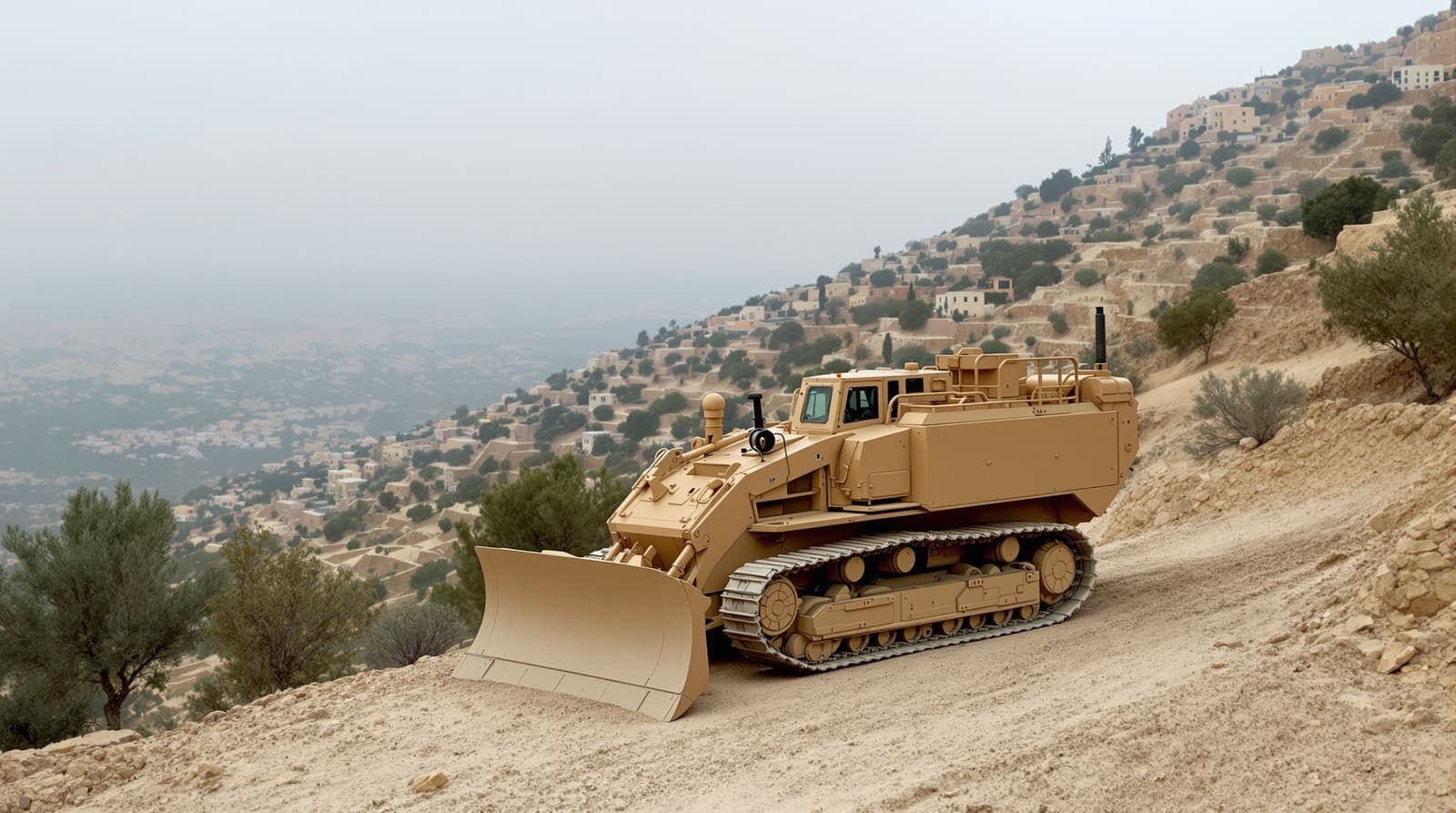
AI illustration, not a photo of the events.
Israeli troops under the 91st Division dismantled more than 540 sites the military describes as terrorist infrastructure inside what it calls the Security Zone in southern Lebanon, according to a statement from the Israel Defense Forces (IDF) spokesperson. The military said the work took place over recent weeks and that some of the sites were used to store weapons.
The army said the operations centred on the areas of Al-Khiam, Tayr Harfa, Meiss El Jabal and Majdal Zoun. In a post on its official account, the IDF said troops also located more than 150 weapons during the same activity. Two Hebrew-language outlets, N12 and News.co.il, carried the same figures, citing the military.
What the sources posted

⭕️540+ terrorist infrastructure sites were dismantled, including weapons storage facilities, during IDF troops’ operations in the areas of Al-Khiam, Tayr Harfa, Meiss El Jabal & Majdal Zoun, located within the Security Zone. Additionally, IDF troops located 150+ weapons Show more

What the military says was found
The fullest list of recovered weapons appears in the IDF's post on X. It names grenades, rockets, rocket-propelled grenade (RPG) missiles, anti-tank missiles of both short and long range, artillery pieces, launchers, Kalashnikov rifles, other rifles, pistols, explosive devices, small arms and magazines. The military did not give a count for any individual category, only the overall figure of more than 150 items.
The News.co.il report gave a shorter list, mentioning rockets, anti-tank missiles, launchers and explosive charges. This is a difference in how much detail was reported rather than a contradiction: all the items it names also appear in the IDF's longer list. The Hebrew reports use the military abbreviation for weapons and military equipment when describing the storage sites, which the IDF's English statements render as weapons storage facilities.
Who the 91st Division is
The IDF organises its ground forces into divisions, each responsible for a sector or a type of mission. The 91st Division is the formation the military identifies as operating in this part of southern Lebanon. A division typically commands several brigades and supporting units, and the IDF often attributes results in a given area to the division in charge of it, as it did here.
What the Security Zone refers to
The IDF's statements describe the four villages as lying within the Security Zone, a term the military uses for the area of southern Lebanon where its troops are operating. The army frames its activity there as removing threats to the State of Israel. The reports do not define the boundaries of the zone or say how far it extends from the border.
Al-Khiam, Tayr Harfa, Meiss El Jabal and Majdal Zoun are villages in southern Lebanon. The spellings used here follow the IDF's English statements; Arabic place names are transliterated in several ways, and readers may see them written differently elsewhere, for example Khiam without the article.
How the information reached the public
The original statement came from the IDF spokesperson's channel. Within minutes, N12, the news arm of one of Israel's main commercial television channels, posted the figures through its correspondent, and News.co.il published its own summary attributed to the IDF spokesperson. The IDF then posted a version on X with the more detailed weapons list.
All four reports therefore trace back to a single source: the Israeli military. The Hebrew outlets attributed the figures explicitly to the army and did not add independent information about the sites or the weapons.
What the reports do not say
Several questions are left open by the material available:
- The reports do not name any organisation as the owner or operator of the dismantled sites or the recovered weapons.
- They do not specify what dismantling involved, whether demolition, removal of equipment or another method.
- No breakdown is given of how many of the more than 540 sites were weapons stores and how many were of other types.
- The period covered is described only as recent weeks, with no start or end date.
- There is no mention of casualties, clashes or arrests during the operations.
- The reports include no response from Lebanese authorities or any other party, and none of the figures has been confirmed by a source outside the IDF.
Sources and further reading
Every link below was opened and checked when this page was written. Official statements are marked as such: they are the subject's own account, not an independent one.
- Officialidft.meIDF spokesperson
- Officialidfx.comIDF on X
- Reportingnewssilt.meNews.co.il
- Reportingkeshett.meN12
How we checked this
The event was reported by the IDF spokesperson, the IDF's X account, N12 and News.co.il, but both Hebrew outlets cited the military, so every figure here rests on IDF statements alone. We have not independently verified the numbers or locations.
Our sourcing and corrections policy →The week from Israel, in one email
The stories that mattered, sourced and checked by the Israel.com newsroom. Free, weekly, one-click unsubscribe.
One list, unsubscribe in a click. See our privacy policy.
More in Security
All security →
Latest
- Gantz pulls Blue and White out of Israel's election eight days before vote
- France imposes partial night curfews as riots follow student and union protests
- Evyatar infiltration alert lifted after IDF says suspect was Israeli civilian
- IDF says weekend strikes in northern Gaza killed three Hamas operatives
- Duvdevan commandos arrest two suspects over planned attack in Kafr Aqab
- Ten arrested in Operation Olive Leaf after reported assaults near Taybeh