Israeli soldiers start voting at some 850 military polling stations
Troops in Israel, Gaza, Lebanon and Syria began casting Knesset ballots ahead of the October 27 national vote, at stations the army says reach every sector.
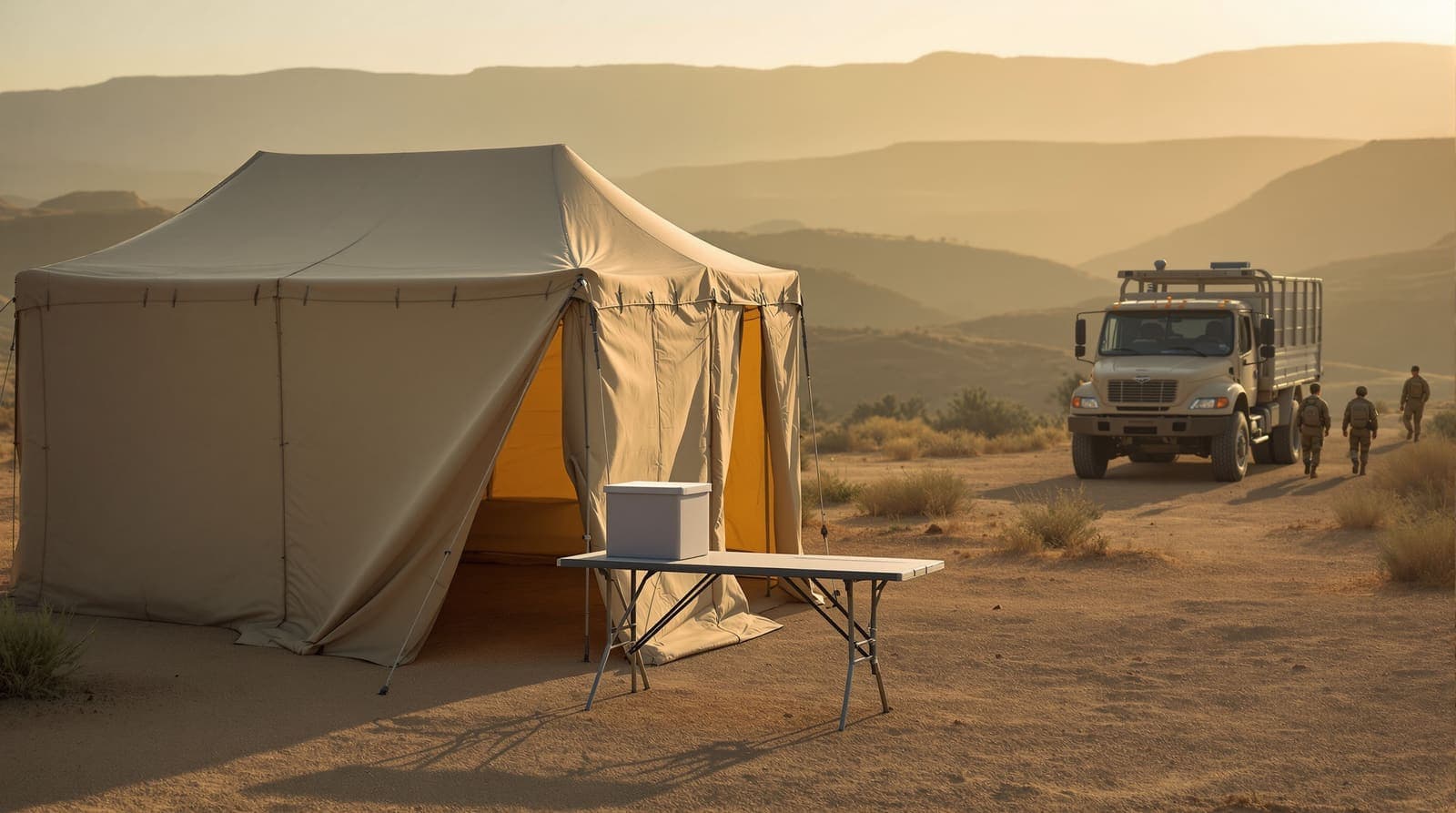
AI illustration, not a photo of the events.
Israeli soldiers have started voting in the country's parliamentary election, days before civilians go to the polls, the Israel Defense Forces (IDF) said. According to the IDF spokesperson, more than 850 military polling stations have been set up across all of the army's sectors, from Mount Hermon in the far north to Eilat at the southern tip, and in Lebanon, Syria and the Gaza Strip.
The Times of Israel reported that the military's stations will stay open through October 27, the date of the general vote, so that soldiers posted far from home or across the border can take part. Hebrew outlets Ynet and N12 also reported that voting had begun at bases and army positions.
What the sources posted

The Israeli military has begun to vote in the national elections, less than a week before the rest of the country, to enable troops stationed in remote locations and inside enemy territory to cast their ballot. The IDF says it has deployed some 850 polling stations across the Show more
On the ground

IDF soldiers have begun casting their votes for the 2026 Knesset elections at military bases across the region, the IDF announced on Wednesday. jpost.com/israel-electio…
How the military vote works
Israel has no postal ballot for most citizens, so soldiers on duty vote at polling stations run inside the military itself. The IDF told The Times of Israel that around 3,000 soldiers, most of them young conscripts, are staffing the stations, and that they were trained by the Central Elections Committee, the body responsible for organising national elections in Israel.
Tens of thousands of troops are entitled to vote at these military stations, according to the same report. About 25 percent of the stations are fully mobile. These travel between units on a schedule set in advance, allowing both conscripts and reservists in hard-to-reach places to vote. The Times of Israel said this includes the army's 40 outposts in the Gaza Strip, many positions in Lebanon and nine outposts in Syria.
The IDF's elections officer, quoted by the military and by N12, said the goal was to let every service member use their "democratic right to vote by secret ballot", including during combat and operational activity beyond the border. Ynet quoted the officer as pledging that the ballot would remain secret.
What the Knesset is
The Knesset is Israel's single-chamber parliament. Israelis vote for party lists rather than individual candidates, and seats are shared out among parties according to their share of the national vote. The parliament then forms the basis for a governing coalition. Because ballots are cast for parties nationwide, a soldier voting at an outpost in Syria or Gaza casts the same kind of ballot as a civilian voting at home.
Where the troops are
The locations named in the reports reflect where Israeli forces are currently deployed. Mount Hermon sits on Israel's northern frontier, near the borders with Lebanon and Syria, while Eilat is Israel's southernmost city on the Red Sea. The reports describe active army positions inside Lebanon and Syria and dozens of outposts inside the Gaza Strip, which is why the military says mobile polling teams are needed to reach units in the field.
Where the reports differ
The figures on polling stations vary slightly in how they are phrased. The IDF spokesperson and N12 describe more than 850 stations, while The Times of Israel and its military correspondent describe some 850, and Ynet's headline gives 850. The differences are small but the sources do not use identical wording, and the exact total has not been published in the material available.
What the reports do not say
The reports do not give a precise number of eligible soldier voters beyond the description of tens of thousands. They do not say how many soldiers had voted by the time of publication, how military ballots are transported and counted, or when results from military stations are combined with the civilian count. They also do not name the IDF elections officer, and they do not describe any specific arrangements for soldiers in units that the mobile stations may be unable to reach.
More on Eilat: Places and businesses in Eilat · Shabbat times in Eilat
Sources and further reading
Every link below was opened and checked when this page was written. Official statements are marked as such: they are the subject's own account, not an independent one.
- Officialidft.meIDF spokesperson
- Reportingyediothynet.co.ilYnet
- Reportingyediotht.meYnet alerts
- Reportingtoitimesofisrael.comThe Times of Israel
- Reportingtoit.meEmanuel Fabian, Times of Israel military correspondent
- Reportingkeshett.meN12
- Reportingtoix.comEmanuel Fabian on X
How we checked this
The start of military voting was reported by the IDF spokesperson, The Times of Israel, Ynet and N12. Details on staffing, mobile stations and outpost numbers come from the military as reported by The Times of Israel and have not been independently verified.
Our sourcing and corrections policy →The week from Israel, in one email
The stories that mattered, sourced and checked by the Israel.com newsroom. Free, weekly, one-click unsubscribe.
One list, unsubscribe in a click. See our privacy policy.
More in Security
All security →

Latest
- Tel-Hai becomes Israel's 11th university, near northern Kiryat Shmona
- Herzog visits Budapest, meets President Baka as Hungary vows stable ties
- Man of about 50 dies after his car catches fire on Route 92 in the Golan
- Israel accepted as a Pacific Islands Forum partner after Sa'ar's Fiji visit
- IDF's 91st Division reports over 540 sites dismantled in southern Lebanon
- IDF says Hezbollah kept using a Kfarra weapons site after Lebanese Army review